
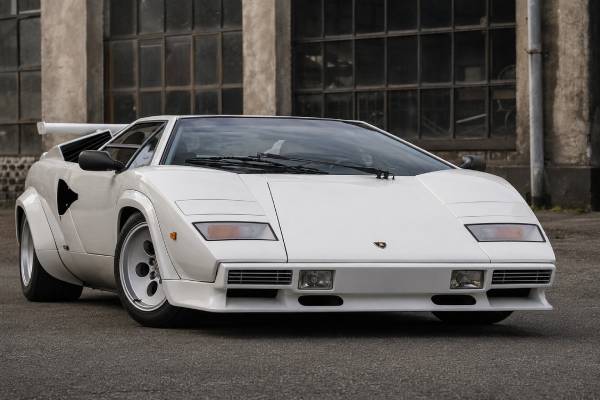
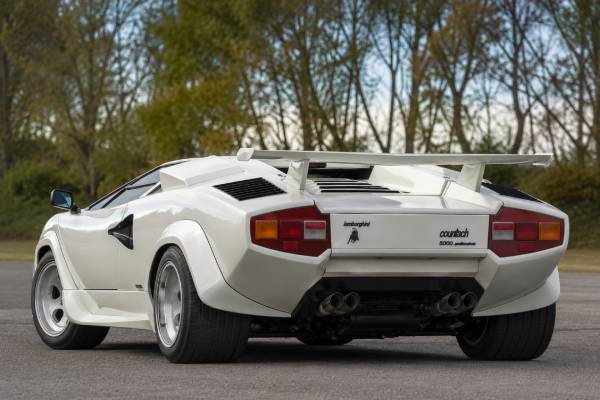
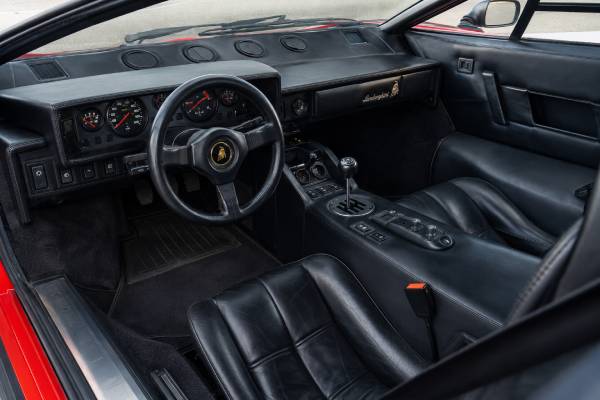
The Lamborghini Countach LP 5000 Quattrovalvole with the L507 V4 engine code and Bosch KE-Jetronic fuel injection is the federalized, emissions-compliant version of one of the most famous 1980s supercars. Built during the 1985–1988 Quattrovalvole era, it kept the Countach’s scissor doors, wedge-shaped Bertone body, tubular chassis, gated five-speed manual gearbox, and mid-mounted V12 layout, but used fuel injection instead of the better-known Weber downdraft carburetors on many European-market cars. The important clarification is simple: “V4” here is part of the Lamborghini engine-code description, not a four-cylinder layout. This car is still a 60-degree Lamborghini V12. For buyers and collectors, the injection QV matters because it combines Countach drama with U.S.-market legality, rare production, 420 hp performance, and a very specific originality checklist that can strongly affect value.
Table of Contents
- Why the LP5000 QV Matters
- L507 V4 KE-Jetronic Specs
- Production, Variants, and Originality
- Bertone Shape and QV Engineering
- Road Feel, Performance, and Usability
- Maintenance, Restoration, and Known Issues
- Market Values and Buyer Checklist
Why the LP5000 QV Matters
The Countach LP 5000 Quattrovalvole is the most muscular pre-Anniversary Countach and one of the key bridge models between the raw 1970s wedge and the more developed final 25th Anniversary version. It matters because it gave the Countach its strongest classic-era V12, four-valve cylinder heads, bolder body details, and a return to serious U.S.-market presence.
Lamborghini introduced the Countach concept as the LP500 prototype in 1971, then put the LP400 into production in the mid-1970s. The car replaced the Miura not by copying it, but by changing the language of the supercar. Where the Miura was flowing and sensual, the Countach was sharp, low, short, wide, and almost architectural. Marcello Gandini at Bertone created the shape, and Lamborghini engineer Paolo Stanzani developed the unusual longitudinal mid-engine layout that gave the car its “LP” identity: longitudinale posteriore, meaning rear longitudinal.
By the time the LP 5000 Quattrovalvole arrived in 1985, the Countach had already moved through several major forms. The LP400 “Periscopio” cars were the purest and narrowest. The LP400 S added the flared arches, wider wheels, and visual aggression that became the public image of the Countach. The 5000 S increased displacement to 4.8 liters. The Quattrovalvole then pushed the formula further with a 5.2-liter V12 and four valves per cylinder, giving the model its name.
The fuel-injected version covered here sits in a specific place in that history. European-market QV cars are usually associated with six Weber downdraft carburetors and a higher 455 CV rating. The Bosch KE-Jetronic version was developed for emissions-compliant markets, especially the United States, and is commonly quoted at about 420 hp. That lower figure does not make it a lesser Countach in collector terms. It makes it a distinct variant with different hardware, different inspection concerns, and a different ownership appeal.
The QV also arrived during an important period for Lamborghini as a company. The brand had survived difficult 1970s conditions and was rebuilding momentum under Mimran ownership before Chrysler acquired Lamborghini in 1987. The Countach was no longer a new idea by then, but it still looked outrageous next to almost anything else on the road. It was also commercially important because later Countach versions sold in higher numbers than the earliest cars and helped keep Lamborghini visible before the Diablo arrived in 1990.
Collectors care about the LP5000 QV because it offers much of the Countach’s most recognizable 1980s image: huge rear tires, optional rear wing, deep side intakes, scissor doors, low roofline, and a V12 that dominates the whole car. Enthusiasts care because it remains mechanical, loud, demanding, and unfiltered. Buyers care because originality, market specification, emissions equipment, bodywork, and documentation can separate a top-tier example from a costly project.
The injection version is especially interesting because it is rarer than the broad QV production story suggests. It is not simply “a Countach with less power.” It is a Countach configured for a different legal environment, with fuel-injection parts, catalyst-related equipment on many cars, federal bumpers, market-specific details, and paperwork that must be judged carefully. A well-preserved, properly documented Bosch KE-Jetronic QV can be highly desirable, especially when it has its correct engine, original color combination, factory records, and complete service history.
L507 V4 KE-Jetronic Specs
The core specification is a 5,167 cc, 48-valve Lamborghini V12 rated around 420 hp in Bosch KE-Jetronic injection form, driving the rear wheels through a five-speed manual transaxle. The numbers only tell part of the story, because weight, gearing, emissions equipment, tire condition, and tune make a major difference in how each car performs.
| Item | Specification |
|---|---|
| Model | Lamborghini Countach LP 5000 Quattrovalvole |
| Internal family | LP112 Countach platform |
| Engine code family | L507 V4; V4 is an engine-code suffix, not the cylinder layout |
| Engine layout | Rear-mid-mounted, longitudinal 60-degree V12 |
| Displacement | 5,167 cc, commonly rounded to 5.2 liters |
| Bore x stroke | 85.5 mm x 75.0 mm |
| Valvetrain | DOHC, four valves per cylinder, 48 valves total |
| Fuel system | Bosch KE-Jetronic continuous fuel injection on the covered injection variant |
| Output | About 420 hp at 7,000 rpm for the injection version |
| Torque | Commonly quoted around 340 lb-ft, with figures varying by market source |
| Transmission | Five-speed gated manual transaxle |
| Drivetrain | Rear-wheel drive |
| Chassis | Tubular steel spaceframe |
| Body | Hand-finished coupe bodywork with aluminum and composite elements depending on panel and year |
The L507 V4 engine is the final major development of the classic Countach V12 before the 25th Anniversary carried the basic 5.2-liter QV mechanical package into the last years of production. Compared with the earlier 5000 S, the QV gained new four-valve cylinder heads and a longer stroke. The result was a broader, stronger engine that felt more serious at high rpm and more capable of moving the Countach’s wider, heavier later body.
The injection system is central to the character of this specific variant. Bosch KE-Jetronic is a continuous fuel-injection system, not a modern sequential electronic injection system. It meters fuel mechanically and electro-hydraulically based on airflow and control pressure. When healthy, it improves cold starts, emissions control, and day-to-day consistency compared with a poorly tuned carbureted car. When tired or misadjusted, it can cause hard starting, uneven idle, weak hot restarts, flat spots, and expensive diagnosis.
| Area | Useful buyer-facing detail |
|---|---|
| Front suspension | Independent suspension with coil springs and telescopic dampers |
| Rear suspension | Independent suspension with coil springs and telescopic dampers |
| Steering | Unassisted rack-and-pinion |
| Brakes | Four-wheel ventilated discs |
| Wheels | 15-inch alloy wheels, with very wide rear fitment |
| Typical tire sizes | 225/50 VR15 front and 345/35 VR15 rear on many QV applications |
| Wheelbase | About 2,450 mm, often quoted as 96.5 inches |
| Width | About 2,000 mm without mirrors |
| Height | About 1,070 mm |
| Weight | Often quoted around 1,490 kg, with U.S. equipment and specification affecting the real figure |
| Fuel capacity | Large twin-tank layout; published figures vary by source and market |
Performance figures should be read with care. A healthy LP5000 QV can feel extremely fast, especially above midrange rpm, but period testing, market equipment, federal bumpers, wing fitment, tire age, and state of tune all affect results. A realistic guide is roughly 0–100 km/h in the high-four to low-five-second range and a top speed around the high-170 mph to low-180 mph range for a strong example. Carbureted European “Downdraft” cars are usually quoted higher, but the injection version still delivers the defining Countach experience: a hard-edged V12, long gearing, heavy controls, and speed that feels dramatic rather than effortless.
Production, Variants, and Originality
The QV was built from 1985 to 1988, and Lamborghini’s own historical material lists 631 Countach Quattrovalvole units. Some registries and auction sources quote 610, so buyers should focus less on one headline number and more on the individual car’s build records, market specification, engine number, VIN, and documentation.
The main LP5000 QV divide is between carbureted and fuel-injected cars. The carbureted European-style cars used six Weber downdraft carburetors and are often called “Downdraft” cars. They have the highest quoted output and a more aggressive intake character. The Bosch KE-Jetronic cars used fuel injection for emissions-compliant markets and are typically associated with U.S. specification, federal bumpers, and a 420 hp rating.
That split matters because the two versions are inspected differently. On a carbureted car, the condition of the carburetors, intake setup, linkage, and correct airbox details matter. On the injection car, the buyer must look closely at fuel distributors, warm-up control, lines, pumps, pressure accumulators, emissions equipment, catalyst-related hardware where fitted, and whether the original injection system has been altered or removed.
Key QV identification points
A correct LP5000 QV should be checked as a complete identity package, not just as a body shape with a V12. Important details include:
- VIN and chassis number format for the market.
- Engine number showing the correct L507 V4 family.
- Gearbox and differential numbers where records are available.
- Factory color and trim combination.
- Correct QV engine cover and rear body details.
- Correct market-specific lighting, bumpers, mirrors, and emissions labels.
- Documentation supporting whether the car was built as an injection car or later converted.
- Service records proving fuel-system, cooling-system, clutch, brake, and suspension work.
The rear wing deserves special care. Many Countach buyers expect to see the giant rear wing because it became part of the poster-car image. It was often ordered, fitted, or added, but not every car left the factory with one. A wing can help the visual appeal for some buyers and hurt purity for others, especially if the installation is undocumented or has damaged original bodywork. It also adds drag, so it is more of an identity and style feature than a simple performance upgrade.
The same is true for U.S. bumpers. Federalized Countach models used large impact bumpers that changed the car’s look. Many owners removed them, modified them, or replaced them with slimmer European-style pieces. That may improve the visual line, but it creates questions about originality, legality, and value. A buyer should not assume a bumper-modified injection QV is wrong, but should know exactly what was changed, when, and whether the original parts come with the car.
Late QV changes
Late 1988 QV cars can carry details that overlap visually with the 25th Anniversary period, especially side-skirt treatment and trim changes. These cars can be desirable, but they are also easy to misdescribe. A correct late QV is not automatically a 25th Anniversary model, and a 25th Anniversary car is not simply a QV with different trim. The Anniversary version received a broader body and aero revision package, while the LP5000 QV remains its own model.
Originality is especially important because the Countach was frequently personalized. Paint changes, wing additions, bumper removals, exhaust swaps, stereo installations, wheel refinishing, interior retrims, and emissions changes are common. Some were done carefully and can be reversed. Others hide accident damage, poor restoration, or missing rare parts. The best cars have a clear chain from factory build to current condition.
For serious collectors, Lamborghini Polo Storico certification or direct factory documentation adds confidence. It cannot turn a poor car into a great one, but it can verify key identity points and help settle questions about original colors, trim, mechanical numbers, and specification. For an injection QV, that paper trail can be the difference between “interesting Countach” and “properly documented rare-market QV.”
Bertone Shape and QV Engineering
The LP5000 QV looks extreme because the Countach body was designed around low height, sharp planes, huge side intake needs, and dramatic packaging rather than normal comfort rules. Its engineering is just as unusual: the V12 sits longitudinally behind the cabin, the gearbox is ahead of the engine, and the driveline passes through the engine’s sump area toward the rear differential.
Marcello Gandini’s Bertone design is one of the clearest examples of the Italian wedge school. The Countach is not sleek in the soft sense. It is a set of angles, openings, edges, and proportions that make the car look almost impossible at rest. The front is low and flat, the windshield is steeply raked, the roof is short, the rear haunches are wide, and the scissor doors turn every entry and exit into an event.
The QV body had to package more engine, more tire, more cooling demand, and more regulatory hardware than the early LP400. That is why later Countach models look more aggressive and more complicated. The wheel-arch extensions cover massive rear tires. The side intakes help feed the radiators and engine bay. The engine cover grew more pronounced because the QV intake and cylinder-head layout needed space. On carbureted downdraft cars, the intake packaging is especially responsible for the famous raised engine-cover profile. Injection cars share much of the QV visual identity, even though their fuel system differs.
Cooling and airflow
Cooling is a major part of the Countach design. The car’s radiators sit along the sides rather than in a conventional front-engine layout. Airflow enters through side openings and exits through rear-quarter and engine-bay areas. When the system is fresh, clean, and correctly bled, the QV can manage normal road use better than its reputation suggests. When radiators, fans, relays, hoses, thermostats, or coolant passages are tired, heat becomes one of the fastest ways to turn a drive into a repair bill.
Aerodynamics are also more complicated than the poster image suggests. The Countach looks like a land missile, but the big wing, wide tires, flares, scoops, and federal bumpers add drag. The wing is visually iconic, but it does not automatically make the car better on the road. A wingless car can be cleaner through the air and often appeals to buyers who prefer the body’s original wedge line. A winged car may be more desirable to someone seeking the full 1980s bedroom-wall version.
Cabin and controls
The cabin is narrow, low, and offset by modern standards. The dashboard sits high, the windshield is shallow, and rear visibility is poor. The driving position works best for drivers who fit the car rather than expect the car to fit them. The pedals, wheel angle, clutch effort, and gearlever all feel old-school and mechanical.
The gated shifter is part of the Countach appeal. It demands deliberate movement, especially when the oil is cold. Rushing the gearbox is a mistake. A good car rewards patience with a clean mechanical feel; a worn one shows baulking, synchro weakness, loose linkage, or noise that can be expensive to correct.
The scissor doors are not a gimmick in this car. They help entry and exit in tight spaces because the Countach is so wide and low. They also became a Lamborghini signature that still shapes the brand’s flagship identity. On a buying inspection, door fit, hinge condition, strut strength, latch behavior, and surrounding paint condition matter because poor alignment may point to body damage or weak prior repairs.
Road Feel, Performance, and Usability
A Bosch KE-Jetronic LP5000 QV feels raw, heavy, loud, and special, not easy in the modern supercar sense. It rewards a driver who warms it properly, shifts with care, respects its width, and understands that much of the performance comes alive once the V12 is hot and spinning freely.
The engine is the center of the experience. At low speed, the injection system can make the car more settled than a badly tuned carbureted example. It can start more consistently, idle more cleanly, and tolerate normal road use better when the fuel system is fresh. But the engine still feels like a large classic Lamborghini V12. It has rotating mass, heat, intake noise, exhaust noise, and a hard mechanical edge that modern insulation usually removes.
Power delivery is strong rather than turbocharged or instant. The V12 builds with rpm and becomes more exciting as the road opens. The 420 hp figure does not sound shocking beside modern supercars, but the Countach gives speed with effort, sound, vibration, and risk. That makes it feel faster than the number suggests. The car is also wide, low, and visually difficult to place, so even moderate pace feels dramatic.
The clutch is heavy in traffic. Steering is heavy at parking speed because there is no power assistance and the front tires are wide. Once moving, the steering becomes more informative, but it still needs commitment. This is not a one-finger car. It asks for both hands, clear inputs, and respect for road surface, tire temperature, and available space.
The gearbox is part of the ritual. First gear sits across the gate in a pattern that takes a moment for new drivers to internalize, and second gear should not be forced when cold. A careful driver lets the fluids warm, uses measured shifts, and avoids treating the transaxle like a modern short-throw unit. Good examples feel precise. Poor examples feel reluctant, noisy, or vague.
Ride, braking, and cornering
The LP5000 QV rides firmly but not crudely when the suspension is healthy and the tires are correct. Old tires can ruin the car. Flat-spotted, hardened, or incorrect-size tires make the steering worse, reduce braking confidence, and can make the car feel nervous. The rear 345-section tires are central to the Countach stance, but they also make tire availability and age a real ownership issue.
Braking is period-correct rather than modern-supercar sharp. The ventilated discs are capable, but the pedal feel, tire grip, and heat capacity are not comparable to modern carbon-ceramic systems. A healthy system should stop straight and confidently. Pulling, long pedal travel, vibration, sticking calipers, aged hoses, or old fluid are all warning signs.
Cornering balance depends heavily on tire condition, alignment, dampers, and driver smoothness. The Countach has immense rear tire presence, but it is still a mid-engine car with mass behind the driver and old-school geometry. It does not like abrupt inputs. It feels best on flowing roads where the driver can plan, settle the chassis, and use the V12 without constant stop-start work.
Everyday usability
Usability is limited, but not hopeless. The cabin is hot, luggage space is small, rear visibility is poor, and low-speed maneuvering is difficult. Reversing often requires opening the door and looking back over the sill, a technique closely associated with Countach ownership. Ground clearance is limited, and the front spoiler is vulnerable.
That said, a well-sorted injection QV can be more usable than the myth suggests. The problem is usually not that the car is impossible. The problem is that many cars are old, underused, incorrectly serviced, or partially modified. A fresh cooling system, healthy injection system, correct clutch adjustment, clean electrical system, good tires, and proper alignment make a huge difference.
The best way to drive one is simple: warm it fully, avoid traffic when possible, use clear roads, shift deliberately, watch temperatures, and leave extra room. The Countach is not relaxing, but that is part of the reason it remains valuable. It makes every journey feel like an occasion.
Maintenance, Restoration, and Known Issues
The biggest ownership risk is not one single weak point; it is deferred maintenance across a complex, low-production V12 exotic. A Countach QV can be robust when properly serviced, but neglected fuel systems, cooling systems, wiring, clutch hydraulics, gearbox wear, and poor body repairs can turn a purchase into a restoration.
The L507 V4 V12 needs specialist care. Valve-clearance work, ignition condition, fuel delivery, oil leaks, cooling health, and timing-related inspection should be handled by someone who knows classic Lamborghini engines. General exotic experience is helpful, but Countach-specific knowledge is better. These cars were hand-built, have limited parts availability, and often carry decades of owner modifications.
Fuel-injection issues
The Bosch KE-Jetronic system is one of the most important inspection areas on the 420 hp injection QV. It should start cleanly from cold, settle into a stable idle, restart when hot, pull evenly, and not smell strongly of raw fuel. Common age-related issues include:
- Hardened fuel hoses.
- Weak fuel pumps.
- Faulty pressure accumulators.
- Contaminated fuel distributors.
- Incorrect control pressures.
- Poor injector spray patterns.
- Vacuum leaks.
- Aged electrical connectors.
- Missing or altered emissions components.
A car converted away from its original injection setup needs careful thought. Some conversions may run well, but originality and emissions legality can suffer. For a collector-grade injection QV, correct fuel-system hardware is part of the car’s value.
Cooling and heat management
Cooling-system condition is critical. Radiators, fans, switches, relays, hoses, expansion tanks, water pump condition, and proper bleeding all matter. The engine bay gets very hot, and heat accelerates the aging of wiring, hoses, insulation, and rubber parts. A car that runs cool during a short test drive may still overheat in traffic or after a spirited run.
Buyers should ask for evidence of recent cooling-system service, not just a seller’s statement that “it runs fine.” Look for invoices showing radiator work, hose replacement, fan operation, thermostat service, coolant changes, and pressure testing. Any sign of coolant contamination, repeated overheating, or improvised wiring should raise concern.
Gearbox, clutch, and driveline
The five-speed transaxle is durable when treated properly, but expensive when worn. Second-gear synchro behavior when cold is a known point to watch, though some reluctance is normal in a cold classic gearbox. Grinding, jumping out of gear, heavy whine, metal in the oil, or a vague linkage should be investigated before purchase.
Clutch wear depends heavily on driving style. Low-speed maneuvering, traffic, hill starts, and inexperienced drivers shorten clutch life. Hydraulic components can also age. A heavy, inconsistent, slipping, or dragging clutch is not something to ignore. The Countach drivetrain is labor-intensive, and “minor adjustment” claims should be verified by a specialist.
Body, frame, and corrosion
The Countach body and chassis require close inspection because repairs are difficult and the body is hand-finished. Accident damage is common enough to take seriously. The low nose, wide hips, vulnerable spoilers, door openings, and rear quarters should all be examined under bright light and from underneath.
Important inspection areas include:
- Tubular frame sections and suspension pickup points.
- Rocker and sill areas.
- Lower door edges.
- Front spoiler and nose structure.
- Radiator duct areas.
- Engine-bay heat-affected panels.
- Door hinge mounts and scissor-door alignment.
- Windshield and window surrounds.
- Rear wing mounts if fitted.
- Evidence of federal bumper removal or body conversion.
Rust is not the only concern. Poor panel fit, thick filler, cracked paint, mismatched textures, uneven shut lines, and missing factory-style fasteners can reveal old crash damage or cosmetic restoration. A cheap paint job on a Countach is rarely cheap once corrected.
Electrical, interior, and trim
Electrical issues are common on aging exotics. Relays, fuse panels, grounds, fan circuits, lighting, window motors, gauges, and aftermarket alarm or stereo wiring all need checking. Heat and age make old repairs brittle. A clean-looking engine bay can still hide weak wiring.
Interior restoration can also be expensive. Correct leather grain, stitching, carpets, switchgear, instruments, vents, and trim pieces matter to collectors. A retrim is not automatically bad, but it should match the original color, materials, and pattern if the car is being presented as collector-grade. Missing tools, books, jacks, manuals, and original accessories affect value.
Restoration should be approached carefully. Returning a modified Countach to original condition can involve rare parts, hand fabrication, specialist labor, and long lead times. A complete, tired car is often better than a shiny car missing its original injection parts, emissions hardware, books, tools, and trim.
Market Values and Buyer Checklist
The LP5000 QV occupies a strong collector position below the very pure early LP400 “Periscopio” cars but above many ordinary 1980s exotics. As of the mid-2020s, good public-sale QV results commonly sit in the mid-six-figure range, with major premiums for exceptional condition, originality, rare color, low mileage, strong provenance, and desirable market specification.
The injection QV must be valued as its own thing. Some buyers prefer carbureted Downdraft cars for their higher output, sound, and European specification. Others value injection cars because they are rarer in certain markets, easier to register in original U.S. form, and historically important as federalized Countach examples. The right buyer will pay for correctness, not just the highest horsepower rating.
| Value factor | Why it matters |
|---|---|
| Original specification | Correct injection hardware, bumpers, emissions equipment, trim, and body details support authenticity. |
| Documentation | Factory records, books, tools, import papers, service invoices, and ownership history reduce uncertainty. |
| Engine and drivetrain identity | Correct engine-number family and gearbox history matter on a high-value V12 Lamborghini. |
| Condition | A usable, serviced car is usually safer than a long-stored car needing every system recommissioned. |
| Color combination | Original, attractive, rare, or period-correct colors can add meaningful appeal. |
| Mileage | Low mileage helps only when condition and service history support it; inactivity can create problems. |
| Restoration quality | High-quality, well-documented work helps; cosmetic work hiding damage hurts. |
| Market equipment | U.S. bumpers, wing fitment, emissions equipment, and federalization details all affect buyer demand. |
Pre-purchase inspection priorities
A normal used-car inspection is not enough. The right inspection is a Countach-specific review by a Lamborghini classic specialist, ideally with lift time, road test, compression or leakdown evaluation where appropriate, fuel-pressure testing, documentation review, and paint-depth/body inspection.
Use this sequence before committing money:
- Confirm the identity: VIN, chassis number, engine number, gearbox number, market specification, and factory color.
- Review documents: build records, import paperwork, service invoices, ownership chain, books, tools, and certification if available.
- Inspect the body and frame: accident damage, corrosion, panel fit, wing mounts, bumper changes, and prior repairs.
- Test the fuel injection: cold start, hot restart, idle quality, fuel pressure, leaks, and correct emissions hardware.
- Check cooling health: radiator condition, fan operation, relay function, hoses, water pump, thermostat, and temperature behavior.
- Evaluate driveline behavior: clutch engagement, gearbox synchros, noise, differential behavior, and linkage feel.
- Inspect brakes, suspension, wheels, and tires: age, cracks, leaks, bushings, calipers, wheel condition, and correct tire sizing.
- Assess interior originality: leather, instruments, switches, carpets, headliner, air conditioning, windows, and trim details.
- Price the car after the inspection, not before it: a lower purchase price can disappear quickly if major systems need restoration.
Examples to seek
The best injection QV is not always the lowest-mileage car. The strongest purchase is usually a complete, matching, documented example that has been serviced by respected specialists and still carries its correct market equipment. A car with original paint and interior can be especially valuable, but only if preservation is genuine and not confused with neglect.
Look for cars with:
- Clear factory or Polo Storico documentation.
- Original color and trim or documented period changes.
- Correct Bosch KE-Jetronic hardware.
- Recent fuel-system service.
- Fresh cooling-system records.
- Proper tires with safe date codes.
- No hidden accident damage.
- Complete books, tools, and records.
- Sensible, reversible upgrades only.
- A seller who understands the car’s exact specification.
Examples to avoid
Avoid cars that are shiny but vague. A Countach with missing emissions equipment, unclear engine identity, poor panel fit, no service history, overheating behavior, fuel smells, non-working fans, weak hot starts, gearbox noise, and undocumented body changes can become far more expensive than a better car bought at a higher price.
Be cautious with cars advertised using broad phrases like “European look,” “upgraded,” “fully restored,” or “recently serviced” unless the paperwork explains exactly what was done. A bumper change, carburetor conversion, aftermarket exhaust, retrim, repaint, or wing installation may be acceptable, but only when priced honestly and documented.
Long-term collectability is likely to remain strong because the Countach is not just another exotic. It is one of the defining supercar shapes, and the LP5000 QV is one of the most recognizable forms of it. The 420 hp Bosch KE-Jetronic version will appeal most to buyers who want a rare, market-specific Countach that can be kept in correct federalized form. The best cars will continue to be judged by authenticity, condition, documentation, and mechanical health rather than by horsepower alone.
References
- Milestones | Lamborghini.com 2026 (Manufacturer History)
- 50 Years Ago the First Countach in Sant’Agata Bolognese 2024 (Manufacturer History)
- Lamborghini Polo Storico 2026 (Manufacturer Classics)
- Recall Campaign | Lamborghini.com 2026 (Manufacturer Recall Lookup)
- Check for Recalls: Vehicle, Car Seat, Tire, Equipment | NHTSA 2026 (Recall Database)
Disclaimer
This article is for informational purposes only and is not a substitute for professional diagnosis, repair, valuation, or pre-purchase inspection. Specifications, torque values, service intervals, emissions equipment, market features, and repair procedures can vary by VIN, market, equipment, and prior restoration history. Always verify details against official Lamborghini service documentation, factory records, and a qualified Lamborghini classic specialist before buying, servicing, or restoring a Countach.
If this guide helped you, please share it on Facebook, X/Twitter, or your favorite car community to support our work.