
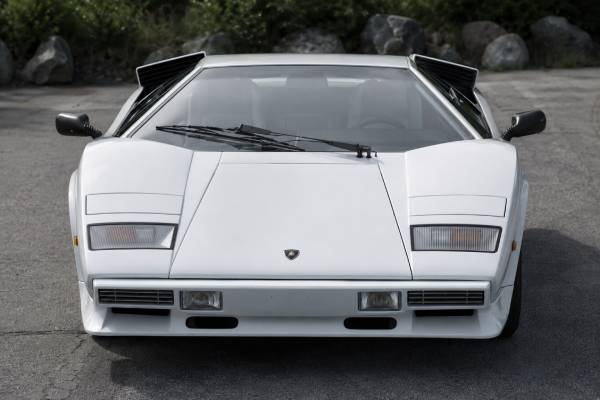
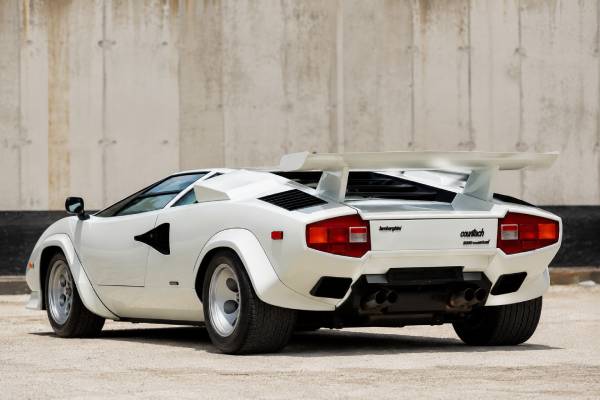
The Lamborghini Countach LP 5000 Quattrovalvole is the most muscular pre-Anniversary Countach and one of the clearest symbols of the 1980s supercar era. Launched for 1985, it kept the Marcello Gandini wedge shape but added the major mechanical change buyers had been waiting for: a 5,167 cc four-valve-per-cylinder Lamborghini V12. In European downdraft-carbureted form, Lamborghini quoted 455 CV, giving the QV the power to match its poster-car looks. U.S. fuel-injected cars were cleaner and more compliant but less powerful.
Collectors still care because the QV sits at a sweet spot. It has more engine than the LP400 S and LP500 S, but it avoids much of the heavier visual restyling of the 25th Anniversary. For buyers, the hard work is not finding drama; it is finding originality, correct specification, strong documentation, and a car that has been maintained by people who understand Countach realities.
Table of Contents
- Why the LP 5000 QV Still Matters
- 5.2-Liter V12 Specs and Chassis Data
- Production, Versions, and Authenticity Checks
- Gandini Design, Cooling, and QV Details
- Driving Character and Real-World Performance
- Maintenance, Restoration, and Known Risks
- Market Values and Buying Guide Priorities
Why the LP 5000 QV Still Matters
The LP 5000 Quattrovalvole matters because it turned the mature Countach into a genuinely stronger, more highly developed V12 supercar. It was not a clean-sheet redesign, but it was the most important engine upgrade in the model’s later life.
The Countach began as Lamborghini’s radical replacement for the Miura. The original LP 500 concept appeared in 1971, and the production LP400 followed in the mid-1970s after major engineering work. The formula was bold even by Lamborghini standards: longitudinal rear-mounted V12, low wedge body, scissor doors, cab-forward seating, and almost no concession to ordinary usability.
By the early 1980s, the Countach had already evolved through wider tires, wheel-arch extensions, spoilers, larger cooling openings, and a 4.8-liter engine in the LP500 S. The LP 5000 Quattrovalvole arrived in 1985 as the next step. “Quattrovalvole” means four valves, and that name pointed directly to the new cylinder heads. The engine grew to 5.2 liters and gained four valves per cylinder, improving breathing at higher rpm and giving the car the power figure that became central to its legend.
The QV also sits in an important visual period. It has the wide-body look, deep wheels, wide rear tires, aggressive intakes, and optional rear wing that many people associate with the Countach, yet it predates the 25th Anniversary’s more heavily reshaped body. That makes it especially appealing to buyers who want the late-car powertrain without losing too much of the original Gandini design purity.
Its historical significance comes from several overlapping factors:
- It was the final major Countach mechanical evolution before the 25th Anniversary.
- It used the most powerful classic Countach engine in European carbureted form.
- It kept the hand-built, analog layout that defines the model.
- It bridged the gap between the early wedge-era Lamborghini and the Diablo that followed in 1990.
- It remains one of the most recognizable collector Lamborghinis because it combines rarity, spectacle, sound, and mechanical theater.
The QV was never a mass-produced car. Most published totals sit around 610 cars, while some specialist registries list slightly different numbers. That small production volume matters, but condition and originality matter more. A tired QV can become an expensive project very quickly. A correct, documented, well-maintained example is a serious collector car with international demand.
5.2-Liter V12 Specs and Chassis Data
The key specification is the 5,167 cc naturally aspirated Lamborghini V12 with four valves per cylinder. The QV is often discussed through its 455 CV European downdraft-carbureted rating, but fuel system and market specification change the story.
Engine and drivetrain specifications
| Item | Lamborghini Countach LP 5000 Quattrovalvole |
|---|---|
| Production period | 1985–1988 |
| Layout | Longitudinal mid-engine, rear-wheel drive |
| Engine type | 60-degree naturally aspirated Lamborghini V12 |
| Displacement | 5,167 cc / 5.2 liters |
| Bore x stroke | 85.5 mm x 75.0 mm |
| Valvetrain | Dual overhead camshafts per bank, four valves per cylinder |
| European fuel system | Six Weber 44 DCNF downdraft carburetors |
| U.S. fuel system | Bosch fuel injection, with lower quoted output |
| European quoted output | 455 CV at 7,000 rpm |
| U.S. injection quoted output | About 420 CV |
| Quoted torque | About 500 Nm at 5,200 rpm |
| Transmission | Five-speed manual transaxle |
| Clutch | Single dry plate, hydraulically operated |
| Final drive | Limited-slip differential |
The European downdraft QV is the version most enthusiasts picture first. Its Weber carburetors sit on top of the engine, which helps explain the raised engine-cover profile. U.S.-market cars used injection for emissions compliance and carried different bumper and trim details. They are still real QVs, but collectors usually separate them from European downdraft cars when discussing value.
Chassis, suspension, brakes, and dimensions
| Item | Specification |
|---|---|
| Chassis | Steel tubular spaceframe |
| Body construction | Aluminum panels with fiberglass extensions and composite panels in selected areas |
| Front suspension | Independent, coil springs, telescopic dampers, anti-roll bar |
| Rear suspension | Independent, coil springs, telescopic dampers, anti-roll bar |
| Steering | Unassisted rack and pinion |
| Brakes | Ventilated discs with vacuum assistance |
| Front tires | 225/50 VR15 |
| Rear tires | 345/35 VR15 |
| Wheelbase | 2,500 mm |
| Width | About 2,000 mm |
| Height | About 1,070 mm |
| Weight | About 1,490 kg, depending on market and equipment |
Published length and weight figures vary because of market bumpers, equipment, measurement method, and source. A European carbureted car without federal bumper hardware is not directly comparable with a U.S.-spec fuel-injected car. That matters in buying decisions, because a “Countach QV” listing may hide meaningful differences in power, appearance, originality, and value.
Performance figures
| Measure | Typical quoted range |
|---|---|
| 0–60 mph | About 5 seconds, depending on test conditions |
| 0–100 km/h | About 4.8–5.5 seconds in period-style estimates |
| Top speed | About 182–183 mph / 293–295 km/h for the strongest quoted versions |
These figures should be read carefully. Period supercar testing was less standardized than modern testing, and real results depend on tune, tires, clutch condition, altitude, temperature, and driver sympathy. A well-sorted QV is extremely fast for its era, but it does not deliver speed in a modern launch-control way.
Production, Versions, and Authenticity Checks
The Countach QV is not one single uniform specification. The biggest split is between European-style downdraft carbureted cars and U.S.-market injected cars, and that split affects performance, appearance, sound, maintenance, and value.
Most QVs were built with left-hand drive, though right-hand-drive cars exist and are especially interesting in markets such as the United Kingdom, Australia, and parts of Asia. The broad model period runs from 1985 until the 25th Anniversary replaced it in 1988. The QV belongs to the LP112 Countach family, and careful chassis, engine, body, and documentation checks are essential before treating any car as correct.
Key QV versions
| Version | Main identifiers | Buyer relevance |
|---|---|---|
| European downdraft QV | Six Weber downdraft carburetors, central engine-cover bulge, no U.S. federal bumper setup | Usually the most desirable performance specification |
| U.S. fuel-injected QV | Bosch injection, federal equipment, lower quoted output, market-specific bumper treatment | Often more usable in emissions-regulated markets, but normally valued differently |
| Late QV with side-skirt treatment | Later exterior detailing appearing as the Countach moved toward the Anniversary era | Needs careful year and originality verification |
| Cars with rear wing | Large optional rear wing mounted over the rear deck | Desirable to some buyers, but originality and factory documentation matter |
The rear wing is one of the most misunderstood Countach features. It helps create the classic bedroom-poster image, but it was not standard on every car and can reduce top-speed efficiency. From a collector view, the main issue is not whether the wing looks dramatic. The issue is whether it was fitted when new, fitted later with correct parts, or added poorly.
Authenticity items to verify
A proper QV inspection should confirm more than the badge. Check:
- VIN and chassis identity against factory or specialist records.
- Engine number and gearbox number where documentation allows.
- Market specification from new.
- Fuel system type and whether it has been converted.
- Original color, interior trim, and delivery market.
- Factory wing, wheels, bumpers, side skirts, and other visible equipment.
- Service books, manuals, tool roll, jack, spare parts, and invoices.
- Import paperwork and federalization records for U.S. cars.
- Restoration photographs and invoices if the car has been repainted or rebuilt.
For high-value examples, Lamborghini Polo Storico certification or strong marque-specialist documentation can make a meaningful difference. A Countach with a glamorous color and low mileage still needs proof. A car restored without records, modified without explanation, or represented vaguely should be treated as a risk until the paperwork and physical evidence agree.
Gandini Design, Cooling, and QV Details
The QV looks extreme because the Countach was designed around a radical packaging idea, not because decoration came first. Its wedge body, scissor doors, huge sills, and rear cooling architecture all come from the attempt to place a large V12 behind two occupants in a very low body.
Marcello Gandini’s design for Bertone gave Lamborghini a shape that still defines the brand’s visual language. The Countach is short, wide, low, sharp-edged, and almost architectural. The cabin sits forward, the windshield is steeply raked, and the rear bodywork is dominated by engine cooling needs. The scissor doors were not just theater; they also helped access in tight spaces because the Countach is very wide and its sills are large.
The QV added its own engineering-driven visual changes. The downdraft carburetors required a higher intake arrangement, so the engine cover gained a raised profile. That made the car more powerful and more dramatic, but it also made rear visibility worse. In a Countach, rear visibility was never good. In a QV, the driver relies heavily on mirrors, judgment, and sometimes the famous door-sill reversing method.
Cooling is central to the design. The Countach uses side-mounted radiators and large side intakes to feed air through the body. The deeper ducts, vents, and later side treatments are not random styling add-ons. They are part of the long-running effort to manage heat from a large mid-mounted V12 in a tight package.
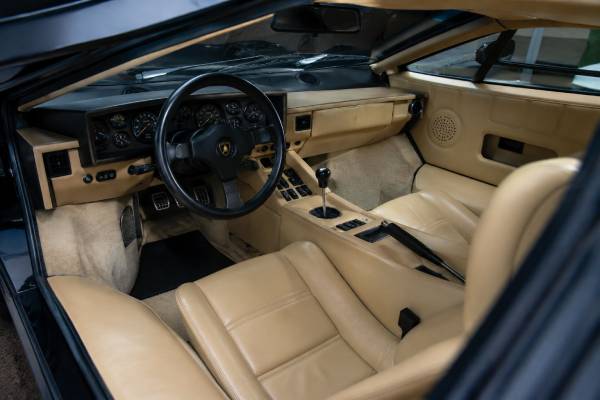
Inside, the car is much more intimate than its exterior suggests. The driving position is low and offset, the pedal box is tight, and the steering wheel, gear lever, switches, and instruments feel old-school even by late-1980s standards. Tall drivers need to sit in the car before buying one. Visibility forward is better than the roofline suggests, but rearward and three-quarter visibility are major limitations.
The sound is part of the QV’s identity. A well-tuned downdraft car has induction noise, mechanical cam-chain sound, exhaust bark, and high-rpm V12 intensity. Fuel-injected cars are still special, but the downdraft engine gives the QV much of its collector mythology. That said, sound is not enough. A badly tuned carbureted QV can be unpleasant, fuel-smelling, difficult to start, and expensive to sort.
Driving Character and Real-World Performance
A healthy Countach QV feels fast, physical, hot, loud, and demanding. It rewards patience and mechanical sympathy more than aggression, especially before the fluids, tires, gearbox, and carburetors are fully warm.
The engine is the main event. In downdraft form, it pulls cleanly when properly tuned, but it comes alive as revs rise. The four-valve heads help the 5.2-liter V12 breathe at the top end, so the car feels more urgent than earlier Countach versions. It is not a lazy large-displacement engine. It wants revs, and the sound hardens as it climbs.
The five-speed manual is part of the experience. It should feel mechanical and deliberate, not vague or obstructive. Cold shifting can be stiff, and second-gear synchro condition deserves careful attention during inspection. A driver who forces the gearbox before the oil is warm can create expensive problems.
The steering is unassisted, so parking speeds require effort. Once moving, the steering becomes more natural and gives useful front-end information. The car’s short wheelbase, wide tires, rear weight bias, and mid-engine layout demand respect. The Countach is stable when healthy and correctly aligned, but it is not a modern stability-controlled supercar. Tire age, tire type, suspension setup, and damper condition have a huge effect on how secure the car feels.
Braking performance is period-correct rather than modern-supercar effortless. The ventilated discs are capable when the system is fresh, but old hoses, tired servos, poor pads, contaminated fluid, or seized components can make a Countach feel much older than it should. Brake condition should never be judged only by whether the car stops during a short test drive.
Usability is limited but not hopeless. A sorted QV can cover distance, but city driving exposes its weak points: heavy controls, heat, poor rear vision, low nose clearance, wide bodywork, and a cabin that can become warm. Air conditioning varies from weak to acceptable depending on condition and upgrades. Owners who expect modern comfort will be disappointed. Owners who understand the car’s age and purpose usually find the inconvenience part of the experience.
The QV is at its best on open roads with space, temperature in the systems, and a driver who knows how to let the car breathe. It is less about easy speed and more about involvement: carburetor response, V12 noise, steering load, road texture, gearshift rhythm, and the sense that every input matters.
Maintenance, Restoration, and Known Risks
The Countach QV is not a normal used exotic; it is a hand-built vintage Lamborghini with a complex V12 and expensive body structure. The safest car to buy is almost always the documented, regularly exercised, specialist-maintained example rather than the neglected low-mileage car.
Mechanical issues to inspect
The engine is strong when maintained, but recommissioning can be costly. Important areas include:
- Carburetor condition, synchronization, fuel leaks, and throttle linkage wear on downdraft cars.
- Injection-system health, warm-start behavior, and emissions equipment on U.S. cars.
- Cooling-system condition, including radiators, fans, hoses, expansion tanks, and thermostats.
- Oil leaks from cam covers, timing covers, seals, and old gaskets.
- Valve adjustment records and evidence of proper specialist servicing.
- Ignition components, distributors, coils, plug wires, and old connectors.
- Exhaust condition, heat shielding, and evidence of overheating around the engine bay.
Fuel safety deserves special attention. Old fuel hoses, tired clamps, incorrect routing, and leaking carburetor components are serious risks on any classic V12 Lamborghini. A beautiful engine bay is not enough; the inspection must confirm that flexible lines, pumps, filters, and fittings are correct and recent.
The gearbox and clutch can become major cost drivers. Look for clutch slip, heavy or inconsistent pedal feel, gear crunching, noisy bearings, weak synchros, differential noise, and leaks from the transaxle. A car that has spent years sitting may drive acceptably for a few miles and then reveal problems once hot.
Body, chassis, and restoration concerns
The Countach body is difficult and expensive to restore correctly. The steel spaceframe, aluminum panels, fiberglass extensions, and composite pieces age differently. Poor accident repair can hide under paint, undercoating, or interior trim.
Check carefully for:
- Corrosion in the tubular structure, sills, suspension pick-up areas, and lower chassis sections.
- Cracks or poor repairs around wheel-arch extensions and lower spoilers.
- Door alignment, scissor-door hinge wear, and latch behavior.
- Previous front or rear impact damage.
- Incorrect paint thickness, overspray, filler, and uneven panel gaps.
- Heat damage around the engine cover and rear bodywork.
- Missing or incorrect undertrays, brackets, ducts, and small hardware.
A full repaint can be acceptable if it was documented and done correctly. A mystery repaint is a warning sign. On a Countach, cosmetic restoration can easily become structural restoration once the car is stripped.
Parts availability is mixed. Some service parts can be sourced through specialists, but trim, body panels, correct wheels, original interior pieces, and market-specific equipment can be difficult and costly. The unusual 15-inch tire sizes are also part of the ownership calculation. Correct tires are important not just for originality but for handling and safety.
Maintenance approach
A practical ownership plan should include annual fluid service, brake-fluid renewal, cooling-system checks, fuel-line inspection, carburetor or injection tuning, suspension inspection, and regular exercise. Long storage is not kind to these cars. Seals dry out, fuel systems gum up, brakes seize, tires age, and electrical contacts corrode.
Originality and upgrades require judgment. Sensible hidden updates for reliability and safety may be acceptable to some buyers, especially if reversible and documented. Visible modifications, incorrect interiors, non-original colors without disclosure, modern audio installations cut into trim, and poorly executed performance changes can hurt collector value.
Market Values and Buying Guide Priorities
The Countach QV is a high-value collector Lamborghini, and the market rewards the right specification, originality, documentation, color, and condition. Public sales in 2025 and early 2026 show strong cars commonly trading in the mid-six-figure range, with exceptional low-mileage or especially desirable examples reaching higher.
Market value is not one number because QVs differ widely. A European downdraft car in a desirable color with original books, tools, known ownership, strong service records, and excellent cosmetics can sit far above a tired injected car with missing history. A project car may look cheaper at purchase and still become the most expensive car in the room after paint, drivetrain, interior, and parts work.
What drives value
| Value factor | Why it matters |
|---|---|
| Specification | European downdraft cars usually attract the strongest enthusiast demand |
| Originality | Factory colors, trim, equipment, engine, and gearbox identity support collector confidence |
| Documentation | Books, tools, invoices, import records, and ownership history reduce risk |
| Condition | Mechanical health, paint quality, interior condition, and chassis integrity can change value dramatically |
| Mileage | Low mileage helps only when condition and service history support it |
| Color combination | Period-correct and striking colors often help, but originality matters more than fashion |
| Wing and trim | Factory or documented equipment is much more valuable than undocumented later additions |
| Certification | Polo Storico or respected specialist verification can support authenticity |
Buyer inspection checklist
Before buying, arrange a pre-purchase inspection with a Countach specialist, not a general exotic shop. The inspection should include:
- Confirm chassis, VIN, engine, gearbox, and body identity against records.
- Verify original market, delivery color, interior trim, and equipment.
- Inspect the tubular chassis and suspension mounting areas on a lift.
- Measure paint and look for accident repair or poor restoration.
- Test hot and cold starting, idle quality, oil pressure, cooling behavior, and charging.
- Check carburetor or injection condition and fuel-system safety.
- Evaluate clutch, gearbox synchros, differential noise, and drivetrain leaks.
- Inspect brake system, hoses, calipers, discs, servo function, and pedal feel.
- Check tire age, tire type, wheel condition, and suspension alignment evidence.
- Review service records for recent specialist work rather than generic invoices.
The best cars are not always the lowest-mileage cars. A Countach that has been driven carefully, maintained correctly, and documented honestly can be a better buy than a static museum piece that needs every system recommissioned. Avoid cars with unclear identity, missing import history, poor federalization work, structural corrosion, overheating evidence, or seller claims that cannot be backed up.
Long-term collectability looks strong because the QV has the right ingredients: low production, dramatic design, manual gearbox, naturally aspirated V12, analog controls, and a central role in Lamborghini history. The risk is not demand. The risk is buying the wrong example. A good Countach QV is a landmark car. A bad one is a long, expensive education.
References
- Milestones | Lamborghini.com 2026 (Manufacturer History)
- 50 Years Ago the First Countach in Sant’Agata Bolognese 2024 (Manufacturer History)
- Masterpieces of Lamborghini at Villa d’Este 2024 (Manufacturer Heritage)
- 1985 – 1988 Lamborghini Countach LP5000 QV 2015 (Specifications)
- Lamborghini Countach LP5000 Quattrovalvole Market – CLASSIC.COM 2026 (Market Database)
Disclaimer
This article is for informational purposes only and is not a substitute for professional diagnosis, repair, inspection, appraisal, or restoration advice. Specifications, torque values, service intervals, parts, procedures, and emissions equipment can vary by VIN, market, production date, and individual vehicle history. Always verify details against official service documentation and consult a qualified Lamborghini specialist before buying, servicing, restoring, or modifying a Countach.
If this guide helped you, please share it on Facebook, X/Twitter, or your preferred car community to support our work.