

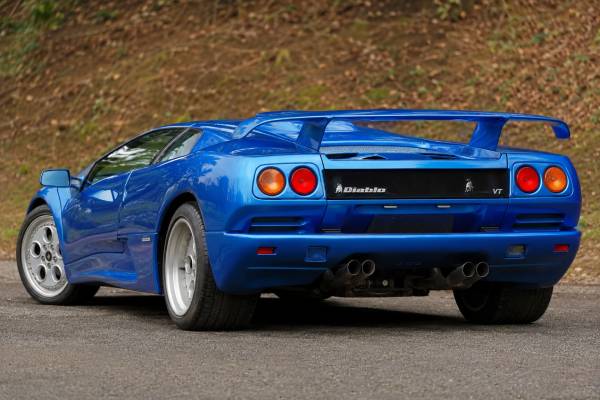
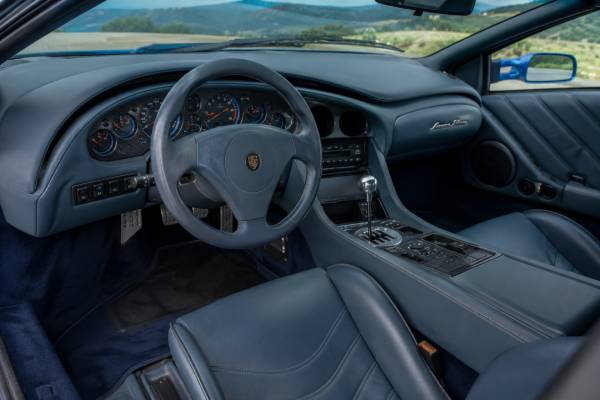
The 1999 Lamborghini Diablo VT Alpine Edition is a very small-run U.S.-market special edition based on the facelifted Diablo VT coupe. It belongs to the final 5.7-liter chapter of the Diablo before the later 6.0-liter cars arrived, and it combines the updated VT all-wheel-drive chassis with the higher-output V12 fitted with variable valve timing. The Alpine Edition did not add engine power over the standard 1999 Diablo VT. Its importance comes from rarity, factory-linked presentation, carbon-fiber details, Alpine multimedia equipment, numbered trim, and a specification that captures late-1990s exotic-car culture almost perfectly. For buyers and collectors, the appeal is clear: only 12 were built for the 1999 U.S. market, and the best examples need to be judged on originality, documentation, maintenance history, and whether their special Alpine-specific parts remain intact.
Table of Contents
- Why the Diablo VT Alpine Edition Matters
- V12 VVT Specs and Diablo VT Hardware
- Twelve-Car Production and Correct Identification
- Carbon, Audio, Aero, and Cabin Details
- How the Alpine Edition Drives
- Maintenance Risks for a 1999 Diablo VT
- Values, Inspection Priorities, and Buying Advice
Why the Diablo VT Alpine Edition Matters
The Alpine Edition matters because it combines the most usable 5.7-liter Diablo VT specification with a documented 12-car U.S. special-edition identity. It is not the most powerful Diablo, but it is one of the most period-correct and collectible late-1990s versions.
The Diablo itself was Lamborghini’s Countach replacement and the company’s defining supercar of the 1990s. Development began under the internal Project 132 program, and the production car arrived in 1990 with a mid-mounted Lamborghini V12, scissor doors, a wide wedge-shaped body, and a level of top-speed performance that made it one of the fastest road cars of its era. The original Diablo was rear-wheel drive, demanding, dramatic, and still tied closely to Lamborghini’s old-world supercar character.
The VT changed that formula. Introduced in the 1990s, “VT” stood for viscous traction, Lamborghini’s all-wheel-drive system that could send torque to the front axle when the rear tires lost grip. It did not turn the Diablo into a soft grand tourer. It still felt wide, loud, heavy, hot, and physical. But it made the car more secure in poor traction and easier to use hard than the earliest rear-drive Diablos.
By 1999, the Diablo had received important updates. The pop-up headlights were gone, replaced by fixed exposed lamps. The interior was redesigned, the wheels and brakes were updated, ABS became part of the late Diablo package, and the 5.7-liter V12 gained variable valve timing. Output was commonly quoted at 530 hp, or 530 PS depending on the market and source convention, with roughly 605 Nm of torque.
The Alpine Edition sits right in this short transitional moment. It came after the raw early cars and before the Audi-influenced Diablo 6.0. That makes it attractive to collectors who want a Diablo with the classic 5.7-liter personality but with the improved usability of the facelifted VT.
Its special-edition purpose was also unusual. Instead of celebrating racing, weight reduction, or extra engine output, it celebrated Lamborghini’s relationship with Alpine Car Audio. In late-1990s context, this made sense. High-end car audio, navigation screens, DVD systems, CD changers, subwoofers, radar detection, and rear camera systems were exotic technology. A Lamborghini fitted with an Alpine multimedia setup was a rolling showcase for the period’s most advanced in-car electronics.
Today, that makes originality especially important. A standard 1999 Diablo VT can be judged mostly as a mechanical and cosmetic collector car. An Alpine Edition must also be judged as a special-edition artifact. Missing headrest embroidery, removed Alpine components, changed carbon trim, incorrect wheels, or undocumented audio replacement can affect its identity and value.
V12 VVT Specs and Diablo VT Hardware
The 1999 Diablo VT Alpine Edition uses the standard facelifted Diablo VT mechanical package: a naturally aspirated 5.7-liter Lamborghini V12, a five-speed gated manual gearbox, and viscous all-wheel drive. The Alpine package did not increase horsepower, so the correct way to describe the car is a special-edition Diablo VT, not a tuned performance model.
| Category | Specification |
|---|---|
| Model year | 1999 |
| Base model | Lamborghini Diablo VT coupe |
| Engine | 5.7-liter naturally aspirated Lamborghini V12 |
| Displacement | 5,707 cc |
| Valvetrain | DOHC, 48 valves, variable valve timing |
| Fuel system | Multi-point electronic fuel injection |
| Power | 530 hp commonly quoted; 530 PS / 523 bhp in some references |
| Torque | About 605 Nm / 446 lb-ft |
| Transmission | Five-speed manual with gated shifter |
| Drivetrain | Mid-engine, viscous all-wheel drive |
| Body style | Two-door coupe |
| Construction | Tubular steel chassis with aluminum and composite body panels |
| Brakes | Ventilated disc brakes with ABS on facelift VT models |
| Steering | Power-assisted rack-and-pinion |
| Wheelbase | About 2,650–2,670 mm depending on specification reference |
| Width | About 2,040 mm |
| Curb weight | About 1,625 kg for a facelift VT coupe |
| Top speed | About 335 km/h / 208 mph when quoted for the 1999 VT |
| 0–100 km/h | About 4.0 seconds, depending on test conditions |
The V12 is the center of the car. It is mounted longitudinally behind the cabin and delivers power in a very different way from modern turbocharged supercars. It needs revs, temperature, and space. The power delivery is strong from the midrange but becomes more urgent as the engine climbs toward the upper half of the tachometer. Variable valve timing helped the late 5.7-liter engine breathe better and made the 1999 VT feel sharper than earlier versions.
The gearbox is a major part of the appeal. The exposed metal gate, long shift movement, and mechanical engagement are key Diablo experiences. It is not a modern dual-clutch transmission, and it does not reward rushed, cold shifts. A healthy car should feel deliberate rather than vague, with clean engagement once warm.
The all-wheel-drive system is also central to the VT’s character. The Diablo is still rear-biased in feel, but the viscous system gives extra security when traction changes. It does not erase the car’s size, mass, or high-speed commitment. It simply gives the driver more confidence than an early rear-drive Diablo when applying power on imperfect roads.
The 1999 updates improved real-world use. ABS brought more security under hard braking. Power steering helped manage the huge front footprint at parking speeds. The redesigned interior made the cabin feel less kit-like than earlier cars. Even so, the Diablo VT Alpine Edition remains an old-school exotic. It is wide, low, hot, mechanically noisy, and far more demanding than a modern Lamborghini Huracán or Aventador.
Twelve-Car Production and Correct Identification
The main production fact buyers need to know is simple: the 1999 Diablo VT Alpine Edition was a 12-car U.S.-market run based on the Diablo VT. A car should not be treated as a genuine Alpine Edition unless its numbered details, build history, and special equipment support that claim.
The Alpine Edition was created to showcase the relationship between Automobili Lamborghini and Alpine Car Audio. The base car was the 1999 Diablo VT, not the SV in the 12-car U.S. run. Some Alpine-related Diablo references also mention a separate 1998 SV-based Alpine car, but that is not the same as the numbered 1999 VT Alpine Edition run.
Correct identification matters because Diablos are often modified. Wheels, stereos, exhausts, wings, trim panels, and interior details are commonly changed over decades of ownership. A normal Diablo VT fitted with Alpine equipment later is not the same as a factory Alpine Edition.
| Area | What to verify | Why it matters |
|---|---|---|
| Production identity | One of the 12 U.S.-market 1999 VT Alpine Edition cars | Defines the special-edition value |
| Headrests | Alpine logos and production numbering | Hard-to-replace visible evidence |
| Audio system | Original Alpine multimedia components where possible | The edition was built around this equipment |
| Interior trim | Carbon-fiber gauge, console, and related trim pieces | Separates the Alpine from a standard VT cabin |
| Exterior trim | Carbon-fiber details around lights, vents, and intake areas | Supports factory special-edition presentation |
| Rear wing | Color-coded SV-style wing with carbon adjustable fin | A visible Alpine Edition feature |
| Documentation | Window sticker, manuals, service invoices, ownership file, photos | Protects against tribute or re-created examples |
Factory documentation is extremely important. A buyer should ask for any original sales paperwork, Lamborghini correspondence, dealer documents, service books, invoices, tool kit details, manuals, and photos showing the car earlier in life. Old photos can be especially useful because they show whether Alpine-specific trim was present before later owners began modifying the car.
Matching numbers are not always discussed with 1990s exotic cars the same way they are with 1960s classics, but originality still matters. The correct engine, gearbox, chassis identity, VIN plates, emissions labels, and market equipment should be inspected by a Lamborghini specialist. U.S.-market Diablos also carry equipment differences from some European-market cars, so imported or converted examples should be checked carefully.
Colors and interior combinations can affect desirability. Some Alpine Edition cars are strongly associated with bold late-1990s finishes and contrast interiors. A rare color can help value, but only if the car remains authentic. A repaint in a popular color may look exciting, yet it can reduce collector confidence if the original paint code, build file, and body condition are unclear.
The special-edition parts are not just cosmetic decoration. They are part of the car’s story. Replacing a failed stereo with a modern unit may improve usability, but removing the original Alpine hardware without preserving it weakens the car’s collector case. The best situation is a functioning or restorable original system, with any modern upgrade installed in a reversible way and the removed parts retained.
Carbon, Audio, Aero, and Cabin Details
The Alpine Edition’s defining feature is not extra speed; it is the combination of late Diablo styling, carbon-fiber details, numbered interior trim, and period Alpine multimedia hardware. These details make the car feel like a factory-built time capsule from the peak era of analog supercars and high-end in-car electronics.
The facelifted 1999 Diablo already looked different from earlier cars. The fixed headlights modernized the nose, and the front and rear bumper treatment on U.S.-market VT cars gave the model a more mature, technical look. The body remained unmistakably Diablo: extremely wide, low, wedge-shaped, and dramatic, with scissor doors and large side intakes feeding the mid-mounted V12.
The Alpine Edition added more visual texture. Carbon-fiber trim appeared in places where a standard VT might have been more restrained. The Alpine cars are known for carbon interior accents, carbon exterior details, carbon-style light and vent treatments, and a rear wing with a carbon adjustable element. These parts create a more tuner-era appearance than a normal VT, but because they are tied to the edition, they should not be dismissed as ordinary aftermarket decoration.
Inside, the Alpine Edition is especially period-specific. The late Diablo dashboard was already smoother and more integrated than the early dashboard. The Alpine system added a small screen, multimedia control hardware, DVD and CD equipment, upgraded speakers, and a subwoofer installation. Some cars also had a rear camera linked to the multimedia display, a feature that was unusually advanced for the time and useful on a car that is so wide and difficult to see out of.
That last point matters. The Diablo looks dramatic because it is packaged around a huge V12, a low roof, wide haunches, and deep intakes. Those same features make parking and reversing difficult. Rearward visibility is limited, the nose is low, the rear quarters are broad, and the driver sits in a cabin that feels offset and tight compared with modern supercars. A functioning rear camera was not just a gimmick; it made the car easier to place.
The sound is also part of the design. The 5.7-liter V12 does not sound isolated or digitally shaped. It has mechanical intake noise, valvetrain texture, exhaust resonance, and a hard-edged rise as revs build. Many Diablos have aftermarket exhaust systems, which can sound spectacular but may reduce originality. On an Alpine Edition, a buyer should treat exhaust changes carefully. A reversible exhaust with the original system retained is far less concerning than a missing original setup and no records.
The car’s emotional character comes from contrast. The Alpine technology feels futuristic for 1999, yet the basic car is still deeply mechanical. You sit low, look over a broad dashboard, operate a gated manual, manage a heavy clutch, and listen to a naturally aspirated V12 behind your shoulders. That mix is exactly why the Alpine Edition has aged into a collectible object rather than just an old supercar with an old stereo.
How the Alpine Edition Drives
A well-sorted Diablo VT Alpine Edition drives like a late 5.7-liter Diablo VT: fast, stable, loud, wide, and physical, with more confidence than the earliest rear-drive cars but far less polish than a modern Lamborghini. The Alpine equipment changes the atmosphere, not the fundamental driving experience.
The first impression is size. The Diablo is not long by modern grand-touring standards, but it is very wide. On narrow roads, the driver must think about lane position, mirrors, curbs, and oncoming traffic. The steering is assisted, but it still carries weight and needs clear inputs. At low speeds, the car feels exotic in the old sense: heavy controls, limited visibility, heat from the drivetrain, and a sense that every maneuver deserves attention.
Once warm, the car becomes more fluid. The clutch should engage cleanly, the gated shifter should move with a defined mechanical rhythm, and the engine should respond cleanly without hesitation. A cold Diablo can feel reluctant if driven impatiently. A warm, healthy one feels much more cooperative, especially when the driver stops trying to rush it.
The V12 defines the car. It pulls strongly, but the real reward comes as the revs rise. Compared with a turbocharged modern supercar, it does not deliver instant low-rpm torque in the same effortless way. Instead, it builds speed with a long, hard mechanical surge. The throttle response is direct, and the engine note becomes more urgent as the variable-valve-timing 5.7-liter unit reaches the upper rev range.
Acceleration remains serious. A roughly four-second 0–100 km/h time was supercar territory in 1999 and still feels quick because the experience is so exposed. The sound, shift effort, driving position, heat, and low seating make the speed feel more intense than the numbers suggest.
The all-wheel-drive VT system gives the car an important advantage over early rear-drive Diablos. It improves traction when the driver feeds in power on imperfect surfaces, especially in cooler weather or on uneven roads. It does not make the car foolproof. A Diablo is still mid-engined, powerful, heavy by sports-car standards, and sensitive to tire condition. Old tires, wrong tire sizes, or poor alignment can make the car feel nervous.
Braking performance depends heavily on condition. A fresh late VT with correct pads, good discs, healthy fluid, and working ABS should feel strong for fast road use. A neglected car may feel wooden, pull under braking, pulse oddly, or fade earlier than expected. Because the Alpine Edition is valuable, many cars have been driven sparingly. Low mileage can help value, but it does not guarantee braking health. Rubber hoses, seals, fluid, and calipers age even when the odometer barely moves.
Ride quality is firm but not race-car harsh when the suspension is healthy. Worn dampers, old bushings, incorrect ride height, or tired tires can make a Diablo feel much worse than it should. The car should feel planted at speed, not loose or wandering. If it tramlines badly, clunks, dives, or feels unstable, assume it needs specialist inspection before purchase.
The best use case is fast road driving, events, shows, and careful touring. It can be driven in cities, but it is not happy there. The clutch, cabin heat, width, low nose, and attention it attracts all work against casual urban use. On an open road, however, the Alpine Edition still delivers the reason people care about Diablos: a huge naturally aspirated V12, a gated manual, scissor doors, and a sense of occasion that modern cars often filter out.
Maintenance Risks for a 1999 Diablo VT
The biggest ownership risk is deferred maintenance, not mileage alone. A 1999 Diablo VT Alpine Edition can be robust when cared for properly, but age, heat, scarce parts, specialist labor, and special-edition trim make neglected examples expensive to rescue.
The engine itself is strong when serviced correctly. The Lamborghini V12 is not a disposable unit, and the 5.7-liter cars have a deep mechanical foundation. But the surrounding systems matter just as much as the block and heads. Cooling, fuel delivery, ignition, sensors, wiring, hoses, mounts, clutch hydraulics, and exhaust heat management all affect reliability.
A pre-purchase inspection should focus on the whole car, not just a compression test and a quick road drive. Important areas include:
- Cooling system condition, including radiators, fans, hoses, clamps, coolant quality, and signs of overheating.
- Fuel system age, including hoses, pumps, pressure regulation, injectors, and any fuel smell after running.
- Clutch wear, clutch hydraulics, release bearing noise, engagement point, and service records.
- Gearbox shift quality, especially second-gear engagement when cold and warm.
- Viscous all-wheel-drive components, leaks, driveline noises, and mismatched tire issues.
- Brakes, including disc thickness, pad condition, calipers, ABS function, hoses, and fluid age.
- Suspension dampers, bushings, ball joints, alignment, and ride-height condition.
- Electrical systems, including warning lights, charging output, window motors, lighting, climate control, and Alpine equipment.
- Body condition, including accident repair, panel gaps, paint depth, undertray damage, and lift-point damage.
The clutch is a major cost driver. A Diablo clutch can last a long time in careful highway use and disappear quickly in city traffic, steep driveways, poor technique, or repeated low-speed maneuvering. Because the car attracts occasional-use owners, service records often matter more than mileage. A 12,000-mile car with old fluids and no recent clutch documentation can be riskier than a 25,000-mile car maintained by a known specialist.
The cooling system deserves special attention. A mid-engine V12 produces major heat, and the Diablo’s packaging leaves little room for neglect. A car that runs hot in traffic, cycles fans unpredictably, pushes coolant, smells sweet, or shows evidence of stop-leak should be treated carefully. Cooling work on an exotic is rarely just a hose.
Electrical issues are common on aging supercars of this era. Window switches, warning lights, alarm systems, climate control, audio wiring, sensors, connectors, alternators, and grounds can all cause trouble. On the Alpine Edition, the audio and multimedia system adds another layer. A nonfunctional original Alpine unit may be acceptable if all pieces are present and restorable. Missing parts are a bigger problem.
The body and chassis need expert inspection. The Diablo sits low, has wide overhangs, and is vulnerable to underside damage. Look for scraped front sections, cracked composite panels, poorly repaired bumper covers, mismatched paint, uneven door fit, and evidence of crash repair. Scissor doors should operate smoothly and align correctly. Door struts, hinges, seals, and latch adjustment matter more than they might on a normal car.
Parts availability is uneven. Some mechanical service parts can be sourced through specialists, while certain trim pieces, Alpine-specific details, carbon panels, switchgear, and body parts can be difficult or very expensive. Restoration quality varies. A shiny repaint or retrim can hide poor preparation, incorrect materials, and lost factory details. On this model, restoration should preserve special-edition identity rather than modernize it away.
A practical maintenance approach is simple: buy the best-documented car, keep a specialist involved, service it on time even if it is not driven much, and preserve every original part. Upgrades should be reversible. For an Alpine Edition, originality is not a vague collector preference. It is the core reason the car is worth more than a normal modified Diablo VT.
Values, Inspection Priorities, and Buying Advice
The best Alpine Edition to buy is the most original, best-documented, mechanically current car you can afford, not simply the lowest-mileage example. In mid-2026 market terms, a properly presented 1999 Diablo VT Alpine Edition generally sits above an ordinary VT coupe, but the premium depends heavily on proof and condition.
Diablo values have become much stronger as collectors have reappraised analog 1990s supercars. Manual gearboxes, naturally aspirated V12 engines, limited production, poster-car design, and pre-digital driving feel all help demand. The Alpine Edition adds rarity, but rarity alone is not enough. A special edition with missing trim, weak records, old tires, and a neglected clutch can be less attractive than a standard VT with excellent history.
A sensible working range for a clean, documented Alpine Edition is roughly in the high six-figure collector zone by ordinary used-car standards, often around the $400,000–$550,000 area depending on mileage, originality, color, condition, and sale venue. Exceptional examples may ask more, while cars with stories, heavy modifications, incomplete Alpine equipment, accident history, or major deferred maintenance should trade at a meaningful discount. Public listings can be aspirational, so recent comparable transactions matter more than asking prices.
| Value factor | Positive sign | Risk sign |
|---|---|---|
| Authenticity | Clear proof of one-of-12 Alpine Edition status | Claimed edition with weak documentation |
| Special parts | Original Alpine hardware, headrest numbering, carbon details | Missing stereo, altered trim, unverified replacement parts |
| Mechanical condition | Recent specialist service and clean inspection | Old fluids, weak clutch, overheating, warning lights |
| Originality | Factory paint and interior where possible | Color change, poor repaint, heavy customization |
| Mileage | Low to moderate miles with regular exercise | Ultra-low miles with long static storage and no recommissioning |
| Documentation | Service invoices, manuals, tools, records, old photos | Gaps, missing history, unclear import or title story |
A buyer should treat the inspection like a collector-car audit, not a normal used-car check. The process should include:
- Confirm the car’s identity against VIN, production records, numbered Alpine details, and available documentation.
- Inspect the Alpine-specific equipment and confirm what is original, what works, what was replaced, and what parts are included.
- Have a Lamborghini specialist perform a mechanical inspection, including compression or leak-down testing if appropriate.
- Review service invoices for clutch work, fluids, cooling system repairs, brake work, suspension, tires, and electrical repairs.
- Check for accident damage, repaint evidence, underside scraping, structural repair, and panel misalignment.
- Verify that all books, tools, keys, covers, removed original parts, and historical records are present.
- Price the car according to the cost of correcting issues, not according to the seller’s claimed rarity alone.
The examples to seek are complete, lightly used but properly maintained cars with original Alpine identity intact. The best cars usually have a thick history file, consistent ownership story, known specialist care, and minimal irreversible modification. A sympathetic exhaust, if documented and accompanied by the original, is less damaging than cut wiring, missing multimedia equipment, or non-original carbon parts.
The examples to avoid are cars with uncertain special-edition status, poor repaint quality, neglected mechanical systems, incomplete interiors, or “easy fixes” that involve rare parts. A Diablo can turn small issues into large bills quickly. A missing trim piece, a weak clutch, a hot-running engine, and a nonfunctional Alpine system may each sound manageable on their own. Together, they can change the economics of the purchase.
Long-term collectability looks strong because the Alpine Edition has several traits collectors like: a naturally aspirated Lamborghini V12, a gated manual gearbox, scissor doors, very low production, a single-year story, and a clear late-1990s identity. It is not as pure as an early rear-drive Diablo, not as extreme as a GT, and not as developed as a 6.0 VT. Its place is different. It is a rare, usable, final-5.7-liter Diablo VT special edition with one of the most memorable factory-linked equipment themes of the period.
References
- Lamborghini V12 History: Diablo 2022
- Lamborghini Diablo’s 30th anniversary with Cesare Cremonini 2020
- Lamborghini Diablo Alpine Edition Guide & History | LamboCARS.com 2006
- LAMBORGHINI Diablo VT Specs, Performance & Photos – 1993, 1994, 1995, 1996, 1997, 1998, 1999 – autoevolution 2026
- Check for Recalls: Vehicle, Car Seat, Tire, Equipment | NHTSA 2026 (Recall Database)
Disclaimer
This article is for informational purposes only and is not a substitute for professional diagnosis, repair, appraisal, or pre-purchase inspection. Specifications, torque values, service intervals, procedures, parts, emissions equipment, and market details can vary by VIN, market, production date, and equipment. Owners and buyers should verify all technical work against official Lamborghini service documentation and use a qualified Lamborghini specialist.
If this guide helped you, please share it on Facebook, X/Twitter, or your favorite enthusiast community to support our work.