
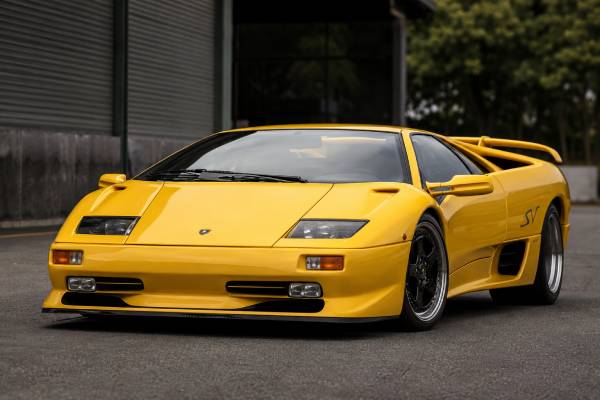
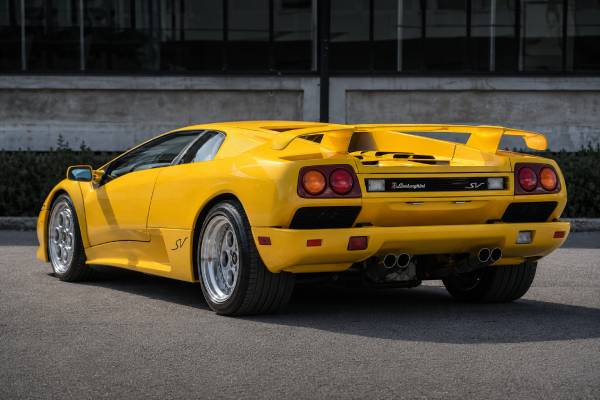
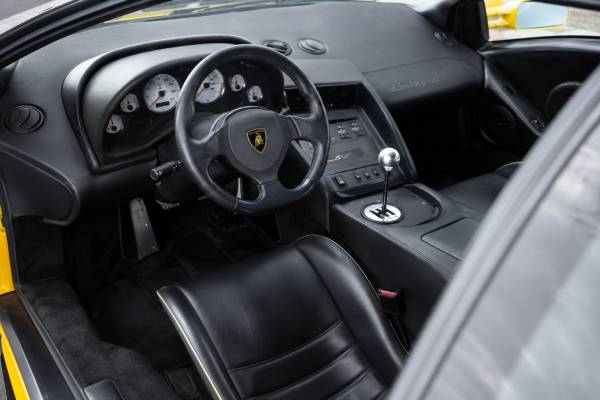
The 1999 Lamborghini Diablo SV is the sharpest road-focused 5.7-liter rear-drive Diablo before the later 6.0-liter Audi-era cars took over. Built from the P132 Diablo project and updated after Lamborghini entered the Audi Group, the 1999 SV combined the old-school drama of Marcello Gandini’s wedge shape with a stronger 530 hp V12, variable valve timing, fixed headlamps, ABS, larger brakes, 18-inch wheels, and a redesigned cabin. It was still a raw, wide, manual, rear-wheel-drive supercar, but it gained just enough refinement to feel like the best-developed version of the original Diablo formula. Collectors care because the 1999 SV sits at a rare crossroads: late-production usability, limited numbers, manual gearbox purity, V12 theater, and the last clear link to the Countach-era Lamborghini spirit before the Murciélago changed the brand’s direction.
Table of Contents
- Why the 1999 Diablo SV Matters
- VVT V12 Specs and Chassis Data
- Production Details, Options, and Identification
- Gandini Shape, Donckerwolke Updates, and SV Details
- How the Rear-Drive SV Feels
- Maintenance, Reliability, and Restoration Risk
- Market Values and Buyer Inspection Priorities
Why the 1999 Diablo SV Matters
The 1999 Diablo SV matters because it is one of the last rear-wheel-drive, manual, naturally aspirated V12 Lamborghinis from the brand’s pre-digital supercar era. It is not the most extreme Diablo ever made, but it may be the most balanced 5.7-liter SV for buyers who want the classic Diablo shape with the important late updates.
The Diablo replaced the Countach in 1990 and carried Lamborghini through one of the company’s most unstable but fascinating periods. Development began under the Mimran era, the car reached production under Chrysler ownership, and its final evolution happened after Audi acquired Lamborghini in 1998. That background explains why the Diablo feels so different from the later Murciélago. It is more physical, less polished, and more demanding, but it also has a directness that later supercars often filter out.
The SV name stands for Super Veloce. In the Diablo range, the SV was not originally a stripped-out, ultra-limited flagship in the modern Aventador SVJ sense. It was a lighter, rear-wheel-drive, more aggressive version of the Diablo, positioned below the all-wheel-drive VT in price and complexity but above the base model in character. By 1999, the standard rear-drive Diablo coupe had effectively disappeared, and the SV became the pure two-wheel-drive choice.
The 1999 update was important. Lamborghini gave the Diablo a modernized front end with fixed headlamps, an updated dashboard, improved seats, dual airbags, 18-inch wheels, ABS, larger perforated brake discs, and the higher-output 5.7-liter V12. The engine was rated around 530 hp and 605 Nm of torque, using variable valve timing or variable valve lift technology depending on the description used by the period source. For owners, the result was a Diablo that kept the noise, width, gated manual gearbox, and rear-drive balance, but gained better brakes and more usable power delivery.
The SV also has a special place among collectors because it was produced in small numbers. Total Diablo production reached 2,903 units across all versions, while the SV family is widely cited at about 346 cars from 1995 to 1999. The fixed-headlamp 1999 SV is much rarer than the overall SV total, with different registries and market sources placing production around the high double digits to roughly 100 cars. Because exact figures vary, the safest buying approach is to verify the individual chassis through Lamborghini documentation, history files, and specialist registries rather than relying only on seller claims.
Today, the 1999 Diablo SV appeals to two groups at once. Enthusiasts want it because it is loud, wide, analog, and dramatic. Collectors want it because it is a late, scarce, manual V12 Lamborghini with a clear identity and strong visual presence. It is also easier to place in Lamborghini history than some middle-period Diablos: it is the final 5.7-liter SV, the modernized fixed-headlight version, and one of the last Lamborghinis that still feels close to the Countach bloodline.
VVT V12 Specs and Chassis Data
The headline specification is simple: a 5,707 cc naturally aspirated Lamborghini V12, rear-wheel drive, a five-speed gated manual gearbox, and about 530 hp. The details matter because the 1999 SV is not just an early SV with different lights; it received the late 5.7-liter engine tune, ABS, larger brakes, and 18-inch running gear.
| Category | Specification |
|---|---|
| Model | Lamborghini Diablo SV, 1999 model year |
| Project code | P132 Diablo program |
| Body style | Two-door, two-seat coupe |
| Engine | 5.7-liter naturally aspirated Lamborghini V12 |
| Displacement | 5,707 cc |
| Valvetrain | DOHC, four valves per cylinder, variable valve timing/valve lift system |
| Fuel system | Multi-point electronic fuel injection |
| Power | About 530 hp at 7,100 rpm |
| Torque | 605 Nm / 446 lb-ft at about 5,500 rpm |
| Transmission | Five-speed manual with open-gate shifter |
| Drivetrain | Longitudinal mid-engine, rear-wheel drive |
| Chassis | Tubular steel spaceframe with mixed aluminum and composite body panels |
| Suspension | Independent double wishbones with coil springs and anti-roll bars |
| Brakes | Ventilated, perforated discs with Kelsey-Hayes ABS |
| Wheels | 18-inch alloy wheels |
| Front tires | 235/35 ZR18 |
| Rear tires | 335/30 ZR18 |
| Wheelbase | 2,650 mm |
| Approximate length | 4,460 mm |
| Approximate width | 2,040 mm |
| Approximate height | 1,105 mm |
| Approximate weight | About 1,530 kg, depending on market and equipment |
| 0–100 km/h | About 3.9 seconds, depending on test method |
| Top speed | About 320–325 km/h / 199–202 mph |
The engine is the reason the car still feels special. The 5.7-liter V12 sits longitudinally behind the cabin and ahead of the rear axle, with twelve cylinders, four overhead camshafts, 48 valves, and a high-revving character that rewards commitment. It is not turbocharged and does not use hybrid assistance. Its performance comes from displacement, breathing, revs, and the mechanical response of a large naturally aspirated engine.
The five-speed gearbox is also central to the experience. Later supercars gained automated manuals, dual-clutch transmissions, launch control, and complex stability systems. The Diablo SV gives the driver a clutch pedal, a metal shift gate, and a direct mechanical relationship with the drivetrain. That makes condition especially important: a worn clutch, tired synchros, or badly adjusted linkage can turn a great Diablo into an expensive problem.
The rear-drive layout separates the SV from the Diablo VT. The VT’s viscous all-wheel-drive system adds traction and security, especially in poor conditions, but it also adds weight and complexity. The SV keeps the front axle free from drive components, which helps steering feel and gives the car a more traditional Lamborghini balance. That simplicity is attractive to purists, although it also means the driver must respect the car’s torque, rear tire condition, road temperature, and alignment.
The 1999 brakes are a major improvement over earlier non-ABS Diablos. The Kelsey-Hayes ABS system and larger perforated discs do not make the SV feel like a modern car, but they add an important layer of confidence. Buyers should still remember that a Diablo is a heavy, very fast 1990s exotic. Brake condition, tire age, fluid history, and correct suspension setup affect real-world performance as much as the power number.
Production Details, Options, and Identification
The 1999 SV is best understood as the final, facelifted 5.7-liter Super Veloce rather than a completely new Diablo generation. Its desirability depends heavily on correct identification, original equipment, factory documentation, and whether the car still matches its original specification.
The Diablo SV first appeared in 1995 as a rear-wheel-drive, higher-output, more visually aggressive Diablo. Early SVs had pop-up headlamps, distinctive side graphics, a large rear wing, and a 510 hp version of the V12. For the 1999 model year, Lamborghini revised the car into the fixed-headlamp form covered here. The update brought the stronger engine, new cabin, airbags, ABS, and 18-inch wheels, while retaining the SV’s two-wheel-drive layout.
Exact production numbers are a common source of confusion. Overall Diablo SV production is widely quoted at about 346 units. The 1999 fixed-headlight SV is much rarer, but published figures vary. Some sources refer to roughly 85 cars, others to around 100, depending on whether they count model-year production, late 1998 builds, market allocations, or special-order examples. A serious buyer should treat “one of X” claims as a starting point, not proof. The right documents matter more than a sales description.
Key identification points for a 1999 Diablo SV include:
- Fixed glass-covered headlamps rather than earlier pop-up lamps
- Updated dashboard with a more integrated, modern instrument layout
- 18-inch wheels and wider late-model tire package
- Kelsey-Hayes ABS system
- 5.7-liter V12 with the later 530 hp tune
- Rear-wheel drive rather than the VT’s all-wheel-drive system
- SV badging or side graphics, depending on original specification and market
- Large rear wing, often body-colored or finished to suit the exterior scheme
- Market-specific lighting, emissions equipment, speedometer markings, and side markers
The options and personalization picture is not as standardized as it is on modern Lamborghinis. Many Diablos were built with customer-selected colors, trim combinations, stereo choices, seat details, and market-specific equipment. Because the car was hand-built in small numbers, two examples can differ in subtle ways. That does not automatically make one car wrong, but it does make documentation essential.
The most valuable paperwork includes the original service book, owner’s manuals, factory warranty or delivery documents, import papers where relevant, invoices from recognized Lamborghini specialists, and any Lamborghini Polo Storico certification or archival confirmation. Original tools, books, jack, spare equipment, keys, and factory accessories can make a noticeable difference in buyer confidence.
For collectors, originality is usually more important than modification. Period stereo upgrades, exhaust systems, repaint work, aftermarket wheels, and carbon trim may not ruin the car, but each change needs to be judged by quality, reversibility, and documentation. A properly kept original car with factory paint, correct interior, known history, and a strong service file will normally sit above a cosmetically dramatic but poorly documented example.
The 1999 SV also sits close to other late Diablo variants, so buyers should understand the differences. The VT and VT Roadster used all-wheel drive. The Diablo GT moved to a more extreme 6.0-liter, track-focused specification and was produced in very small numbers. The later VT 6.0 and 6.0 SE introduced deeper Audi-era revisions and a smoother, more modern character. The 1999 SV is the late 5.7-liter rear-drive choice, not the most refined Diablo and not the most radical, but one of the purest.
Gandini Shape, Donckerwolke Updates, and SV Details
The 1999 Diablo SV looks modernized, but it still carries the extreme wedge profile that made the Diablo a true Countach successor. The fixed lamps, revised cabin, and late details make it cleaner and more usable, while the wide stance, scissor doors, huge rear tires, and side intakes keep the car theatrical.
Marcello Gandini’s influence is visible in the proportions. The Diablo is low, wide, cab-forward, and sharply wedged, with a short front overhang and a long rear mass wrapped around the V12. Chrysler’s design team softened and productionized parts of the original shape before launch, but the car still looks more like a concept car than a normal road vehicle. It is over two meters wide, barely over 1.1 meters tall, and visually dominated by its side intakes and rear haunches.
For 1999, Luc Donckerwolke’s restyling gave the Diablo a cleaner face and a more contemporary interior. The pop-up headlamps disappeared, replaced by fixed covered units. The change was controversial because pop-up lamps were part of the original Diablo image, but the fixed lamps improved the car’s late-1990s look and reduced the mechanical complexity of the old lamp system. Today, both styles have fans. Pop-up-light cars look more period-correct; fixed-headlight cars look rarer and more developed.
The SV details give the car its own identity. The big rear wing, side graphics on many examples, larger wheels, black trim accents, and lower, more aggressive stance separate it from the more grand-touring VT. The SV does not hide its purpose. It looks like the louder, less polite Diablo, and that matters to collectors who want a car that announces itself even before the V12 starts.
The body construction reflects the supercar methods of its time. Underneath is a tubular steel spaceframe, not a modern carbon monocoque. Body panels use a mix of lightweight materials and hand-finished construction. That gives the car character, but it also means panel gaps, paint depth, and repair quality require expert interpretation. A slightly imperfect original car may be more desirable than a heavily corrected car with hidden accident history.
Cooling and airflow are core parts of the design. The side intakes feed the rear-mounted powertrain and cooling systems, while the rear deck, engine cover, and wing manage heat and stability. The Diablo creates real cabin and engine-bay heat, especially in traffic or hot climates. Cooling fans, radiators, hoses, and air-conditioning performance are not small inspection details; they are central to how usable the car is.
The cabin is still pure 1990s exotic. The driving position is low, the sills are wide, the windshield is steeply raked, and rear visibility is limited. The 1999 dashboard is more integrated than the earlier design and includes dual airbags, but it remains far from modern. Switchgear, leather, warning lights, stereo equipment, and HVAC controls need to be checked carefully because original trim pieces can be hard to source and expensive to restore.
The emotional signature is the engine sound. The 5.7-liter V12 has a hard metallic start-up, a deep idle, and a rising intake-and-exhaust note that becomes sharper with rpm. A non-original exhaust can make the car more dramatic, but it can also introduce drone, heat issues, emissions problems, and value questions. The best SVs sound aggressive without losing their factory character.
How the Rear-Drive SV Feels
The 1999 Diablo SV feels physical, wide, loud, and very fast, but not effortless in the way a modern supercar feels. Its appeal comes from the work it asks of the driver: clutch control, deliberate shifts, warm tires, careful braking, and respect for a 530 hp V12 driving only the rear wheels.
At low speed, the Diablo reminds you that it was built before supercars became easy. The clutch is heavy, the gearbox prefers deliberate movement, and the steering can feel weighty until the car is rolling properly. The turning circle is not city-friendly, the nose is low, and the width is always present. Parking, ramps, tight fuel stations, and narrow roads require patience.
Once moving, the SV becomes more fluid. The engine pulls strongly from the middle of the rev range and becomes much more intense as it climbs toward the top end. Because there is no turbocharger, throttle response is immediate and predictable. You do not get the sudden torque wall of a boosted car; you get a large V12 building force in a linear, old-school way.
The gated manual gearbox is central to the pleasure. A clean shift through the metal gate is one of the defining Diablo experiences, but the gearbox is not something to rush when cold. A good car should shift cleanly once warm, without heavy graunching, baulking, or jumping out of gear. Weak synchros, worn clutch hydraulics, poor adjustment, or old gearbox oil can make the car feel worse than it is.
Compared with a VT, the SV feels more rear-led. The steering is less corrupted by front drive hardware, and the front end can feel more natural when the suspension, tires, and alignment are right. The tradeoff is traction. A Diablo SV on old rear tires, cold pavement, or a bumpy road can become demanding very quickly. This is not a car to provoke casually.
Braking is improved by the 1999 ABS system, but the pedal and stopping behavior still depend heavily on maintenance. Fresh fluid, healthy discs, correct pads, functioning ABS sensors, and modern tires make a major difference. A poorly stored SV may have the power to reach high speeds but not the brake confidence to enjoy them safely.
Ride quality is firm but not hopeless. The Diablo has long-travel suspension compared with many later ultra-low supercars, yet the huge rear tires, wide track, and age-sensitive dampers mean condition matters. A correctly sorted car feels planted and muscular. A tired one can tramline, crash over bumps, wander under braking, or feel nervous at speed.
Visibility is part of the experience. Forward visibility is dramatic through the low screen, but rear visibility is limited and the car is extremely wide. Drivers learn to use mirrors, road positioning, and caution. The famous scissor doors help entry in tight spaces more than ordinary long coupe doors would, but climbing over the sill still takes practice.
On a mountain road, the SV rewards smoothness. It does not want abrupt steering, panic braking, or throttle stabs on corner exit. It wants the driver to set the car, choose a gear, feed in power, and let the V12 pull. On a highway, it feels more at home: stable, loud, and geared for serious speed. On track, it can be thrilling, but it is expensive to run hard and does not have the cooling, consumable pricing, or electronic safety net of a modern track-focused supercar.
The honest appeal is that the SV never feels ordinary. Even at normal speeds, the view over the nose, the engine behind your shoulders, the manual shift, the cabin heat, and the sheer width make it an event. That is exactly why people still want it.
Maintenance, Reliability, and Restoration Risk
A good Diablo SV can be durable when maintained by the right specialists, but neglect is extremely expensive. The car is not fragile in the ordinary sense; it is old, rare, hand-built, hot-running, highly stressed, and full of parts that can be difficult or costly to replace.
The V12 itself has a strong reputation when serviced correctly. The main risk is not that the engine is inherently weak. The risk is deferred maintenance: old fluids, heat-aged hoses, fuel leaks, cooling problems, poor storage, incorrect tuning, and repairs performed by shops that do not know the model. A pre-purchase inspection should include leak checks, compression or leak-down testing where appropriate, oil analysis if useful, ECU and sensor checks, cooling-system pressure testing, and inspection of service records.
The gearbox and clutch deserve special attention. The five-speed manual is part of the car’s value, and poor shift quality can signal expensive work. During inspection, check cold and warm shifts, second-gear synchro behavior, reverse engagement, clutch take-up, hydraulic leaks, slave cylinder condition, and evidence of clutch replacement. A low-mileage car can still need a clutch if it has spent its life being maneuvered, displayed, or driven poorly.
Cooling is one of the most important ownership systems. The Diablo’s engine bay runs hot, and heat affects hoses, wiring, sensors, fuel components, and interior comfort. Radiators, fans, water pump, thermostat, coolant pipes, expansion tank, and hose clamps all need attention. A car that runs hot in traffic is not just inconvenient; it may be warning you about a costly chain of problems.
Fuel-system age is another major concern. Old fuel hoses, pumps, filters, injectors, seals, and tanks can create running issues or fire risk. Any smell of fuel in the cabin, engine bay, or garage deserves immediate investigation. Because many Diablos cover low annual mileage, time-based deterioration can matter more than odometer reading.
Brakes and ABS components are specific to the late car and should not be treated as normal used-car items. Check discs for cracking, thickness, corrosion, and heat damage. Check calipers, hoses, master cylinder, ABS sensors, wiring, and warning lights. A seller who dismisses an ABS warning light as “just a sensor” may be right, but the diagnosis must be proven before purchase.
Suspension and steering parts also age. Bushings, ball joints, dampers, anti-roll-bar links, wheel bearings, and alignment settings affect how the SV feels. A Diablo that wanders, pulls, tramlines badly, or feels unstable under braking may need a full chassis refresh, not just tires. Because the car is very wide and low, hidden underside damage from ramps, jacks, and transport loading is common enough to inspect carefully.
Electrical systems can be frustrating. Window motors, HVAC controls, fans, warning lights, airbag components, relays, fuse boxes, alarm systems, stereo wiring, and aging connectors can all cause issues. The 1999 cabin is more modern than the earlier Diablo interior, but that also means more late-model electronics to verify. Any aftermarket alarm, immobilizer, stereo, or tracker should be inspected for wiring quality.
| Area | What to check | Why it matters |
|---|---|---|
| Engine | Leaks, compression, smoke, overheating, service history | Major V12 work is costly and specialist-dependent |
| Fuel system | Hoses, pumps, injectors, fuel smell, old seals | Age-related failures can be dangerous |
| Gearbox and clutch | Synchros, clutch bite, hydraulic leaks, shift linkage | The manual drivetrain is central to value |
| Cooling system | Radiators, fans, hoses, water pump, temperature stability | Heat damage can spread into other systems |
| Brakes and ABS | Disc condition, sensors, warning lights, fluid age | Late SV braking parts are important and expensive |
| Chassis and body | Accident repair, corrosion, floor damage, panel fit | Structural and cosmetic repairs affect value heavily |
| Interior | Leather shrinkage, dash, switches, airbag trim, HVAC | Original trim can be rare and difficult to replace |
| Documentation | Books, tools, invoices, VIN history, factory confirmation | Provenance separates top cars from risky cars |
Restoration is difficult because the Diablo is not supported like a mass-produced classic. Mechanical parts can often be sourced through specialists, but body panels, interior trim, glass, lights, wheels, and model-specific pieces may be slow, expensive, or unavailable without donor parts. A cheap project Diablo SV can become more expensive than a sorted car very quickly.
Originality versus upgrades is a real tradeoff. Sensible hidden improvements, such as modern hose materials, better cooling maintenance, updated tires, and reversible battery support, can make ownership safer. Visible modifications, aftermarket wheels, non-factory paint changes, loud exhausts, non-original trim, and stereo cutting can reduce collector value. The best approach is to preserve original parts and document every change.
Market Values and Buyer Inspection Priorities
The 1999 Diablo SV sits in the upper tier of regular-production Diablos because it is rare, late, rear-drive, manual, and visually distinctive. It is not priced like a Diablo GT or SE30 Jota, but the best fixed-headlight SVs now trade far above ordinary early Diablos.
As of mid-2026, public market data shows a wide spread. The 1999 SV benchmark has been listed around the $700,000 range by major auction-data aggregators, although that number depends on a very small sample. A 1999 SV sold in Europe in May 2026 for €456,250, while a strong 1999 SV result in Monterey in 2024 reached $720,000. These figures show the real lesson: condition, mileage, originality, market location, and auction environment can move the price dramatically.
Buyers should not shop only by asking price. A lower-priced SV with missing history, aging tires, weak air conditioning, poor paintwork, clutch issues, and old fuel lines can become more expensive than a high-priced, fully documented car. A late Diablo is not a normal used exotic where a buyer can simply budget for a service and move on. The inspection must judge authenticity, mechanical health, restoration quality, and future parts risk.
The strongest value factors are:
- Confirmed 1999 fixed-headlight SV identity
- Original color and interior combination
- Low but believable mileage with consistent records
- Factory books, tools, keys, jack, and accessories
- Lamborghini specialist service history
- No serious accident damage or hidden chassis repair
- Original engine and gearbox, with supporting records
- Factory-correct wheels, brakes, interior, and exterior trim
- Reversible or no modifications
- Desirable colors with period-correct presentation
- Clear import, tax, emissions, and registration history
Cars to approach carefully include examples with long storage gaps, recent cosmetic refurbishment but weak mechanical records, missing books, unclear mileage, inconsistent paint readings, aftermarket wiring, non-original wheels, poor cold-start behavior, overheating, or seller resistance to an independent inspection. A Diablo SV should be inspected on a lift by someone who knows Diablos specifically, not just Italian exotics generally.
A proper buying process should follow a sequence:
- Confirm the VIN, build details, market specification, and claimed SV identity.
- Review the complete service file before discussing final price.
- Check ownership history, import documents, title status, and mileage continuity.
- Inspect paint, body panels, glass, lamps, wheels, underbody, and chassis tubes.
- Test all electrical systems, air conditioning, warning lights, windows, and instruments.
- Perform a cold start and warm running inspection.
- Road-test the car long enough to assess clutch, gearbox, temperature, brakes, steering, and suspension.
- Price the car based on needed work, not just visible condition.
- Confirm parts availability for any known faults before closing the deal.
For investors, the long-term case is strong but not risk-free. The 1999 Diablo SV has rarity, manual transmission appeal, V12 heritage, and clear historical placement. It also benefits from growing interest in analog 1990s supercars. However, values can be thinly traded, and one auction result does not define the whole market. The safest cars are the ones that a future buyer can understand quickly: original, documented, inspected, and maintained.
For owners, the right mindset is preservation with use. A Diablo that is never driven can develop fuel, hydraulic, electrical, tire, and seal issues. A Diablo driven without proper maintenance can become expensive even faster. The best examples are exercised regularly, serviced by specialists, stored correctly, and kept close to factory specification.
The 1999 Diablo SV is not the easiest Lamborghini to own, but that is part of its meaning. It is a car from the end of an era, when a flagship supercar still asked the driver to manage a huge naturally aspirated engine, a gated manual gearbox, rear-wheel drive, heavy controls, and very real speed. Buy the right one, and it offers something modern performance cars rarely can: mechanical drama with historical weight.
References
- Lamborghini Diablo’s 30th anniversary with Cesare Cremonini 2020
- Milestones | Lamborghini.com 2026
- Lamborghini V12: an engine that made history 2021
- MY1999 Lamborghini Diablo SV Guide & History | LamboCARS.com 2010
- Lamborghini Diablo SV – 2nd Generation Market – CLASSIC.COM 2026
Disclaimer
This article is for informational purposes only and is not a substitute for professional diagnosis, inspection, repair, valuation, or restoration advice. Specifications, torque values, service intervals, fluids, procedures, market equipment, and parts compatibility can vary by VIN, market, model-year timing, and individual vehicle history. Always verify details against official Lamborghini service documentation and consult a qualified Lamborghini specialist before purchase, repair, or restoration work.
If you found this guide useful, please consider sharing it on Facebook, X/Twitter, or your favorite car community to support our work.