
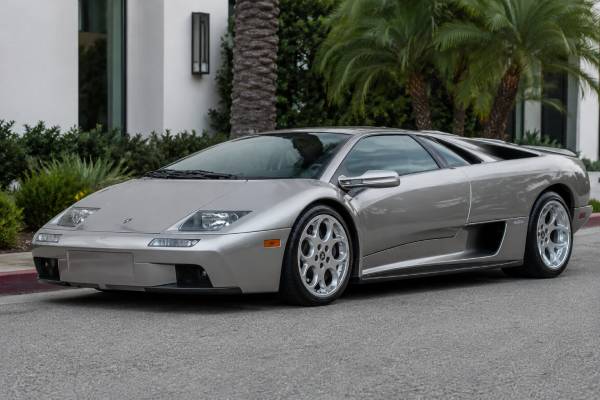
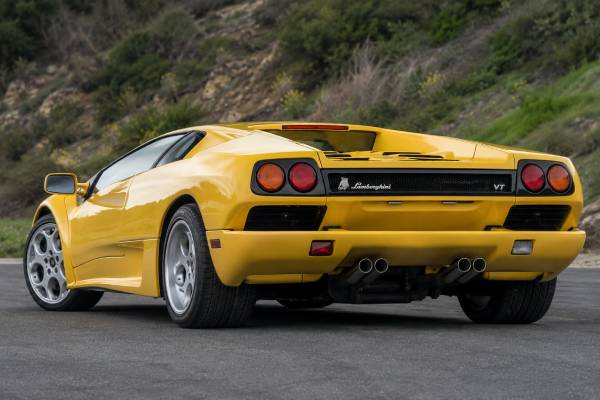
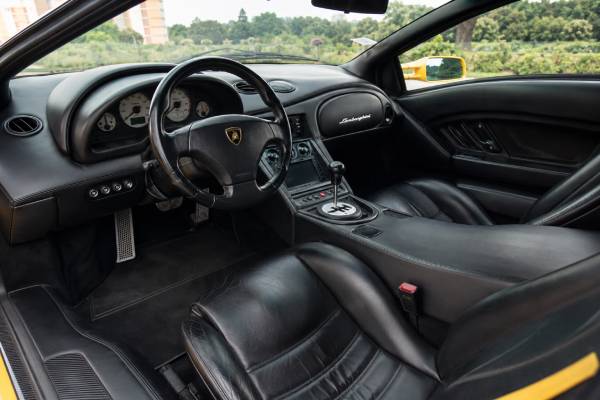
The Lamborghini Diablo VT 6.0 is the final regular-production evolution of the Diablo and one of the most important bridge cars in Lamborghini history. Built for 2000 and 2001, it kept the old-school mid-mounted V12, gated five-speed manual, scissor doors, and dramatic wedge shape, but added the discipline of the early Audi era: better build quality, a reworked cabin, improved drivability, stronger brakes, and a cleaner Luc Donckerwolke redesign. Its 6.0-liter naturally aspirated V12 is closely related to the Diablo GT engine and is commonly rated at 550 PS, or about 543 hp, with 620 Nm of torque. For collectors, the VT 6.0 matters because it is scarce, analog, visually mature, and easier to live with than earlier Diablos. For drivers, it is still a raw, wide, loud, mechanical Lamborghini with no modern supercar filter.
Table of Contents
- Why the VT 6.0 Defines the Final Diablo
- V12 Specs, Chassis Data, and Performance Numbers
- Production Numbers, SE Models, and Factory Details
- Audi-Era Design, Carbon Body, and Diablo Character
- How the Diablo VT 6.0 Drives
- Maintenance Risks, Parts, and Specialist Care
- Market Values and Buying Checklist
Why the VT 6.0 Defines the Final Diablo
The Diablo VT 6.0 is the most refined non-racing Diablo and the last chapter before the Murciélago changed Lamborghini for the Volkswagen Group era. It matters because it blends the drama of the Countach-descended V12 cars with the quality push that arrived after Audi took control of Lamborghini in 1998.
The Diablo itself began as Project 132, the long-awaited replacement for the Countach. It was launched in 1990 as a rear-wheel-drive V12 flagship and carried Lamborghini through a difficult but important decade. Early cars were fast, theatrical, and demanding. Later versions added more power, better brakes, all-wheel drive, improved interiors, and stronger cooling. By the time the VT 6.0 arrived, Lamborghini had spent ten years improving the same basic idea.
The “VT” name stands for viscous traction. In normal driving, the car keeps a rear-biased feel, but a viscous coupling can send torque forward when the rear wheels slip. This made the Diablo more usable in poor conditions and more forgiving under hard acceleration than the rear-drive versions, while still keeping the sensation of a big mid-engine Lamborghini.
The VT 6.0 was not a clean-sheet model. That was part of its appeal. It was the final and best-developed version of an established analog platform. Audi did not turn it into a quiet luxury car. Instead, Lamborghini sharpened the parts that needed attention: cabin ergonomics, climate control, body finish, engine management, front suspension geometry, pedal placement, braking hardware, and materials.
It also arrived at a turning point. The Murciélago was already in development, and Lamborghini needed a final Diablo that could hold the brand’s flagship position while the new car was prepared. The result was a short-lived, coupé-only model that now attracts buyers who want a usable collector-grade Lamborghini without losing the raw sound, width, heat, noise, and physicality that made the Diablo famous.
The VT 6.0’s reputation today rests on five qualities:
- It is the last major production Diablo variant.
- It uses a naturally aspirated 6.0-liter Lamborghini V12 with a manual gearbox.
- It benefits from Audi-era development without feeling modernized beyond recognition.
- It is rare enough to be collectible, but not so rare that owners are afraid to drive every example.
- It has the fixed-headlight, late-Diablo look that strongly influenced the Murciélago’s visual language.
Earlier Diablos can feel wilder. The SE30 and GT are more extreme. The VT Roadster has open-air drama. But the VT 6.0 is the mature car: still intimidating, still wide, still loud, but better resolved than most earlier versions.
V12 Specs, Chassis Data, and Performance Numbers
The Diablo VT 6.0 uses a 5,992 cc naturally aspirated V12, a five-speed gated manual gearbox, and a rear-biased all-wheel-drive system. It is fast even by modern standards, but the bigger story is how mechanical and direct the performance feels.
| Category | Specification |
|---|---|
| Production years | 2000–2001 |
| Body style | Two-door coupé |
| Layout | Longitudinal mid-engine, all-wheel drive |
| Engine | 5,992 cc naturally aspirated Lamborghini V12 |
| Valvetrain | DOHC, 48 valves, variable valve timing |
| Induction | Naturally aspirated, multi-point fuel injection |
| Output | 550 PS / about 543 hp / 405 kW |
| Torque | 620 Nm / 457 lb-ft |
| Transmission | Five-speed gated manual |
| Drivetrain | Viscous-coupling all-wheel drive |
| Chassis | Steel tubular spaceframe |
| Body materials | Carbon-fiber body panels with aluminum doors and a steel roof structure |
| Suspension | Independent control arms front and rear |
| Brakes | Vented, cross-drilled discs with ABS |
| Front tires | 235/35 ZR18 |
| Rear tires | 335/30 ZR18 |
The power figure needs a short explanation because different sources use different horsepower standards. Lamborghini and many European references describe the car as 550 PS. In U.S. terms, this is often listed as 543 hp. The important point is that the VT 6.0 is materially stronger than earlier 5.7-liter Diablos and close in character to the Diablo GT, though the GT is lighter, rear-drive, and more aggressive.
The engine update was more than a displacement increase. The 6.0-liter V12 used revised intake and exhaust hardware, improved engine management, variable valve timing, and internal changes aimed at stronger response and cleaner power delivery. It is not a lazy large-displacement engine. It has serious low-speed torque, but it also pulls hard toward the top of the tachometer, where the sound becomes sharper and more metallic.
| Metric | Figure |
|---|---|
| 0–100 km/h | About 3.9–4.0 seconds, depending on source and launch method |
| 0–60 mph | About 4.3 seconds in period independent testing |
| Quarter mile | About 12.2 seconds in period testing |
| Top speed | About 205–208 mph, depending on source |
| 70–0 mph braking | About 165 ft in period testing |
| Curb weight | Roughly 1,625 kg / 3,580 lb, with some variation by equipment and source |
The gearbox is a central part of the car’s appeal. It is a traditional open-gate manual with long mechanical travel, a heavy clutch, and a shift quality that rewards patience. This is not a rapid-fire modern transmission. Good shifts feel deliberate and satisfying. Bad shifts can be expensive.
The all-wheel-drive system is also important for ownership. It improves traction, especially with the huge rear tires, but it adds parts that need inspection: viscous coupling, front differential, driveshafts, joints, boots, and related seals. Buyers who only focus on the engine can miss large costs hidden in the driveline.
Production Numbers, SE Models, and Factory Details
The Diablo VT 6.0 was built in small numbers, and exact totals vary slightly because different sources count standard cars, SE cars, prototypes, market allocations, and late registrations differently. A practical buyer should treat it as a roughly 340-car standard-production model, plus a very small run of final SE cars.
Most references place regular Diablo VT 6.0 production at around 337 to 343 cars. The Diablo VT 6.0 SE, the final special edition, is usually listed at about 42 to 44 cars. Either way, the total pool is small, especially compared with later Lamborghini V12 models.
The regular VT 6.0 was coupé-only from the factory. Lamborghini had already offered earlier Diablo Roadster versions, but the 6.0-liter final model was focused on the fixed-roof body. A rear-wheel-drive version is sometimes noted as a special-order possibility, but most cars are all-wheel drive and should be inspected as such.
What separates the VT 6.0 from earlier Diablos
The VT 6.0 is easy to identify once you know the late-Diablo details. It has a revised front fascia with larger intake openings, cleaner surfaces, fixed headlights, a more modern rear treatment, and 18-inch wheels. Inside, the cabin is more coherent than early cars, with revised seats, improved pedal placement, carbon-fiber trim, and better climate control.
Key late-model features include:
- 6.0-liter V12 rather than the earlier 5.7-liter unit.
- Audi-era body and interior updates.
- Fixed headlights rather than original pop-up lamps.
- Revised front suspension layout for better footwell and pedal ergonomics.
- Larger brakes and ABS.
- Carbon-fiber body panels on much of the exterior.
- Coupé-only production for the 6.0-liter VT model.
The Diablo VT 6.0 SE
The VT 6.0 SE is the final collector-focused version and is more limited than the standard VT 6.0. It is best known for two special colors: Oro Elios, a gold tone linked with sunrise, and Marrone Eklipsis, a bronze-brown color linked with sunset. SE cars also received detail changes such as special trim, unique badging, and interior upgrades.
The SE is more collectible, but it is not automatically the better car for every buyer. A standard VT 6.0 with low mileage, strong documentation, original paint, correct trim, and a clean service history can be a more satisfying ownership choice than a tired or poorly corrected SE. Condition and provenance still matter more than the badge alone.
Documentation and authenticity
For a Diablo VT 6.0, paperwork is not a small detail. It is a value driver. The best cars have service invoices, ownership history, factory books, tools, keys, import documents where relevant, and records showing major work by recognized Lamborghini specialists.
A buyer should verify:
- VIN and market specification.
- Engine and gearbox identity where records allow.
- Factory color and interior specification.
- Whether body panels remain original.
- Whether the car has accident history.
- Whether the drivetrain remains factory all-wheel drive.
- Whether aftermarket exhaust, wheel, suspension, stereo, or ECU changes can be reversed.
- Whether manuals, tool kit, tire inflator, books, and original parts are present.
Originality has become more important as Diablo values have increased. Period upgrades that once looked harmless may now reduce value if they replace rare factory parts. Exhaust changes are common, but a car with its original exhaust included is usually more attractive.
Audi-Era Design, Carbon Body, and Diablo Character
The VT 6.0 looks cleaner and more mature than early Diablos, but it still has the essential Lamborghini shape: low nose, huge width, cab-forward stance, scissor doors, and a dramatic rear mass. The redesign did not erase the Diablo; it made the car look ready for the 2000s.
Luc Donckerwolke’s update gave the car a stronger link to the coming Murciélago. The large front intakes, smoother nose, body-color rear lamp surrounds, fixed headlights, and more integrated detailing all moved Lamborghini away from the rougher early-1990s look. At the same time, the proportions remained pure Diablo. It still has the visual tension of a big engine placed behind two passengers with very little concern for subtlety.
The carbon-fiber bodywork is one of the most important engineering details. The Diablo was not a carbon-tub car like later supercars, but the VT 6.0 used carbon-fiber exterior panels over a tubular steel chassis, with aluminum doors and a steel roof area. This mix gave Lamborghini a lighter and more advanced body structure than traditional steel or aluminum panels alone, while keeping the familiar spaceframe architecture.
Aerodynamics were shaped around stability and cooling rather than delicate active systems. The Diablo VT 6.0 has large front openings for airflow, side intakes feeding the engine bay, and a wide rear body designed to manage heat from the V12. A rear wing was optional and changes the look of the car heavily. Some buyers prefer the cleaner wingless profile; others want the full poster-car look.
The cabin is a major reason the VT 6.0 is more livable than earlier Diablos. Older cars can have awkward pedal placement and a more kit-like dashboard feel. The 6.0 cabin is still tight and low, but it has better seats, a more modern dash, improved switchgear, better air conditioning, and a driving position that works for more people.
Even with those improvements, this is not a modern ergonomic car. Rear visibility is limited. The sills are wide. The doors attract attention everywhere. Cabin heat can build in traffic. The clutch is heavy. The car is extremely wide, and urban driving requires care. None of that is a flaw in context; it is part of why the VT 6.0 feels like a real analog flagship rather than a softened grand tourer.
The sound is also central to the design. The intake and exhaust paths let the V12 dominate the experience. At low rpm, the engine has a deep, busy mechanical tone. At higher rpm, it becomes harder-edged and urgent. Many cars now have aftermarket exhausts, but the best setup depends on use. A loud system may thrill on short drives and become tiring on long motorway trips. For value, retaining original exhaust parts matters.
How the Diablo VT 6.0 Drives
The Diablo VT 6.0 drives like a large, powerful, analog supercar with more polish than earlier Diablos but none of the insulation of later dual-clutch Lamborghinis. It is fast, stable, physical, and deeply mechanical.
The first impression is size. The car is very low and very wide, with a forward seating position and limited rear visibility. On narrow roads, the driver must place the car carefully. On open roads, that width becomes part of its confidence. The Diablo feels planted rather than nervous, especially at speed.
The engine dominates the drive. The 6.0-liter V12 has enough torque that you do not need constant downshifts, but it rewards using the full rev range. Throttle response is direct by modern standards because there is no turbocharger softening the delivery. The car builds speed in a long, forceful rush, with a sound that makes even moderate acceleration feel special.
The gearbox needs respect. When cold, the shift can feel stiff, and rushing the lever is the wrong approach. Once warm, the gated manual becomes more fluid, but it still asks for clean timing. A well-adjusted, healthy car should shift with a positive mechanical feel. Crunching, baulking, jumping out of gear, or heavy resistance after warm-up should be treated as inspection warnings.
The all-wheel-drive system changes the car’s personality. Compared with a rear-drive Diablo, the VT 6.0 is less likely to overwhelm its rear tires on corner exit. It still feels rear-led, but it has more traction and security when the road is cold, dusty, or uneven. Understeer can appear if the driver turns in too fast, and the car does not shrink around you like a modern lightweight supercar. Smooth inputs matter.
Steering feel is heavy but informative. It does not have the light, quick response of a modern Huracán or the electronic calm of an Aventador. It feels like the front tires are working hard and the driver is connected to the load passing through them. At parking speeds, effort is high. At road speed, the steering becomes one of the car’s strengths.
The brakes are strong for the period, with large vented and cross-drilled discs and ABS. They do not feel like modern carbon-ceramic brakes, and they need proper condition, good fluid, healthy hoses, and correct pads. A Diablo that pulls under braking, has a long pedal, vibrates through the pedal, or shows old tires should not be driven hard until inspected.
Ride quality is firm but not unbearable. The VT 6.0 is more usable than its shape suggests, especially on good roads. It can cover distance, and period reports noted that late Diablos were being driven more often than early cars. Still, this is a noisy, warm, attention-heavy car. Long trips require patience, planning, and a driver who enjoys being involved all the time.
On track, the Diablo VT 6.0 is exciting but costly to run. It has the speed, brakes, and stability to be enjoyable, but it is heavy, rare, and expensive to repair. Tires, brakes, clutch, fluids, and heat management become serious concerns. For most owners, fast road use and occasional demonstration laps make more sense than repeated hard track days.
Maintenance Risks, Parts, and Specialist Care
A Diablo VT 6.0 can be reliable when maintained properly, but neglect is expensive and often hidden. The right question is not “Is it reliable?” but “Has this specific car been kept ahead of age, heat, fluid, clutch, driveline, and electrical problems?”
The V12 itself is strong when serviced correctly. It is not a fragile engine that fails simply because it is exotic. The risk comes from age, poor storage, deferred maintenance, overheating, bad previous repairs, and lack of specialist knowledge. Access is tight, labor hours add up quickly, and small leaks or worn parts can become large bills if ignored.
Common ownership areas to inspect include:
- Clutch wear, especially on cars used for city driving, display events, or aggressive launches.
- Gearbox synchros, shift linkage adjustment, and signs of hard use.
- Cooling system health, including radiators, fans, hoses, expansion tank, and coolant condition.
- Oil leaks from cam covers, seals, lines, and aged gaskets.
- Fuel system condition, including old hoses and pump behavior.
- Electrical faults in switches, warning lights, window motors, climate control, and charging system.
- Air-conditioning performance, especially on cars stored for long periods.
- Suspension bushings, dampers, ball joints, wheel bearings, and alignment.
- Brake discs, pads, calipers, hoses, and ABS function.
- Tire age, not just tread depth.
- Front differential, viscous coupling, driveshafts, CV boots, and seals.
The clutch deserves special attention. A Diablo clutch can be ruined quickly by poor launch technique, repeated slipping, or low-speed show-off driving. A heavy pedal alone is not proof of failure, but a slipping clutch, burning smell, late engagement, shudder, or poor gear selection under load should be taken seriously. Replacement costs vary widely by region and parts availability, but they are never casual.
Cooling is another major area. A mid-engine V12 creates a lot of heat, and many Diablos spend time in slow traffic, hot climates, or storage. Old hoses, weak fans, clogged radiators, and poor bleeding can cause overheating. A pre-purchase inspection should include a proper warm-up, fan cycling, leak check, and pressure test where appropriate.
Parts availability is mixed. Some service parts are available through specialists or Lamborghini channels, but trim pieces, model-specific body parts, interior components, lenses, wheels, and rare 6.0-specific items can be hard to source. A missing part can cost more than expected simply because the supply is thin.
Restoration is possible but expensive. The Diablo is not a simple classic with easy panel availability. Carbon-fiber body repair, paint matching, chassis measurement, suspension setup, and interior restoration require specialists. Accident damage is especially serious because poor repairs can hide under beautiful paint.
Originality creates a tradeoff. Sensible upgrades, such as improved cooling components, modern tires in correct sizes, better battery maintenance, and carefully chosen exhaust solutions, can make the car easier to use. But irreversible changes hurt value. The best approach is to keep factory parts and document every change.
A strong service file should show regular fluid changes, brake service, clutch records, cooling system work, tire replacement, battery care, and invoices from known Lamborghini specialists. A car with low mileage but old fluids, old tires, weak air conditioning, and no recent major service is not automatically better than a higher-mile car that has been kept active and maintained correctly.
Market Values and Buying Checklist
The Diablo VT 6.0 sits in a strong collector position because it is rare, manual, naturally aspirated, visually iconic, and historically important as the final developed Diablo. As of mid-2026, good standard cars often trade in the high six-figure range, while exceptional low-mileage, original, well-documented cars can move much higher.
Recent public-market data shows a wide spread. Some usable or less perfect cars have appeared around the low-to-mid $500,000 range, while highly desirable examples have sold in the $700,000 to $800,000-plus range. Exceptional results near or above that level usually reflect mileage, originality, color, condition, venue, timing, and buyer competition. Modified cars, cars with stories, cars needing major service, or cars with unclear documentation trade at a discount.
The market is not only about mileage. A very low-mileage Diablo with deferred maintenance may need a major catch-up service before it can be used safely. A higher-mileage car with careful ownership, strong records, correct parts, and recent mechanical work may be the better driver. For collectors, originality and documentation still carry the most weight.
| Value factor | Why it matters |
|---|---|
| Original paint and panels | Accident repair and repaint quality can strongly affect collector confidence. |
| Factory color combination | Desirable colors and correct interiors improve liquidity. |
| Service history | Invoices from respected specialists reduce ownership risk. |
| Mileage | Low mileage helps, but only when condition and maintenance support it. |
| Original parts | Factory exhaust, wheels, books, tools, and trim add value. |
| Mechanical condition | Clutch, cooling, gearbox, brakes, and driveline work can be costly. |
| Specification | SE cars and unusual factory details can command premiums. |
| Provenance | Known ownership history or celebrity/racing links can help when documented. |
Pre-purchase inspection priorities
A Diablo VT 6.0 should be inspected by a specialist who knows Diablos, not just modern Lamborghinis. The car has its own failure points, build details, and parts issues.
A serious inspection should cover:
- Confirm VIN, market version, title status, import history, and factory specification.
- Check paint depth, panel gaps, carbon-fiber repairs, underbody condition, and chassis alignment.
- Inspect service records for clutch, fluids, cooling system, brakes, tires, and major engine work.
- Perform a cold start and warm running check.
- Look for oil, coolant, fuel, gearbox, and differential leaks.
- Test clutch engagement, gearbox shift quality, and driveline behavior.
- Verify fan operation, cooling stability, and air-conditioning function.
- Inspect tire date codes, wheel condition, brake wear, and suspension play.
- Check all electrical functions, including windows, lights, warning lamps, HVAC, and gauges.
- Confirm original parts, books, tools, keys, and spare items.
Cars to seek
The best buys are not always the cheapest or the lowest-mileage cars. The most desirable standard VT 6.0s usually have clean history, strong colors, original paint where possible, complete documentation, recent service, correct wheels, factory parts, and no mystery modifications.
A good driver-grade example should be mechanically fresh, cosmetically honest, and priced with its mileage and imperfections in mind. A concours-level car should have exceptional originality, complete accessories, and no excuses. An SE should be judged even more carefully because the premium only makes sense when the car is correct.
Cars to avoid
Be careful with cars that have missing records, repeated auction appearances, unclear import history, old tires, weak cooling, clutch slip, gearbox noise, warning lights, mismatched paint, non-original bodywork, poor interior retrims, or heavily modified drivetrains. A cheap Diablo can become the most expensive one after the first year.
The long-term outlook is strong, but not risk-free. The VT 6.0 has the traits collectors want: manual gearbox, naturally aspirated V12, small production, final-year importance, analog controls, and dramatic design. The risk is that maintenance costs and parts scarcity will keep separating excellent cars from average ones. Buy the best-documented car you can justify, leave room in the budget for immediate service, and do not skip the specialist inspection.
References
- Lamborghini History – Diablo | Lamborghini.com 2026 (Manufacturer History Page)
- Lamborghini V12 History: Diablo 2022 (Manufacturer History Page)
- Tested: 2000 Lamborghini Diablo VT 6.0 Bows Out with 543HP 2000 (Road Test)
- Lamborgini Diablo VT 6.0 Market – CLASSIC.COM 2026 (Market Data)
- 2001 Lamborghini Diablo 6.0 VT Coupe | Gooding Christie’s 2026 (Auction Result)
Disclaimer
This article is for informational purposes only and is not a substitute for professional diagnosis, repair, valuation, or inspection. Specifications, torque values, service intervals, procedures, market equipment, emissions equipment, and parts can vary by VIN, market, production date, and individual vehicle history. Always verify details against the official service documentation for the exact car and use a qualified Lamborghini specialist before purchase or repair.
If you found this guide useful, please share it on Facebook, X/Twitter, or your preferred car community to support our work.