
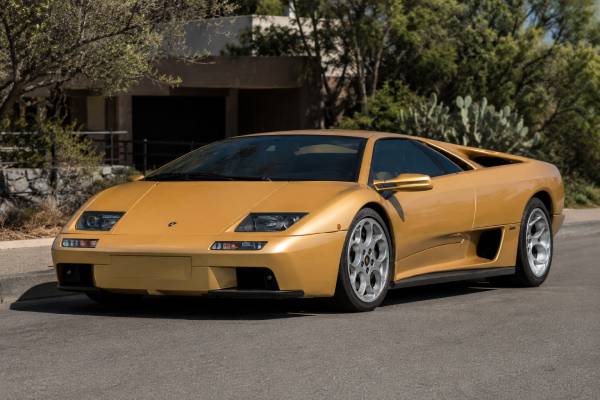
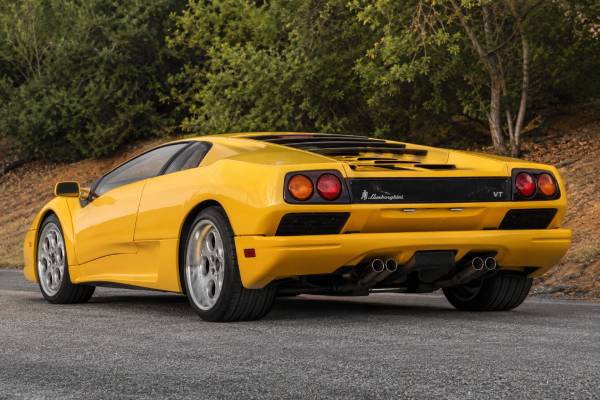
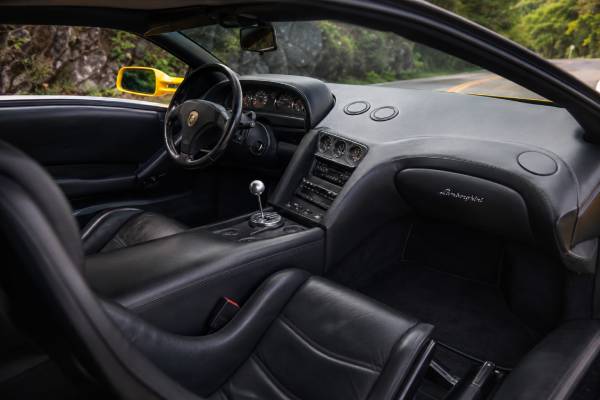
The Lamborghini Diablo VT 6.0 SE is the final special-edition Diablo and one of the last pure analog V12 Lamborghinis before the Murciélago changed the brand’s modern era. Built for 2001, it combined the Audi-era Diablo 6.0 redesign with a naturally aspirated 6.0-liter V12, a five-speed gated manual gearbox, Viscous Traction all-wheel drive, fixed headlights, revised bodywork, and a more refined cabin. Its appeal comes from the unusual mix of old-school Lamborghini theater and late-production development: scissor doors, huge rear tires, hand-built feel, and 550 hp, but also ABS, power steering, improved ergonomics, and better cooling than earlier Diablos. For collectors, the VT 6.0 SE matters because it is rare, visually distinct, tied to the end of Diablo production, and close enough to modern usability to be driven while still feeling raw.
Table of Contents
- Diablo VT 6.0 SE in Lamborghini History
- V12 Specs, Chassis, and Performance Data
- Production, Colors, Options, and Authenticity
- Design, Engineering, and Special Features
- Road Character, Acceleration, and Handling
- Maintenance, Reliability, and Restoration Risk
- Market Values, Inspection, and Buying Advice
Diablo VT 6.0 SE in Lamborghini History
The Diablo VT 6.0 SE is best understood as the closing chapter of the Diablo line, not as a normal trim package. It kept the Countach-era drama that defined Lamborghini for decades, but it arrived after Audi had taken control and started improving the car’s finish, usability, and engineering discipline.
The Diablo itself replaced the Countach in 1990. Development began under the P132 project, and the basic idea was clear: Lamborghini needed a flagship V12 supercar that could look outrageous, break the 200-mph barrier, and still feel like a direct descendant of the Miura and Countach. Early Diablos were fast and dramatic, but they were also demanding. They had heavy controls, wide bodywork, poor rear visibility, and a cabin shaped more by theater than daily comfort.
The VT, introduced in 1993, added “Viscous Traction” all-wheel drive. This did not turn the Diablo into a soft grand tourer. It still behaved like a mid-engined Lamborghini, but the front axle could help when the rear tires lost grip. That mattered because the Diablo’s torque, width, and rear weight bias made it a serious machine in wet or cold conditions.
By the late 1990s, Lamborghini was under Audi-Volkswagen ownership. The replacement Murciélago was in development, but the Diablo still had to carry the brand. Audi-era updates brought fixed headlights, revised interiors, better brakes, ABS, improved engine management, and the final 6.0-liter V12 development. The Diablo 6.0 VT became the most polished regular Diablo. The VT 6.0 SE then served as the last limited-production send-off.
The SE’s collector appeal comes from four factors:
- It is one of the rarest factory Diablo road cars.
- It uses the final 6.0-liter naturally aspirated V12 tune in the road-going VT line.
- It has late-production usability improvements without losing the gated manual and analog cabin.
- It belongs to the final period before Lamborghini’s fully modern Audi-era production methods arrived with the Murciélago and Gallardo.
The Diablo also holds a special place because it bridged two eras. It began as the wild successor to the Countach and ended as a more mature supercar developed under Audi oversight. The VT 6.0 SE sits at the end of that story, which is why collectors often treat it differently from ordinary low-mileage Diablos.
V12 Specs, Chassis, and Performance Data
The Diablo VT 6.0 SE used a 5,992 cc naturally aspirated V12 rated at 550 hp, paired with a five-speed manual and all-wheel drive. Its numbers still look serious today, but the key point is how mechanical the car remains: no dual-clutch gearbox, no turbocharging, no hybrid boost, and no stability-control safety net.
| Category | Specification |
|---|---|
| Model | Lamborghini Diablo VT 6.0 SE |
| Internal project lineage | P132 Diablo family |
| Production year | 2001 |
| Body style | Two-door, two-seat coupé with scissor doors |
| Engine | 60-degree naturally aspirated V12 |
| Displacement | 5,992 cc |
| Bore x stroke | 87 mm x 84 mm |
| Valvetrain | DOHC, four valves per cylinder, variable valve timing |
| Fuel system | Lamborghini electronic sequential multipoint injection |
| Compression ratio | 10.7:1 |
| Power | 550 hp at 7,100 rpm |
| Torque | 620 Nm at 5,500 rpm |
| Transmission | Five-speed manual with reverse |
| Drive system | Viscous Traction all-wheel drive |
| Clutch | Dry single-plate, hydraulically operated |
The engine is a development of Lamborghini’s long-running V12 rather than a clean-sheet Audi engine. That matters to enthusiasts because the sound, throttle response, and mechanical feel still belong to the old Sant’Agata bloodline. The 6.0-liter unit uses an alloy block, four-cam heads, four valves per cylinder, and electronic engine management. Compared with the earlier 5.7-liter cars, the 6.0 brings more torque, cleaner response, and a broader performance envelope.
| Area | Detail |
|---|---|
| Chassis structure | High-strength steel rectangular tube structure with composite and carbon-fiber elements |
| Body materials | Aluminum alloy and hand-laid composite panels |
| Suspension | Independent double wishbones, coil springs, anti-roll bars, electronic dampers |
| Brakes | Ventilated and perforated Brembo discs with four-piston alloy calipers and ABS |
| Front brake discs | 365 mm |
| Rear brake discs | 335 mm |
| Steering | Power-assisted rack and pinion |
| Front wheels and tires | 8.5 x 18-inch OZ wheels, 235/35 ZR18 tires |
| Rear wheels and tires | 13 x 18-inch OZ wheels, 335/30 ZR18 tires |
| Wheelbase | 2,650 mm |
| Length | 4,460 mm |
| Width | 2,040 mm |
| Height | 1,105 mm |
| Weight | About 1,625 kg |
| Weight distribution | About 41 percent front, 59 percent rear |
| Fuel capacity | 100 liters |
The performance figures depend on test conditions, tires, and measurement method, but the accepted factory-style figures are about 3.95 seconds from 0–100 km/h and about 335 km/h, or 208 mph, flat out. Those figures only tell part of the story. A modern supercar may be easier to launch and quicker through a dual-clutch gearbox, but the Diablo VT 6.0 SE asks the driver to manage clutch take-up, gear selection, tire temperature, road camber, and braking effort. That involvement is a major reason the car remains desirable.
Production, Colors, Options, and Authenticity
The VT 6.0 SE was built in very small numbers, and production accounting is one of the first things buyers should verify. The commonly quoted total is 42 cars, though some market listings describe the color split as 40 customer cars, usually 20 in Oro Elios and 20 in Marrone Eklipsis, with the remaining difference depending on how prototypes, market allocations, or factory records are counted.
The two signature colors are central to the SE identity. Oro Elios is a gold finish meant to suggest sunrise. Marrone Eklipsis is a darker color-shifting bronze or maroon shade linked to sunset. Those colors are not just paint choices; they are part of the limited-edition concept. A repaint into a non-SE color may still create an attractive car, but it weakens the model’s authenticity unless the original finish is documented and restorable.
The SE was not a lightweight track special like the Diablo GT or GTR. It was a final-series road car with luxury and visual details. Typical SE features included special upholstery, added carbon-fiber interior trim, “Lamborghini” badging on the brake calipers, navigation equipment in some markets, and detail changes over the standard 6.0 VT. A rear wing may appear on some cars, but buyers should confirm whether it was factory fitted, dealer fitted, later added, or removed.
What makes an SE correct
A correct Diablo VT 6.0 SE should be inspected as a numbered, documented, late-production Lamborghini rather than just a 6.0 VT in a special color. Important checks include:
- VIN, chassis number, engine number, and gearbox identity.
- Original paint color and trim combination.
- Factory build documentation or Lamborghini Polo Storico records.
- Delivery market and compliance equipment.
- Evidence of the SE-specific interior and exterior details.
- Service history from known Lamborghini specialists or authorized dealers.
- Any paintwork, accident repair, panel replacement, or color change.
- Whether the car has been converted from all-wheel drive to rear-wheel drive.
The last point matters because some Diablo 6.0 cars have been modified for rear-wheel drive to sharpen steering feel and reduce drivetrain complexity. A reversible, well-documented conversion may appeal to a driver, but it usually hurts collectability on a limited SE unless the factory documentation supports it.
Documentation matters more than mileage alone
Low mileage helps value, but on a Diablo it can also hide risk. Cars that sit for long periods often need fuel-system, cooling-system, brake, clutch-hydraulic, tire, and electrical work before serious driving. A car with modest mileage and consistent service may be a better ownership prospect than a static display car with original tires, dried seals, old fluids, and a thin service file.
The strongest examples usually have:
- Original books, tools, keys, pouch, and delivery paperwork.
- Clear ownership history.
- Factory color confirmation.
- Recent major service.
- No unexplained gaps in mileage or registration.
- No heavy aftermarket audio, body, exhaust, wheel, or ECU changes.
- Paint-meter results and photos supporting any claimed originality.
Because the SE is rare, buyers should expect a longer search and fewer direct comparisons. That makes expert authentication especially important.
Design, Engineering, and Special Features
The Diablo VT 6.0 SE looks like a Diablo, but it is not visually identical to early cars. The 6.0 redesign cleaned up the front, improved airflow, modernized the lighting and cabin, and gave the car a more controlled Audi-era finish without removing its extreme wedge stance.
Marcello Gandini’s original Diablo design was heavily revised before production, but the basic proportions remained unmistakable: low nose, huge rear haunches, cab-forward cockpit, scissor doors, and an almost impossibly wide tail. The 6.0 update, shaped under Luc Donckerwolke’s direction, made the car look less like an early-1990s poster car and more like a bridge to the Murciélago.
The most obvious exterior changes include the fixed headlamps, deeper front air intakes, reshaped front bumper, revised front fenders, body-color rear lamp surrounds, and large central engine cover intake. The SE’s color themes added another layer. Oro Elios makes the surfaces look sharper and more ceremonial, while Marrone Eklipsis gives the car a darker, more unusual collector-car look.
The engineering choices are equally important. The Diablo was not built around a carbon tub like later flagship Lamborghinis. It used a steel tube chassis with aluminum and composite bodywork. This makes accident inspection and restoration different from later carbon-fiber supercars. A damaged tube structure can be repaired, but it requires a specialist who understands the car’s geometry, not a general exotic body shop.
The Viscous Traction system defines the VT character. It sends most of the car’s personality through the rear axle but can transfer torque forward when the rear tires slip. Combined with huge 335-section rear tires, it gives the late Diablo more traction than early rear-drive versions. It also adds weight and complexity, which is why some purists prefer rear-drive variants. For the SE, originality usually matters more than chasing the lightest, sharpest setup.
Inside, the 6.0 SE feels much more mature than an early Diablo. The seating position, pedals, dashboard layout, and materials are improved, though the car remains wide, low, hot, loud, and physical. The gated shifter remains a centerpiece. The cabin is not spacious by modern GT standards, but it is far more usable than the most uncompromising Diablos.
The sound is one of the car’s defining features. The 6.0-liter V12 has a deep mechanical idle, a hard metallic rise through the midrange, and a sharp top-end tone near 7,000 rpm. It does not rely on turbo whistle, synthetic cabin sound, or exhaust theatrics. Intake noise, valve gear, gearbox whine, and exhaust combine into a sound that feels mechanical rather than programmed.
Road Character, Acceleration, and Handling
The Diablo VT 6.0 SE is fast, but its real character comes from weight, width, steering feel, clutch effort, and the V12’s response. It is more refined than early Diablos, yet it still feels like a big, serious, mid-engined machine that expects care from the driver.
The engine is tractable at low speeds if properly tuned, but it prefers heat in the fluids and tires before being pushed. The V12 pulls cleanly through the middle of the rev range, then becomes harder-edged as it approaches peak power. Throttle response is direct, and the lack of forced induction makes the car feel predictable once the driver understands its mass and rear weight bias.
The five-speed manual is part of the car’s appeal. The shift is deliberate rather than light. A cold gearbox can feel stiff, especially before the oil warms. The clutch is heavier than a normal sports car’s clutch, and poor low-speed technique can shorten clutch life. Once warm and driven properly, the gated shift gives the Diablo a level of involvement that modern paddle-shift supercars cannot copy.
Steering is power-assisted, which makes the 6.0 more manageable than early manual-steering Diablos. It still has a wide front track and large tires, so tight urban roads and parking spaces need care. At speed, the front end feels more settled than many expect, while the car’s width remains the main limit on confidence. On a narrow road, the Diablo can feel larger than the lane.
The all-wheel-drive system improves traction, especially on imperfect roads, but it does not make the car foolproof. There is still a lot of mass behind the driver. If the tires are old, cold, or mismatched, the Diablo can feel nervous. If the suspension is tired, alignment is poor, or the electronic dampers are not working correctly, the car may tramline, understeer, or feel vague.
Braking performance is strong for the period when the system is fresh. The Brembo discs, four-piston calipers, and ABS give the SE more confidence than early non-ABS Diablos. Brake age matters. Old flexible lines, contaminated fluid, worn discs, poor pads, or sticky calipers can make an expensive car feel frightening. A proper brake refresh transforms the drive.
In daily use, the SE is better than its looks suggest but still not easy. Visibility is limited, the nose is low, the doors need space, the cabin can build heat, and the car attracts constant attention. On open highways and fast sweepers, it becomes more natural. On mountain roads, it rewards smooth inputs and patience. On track, it can be exciting, but heat management, brake wear, clutch wear, and tire cost make it a costly place to explore the limit.
Maintenance, Reliability, and Restoration Risk
A Diablo VT 6.0 SE can be dependable when maintained by specialists, but neglected examples become very expensive very quickly. The car is not fragile in the way myths suggest, yet it is complex, low-volume, old, and costly to repair.
The V12 itself is strong when serviced correctly. The danger comes from age, heat, old fluids, deferred maintenance, and poor workmanship. Cooling-system health is critical because the engine bay runs hot and the system uses multiple radiators, fans, hoses, pipes, and thermostatic control. Any sign of overheating history should be taken seriously.
Common ownership priorities include:
- Engine oil and filter service using the correct specification.
- Gearbox oil and differential oil service.
- Coolant flushes and careful bleeding.
- Fuel-hose, injector, pump, and regulator inspection.
- Valve-train and timing-related checks by a Lamborghini specialist.
- Clutch hydraulic inspection and adjustment.
- Brake fluid changes and caliper service.
- Suspension bushing, damper, and alignment checks.
- Tire replacement based on age, not only tread depth.
- Battery, charging, grounding, and fuse-panel inspection.
The clutch is a major cost driver. Wear depends on driver skill, traffic use, hill starts, and setup condition. A slipping clutch, poor pedal feel, difficult engagement, or hydraulic leak needs immediate attention. Because the Diablo uses a gated manual, clutch condition affects both drivability and value.
The gearbox should shift cleanly when warm. Synchro wear, linkage issues, or incorrect oil can make the shift feel heavy or noisy. A cold gearbox can be reluctant, but grinding, jumping out of gear, or persistent stiffness is not normal.
The all-wheel-drive system needs careful inspection. Front differential leaks, transfer components, CV joints, boots, and drivetrain mounts should be checked. A car that has had a rear-wheel-drive conversion needs documentation, reversibility details, and a clear explanation of who did the work.
Electrical issues are common on aging exotics. Problems may involve window motors, warning lights, cooling fans, instrument functions, alarm systems, battery drains, connectors, and previous audio or navigation modifications. Many faults come from old wiring, poor grounds, heat exposure, or unsympathetic aftermarket work.
Body and chassis inspection is vital. The Diablo’s low nose and wide body make it vulnerable to front-lip damage, underside scrapes, wheel-arch repairs, and accident history. Panel gaps should be consistent, doors should open and close cleanly, and the front structure should be inspected on a lift. Poor repairs can turn an apparently beautiful Diablo into a long-term problem.
Parts availability is better through specialists than outsiders expect, but some SE-specific trim, interior, and body details can be difficult or slow to source. The rarest parts are often not the engine internals but the cosmetic pieces that make the car correct. That is why originality has real financial value.
Market Values, Inspection, and Buying Advice
The Diablo VT 6.0 SE sits in the upper collector tier of road-going Diablos, below the most extreme GT and GTR examples but above many earlier standard cars. In the 2025–2026 market, strong 6.0 VT cars have appeared around the mid-six-figure to high-six-figure range, while true SE examples depend heavily on documentation, color, mileage, and originality.
Price guides are only a starting point because the SE trades infrequently. A correct, low-mileage, documented Oro Elios or Marrone Eklipsis car with recent specialist service can command a major premium. A car with stories, accident history, missing SE details, poor repaint quality, old service records, or heavy modifications should be priced very differently.
| Value factor | Why it matters |
|---|---|
| Factory documentation | Confirms the car is a genuine SE and supports the original color, trim, and equipment. |
| Original color | Oro Elios and Marrone Eklipsis are part of the SE identity. |
| Service history | Recent specialist work can save the buyer from immediate five-figure catch-up costs. |
| Mileage | Low mileage helps, but only when the car has not suffered from storage neglect. |
| Paint and body condition | Accident repair or color change can sharply reduce collector value. |
| Interior correctness | SE-specific trim and materials are difficult to replace properly. |
| Mechanical originality | Drivetrain conversions, non-original exhausts, and ECU changes need careful review. |
| Market timing | Rare Lamborghinis can move sharply when a few strong public sales reset expectations. |
Pre-purchase inspection priorities
A serious buyer should not rely on photos, a cold start video, or a dealer description. The inspection should be performed by a Lamborghini specialist with Diablo experience and should include:
- Confirm VIN, engine, gearbox, color, and production identity.
- Check service records against mileage and ownership history.
- Inspect the chassis, underbody, nose, suspension mounts, and repaired areas.
- Perform paint-depth readings across the full body.
- Check cooling fans, radiators, hoses, coolant condition, and leak history.
- Inspect clutch operation, hydraulics, and service records.
- Road-test the car from cold to full operating temperature.
- Check gearbox shift quality hot and cold.
- Inspect brakes, tire age, wheels, and suspension.
- Verify all electrical systems, lights, instruments, HVAC, windows, and warning lamps.
The best cars are not always the lowest-mileage cars. The best cars are the ones whose condition, records, originality, and driving behavior all agree with the story being sold.
Examples to seek and avoid
Seek a car with original SE colors, complete documentation, recent major service, known specialist care, fresh tires, clean paint readings, and a transparent ownership trail. A slightly higher-mileage car with regular use and excellent records may be easier to own than a museum-mile car needing a full recommission.
Avoid cars with unclear identity, missing records, non-original color, accident history, unresolved overheating, weak clutch, gearbox complaints, unknown drivetrain conversions, non-functioning electronics, or seller pressure to skip inspection. On a rare Lamborghini, the cheapest example can become the most expensive one after the first service visit.
Long-term collectability looks strong because the VT 6.0 SE has the traits collectors usually reward: limited production, final-year status, V12 power, gated manual transmission, distinctive colors, historical importance, and a direct link to Lamborghini before the fully modern era. The main risk is not demand; it is buying the wrong car. Condition and authenticity matter more than chasing a bargain.
References
- Lamborghini V12 History: Diablo 2022
- Lamborghini Diablo’s 30th anniversary with Cesare Cremonini 2020
- Milestones | Lamborghini.com 2026
- Lamborghini celebrates its 60th anniversary with Giro Polo Storico 2023
- Lamborghini Diablo VT 6.0 SE – Specs & Performance – LamboCars 2015
Disclaimer
This article is for informational purposes only and is not a substitute for professional diagnosis, repair, inspection, or valuation. Specifications, torque values, service intervals, repair procedures, parts availability, and factory equipment can vary by VIN, market, production date, and individual vehicle history. Always verify details against official Lamborghini service documentation, factory records, and a qualified Lamborghini specialist before buying, repairing, restoring, or modifying a Diablo VT 6.0 SE.
If this guide helped you, please share it on Facebook, X/Twitter, or your favorite car community to support our work.