
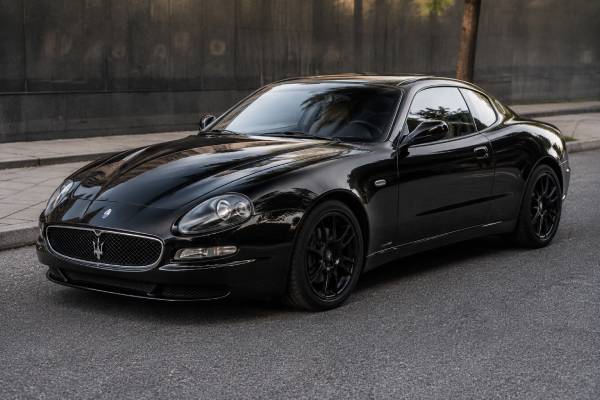
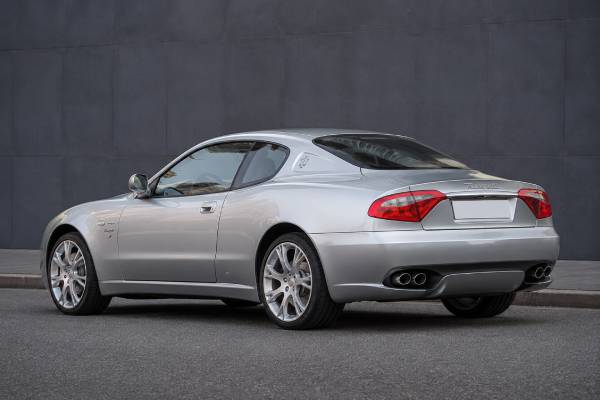
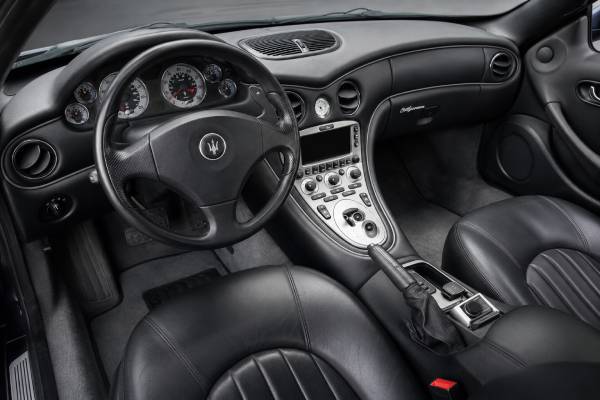
The 2004 Maserati Coupé Cambiocorsa 90th Anniversary Edition is a rare regional special that combines the standard M138 Coupé’s 390 hp Ferrari-Maserati V8 and paddle-operated transaxle with an unusually rich factory option package. It was created for Maserati’s 90th-birthday celebrations and is most clearly documented in Australia, where a small allocation of Coupé and Spyder anniversary cars arrived with numbered plaques, carbon-fiber trim, special wheels, Skyhook suspension, and distinctive Trident detailing. Mechanically, it remains a Coupé Cambiocorsa rather than a GranSport, so its appeal comes from provenance, specification, and condition more than extra power. That distinction matters when buying one today. A convincing car should have paperwork that ties its plaque, VIN, market delivery, colors, and original equipment together. Beneath the commemorative details is one of the most charismatic early-2000s grand tourers: fast, spacious, beautifully trimmed, and capable of expensive trouble when deferred maintenance catches up.
Table of Contents
- The Anniversary Coupé in Context
- V8, Transaxle, and Core Specifications
- Limited Allocation and Authenticity
- Special Trim and M138 Engineering
- Cambiocorsa Road Manners
- Ownership Risks and Service Needs
- How to Buy the Right Example
The Anniversary Coupé in Context
The 90th Anniversary Coupé is best understood as a highly specified, numbered celebration model built on the regular 2004 Coupé platform. It does not have the GranSport’s 400 hp tune, faster shift calibration, 19-inch wheels, or revised aerodynamic package.
Maserati founded its original business in Bologna in December 1914, and the company began marking its 90th year during 2004. In Australia, the celebration included a small shipment of Coupé and Spyder models assembled with an option package that was much more elaborate than the equipment fitted to a normal showroom car. Contemporary material described 30 anniversary examples for the market, with both conventional six-speed manual and Cambiocorsa transmissions available. Surviving cars carry individually numbered plaques, which makes them identifiable in a way that many option-driven “special editions” are not.
The underlying M138 Coupé had already become an important model for Maserati. Introduced for 2002 after the shorter-wheelbase Spyder, it replaced the 3200 GT’s twin-turbo V8 with a naturally aspirated 4.2-liter engine developed during Maserati’s close technical relationship with Ferrari. It also moved the gearbox to the rear, creating a transaxle layout that helped place more mass over the driven wheels. The result was a more modern, more predictable grand tourer that helped re-establish Maserati in major export markets.
The anniversary car’s importance is narrower but still meaningful. It captures the point just before the GranSport changed the M138’s personality from relaxed GT to sharper sporting derivative. Its special equipment also reflects Maserati’s early-2000s personalization culture, when buyers could combine leather colors, carbon trim, caliper finishes, wheels, and convenience equipment in combinations rarely seen on mass-produced cars.
Today, the edition appeals to three kinds of buyer:
- Collectors who value a numbered, market-specific Maserati with documented rarity.
- Drivers who want the regular Coupé’s softer, more usable character but prefer a richer specification.
- Enthusiasts attracted to the F136 V8 and Cambiocorsa experience without paying the premium for an MC Victory.
Its reputation depends heavily on authenticity. A standard Coupé can be fitted with carbon trim, aftermarket wheels, anniversary-style badges, or a reproduction plaque. The special edition therefore deserves a higher price only when the complete car, not one decorative feature, can be verified.
V8, Transaxle, and Core Specifications
The anniversary version uses the standard 2004 Coupé Cambiocorsa powertrain: a 4,244 cc naturally aspirated V8, a six-speed electrohydraulic automated manual transaxle, and rear-wheel drive. Its 390 hp output and roughly 285 km/h top speed place it firmly in period high-performance GT territory.
| Item | Specification |
|---|---|
| Model code | M138 |
| Engine | F136 R, 90-degree naturally aspirated V8 |
| Displacement | 4,244 cc |
| Construction | Aluminum-alloy block and cylinder heads |
| Valve gear | DOHC, 32 valves, variable intake timing |
| Lubrication | Dry sump |
| Power | 390 hp at 7,000 rpm |
| Torque | 451 Nm at 4,500 rpm |
| Transmission | Six-speed Cambiocorsa automated manual transaxle |
| Drive | Rear-wheel drive with limited-slip differential |
| Front suspension | Double wishbones, coil springs, anti-roll bar, Skyhook adaptive dampers |
| Rear suspension | Double wishbones, coil springs, anti-roll bar, Skyhook adaptive dampers |
| Front brakes | 330 mm ventilated discs, four-piston calipers |
| Rear brakes | 310 mm ventilated discs, four-piston calipers |
| Wheels | Special 18-inch seven-spoke alloys |
| Tires | 235/40 ZR18 front; 265/35 ZR18 rear |
| Wheelbase | 2,660 mm |
| Length | 4,523 mm |
| Width | 1,822 mm |
| Height | 1,305 mm |
| Kerb weight | Approximately 1,670 kg, depending on equipment |
| 0–100 km/h | About 4.9 seconds under favorable conditions |
| Top speed | Approximately 285 km/h |
The F136 R is a cross-plane-crank V8, so its sound is deeper and more muscular than the higher-pitched character associated with many contemporary Ferrari engines. A 92 mm bore and 80 mm stroke produce the 4.2-liter displacement. The engine uses chain-driven camshafts and dry-sump lubrication, which stores oil in a separate reservoir rather than a conventional pan beneath the crankshaft. That arrangement supports reliable oil supply during hard cornering and allows the engine to sit lower.
The Cambiocorsa transmission is mechanically a manual gearbox. An electrohydraulic system operates the clutch and selects gears in response to steering-column paddles or automatic-mode commands. It is not a torque-converter automatic and should not be judged like one. Shift quality depends on software strategy, throttle position, clutch condition, hydraulic health, and driver technique.
The steel monocoque body uses front and rear subframes. Double-wishbone suspension at all four corners gives Maserati precise control over wheel movement, while the electronic Skyhook dampers vary their response to road inputs. In Sport mode, the control system firms the damping and changes the powertrain’s behavior. The car also uses Brembo brakes, hydraulic power steering, anti-lock braking, traction control, and Maserati’s integrated stability system on 2004 examples.
Period acceleration results vary because launch technique has a large effect on clutch engagement and wheelspin. A well-driven Cambiocorsa can be quicker than the conservative factory figure, but repeated hard launches consume clutch life and are poor evidence of a healthy road car.
Limited Allocation and Authenticity
The most important fact is that this was not a single worldwide specification with a universally published production ledger. The best-documented Coupé anniversary package was a limited Australian allocation, and buyers should verify each car as a market-specific example rather than relying on the badge alone.
Contemporary Australian information described 30 anniversary Coupé and Spyder vehicles arriving between April and September 2004. Both manual GT and Cambiocorsa versions were offered. That wording does not establish how many of the 30 were Coupés, how many were Spyders, or how the transmission split was divided. Some later advertisements describe 30 anniversary Coupés, but such claims should be checked against original invoices, distributor correspondence, and Maserati build data.
Expected anniversary equipment included:
- An individually numbered 90th Anniversary plaque.
- Dark metallic silver seven-spoke 18-inch wheels.
- Aluminum-finish or red brake calipers.
- Aluminum racing pedals.
- Carbon-fiber steering-wheel, door-trim, and sill elements.
- Chrome grille and Trident details with red accents.
- Electronic Skyhook suspension.
- Rear parking sensors.
- One of four advertised exterior colors: Rosso Mondiale, Grigio Touring, Grigio Alfieri, or Nero Carbonio.
Because Maserati offered extensive personalization, an individual car may show small trim differences without being false. Conversely, a car with most of the visible equipment is not automatically authentic. The plaque number should make sense, the trim should show consistent age, and the original sales invoice should describe the anniversary package or its component options.
What the edition is not
It is not the globally recognized Spyder 90th Anniversary with Blu Anniversary paint, fairings behind the rollover bars, and GranSport-influenced exterior treatment. It is also not a GranSport, despite sharing carbon-fiber themes and a more purposeful appearance than a basic Coupé.
This distinction prevents three common buying mistakes:
- Paying a large premium for a standard Coupé fitted with similar accessories.
- Assuming all “90th Anniversary” Maseratis have the same colors and body details.
- Expecting the 400 hp GranSport engine calibration and faster gearbox software.
A serious buyer should request a factory build sheet or Classiche documentation and compare it with the car’s current equipment. Photographs of the plaque, VIN stamping, option codes, wheels, brake calipers, interior carbon, keys, manuals, and original sales documents should all tell the same story.
Special Trim and M138 Engineering
The anniversary package adds visual drama and tactile detail, but the car’s lasting character comes from the M138’s unusual blend of Giugiaro styling, a rear transaxle, genuine four-seat accommodation, and a hand-finished cabin. It feels more like a compact Italian express than a stripped sports car.
Giorgetto Giugiaro’s Italdesign studio shaped the basic Coupé body from the 3200 GT theme. The long hood, low roof, broad rear shoulders, and clean glasshouse give the car classic grand-touring proportions. The 2004 anniversary trim adds brightness and texture without changing the underlying panels. Dark seven-spoke wheels and colored calipers provide contrast, while red accents in the Trident badges make the celebration model easier to identify at close range.
Inside, carbon fiber replaces some of the wood or plain trim found in regular cars. The material appears on high-contact areas such as the steering wheel and doors, giving the cabin a sportier mood while retaining the soft leather, deeply padded surfaces, and generous rear seating that define the Coupé. The rear seats are not decorative shelves; adults can use them for shorter journeys, and the long wheelbase creates more cabin space than the car’s profile suggests.
The rear transaxle is the central engineering feature. Moving the gearbox away from the engine helps shift static weight rearward and reduces the nose-heavy behavior that can affect powerful front-engine GTs. A torque tube links the engine to the gearbox. The layout also concentrates clutch, gear-selection, differential, and hydraulic-service concerns at the rear, which is useful to remember during inspection.
Skyhook adaptive damping was a costly and desirable part of the anniversary package. Accelerometers and control logic adjust the dampers rapidly to balance body control and ride comfort. Normal mode allows the car to breathe over uneven roads; Sport mode tightens vertical movement and supports quicker responses. Worn dampers, failed actuators, or incorrect replacement units can erase this advantage, so a warning-free dashboard does not replace a physical suspension inspection.
Cooling and aerodynamics are conventional but effective. The front grille and lower openings feed the radiators and engine bay, while the smooth underbody and stable high-speed shape suit long-distance driving. The car does not have active aerodynamics. Its personality comes from balanced proportions, mechanical grip, and the powertrain’s sound rather than theatrical devices.
The engine’s intake and exhaust define the sensory experience. At low speed the V8 has a restrained, bass-heavy pulse. Above the midrange, induction noise and mechanical texture build quickly. The anniversary car uses the standard Coupé exhaust rather than the GranSport’s valve-controlled system, so it is less aggressive but often more comfortable over several hours.
Cambiocorsa Road Manners
A healthy anniversary Coupé is fast, stable, and surprisingly comfortable, but the Cambiocorsa gearbox rewards deliberate inputs. It works best when the driver treats it as a manual transmission whose clutch is operated by a computer.
From rest, the system slips the single dry clutch. Creeping repeatedly in traffic, holding the car on an incline with the accelerator, or inching into a tight parking space generates heat and wear. A clean departure uses a positive but moderate throttle input, allowing the clutch to engage rather than hover at its biting point. Once moving, small lifts during upshifts can make Normal mode smoother. Sport mode shortens shift time and feels more natural during committed driving.
The V8 supplies enough torque to move the 1.67-tonne Coupé without constant downshifts. It pulls cleanly from the midrange, then becomes much more urgent near 5,000 rpm. The final third of the tachometer is where the engine feels most special, with strong acceleration and a hard-edged mechanical soundtrack. Passing performance is immediate when the driver selects the correct gear before opening the throttle.
Steering is hydraulically assisted and relatively light around center, but it becomes more informative as cornering load builds. The long wheelbase and rearward mass distribution make the car stable through fast bends. It prefers a smooth entry, a settled chassis, and progressive power on exit. Abrupt throttle changes can still disturb the rear tires, especially on old rubber or damp roads.
Ride quality is one of the Coupé’s strengths. Normal Skyhook mode softens sharp impacts better than many contemporary sports cars, and the body feels solid over long waves. Sport mode reduces float and roll but can make broken surfaces busy. The 18-inch anniversary wheels preserve more sidewall than the GranSport’s 19-inch setup, which helps both comfort and wheel protection.
The Brembo brakes offer strong stopping power, though pedal feel can seem firm rather than highly delicate. Fresh fluid, correct pads, healthy hoses, and properly bedded discs make a large difference. A car that pulls under braking, vibrates through the wheel, or triggers warning lights needs investigation rather than an assumption that old Italian cars simply behave that way.
As a touring car, the Coupé remains useful. Visibility is generally good, the cabin is wide, rear seats can carry passengers, and the trunk handles weekend luggage. Weak points include dated navigation and audio controls, a large turning circle, expensive body panels, and the Cambiocorsa’s dislike of stop-start crawling. On an open road, those concerns recede and the car’s original purpose becomes clear.
Ownership Risks and Service Needs
The F136 V8 is usually durable when serviced correctly, but the surrounding systems can generate large bills. Clutch wear, hydraulic faults, neglected cooling components, suspension deterioration, sticky interior trim, and incomplete service history matter more than odometer mileage alone.
Cambiocorsa clutch and hydraulics
The clutch is the first major inspection item. A diagnostic scan can report estimated clutch wear, but the number should be interpreted with engagement quality, setup data, and service records. A badly calibrated position sensor can make a remaining-life figure misleading. Check for shudder, delayed engagement, missed gears, selection warnings, excessive pump operation, and fluid leaks.
The electrohydraulic system includes a pump, accumulator, actuator, valves, sensors, and control unit. A pump that runs very frequently may indicate pressure loss or a tired accumulator. Repairs often require specialist diagnosis and correct bleeding procedures. Replacing random parts is expensive and can leave the original fault unresolved.
Engine, cooling, and fluids
Inspect for oil leaks around cam covers, front covers, hoses, the dry-sump system, and the oil tank. Confirm that oil-pressure warnings extinguish promptly and never appear during hot idle or cornering. Cooling-system health is equally important. Aging hoses, radiators, fans, relays, expansion tanks, and thermostats can turn a small leak into an overheating event.
The engine uses timing chains rather than a routine belt replacement, but that does not make it maintenance-free. Correct oil, regular changes, healthy tensioners, and prompt attention to noise remain essential. Spark plugs, accessory belts, filters, and fluid changes should appear in the history at sensible intervals even when annual mileage is low.
Suspension, brakes, and tires
Listen for knocks from wishbone bushes, ball joints, anti-roll-bar links, and dampers. Check Skyhook operation in both modes and scan every suspension module for stored faults. Damaged anniversary wheels are difficult to replace in matching finish, so inspect inner rims for cracks and repairs.
Brake discs should be measured, not judged only through the spokes. Old flexible hoses and moisture-contaminated fluid can reduce confidence. Tires must be correct in size, matched by axle, free from sidewall cracking, and recent enough for performance driving. Low mileage does not preserve tire compound indefinitely.
Electrical and cosmetic aging
Test every switch, window, seat motor, mirror, parking sensor, lamp, climate function, alarm, key, and infotainment control. Low battery voltage can create misleading fault messages, but repeated electrical problems still require diagnosis. Keep the battery charged with a suitable maintainer when the car is stored.
Soft-touch coatings can become sticky, leather can shrink around the dashboard, headliners can sag, and carbon trim can cloud or lift. Anniversary-specific pieces deserve conservation rather than casual replacement. Body corrosion is not usually the headline risk, yet accident repair, blocked drains, stone damage, and moisture trapped around seals can create local problems.
A pre-purchase inspection should be performed by a technician familiar with M138 Maseratis and equipped with compatible diagnostic software. A general inspection that cannot measure clutch parameters, read gearbox faults, or identify correct anniversary equipment is incomplete.
How to Buy the Right Example
Buy the best-documented car, not the cheapest numbered plaque. A sound standard Coupé is preferable to a questionable anniversary car with missing history, mismatched trim, or a worn Cambiocorsa system.
Start with identity. Ask for the VIN, plaque number, original invoice, delivery-market documents, build information, service book, manuals, spare keys, and photographs of every special component. Confirm that the colors and equipment fit the known anniversary package. Look for consistent aging: an original carbon sill should not appear brand new beside heavily worn leather unless its replacement is documented.
Then evaluate mechanical condition in a fixed order:
- Scan all control modules before clearing any faults.
- Check clutch wear data, engagement behavior, hydraulic pressure cycling, and gearbox adaptation.
- Start the engine cold and observe oil pressure, smoke, noise, idle quality, and warning lights.
- Pressure-test the cooling system and inspect radiators, hoses, fans, and fluid condition.
- Measure brake discs and inspect suspension joints, Skyhook dampers, wheel repairs, and tire dates.
- Examine the underside for leaks, impact damage, poor lifting, and accident repairs.
- Road-test the car in Normal and Sport modes from cold through full operating temperature.
Budget beyond the purchase price. A recently completed clutch, sorted hydraulics, fresh tires, clean cooling system, and documented annual service can justify a substantial premium. Conversely, a low-mileage car that has sat unused may need more work than a regularly driven example.
Originality matters, but sensible reversible upgrades can improve ownership. A modern battery maintainer, improved relay protection, updated tires, and carefully chosen exhaust components may be acceptable when all original parts are retained. Irreversible interior changes, nonstandard wheels, aggressive suspension alterations, and undocumented gearbox software reduce collector confidence.
The strongest example will have four qualities at once: proven anniversary identity, a healthy Cambiocorsa system, continuous specialist maintenance, and cosmetic condition that preserves the unusual trim. When those elements align, the 90th Anniversary Coupé offers something rare in the modern-classic market—a genuinely usable four-seat Italian GT with a naturally aspirated V8, a strong sense of occasion, and a specification tied to a specific moment in Maserati history.
References
- Coupé Model – Gran Turismo models | Maserati 2026
- 2004 Maserati Coupé 90th Anniversary Edition 2004
- Tested: 2004 Luxury Sports Coupe Comparison 2004 (Road Test)
- Receive the Certification of Authenticity for your car | Maserati 2026
Disclaimer
This article is for informational purposes and is not a substitute for professional diagnosis, inspection, or repair. Specifications, torque values, service intervals, and procedures can vary by VIN, market, production date, and equipment; verify all work against the official service documentation for the specific vehicle.
Please share this article on Facebook, X/Twitter, or your preferred enthusiast community to support our work.