
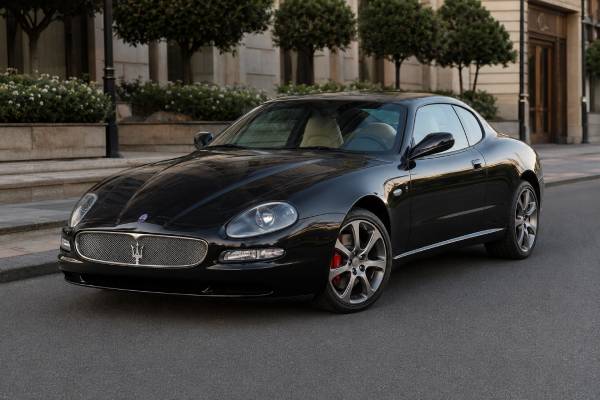
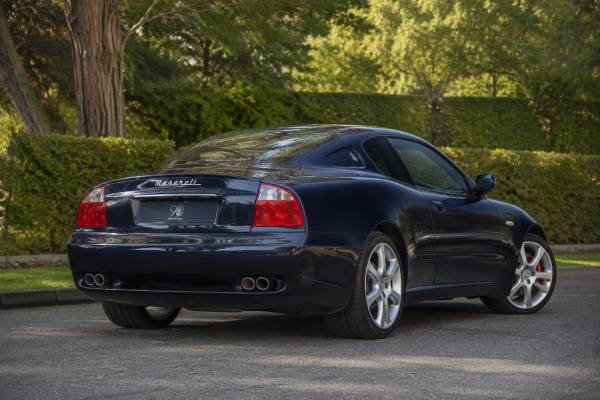
The 2004 Maserati Coupé GT 90th Anniversary Edition is the rare manual-transmission form of a market-specific birthday package built around the M138 grand tourer. Its essential appeal is simple: a naturally aspirated 390 hp V8, a rear-mounted six-speed gearbox, four usable seats, and a conventional clutch pedal, enhanced by numbered anniversary identification and a costly selection of carbon, wheel, suspension, and trim options. Contemporary Australian material described a limited allocation shared between Coupé and Spyder bodies and offered with either manual GT or paddle-shift Cambiocorsa transmissions. That makes the manual Coupé especially uncommon, but it also makes verification more important than assumptions about production totals. Mechanically, this is not a GranSport and does not receive the later model’s 400 hp tune. It is the more relaxed M138 Coupé in an unusually complete specification, with a direct gear lever that many enthusiasts now consider the most satisfying and durable way to experience the early Ferrari-era Maserati V8.
Table of Contents
- Why the Manual Anniversary Matters
- Engine, Gearbox, and Chassis Data
- Production Evidence and Original Equipment
- Giugiaro Shape and Transaxle Layout
- Driving the Six-Speed GT
- Manual-Model Maintenance Realities
- Inspection and Purchase Strategy
Why the Manual Anniversary Matters
The GT version matters because it pairs the anniversary specification with the least common M138 transmission and the most traditional driver interface. A genuine example offers rarity without changing the base car’s balanced grand-touring purpose.
Maserati introduced the M138 Spyder in 2001 and the longer-wheelbase Coupé in 2002, replacing the 3200 GT’s twin-turbo engine with a naturally aspirated 4.2-liter V8. The new car marked a major technical reset. Its engine was related to the Ferrari-Maserati F136 family, its gearbox sat at the rear axle, and its chassis combined double-wishbone suspension with electronic damping. The Coupé also retained real 2+2 practicality, which separated it from tighter two-seat exotics.
The 90th Anniversary package appeared during 2004 as Maserati began celebrating the company’s December 1914 founding. In Australia, contemporary information described 30 Coupé and Spyder anniversary cars scheduled for delivery, with both manual and Cambiocorsa gearboxes available. The package was therefore not a single mechanical derivative. It was a curated equipment and appearance specification applied to different M138 configurations.
That distinction explains why the GT model deserves its own article. The six-speed manual changes how the car is driven, serviced, valued, and inspected. It removes the Cambiocorsa hydraulic actuator, pump, accumulator, clutch-position learning, and transmission computer from the ownership equation. It does not eliminate clutch wear or gearbox problems, but it makes their behavior easier for a skilled driver to feel directly.
Collectors also face a documentation challenge. Maserati’s current historical model page covers the Coupé GT and Cambiocorsa together and does not publish a global anniversary Coupé production breakdown. Regional launch information and surviving numbered cars provide stronger evidence for the Australian series. Buyers should therefore avoid broad claims such as “one of 30 worldwide” unless the specific car’s records support them.
A manual anniversary Coupé is most compelling when viewed as a convergence of features:
- The relatively scarce three-pedal M138 drivetrain.
- A numbered regional celebration package.
- The standard Coupé’s softer ride and quieter exhaust compared with a GranSport.
- High-value factory options that improve both appearance and daily usability.
- A four-seat cabin and substantial luggage capacity for an Italian performance car.
Its modern-classic reputation is rising because it offers a combination no current Maserati reproduces: an atmospheric V8, hydraulic steering, a manual transaxle, and an elegant Giugiaro body without the visual aggression of later performance models.
Engine, Gearbox, and Chassis Data
The GT uses the same 4,244 cc F136 R V8 as the Cambiocorsa, but the driver operates a conventional single-plate clutch and six-speed rear transaxle. Performance is broadly similar, with acceleration depending on launch technique and shift speed.
| Category | Detail |
|---|---|
| Platform code | M138 |
| Engine code | F136 R |
| Engine type | 90-degree naturally aspirated V8 |
| Displacement | 4,244 cc |
| Bore and stroke | 92 mm x 80 mm |
| Valve gear | DOHC, four valves per cylinder, variable intake timing |
| Lubrication | Dry sump |
| Maximum power | 390 hp at 7,000 rpm |
| Maximum torque | 451 Nm at 4,500 rpm |
| Transmission | Six-speed manual rear transaxle |
| Clutch | Single dry plate, hydraulically operated |
| Drivetrain | Rear-wheel drive, limited-slip differential |
| Body structure | Steel monocoque with front and rear subframes |
| Suspension | Double wishbones front and rear; Skyhook adaptive damping |
| Steering | Hydraulic power assistance |
| Brakes | 330 mm front and 310 mm rear ventilated discs, four-piston calipers |
| Wheels | Anniversary 18-inch seven-spoke alloys |
| Tires | 235/40 ZR18 front; 265/35 ZR18 rear |
| Wheelbase | 2,660 mm |
| Overall length | 4,523 mm |
| Overall width | 1,822 mm |
| Overall height | 1,305 mm |
| Weight | Approximately 1,670 kg, equipment dependent |
| 0–100 km/h | Approximately 4.9–5.0 seconds |
| Maximum speed | Approximately 285 km/h |
The all-aluminum engine uses a cross-plane crankshaft, which creates a deep, uneven exhaust pulse rather than the sharper tone of a flat-plane racing V8. Dry-sump lubrication places the oil supply in a separate reservoir and supports stable pressure under sustained cornering. Chain-driven camshafts avoid a routine timing-belt replacement, although guides, tensioners, oil quality, and startup noise still matter as the car ages.
The gearbox is positioned behind the cabin with the differential. A rigid torque tube connects it to the engine. This arrangement produces a rearward weight bias compared with a conventional front-engine, front-gearbox layout and helps the car put power down cleanly. The manual and Cambiocorsa units share the same broad transaxle concept, but the GT uses a gear lever, shift linkage, clutch pedal, master cylinder, and slave mechanism instead of electrohydraulic selection.
Skyhook damping was part of the anniversary package. Sensors monitor body and wheel movement, and the control unit adjusts the dampers to suit road conditions. The system gives the Coupé two personalities: supple enough for long trips in its normal setting and noticeably tighter when Sport mode is selected.
The quoted acceleration figure should be treated as a period benchmark rather than a guarantee. Tire condition, surface, driver technique, fuel load, and clutch health can alter results. The manual car can match the Cambiocorsa when shifted well, but its real advantage is engagement, not a fractional stopwatch difference.
Production Evidence and Original Equipment
A buyer should verify the anniversary identity through documents and complete equipment, because the package was regional and option-based. The numbered plaque is necessary evidence, but it is not sufficient by itself.
Australian launch material listed a group of expensive features that distinguished the anniversary cars from a normal Coupé. The advertised package included carbon-fiber interior pieces, aluminum pedals, special wheels, Skyhook suspension, parking sensors, colored brake calipers, and revised brightwork. Four exterior colors were promoted: Rosso Mondiale, Grigio Touring, Grigio Alfieri, and Nero Carbonio.
The likely original features are:
- A commemorative numbered plaque mounted in the cabin.
- A carbon-fiber steering-wheel section, door inserts, and sill trim.
- Aluminum racing-style pedal covers.
- Seven-spoke 18-inch wheels in a dark metallic silver finish.
- Aluminum-finish or red brake calipers.
- Chrome grille details and red-accented Trident emblems.
- Rear parking sensors.
- Electronic Skyhook suspension.
- Market-specific books, warranty records, and delivery paperwork.
Maserati’s customization program allowed owners to choose extensive color and trim combinations, so exact leather shade or stitching may vary. The important point is internal consistency. A build sheet should correspond with the current cabin, wheel finish, caliper color, and exterior paint. Refinished components are not automatically a problem, but the work should be documented and accurate.
Manual rarity needs careful wording
The general M138 Coupé was produced in far greater numbers with Cambiocorsa than with the conventional manual. Within the Australian anniversary allocation, the transmission split is not clearly published in the surviving launch text. Sellers sometimes quote very small manual totals, but those numbers should be treated as claims until supported by importer or factory records.
The strongest evidence package includes:
- Original sales invoice naming the anniversary edition or listing its full option bundle.
- Factory build information tied to the VIN.
- Service book stamped by recognized dealers or specialists.
- Historic registration or insurance documents using the same model description.
- Period photographs showing the plaque and original trim.
- Confirmation from Maserati Classiche where available.
The edition should not be confused with the international Spyder 90th Anniversary, which used a different visual identity and was associated with Blu Anniversary paint and special body details. Nor should it be advertised as a GranSport merely because it has carbon trim and sporting wheels.
Giugiaro Shape and Transaxle Layout
The car’s lasting appeal comes from elegant proportions and unusually sophisticated packaging, not from anniversary badges alone. Its long hood, four-seat cabin, rear transaxle, and compact V8 create a distinctive balance between luxury and mechanical purpose.
Giorgetto Giugiaro’s Italdesign studio evolved the 3200 GT silhouette rather than replacing it. The M138 Coupé retained the arched roof, muscular rear quarters, and clean shoulder line but adopted conventional rear lamps for broader market approval. A wider grille and subtle detail changes arrived around the 2004 period, giving later cars a slightly more formal face.
The anniversary equipment suits the body because it adds contrast without overwhelming the design. Dark seven-spoke wheels visually lower the car, colored calipers emphasize the Brembo hardware, and restrained red accents in the Trident badges echo Maserati’s competition identity. The package is more discreet than the later GranSport’s extended sills and larger grille.
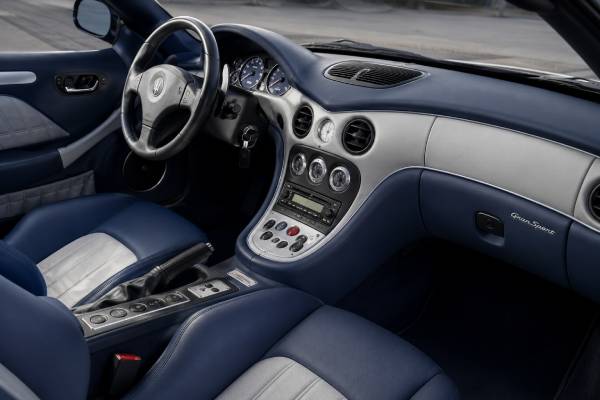
Inside, the Coupé offers one of the M138 family’s strongest practical advantages. The front seats are broad and supportive, while the rear compartment can carry adults on shorter trips and children comfortably. Leather covers most visible surfaces. Carbon-fiber inserts change the atmosphere from traditional grand tourer to modern sporting luxury, but the dashboard architecture remains soft and rounded rather than stark.
The manual gear lever is a visual and tactile centerpiece. Its long linkage connects the cabin to the transaxle behind it, and the shift can feel mechanical when cold. A healthy system should become cleaner as the oil warms. Excessive looseness, crunching, or resistance points to linkage wear, clutch drag, synchro damage, incorrect lubricant, or adjustment issues.
Packaging the gearbox at the rear also affects service. Exhaust sections, heat shielding, the torque tube, clutch housing, and rear subframe area can complicate access. Jobs that sound ordinary on a front-gearbox car may require substantial labor. This is why a complete history is worth more than a low odometer reading.
The engine bay is tightly organized but visually special. Red cam covers, the sculpted intake, dry-sump plumbing, and front-mounted accessories make it clear that the M138 was engineered as more than a luxury coupe with a large engine. Airflow through the nose feeds separate cooling circuits, and clean radiator faces are vital because debris can collect between heat exchangers.
Sound is central to the design. The standard Coupé exhaust is calmer than a GranSport’s valve-controlled arrangement, but it develops a rich baritone under load and a metallic edge near the upper rev range. For long-distance use, many owners prefer this balance. An aftermarket exhaust can add drama, yet originality is especially valuable on a numbered anniversary car.
Driving the Six-Speed GT
The manual GT feels more natural at low speed than a Cambiocorsa and more involving on an open road. Its clutch is not feather-light, and the shift is not as short as a small sports car’s, but the controls suit the V8’s broad torque and the Coupé’s grand-touring character.
At startup, the engine settles into a textured idle with audible mechanical activity. The throttle response is immediate but not nervous. Below 3,000 rpm the car is easy to place in traffic, and the V8 has enough torque to pull taller gears without strain. Between roughly 4,500 rpm and the 7,000 rpm power peak, acceleration hardens and the sound changes from a low rumble to a layered induction-and-exhaust roar.
The clutch pedal should take up progressively. A high bite point alone does not prove the clutch is worn, but slip under full load, judder when hot, hydraulic leakage, or difficulty selecting reverse requires attention. The gear lever benefits from deliberate movement. Second gear may be reluctant before the transaxle warms, yet it should not grind when the clutch fully releases.
Steering is lighter than some German rivals of the period, but it communicates front-tire loading clearly enough to build confidence. The long wheelbase gives the Coupé calm high-speed behavior. It changes direction with less immediacy than a compact mid-engine sports car, then settles into a balanced arc that rewards smooth hands and early throttle.
The rearward transaxle mass helps traction, but the car can still oversteer if provoked. Stability and traction systems provide a safety layer, especially in wet conditions. Old rear tires are a serious hazard because the V8 can overwhelm hardened rubber without much warning.
Normal Skyhook mode is the best setting for rough roads and motorway travel. The car absorbs long undulations without losing control, and the 18-inch wheels retain useful sidewall. Sport mode reduces pitch and roll, sharpens responses, and makes the car feel smaller, although broken pavement can reveal noise from worn bushes or dampers.
The brakes deliver strong performance when maintained. The pedal is firm and braking distances were competitive in period testing. A soft pedal usually indicates fluid, hose, air, or caliper issues rather than a normal characteristic. Vibration can come from uneven deposits, heat-damaged discs, wheel faults, or suspension play.
As a daily classic, the GT has advantages over the Cambiocorsa. It tolerates creeping traffic without automated clutch slip, makes parking more predictable, and avoids hydraulic pump cycling. The driver still needs to accept heavy fuel use, a wide body, dated infotainment, limited parts availability, and the need for a specialist. On a quiet road, the combination of manual control, V8 response, and supple chassis makes those compromises easy to understand.
Manual-Model Maintenance Realities
The manual transmission removes several costly Cambiocorsa components, but it does not turn the Coupé into a low-maintenance car. Cooling-system age, clutch hydraulics, oil leaks, suspension wear, electrical faults, and neglected annual service remain the major ownership risks.
Clutch, hydraulics, and transaxle
Check the clutch master and slave circuits for fluid loss, internal leakage, and inconsistent pedal feel. A pedal that remains low, changes bite point during the drive, or makes gear selection difficult may indicate hydraulic trouble. Replacing the clutch still involves substantial labor because of the transaxle layout.
Listen for bearing noise in neutral, on overrun, and under load. Inspect the shift linkage and mounts. Fresh, correct-specification transaxle oil can improve cold operation, but it cannot repair damaged synchronizers. A car that repeatedly crunches into a gear after warming needs diagnosis.
V8 and cooling system
The engine should start cleanly from cold, hold stable oil pressure, idle without warning lights, and pull smoothly through the rev range. Inspect cam-cover seals, front-cover areas, dry-sump hoses, oil tank connections, and the underside for seepage. Minor sweating is common; active leaks or oil on exhaust components are not.
Cooling components age even on low-mileage cars. Examine radiators, fans, relays, hoses, thermostat operation, expansion tank, and coolant condition. Confirm that temperature remains stable in traffic with the air conditioning operating. Overheating can damage a sound engine quickly.
Regular oil changes are more important than stretching intervals based on distance. Cars driven only a few hundred kilometers per year still accumulate moisture, fuel dilution, and seal deterioration. Spark plugs, filters, belts, brake fluid, coolant, and gearbox oil should be changed by age as well as mileage.
Chassis and electronic systems
Double-wishbone joints, bushes, anti-roll-bar links, engine mounts, transaxle mounts, and Skyhook dampers all influence how the car feels. A vague or nervous M138 often needs a collection of small chassis repairs rather than one dramatic component.
Scan the Skyhook controller, engine ECU, ABS/MSP system, airbag module, body electronics, and climate controls. A weak battery can create scattered warnings, so battery condition and charging voltage should be checked first. Repeated faults after voltage is stabilized require proper investigation.
Interior aging includes sticky switch coatings, lifting leather, sagging headlining, cracked seat bolsters, failing displays, and delaminating carbon trim. Anniversary-specific carbon and plaque pieces are difficult to replace accurately. Preservation by a skilled trimmer is preferable to generic replacement.
The manual GT benefits from regular use. A fully warmed drive keeps seals lubricated, brakes clean, tires round, and electrical connections active. Short cold starts without a proper journey do more harm than storage with a maintained battery and controlled environment.
Inspection and Purchase Strategy
The right car is the example with verified anniversary provenance and evidence of continuous mechanical care. Manual rarity should not excuse poor shifting, missing trim, accident damage, or years of deferred service.
Begin with authenticity. Obtain clear photographs of the VIN, anniversary plaque, original wheels, calipers, pedals, carbon trim, grille badges, books, keys, and invoice. Compare the paint and interior with the build record. Ask whether any original components were removed and whether they remain with the car.
Next, arrange a specialist inspection that includes:
- A cold start after the car has sat overnight.
- Compression or leak-down testing when engine condition is uncertain.
- Cooling-system pressure and fan-operation checks.
- Inspection of dry-sump hoses and oil leaks.
- Clutch operation, hydraulic condition, and transaxle synchro evaluation.
- Full diagnostic scanning of all available modules.
- Measurement of brake discs and examination of calipers and hoses.
- Suspension-joint, damper, wheel, and tire inspection.
- Paint-depth readings and underside checks for crash repair.
- Confirmation that every anniversary feature is present or documented.
A road test should include a cold gearbox, full operating temperature, urban speeds, a smooth highway section, rough pavement, and several controlled braking events. Do not accept “they all do that” as an answer for grinding gears, unstable temperature, warning lights, steering vibration, or a wandering chassis.
Value is driven by condition more than mileage. A 70,000 km car with a recent clutch, fresh cooling components, restored trim, good tires, and detailed invoices may be a stronger purchase than a 25,000 km example with old fluids and years of inactivity. The premium for the anniversary package should reflect completeness and proof, not merely a seller’s description.
Modifications need judgment. Reversible improvements such as modern tires, an updated battery maintainer connection, improved audio hidden behind original trim, or a carefully selected exhaust can make the car easier to use. Keep all original pieces. Non-original wheels, drilled bodywork, altered plaques, poorly installed electronics, and aggressive suspension changes weaken both reliability and collector appeal.
Before purchase, build a first-year reserve for service, tires, brake work, cooling repairs, and unexpected electrical issues. The manual car avoids a Cambiocorsa actuator bill, but a clutch, gearbox repair, or major suspension refresh can still be expensive.
A properly sorted Coupé GT 90th Anniversary Edition delivers a rare form of satisfaction. It is fast without being frantic, spacious without feeling ordinary, and mechanical without being crude. The three-pedal transaxle gives the driver a direct connection to one of Maserati’s most characterful modern V8s, while the numbered specification adds historical interest. Buy one only after proving what it is and how it has been cared for; then use it as the grand tourer it was built to be.
References
- Coupé Model – Gran Turismo models | Maserati 2026
- 2004 Maserati Coupé 90th Anniversary Edition 2004
- 2002 Maserati Coupe – Road Test & Review – Automobile Magazine 2002 (Road Test)
- Receive the Certification of Authenticity for your car | Maserati 2026
Disclaimer
This article is for informational purposes and does not replace professional diagnosis, inspection, or repair. Specifications, torque values, service intervals, and procedures vary by VIN, market, production date, and equipment; always confirm them in the official service documentation for the individual car.
Please share this article on Facebook, X/Twitter, or another enthusiast platform to help support our work.