


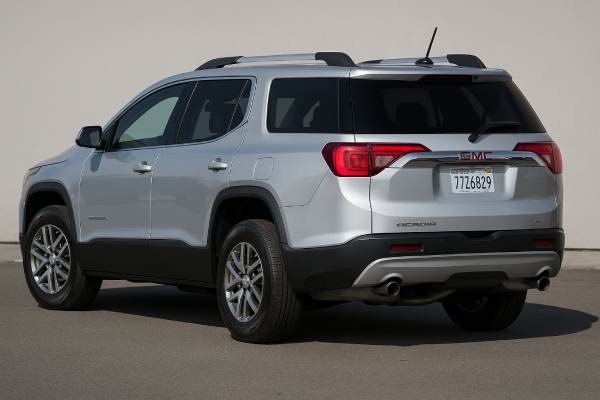
The 2016–2019 GMC Acadia AWD with the 2.5 litre LCV four-cylinder engine sits in an unusual spot in the midsize SUV class. It is lighter and more efficient than the previous generation, yet still offers three rows, available seven-seat capacity, and a fairly sophisticated on-demand all wheel drive system. For many owners, it is a family workhorse first and an all-weather tool second. Understanding how the 2.5 AWD package is engineered – from the Hydra-Matic 6-speed automatic and drive mode selector to its high-strength body structure and active safety tech – helps you decide whether it fits your usage pattern. This guide walks through the core specs, performance, common issues, maintenance expectations, and how the 2.5 AWD compares with rivals. The goal is to give you enough detail to choose the right trim, maintain it intelligently, and avoid predictable problems as the vehicle ages.
At a Glance
- All wheel drive with selectable modes (2WD, AWD, Sport, Off-Road, Tow/Haul) makes the 2.5 Acadia a confident all-weather family SUV.
- Spacious cabin and flexible seating with up to seven seats, plus a flat load floor and around 79 ft³ (≈2,237 L) of maximum cargo space.
- Four-cylinder engine is adequate but not strong for towing; V6 is better if you regularly haul close to 2,000 lb (907 kg).
- Watch for intermittent “Shift to Park” messages and stay ahead of AWD fluid care to help avoid expensive driveline repairs.
- Plan on engine oil and filter service based on the oil-life monitor or roughly every 10,000–12,000 km or 12 months, whichever comes first.
What’s inside
- GMC Acadia 2.5 AWD Rundown
- Acadia 2.5 AWD Specs and Data
- Trims, Options, and AWD Safety
- Reliability, AWD System, and Fixes
- Service Schedule and Used-Buy Tips
- Driving Feel and All-Weather Performance
- Acadia 2.5 AWD Versus Competitors
- Back to top
GMC Acadia 2.5 AWD Rundown
For 2017 (with carry-over into 2018 and 2019), GMC downsized the Acadia onto the C1UG platform and offered a lighter, more fuel-efficient crossover with available all wheel drive. The 2.5 litre LCV four-cylinder serves as the base engine, paired here with a 6-speed Hydra-Matic automatic and an on-demand AWD system that can fully disconnect the rear driveline to save fuel.
On paper, 193 hp and about 188 lb-ft (≈255–258 Nm) of torque are on the modest side for a three-row SUV, but the reduced curb weight – roughly 1,900–1,950 kg (≈4,200–4,300 lb) for a typical AWD trim – keeps everyday performance usable. The 2.5 AWD is best thought of as a family commuter that occasionally tackles bad weather, not a heavy tow rig.
The all wheel drive hardware is more sophisticated than simple “slip and grip.” A power transfer unit (PTU) on the transmission sends torque to a rear drive module, which can engage or disconnect through clutches. When fitted with the Active Twin Clutch rear drive unit (mainly on All Terrain-oriented variants), the system can bias torque side-to-side across the rear axle to help the vehicle rotate more confidently in corners and claw for traction on split-mu surfaces.
The Acadia’s cabin emphasises usability: sliding second-row seats, an available two-chair layout in the middle row, and a third row that folds flat into the floor. For daily life, owners tend to appreciate the easy step-in height, wide-opening rear doors and generous small-item storage more than any single headline spec.
Safety is another pillar. All 2.5 AWD Acadias share a strong body shell with extensive high-strength steel and come with a full complement of airbags and stability control, while upper trims can add advanced driver assistance such as forward automatic braking and lane keep assist.
If you want a midsize SUV with decent efficiency, true winter capability, and a manageable footprint, the 2.5 AWD Acadia is a pragmatic choice – as long as you understand its power and towing limits and stay ahead of a few known reliability items.
Acadia 2.5 AWD Specs and Data
This section focuses on the 2017–2019 GMC Acadia AWD with the 2.5 L LCV four-cylinder and 6-speed automatic. Figures may vary slightly by trim and market, but the values below capture the typical configuration.
Engine and performance
| Item | Value |
|---|---|
| Engine code | 2.5 L LCV inline-4, direct injection |
| Layout and valvetrain | Transverse I-4, DOHC, 4 valves/cyl |
| Bore × stroke | ≈ 88 mm × 101 mm (3.46 × 3.98 in) |
| Displacement | 2.5 L (≈ 2,457 cc) |
| Induction | Naturally aspirated |
| Compression ratio | ≈ 11.3:1 (market-dependent) |
| Max power | ≈ 193 hp (144 kW) @ 6,300 rpm |
| Max torque | ≈ 188 lb-ft (255–258 Nm) @ ≈4,000–4,400 rpm |
| Fuel system | Direct injection with variable valve timing |
| Timing drive | Chain (no scheduled replacement) |
| Emissions standard | U.S. LEV III / Tier 3 equivalent in most markets |
Fuel economy and efficiency (2.5 AWD)
(Official ratings; expect real-world variation.)
- City: ~21 mpg US (≈ 11.2 L/100 km)
- Highway: ~25 mpg US (≈ 9.4 L/100 km)
- Combined: ~23 mpg US (≈ 10.2 L/100 km) in gentle mixed use
- Real-world highway at 120 km/h: often around 9.5–10.5 L/100 km (22–25 mpg US), depending on load, tyres, and weather.
Aerodynamics are typical for a midsize crossover; the frontal area and drag coefficient are adequate rather than class-leading, which is why speed and roof loads can have a noticeable effect on consumption.
Transmission and driveline
| Item | Value |
|---|---|
| Transmission | Hydra-Matic 6T50 6-speed automatic |
| Drive type | On-demand AWD with front-drive disconnect |
| Final drive ratio | ≈ 3.16:1 on most 2.5 AWD models |
| Typical gear ratios (6T family) | 1st ≈ 4.48, 2nd ≈ 2.87, 3rd ≈ 1.84, 4th ≈ 1.41, 5th 1.00, 6th ≈ 0.74, reverse ≈ 2.88 |
| AWD hardware | Power Transfer Unit (PTU) + rear drive module; some trims with Active Twin Clutch rear axle |
| Drive mode selector | 2WD (AWD disconnect), AWD, Sport, Off-Road/All Terrain (depending on trim), Tow/Haul |
In 2WD mode the PTU disconnects and the rear shaft does not spin, which can save fuel and reduce wear. When AWD is selected or slip is detected, the system pre-emptively engages the PTU and rear clutches to send torque rearward.
Chassis, weight, and dimensions
| Item | Value |
|---|---|
| Platform | C1UG crossover (unibody) |
| Front suspension | MacPherson strut with coil springs and stabiliser bar |
| Rear suspension | Five-link independent with coil springs and stabiliser bar |
| Steering | Electric rack-and-pinion, variable assist |
| Brakes | Four-wheel discs, ABS and stability control standard |
| Length | ≈ 4,917 mm (193.6 in) |
| Width (without mirrors) | ≈ 1,915 mm (75.4 in) |
| Height | ≈ 1,745 mm (68.7 in) |
| Wheelbase | ≈ 2,857 mm (112.5 in) |
| Ground clearance | ≈ 180–185 mm (≈7.1–7.3 in), trim-dependent |
| Turning circle | ≈ 11.8 m (≈38.7 ft) kerb-to-kerb |
| Curb weight (typical AWD 2.5) | ≈ 1,900–1,950 kg (≈4,200–4,300 lb), option-dependent |
| GVWR | Around 2,700–2,730 kg (≈6,000 lb) |
| Fuel tank | ≈ 83 L (≈21.9 US gal; ≈18.3 UK gal) |
| Cargo volume | ≈ 362 L (≈12.8 ft³) behind 3rd row; up to ≈2,237 L (≈79 ft³) with rows folded (VDA/SAE style) |
Performance and capability
| Metric | Typical value (2.5 AWD) |
|---|---|
| 0–100 km/h (0–62 mph) | ~9.5–10.5 s depending on load and conditions |
| Top speed | Electronically limited; typically around 190–200 km/h (118–124 mph) in testing |
| Towing capacity (2.5 AWD) | Up to 2,000 lb (≈907 kg) with proper equipment |
| Payload | Typically 450–550 kg (≈1,000–1,200 lb) depending on trim |
| Roof load rating | Commonly around 75–100 kg (165–220 lb) including rack – verify per vehicle label |
The 2,000 lb tow rating is adequate for small trailers, light boats, or a pair of motorcycles. If you regularly tow near that limit or in hilly country, the 3.6 V6 is noticeably better suited.
Fluids and service capacities (approximate)
Always verify against your exact VIN and service documentation:
- Engine oil: Dexos1-approved 5W-30 or 0W-20 (market-specific); ≈ 5.7 L (≈6.0 qt) with filter on many AWD 2.5s.
- Coolant: Long-life Dex-Cool; total system capacity ≈ 9–10 L (≈9.5–10.5 qt); typical 50/50 mix.
- Automatic transmission fluid: Dexron VI (or current GM replacement); total fill ≈ 8–9 L (≈8.5–9.5 qt); drain-and-fill is less.
- Rear drive module fluid: GM-specified gear oil; capacity usually around 0.7–1.0 L; often labelled “fill-for-life” but many specialists recommend periodic changes.
- PTU / power transfer unit: GM-specified gear oil; small capacity and high thermal load – treat any leaks or burning smell seriously.
- A/C refrigerant: Typically R-134a or R-1234yf depending on market/year; charge amount and compressor oil type must be checked in the under-hood label.
Electrical and safety tech snapshot
- Alternator output: Around 150 A on many builds.
- 12 V battery: Commonly 70–80 Ah AGM or flooded battery; exact group size varies by market.
- Safety structure: Multi-load-path front rails, high-strength steel cage, front, side-impact and side-curtain airbags.
- Driver assistance availability (trim-dependent): forward collision alert, forward automatic braking, lane keep assist with lane departure warning, blind-spot monitoring, rear cross-traffic alert, surround-view camera, and Safety Alert Seat.
Trims, Options, and AWD Safety
On the second-generation Acadia, the 2.5 AWD configuration was positioned as an entry all-weather drivetrain, typically paired with mid-range trims rather than the very base model. Exact equipment depends on market, but the following pattern is common.
Trim and equipment overview (2017–2019, 2.5 AWD focus)
- SLE-2 AWD
- Often the primary home of the 2.5 AWD powertrain.
- Cloth or optional leather-appointed seats, 7-passenger or 6-passenger layout (with second-row captain’s chairs).
- 7- or 8-inch infotainment with Apple CarPlay/Android Auto in many markets.
- Power liftgate available, plus convenience options such as remote start and heated front seats.
- Typically rides on 18-inch wheels and all-season tyres.
- SLT AWD (with 2.5 in some regions)
- More common with the 3.6 V6, but certain fleets/markets combined SLT equipment with the 2.5 AWD.
- Leather seating, more sound insulation, additional driver-assistance options.
- Available Bose audio, larger wheels, and more sophisticated instrument cluster.
- All Terrain / Off-road-oriented packages
- Usually paired with the 3.6 V6, but worth mentioning because of their AWD logic.
- Include Active Twin Clutch rear axle, specific All Terrain drive mode, and revised front/rear styling.
- Two-row interior layout with additional storage bins in the cargo area.
Quick identifiers for AWD models include a rear differential housing visible between the rear wheels, an AWD badge in some markets, and the presence of an AWD mode indicator near the drive mode selector.
Functional differences by trim and options
- Brakes and suspension: Denali and some higher trims offer continuous damping control and slightly different wheel/tire packages, improving ride control but raising replacement costs.
- Steering and chassis: All use electric power steering and similar basic geometry; differences are mainly in tyre size and damper calibration.
- Towing: A factory towing package typically adds a hitch receiver, wiring, and sometimes a higher-capacity cooling setup and Tow/Haul mode availability.
When shopping used, note whether the vehicle has the factory tow package if you plan any regular towing – retrofitting a hitch alone does not necessarily give you the same cooling margin or legal rating.
Safety ratings in brief
In major crash-test programs, this generation Acadia generally scores well for occupant protection:
- Strong ratings in frontal and side crash tests, reflecting the high-strength steel structure and well-tuned restraints.
- Rollover resistance roughly in line with other midsize crossovers, helped by the lower weight and reasonably wide track.
- Headlight performance and some advanced safety equipment availability can limit top awards; base halogen headlights often test worse than HID or LED units on higher trims.
Because ratings sometimes vary by trim (for example, due to optional safety packages or different headlights), it is worth checking the exact year and equipment level of a vehicle you are considering rather than assuming all 2.5 AWD Acadias perform identically.
Safety systems and ADAS evolution
- Standard core safety: ABS, stability control, traction control, rearview camera, multiple airbags, tyre-pressure monitoring.
- Available systems, often via packages or upper trims:
- Forward Collision Alert and Forward Automatic Braking.
- Lane Keep Assist with Lane Departure Warning.
- Lane Change Alert with Side Blind Zone Alert.
- Rear Cross-Traffic Alert.
- Front and Rear Park Assist.
- Surround Vision (multi-camera 360° view).
- Safety Alert Seat (tactile warning in the driver’s seat rather than chimes).
Calibration of radar and camera-based systems is important after windshield replacement, front-end collision repairs, or ride-height changes. Plan for professional recalibration if you modify suspension or steering.
On balance, a 2.5 AWD Acadia equipped with the major driver-assistance options and better headlights can be a very safe family vehicle. When buying used, prioritise examples with these packages already fitted if budget allows.
Reliability, AWD System, and Fixes
As an all wheel drive three-row crossover, the 2.5-litre Acadia has more systems to look after than a simple front-drive compact, but most are manageable if you know where to look. This section focuses on the AWD-equipped four-cylinder models, though many issues overlap with the V6 range.
Engine and powertrain
- 2.5 L LCV engine (overall):
- Generally solid bottom end and block design.
- Occasional complaints of rough idle or stalling can arise from carbon deposits on intake valves (as with many direct-injection engines), dirty throttle bodies, or software calibration issues.
- Regular high-quality fuel, periodic intake cleaning, and up-to-date ECU software help.
- Oil consumption and leaks (occasional, usually low-severity):
- Some owners report mild oil use at higher mileage, often manageable with top-ups between oil changes.
- Cam cover and front crank seals can seep with age; addressed by resealing and ensuring PCV system health.
- Stop/Start system behaviour:
- The factory stop/start can feel abrupt if the battery is weak or the starter circuit is stressed.
- A declining 12 V battery or high electrical loads can cause the system to disable itself; treating it as an early warning sign rather than an annoyance is wise.
AWD system and driveline
- PTU and rear drive module fluid stress (occasional to common at high mileage):
- The PTU has a small fluid volume and lives near hot exhaust components. Heavy towing, frequent AWD use, or extended high-speed driving can darken fluid quickly.
- Symptoms of trouble include burnt fluid smell, grinding or whining noises, or AWD warning messages.
- Preventive fluid changes ahead of any official “lifetime” claims are cheap insurance.
- Active Twin Clutch rear axle (on certain AWD trims):
- Offers better handling and traction but adds complexity.
- Clutch chatter, binding, or noises on tight turns may point to contaminated or wrong-spec fluid, clutch wear, or control module issues.
- Using the correct fluid and following updated service bulletins is important.
- Driveshaft and wheel bearings:
- Typical crossover wear pattern: rear wheel bearings and hub assemblies can grow noisy after high mileage or rough-road use.
- Vibration under load should be investigated for tyre balance, driveshaft condition, and worn mounts.
Transmission and “Shift to Park” behaviour
- 6T50 automatic reliability:
- With sane fluid temperatures and clean ATF, the 6-speed is generally durable.
- Harsh shifting, flare, or delayed engagement often respond well to software updates and fluid service.
- Ignoring early symptoms and overheating the unit is what leads to expensive rebuilds.
- “Shift to Park” message (common enough to warrant a bulletin):
- Some 2017–2019 Acadias exhibit an intermittent “Shift to Park” warning even when the shifter is already in Park.
- Root cause is usually the park switch inside the shifter assembly not sending a clean signal to the body control module.
- Manufacturer guidance has included cleaning the internal switch, updating components, and in many cases adding an inline jumper harness or replacing the shifter assembly.
- If your vehicle shows this behaviour, ask a dealer to check for open bulletins and confirm which remedy applies; this is a known pattern, not a mystery fault.
Chassis, body, and electrical
- Suspension bushings and links:
- Front control arm bushings and stabiliser-bar links can wear, causing clunks over bumps and vague steering.
- Replacement restors tightness and is typical maintenance on a heavier crossover.
- Corrosion hotspots:
- In rust-belt climates, pay attention to rear subframe mounts, brake lines, and underbody seams.
- Regular underbody rinsing and periodic inspections go a long way.
- Water leaks and electronics:
- Blocked sunroof drains or tailgate seals can cause water ingress into the rear cargo or headliner areas, leading to stained trim or electrical gremlins.
- Checking drains and seals, especially after windshield or body repairs, can prevent more serious issues.
Recalls, TSBs, and extended coverage
- Recalls:
- Campaigns can cover items such as seat-mounting hardware, airbags, or software behaviours.
- Use the VIN with official recall databases to confirm that all actions are complete.
- Technical Service Bulletins (TSBs):
- Address issues such as “Shift to Park” warnings, drivability calibration updates, and noise/vibration fixes.
- TSBs are not recalls but provide dealers with official repair procedures; having these documented on service records is a plus when shopping used.
Pre-purchase reliability checks
If you are evaluating a used 2.5 AWD Acadia:
- Verify complete service history, especially regular oil changes and any transmission or AWD fluid services.
- Confirm recall and TSB completion via official VIN lookup.
- Test the shifter repeatedly for any “Shift to Park” message or reluctance to recognise Park.
- Drive in tight circles with steering at full lock and listen for AWD axle or differential noises.
- Check for leaks at the PTU, rear drive module, and transmission pan, and inspect underbody for corrosion.
Handled proactively, most issues can be managed before they turn into major failures.
Service Schedule and Used-Buy Tips
The Acadia’s official maintenance schedule is oil-life-monitor-driven, but many owners prefer clear distance and time markers. The intervals below are typical practical guidelines for a 2.5 AWD in mixed use; always confirm with your regional manual and adjust for severe conditions.
Core maintenance intervals (approximate)
- Engine oil and filter
- When the oil-life monitor requests, or about every 10,000–12,000 km (6,000–7,500 miles) / 12 months.
- More frequent changes (7,500–8,000 km) if you tow, idle extensively, or drive mostly short trips.
- Engine air filter
- Inspect every 20,000–25,000 km (12,000–15,000 miles); replace around 45,000–60,000 km or sooner in dusty areas.
- Cabin (pollen) filter
- Replace roughly every 24,000–30,000 km (15,000–18,000 miles) or every 2 years to keep HVAC performance and interior air quality up.
- Spark plugs (iridium)
- Often listed around 150,000 km (≈90,000 miles) under normal conditions.
- If misfires or rough running occur earlier, test and replace sooner.
- Coolant (Dex-Cool)
- Long-life coolant can have first replacement around 5 years / 240,000 km in many manuals, but a 5–7 year / 160,000–200,000 km interval is a reasonable practical target.
- Automatic transmission fluid
- Many guides suggest “life-of-vehicle” under light duty, but a prudent interval is 80,000–100,000 km (50,000–60,000 miles) for a partial drain and refill, especially on an AWD that sees towing or steep grades.
- AWD system fluids
- PTU and rear drive module: although often described as not requiring regular service, changing fluid every 80,000–100,000 km (or sooner after heavy towing) significantly reduces risk of expensive failures.
- Always use the exact specified fluid; mixing generic gear oils is a bad idea here.
- Brake fluid
- Replace every 3 years regardless of mileage to combat moisture absorption and corrosion.
- Brake pads and rotors
- Inspect at least annually; many Acadia owners see front pads last 40,000–70,000 km depending on driving style, with rears often lasting longer.
- Tyres, alignment, and rotation
- Rotate every 10,000–12,000 km with oil changes.
- Check alignment if you notice pulling, uneven wear, or after pothole impacts.
- Correct tyre size and load rating are important for AWD system health.
- Serpentine/auxiliary belt and hoses
- Inspect from around 90,000 km (60,000 miles) onward; plan replacement in the 120,000–150,000 km range or at the first sign of cracking or noise.
- 12 V battery
- Typical life is 4–6 years; weak batteries can trigger odd electrical behaviour and affect stop/start operation. Proactive replacement before total failure is wise in harsh climates.
Key torque values to know (always verify for your VIN)
- Wheel lug nuts: commonly around 140 Nm (≈103 lb-ft).
- Engine oil drain plug: approximate values around 25–30 Nm (18–22 lb-ft).
- Spark plugs: often about 18–25 Nm (13–18 lb-ft).
These are general figures; always cross-check with official data when working on a specific vehicle.
Buyer’s checklist for a used 2.5 AWD
When inspecting a pre-owned Acadia:
- Powertrain and AWD
- Cold start: listen for rattles, knocks, or loud injector tick beyond a brief warm-up.
- Transmission: check for delayed engagement, harsh shifts, or flare on 2–3 or 3–4 shifts.
- AWD: switch between 2WD, AWD, and other modes; make sure indicator lights work and there are no warnings.
- Leaks and corrosion
- Inspect PTU and rear drive module for wetness or burnt fluid smell.
- Check underbody for rust, especially on subframes and brake lines in salty regions.
- Interior and electronics
- Test every seat, window, lock, infotainment function, and camera.
- Confirm that the rear seat reminder and other alerts function as expected.
- Check for damp carpets or musty odours that could indicate water ingress.
- Service and paperwork
- Ask for printouts showing recall and bulletin completion.
- Prefer vehicles with documented regular oil changes and any ATF/AWD fluid services.
Which years and specs to target
- 2017–2018 2.5 AWD with good service records are often strong value buys; early ownership issues will usually have surfaced by now.
- Trims with key safety packages (forward automatic braking, blind-spot monitoring, rear cross-traffic alert) are worth the premium if you plan to keep the vehicle long-term.
- If you tow regularly near 2,000 lb, strongly consider the V6 instead of pushing the 2.5 to its limits.
With sane maintenance and realistic expectations about performance, the 2.5 AWD Acadia can deliver a long, low-drama service life.
Driving Feel and All-Weather Performance
On the road, the 2.5 AWD Acadia feels more like a slightly large wagon than a bulky SUV, especially compared to the older first-generation model. The C1UG platform and electric power steering deliver a lighter, more responsive character.
Ride, handling, and refinement
- Ride quality:
- With 18-inch wheels and sensible tyre profiles, the Acadia smooths out most everyday bumps well.
- Continuous damping control (where fitted on higher trims) further tidies body motions over broken pavement and highway undulations.
- Very low-profile tyres or heavily worn dampers can make the ride busier, so tyre choice matters.
- Handling and stability:
- The chassis is tuned for safe understeer at the limit, as you would expect in a family SUV.
- The AWD system can subtly help rotate the vehicle when exiting corners, especially on models with the Active Twin Clutch rear axle, making it feel more composed in the wet than a pure front-driver.
- Straight-line stability at highway speeds is good, provided alignment and tyre pressures are in order.
- Noise, vibration, and harshness (NVH):
- Road and wind noise are competitive for the class, though not luxury-car quiet.
- The four-cylinder can sound strained when worked hard; cruising at 110–120 km/h is usually quiet enough for conversation.
Powertrain character
- Throttle response:
- Smooth and predictable in normal driving, tuned for efficiency rather than urgency.
- Sport mode sharpens response slightly and can hold gears longer.
- Low-rpm torque:
- Adequate for city use but not abundant; full loads or steep climbs can require frequent downshifts.
- Owners who often drive fully loaded in hilly terrain may find the engine busy.
- Transmission behaviour:
- In normal mode, the 6-speed upshifts early to save fuel, occasionally “hunting” between gears on rolling highways.
- Tow/Haul and Sport modes reduce this hunting by holding lower gears and allowing higher revs, at the expense of fuel economy.
Real-world efficiency
Expect the following ballpark figures for a healthy 2.5 AWD on standard tyres:
- City driving: 12–13.5 L/100 km (17–20 mpg US) depending on traffic and climate.
- Highway (100–120 km/h / 60–75 mph): around 9.0–10.5 L/100 km (22–26 mpg US).
- Mixed use: in the low-10s L/100 km (21–24 mpg US) for many owners.
Cold weather, short trips, roof boxes, and heavy loads can easily add 1–2 L/100 km to those numbers. Running in 2WD mode when conditions permit and keeping tyres properly inflated are simple ways to preserve economy.
All-weather traction and control
- Snow and ice:
- AWD mode provides reassuring traction from a standstill and improved stability when accelerating on slippery surfaces.
- The system can send torque rearward proactively when slip is predicted, not just after it happens.
- With proper winter tyres, the Acadia feels sure-footed; on worn all-season tyres, braking remains the limiting factor, as with any heavy SUV.
- Off-pavement:
- Off-Road or All Terrain mode adjusts throttle, transmission, and AWD behaviour for loose surfaces such as gravel or mud.
- Ground clearance is sufficient for graded dirt roads and mild trails but not for serious rock-crawling; underbody protection is limited.
- Towing and heavy loads:
- Towing within the 2,000 lb rating, the 2.5 can handle light trailers but will downshift frequently on grades.
- Expect a 20–40% increase in fuel consumption when towing at highway speeds and monitor transmission temperatures where possible.
Overall, the 2.5 AWD configuration suits drivers who value confidence in poor weather more than outright acceleration. It rewards smooth inputs and proactive maintenance rather than aggressive driving.
Acadia 2.5 AWD Versus Competitors
In the crowded midsize three-row SUV segment, the 2016–2019 GMC Acadia 2.5 AWD competes with vehicles such as the Toyota Highlander, Honda Pilot, Ford Explorer, Subaru Ascent, and Chevrolet Traverse. Understanding where it stands helps you judge whether its particular blend of attributes fits your needs.
Space and packaging
- Compared with full-size rivals, the downsized Acadia feels more compact and easier to park, particularly in tight urban spaces and older garages.
- Cabin space is good for families with younger children; adults fit comfortably in the first two rows, while the third row is best for kids or short trips for adults.
- Maximum cargo volume, at roughly 79 ft³, is competitive but still slightly behind the largest players in the class that prioritise sheer volume.
If you routinely carry seven adults and their luggage, a larger competitor might suit you better; if you mainly run five occupants and occasionally use the third row, the Acadia’s balance is attractive.
Performance and fuel economy
- Versus V6 rivals:
- Most competitors pair AWD with a V6 or powerful turbo four, delivering stronger acceleration and better towing ratings (often 2,268–2,720 kg / 5,000–6,000 lb).
- The Acadia 2.5 AWD trades that performance for lower purchase price and slightly better efficiency at light loads.
- Versus other four-cylinder AWD SUVs:
- Some rivals now use smaller turbocharged engines; these can feel punchier in daily driving but may have more complex long-term maintenance considerations.
- The naturally aspirated 2.5 LCV is simpler and may be attractive to buyers who prefer fewer forced-induction components.
AWD system sophistication
- The Acadia’s available Active Twin Clutch rear axle compares favourably with simpler open-differential systems, particularly in split-mu situations or spirited wet-road driving.
- However, it is not as off-road-oriented as some 4×4 systems with low range and locking differentials; this is a crossover-grade AWD tuned for real-world tarmac and light trail use.
Ride, refinement, and technology
- Interior materials and design are generally competitive with mainstream competitors of the era, with Denali and well-optioned SLT trims nudging towards near-premium territory.
- Infotainment with Apple CarPlay and Android Auto helps the 2017–2019 Acadia feel modern, and the availability of features like surround-view cameras and Safety Alert Seat gives it an edge in certain safety-tech comparisons within its age group.
Reliability and ownership
- The 2.5 AWD Acadia does not have the same reputation for bulletproof longevity as, say, a Highlander, but most issues are known and manageable with good maintenance.
- The “Shift to Park” concern and the stress on AWD fluids are the two headline ownership topics; rivals have their own characteristic issues (turbocharger wear, CVT behaviour, or complex infotainment failures).
Who the 2.5 AWD Acadia suits best
Choose the 2.5 AWD Acadia if:
- You value a manageable exterior size, comfortable ride, and confident AWD traction more than maximum towing capacity.
- You prefer a naturally aspirated four-cylinder over a small turbo engine and are willing to live with modest acceleration.
- You are prepared to follow proactive maintenance for the transmission and AWD system rather than treating fluids as “lifetime.”
If you regularly tow near 2,000 lb, drive fully loaded in mountainous regions, or want brisk passing power at highway speeds, a V6 Acadia or a competitor with a stronger engine is likely a better match. For many families, though, the 2.5 AWD offers a useful sweet spot of practicality, safety, and running costs.
References
<a href="https://www.gmc.com/support/vehicle/manuals-guides">Manuals and Guides | Vehicle Support</a> 2024 (Owner’s Manual)<a href="https://www.fueleconomy.gov/feg/bymodel/2017_GMC_Acadia.shtml">Gas Mileage of 2017 GMC Acadia</a> 2024 (Fuel Economy Data)<a href="https://www.iihs.org/ratings/vehicle/gmc/acadia-4-door-suv/2017">2017 GMC Acadia</a> 2024 (Safety Rating)<a href="https://static.nhtsa.gov/odi/tsbs/2020/MC-10183172-9999.pdf">Service Bulletin TECHNICAL</a> 2020 (TSB)<a href="https://www.nhtsa.gov/vehicle/2017/GMC/ACADIA%20">Vehicle Detail Search - 2017 GMC ACADIA | NHTSA</a> 2024 (Recall Database)
Disclaimer
This article is intended for informational purposes only and does not replace professional diagnosis, repair advice, or official service literature. Specifications, torque values, fluid types, and maintenance intervals can vary by VIN, market, production date, and installed equipment. Always confirm procedures and values against the official owner’s manual, service manual, and technical bulletins for your specific vehicle, and consult a qualified technician before performing any repair or adjustment.
If you found this guide useful, you are welcome to share it with other GMC Acadia owners on social platforms such as Facebook or X/Twitter to help support our work and make accurate technical information easier to find.