
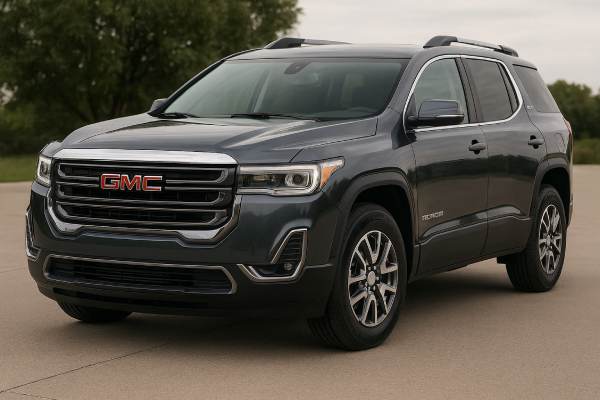
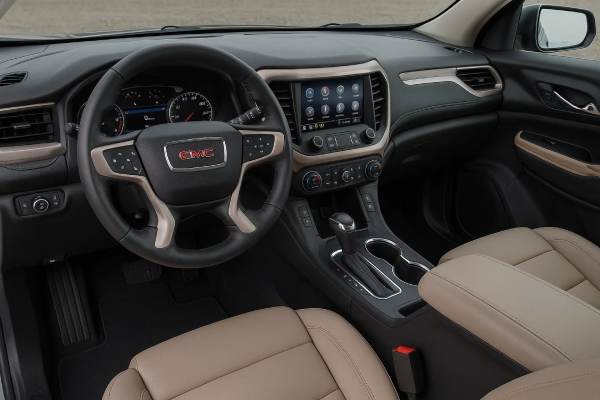
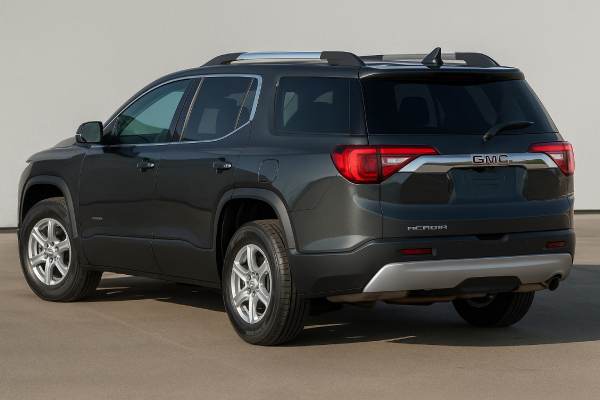
The 2020–2023 GMC Acadia AWD with the LGX 3.6 litre V6 sits in a useful middle ground between family crossover and light-duty tow vehicle. It combines a modern, high-feature V6, nine-speed automatic transmission, and on-demand all-wheel drive in a package that is easy to live with every day. For many owners, the appeal is straightforward: strong passing power even with a full cabin, confident traction in poor weather, and reasonable running costs if you stay ahead of maintenance.
This article focuses specifically on the AWD 3.6 V6 facelift models (C1UG platform). You will find hard numbers on dimensions, performance, fuel economy, and towing, plus a realistic look at reliability patterns and service needs. Where possible, details are drawn from official documentation and test data rather than marketing claims, then translated into clear guidance for buyers, owners, and DIY enthusiasts who want to understand what this powertrain can really do over 10–15 years of use.
Owner Snapshot
- Strong LGX 3.6 V6 delivers 310 hp and smooth power with confident highway passing and merging.
- AWD system with disconnect mode improves all-weather traction while limiting drag when not needed.
- Interior packaging is flexible: three-row seating with useful cargo space and a manageable exterior size.
- Watch for timing-chain stretch and cooling-system neglect; long oil-change intervals accelerate wear.
- Plan on engine oil and filter changes every 10,000 km or 6,000 miles (or 12 months) for long-term durability.
Navigate this guide
- AWD Acadia V6 in detail
- Engine, drivetrain and key figures
- Model ranges, options and protection tech
- Reliability, faults and corrective actions
- Service schedule and buying checklist
- On-road behaviour and real-world economy
- AWD V6 rivals and alternatives
AWD Acadia V6 in detail
The AWD GMC Acadia with the 3.6 litre LGX engine is the “muscle” option in the second-generation Acadia range. Compared with the 2.0 litre turbo models, it trades some efficiency for a more relaxed, naturally aspirated power delivery and higher towing capacity. For many owners who regularly carry passengers or tow, that trade is worthwhile.
Under the bonnet sits GM’s LGX 3.6 litre V6, an all-aluminium, direct-injected engine with dual overhead cams, four valves per cylinder, variable valve timing and cylinder deactivation. In the Acadia it produces 310 hp and roughly 373 Nm (271 lb-ft) of torque, sent through a nine-speed automatic (Hydra-Matic 9T65) to an electronically controlled AWD system. The rear axle can fully disconnect in steady cruising to cut parasitic drag, which is why highway fuel economy is better than you might expect for a 3-row AWD crossover.
The facelift that arrived for model year 2020 brought revised styling, a new infotainment system, refined shift mapping for the nine-speed, and expanded driver-assistance tech depending on trim. Inside, the Acadia still feels narrower than some three-row rivals, but that pays off in easier parking and a comparatively light curb weight for the class.
For the AWD V6 variant, the key use cases are:
- Families needing an all-weather people mover with real passing performance.
- Owners who tow small boats, pop-up campers or utility trailers within the 1,800–2,000 kg (4,000 lb) range when properly equipped.
- Drivers in snow-belt regions who value selectable drive modes and stability at higher speeds.
If you understand its strengths and observe realistic service intervals, the AWD LGX Acadia can be a capable and fairly low-drama long-term companion.
Engine, drivetrain and key figures
This section collects the main hard specs for the 2020–2023 Acadia AWD 3.6 LGX in a scannable format. Values can vary slightly by trim, market, and equipment, so always confirm against the VIN-specific documentation.
Engine and performance (LGX 3.6 V6)
| Item | Specification |
|---|---|
| Engine code | LGX |
| Layout and cylinders | 60° V6, aluminium block and heads |
| Valvetrain | DOHC, 4 valves per cylinder, dual VVT |
| Displacement | 3.6 L (≈ 3,649 cc) |
| Bore × stroke | ~95.0 × 85.8 mm (3.74 × 3.38 in) |
| Induction | Naturally aspirated |
| Fuel system | Direct injection (SIDI) |
| Compression ratio | ≈ 11.5:1 |
| Max power | 310 hp (≈ 231 kW) @ 6,600 rpm |
| Max torque | ≈ 373 Nm (271 lb-ft) @ 5,000 rpm |
| Timing drive | Chain (no scheduled replacement, inspect with age) |
| Cylinder deactivation | Yes, under light load |
| Emissions standard | U.S. Tier 3 / LEV III (typical) |
| Recommended fuel | Regular unleaded petrol |
Fuel economy and aerodynamics (AWD V6)
| Item | Specification (typical U.S. EPA style ratings) |
|---|---|
| Rated city consumption | ~13.1 L/100 km (18 mpg US / ≈ 21.5 mpg UK) |
| Rated highway consumption | ~9.4 L/100 km (25 mpg US / ≈ 30 mpg UK) |
| Rated combined consumption | ~11.2 L/100 km (21 mpg US / ≈ 25 mpg UK) |
| Real-world highway @ 120 km/h, light load | ~10–11 L/100 km (21–23 mpg US) |
| Drag coefficient (approximate) | ~0.33–0.35 |
| Drivetrain loss mitigation | Rear axle disconnect in FWD cruise mode |
Real-world consumption is sensitive to roof racks, larger wheels, winter tyres, and driving style. Short urban trips in cold weather can push city figures closer to 15–16 L/100 km.
Transmission and AWD system
| Item | Specification |
|---|---|
| Transmission type | 9-speed automatic, electronically controlled |
| Transmission code | Hydra-Matic 9T65 |
| 1st / 2nd / 3rd gear | 4.69 / 3.31 / 3.01 |
| 4th / 5th / 6th gear | 2.44 / 1.92 / 1.44 |
| 7th / 8th / 9th gear | 1.00 / 0.75 / 0.62 |
| Reverse | 2.96 |
| Final drive ratio | 3.49 : 1 (typical AWD V6 specification) |
| Drive type | On-demand AWD with electronic multi-plate clutch |
| Rear axle disconnect | Yes, to reduce drag when AWD is not required |
| Differential type | Open differentials with electronic brake-based torque vectoring |
In snow or loose surfaces, the drive modes adjust throttle, transmission mapping, and AWD behaviour. With the trailering package, the Tow/Haul mode recalibrates shift points and can help with engine braking on descents.
Chassis and dimensions
| Item | Specification (typical AWD V6, 2020–2023) |
|---|---|
| Platform | C1UG (second-generation Acadia) |
| Suspension front | MacPherson strut, coil springs, stabilizer bar |
| Suspension rear | Independent multi-link, coil springs, stabilizer |
| Steering | Electric rack-and-pinion |
| Turning circle (kerb-to-kerb) | ≈ 11.8 m (≈ 38.7 ft) |
| Brakes front | Ventilated discs, ~320 mm (12.6 in) |
| Brakes rear | Solid discs, ~315 mm (12.4 in) |
| Typical tyre size (SLT/AT4) | 235–255 section, 18–20 in rims |
| Overall length | ≈ 4,917 mm (193.6 in) |
| Width (excluding mirrors) | ≈ 1,915 mm (75.4 in) |
| Height | ≈ 1,670–1,700 mm (≈ 66–67 in) |
| Wheelbase | ≈ 2,857 mm (112.5 in) |
| Ground clearance | Around 180–200 mm (≈ 7–8 in), trim-dependent |
| Curb weight (AWD V6) | ≈ 1,950–2,000 kg (4,300–4,400 lb), by trim |
| GVWR | Around 2,720–2,720+ kg (≈ 6,000 lb), trim-dependent |
| Fuel tank capacity | ≈ 82 L (21.7 US gal / 18.1 UK gal) |
| Cargo volume (seats up/flat) | Roughly 360 / 2,200+ L (≈ 12.8 / 79 ft³) |
Performance, towing and load-carrying
| Item | Specification (typical AWD 3.6 V6) |
|---|---|
| 0–100 km/h (0–62 mph) | ≈ 7.0–7.3 seconds |
| 0–60 mph | ≈ 6.1–6.5 seconds |
| Top speed (governed) | Around 210 km/h (≈ 130 mph), market-dependent |
| 100–0 km/h braking | ≈ 37–40 m (≈ 120–131 ft), depending on tyres |
| Max towing capacity | Up to about 1,814–2,000 kg (4,000–4,400 lb) with factory tow package |
| Standard towing (no HD cooling) | Often limited to ≈ 1,600 kg (3,500 lb) or less |
| Max tongue weight | Typically 10% of rated trailer weight |
| Roof load | Usually around 75–90 kg (165–200 lb) with OEM rails |
Always check the specific VIN’s trailering section: some trims require the heavy-duty cooling package to reach the highest tow rating.
Fluids, capacities and key torques (typical values)
| System | Specification / Capacity (approximate) |
|---|---|
| Engine oil | Dexos1 Gen2 5W-30; ≈ 5.7 L (6.0 US qt) with filter |
| Engine oil drain plug | ≈ 25–30 Nm (18–22 lb-ft) |
| Engine coolant | Dex-Cool OAT; capacity ≈ 10–11 L (10.5–11.5 qt) |
| Automatic transmission | Dexron VI / equivalent; total ≈ 8–9 L (varies) |
| Rear differential | Synthetic gear oil, 75W-90; capacity ≈ 1–1.5 L |
| Transfer case / AWD unit | Specific GM fluid; capacity typically < 1.5 L |
| Spark plugs | Iridium, heat range per LGX spec; gap ≈ 0.8 mm |
Because LGX and 9T65 service procedures evolve, torque specs and capacities should always be verified in the current service manual before any major work.
Electrical and safety systems
| Item | Specification |
|---|---|
| Alternator output | Typically 155–170 A, trim-dependent |
| 12V battery | Around 70–80 Ah, AGM recommended in cold climates |
| Airbags | Front, side, curtain; driver’s knee on some trims |
| Stability control | Standard ESC with traction control |
| ADAS availability | AEB, forward collision warning, lane keep assist, blind spot, rear cross-traffic, following distance indicator, safety alert seat, depending on trim and option packages |
| Headlight performance | Projector or LED units; better performance on higher trims and with IntelliBeam auto high-beam |
Model ranges, options and protection tech
For the AWD LGX Acadia, the key trims during 2020–2023 were typically SLE, SLT, AT4 and Denali, though exact availability can vary by market and year. All share the same basic engine, transmission and C1UG platform, but they differ in gearing details, tyres, suspension tuning and safety/comfort equipment.
Trim and equipment highlights (AWD V6)
- SLE AWD 3.6
Often the entry point into the AWD V6. Cloth upholstery, smaller wheels, and fewer cosmetic extras, but a good way to get the powertrain at a lower cost. Frequently paired with 18-inch wheels and a simpler audio system. - SLT AWD 3.6
Adds leather seating surfaces, heated front seats, additional driver comfort features, power liftgate and more advanced infotainment. Many SLT examples include the popular Driver Convenience and Driver Alert packages, which bring remote start, heated seats, and several ADAS features. - AT4 AWD 3.6
The off-road-flavoured trim: more aggressive exterior styling, specific wheel and tyre package, slightly different damper and traction tuning, and sometimes a different seating configuration (five or six seats). Ground clearance can be slightly higher, and all-terrain tyres are common. - Denali AWD 3.6
The range-topping luxury variant. Expect 20-inch wheels on many builds, head-up display, premium audio, advanced driver assistance bundles, and extensive chrome exterior trim. Denali models are the most likely to have dual sunroofs and the full suite of safety tech.
Mechanical and functional differences by trim
Mechanically, the engine and gearbox are shared, but trims can differ in:
- Wheels and tyres – 17–20 inch wheels with varying sidewall height. Larger wheels improve appearance and initial steering response, but increase impact harshness and tyre replacement cost.
- Suspension tuning – AT4 may have slightly softer, more off-road biased damping, while Denali tends towards a more controlled, road-biased setup.
- Seating configuration – 7-seat (2-3-2) and 6-seat (2-2-2 captain’s chairs) layouts exist. Captain’s chairs ease third-row access but reduce maximum passenger count.
- Tow equipment – The factory trailering package adds a Class III hitch, 7-pin wiring, heavy-duty cooling, and hitch guidance software. This is essential if you plan to tow near the rated maximum on a regular basis.
Year-to-year updates relevant to safety and tech
Within the 2020–2023 facelift period, changes were evolutionary rather than radical. Software, infotainment, and ADAS calibration received iterative updates. Certain driver-assistance features that were initially optional on mid trims became more widely available or standard equipment in later years. When cross-shopping, a 2022–2023 example may have a more complete ADAS suite than a 2020 with similar trim badges.
Safety ratings and ADAS overview
Regulatory crash testing has generally scored the second-generation Acadia well, with strong frontal and side-impact performance and a solid roof-strength showing. Head restraints, seat design, and side curtain coverage are sufficient for typical family use when occupants are correctly belted.
Typical ADAS availability (varies by trim and package):
- Forward collision alert and automatic emergency braking.
- Front pedestrian braking.
- Lane keep assist with lane departure warning.
- Blind zone monitoring and rear cross-traffic alert.
- Following distance indicator and safety alert seat.
- IntelliBeam automatic high-beam headlamps.
- Front and rear park assist.
Calibration matters after any structural, suspension, or windshield work. If cameras or radar modules are disturbed, ensure that the dealer or a competent specialist performs the specified calibration routine, otherwise the system may function improperly or be disabled.
Reliability, faults and corrective actions
The LGX 3.6 and C1UG Acadia are more robust than some earlier GM 3.6 and crossover generations, but they still have distinct patterns. Thinking in terms of prevalence and severity helps.
Engine and fuel system
Common-to-occasional issues:
- Timing chain stretch and wear
- Symptoms: Rattling at cold start, cam/crank correlation codes, rough idle, reduced performance.
- Root cause: Extended oil-change intervals, low-quality oil, and accumulated varnish slow the chain tensioners and accelerate wear.
- Remedy: Replace chains, guides, tensioners and related hardware; update engine calibration if applicable. Prevention is cheaper: shorten oil intervals and use the specified Dexos-rated oil.
- Carbon deposits on intake valves (DI engines)
- Symptoms: Hesitation, misfires under light load, slight loss of efficiency.
- Root cause: Lack of fuel wash over the intake valves in direct injection leads to deposits, especially with short-trip driving.
- Remedy: Intake-valve cleaning using walnut blasting or approved chemical methods. Use quality fuel and ensure the engine regularly reaches full operating temperature.
- Cooling system leaks and thermostat issues
- Symptoms: Coolant smell, low coolant warnings, slow warm-up or overheating.
- Root cause: Ageing hoses, plastic fittings, radiators and thermostat housings.
- Remedy: Pressure-test system, replace leaking components, and flush with fresh Dex-Cool at the recommended interval.
Transmission and AWD driveline
- 9T65 shift quality concerns
- Symptoms: Harsh 1–2 or 2–3 shifts, flare or hesitation on light throttle, occasional shudder.
- Root cause: Software calibration, contaminated fluid, or in rarer cases internal valve body wear.
- Remedy: First step is usually a software update and fluid exchange with the correct spec. Persistent issues may require valve body work or further diagnosis.
- AWD module or rear-drive unit issues
- Symptoms: AWD warning messages, clunks on engagement, binding sensation at low-speed turning.
- Root cause: Contaminated fluid, electrical faults, or worn clutch packs in the rear drive unit.
- Remedy: Fluid service, software updates, and, if necessary, replacement of the rear-drive unit. Regular fluid changes greatly reduce the risk.
Chassis, suspension and brakes
- Front suspension wear
- Symptoms: Clunks over bumps, vague steering, uneven tyre wear.
- Root cause: Normal wear of control-arm bushings, ball joints, and strut mounts, accelerated by heavy loads and poor roads.
- Remedy: Replace worn components with quality parts, align the vehicle, and inspect tyres for uneven wear or internal damage.
- Brake corrosion and noise in salt-belt regions
- Symptoms: Pulsation, squeal, and reduced braking performance.
- Root cause: Rust on rotor faces and cooling vanes, sticking caliper slide pins.
- Remedy: Regular brake inspections, cleaning and lubrication of slide pins, timely pad and rotor replacement.
Electronics and body
- Infotainment glitches
- Symptoms: Frozen or blank screens, Bluetooth instability, intermittent audio.
- Root cause: Software bugs or rare module faults.
- Remedy: Software updates via the dealer or over-the-air where available. In stubborn cases, module replacement.
- Door and liftgate hardware
- Symptoms: Rattles, sensor errors on hands-free tailgate, or intermittent power-liftgate operation.
- Root cause: Misalignment, worn struts, or sensors exposed to dirt and moisture.
- Remedy: Adjust latch and strikers, replace liftgate struts when weak, clean or replace sensors as required.
Recalls, TSBs and extended coverage
Over the 2020–2023 period, various recalls and technical service bulletins have addressed issues such as:
- Airbag or seat-belt system concerns.
- Electronic brake or stability-control system behaviour.
- Software updates for engine, transmission, or ADAS modules.
Because recall and service campaigns are VIN-specific, owners should:
- Run the VIN through the official recall database.
- Ask the dealer for a full printout of completed and outstanding campaigns.
- Keep documentation of any recall or warranty work for future resale.
Pre-purchase checks
For a used AWD LGX Acadia, insist on:
- Complete service history with evidence of regular oil changes.
- Proof that any recalls and major TSBs have been completed.
- Transmission and AWD fluid services if mileage exceeds 80,000–100,000 km.
- Cooling system inspection and pressure test.
- Professional scan for stored or pending fault codes in all modules.
A well-serviced example can be durable; a neglected one can become expensive relatively quickly due to the labour cost of engine and transmission repairs.
Service schedule and buying checklist
Factory schedules often assume ideal conditions and long intervals. For a real-world mix of city driving, cold starts and occasional towing, a slightly more conservative plan helps the LGX and 9T65 age gracefully.
Practical maintenance schedule (time or distance, whichever comes first)
- Engine oil and filter
- Every 10,000 km / 6,000 miles or 12 months.
- Halve the interval if you tow frequently, idle a lot, or mainly do short journeys.
- Engine air filter
- Inspect every 20,000 km / 12,000 miles; replace by 40,000 km / 25,000 miles, sooner in dusty conditions.
- Cabin (pollen) filter
- Replace every 20,000–25,000 km / 12,000–15,000 miles or 2 years.
- Spark plugs (iridium)
- Typically 95,000–110,000 km / 60,000–70,000 miles in the factory schedule.
- Consider 90,000 km / 55,000 miles if you tow or want maximum reliability.
- Coolant (Dex-Cool)
- First change around 5 years or 160,000 km (100,000 miles), then every 5 years / 100,000 km thereafter.
- Any cooling repair is a good opportunity for a full flush.
- Automatic transmission fluid (9T65)
- Sensible to service at 60,000–80,000 km / 40,000–50,000 miles, especially on AWD and tow vehicles.
- Use the correct spec fluid and follow the official temperature-based fill procedure.
- AWD unit and rear differential fluids
- Every 60,000–80,000 km / 40,000–50,000 miles; more often if you tow or see frequent AWD usage.
- Brake fluid
- Replace every 2–3 years regardless of mileage.
- Brake pads and rotors
- Inspect at every tyre rotation (10,000–12,000 km). Replace when near minimum thickness or if cracked or heavily corroded.
- Tyre rotation and alignment
- Rotate every 10,000–12,000 km / 6,000–8,000 miles.
- Check alignment annually or any time you notice steering pull or uneven wear.
- Serpentine/auxiliary belt and hoses
- Inspect from 80,000 km / 50,000 miles onward; replace if cracked, noisy, or oil-soaked, typically by 10 years or 160,000 km.
- 12 V battery
- Test annually from year 3; plan for replacement around 5–7 years depending on climate and usage.
- Body and underbody corrosion checks
- Annually in salt-belt regions; wash underbody after winter and inspect brake lines, subframes and mounting points.
The LGX uses timing chains rather than a belt, so there is no fixed replacement interval. Instead, listen for rattle, monitor for timing-related fault codes, and treat any evidence of chain wear as reason to intervene before a catastrophic failure.
Buyer’s checklist for a used AWD 3.6 Acadia
When inspecting a candidate vehicle:
- Start-up behaviour
- Listen for chain rattle or ticking at cold start that lasts more than a brief second or two.
- Watch for warning lights before and after start-up.
- Fluid condition
- Oil should not be thick, tar-like or smelling strongly burnt.
- Transmission fluid should be reasonably bright and not smell burnt; brown/black fluid at low mileage is a concern.
- Coolant should be the correct colour and free of oil contamination.
- Driving test
- Check for smooth 1–2 and 2–3 shifts. Occasional firmness is acceptable; repeated harshness or flaring is not.
- Engage and disengage AWD modes if accessible; watch for binding or warning messages.
- Brake from highway speed and note any pulsation, pull or noise.
- Noise and vibration
- Listen for humming that increases with speed (wheel bearings), clunks on sharp steering lock (CV joints or mounts), and wind noise around doors and glass.
- Electronics and ADAS
- Verify operation of infotainment, Bluetooth, cameras, parking sensors and all listed driver-assistance features. Failures here can be costly.
- Underbody and structural checks
- Look for corrosion on subframes, suspension mounting points and brake lines.
- Inspect for evidence of off-road abuse on AT4 models (dented underbody, damaged exhaust).
Recommended target vehicles
- Examples with full dealer or specialist service history, especially with documented oil changes at or below recommended intervals.
- Vehicles with the factory tow package if you plan to tow; retrofitting cooling and wiring later is possible but more complex.
- Later model years (2022–2023) if you want the broadest ADAS coverage and the latest software calibrations.
On-road behaviour and real-world economy
The AWD 3.6 Acadia’s character is defined by its engine and gearbox pairing. The LGX V6 revs freely and feels more like a traditional performance-oriented six than a low-revving truck motor. In everyday driving, it is quiet and unobtrusive; press deeper on the throttle and it delivers a smooth, linear surge of power.
Ride, handling and refinement
- Ride quality
On 18-inch wheels, the Acadia rides comfortably, with good compliance over typical potholes and expansion joints. On 20-inch Denali wheels, impacts are sharper and tyre roar is more noticeable on coarse surfaces. - Handling
The steering is light at parking speeds and firms up nicely at highway speeds. The Acadia is not a sports SUV, but turn-in is predictable and body roll is well contained for a three-row crossover. AT4’s all-terrain tyres soften initial steering response but improve grip on loose surfaces. - Noise, vibration and harshness (NVH)
Wind noise is modest; road noise mostly depends on tyre choice. The V6 is quiet in cruise, with a more pronounced growl when pushed near the upper rev range. Cylinder deactivation transitions are usually smooth and unobtrusive.
Powertrain behaviour
- Throttle response
Initial response is tuned for smoothness rather than aggression. In normal mode there can be a slight delay between pedal input and downshift; selecting Sport or using Tow/Haul mode sharpens the response. - Transmission logic
The nine-speed tends to favour higher gears at light throttle for fuel economy. With updated software and fresh fluid it can shift very smoothly, though occasional low-speed hesitation is still possible in stop-and-go traffic. - AWD traction
In wet or snowy conditions, the AWD system reacts quickly, feeding torque rearward when slip is detected or when drive modes demand it. It helps the Acadia feel stable and confidence-inspiring, especially when accelerating out of junctions or climbing grades.
Real-world efficiency
Owners report a wide spread depending on usage:
- Urban / short trips
13–16 L/100 km (15–18 mpg US) is common in heavy city driving, especially in cold climates. - Mixed driving
11–12 L/100 km (19–21 mpg US) is realistic with a mix of urban and highway use, moderate speeds, and no roof accessories. - Highway cruising
At 100–110 km/h (60–70 mph), expect around 9.5–11 L/100 km (21–25 mpg US), better on flat routes with gentle driving.
Heavy loads, roof boxes, large trailer mirrors and aggressive acceleration all push consumption upward. In contrast, moderate speeds, correctly inflated tyres and gentle throttle inputs can match or slightly beat the official highway ratings.
Towing and load behaviour
With the factory trailering package:
- The V6 has enough torque to pull a mid-size camper or small boat confidently on level ground.
- On long grades, the engine will rev higher and hold lower gears; this is normal for a naturally aspirated engine carrying weight.
- Tow/Haul mode improves shift logic and can help stabilise speed on descents.
Expect a significant fuel consumption penalty when towing: it is common to see 30–50% higher consumption compared with solo highway running, depending on trailer frontal area and mass.
Overall, the AWD LGX Acadia feels composed and capable, balancing everyday comfort with sufficient performance to feel safe and unstrained when fully loaded.
AWD V6 rivals and alternatives
When you look at the GMC Acadia AWD 3.6 V6, you are usually comparing it with other three-row or two-plus-two-row crossovers that offer strong performance and available all-wheel drive.
Key rivals
- Ford Explorer (various engines)
Offers more engine choices, including turbocharged four- and six-cylinder units. The Explorer can tow well and feels more rear-drive in character, but complexity increases with some of the turbo powertrains and hybrid variants. - Toyota Highlander V6 / 2.4 turbo
Known for conservative tuning and long-term durability, the Highlander typically has a softer, more comfort-biased ride and slightly better fuel economy. However, some owners find the older V6 less lively than the LGX at high revs, and interior space distribution differs. - Chevrolet Traverse / Buick Enclave (shared GM architecture)
These are closely related in engineering terms but are larger and heavier, with more interior volume. They often share similar engine families and transmissions, so the driving and ownership experience overlaps with the Acadia but in a bigger shell. - Honda Pilot / Acura MDX
Smooth V6 engines and strong reputations for reliability, with handling that can be surprisingly agile in the MDX. However, transmission designs and service requirements differ, and some model years have their own well-documented quirks.
Where the AWD LGX Acadia stands out
- Size and manoeuvrability – It is slightly smaller than some rivals, which helps in tight city parking while still offering three rows.
- Power-to-weight balance – The 310 hp V6 in a relatively light three-row crossover gives brisk performance without resorting to high-boost turbocharging.
- Driving character – The naturally aspirated V6 offers a linear, predictable feel that many drivers prefer to some turbocharged four-cylinder rivals.
Where rivals may be stronger
- Long-term reputation – Japanese competitors like Highlander and Pilot often enjoy a perception edge in reliability and resale.
- Interior packaging – Some competitors provide more third-row space or cargo room behind the third row.
- Hybrid options – If fuel economy is a top priority, hybrid variants from Toyota, Ford and others are compelling.
If you prioritise a strong, naturally aspirated V6, confident all-weather traction, and manageable overall size, the GMC Acadia AWD 3.6 LGX remains a competitive option. Just factor in a slightly more proactive maintenance plan than the brochure suggests, and you can tilt the odds towards a long, reliable service life.
References
<a href="https://cdn.dealereprocess.org/cdn/servicemanuals/gmc/2020-acadia.pdf">2020 GMC Acadia Owners Manual - Dealer E Process</a> 2019 (Owner’s Manual)<a href="https://www.auto-data.net/en/gmc-acadia-ii-facelift-2020-3.6-v6-310hp-awd-automatic-38057">GMC Acadia II (facelift 2020) 3.6 V6 (310 Hp) AWD Automatic - Full specifications</a> 2020 (Specifications)<a href="https://www.thecarconnection.com/specifications/gmc_acadia_2020">2020 GMC Acadia Specifications</a> 2020 (Specifications)<a href="https://www.fueleconomy.gov/feg/PowerSearch.do?action=noform&path=1&year1=2020&year2=2020&make=GMC&baseModel=Acadia">Power Search: 2020 GMC Acadia</a> 2020 (Fuel Economy Data)<a href="https://www.iihs.org/ratings/vehicle/gmc/acadia-4-door-suv/2020">2020 GMC Acadia 4-door SUV</a> 2020 (Safety Rating)
Disclaimer
This article is provided for informational purposes only and is not a substitute for professional diagnosis, repair, or VIN-specific service information. Specifications, torque values, maintenance intervals, and procedures can vary by market, production date, trim, and installed equipment. Always confirm details against your vehicle’s official owner’s manual, service manual, and current technical bulletins before carrying out any work.
If you found this guide helpful, please consider sharing it with other owners and buyers on social platforms such as Facebook or X/Twitter. Your support helps more drivers make informed decisions and maintain their vehicles safely.