
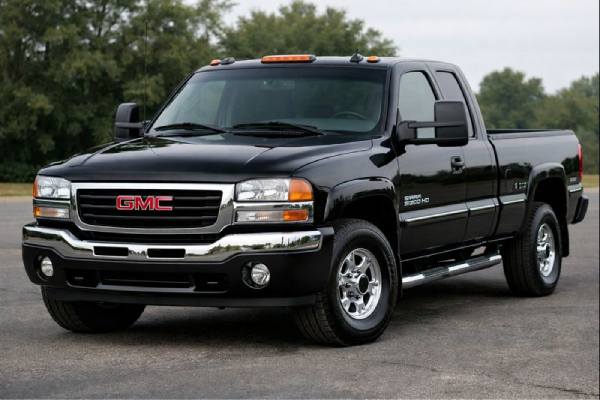
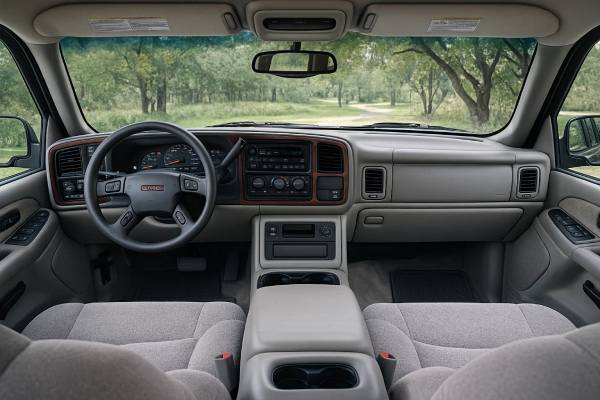
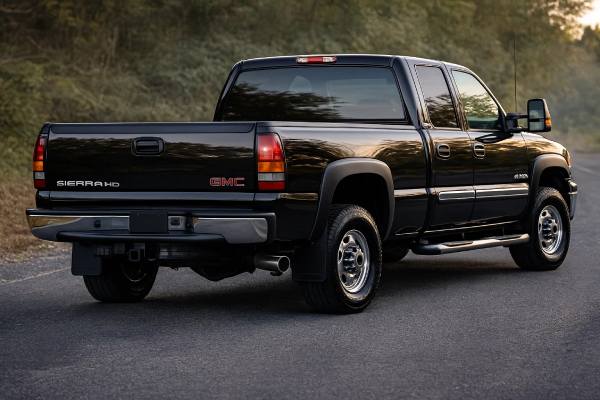
The 2001–2002 GMC Sierra HD RWD with the L18 8.1L V8 (often called the Vortec 8100) is a very specific kind of heavy-duty truck: a big-block gasoline tow platform without the added complexity of four-wheel drive. In the right configuration—especially with towing-oriented axle gearing and an HD automatic—it delivers confident pulling power, steady grade performance, and a “built to work” feel that modern trucks sometimes hide behind layers of software.
RWD matters here. It simplifies the driveline, reduces rotating mass, and removes transfer-case maintenance, which can help long-term ownership cost. The trade is traction. If you tow on wet ramps, launch boats, or drive in snow, tire choice and weight distribution become just as important as horsepower.
This guide focuses on what owners and buyers actually need: real specs that affect decisions, common issues by severity, and a maintenance plan that keeps an 8.1L HD dependable.
Key Takeaways
- Big-block torque makes long grades and heavy trailers feel less stressful than smaller gasoline V8s
- RWD layout reduces driveline complexity and removes transfer-case service and wear points
- Best towing setups usually include tow-oriented axle ratios and a properly serviced HD automatic
- Expect high fuel use under load; gearing, tires, and speed can swing results noticeably
- Plan oil and filter service around 5,000–8,000 km (3,000–5,000 mi) for towing, idling, or short-trip duty
On this page
- RWD 8.1L HD explained
- Core specs and capacities
- Trims, towing gear, and safety
- Problems to watch for
- Service schedule and ownership
- Real-world driving feel
- Compare with other HDs
RWD 8.1L HD explained
The Sierra HD RWD with the 8.1L L18 was designed for owners who move weight, not just people. In the early-2000s GMT800 lineup, it sat at the “gas towing” peak: a big-displacement V8 aimed at hauling and conventional towing where steady torque matters more than peak horsepower. The engine’s appeal is simple: it makes strong pulling power without needing high rpm, so the truck can maintain speed on grades and merge confidently with a load.
The RWD part of the equation is not a footnote—it shapes ownership. Compared with a similar 4WD truck, the RWD model removes a transfer case, front differential, front driveshaft, and related seals and bearings. That means fewer fluid services, fewer wear items, and fewer “mystery vibrations” as the miles pile up. It also means less parasitic drag, which can help fuel use slightly in steady cruising. If your truck spends most of its time on dry pavement towing equipment, boats, or travel trailers, RWD can be the most efficient version of this platform to live with.
Where RWD asks more of the owner is traction management. Big-block torque and a heavy rear axle are helpful, but traction still depends on tires, surface conditions, and load distribution. If you tow on wet ramps, gravel, or snow, you’ll want proper load-range tires and, ideally, a rear locking or limited-slip strategy (common GM HD hardware can vary by build). A good trailer setup matters even more in RWD: correct tongue weight, a quality hitch (including weight distribution when needed), and trailer brakes that are properly tuned keep the truck stable and reduce rear-wheel slip at launch.
Two ownership truths define the 8.1L HD experience:
- It pulls with ease when maintained and geared appropriately.
- It consumes fuel at a rate that surprises drivers used to smaller gas engines—especially in city driving or while towing at higher speeds.
If your priority is heavy towing without diesel ownership complexity, the 8.1L RWD Sierra HD remains a strong match. The best trucks aren’t the shiniest; they’re the ones with proof of cooling system care, regular transmission service, and front-end components that haven’t been ignored.
Core specs and capacities
Below are the specs that most affect real decisions: engine design, driveline hardware, dimensions that influence stability, and the service capacities you’ll actually buy fluids for. Because GMT800 HD trucks vary widely by cab, bed, and GVWR class, many items are shown as “typical” ranges. Always verify your exact ratings and capacities by VIN and under-hood/service labels.
Engine and performance (L18 8.1L)
| Item | Specification |
|---|---|
| Code | L18 (Vortec 8100) |
| Engine layout and cylinders | V8, OHV, 2 valves/cyl |
| Displacement | 8.1 L (8,128 cc) |
| Induction | Naturally aspirated |
| Fuel system | Sequential port fuel injection (PFI) |
| Max power | 340 hp (254 kW) (rpm varies by calibration) |
| Max torque | Typically quoted around 455 lb-ft (617 Nm) (rpm varies by calibration) |
| Timing drive | Chain |
| Emissions and efficiency standard | EPA-era certification (varies by market) |
| Rated efficiency (typical) | High consumption vs smaller V8s; varies strongly by gearing, tires, and load |
Transmission and driveline (RWD)
RWD configurations commonly pair the 8.1L with heavy-duty automatics depending on GVWR and build intent. The goal is heat management and consistency under load.
| Item | Typical configuration notes |
|---|---|
| Transmission | HD automatic (exact unit varies by build; confirm by RPO codes) |
| Drive type | RWD |
| Differential | Open or locking/limited-slip type depending on build |
| Final drive ratio | Often tow-focused ratios in HD applications; verify by axle code |
| Transfer case | Not applicable (RWD) |
Chassis and dimensions (configuration dependent)
| Item | Typical range (cab and bed dependent) |
|---|---|
| Suspension (front/rear) | Independent front (torsion bars) / rear leaf springs (HD) |
| Steering | Truck steering gear (recirculating-ball style) |
| Brakes | HD disc brakes common; size varies by GVWR |
| Wheelbase | ~3,378–4,255 mm (133.0–167.5 in) |
| Overall length | ~5,560–6,270 mm (219–247 in) |
| Width | ~2,017 mm (79.4 in), excluding mirrors |
| Curb weight | Commonly ~2,700–3,300 kg (6,000–7,300 lb) |
| Fuel tank | Often 98 L (26.0 US gal) on many configurations; some long-bed setups differ |
Performance and capability (what to verify)
On paper, towing and payload depend on more than engine output. Cab type, axle ratio, cooling, hitch rating, and GVWR class all matter.
| Item | What to expect |
|---|---|
| Acceleration | Strong midrange pull; 0–100 km/h (0–62 mph) varies widely by weight and gearing |
| Towing capacity | Wide spread by configuration; verify on VIN label and towing guide |
| Payload | Depends on GVWR and curb weight; check tire load rating and axle ratings |
| Braking | Strong for the era when pads/rotors/fluid are fresh; trailer brakes are part of the system |
Fluids and service capacities (decision-making essentials)
These are common service references for the platform. Confirm for your exact build before purchase or service.
| System | Typical spec and capacity guidance |
|---|---|
| Engine oil | 5W-30 meeting GM gasoline spec of the era; ~6.1 L (6.5 US qt) with filter |
| Coolant | GM-approved coolant; capacity commonly around ~19–20 L (~20–21 US qt) depending on equipment |
| Automatic transmission fluid | Fluid spec varies by transmission; verify label and service info before filling |
| Rear differential | Gear oil typically 75W-90 (verify by axle and duty) |
| Brake fluid | DOT 3 (common for the era) |
| Wheel lug torque | Common HD spec is 190 N·m (140 lb-ft) (verify for wheel type and lug count) |
If you only memorize one rule: ratings and capacities are configuration-specific. Use RPO codes and the door-jamb/VIN labels to lock down the exact axle ratio, GVWR class, and cooling/tow equipment before you plan upgrades or towing loads.
Trims, towing gear, and safety
On GMT800 HD trucks, trim names mostly describe comfort—while towing hardware and axle ratings define what the truck can safely do. For a 2001–2002 Sierra HD RWD 8.1L, your buying success comes from identifying the “work spec” underneath the interior options.
Trims and options that change function
You may see a range of trims depending on market, but the practical differences usually come from these items:
- Cab and bed combination: wheelbase and rear overhang influence stability, turning circle, and how the truck behaves with a trailer. Long wheelbase trucks typically feel calmer with heavy conventional towing.
- Axle ratio: tow-oriented gearing improves launch feel and grade performance, especially with heavier trailers. Taller gearing can cruise quietly but may downshift more on hills.
- Rear differential type: some builds include a locking or limited-slip strategy that materially improves traction when launching on wet pavement or gravel—especially useful in RWD.
- Tow package content: look for evidence of integrated wiring, a receiver hitch rated for HD loads, and additional cooling hardware where applicable.
- Brake and tire package: HD ratings assume the correct load-range tires and brake condition. Mismatched tires can reduce payload safety even if the axle itself is capable.
Quick identifiers when you’re inspecting a truck:
- RPO codes (service parts list): these codes tell you axle ratio, differential type, and towing-related equipment.
- Hitch and wiring quality: factory-style routing and connectors usually look integrated, not improvised.
- Cooling system condition: towing life is hard on cooling; patched hoses, mixed coolant types, or chronic seepage are warning signs.
Safety ratings and what applies to HD trucks
Early-2000s HD pickups don’t fit neatly into modern safety-rating expectations. Formal crash-test results may apply to certain body styles or lighter variants rather than every HD configuration. Treat published ratings as informative but not definitive for your exact truck.
What you can assess directly is just as important:
- Airbags and restraints: front airbags are typical; side airbags are often absent on this era of HD trucks.
- ABS: widely present and essential for stability, especially when towing.
- Child-seat provisions: LATCH availability varies by cab and seating position. If child seats matter, verify anchor points in the exact cab style you’re buying.
Driver assistance and stability systems (realistic expectations)
Modern ADAS features—automatic emergency braking, adaptive cruise, lane centering—are not part of the 2001–2002 Sierra HD story. Your “safety tech” is mainly:
- ABS and basic traction strategies (where fitted)
- Good tires, correct alignment, healthy shocks, and properly functioning trailer brakes
- Driver setup choices: hitch height, tongue weight, and trailer brake tuning
If safety is a top priority, the best upgrades are condition-based: high-quality load-rated tires, fresh brake fluid, strong pads/rotors, and suspension components that keep the truck settled under tongue weight.
Problems to watch for
A Sierra HD 8.1L can be very durable, but age, towing, and deferred service create predictable failure patterns. The most useful way to approach reliability is to sort issues by how often they appear and how expensive they are when ignored.
Common (frequent) issues: high probability, usually manageable
- Front-end wear (steering and suspension): looseness, wandering, uneven tire wear, or a “clunk” over bumps often points to idler and pitman arms, tie-rod ends, or ball joints.
- Symptoms → cause → remedy: vague steering → worn linkage joints → replace worn parts as a system, then align.
- Hub/bearing wear and ABS-related faults: growling, vibration, or ABS warning behavior can come from hub assemblies or sensor wiring.
- Symptoms → cause → remedy: rumble that changes with load → hub wear → replace with quality units and verify sensor condition.
- Cooling system fatigue: small leaks, weak radiator caps, aging hoses, or a tired water pump become bigger problems under tow heat.
- Symptoms → cause → remedy: creeping temps under load → leak/flow issue → pressure test, repair leaks, refresh coolant correctly.
Occasional issues: moderate probability, cost depends on timing
- Exhaust leaks at manifolds: a ticking sound on cold start that fades as the engine warms can indicate manifold bolt issues or gasket leakage.
- Remedy: confirm the leak location and repair correctly; don’t overtighten old hardware.
- Fuel delivery and sensor aging: hard starts, hesitation, or unusually poor fuel use (beyond what’s normal for an 8.1L) can trace to fuel pressure issues or aging oxygen sensors.
- Remedy: scan live data, verify fuel pressure under load, and fix root causes instead of guessing.
Rare but expensive: lower probability, higher consequences
- Transmission distress from heat and neglect: towing without regular fluid service can lead to harsh shifting, slip, or limp behavior when hot.
- Remedy: treat towing as severe duty, service fluid/filters on time, and investigate overheating early.
- Brake system neglect under towing: old brake fluid and worn components reduce braking consistency on long descents.
- Remedy: flush fluid every two years, inspect pads/rotors, and ensure trailer brakes are properly set up.
RWD-specific considerations
RWD removes transfer-case and front-driveline failures, but it can expose traction weaknesses:
- One-wheel spin on slick surfaces is common if the rear differential is open.
- Oversize tires or tall gearing can increase launch slip when towing and make the transmission work harder.
Pre-purchase checks that save money
- Cold start plus a full warm drive (verify temperature stability)
- Straight-line braking test (front-end tightness and brake behavior)
- Scan for codes and check for pending faults
- Look for evidence of regular fluid services, especially transmission and cooling
In short: most reliability problems are not exotic. They’re the result of a heavy-duty truck being used heavily while maintained lightly.
Service schedule and ownership
A 2001–2002 Sierra HD RWD with the 8.1L stays dependable when you manage heat, fluids, and wear items proactively. The goal is to keep “routine service” from turning into “catch-up repairs,” which is where big-block HD ownership gets expensive.
Practical maintenance schedule (distance and time)
Use this as a conservative baseline. Tighten intervals if you tow often, idle heavily, or drive short trips.
- Engine oil and filter: every 5,000–8,000 km (3,000–5,000 mi) for towing/short-trip use; longer intervals may be acceptable for light duty, but consistency matters more than chasing maximum interval.
- Engine air filter: inspect at every oil change; replace roughly 20,000–30,000 km (12,000–18,000 mi) in dusty conditions.
- Cooling system: inspect hoses, radiator condition, and cap function at least twice per year; service coolant on schedule and immediately after any contamination or repeated top-offs.
- Spark plugs: replace at major intervals; inspect wires/boots and coils (as applicable) for heat aging.
- Automatic transmission (RWD): follow severe-duty guidance if towing. If service history is unknown, plan a baseline service and monitor shift quality and fluid condition.
- Rear differential: service by mileage and use; towing and high heat justify more frequent changes than casual commuting.
- Brake fluid: flush every 2 years; old fluid reduces braking consistency and increases corrosion risk.
- Tires: rotate every 8,000–10,000 km (5,000–6,000 mi); keep pressures matched to load, and confirm the tire’s load rating supports your axle/GVWR requirements.
- Battery and charging: test annually; many “weird electrical problems” start with weak voltage under load.
Fluids, specs, and “don’t guess” rules
Because GMT800 HD trucks can be built with different transmission units and axle configurations, treat fluid selection as a verification step:
- Use the under-hood/service labels and RPO codes to confirm the correct ATF and any special service notes.
- For gear oils, verify whether any limited-slip/locking axle requires additives or a specific spec.
- Do not mix coolant types casually. If the history is unknown, a correct flush and refill is often cheaper than chasing cooling problems.
Essential torque values for owner-level work
These help when evaluating service quality or planning DIY work (always verify for your exact wheels and fasteners):
- Wheel lug torque: commonly 190 N·m (140 lb-ft) on HD lug setups
- For suspension/steering fasteners, use correct service information; “good and tight” is not a spec on HD trucks.
Buyer’s guide: what to inspect before you commit
- Cooling stability under sustained driving: steady temp, no coolant odor, no bubbling/overflow behavior
- Transmission behavior hot and cold: no flare, no delayed engagement, no burnt smell in fluid
- Front-end tightness: minimal play, even tire wear, predictable braking
- Rust and line condition: brake and fuel lines, frame scaling, body mounts—especially in corrosion regions
- Towing setup sanity: correct hitch height, clean wiring, evidence of trailer brake use and maintenance
Long-term durability outlook: the 8.1L RWD Sierra HD can be a “keep it for years” truck when maintained as a tow vehicle. When neglected, it becomes a steady stream of suspension, cooling, and driveline catch-up repairs.
Real-world driving feel
The Sierra HD 8.1L RWD drives like a heavy-duty tool—solid, stable, and happiest when it has a job. Unloaded ride quality depends on whether you’re looking at a 2500HD or 3500 configuration and what tires are fitted. Many HD trucks ride firm when empty because the rear springs are designed for payload and tongue weight. Put weight in the bed or hook up a trailer and the chassis often feels more composed.
Ride, handling, and NVH
- Straight-line stability: generally strong with a healthy front end. When steering and suspension parts are worn, the truck can feel vague and require constant correction; when restored, it tracks confidently even with a trailer.
- Steering character: expect slower response and heavier effort than modern rack systems. The goal is control and durability rather than quick turn-in.
- Braking feel: these trucks can brake well for their era when the system is fresh. If brake fluid is old, pedal feel and consistency suffer—especially on long descents while towing.
Cabin noise is typical early-2000s HD: more wind and tire roar than modern trucks, and a noticeable V8 presence when pulling hard. Exhaust leaks can add a tick on cold start; don’t confuse that with internal engine knock until you confirm the source.
Powertrain behavior (what owners notice)
The 8.1L’s advantage is how it makes speed feel easy when loaded. You don’t need to “spin it up” to find torque; it pushes early and holds steady through the midrange. That reduces the frantic downshifting you can get from smaller gasoline engines when towing into headwinds or climbing long grades.
Transmission behavior is the deciding factor in how “relaxed” the truck feels. A well-maintained HD automatic will shift decisively and manage heat. A neglected one may hunt between gears, flare on upshifts, or feel soft when hot—issues that often worsen quickly under towing.
Real-world fuel use (RWD context)
Fuel economy is not this truck’s selling point, and towing speed matters more than many owners expect. Typical ranges you may see, depending on gearing and tires:
- Highway steady cruise: roughly 14–18 L/100 km (13–17 mpg US / 16–20 mpg UK)
- Mixed driving: roughly 16–22 L/100 km (11–15 mpg US / 13–18 mpg UK)
- Towing: commonly 20–30+ L/100 km (8–12 mpg US / 9–14 mpg UK) depending on weight, aerodynamics, and speed
RWD can help slightly at steady cruise versus 4WD, but the 8.1L’s appetite still dominates the story—especially with tall tires, heavy loads, or frequent stops.
Towing and traction (RWD reality)
With proper hitch setup and trailer brakes, the truck tows confidently. Where RWD needs attention is launch traction on slick surfaces. Good load-rated tires, a sensible trailer weight distribution, and the right rear differential type matter as much as engine output when conditions are less than ideal.
Compare with other HDs
The 8.1L Sierra HD RWD makes the most sense when you compare it to the trucks buyers usually cross-shop: the diesel Duramax of the same era, the 6.0L gas HD, and competing heavy-duty gas trucks from Ford and Dodge.
8.1L RWD vs Duramax LB7 (diesel, same era)
- Duramax advantages: significantly better fuel economy and longer range, especially under towing. For high-mileage towing, diesel can be cheaper to run if major repairs are avoided.
- 8.1L advantages: gasoline simplicity, smoother cold-start behavior in many climates, and often lower buy-in price. It also avoids diesel-specific repair categories that can be costly on older trucks.
A practical way to decide: if you tow heavy long-distance frequently, the diesel often wins. If you tow heavy but less often, want simpler ownership, or find a cleaner service history in gas form, the 8.1L can be the smarter long-term bet.
8.1L RWD vs 6.0L gas HD
- 6.0L strengths: lower fuel use, often lower operating cost, and strong parts availability.
- 8.1L strengths: better grade-holding and less strain at heavy trailer weights, with a calmer “it has torque to spare” feel.
If your trailer is moderate and you drive the truck daily, the 6.0L usually makes more financial sense. If you routinely tow at the upper end of HD ratings, the 8.1L earns its keep.
8.1L RWD vs Ford V10 and Dodge big-gas HDs (era-appropriate)
- Ford 6.8L V10: similar “big gas towing” logic; capable, but also thirsty. Real-world feel depends heavily on transmission and axle ratio choices.
- Dodge V10-era trucks: strong pulling ability with their own ownership quirks, and regional parts/service familiarity can vary.
Where the GMT800 Sierra HD often stands out is overall platform familiarity and parts coverage. That matters when you’re keeping a 20+ year old tow rig on the road and need steering, brakes, or cooling parts quickly.
Modern HD alternative (why people still choose the 8.1L)
A newer HD truck offers better crash engineering, more towing tech, and far more driver assistance. The trade is complexity and higher buy-in cost. Owners choose the 8.1L because it’s a straightforward, heavy-duty gasoline tow platform—provided they accept the fuel cost and maintain it like a working machine.
If your priorities are simple towing power, fewer driveline parts (RWD), and a platform you can keep alive with consistent maintenance, the 2001–2002 Sierra HD 8.1L still has a clear place.
References
- Recalls | NHTSA 2025 (Recall Database)
- VIN Lookup | NHTSA 2025 (Recall Database)
- Vehicle ratings 2025 (Safety Rating)
- Manuals and Guides 2025 (Owner’s Manual)
Disclaimer
This article is for informational purposes only and is not a substitute for professional diagnosis, inspection, or repair. Specifications, torque values, service intervals, fluids, and procedures vary by VIN, market, configuration, and prior modifications—verify all details using your official service documentation, under-hood labels, and the vehicle’s VIN-specific information before purchasing parts or performing work.
If you found this guide useful, please consider sharing it on Facebook, X, or your preferred community to support our work.