
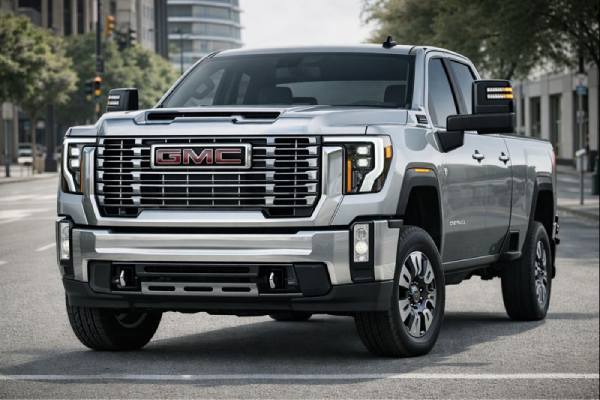
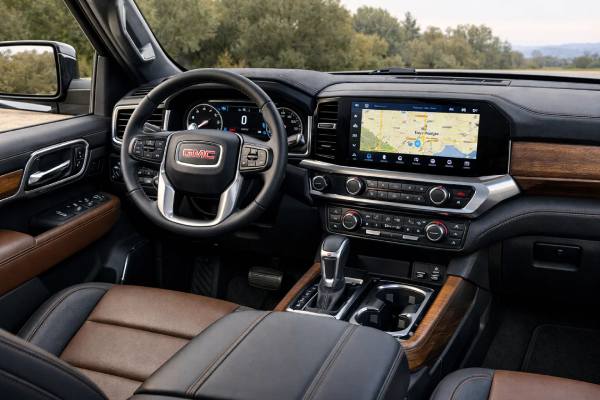
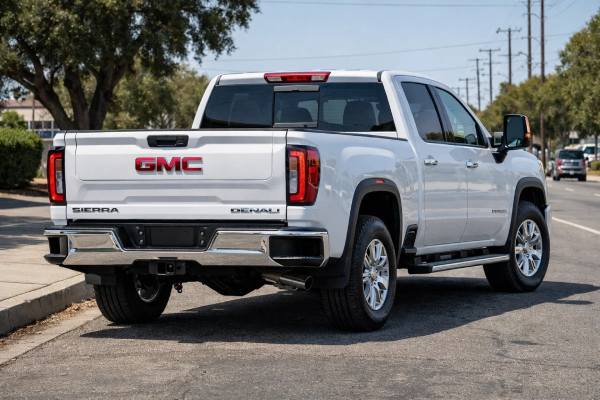
The 2024–present GMC Sierra HD 4WD (T1XX) with the updated L5P 6.6L Duramax is built for owners who regularly haul heavy payloads, tow large trailers, or run demanding work cycles—but still want modern comfort and tech. The facelift matters because it pairs the Duramax with more low-end shove, stronger engine braking control, and a much more up-to-date cabin experience, while keeping the core HD hardware: a boxed ladder frame, heavy-duty axles, and 2-speed 4WD for traction on job sites, snow, and steep grades.
If you’re shopping used or configuring new, the big decisions are cab and bed length (which change wheelbase, turning circle, and ride), single vs dual rear wheel on 3500HD, and trailering equipment (receiver vs gooseneck/fifth-wheel prep). Get those right, and the Sierra HD 4WD becomes a very predictable long-term tool—provided you stay on top of diesel aftertreatment care and fluid services.
Owner Snapshot
- Excellent low-rpm pulling power and confident hill control with integrated engine braking—especially when towing heavy.
- 2-speed 4WD and available trailering camera views make placement and traction easier on poor surfaces.
- Cabin and trailering tech feel modern for an HD truck, including larger screens and more available towing aids.
- Ownership caveat: diesel emissions components (DEF, sensors, DPF regen) dislike repeated short trips and neglected maintenance.
- Typical interval: rotate tires every 12,000 km (7,500 mi) or sooner if you tow often or see uneven wear.
Contents and shortcuts
- Sierra HD 4WD facelift deep dive
- L5P 4WD technical tables
- Trims, packages, and safety tech
- Reliability hotspots and service actions
- Upkeep plan and purchase checklist
- Driving feel under load
- Against Ram and Super Duty
Sierra HD 4WD facelift deep dive
Think of the 2024–present Sierra HD 4WD Duramax as two trucks in one: a heavy-duty chassis designed around commercial-style loads, and a technology-forward towing platform that tries to remove stress from everyday work. The facelift’s most meaningful engineering change is how the Duramax delivers torque and control at low engine speeds. In real use—pulling a loaded equipment trailer from a stop, climbing a grade at moderate speed, or descending with a heavy trailer—low-end torque and predictable engine braking matter more than peak horsepower.
On the 4WD models, the drivetrain layout is classic HD: a longitudinal V8, a heavy-duty automatic, a 2-speed transfer case, and a solid front axle. That matters because it’s robust under load and tolerant of rough surfaces, but it also adds weight and rotating hardware compared with 2WD. In practice, 4WD gives you three ownership benefits:
- Launch traction: Less wheelspin when the trailer tongue weight unloads the rear tires or when you start on wet pavement, gravel, or snow.
- Control on imperfect ground: Job sites often look flat until you try to back a trailer into place. 4WD low range can make slow-speed maneuvering calmer, with less brake heat and less clutch-like slipping (even though this is an automatic).
- Confidence in bad weather: If you drive year-round in cold regions, 4WD reduces the “white-knuckle” moments—especially with an unloaded bed.
The facelift is also a usability change. HD trucks can last a decade or more in fleets and personal ownership, and the interior is where you feel age first. The 2024–present update brings larger screens and more available trailering camera views, which can be as valuable as horsepower if you hitch alone or move multiple trailers.
Finally, understand the platform’s “knobs” before you shop: 2500HD vs 3500HD, wheelbase, bed length, rear axle ratio, and the type of hitch. Most complaints about ride harshness, poor turning behavior, or “it doesn’t tow like I expected” are really configuration mismatches. A crew cab long bed drives differently than a regular cab long bed, and a gooseneck setup behaves differently than a bumper-pull—even at the same trailer weight.
L5P 4WD technical tables
Below are practical specs for the 2024–present Sierra HD 4WD with the facelift-era Duramax L5P. HD trucks vary significantly by cab, bed, axle ratio, and single vs dual rear wheel, so treat dimensions, weights, and capacities as configuration-dependent.
Engine and performance (Duramax L5P)
| Item | Specification |
|---|---|
| Code | L5P |
| Layout and cylinders | V8, 32-valve (DOHC, 4 valves/cyl) |
| Displacement | 6.6 L (6,600 cc) |
| Bore × stroke | 103.0 × 99.0 mm (4.06 × 3.90 in) |
| Induction | Turbocharged |
| Fuel system | High-pressure common-rail direct injection |
| Compression ratio | 16.0:1 |
| Max power | 470 hp (350 kW) @ 2,800 rpm |
| Max torque | 1,322 Nm (975 lb-ft) @ 1,600 rpm |
| Timing drive | Chain |
| Emissions system (typical) | EGR + SCR/DEF + DPF |
Transmission and 4WD driveline
| Item | Specification |
|---|---|
| Transmission | Allison 10-speed automatic |
| Gear ratios | 1st 4.54 / 2nd 2.87 / 3rd 2.06 / 4th 1.72 / 5th 1.48 / 6th 1.26 / 7th 1.00 / 8th 0.85 / 9th 0.69 / 10th 0.63 |
| Drive type | Part-time 4WD with 2-speed transfer case (trim/equipment dependent) |
| Differentials | Open standard; locking rear differential available by trim/package |
| Notes for towing | Axle ratio and tire size strongly affect tow rating and feel |
Chassis, brakes, and dimensions (typical ranges)
| Item | Typical specification (varies by cab/bed) |
|---|---|
| Frame | Fully boxed ladder frame |
| Suspension (front/rear) | Independent front (torsion bar) / leaf springs rear |
| Steering | Hydraulic assist (HD tuning) |
| Brakes | 4-wheel disc (diameter varies by model) |
| Wheels/tires | Multiple sizes; tire load rating matters more than wheel diameter |
| Ground clearance | Configuration-dependent |
| Dimension | Typical range |
|---|---|
| Wheelbase | Short to long depending on cab/bed (wide spread across lineup) |
| Overall length | Strongly dependent on bed and cab |
| Turning circle | Increases noticeably with long-bed crew cab |
Capability (what changes the most)
| Capability item | What to know |
|---|---|
| Towing capacity | Depends on 2500HD vs 3500HD, axle ratio, hitch type, tires, and equipment |
| Payload | Drops quickly with luxury trims, 4WD hardware, and heavy options |
| Gooseneck/fifth-wheel | Usually gives better stability and higher ratings than bumper-pull, when equipped |
Fluids and service capacities (typical; verify by VIN)
| System | Specification (typical guidance) |
|---|---|
| Engine oil | Heavy-duty diesel oil meeting current GM and API diesel specs; viscosity depends on climate |
| Coolant | GM-approved long-life coolant (commonly 50/50 premix) |
| Transmission fluid | GM-specified ATF for the Allison 10-speed |
| Front/rear differential | Synthetic gear oil by axle and locker spec |
| Transfer case | GM-specified fluid by transfer case type |
| A/C refrigerant | Refrigerant type and charge vary by market and equipment |
Safety and driver assistance (availability varies)
| Item | Notes |
|---|---|
| Crash ratings | Many HD pickups are not tested in the same way as light-duty models; verify by year and agency |
| Standard/available ADAS | Forward collision alert, automatic emergency braking, lane departure warning, auto high beams; more available in higher trims and tow packages |
| Trailering assists | Multi-camera views and trailer-specific alerts may be optional |
Trims, packages, and safety tech
The Sierra HD lineup is wide, and the “best” trim is the one that matches your work pattern and trailer type. Start by deciding whether you want the truck to be a work tool first (simpler trim, fewer expensive electronics) or a dual-purpose tow vehicle (comfort and driver assists that reduce fatigue). Then choose the equipment that changes capability—not just appearance.
Trim and options overview (what actually changes)
Common trim families you’ll see include Pro, SLE, SLT, AT4, Denali, and Denali Ultimate. The names vary by market, but the pattern is consistent:
- Pro / base trims: Best for fleets and owners who want simpler interior materials and fewer high-cost features. Often the best value if you plan to add aftermarket work gear (service bodies, toolboxes).
- SLE / SLT: The middle ground. Typically where you can add trailering tech and still keep costs controlled.
- AT4 / off-road oriented: More likely to include skid protection, off-road tuning, and tires that help on loose surfaces. Be cautious: aggressive tires can reduce stability feel at highway speeds and raise fuel use.
- Denali / Denali Ultimate: Luxury plus towing tech. Great long-haul comfort, but higher option weight can reduce payload, and replacement costs (wheels, tires, lighting, trim) tend to be higher.
Packages to prioritize for towing
If towing is your primary reason to buy the Duramax 4WD, focus on packages that add functional hardware:
- Gooseneck/fifth-wheel prep if you tow heavy frequently. It usually improves stability and can increase ratings when properly configured.
- Integrated trailer brake controller and trailer gain logic (essential for consistent braking).
- Trailering camera systems if you hitch solo or run multiple trailers. The time saved—and mistakes avoided—adds up quickly.
- Cooling and max trailering equipment where available (often bundled).
Quick identifiers when shopping used
- Look for a factory gooseneck/fifth-wheel prep indicator in the bed and check for proper hitch hardware.
- Confirm axle ratio and tow package content using the build label/VIN equipment list.
- Check tire load range and rear axle type (single vs dual rear wheel on 3500HD). These change payload and stability more than most cosmetic options.
Safety ratings and safety systems (what to expect)
For many heavy-duty pickups, published crash-test ratings can be limited or not directly comparable to light-duty trucks. That doesn’t mean the truck is unsafe—it means you should evaluate safety by equipment and real-world use:
- Core hardware safety: frame strength, brake sizing, tire load rating, and trailer brake setup.
- Driver assistance tech: forward collision alert and automatic emergency braking can help in traffic, but they don’t repeal physics when you’re heavy. Leave more distance than you would in a light truck.
- Child-seat provisions: most modern HD cabs include LATCH/ISOFIX-style anchors in the rear, but check cab configuration (crew cab is easiest for family use).
Also remember that calibration matters. After windshield replacement, front camera work, or alignment changes, some ADAS systems require recalibration. If a seller can’t prove the work was done correctly, plan to have it checked.
Reliability hotspots and service actions
The Duramax/Allison combo is designed for long service life, but HD diesel reliability is less about “will the engine explode?” and more about how the truck is used. Steady towing miles are often easier on the emissions system than repeated cold starts, short trips, and long idle periods. Below are common issue patterns, grouped by prevalence and cost tier.
Common (higher prevalence)
- DEF/SCR warnings and sensor faults (medium cost):
Symptoms: warning messages, derate countdowns, check engine light.
Likely causes: NOx sensor aging, DEF quality issues, heater faults in cold climates.
Remedy: scan with a capable tool, confirm DEF quality, replace failed sensors/heaters, and update software when applicable. - DPF regeneration interruptions (low to medium cost):
Symptoms: rising soot load, frequent regens, reduced economy, occasional limp behavior.
Likely causes: repeated short trips, long idle time, low exhaust temperature cycles.
Remedy: change driving pattern when possible (longer highway runs), keep the engine in efficient load ranges, and don’t ignore warning prompts. - Fuel filter restriction (low cost, high impact):
Symptoms: reduced power under load, hard starting, rail pressure codes.
Likely causes: delayed filter changes or contaminated fuel.
Remedy: replace filters on schedule, consider more frequent service if you buy fuel from low-volume stations.
Occasional (moderate prevalence)
- Turbo actuator/control issues (medium to high cost):
Symptoms: inconsistent boost, reduced power, engine braking feels weaker than expected.
Root cause: actuator wear, soot buildup, or control faults.
Remedy: diagnose with data logging; replace/repair components as needed. - Transmission shift quality complaints (medium cost):
Symptoms: harsh shifts when cold, hunting between gears in rolling terrain, occasional flare under heavy throttle.
Root cause: adaptive learning needs, fluid condition, calibration updates, or towing setup.
Remedy: verify correct fluid, check for updates, and ensure tow/haul mode is used correctly when loaded. - Transfer case and front driveline wear (medium cost):
Symptoms: clunks, vibration, binding in 4WD, leaks.
Root cause: neglected fluid changes, heavy use in 4WD high on dry pavement, worn U-joints.
Remedy: service fluids, inspect joints, and use 4WD appropriately.
Rare (lower prevalence but higher risk)
- Cooling system events under extreme duty (high cost if ignored):
Symptoms: rising temps on grades, coolant smell, reduced power.
Root cause: towing beyond practical limits, airflow restrictions, neglected coolant.
Remedy: inspect cooling stack, verify fan operation, service coolant, and match trailer size to the truck’s configuration.
Recalls, TSBs, and software updates (how to handle)
Rather than relying on rumors, verify by VIN using official records and dealer history. When you shop, ask for:
- A printout showing all recalls completed.
- Evidence of emissions-system repairs (if any), including replaced sensors and updated calibrations.
- Proof of transmission and driveline fluid services if the truck has been used for towing.
Even a “perfect” truck can feel wrong if software is outdated or if towing-related systems were installed incorrectly. For modern HD trucks, software and calibration are part of reliability.
Upkeep plan and purchase checklist
A Sierra HD Duramax lasts when you treat maintenance as a system: oil quality protects bearings and turbo hardware, clean fuel protects injection components, and correct driveline service protects expensive 4WD parts. The schedule below is a practical baseline. Adjust toward “severe service” if you idle a lot, tow heavy often, drive short trips, or operate in dusty/cold conditions.
Practical maintenance schedule (baseline)
- Engine oil and filter: follow the oil life monitor; many owners see 8,000–12,000 km (5,000–7,500 mi) under mixed use. Short trips and heavy towing shorten this.
- Fuel filters (diesel): replace on schedule; consider every 24,000–32,000 km (15,000–20,000 mi) if you tow and want extra margin.
- Engine air filter: inspect every oil change; replace earlier in dust or when restriction is evident.
- Cabin air filter: replace every 12 months or sooner in dusty regions.
- Cooling system: inspect level and condition at every service; replace coolant at the interval specified for your market coolant type.
- Transmission fluid: if you tow heavy, plan a service interval earlier than “lifetime” marketing—heat and load are real.
- Transfer case and differentials: change fluid periodically, especially if you use 4WD often or drive through water/mud.
- Brake fluid: replace every 2–3 years to control moisture buildup, especially if you tow in mountains.
- Tires: rotate every 12,000 km (7,500 mi), and check alignment if you see edge wear or steering pull.
- Battery and charging system: test annually; HD trucks that idle and run accessories can stress batteries.
Fluid specs and capacities (decision-useful guidance)
Because exact specs can vary by market and equipment, the best practice is to confirm by VIN in the official service information. Still, these guidelines help you shop and plan:
- Diesel engine oil: use a high-quality heavy-duty diesel oil meeting current GM/API diesel requirements; choose viscosity for your temperature range.
- Coolant: GM-approved long-life coolant, typically used as a 50/50 mix.
- Gear oils: use the correct viscosity and limited-slip additive requirements when applicable.
- DEF: use certified diesel exhaust fluid only; keep the fill area clean to avoid contamination.
Essential torque values (common “owner-level” numbers)
These are provided for planning and basic checks only—always verify for your exact wheel and axle setup:
- Wheel lug nuts (typical HD): about 190 Nm (140 lb-ft)
- Receiver hitch fasteners and gooseneck hardware: vary widely by kit; use factory instructions for your exact setup.
Buyer’s guide: inspection checklist
When evaluating a used 2024–present Sierra HD Duramax 4WD, focus on evidence of correct use, not just shiny paint.
Powertrain and emissions
- Cold start behavior: smooth idle, no excessive smoke, no abnormal knocking.
- Check for stored codes with a proper scan tool (not just a generic reader).
- Ask about the driving pattern: lots of short trips can mean more DPF/DEF history.
Driveline and chassis
- 4WD engagement test: verify 2HI/4HI/4LO engagement on an appropriate surface.
- Look for leaks at the transfer case, front differential, and axle seals.
- Check steering play and front-end wear—HD front ends live a hard life.
Towing wear indicators
- Uneven rear tire wear can indicate frequent heavy loads or alignment issues.
- Inspect hitch receiver and bed prep points for deformation or heavy corrosion.
- Brake condition matters more than “pad thickness” when towing—look for heat checking and cracking.
Best “sweet spot” configurations
- Frequent heavy towing: prioritize correct hitch type, axle ratio, cooling equipment, and tire load rating over luxury trim.
- Mixed personal/work use: mid trims with trailering tech often offer the best balance of payload, comfort, and long-term costs.
Driving feel under load
With the facelift-era Duramax, the Sierra HD 4WD feels strongest where HD trucks earn their keep: low-speed pulling and steady grade work. The torque peak arrives early, so the truck doesn’t need high rpm to feel decisive. That makes merges, rolling hills, and heavy launches feel calmer than older diesels that needed more revs or had less refined shifting.
Ride, handling, and NVH (real-world)
Unloaded, an HD truck rides like an HD truck. The rear leaf springs are built for payload, so bumps that a half-ton would absorb can feel sharper. Add a few hundred kilograms in the bed or a properly balanced trailer, and the ride typically settles down. Steering is tuned for stability rather than quickness: it’s meant to hold a straight line at highway speed with a load and resist being pushed around by crosswinds or trailer sway.
Cab noise is generally dominated by tire choice and mirrors at speed. Aggressive all-terrains and large tow mirrors can raise highway noise noticeably. If you do long trips, tire selection is a quiet “performance mod” that actually matters.
Transmission behavior and tow/haul logic
The 10-speed’s biggest advantage is keeping the engine in its useful band without dramatic rpm swings. Under light throttle, it aims for efficiency. Under load, tow/haul mode tends to hold gears longer, reduce hunting, and improve downhill control by using engine braking strategy more aggressively. Use tow/haul whenever you’re pulling meaningful weight—it’s not just for mountains.
Real-world efficiency (what owners typically see)
HD diesels vary a lot based on speed, tire type, and wind. Still, a practical expectation is:
- Mixed driving, unloaded: often mid-to-high teens mpg (US) under moderate speeds.
- Highway at 120 km/h (75 mph): typically lower due to aerodynamic drag and tire load ratings.
- Towing: fuel use can rise dramatically; a heavy, tall trailer can cut economy by 30–50% compared with unloaded driving.
Cold weather reduces efficiency further because the engine and aftertreatment need heat. Short trips in winter can be the worst-case scenario for both economy and emissions-system happiness.
Towing stability and control
The Sierra HD’s strength is stability. Properly set up—correct tongue weight, trailer brakes adjusted, and tires at the right pressure—it feels composed at speed. The biggest “handling upgrade” is setup discipline:
- Confirm trailer brake gain and test braking at low speed.
- Keep tongue weight in the correct range for bumper-pull trailers.
- Use weight distribution equipment when required.
- Don’t exceed tire load rating—especially on the rear axle.
For 4WD owners, 4LO can be extremely useful for slow, controlled maneuvering up a ramp, over uneven ground, or when backing a heavy trailer precisely. It reduces brake abuse and gives you better throttle resolution.
Against Ram and Super Duty
The Sierra HD 4WD Duramax competes in a segment where capability is close on paper, so the best choice usually comes down to how the truck behaves when you actually live with it: power delivery under load, transmission logic, towing tech, and long-term service convenience.
Versus Ram HD (diesel)
Ram’s diesel HD trucks are often praised for ride comfort and cabin features, depending on configuration. Where the Sierra HD tends to stand out is the combination of early torque and a transmission strategy that feels designed around towing—especially in rolling terrain where frequent shifting can get annoying. If you spend a lot of time hitching alone, the Sierra’s available camera and trailering aids can be a practical advantage.
Choose the Ram if ride comfort is your top priority and your towing needs are moderate-to-heavy but not constant. Choose the Sierra if you want a work-focused towing experience with strong low-end control and a tech package aimed at trailering confidence.
Versus Ford Super Duty (diesel)
Ford’s Super Duty lineup is strong in capability breadth and work-oriented options. In many markets, Ford also has wide fleet support and upfitter ecosystems. The Sierra HD’s argument is that its towing assistance tools and the Duramax/Allison pairing deliver an easy, consistent feel when pulling heavy loads, with confident grade control.
Pick the Ford if you need a very specific commercial configuration, prioritize certain upfit pathways, or prefer Ford’s interior and control layout. Pick the Sierra if you want a refined heavy tow experience, strong low-speed shove, and you value a trailering UI that reduces stress.
The practical takeaway
If you tow heavy occasionally, any of these trucks can work. If you tow heavy frequently, the winning move is to buy the truck that matches your trailer type and operating pattern:
- Gooseneck/fifth-wheel often favors stability and higher ratings across brands when configured correctly.
- Payload is usually the first “real-world limit,” and luxury options can reduce it more than people expect.
- Dealer support matters: the best truck is the one you can service quickly with the right parts and technicians.
For many owners, the Sierra HD 4WD Duramax lands as the “predictable work partner” choice—strong torque where you use it, solid control under load, and a modern cabin that makes long towing days less tiring.
References
- The Ultimate Heavy Duty: GMC Introduces its most Luxurious, Advanced and Capable Sierra HD Ever 2022 (Manufacturer Press Release) ([General Motors Canada][1])
- Duramax Diesel Trucks and Full-Size SUVs | GMC 2024 (Manufacturer Specifications) ([GMC][2])
- Part 573 Safety Recall Report 24V-060 2024 (Recall Database)
Disclaimer
This article is for informational purposes only and is not a substitute for professional diagnosis, inspection, or repair. Specifications, torque values, service intervals, and procedures can vary by VIN, market, model year, and installed equipment. Always verify details using your official owner’s manual, factory service information, and the instructions supplied with towing and hitch equipment.
If you found this guide useful, please consider sharing it on Facebook, X (Twitter), or your favorite forum to help others find reliable, practical vehicle information.