
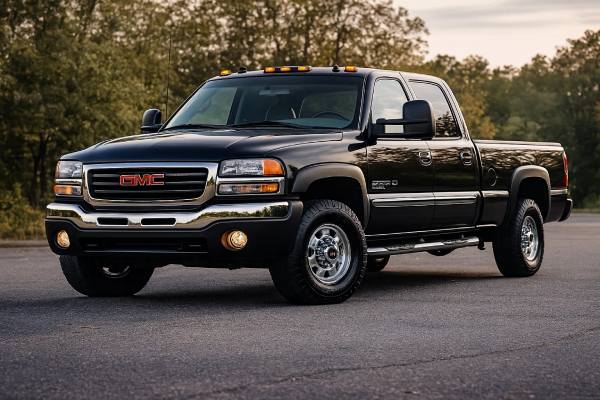
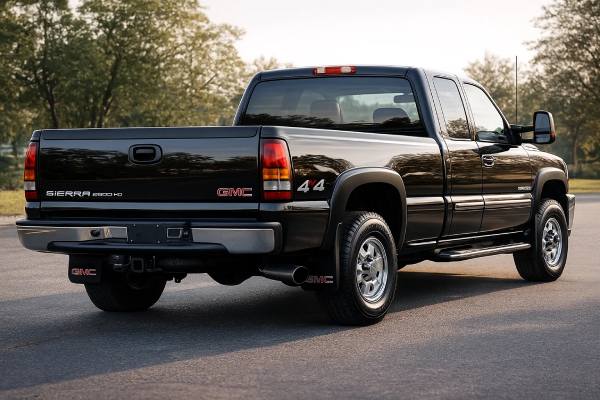
The 2001–2002 GMC Sierra HD 4WD with the 8.1-liter L18 (Vortec 8100) is a very specific kind of heavy-duty pickup: a big-cube gasoline workhorse built for steady towing, simple ownership, and easy drivability compared with many diesels of the era. In a GMT800 chassis, the 8.1L’s value comes from low- to mid-rpm torque, predictable throttle response, and fewer “systems on top of systems” than modern trucks. Pair that with a stout automatic, a traditional transfer case, and heavy-duty cooling and brakes, and you get a truck that can still earn its keep today.
The trade-off is not subtle: fuel use is high, and the best trucks are the ones that were maintained like equipment—fluids, cooling system, front-end parts, and 4WD driveline service on time.
What to Know
- Strong low-rpm pull for towing and hauling, especially with 4.10 gearing and the right cooling package.
- Straightforward, emissions-light powertrain by modern standards (no DPF/DEF), which simplifies long-term ownership.
- 4WD hardware is robust, but transfer-case wear and front-hub issues can be costly if ignored.
- Budget for fuel: mixed driving commonly lands around 18–24 L/100 km (10–13 mpg US) depending on load and gearing.
- Change engine oil about every 8,000 km (5,000 mi) or 6 months (shorter with towing, idling, or short trips).
Quick navigation
- What this 8.1L 4WD HD is built for
- Specs and service data in tables
- Trims, options, and safety equipment
- Reliability problems and official fixes
- Maintenance routine and buyer’s checklist
- Real-world driving, towing, and economy
- Rivals: how it stacks up
What this 8.1L 4WD HD is built for
Think of the 2001–2002 Sierra HD 4WD 8.1L as a “gas big-block tow rig” from the last era before heavy-duty pickups became rolling networks. The L18’s defining trait is how it makes work feel easy: it doesn’t need high rpm, and it doesn’t rely on boost to build usable torque. That matters when you’re merging with a trailer, climbing grades at steady throttle, or crawling around a jobsite in low range. In stock form, it’s also mechanically familiar—port fuel injection, a conventional automatic, a traditional transfer case, and a heavy-duty cooling package that was designed for sustained load.
On the road, this powertrain tends to feel calm rather than quick. The 8.1L will pull hard from 1,500–3,500 rpm, and that’s the operating band you want for towing. With the right axle ratio, it can hold gears without constantly “hunting,” which reduces heat and driver fatigue. The 4WD system adds year-round usability: snow traction, wet job sites, and boat ramps are obvious wins, but it also gives you driveline gearing flexibility (low range) that protects the transmission when you’re maneuvering a heavy trailer at low speed.
Where owners get surprised is not durability—it’s operating cost. Fuel consumption is the price of admission, and it’s influenced heavily by axle ratio, tire size, trailer frontal area, and speed. Another reality is age: GMT800 HD trucks are now old enough that rubber, seals, wiring connectors, and suspension joints matter as much as “engine health.” The best examples are usually the ones that were treated like fleet equipment: fluids documented, cooling system kept clean, front end rebuilt when needed, and 4WD components serviced on schedule rather than “when noisy.”
If you want a heavy-duty truck that tows confidently, is easier to diagnose than many newer diesels, and can be kept alive with disciplined maintenance, the 8.1L Sierra HD 4WD is still a compelling tool—provided you buy with your eyes open.
Specs and service data in tables
Because “Sierra HD 4WD” covers multiple cabs, bed lengths, and axle ratios, treat these figures as a configuration map. When a value varies, the table notes the typical range or the most common HD setups. Always verify by RPO codes (glovebox sticker), VIN decode, and door-jamb tire/axle labels.
Engine and performance (L18 Vortec 8100)
| Item | Specification |
|---|---|
| Code | L18 (Vortec 8100) |
| Engine layout and cylinders | V8, OHV (pushrod), 2 valves/cyl |
| Displacement | 8.1 L (8,128 cc) |
| Bore × stroke | 107.9 × 95.0 mm (4.25 × 3.74 in) |
| Induction | Naturally aspirated |
| Fuel system | Sequential MPFI (port injection) |
| Compression ratio | ~9.1:1 (typical published value) |
| Max power | 340 hp (254 kW) @ ~4,200 rpm |
| Max torque | ~617 Nm (455 lb-ft) @ ~3,200 rpm |
| Timing drive | Chain |
| Emissions and efficiency standard | U.S. light-truck era standards; HD configurations may not have published EPA mpg in some cases |
| Real-world highway @ 120 km/h (75 mph) | Often ~18–23 L/100 km (10–13 mpg US), gearing and tires dependent |
Transmission and driveline (4WD)
| Item | Specification |
|---|---|
| Transmission | 4-speed automatic (commonly 4L85-E with 8.1L) |
| Gear ratios | 1st 2.48 / 2nd 1.48 / 3rd 1.00 / 4th 0.75 (typical) |
| Final drive ratio | Commonly 3.73 or 4.10 (varies by GVWR/tow package) |
| Drive type | Part-time 4WD with 2HI / 4HI / 4LO (some trims also offered Auto 4WD) |
| Transfer case | NV261 or NV263 family (varies by control type and options) |
| Differential | Open standard; limited-slip/locker availability varies by axle and package |
Chassis and dimensions (configuration-dependent)
| Item | Typical range / notes |
|---|---|
| Suspension (front/rear) | Independent torsion-bar front / leaf-spring rear |
| Steering | Hydraulic power steering (recirculating ball), HD tuning |
| Brakes | 4-wheel disc typical on HD; ABS standard on most HD builds |
| Wheels/tyres | 16 in common (LT-rated); exact sizes vary |
| Ground clearance | Varies with tires and suspension; verify on your truck |
| Length / wheelbase | Varies widely by cab/box (regular, extended, crew; standard/long bed) |
| Kerb (curb) weight | Roughly 2,800–3,400 kg (6,200–7,500 lb) depending on configuration |
| GVWR | Often in the ~3,900–4,500 kg (8,600–9,900 lb) range depending on 2500HD vs 3500 and axle |
| Fuel tank | Often ~98–132 L (26–35 US gal), cab/bed dependent |
Performance and capability (what changes the verdict)
| Item | Typical expectation |
|---|---|
| 0–100 km/h (0–62 mph) | Often ~8.5–10.5 s unloaded (cab/axle ratio matter) |
| Towing capacity | Highly configuration-specific; verify by door sticker and hitch rating |
| Payload | Highly configuration-specific; verify by tire/loading label |
| Braking distance | Mostly tire and brake-condition dependent; aged brake hydraulics can change results dramatically |
Fluids and service capacities (verify by VIN/RPO)
| System | Specification (typical) |
|---|---|
| Engine oil | 5W-30; capacity commonly ~5.7 L (6.0 US qt) with filter |
| Coolant | Dex-Cool type OAT; 50/50 mix; capacity varies with radiator/heater setup |
| Transmission/ATF | Dexron-III era spec (use current GM-compatible equivalent); capacity varies by pan/cooler |
| Transfer case | Depends on case and control: Dexron-type ATF or AutoTrak II (blue) on some Auto 4WD cases |
| Front and rear differential | Commonly 75W-90 gear oil; LSD may require friction modifier depending on unit |
| Brake fluid | DOT 3 typical |
| A/C refrigerant | R-134a (charge varies by HVAC and line set) |
Electrical (typical)
| Item | Typical |
|---|---|
| Alternator output | Often 105–145 A depending on options |
| 12V battery | Group size varies; HD often uses higher CCA ratings |
| Spark plug | AC Delco equivalent; gap commonly around 1.52 mm (0.060 in) on many GM V8s of this era |
Safety and driver assistance (era-appropriate)
| Item | Notes |
|---|---|
| Crash ratings | Availability varies by model class and year; confirm via official databases |
| Airbags | Dual front airbags standard; side airbags were limited/option-dependent in early 2000s HD trucks |
| ADAS suite | None of the modern systems (AEB/ACC/LKA) were offered; focus is on ABS and basic restraint design |
Trims, options, and safety equipment
For 2001–2002, the Sierra HD lineup is less about “trim personality” and more about functional build choices: cab, bed, axle ratio, suspension rating, and towing equipment. The badges (SL, SLE, SLT) tell you the comfort level, but the RPO codes and axle tags tell you how the truck was meant to work.
Trims and options that matter mechanically
Key items to identify on an 8.1L 4WD:
- Axle ratio (often 3.73 or 4.10): This is one of the biggest real-world differences. A 4.10 truck generally feels more eager under load and can keep transmission temperatures happier on grades, but it will also spin higher rpm at highway speed and usually burn more fuel.
- Cooling and towing equipment: Look for factory transmission cooler routing, tow mirrors, hitch class, and trailer wiring. A truck that towed from new often has the right cooling—provided it was maintained.
- Transfer case control type: Manual lever systems are simple and predictable. Auto 4WD systems add convenience but can bring additional wear points and fluid requirements.
- Rear axle type (2500HD vs 3500, SRW vs DRW): This changes payload stability, tire costs, and brake feel under load.
Quick identifiers to use before you crawl under the truck
- RPO label (glovebox): Confirms axle ratio, differential type, transfer case family, and towing packages.
- Door-jamb tire and loading label: Your best truth source for payload on that exact VIN.
- Under-hood emissions label: Helps confirm engine family and calibrations.
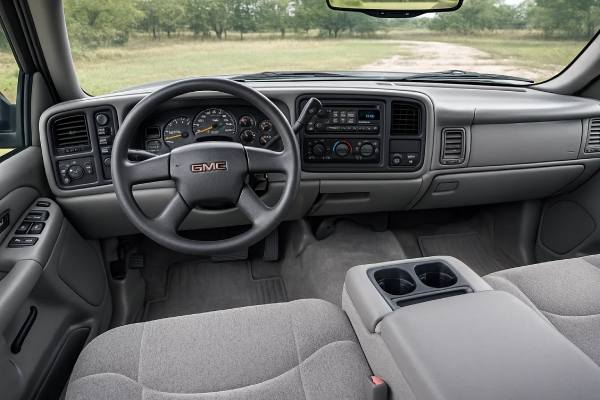
- Cluster and switchgear: Auto 4WD vs manual 4WD controls are obvious inside, and they guide your transfer-case service needs.
Safety ratings: what’s realistic for a 2001–2002 HD
Safety ratings can be confusing because heavy-duty variants are not always tested the same way as lighter trucks, and some databases focus on specific weight classes or body configurations. The practical approach:
- Use the VIN and check official results and recalls rather than assuming a rating applies across the lineup.
- Separate crashworthiness from crash avoidance. This era has essentially no modern avoidance tech. Your biggest “safety upgrade” is tires, brakes in top condition, and correct load distribution.
Safety systems you can expect (and what to verify)
- ABS: Typically standard on HD trucks; confirm it cycles properly and that wheel-speed sensors are healthy (no warning lamp history).
- Airbags and seatbelts: Dual front airbags are typical. If the truck has been modified (steering wheel swap, seats changed), verify that SRS components match the vehicle.
- Child-seat provisions: This era can be less convenient than modern trucks; verify anchors and rear seating layout on your cab style.
- Lighting: Headlight output is often weak by today’s standards—restored housings and quality bulbs matter more than people expect.
If you treat safety as a system—tires, brakes, suspension, and restraint integrity—you’ll make a bigger real-world improvement than chasing a single published rating number.
Reliability problems and official fixes
A well-kept 8.1L Sierra HD can be durable, but it has predictable age- and workload-related failure points. Below is a practical map by prevalence and cost tier, with symptoms → likely cause → sensible remedy.
Common (plan for it)
- Front hub/bearing assemblies (medium cost):
Symptoms: Growl/hum that changes with steering input, ABS warnings, wheel play.
Cause: Heavy front axle load, water intrusion, age.
Fix: Quality hub assemblies, inspect CV seals, confirm tone ring/sensor function. - Steering and front-end wear (medium cost):
Symptoms: Wander, clunk over bumps, uneven tire wear.
Cause: Idler/pitman arms, tie rods, ball joints, alignment drift—especially with bigger tires.
Fix: Replace worn joints as a set, then align with load in mind. - Transfer-case wear and leaks (medium to high):
Symptoms: Fluid seepage, chain noise under load, popping out of range, vibration.
Cause: High miles, neglected fluid, case-specific wear patterns (varies by NV261/NV263).
Fix: Correct fluid, check for case rub/wear, rebuild before hard failure if symptoms appear.
Occasional (depends on use and maintenance)
- Cooling system fatigue (medium cost):
Symptoms: Temperature creep under load, coolant smell, heater performance changes.
Cause: Radiator age, water pump seep, thermostat drift, fan clutch wear.
Fix: Pressure test, replace weak components proactively if you tow. - Exhaust manifold bolt leaks (low to medium):
Symptoms: Ticking on cold start that fades warm.
Cause: Heat cycling loosens or breaks fasteners.
Fix: Repair hardware, check manifolds for warp. - Fuel pump and fuel delivery issues (medium):
Symptoms: Long crank, loss of power, lean codes.
Cause: Pump wear, electrical connector corrosion.
Fix: Fuel pressure test first; replace pump module if out of spec.
Rare but high-impact (don’t ignore signs)
- Transmission heat damage (high):
Symptoms: Shudder on lockup, delayed engagement, burnt smell, slipping under load.
Cause: Overheating from towing in overdrive, weak cooler flow, old fluid.
Fix: Add/restore cooling, service fluid early, address symptoms immediately—heat is the enemy. - 4WD actuator and engagement faults (medium):
Symptoms: No 4HI/4LO engagement, blinking indicator, front axle not pulling.
Cause: Actuator failure, vacuum/electrical issues depending on system.
Fix: Verify command vs engagement, repair actuator and wiring, confirm front diff engagement.
Recalls, TSBs, and how to verify completion
The correct approach is process-based, not memory-based: run the VIN in the official recall database and cross-check dealer records. If you’re shopping, ask for printouts showing recall closure and any campaign work.
Pre-purchase request that pays off: a quick scan for stored powertrain and ABS codes, plus a test drive that includes steady-speed lockup, multiple 4WD engagements (2HI→4HI→4LO), and a short uphill pull to watch temps and shift behavior.
Maintenance routine and buyer’s checklist
These trucks reward owners who maintain them like equipment. The goal is not perfection—it’s controlling the known weak points: heat, fluids, and front-end wear.
Practical maintenance schedule (distance or time, whichever comes first)
- Engine oil and filter: every 8,000 km (5,000 mi) or 6 months; every 5,000 km (3,000 mi) if short-trip, dusty, heavy towing, or long idling. Use a quality 5W-30 and a filter with good anti-drainback.
- Engine air filter: inspect every oil change; replace roughly 24,000–32,000 km (15,000–20,000 mi) (sooner in dust).
- Cabin air filter (if equipped): yearly or 24,000 km (15,000 mi).
- Coolant (Dex-Cool type): replace about 5 years / 160,000 km (100,000 mi) as a conservative interval; sooner if the system has been opened, contaminated, or shows pH/clarity issues.
- Transmission fluid: every 50,000–80,000 km (30,000–50,000 mi) with towing; otherwise 80,000–100,000 km (50,000–60,000 mi). Add a temperature gauge if you tow often.
- Transfer case fluid: every 50,000 km (30,000 mi) with regular 4WD use or towing; otherwise inspect and replace every 2–3 years.
- Front and rear differentials: every 50,000–80,000 km (30,000–50,000 mi) under load, water crossings, or snow-salt service; otherwise every 100,000 km (60,000 mi).
- Brake fluid: every 2 years (moisture control is critical for pedal feel and ABS health).
- Spark plugs: commonly 160,000 km (100,000 mi) in ideal conditions, but on older trucks a 100,000–130,000 km (60,000–80,000 mi) plan often keeps misfires away.
- Serpentine belt, tensioner, and hoses: inspect at every oil change; replace preventively around 10 years or if cracking/noise appears.
- Tire rotation and alignment: rotate every 8,000–10,000 km (5,000–6,000 mi); align when parts are replaced or wear appears.
- 12V battery testing: yearly before winter; many HD batteries last 4–6 years depending on heat and use.
Essential fluid notes (decision-making level)
- Use the correct transfer-case fluid for your exact case and control strategy; the wrong fluid can cause chatter, wear, or poor engagement.
- If you suspect differential noise, confirm level first—many failures start as slow leaks.
Buyer’s checklist (what to inspect before money changes hands)
- VIN and RPO verification: confirm L18, axle ratio, transfer case type, and any towing packages.
- Cooling system health: pressure test, check radiator condition, confirm fan clutch operation, watch temps on a grade.
- Transmission behavior: smooth lockup, no flare on shifts, no burnt smell, and stable temps if you can monitor them.
- 4WD operation: engage 4HI and 4LO, confirm front pull on loose surface, listen for chain noise or clunks.
- Front end and steering: check hubs for play, inspect ball joints/tie rods, and watch for wander on the highway.
- Rust and corrosion hotspots: brake lines, rocker panels, cab mounts, and frame seams—especially in salt states.
- Electrical and warning lamps: ABS and airbag lamps should prove out correctly and stay off.
A strong long-term outlook comes from buying the least-neglected truck, even if the paint is imperfect. Maintenance history beats mileage.
Real-world driving, towing, and economy
Ride, handling, and NVH
Unloaded, an HD 4WD Sierra rides like what it is: stiff springs, firm damping, and a front suspension tuned to carry weight. Add 300–500 kg in the bed or a properly set-up trailer, and the truck often feels more settled. Steering is slower than modern trucks and can feel vague if the idler/pitman arms or alignment are worn, so a tight front end transforms the experience more than most owners expect. Cabin noise is also “old-truck honest”: tire choice, worn door seals, and exhaust leaks make a bigger difference than the engine itself.
Powertrain character
The 8.1L’s strength is immediate, linear response. It doesn’t have turbo lag, and it doesn’t need to downshift aggressively for modest hills. Under load, it likes to work in the midrange—if you keep it there, it stays cooler and feels smoother. The automatic’s personality depends heavily on calibration, condition, and gearing. Healthy trucks hold gears confidently; tired ones hunt, heat-soak, and feel busy.
Real-world economy (be realistic)
Fuel consumption is the clear downside, and speed matters a lot because a trailer’s aerodynamic drag rises quickly.
- City: often 20–27 L/100 km (9–12 mpg US) depending on warm-up time and stop density.
- Highway (100–120 km/h / 60–75 mph): commonly 18–23 L/100 km (10–13 mpg US).
- Mixed: typically 18–24 L/100 km (10–13 mpg US).
- Moderate towing: often 27–35+ L/100 km (7–9 mpg US) depending on weight, frontal area, and grade.
Cold weather usually worsens these numbers, and short trips can be especially punishing.
Towing and load behavior
Where this truck shines is stable, repeatable towing. The long wheelbase configurations track well, and the engine’s torque curve makes it easy to maintain speed on rolling terrain. The key is temperature control: towing in overdrive at low rpm can sound relaxed but build heat. A practical rule is to choose the gear that keeps rpm stable and coolant and transmission temperatures controlled—even if that means higher rpm.
For traction, 4WD is a real tool, not just a winter feature. It helps on wet ramps, loose gravel, and steep driveways—places where a heavy trailer can quickly overpower 2WD traction. Use 4LO for slow maneuvering with a heavy trailer when appropriate; it reduces strain on the transmission.
Rivals: how it stacks up
In 2001–2002, the Sierra HD 8.1L 4WD competed in a market where gasoline heavy-duty engines were still common. The most relevant comparisons are Ford’s Super Duty gas V10 options and Dodge’s Ram HD gas V10, plus the diesel alternatives that many buyers cross-shop today on the used market.
Versus Ford Super Duty gas (6.8L V10 era)
- Where the Sierra 8.1L often wins: strong low- to midrange torque feel, smooth towing power delivery, and a simple, familiar GM parts ecosystem in many regions.
- Where Ford can edge ahead: some configurations offer different payload/tow ratings, and chassis feel can be more stable depending on axle and suspension setup.
- Buyer takeaway: compare by door-sticker payload and axle ratio, not by engine displacement alone.
Versus Dodge Ram HD gas V10
- Sierra advantage: generally predictable drivability and a well-developed GMT800 platform with broad aftermarket support for suspension, steering, and towing upgrades.
- Ram advantage: specific axle/suspension packages can be very stout, and some owners prefer the feel of the solid-axle front end (depending on year/config).
- Buyer takeaway: condition matters more than brand at this age—front-end tightness and cooling health decide who feels “better.”
Versus diesel alternatives (including GM Duramax of the same era)
- 8.1L benefits: simpler emissions hardware, generally lower complexity, and fewer diesel-specific fuel system and turbo concerns.
- Diesel benefits: far better fuel economy under load and often stronger resale in many markets.
- Buyer takeaway: if you tow heavy frequently and far, diesel efficiency can pay you back. If your use is mixed, seasonal, or local—and you value simplicity—the 8.1L can be the more comfortable ownership choice.
The bottom line
A good Sierra HD 4WD 8.1L is not “the cheapest way to tow.” It is, however, a straightforward, capable heavy-duty truck that can be kept in service for years if you buy a solid example, keep heat under control, and treat 4WD and front-end maintenance as routine—not optional.
References
- Vehicle Detail Search – 2002 GMC SIERRA 2500 | NHTSA 2025 (Recall Database)
- Check for Recalls: Vehicle, Car Seat, Tire, Equipment | NHTSA 2025 (Recall Database)
- VIN Decoder | NHTSA 2025 (VIN Decoder)
Disclaimer
This article is for informational purposes only and is not a substitute for professional inspection, diagnosis, or repair. Specifications, torque values, service intervals, and procedures can vary by VIN, market, axle ratio, cab/bed configuration, and installed options—always verify details against official service documentation for your exact truck.
If you found this guide useful, please consider sharing it on Facebook, X (Twitter), or your favorite forum to support our work.