
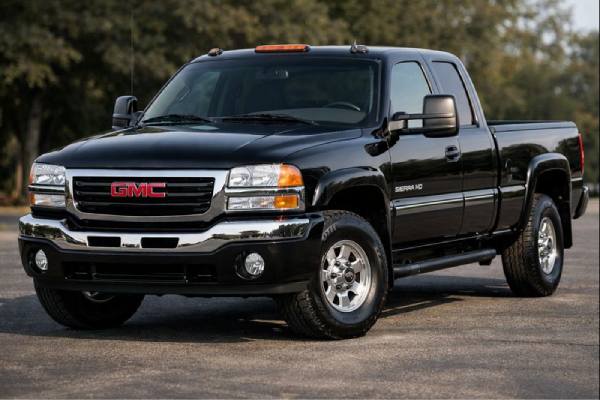
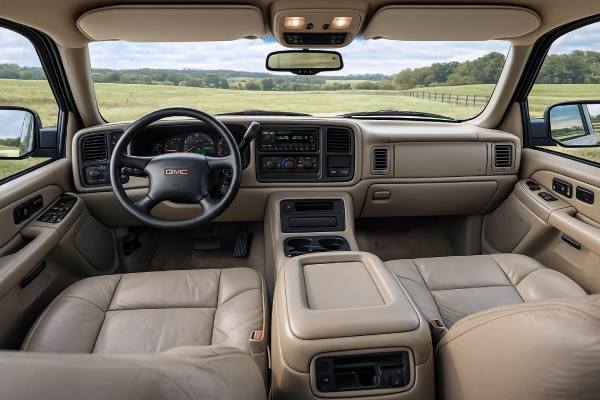
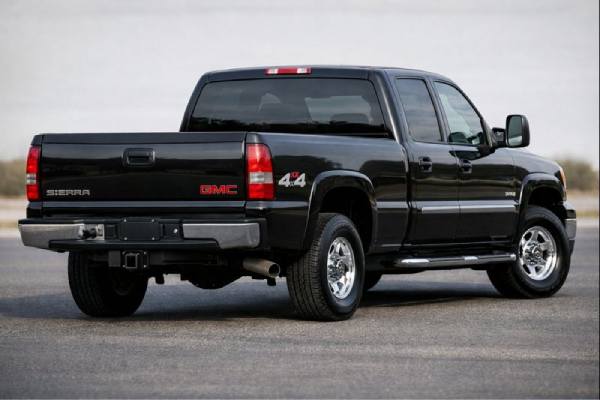
The 2003–2004 facelift GMC Sierra HD 4WD with the LB7 6.6L Duramax is a very specific kind of heavy-duty truck: modern enough to tow confidently at highway speeds, old-school enough to be repairable without exotic tools, and strong where it matters—frame, axles, cooling, and driveline hardware. The LB7’s headline is 300 hp, but owners remember the broad torque band and how easily the truck holds speed under load with the right gearing. The 4WD system adds capability, but also adds parts that need attention as mileage climbs: front-end wear items, transfer-case service, and careful tire management. Buy one well-maintained and it can be a durable work partner; buy one neglected and it can become a steady stream of “small” repairs that add up.
Top Highlights
- Strong towing foundation with a stout frame, HD running gear, and a torque-rich diesel that stays relaxed at work speeds.
- 4WD traction helps in snow, ramps, and job sites—especially when paired with proper tires and correct front-end alignment.
- Excellent long-term parts support and straightforward service access compared with many newer emissions-heavy diesels.
- Budget for common LB7-era fuel-system wear and front suspension/steering refreshes as mileage climbs.
- Plan on transfer case fluid checks every 24,000–48,000 km (15,000–30,000 mi) depending on use and contamination risk.
Navigate this guide
- GMT800 Sierra HD 4WD profile
- LB7 Duramax and 4WD specs
- 4WD trims, towing, and safety
- Known weak points and recalls
- Service schedule and ownership tips
- On-road and towing behavior
- How it stacks up against rivals
GMT800 Sierra HD 4WD profile
In facelift form (2003–2004), the GMC Sierra HD 4WD sits in a sweet spot for buyers who want heavy-duty capability without the complexity of later emissions systems. “HD” typically means 2500HD or 3500/3500 DRW running gear, heavier brakes, and a payload/towing focus compared with half-tons. Add 4WD and you get a truck designed for year-round work: slippery boat ramps, muddy access roads, snow-covered grades, and low-speed maneuvering with trailers.
The LB7 Duramax (6.6L) is the defining feature. It delivers its power in a way that suits real tasks: strong pull from low rpm, steady midrange, and enough top-end to merge or pass without drama when empty. In practice, the Duramax’s drivability often feels “bigger” than the horsepower number suggests because it makes useful torque where trucks live—below 2,500 rpm. Pairing that with the Allison automatic (common on these trucks) creates a powertrain that is easy to tow with, even for owners who are new to heavy-duty diesels.
The 4WD system is also part of the ownership story. It’s not only about traction; it changes maintenance priorities. A front differential, transfer case, CV axles (on IFS trucks), and extra u-joints add service points and wear items. The payoff is real: controlled starts on loose surfaces, reduced wheelspin that can stress driveline parts, and better control when positioning a trailer off pavement.
Where owners get the best experience is by treating the truck like a system. Keep the cooling stack clean, keep fluids fresh, manage tire wear, and fix small front-end looseness early. Do that, and the 2003–2004 Sierra HD 4WD can still feel like an honest, capable tool that earns its fuel.
LB7 Duramax and 4WD specs
Below are practical specifications for the 2003–2004 facelift Sierra HD 4WD with the LB7 Duramax. Exact figures can vary by cab, bed, axle ratio, and whether the truck is a 2500HD vs 3500 (SRW/DRW). Use the tables as a decision guide, then confirm your truck’s RPO codes and labels.
Engine and performance
| Item | Spec (LB7 Duramax) |
|---|---|
| Code | LB7 |
| Layout | 90° V8 turbo-diesel |
| Displacement | 6.6 L (6,599 cc) |
| Induction | Turbocharged |
| Max power | 300 hp (224 kW) @ rpm varies by calibration |
| Fuel system | High-pressure common-rail direct injection |
| Timing drive | Gear-driven front accessory drive with internal timing arrangement (confirm service info for procedures) |
Transmission and 4WD driveline
| Item | Typical spec for Sierra HD 4WD (GMT800) |
|---|---|
| Transmission | Allison 1000-series 5-speed automatic (common pairing) |
| Drive type | 4WD (part-time or selectable system depending on transfer case) |
| Transfer case | NP261HD (manual shift) or NP263HD (push-button/auto modes) depending on build |
| Front differential | Independent front setup on most 2500HD/3500 4WD pickups (IFS) |
| Rear differential | Heavy-duty axle; locking differential availability varies by RPO |
Dimensions and weights (typical ranges)
| Item | What to expect |
|---|---|
| Wheelbase | Varies widely by cab/bed (confirm by VIN/config) |
| Curb weight | Heavy-duty range; increases with 4WD and crew cab |
| GVWR | HD-class ratings vary by 2500HD vs 3500 and equipment |
| Fuel tank | 98 L (26.0 US gal) short bed; 136 L (36.0 US gal) long bed on many pickups |
Capability highlights (example tow chart entries)
These are representative examples from factory towing charts for comparable GMT800 HD 4WD configurations; always verify your exact truck and hitch type:
| Vehicle configuration | Axle ratio | Max trailer weight | GCWR |
|---|---|---|---|
| K-2500 HD (4WD) with 6.6L diesel | 3.73 | 12,000 lb (5,443 kg) | 22,000 lb (9,979 kg) |
| K-3500 (4WD) SRW/DRW with 6.6L diesel | 3.73 | 12,000 lb (5,443 kg) | 22,000 lb (9,979 kg) |
Fluids and service capacities (ownership-useful, verify on your truck)
Because configurations vary by transfer case, coolers, and axle type, treat these as “shop planning” guidance and confirm with your truck’s labels/service documentation:
| System | Common spec to look for | Notes |
|---|---|---|
| Engine oil | Heavy-duty diesel oil meeting the correct API category; 15W-40 common | Capacity varies by pan/cooler; confirm before buying bulk oil |
| Coolant | Dex-Cool type, 50/50 mix | Keep concentration correct for corrosion protection |
| Transfer case | NP261 often uses ATF; NP263 “Auto 4WD” typically uses Auto-Trak II | Use the fluid specified on the case/owner info |
| Differentials | 75W-90 gear oil common | Locker vs open changes service needs less than towing heat does |
| Wheel lug torque | 140 lb-ft (190 N·m) for many 6- and 8-lug setups | Recheck after wheel service on dual-wheel trucks |
Safety baseline (era-correct)
| Item | What’s typical |
|---|---|
| ABS | Standard on most HD trims |
| Airbags | Front airbags; side curtain availability varies by cab/year |
| ADAS | Limited by era; no modern AEB/LKA systems |
4WD trims, towing, and safety
Trim strategy on the 2003–2004 Sierra HD 4WD is less about “performance models” and more about work roles. In most markets you’ll see trims like Work Truck (WT), SL, SLE, and SLT, with Denali appearing on some Sierra 1500 lines more than HD in this era. For buyers, the most important “trim” decisions are functional: cab size, bed length, axle ratio, hitch type, and whether the truck was ordered with trailering and cooling upgrades.
Trims and practical option differences
- WT / SL: Often simplest interiors and easiest to keep clean. Great for buyers prioritizing mechanical condition over luxury electronics. Look for trailering hardware and brake controller provisions rather than badges.
- SLE / SLT: More comfort features (better seats, upgraded audio, power equipment). These can be excellent daily drivers, but inspect every switch and module—age affects window regulators, HVAC controls, and instrument cluster illumination.
- Chassis cab vs pickup: Chassis cabs often have different fuel tank arrangements and upfit wiring. They can be superb work platforms but require more careful inspection for wiring quality and load history.
Towing and hauling equipment that matters
For towing, the “right” truck is usually the one with the correct axle ratio, a factory-style receiver, and cooling capacity appropriate to your load. Many LB7 HD 4WD trucks use 3.73 gearing; it’s a strong all-round match for mixed driving and towing. If you regularly tow heavy in hills, the truck’s cooling condition matters as much as gearing: radiator, intercooler, fan clutch (if equipped), and transmission cooling lines all need to be healthy.
Also separate bumper-pull towing from fifth-wheel/gooseneck towing. A truck that feels stable at 10,000–12,000 lb bumper-pull can feel very different with a high pin weight and the wrong suspension setup. Pay attention to rear spring condition, shock quality, and tire load ratings—these are the “hidden” stability features.
Safety ratings and what they mean here
Crash testing for heavy-duty variants is not always as complete or directly comparable to half-ton results, and test protocols have evolved. Treat any published results as a general indicator of platform-era protection rather than a guarantee for your exact HD configuration. What you can control as an owner is more valuable:
- Keep tires modern and correctly inflated for the load.
- Ensure brakes are serviced with quality parts and fresh fluid.
- Maintain steering and suspension tightness so the truck tracks straight under braking and crosswinds.
Safety systems and driver assistance (realistic expectations)
These trucks predate today’s camera- and radar-based safety suites. You’re mainly relying on structure, belts, airbags, ABS, and (where equipped) traction control. If you add modern towing mirrors, a quality trailer brake controller, and good lighting, you can meaningfully improve safety without trying to retrofit modern ADAS.
Known weak points and recalls
A well-kept LB7 Sierra HD 4WD can run for a long time, but this generation has patterns you should understand before you buy—or before you start modifying. The key is separating common wear from high-cost failures, and matching your inspection to how the truck was used (towing, plowing, short trips, dusty work sites).
Common issues (more frequent)
- Front-end wear (medium cost, common at higher mileage): Loose steering feel, wandering, tire cupping, or clunks over bumps often trace to idler/pitman arms, tie rods, ball joints, and wheel bearings.
- Remedy: Refresh as a system and align after. Piecemeal repairs often chase symptoms.
- Transfer case pump rub (severity varies, can be high): Some transfer cases can wear through the case due to internal pump contact over time, leading to fluid loss and chain/bearing damage.
- Remedy: Inspect for seepage, check fluid level regularly, and consider preventative updates if your case is known for this wear pattern.
- U-joints and driveline vibration (low to medium cost): Heavy towing and 4WD use accelerate wear.
- Remedy: Address early; vibration can damage seals and bearings.
Occasional issues (condition- and use-dependent)
- LB7 fuel system wear (cost can be high): Hard starts, excess smoke, rough idle, or fuel dilution concerns can point toward injector problems on high-mileage trucks.
- Remedy: Diagnose carefully before replacing parts; confirm balance rates and check for related fuel supply issues.
- Cooling stack clogging (medium risk, common in dusty towing): Overheating under load can be caused by restricted airflow through the radiator/intercooler/AC condenser stack.
- Remedy: Clean externally and verify fan/clutch performance; don’t ignore rising temps.
- Electrical aging (low to medium): Grounds, battery cables, alternator output, and instrument cluster behavior can degrade with time. Dual-battery trucks demand equal attention to both batteries and connections.
Rare but expensive (watch-list)
- Transmission distress under chronic overload (high cost): The Allison is strong, but overheats and poor fluid service shorten life.
- Remedy: Watch temps, service fluid properly, and fix cooling issues before towing heavy again.
- Front differential or CV axle failures (medium to high): Aggressive tires, hard launches in 4WD, or mismatched tire diameters increase stress.
- Remedy: Keep tires matched in size and wear; avoid shock-loading the front driveline.
Recalls and service actions
Two themes matter: brake system recalls and parking brake concerns appeared in this era, and both deserve confirmation on any used purchase. Don’t rely on verbal assurances—verify completion through official VIN-based records and dealer history. If you’re missing paperwork, assume it hasn’t been done until proven otherwise.
Service schedule and ownership tips
A 2003–2004 Sierra HD 4WD rewards owners who run maintenance like a checklist, not a reaction. The goal is to prevent heat, contamination, and looseness—three things that shorten the life of HD trucks.
Practical maintenance schedule (distance or time)
- Engine oil and filter: Follow the truck’s oil-life logic if equipped, but for work/tow use many owners plan every 8,000–10,000 km (5,000–6,000 mi) or 6 months, whichever comes first. Confirm the correct diesel oil specification for your climate and usage.
- Fuel filter: Every 16,000–24,000 km (10,000–15,000 mi) or sooner with poor fuel quality. A restricted filter can mimic bigger problems.
- Air filter: Inspect every 8,000–16,000 km (5,000–10,000 mi) in dusty service; replace when restriction or dirt load is obvious.
- Cooling system: Inspect hoses and clamps at every oil change; refresh coolant on a time basis (often 5 years for long-life coolant types), but shorten intervals if the truck sees severe duty or contamination.
- Transmission fluid: Service intervals depend on towing and temperature history. If the truck tows, plan conservative service and verify correct fluid type for your transmission setup.
- Transfer case: Inspect fluid condition often; change every 24,000–48,000 km (15,000–30,000 mi) depending on water exposure, plowing, or frequent 4WD use.
- Differentials: Change gear oil every 48,000–80,000 km (30,000–50,000 mi) for towing or heavy loads; longer intervals may be acceptable for light use but should be supported by clean oil and low operating temps.
- Brake fluid: Every 2 years, regardless of mileage, especially on tow vehicles.
- Tires and alignment: Rotate every 8,000–10,000 km (5,000–6,000 mi). Address uneven wear quickly—front-end parts are cheaper than tires.
Essential “owner habits” that prevent expensive repairs
- Warm up with purpose, not idling forever: Short idle time is fine; bring temps up by driving gently rather than long stationary idles.
- Watch temperatures when towing: If you don’t have a trans temp gauge, add one. Heat is the silent killer of automatics.
- Keep tires matched (4WD rule): Same brand, same size, similar wear on all four corners to protect differentials and transfer case.
- Fix steering looseness early: Small play becomes tire wear, then braking instability, then expensive “everything feels worn” repairs.
Buyer’s guide checklist (fast but effective)
- Cold start behavior: Listen for uneven idle, abnormal smoke, or long crank times.
- Front-end feel: Any wander, clunks, or steering delay suggests a refresh is due.
- 4WD engagement: Confirm smooth shift/engagement and no binding in appropriate modes.
- Leak check: Look at transfer case seams, front diff area, and steering gear region.
- Service records: Prioritize documented fluid services over cosmetic upgrades.
- Tow history clues: Receiver wear, brake controller wiring quality, rear suspension sag, and overheated fluid smell.
Long-term durability outlook is best when the truck is kept stock-ish, cooled well, and serviced on time. Mild towing upgrades are fine; neglect plus aggressive tuning is where costs escalate.
On-road and towing behavior
Even by modern standards, an LB7 Sierra HD 4WD can feel confident on the highway—provided the suspension and steering are tight. The platform’s strength is straight-line stability: long wheelbases, heavy curb weights, and stiff frames help it track well at speed. Where older HD trucks feel “busy” is in steering precision and ride quality when components wear. A fresh front end and quality shocks can make the difference between a tiring commute and a truck you’d happily drive cross-state.
Ride, handling, and NVH
Unloaded, expect a firm ride—these trucks are sprung for payload. The 4WD front suspension can transmit sharper impacts over broken pavement than a lighter half-ton. Cabin noise is reasonable for the era, but tire choice changes everything: aggressive all-terrains often add hum and can reduce wet braking performance. If you want a calmer daily driver, choose a highway-terrain tire with a high load rating rather than the loudest tread you can find.
Braking feel depends heavily on maintenance. When the system is healthy, pedal response is predictable, but these are heavy trucks: stopping distances rise quickly with load, and cheap pads can fade. Trailer brake setup matters just as much as truck brakes when towing.
Powertrain character
The LB7’s appeal is usable torque and relaxed towing. Throttle response is strong at low rpm, and the turbocharged diesel character feels “effortless” compared to many gasoline HD trucks of the same era. The Allison automatic (where equipped) generally shifts with authority and holds gears well under load, but you should still manage it like a towing transmission: use tow/haul mode, don’t lug it up long grades, and watch temperatures.
Real-world efficiency (what owners actually see)
Fuel economy varies more with speed, tire size, and load than many buyers expect. As a broad rule, steady highway cruising at moderate speeds can be surprisingly reasonable for a heavy 4WD truck, while city driving and short trips are noticeably less efficient. Towing typically adds a clear penalty; under moderate trailers, many owners see a meaningful drop, and under heavy trailers the drop can be substantial. If your driving is mostly short trips, budget extra for fuel and maintenance because diesel warm-up cycles and soot loading are harder on consumables.
4WD traction and control
In snow or loose surfaces, 4WD makes the truck feel far more controlled—especially when starting on grades or maneuvering with a trailer. The big “skill” is knowing when not to use it: avoid binding on dry pavement, keep tire sizes matched, and service the transfer case so engagement stays smooth. With the right tires, 4WD capability is not just about getting moving; it’s about staying stable when conditions are changing.
How it stacks up against rivals
To compare the 2003–2004 GMC Sierra HD 4WD LB7 fairly, you need to compare it to other early-2000s heavy-duty diesels and to newer trucks that offer more tech but also more complexity.
Against Ford Super Duty 7.3L Power Stroke (late 1990s–early 2000s)
- Sierra HD advantages: Often a more modern driving feel and a strong automatic pairing (especially with the Allison). The Duramax torque delivery is very tow-friendly.
- Ford advantages: The 7.3L’s reputation for longevity is strong, and parts familiarity is widespread.
- Decision tip: Choose based on condition and service history first; both platforms can be excellent or expensive depending on past care.
Against Ram HD 5.9L Cummins (24-valve era)
- Sierra HD advantages: A refined towing experience with a strong automatic option and a stable highway feel.
- Cummins advantages: Inline-six simplicity and strong low-end pull; many owners value the engine layout for service access.
- Decision tip: If you want a quieter, more integrated “whole truck” feel, Sierra often wins; if you prioritize engine simplicity, the Cummins appeal is real.
Against newer emissions-era HD diesels (mid-2000s and later)
- Sierra HD advantages: Less emissions hardware complexity, typically lower diagnostic friction, and fewer expensive aftertreatment components.
- Newer truck advantages: Better crash structures, more capable factory brake controllers and tow aids, stronger factory exhaust braking strategies, and modern stability systems.
- Decision tip: If you tow heavy frequently and want the safest, easiest towing experience, newer trucks earn their cost. If you want a capable work truck you can maintain yourself and you accept older safety tech, the LB7 Sierra HD is still compelling.
Best-fit buyer profile
This truck fits owners who want true HD capability, 4WD traction, and a serviceable diesel platform—and who are willing to maintain front-end parts, keep fluids fresh, and verify recall completion. It’s less ideal for buyers who want modern driver assistance, the quietest ride, or “set-it-and-forget-it” ownership with minimal upkeep.
References
- 2004 GMC Sierra Owners Manual 2003 (Owner’s Manual)
- Hydro-Boost® Accumulator Over-Pressurization 2005 (Recall Database)
- Product Safety Recall Parking Brake Shoe and Drum Contact 2004 (Recall Database)
- Check for Recalls: Vehicle, Car Seat, Tire, Equipment 2025 (Recall Database)
- 2003 GMC Sierra 1500 extended cab pickup 2025 (Safety Rating)
Disclaimer
This article is for informational purposes only and is not a substitute for professional inspection, diagnosis, or repair. Specifications, torque values, maintenance intervals, and procedures can vary by VIN, market, model configuration, and installed equipment, so always verify details using your official owner’s manual and factory service documentation for your exact truck.
If you found this guide useful, please consider sharing it on Facebook, X (Twitter), or your favorite forum to support our work.