
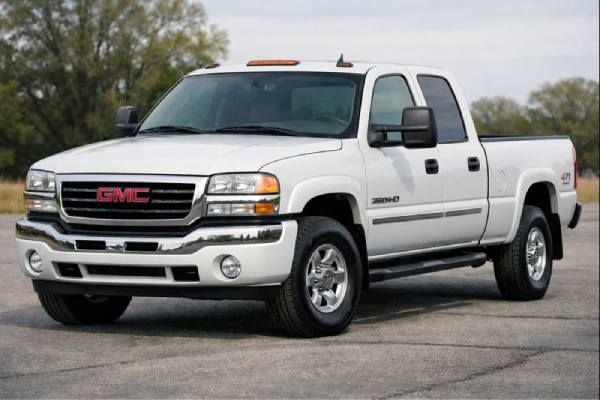
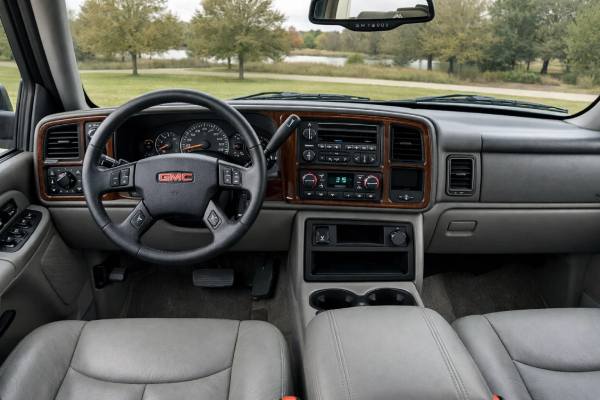
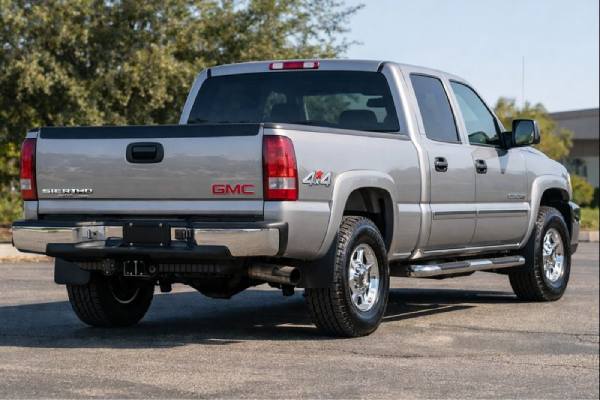
The 2003–2007 GMC Sierra HD 4WD on the GMT800 platform with the LQ4 6.0L V8 is a work-first truck built around simple, proven hardware: a heavy-duty gasoline V8, a stout 4-speed automatic, and a truck-grade 4WD system meant to pull, haul, and keep moving when conditions get ugly. It is not a modern comfort-and-tech pickup, but it can be an excellent ownership proposition because parts support is strong, access for repairs is straightforward, and most issues follow predictable patterns.
Where this truck shines is durability under load and day-to-day serviceability. Where it demands respect is age: steering and front-end wear, corrosion in certain climates, and deferred maintenance from past owners can change the experience dramatically. Buy the best-kept example you can, and it rewards you with honest capability.
Owner Snapshot
- Strong low- to mid-range pull with a simple V8 that tolerates hard work when maintained.
- 4WD hardware is effective and easy to service compared with newer electronic systems.
- Heavy-duty chassis and brakes suit towing and payload better than half-ton pickups.
- Watch for front-end wear (hub bearings, idler and pitman arms) and transfer case seepage.
- Change engine oil every 8,000–10,000 km (5,000–6,000 mi) or 6 months, sooner if you tow often.
Contents and shortcuts
- What this 4WD HD is
- LQ4 4WD specs in one place
- Trims, towing, and safety gear
- Problems to expect and address
- Maintenance plan and smart buying
- Real-world driving and economy
- How it stacks up to rivals
What this 4WD HD is
The facelift-era GMT800 Sierra HD 4WD with the LQ4 6.0L V8 is best understood as a mechanical package designed around sustained workload. The engine is a cast-iron, pushrod V8 with conservative tuning and a broad torque curve. It is not exotic, but it is tolerant of towing heat and long duty cycles when fluids are kept clean and cooling components stay healthy. Power delivery is linear and predictable, which matters when you are backing a trailer or climbing a grade at steady throttle.
The heavy-duty feel comes from the chassis and running gear more than the headline horsepower. Compared with a half-ton, the HD typically brings higher-capacity axles, stiffer springs, heavier brakes, and higher GVWR. That added structure also changes the ride: empty, it can feel firm and busy over broken pavement, but loaded, it settles and tracks with confidence.
The 4WD system is a major reason these trucks still earn loyalty. In most configurations you are dealing with a conventional truck transfer case, a front differential, and robust driveline components. If the truck has “Auto 4WD,” it uses a transfer case that can apportion torque automatically for mixed traction; if it does not, it is usually a simpler 2HI/4HI/4LO setup. Either way, the system is effective in snow, mud, and loose gravel, provided the tires match the job.
Ownership today is mainly about condition and prior use. These trucks often lived hard lives: towing, plowing, jobsite idling, and short-trip driving that stresses fluids. A well-maintained example can be very dependable, but one that has been run low on oil, ignored for coolant service, or driven with worn front-end parts can feel tired and expensive until you catch up. The key is buying on evidence—service records, driveline behavior, and corrosion inspection—rather than on mileage alone.
LQ4 4WD specs in one place
Below are practical, ownership-focused specs for the GMT800 Sierra HD 4WD with the LQ4 6.0L (300 hp). Exact numbers can vary by cab, bed, axle ratio, and GVWR package, so treat ranges as typical and confirm with the door sticker, RPO codes, and your service documentation.
Engine and performance
| Item | Spec |
|---|---|
| Code | LQ4 |
| Layout | V8, OHV (pushrod), 2 valves/cyl |
| Displacement | 6.0 L (5,967 cc) |
| Bore × stroke | 101.6 × 92.0 mm (4.00 × 3.62 in) |
| Induction | Naturally aspirated |
| Fuel system | Port fuel injection |
| Compression ratio | ~9.4:1 (typical) |
| Max power | 300 hp (224 kW) @ ~4,400 rpm |
| Max torque | ~360 lb-ft (488 Nm) @ ~4,000 rpm |
| Timing drive | Chain |
Transmission and driveline
| Item | Spec |
|---|---|
| Transmission | 4-speed automatic (4L80-E, typical for HD gas) |
| Gear ratios | 2.48 / 1.48 / 1.00 / 0.75 (Rev ~2.07) |
| Drive type | 4WD (2HI/4HI/4LO; some trucks add Auto 4WD) |
| Transfer case | Model varies by equipment (common HD units include NP261/NP263 families) |
| Differentials | Usually open; G80 auto-locking rear differential common option |
Chassis, dimensions, and weights (typical ranges)
| Item | Typical range / notes |
|---|---|
| Front suspension | Independent front suspension (torsion bars) |
| Rear suspension | Leaf springs |
| Brakes | 4-wheel disc (HD) |
| Wheelbase | ~3,600–4,000 mm (142–157 in), by cab/bed |
| Length | ~5,600–6,200 mm (220–244 in), by cab/bed |
| Curb weight | ~2,700–3,200 kg (6,000–7,100 lb), by configuration |
| GVWR | Commonly ~3,900–4,300 kg (8,600–9,500 lb), by package |
| Fuel tank | Often ~98–129 L (26–34 US gal), by wheelbase/bed |
Performance and capability (typical)
| Item | Typical range / notes |
|---|---|
| 0–100 km/h (0–62 mph) | ~9–11 s (varies with axle ratio and weight) |
| Top speed | Governed; not a meaningful metric for HD use |
| Towing capacity | Commonly ~4,500–5,400 kg (10,000–12,000 lb), equipment-dependent |
| Payload | Often ~1,200–1,800 kg (2,600–4,000 lb), GVWR-dependent |
Fluids and service capacities (verify by VIN/RPO)
| System | Typical spec and note |
|---|---|
| Engine oil | 5W-30; ~5.7 L (6.0 US qt) with filter (typical) |
| Coolant | Dex-Cool type; capacity varies by radiator and heater plumbing |
| ATF | Dexron-type; pan service vs dry fill differ greatly |
| Transfer case | Auto 4WD cases often use AutoTrak II; others use ATF—confirm before filling |
| Differentials | 75W-90 synthetic gear oil typical; some options require friction modifier |
Electrical
| Item | Typical spec |
|---|---|
| 12V battery | Group size varies; choose correct CCA for climate |
| Alternator | Output varies by options (plow prep, towing, audio) |
Trims, towing, and safety gear
This generation of Sierra HD was sold in a straightforward trim structure, but the real differences often hide in option codes. You will see familiar trims such as base/work-oriented models and more comfort-focused versions (often SLE/SLT depending on market). Interiors range from hard-wearing vinyl and simple radios to leather, upgraded audio, and power accessories. For long-term ownership, prioritize mechanical configuration over badges.
Options that change how the truck works
A few equipment choices have outsized impact:
- Axle ratio: A numerically higher ratio (often 4.10) generally improves launch and grade performance with trailers, at the cost of higher engine speed on the highway.
- Locking rear differential: GM’s common automatic locker option can be a major traction upgrade in snow, mud, and uneven job sites.
- Tow package: Look for integrated hitch hardware, wiring provisions, transmission cooling, and the correct mirrors. A “tow package” badge means little unless you confirm the actual equipment.
- Plow prep / heavy service: In snow markets, this may include higher-output charging and cooling upgrades. It can be a benefit if the truck was not abused.
Cab and bed length also matter. A longer wheelbase can improve trailer stability, while shorter trucks are easier to maneuver and park. If you tow frequently, stability and cooling capacity usually beat convenience features.
Safety ratings and what is (and is not) available
Safety-rating coverage can be uneven for heavy-duty pickups of this era. Many official crash-test programs focused more on passenger vehicles and popular half-ton configurations, so you may not find a clean, directly comparable star rating for every HD body style. If you do find a rating, confirm it matches the correct weight class, cab style, and model year test protocol.
IIHS results that apply to 1999–2006 Sierra 1500 can still offer useful context on structure and restraint performance for the GMT800 family, but you should not assume the score maps perfectly to HD frames, springs, or curb weights. Use such ratings as “context,” not a definitive answer for your exact truck.
Safety equipment and driver assistance
Expect “old-school” safety:
- Front airbags and 3-point belts, with child-seat anchoring provisions varying by cab and year.
- ABS is typically present on HD trims, with traction control availability depending on year and configuration.
- Modern ADAS (automatic emergency braking, lane keeping, adaptive cruise) is generally not part of this generation.
Because there is little electronic safety automation, the most meaningful upgrades you can make are condition-based: fresh tires with the right load rating, brakes in top shape, correct alignment, and working exterior lighting. For family duty, confirm belt function, seat mounting integrity, and airbag readiness (no warning lights) before you commit.
Problems to expect and address
Most Sierra HD 4WD issues on GMT800 trucks fall into a few repeat categories: front-end wear, transfer case and 4WD control problems, aging electrical components, and corrosion in specific climates. The good news is that many fixes are well understood; the bad news is that a neglected truck can stack multiple issues at once.
Common and usually manageable
- Front hub bearings (common, medium cost): humming that rises with speed, looseness at the wheel, or ABS light if the sensor is integrated. Remedy is typically hub assembly replacement; insist on quality parts.
- Idler arm and pitman arm wear (common, low-to-medium cost): wandering steering, uneven tire wear, and frequent alignment drift. Replace worn components together and align afterward.
- Brake wear and sticking slide pins (common, low-to-medium cost): pulling, uneven pad wear, or heat smell after towing. Cleaning and lubricating caliper hardware is a recurring need.
4WD-specific issues to watch
- Transfer case seepage or “pump rub” wear-through (common on certain units, medium-to-high cost if ignored): fluid spots, damp case seams, or eventual loss of fluid. The fix may involve upgraded case components or a preventive wear plate kit, depending on the transfer case model.
- Encoder motor or switch faults (occasional, medium cost): 4WD mode lights flashing, refusal to engage, or getting “stuck” in a mode. Diagnosis should confirm wiring integrity and actuator function before parts are thrown at it.
- Front differential and CV axle wear (occasional, medium cost): clicking under load, vibration, or torn boots leading to joint wear—especially if the truck has been lifted.
Higher-severity items
- Automatic transmission stress (occasional, high cost if overheated): delayed shifts, slipping, or burnt-smelling fluid can follow heavy towing without adequate cooling or fluid service. Verify cooler lines and service history; a test drive under load is ideal.
- Cooling system aging (occasional, medium-to-high cost): radiators, water pumps, hoses, and thermostats are consumables at this age. Overheating under tow is a warning sign to take seriously.
- Corrosion (climate-dependent, severity varies): check brake lines, fuel lines, rocker panels, and cab mounts. Frame condition should be evaluated with a light and a screwdriver, not a quick glance.
Recalls and service actions
At this age, you should assume recall status is unknown until proven otherwise. Use an official VIN-based lookup and dealer records to confirm completion. Even if recalls were done years ago, documentation matters for resale and peace of mind.
Maintenance plan and smart buying
A GMT800 Sierra HD 4WD can be a dependable long-term truck if you treat maintenance as a system, not a series of emergencies. The goal is to keep fluids clean, temperatures controlled, and wear items replaced before they take adjacent parts with them.
Practical maintenance schedule
Use this as a conservative baseline for mixed use; shorten intervals for frequent towing, plowing, heavy idling, or dusty conditions:
- Engine oil and filter: every 8,000–10,000 km (5,000–6,000 mi) or 6 months.
- Engine air filter: inspect every oil change; replace roughly 20,000–30,000 km (12,000–18,000 mi) in typical use.
- Coolant: replace on time, not just on appearance; inspect hoses and radiator end tanks annually.
- Spark plugs: replace around 160,000 km (100,000 mi) unless misfires or mileage-based maintenance suggests earlier.
- Automatic transmission fluid: service every 50,000–80,000 km (30,000–50,000 mi) depending on towing intensity and temperature history.
- Transfer case fluid: every 50,000–80,000 km (30,000–50,000 mi); use the correct fluid for your transfer case type.
- Front and rear differential fluid: every 80,000–120,000 km (50,000–75,000 mi); shorten if you tow heavy or drive in water crossings.
- Brake fluid: every 2 years, regardless of mileage.
- Tire rotation and alignment: rotate every 10,000–12,000 km (6,000–7,500 mi); align when tires show edge wear or after steering work.
- 12V battery: test annually; typical replacement window is 4–6 years, shorter in extreme heat/cold.
Fluid specs and a few key torque values
Because model-year and equipment differences matter, always verify specs in official documentation. Still, a few decisions are safe to plan around:
- Oil viscosity: 5W-30 is the common baseline; choose a quality oil that matches your climate and duty cycle.
- Transfer case fluid: do not guess—Auto 4WD cases often require a specific fluid, and incorrect fluid can cause chatter or clutch wear.
- Wheel lug nuts (8-lug HD): typically ~190 Nm (140 lb-ft); recheck after wheel service.
Buyer’s guide: what to inspect before you buy
Bring a flashlight and plan to spend time underneath.
- Service evidence: oil changes, cooling work, transmission and 4WD fluid service, and brake history.
- 4WD function test: confirm 2HI to 4HI engagement on a loose surface, and verify 4LO engages properly. Listen for binding, grinding, or delay.
- Front-end play: check for steering wander, clunks over bumps, and uneven tire wear.
- Leaks: rear main area, transmission lines, transfer case seams, and differential covers.
- Corrosion hotspots: brake and fuel lines, cab corners/rockers, bed crossmembers, and frame areas near rear spring mounts.
- Towing wear: look for cooked fluid smell, trailer wiring hacks, and hitch deformation.
A strong long-term buy is usually the simplest, best-documented truck with intact 4WD function, clean fluids, and a tight front end—even if it has higher mileage.
Real-world driving and economy
On the road, the LQ4-powered Sierra HD 4WD feels like a traditional heavy-duty pickup: steady, deliberate, and more comfortable with weight in the bed or on the hitch than it is empty. The steering is typically slower than modern trucks, and worn front-end components can make it feel vague. When the suspension and steering are refreshed, it tracks straight and inspires confidence on long highway pulls.
Powertrain character and towing manners
The LQ4’s strength is predictable, usable torque rather than quick acceleration. It builds power smoothly, and it is easy to modulate at low speeds—helpful for boat ramps, work sites, and backing trailers. The common 4-speed automatic is geared for work: you will feel larger rpm steps between gears than in modern 6–10 speed trucks, and it may downshift early on grades to keep transmission temperatures under control. That behavior is usually a feature, not a flaw, as long as the truck does not flare shifts, slip, or overheat.
With a properly set up hitch, the HD chassis typically remains composed under moderate-to-heavy tow loads. The key is temperature management: ensure the cooling system is healthy, the transmission fluid is fresh, and airflow is not blocked by debris. If you tow in mountains or heat, add discipline: slower climbs, earlier downshifts, and periodic cool-down checks.
Ride, handling, and NVH
Empty ride quality is firm, with sharper impacts over potholes than you would expect from a modern pickup. Loaded, it settles. Highway noise depends heavily on tires; aggressive all-terrains increase hum and can reduce fuel economy. Brake feel is usually strong for the class when components are maintained, but warped rotors or sticky calipers can show up on trucks that sat or towed with poor pad selection.
Real-world fuel economy expectations
Fuel economy is highly sensitive to axle ratio, tire size, and load. Owners commonly see:
- Highway (unloaded, 100–120 km/h / 60–75 mph): roughly 14–18 L/100 km (13–17 mpg US / 16–20 mpg UK)
- Mixed driving: roughly 16–22 L/100 km (11–15 mpg US / 13–18 mpg UK)
- Towing: a 20–40% consumption increase is common, sometimes more with high speeds or steep grades.
Treat these as realistic planning numbers, not promises. The quickest way to improve economy is usually maintenance plus correct tire pressure and alignment—then driving style. For winter climates, expect a noticeable penalty from cold starts, winter fuel blends, and long warm-up times.
How it stacks up to rivals
A GMT800 Sierra HD 4WD with the LQ4 occupies a specific niche: heavy-duty capability with older-school simplicity. That makes the comparison less about “which is best” and more about “which fits your job and tolerance for age.”
Against newer gas HD trucks
Newer HD pickups bring more gears, better braking electronics, stronger crash structures, and far more driver assistance. They also bring higher purchase prices and more complex systems. If you tow heavy every week and value stability control tuning, integrated trailer brake controllers, and modern crash avoidance, a newer HD may be worth it. If you want a lower entry cost and you can do basic mechanical upkeep, the GMT800 remains attractive.
Against diesel options of the era
Within the same generation, diesel variants can deliver better towing efficiency and stronger low-rpm torque. They can also introduce higher repair costs (fuel system components, turbo hardware, injector issues depending on engine family) and more “specialist” service needs. The LQ4 gas truck often wins for owners who do shorter trips, prefer simpler fuel and emissions hardware, and want predictable running costs—even if fuel economy is worse.
Against Ford and Ram heavy-duty pickups (early-2000s)
Comparable Ford Super Duty and Ram HD trucks from the same era are also fundamentally durable, but each has its own weak points (front-end wear patterns, transmission histories, and corrosion behavior vary). The Sierra HD’s advantage is usually parts availability, broad mechanic familiarity, and a drivetrain that many shops can diagnose quickly. The deciding factor tends to be condition: a rust-free, well-documented truck of any brand usually beats a cheaper example with hidden structural corrosion and neglected fluids.
Who should choose this Sierra HD 4WD?
Choose it if you want:
- Traditional HD towing and payload capability without modern complexity.
- A truck you can keep running with consistent fluid service and periodic front-end refreshes.
- Strong 4WD utility for winter, rural roads, and job sites.
Skip it if you need:
- Modern crash-avoidance tech and late-model crash-test performance.
- Quiet, half-ton-like ride comfort while empty.
- “Set it and forget it” ownership with minimal hands-on maintenance attention.
Done right, this truck remains a practical, honest tool—especially for owners who value capability and serviceability over screens and automation.
References
- Manuals and Guides | Vehicle Support | GM Support 2025 (Owner’s Manual Portal)
- Vehicle Detail Search – 2005 GMC Sierra 2500HD | NHTSA 2025 (Recall Database)
- 2005 GMC Sierra 1500 extended cab pickup 2025 (Safety Rating)
- Car Safety Ratings | Vehicles, Car Seats, Tires | NHTSA 2025 (Safety Ratings Program)
- Owner’s Manuals & Guides | GMC Canada 2025 (Owner’s Manual Portal)
Disclaimer
This article is for informational purposes only and is not a substitute for professional inspection, diagnosis, or repair. Specifications, torque values, service intervals, fluids, and procedures vary by VIN, market, axle ratio, and installed equipment—always verify details using official owner and service documentation for your exact truck.
If this guide helped, please consider sharing it on Facebook, X (Twitter), or your favorite forum/community to support our work.