

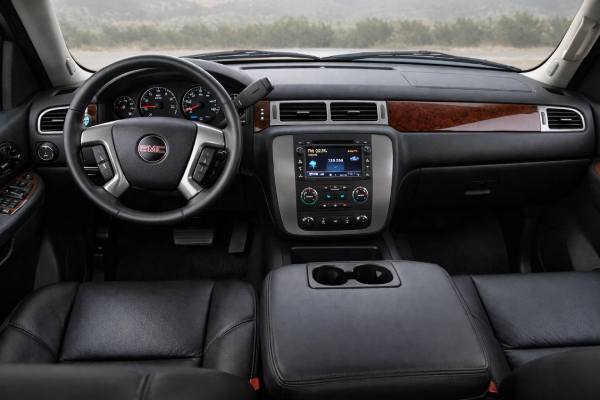
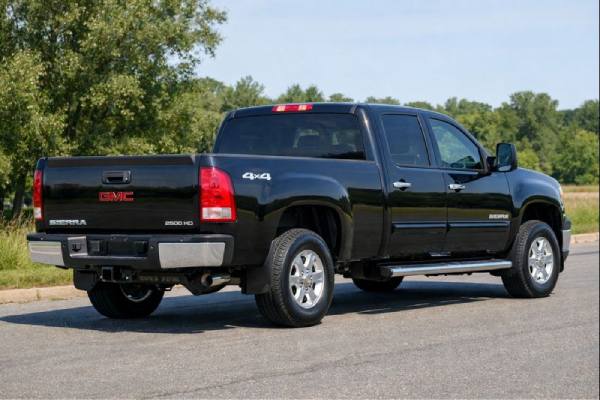
A 2011–2014 GMC Sierra HD RWD with the 6.0L L96 is the “simple, strong” choice in the GMT900 heavy-duty lineup. You still get the HD frame, stout cooling, and work-grade brakes, but without the added weight and extra service points of a 4WD front axle and transfer case. The L96 itself is a straightforward gas V8: port fuel injection (PFI), a timing chain, and flex-fuel capability on many builds. It makes its power higher in the rev range than a diesel, yet it’s predictable, easy to service, and typically cheaper to keep on the road long-term. The ownership reality is that fuel use climbs quickly when towing, and traction depends heavily on tires and rear-axle equipment. If you want an HD truck for payload, occasional towing, and dependable cold-start behavior—without diesel aftertreatment complexity—this facelift-era RWD L96 setup is a practical, durable formula.
Owner Snapshot
- The L96 6.0L gas V8 is mechanically straightforward and widely serviceable, with strong parts availability.
- RWD reduces weight and drivetrain maintenance compared with 4WD, often improving payload headroom.
- Predictable towing behavior with the HD chassis and 6-speed automatic, especially when equipped with the right axle ratio.
- Expect higher fuel use under load; towing often pushes economy into the low teens mpg (US) or worse.
- Plan on engine oil and filter service every 8,000–12,000 km (5,000–7,500 mi) or 6–12 months, depending on duty cycle.
Jump to sections
- What this RWD L96 HD is
- Specs, tables, and capacities
- Trims, towing options, and safety
- Reliability issues and service actions
- Maintenance plan and buying advice
- Driving performance and real mpg
- How it stacks up against rivals
What this RWD L96 HD is
The facelift 2011–2014 Sierra HD (GMT900) is a heavy-duty pickup built for payload and sustained towing, and the RWD L96 version is often the most rational configuration for owners who don’t truly need front-axle drive. You still get the HD frame, leaf-spring rear suspension, robust cooling, and a drivetrain designed to tolerate long duty cycles. What you remove is the front differential, CV shafts, transfer case, and the extra wear points that come with four-wheel drive. That reduction in complexity matters over time: fewer fluids to service, fewer seals to leak, fewer joints to clunk, and often a slightly better curb-weight situation that can help payload depending on cab and trim.
The L96 6.0L V8 is also a key part of the appeal. It’s a traditional pushrod (OHV) V8 with port fuel injection rather than direct injection. That keeps the fuel system simpler and generally cheaper to repair than many modern DI setups. It also tends to behave well in cold weather and short-trip usage, where diesel emissions systems can be less happy. Many L96 trucks are flex-fuel (E85) capable, which can be useful in regions where E85 is common, though towing range often drops noticeably on E85 because the fuel contains less energy per liter (or gallon).
RWD ownership does come with a clear trade. Traction is the limit, not power. An empty HD bed over a rear-drive axle can feel light on slick pavement, and towing on wet ramps or snowy driveways can reveal the difference quickly. The fix is usually not “more engine,” but better tires and smarter axle equipment. A limited-slip or locking rear differential, a set of tires with real load capacity and winter grip (if you need it), and good weight management in the bed can transform how confident the truck feels. If you tow frequently, axle ratio selection also matters: a numerically higher ratio (such as 4.10) can keep the engine in a more comfortable range on grades, while a 3.73 often favors calmer cruising.
Bottom line: this truck is a work-capable HD platform that trades diesel complexity and 4WD hardware for simpler ownership—while asking you to be intentional about traction and fuel use.
Specs, tables, and capacities
The Sierra HD RWD L96 powertrain is consistent across the facelift years, but capability figures vary widely by cab, bed, GVWR package, axle ratio, and whether you have a 2500HD or 3500HD (and SRW vs DRW where applicable). Use the tables below as a clean reference framework, then confirm your exact truck via the door-jamb labels (GVWR and GAWR), the Service Parts ID (RPO) label, and the official towing guide for your build.
Engine and performance (L96 6.0L gas V8)
| Item | Specification |
|---|---|
| Code | L96 |
| Engine layout and cylinders | V8, OHV (pushrod), 8 cylinders, 2 valves/cyl |
| Displacement | 6.0 L (5,967 cc) |
| Bore × stroke | 101.6 × 92.0 mm (4.00 × 3.62 in) |
| Induction | Naturally aspirated |
| Fuel system | Sequential port fuel injection (PFI) |
| Compression ratio | ~9.7:1 (varies slightly by source and calibration) |
| Max power | 360 hp (268 kW) @ 5,400 rpm |
| Max torque | 515 Nm (380 lb-ft) @ 4,200 rpm |
| Timing drive | Chain |
| Emissions and efficiency standard | EPA-era gasoline controls (3-way catalyst, EVAP, PCV) |
| Rated efficiency | Not consistently published for HD trucks; real-world varies with load and gearing |
| Firing order (if needed) | 1–8–7–2–6–5–4–3 |
Transmission and driveline (RWD)
| Item | Typical specification (confirm by RPO) |
|---|---|
| Transmission | 6-speed automatic (commonly the heavy-duty 6L90 family) |
| Gear ratios (typical 6-speed) | 1st 4.03 / 2nd 2.36 / 3rd 1.53 / 4th 1.15 / 5th 0.85 / 6th 0.67 / Rev 3.06 |
| Drive type | RWD |
| Final drive ratio | Often 3.73 or 4.10 |
| Differential | Open or automatic locking/limited-slip depending on option |
Chassis and dimensions (typical ranges)
| Item | Typical range (varies by cab and bed) |
|---|---|
| Suspension (front/rear) | Independent front / leaf-spring rear |
| Steering | Hydraulic assist (ratio varies by year and package) |
| Length | ~5,700–6,600 mm (224–260 in) |
| Width | ~2,030 mm (80 in) excluding mirrors |
| Wheelbase | ~3,400–4,200 mm (134–165 in) |
| Turning circle | Often ~14–16 m (46–52 ft), configuration dependent |
| Curb weight (RWD) | Commonly ~2,800–3,400 kg (6,200–7,500 lb) depending on configuration |
| Fuel tank | Often ~136 L (36 US gal / 30 UK gal) on many HD builds (verify by VIN) |
Performance and capability (configuration dependent)
| Item | Typical expectation |
|---|---|
| Acceleration 0–100 km/h (0–62 mph) | Often ~8–11 s depending on weight and axle ratio |
| Top speed | Typically electronically limited (often near ~160 km/h / 100 mph) |
| Towing capacity | Commonly ~4,500–6,000 kg (10,000–13,000 lb) for many gas HD builds; exact number depends on hitch and configuration |
| Payload | Often ~1,200–1,900 kg (2,600–4,200 lb), sometimes higher on certain 3500HD setups |
Fluids and service capacities (verify by VIN)
| Item | Typical spec (use official service info for exact) |
|---|---|
| Engine oil | Dexos-approved gasoline oil where applicable; viscosity commonly 5W-30 (climate dependent) |
| Engine oil capacity | ~6.6 L (~7.0 US qt) with filter (varies slightly) |
| Coolant | GM long-life coolant; 50/50 mix unless climate requires otherwise |
| Transmission fluid | Dexron VI commonly specified |
| Rear differential | Synthetic gear oil typically used; viscosity depends on axle |
| A/C refrigerant | R134a (charge varies by cab and rear HVAC presence) |
Electrical
| Item | Typical specification |
|---|---|
| Alternator output | Often ~145–160 A depending on equipment |
| 12 V battery | Heavy-duty group size with high CCA (verify label) |
| Spark plugs | Long-life plugs; gap and part number depend on calibration (verify service documentation) |
Safety and driver assistance (era-appropriate)
| Item | Notes |
|---|---|
| Crash ratings | HD models are not always directly rated; use the closest applicable test data and confirm equipment |
| Airbags | Front airbags standard; side curtain and torso airbags depend on cab and year/trim |
| ADAS | No modern AEB or lane keeping; expect ABS, traction control, and stability control depending on build |
If you take one practical lesson from the spec section, make it this: the door sticker and RPO codes determine the real truck you own, and two “identical” L96 Sierras can differ significantly in payload and tow limits.
Trims, towing options, and safety
On 2011–2014 Sierra HD trucks, trim names mostly describe comfort and appearance, while the options list determines real capability. For an RWD L96 buyer, the goal is to align axle ratio, cooling, hitch equipment, and rear differential type with your actual towing and payload needs.
Trims and what they usually mean
WT (Work Truck): the most utilitarian. You often get fewer power accessories and simpler interior electronics, which can be an advantage as the truck ages. WT trucks can still be ordered with serious towing hardware; the trim alone does not tell you what it can pull.
SLE: commonly the best balance. You tend to gain comfort features (seat upgrades, better audio, convenience packages) without the full complexity of the top trims. Many clean used examples live here.
SLT and Denali-style equipment packages (where applicable): more luxury, more power accessories, and often higher resale appeal. The trade is more “aging electronics” exposure: seat motors, climate-control actuators, and infotainment issues become more likely simply because there is more to fail.
Towing and hauling options that matter on RWD
- Axle ratio: If you tow frequently or in hilly terrain, a 4.10 ratio can reduce gear-hunting and keep coolant and transmission temperatures steadier. A 3.73 often feels calmer unloaded and can help highway rpm.
- Hitch type: A factory receiver is common, but gooseneck and fifth-wheel setups depend on prior installation. Inspect how it was installed and whether the frame area is clean and crack-free.
- Trailer brake control readiness: Some trucks are pre-wired; others need correct modules and setup. Verify real function with a trailer or a proper tester.
- Rear differential type: For RWD, this is a big deal. An automatic locking or limited-slip rear differential improves launches on slick surfaces and reduces single-wheel spin when the bed is lightly loaded.
Seating and configuration choices
Crew cabs dominate the used market, but they can reduce payload compared with regular cab trucks because of added weight. Long bed setups often tow more comfortably because of wheelbase stability, while short beds can be easier in tight urban work areas. For owners who carry tools daily, the “best” configuration is usually the one that keeps you comfortably under GVWR with real cargo in the bed, not the one with the flashiest badge.
Safety systems and ratings: how to think about them
This generation’s safety story is mostly structural design, airbag availability, and basic electronic stability systems—rather than advanced driver assistance. Many heavy-duty pickups are not tested in the same way as passenger vehicles, so you may need to rely on the closest applicable data and confirm what is installed on your exact truck. Focus on what you can verify:
- Airbag coverage: confirm front airbags and check whether your cab has head-curtain and torso airbags.
- Child-seat provisions: rear seating position anchors vary by cab; confirm if you need them.
- ABS and stability control: verify warning lights are off and the system self-check completes.
If safety is a priority, treat tires and brakes as part of the safety system. A fresh set of correct load-rated tires and properly serviced brakes often do more for real-world avoidance and stopping than any single trim upgrade on this era of HD trucks.
Reliability issues and service actions
The L96 RWD Sierra HD is generally a durable platform, but it has predictable wear points. The smartest ownership strategy is to address the “cheap-but-common” items early and watch closely for the conditions that create expensive secondary damage—overheating, neglected fluids, and chronic driveline vibration.
Common (frequent) issues: low to medium cost
Exhaust manifold bolt noise and leaks
- Symptoms: ticking on cold start, soot marks near the manifold, occasional oxygen-sensor codes.
- Likely cause: heat cycling can loosen or break manifold bolts over time.
- Remedy: repair with quality hardware, check flange surfaces, and confirm no downstream exhaust leaks that can confuse fuel trims.
Front-end steering and suspension wear
- Symptoms: wander, clunks over bumps, uneven tire wear, vague steering feel at highway speeds.
- Likely cause: tie rods, idler and pitman arms, ball joints, and alignment drift—especially if the truck spent years with heavy front loads.
- Remedy: replace worn components as a system, then align; don’t chase one part at a time if multiple joints are loose.
Fuel pump and EVAP-related faults (age-driven)
- Symptoms: hard starts, loss of power under load, EVAP leak codes, fuel smell around the tank area.
- Likely cause: pump wear, degraded seals, or vent/EVAP component aging.
- Remedy: test fuel pressure under load, inspect EVAP lines and canister area, and replace components based on diagnosis.
Occasional (duty-cycle and maintenance dependent): medium cost
6-speed automatic shift quality complaints
- Symptoms: delayed engagement, harsh 2–3 or 3–4 shifts, shudder on light throttle, overheating when towing.
- Likely cause: aged fluid, thermostat or cooler flow issues, torque converter wear, or calibration mismatch after repairs.
- Remedy: baseline fluid condition and temperature behavior first; use correct fluid, confirm cooler integrity, and scan for transmission codes before parts replacement.
Cooling system neglect leading to temperature creep
- Symptoms: rising temps under load, heater output changes, fan clutch behavior that feels abnormal.
- Likely cause: old coolant, restricted radiator, weak fan clutch, or partially clogged overflow pathways.
- Remedy: restore the cooling system to known-good condition; heavy-duty towing is unforgiving of “almost okay” cooling.
Rear driveline vibration
- Symptoms: vibration at specific speeds, shudder on acceleration, clunk when shifting from drive to reverse.
- Likely cause: worn U-joints, carrier bearing issues (on certain shaft designs), incorrect pinion angle after suspension changes, or out-of-balance driveshaft.
- Remedy: inspect U-joints for binding and rust dust, check shaft runout and balance, and verify axle and transmission mounts.
Rare but high-cost risks: watch for these
Severe overheating events
- Symptoms: repeated coolant loss, persistent misfire, oil contamination, or chronic high temps afterward.
- Why it matters: HD trucks can tolerate hard work, but repeated overheating can warp sealing surfaces and turn a simple repair into an engine-out job.
- Best approach: avoid buying a truck with vague “it got hot once” stories unless you can verify repairs and compression health.
Chronic towing beyond ratings
- Symptoms: accelerated brake wear, transmission heat damage, axle noise, and frame or hitch-area stress.
- Remedy: verify the truck’s true ratings and match your trailer to them; the repair costs of overloaded use tend to show up later.
Recalls, TSBs, and verification
Rather than relying on memory or internet lists, treat recalls and service campaigns as VIN-specific. For any used purchase, run the VIN through the official recall database and ask for dealer records showing completion. If the truck has warning lights, scan it with a capable tool before buying; “no codes” is meaningful only when you verify it.
Maintenance plan and buying advice
A maintenance plan for the L96 RWD Sierra HD is less about exotic procedures and more about consistency. Gas HD trucks often live a hard life—short trips, idle time, tools in the bed, trailers on weekends—so your service schedule should be based on what the truck actually does, not the longest possible interval.
Practical maintenance schedule (distance and time)
| Item | Interval | Notes |
|---|---|---|
| Engine oil and filter | 8,000–12,000 km (5,000–7,500 mi) or 6–12 months | Shorten for towing, high idle time, dusty use |
| Engine air filter | Inspect every oil service | Replace early for job-site dust |
| Cabin air filter (if equipped) | 15,000–30,000 km (10,000–20,000 mi) | Helps HVAC airflow and odor control |
| Spark plugs | Often 160,000 km (100,000 mi) typical for long-life plugs | Confirm exact interval and plug type by service info |
| Transmission service | 80,000–160,000 km (50,000–100,000 mi) | Use the shorter end for frequent towing |
| Rear differential fluid | 80,000–160,000 km (50,000–100,000 mi) | Shorten after heavy towing or water exposure |
| Coolant | Often 5 years / 240,000 km (150,000 mi) | Use correct long-life coolant chemistry |
| Brake fluid | Every 2–3 years | Prevents moisture-related fade and corrosion |
| Brake inspection | Every oil change | Pads, rotors, calipers, and slide pins |
| Tire rotation and alignment | 10,000–15,000 km (6,000–9,000 mi) | Especially important for heavy front-end wear |
Fluids and specs: make the boring choices correctly
- Engine oil: choose the manufacturer-recommended viscosity for your climate; towing in high heat favors shear-stable oil, while cold climates benefit from better cold-flow oils.
- Transmission fluid: use the correct ATF and follow the correct fill procedure; incorrect level is a common source of shift complaints.
- Rear axle oil: confirm viscosity and additive needs if you have a limited-slip or locking differential option.
Essential torque values (decision-making level)
| Fastener | Typical value to expect |
|---|---|
| Wheel lug nuts (8-lug) | ~190 Nm (140 lb-ft) |
| Spark plugs | Low torque and clean threads matter; follow official specs |
| Driveshaft fasteners | Follow service manual; over-torque can deform straps and cause vibration |
Buyer’s guide: what to inspect before money changes hands
1) Identity and ratings
- Door-jamb GVWR and GAWR labels (front and rear).
- RPO codes (glovebox label on many GMT900s) to confirm axle ratio and differential type.
2) Driveline and chassis condition
- U-joints: look for rust dust and check for binding.
- Rear axle leaks: pinion seal and axle seals are common age items.
- Front-end play: a short test drive can reveal steering looseness quickly.
3) Engine and cooling health
- Listen for persistent ticking beyond a normal cold start.
- Check coolant condition and signs of chronic overheating (staining, mismatched parts, sloppy repairs).
- Watch live data for coolant temperature stability on a longer drive.
4) Towing readiness
- Confirm hitch quality and wiring integrity.
- If you plan to tow heavy, prioritize trucks with a known service history and a clean transmission temperature story.
A well-bought L96 HD often feels “boringly dependable.” The key is buying one that has not been overheated, overloaded, or ignored.
Driving performance and real mpg
The RWD L96 Sierra HD drives like a heavy-duty truck should: stable, predictable, and happiest when you’re using it for real work rather than pretending it’s a half-ton. The facelift years improved interior feel and usability, but the basic dynamics remain HD-first.
Ride, handling, and NVH
Unloaded, the rear leaf springs can feel firm over sharp bumps because the truck is designed to carry weight. Add cargo or hitch weight and the ride usually settles, with less bounce and better control over expansion joints. Steering is typically heavier and slower than modern light-duty trucks. If the truck wanders, it is usually a maintenance signal—tire condition, alignment, and steering-linkage wear matter a lot on this platform.
Cab noise depends heavily on tires. HD trucks often wear aggressive tread patterns that amplify road roar. If you want a calmer long-distance tow rig, a quality highway-terrain tire with correct load rating can be one of the best “mods” you can buy.
Powertrain character: where the L96 shines and where it asks more
The L96 makes honest power, but it makes its best power higher in the rpm range than a diesel. That means towing often involves more revs, more downshifts, and a more audible engine note on grades. The upside is simplicity: no diesel aftertreatment, no high-pressure diesel injection costs, and generally easier cold-weather behavior.
The 6-speed automatic’s tow/haul mode is your friend. It typically holds gears longer, reduces hunting, and increases engine braking on descents. For steep grades, don’t be afraid of rpm—what hurts these trucks is heat from lugging or repeated converter slip, not a healthy engine running in its working range.
Real-world fuel economy (and what changes it)
Fuel economy varies dramatically with speed, axle ratio, tire size, and load. As a realistic ownership guide:
- Mixed daily driving (unloaded): often ~16–20 L/100 km (12–15 mpg US / 14–18 mpg UK).
- Highway steady (unloaded): often ~14–18 L/100 km (13–17 mpg US / 16–20 mpg UK).
- Towing (moderate to heavy): often ~20–30+ L/100 km (8–12 mpg US / 10–14 mpg UK) depending on trailer shape and speed.
Speed matters as much as weight. A tall, blunt trailer at 120 km/h (75 mph) can cost more fuel than a heavier but more aerodynamic setup at 100 km/h (62 mph). Cold weather usually worsens economy because warm-up time increases and winter fuel blends can be less efficient.
Traction and control: the RWD reality
RWD works very well on dry pavement and stable highway towing, but traction is the limiting factor on slick surfaces. If you regularly deal with snow, mud, or wet ramps, plan your setup:
- Choose tires with real wet and winter grip (still load-rated).
- Consider rear differential options that improve traction.
- Use smart bed loading when conditions are slippery.
Driven within its design envelope, the L96 RWD Sierra HD is a stable, predictable tow and work truck—just one that rewards sensible speed and thoughtful traction planning.
How it stacks up against rivals
The best way to compare the 2011–2014 Sierra HD RWD L96 is to compare “gas HD value” rather than chasing diesel bragging rights. In that frame, the Sierra’s strengths are simplicity, serviceability, and a proven platform. Its weaknesses are fuel use under load and traction limits in poor conditions.
Versus a diesel Sierra HD (same era)
A Duramax-equipped HD will usually tow heavier with less effort, especially at altitude or on long grades, and it often returns better fuel economy while towing. But it typically costs more to buy and can cost more to repair as it ages, especially if emissions and fuel-system work becomes necessary. The L96’s advantage is predictability: routine service is straightforward, and “big repair bills” are less common when the truck has not been overheated or abused.
A useful rule of thumb: if you tow heavy, often, and far, diesel can pay back. If you tow occasionally, carry payload frequently, or keep mileage moderate, the L96 can be the more economical lifetime choice even with higher fuel consumption.
Versus Ford Super Duty gas (similar years)
Ford’s gas HD offerings in this era often deliver strong performance and are widely supported. The comparison usually comes down to condition and configuration more than brand. Look at transmission behavior, axle ratio, and service history. The Sierra’s edge is the familiar GM small-block ecosystem and broad parts availability; Ford’s edge can be a different power curve and, in some cases, a more modern feel depending on exact year and spec.
Versus Ram HD gas (early-2010s)
Ram’s gas HD options vary by year and setup, and used-market condition can be inconsistent. Some owners prefer Ram’s ride quality and interior feel, while others prefer GM’s long-term service familiarity. For the Sierra, a clean maintenance history and a tight front end often make it feel “ready to work” even at higher mileage.
Where the Sierra HD RWD L96 is the smart pick
Choose this truck if you want:
- A heavy-duty chassis for payload and occasional to moderate towing.
- Gas-engine simplicity, straightforward cold starts, and broad service support.
- Lower drivetrain complexity than a comparable 4WD HD.
Consider a different setup if:
- You frequently tow near the top of HD ratings in mountainous terrain.
- You need reliable traction on snow, mud, or steep wet surfaces without planning around tires and weight.
- Fuel cost under load is your primary concern.
In the real world, the “best” rival is often another Sierra HD with different options. If you find an L96 truck with the right axle ratio, a good rear differential, clean cooling health, and solid maintenance records, it can be a long-term work partner rather than a project.
References
- Owner’s Manual 2014 (Owner’s Manual)
- 6.0L V-8 L96 2025 (Manufacturer Specifications)
- Vehicle Detail Search – 2011 GMC SIERRA 2500HD | NHTSA 2025 (Recall Database)
- 2011 GMC Sierra 1500 crew cab pickup 2011 (Safety Rating)
Disclaimer
This article is for informational purposes only and is not a substitute for professional diagnosis, inspection, or repair. Specifications, torque values, service intervals, and procedures can vary by VIN, market, model year, and installed equipment—verify details against official service documentation and your vehicle’s labels before performing work or making purchase decisions.
If this guide helped you, please consider sharing it on Facebook, X (Twitter), or your favorite forum or group to support our work.