
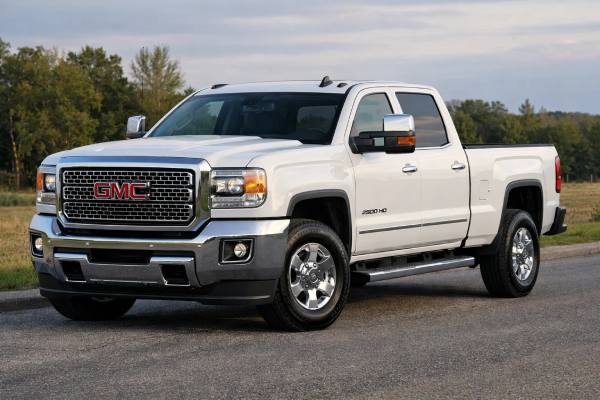
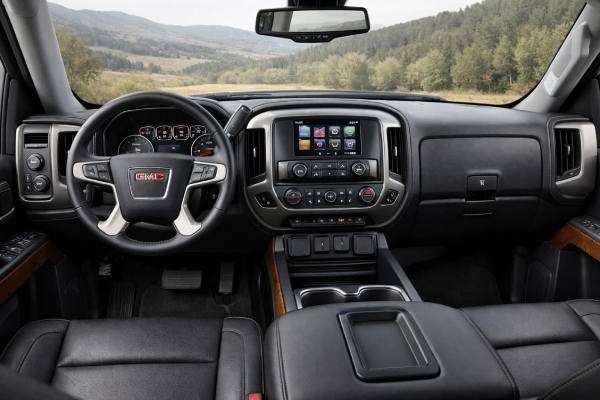

The 2015–2016 GMC Sierra HD RWD (GMTK2XX) with the LML 6.6L Duramax is built around one idea: sustained work. The powertrain pairs a high-torque, turbocharged V8 diesel with the Allison 6-speed automatic, tuned for towing stability and temperature control rather than quick sprints. In rear-wheel-drive form, the truck is mechanically simpler than 4WD versions—fewer rotating parts, fewer fluid circuits, and generally lower driveline drag—while still retaining heavy-duty brakes, cooling, and frame strength.
Ownership tends to hinge on two realities. First, these trucks feel “understressed” when maintained well, especially for highway towing. Second, modern diesel emissions hardware (DPF and SCR/DEF) rewards long, hot runs and can punish short-trip use. If you shop smart and keep up with fluids, filters, and fuel-quality discipline, this Sierra HD can be a long-lived tool.
Essential Insights
- Strong low-rpm pull and confident grade control make it a natural fit for frequent towing and highway hauling.
- RWD layout reduces transfer-case and front-axle complexity, often lowering long-term service burden.
- Durable Allison 6-speed behavior improves when fluid temperature is managed and service is not delayed.
- Emissions components dislike repeated short trips; plan for regular hot highway runs to support DPF cleaning.
- Rotate tires about every 7,500 miles (12,000 km) and inspect brakes and steering at the same time.
Section overview
- GMTK2XX Sierra HD RWD profile
- LML 2015–2016 specs and measurements
- Equipment, packages, and safety layout
- Failure hotspots and service actions
- Service plan and buyer’s checklist
- Driving feel and real-world results
- How it compares to heavy-duty rivals
GMTK2XX Sierra HD RWD profile
The 2015–2016 Sierra HD moved the heavy-duty line onto the GMTK2XX generation while keeping the familiar Duramax–Allison pairing that many buyers consider the centerpiece. In rear-wheel-drive form, the truck is usually purchased for one of three reasons: steady towing on paved roads, commercial payload duty that rarely needs low-range traction, or buyers who simply want fewer systems to service over time.
From an engineering standpoint, the RWD advantage is straightforward. Eliminating the transfer case, front driveshaft, and front differential (plus their seals, bearings, and fluid) reduces rotating mass and parasitic loss. That does not make the truck “light,” but it can slightly improve drivability smoothness and simplify diagnostics when vibrations or leaks appear. It also tends to improve steering feel consistency because there is less driveline wind-up and fewer front-end driveline angles influencing feedback.
The frame, brakes, and cooling package are the true HD story. These trucks are designed to handle sustained load: long grades, high ambient temperatures, and heavy trailer tongue weights. When owners say a Sierra HD “feels planted,” they are often describing the combination of wheelbase, rear spring rate, brake thermal capacity, and a transmission strategy that is comfortable holding gears to protect temperatures. The diesel’s broad torque curve does the rest, especially in the 1,600–2,800 rpm band where towing typically lives.
Where ownership gets nuanced is emissions and fuel-system care. The LML era uses high-pressure common-rail injection and aftertreatment that is sensitive to fuel cleanliness and operating pattern. If your use case is mostly short urban runs, the truck can still work, but you should plan proactive habits: keep DEF fresh, watch regeneration behavior, and treat fuel filtration as non-negotiable. If your use case is highway towing, this drivetrain often feels like it was designed around you.
LML 2015–2016 specs and measurements
Specs vary by cab, bed, axle ratio, and 2500HD vs 3500HD configuration, so the most useful approach is to present core mechanical specs plus realistic ranges for size and capability. The tables below focus on the 2015–2016 Sierra HD RWD with the LML 6.6L diesel and Allison 6-speed automatic.
Engine and performance
| Item | Specification |
|---|---|
| Code | LML |
| Engine layout and cylinders | V8, turbocharged diesel, OHV pushrod, 2 valves/cyl (16-valve) |
| Bore × stroke | 103 × 99 mm (4.055 × 3.90 in) |
| Displacement | 6.6 L (6,599 cc) |
| Induction | Turbocharged (variable-geometry turbo) |
| Fuel system | High-pressure common-rail direct injection |
| Compression ratio | ~16.0:1 |
| Max power | 397 hp (296 kW) @ ~3,000 rpm |
| Max torque | ~1,037 Nm (765 lb-ft) @ ~1,600 rpm |
| Timing drive | Gear-driven (diesel valvetrain timing gears) |
| Emissions and efficiency standard | U.S. EPA heavy-duty pickup compliance; many trims are not EPA mpg-label rated due to GVWR class |
| Real-world highway @ 120 km/h (75 mph) | Commonly ~13–18 mpg US (18–13 L/100 km) unloaded; towing can reduce this substantially depending on trailer and speed |
Transmission and driveline
| Item | Specification |
|---|---|
| Transmission | Allison 1000 6-speed automatic |
| Drive type | RWD |
| Differential | Open standard; limited-slip or locker availability varies by axle and package (more common on fleet/3500HD applications) |
| Tow/Haul | Yes (revised shift scheduling and grade logic) |
| Exhaust brake | Yes (integrated diesel exhaust brake behavior with Tow/Haul and manual range selection) |
Chassis and dimensions (typical ranges)
| Item | Typical range / notes |
|---|---|
| Suspension (front/rear) | Independent front (torsion bar) / rear leaf springs |
| Steering | Power-assisted steering (configuration varies by trim; HD uses robust linkage and steering gear) |
| Brakes | 4-wheel disc; sizes vary by 2500HD vs 3500HD and wheel package |
| Wheels and tyres | Commonly 17–18 in; commercial-oriented all-terrain or highway LT tires depending on trim |
| Length / width / height | Varies widely by cab/bed; expect roughly 5.8–6.4 m length overall depending on configuration |
| Wheelbase | Roughly 3.6–4.3 m depending on cab/bed |
| Turning circle | Large by passenger-car standards; plan for wide U-turns and trailer swing clearance |
| Curb weight | Typically well over 3,000 kg (6,600 lb) depending on cab/bed and equipment |
| Fuel tank | Typically around 136 L (36 US gal) depending on configuration |
| Ground clearance | Varies with tires and suspension; enough for job sites but not an off-road specialist in RWD form |
Performance and capability (typical ranges)
| Item | Typical range / notes |
|---|---|
| Acceleration 0–100 km/h (0–62 mph) | Commonly in the ~8–10 s range depending on configuration and traction |
| Top speed | Limited; not a primary design target for HD pickups |
| Towing capacity | Highly configuration-dependent; use the truck’s door sticker and trailering label for the authoritative rating |
| Payload | Highly configuration-dependent; options can reduce payload significantly |
| Roof load | Not typically specified for heavy-duty pickups in the same way as SUVs; avoid heavy roof loads due to stability and body stress |
Fluids and service capacities (decision-useful)
Capacities can vary by cooling package, oil pan design, and auxiliary equipment. Verify by VIN and service information before ordering fluids.
| System | Specification and common notes |
|---|---|
| Engine oil | Dexos-approved diesel oil where applicable; common viscosity 5W-40 (cold climates may allow 0W-40); capacity often around 9.5 L (10.0 US qt) with filter |
| Coolant | Dex-Cool type OAT coolant; typical service interval is time-based (often 5 years); total capacity varies widely with cooling package |
| Transmission (Allison) | TES-295 type fluids are common upgrade choices; capacity depends on drain method (pan service vs full exchange) |
| Differential | Synthetic gear oil (viscosity depends on axle); capacity varies by axle and housing |
| A/C refrigerant | R-134a in this era; charge varies by cab and HVAC configuration |
Key torque specs (common decision points)
| Fastener | Typical spec (verify by wheel/axle) |
|---|---|
| Wheel lug nuts (8-lug) | Commonly 190 Nm (140 lb-ft); dually and wheel type can change this |
Equipment, packages, and safety layout
Trim and package strategy on the 2015–2016 Sierra HD tends to separate “work ready” from “tow comfortable.” Even if you buy a higher trim, the mechanical fundamentals—frame, axle, brakes, cooling—remain heavy duty. What changes is gearing availability, towing hardware, cabin configuration, and how much driver-assistance technology is on the build.
Trims and quick identifiers (typical U.S. market pattern):
- Base / WT-style trucks: often vinyl floors, simpler infotainment, and fleet-friendly upfit options. These can be excellent buys if maintenance history is clear and the truck has not been overloaded.
- SLE and SLT: the common middle ground—more comfort features, better infotainment, and popular towing options.
- Denali: luxury presentation, more standard equipment, and often the easiest way to get certain convenience and safety tech of the era.
Cab and bed choices matter more than trim. A crew cab standard bed is a common towing layout for stability and interior space. Long beds add wheelbase and cargo flexibility but can reduce maneuverability in tight yards and urban parking. If you are buying primarily for towing, prioritize wheelbase, hitch equipment, mirrors, cooling strategy, and axle ratio over cosmetic trim.
Towing and hauling options that change real capability:
- Factory trailering package hardware: integrated receiver, wiring provisions, and cooling enhancements (content varies by build).
- Integrated trailer brake controller (ITBC): strongly preferred for heavy trailers; smoother modulation and better integration with stability control.
- Trailer sway control: typically tied into stability control; it helps damp oscillation but does not replace correct loading.
- Axle ratio differences: small ratio changes can meaningfully alter grade speed, transmission temperature, and perceived effort.
Safety ratings and what to expect. Heavy-duty pickups are not always tested and scored the same way as lighter vehicles, and published ratings can be limited by configuration. Treat public ratings as a starting point and confirm the truck’s safety equipment list and recall status by VIN.
Safety systems and ADAS reality (2015–2016 era):
- Standard safety backbone: front airbags, side-impact protection (configuration varies), ABS, stability control, and traction control.
- Trailer-related stability logic: useful when correctly set up, especially with an integrated brake controller.
- Optional driver alerts on higher trims: features like lane departure warning and forward collision alert may appear on some builds, but widespread automatic emergency braking was not yet a consistent, standard feature in this segment and time period.
After repairs, note that alignment, steering-link components, and trailer brake calibration (if equipped) can affect how “secure” the truck feels. A post-service road test with a controlled brake check is a smart habit for any HD tow vehicle.
Failure hotspots and service actions
Reliability on the LML Sierra HD is best viewed as “strong core, sensitive supporting systems.” The long block and Allison are capable of high mileage, but the fuel system and emissions hardware can create expensive events when maintenance or operating pattern is mismatched.
Below is a practical map by prevalence and cost tier, with symptoms, likely causes, and what owners typically do.
Common (watch closely)
- Emissions sensor and DEF-system faults (medium cost):
Symptoms: check-engine light, “service emissions system,” reduced power countdown, poor fuel economy, frequent regeneration.
Likely causes: NOx sensor drift, DEF quality issues, heater or dosing faults, soot loading from repeated short trips.
Remedy: scan for codes, verify DEF quality and age, repair failed sensors/heaters, and confirm regeneration completes properly after repairs. - Fuel filter neglect leading to driveability issues (low to medium cost, can become high):
Symptoms: hard starting, stumble under load, rail-pressure codes, loss of power at high demand.
Likely causes: plugged filter, water contamination, poor fuel storage.
Remedy: strict filter intervals, drain water separator where applicable, and treat fuel quality as part of maintenance—not an afterthought.
Occasional (depends on use)
- High-pressure fuel system failures (high cost when catastrophic):
Symptoms: sudden no-start, metal contamination in fuel system, widespread injector/pump damage.
Likely causes: high-pressure pump wear, fuel lubricity issues, contamination events.
Remedy: immediate diagnosis and containment; full-system repair can be extensive. Preventive habits—clean fuel, timely filtration, avoiding running low—matter. - Turbo and EGR-related performance drift (medium to high cost):
Symptoms: lag, underboost codes, higher EGT, soot smell, reduced pulling power.
Likely causes: variable-geometry vane sticking, EGR deposit buildup, boost leaks.
Remedy: pressure testing for leaks, cleaning/repairing components as needed, and ensuring the truck regularly sees sustained load/temperature.
Rare but expensive
- Transmission overheating from poor cooling airflow or delayed service (high cost):
Symptoms: hot ATF warnings, harsh shifts when hot, tow/haul hunting on grades.
Likely causes: blocked coolers, old fluid, heavy towing at high speed with poor airflow, incorrect range selection.
Remedy: restore cooling efficiency, adopt smarter grade strategy, and service fluid/filter on severe-use schedules.
Service actions, recalls, and verification
Because recall and service-campaign scope depends on VIN, build date, and market, the most reliable approach is procedural:
- Run the VIN through the official recall database and print the results.
- Ask for dealer service history showing campaign completion.
- Confirm software updates for powertrain and instrument cluster where applicable after component replacement, especially if emissions-related parts were changed.
For a buyer, the goal is not perfection—it is proof. A truck with documented fixes, clean fuel practices, and a consistent towing pattern is usually a better bet than a low-mile example with unknown history and lots of short-trip time.
Service plan and buyer’s checklist
A durable Sierra HD RWD ownership plan is built around three themes: heat control, fluid cleanliness, and early detection. The diesel will tolerate hard work; it is neglect and contamination that it resists.
Practical maintenance schedule (distance and time)
Use the truck’s oil-life monitor as the primary oil-change trigger, but anchor it with common-sense limits.
- Engine oil and filter: follow oil-life monitor; for heavy towing and idling, many owners use 5,000–7,500 miles (8,000–12,000 km) as a practical window.
- Tire rotation: about 7,500 miles (12,000 km) with brake and steering inspection at the same visit.
- Cabin air filter: about every 2 years (sooner in dusty areas).
- Engine air filter: about every 4 years in normal service; inspect more often if you drive gravel roads or job sites.
- Fuel filter (critical): commonly every 22,500 miles (36,000 km); shorten the interval if fuel quality is uncertain or the truck works in remote areas.
- Cooling system: often time-based, commonly 5 years; confirm coolant type and avoid mixing chemistries.
- Brake fluid: commonly every 3 years; more often if the truck sees heavy mountain towing.
- Transmission service: for severe towing use, follow severe schedule for fluid and filter; do not wait for symptoms.
Fluids to choose thoughtfully
- Engine oil: use diesel-rated oil that meets the required GM specs for the model year and emissions system.
- Transmission fluid: Allison behavior is highly dependent on fluid condition and temperature; choose a known-correct specification and keep service intervals aligned with your use.
- Differential gear oil: towing loads heat the axle; fresh fluid is cheap insurance.
Buyer’s inspection checklist (what matters most)
- Proof of fuel-filter services at repeat intervals, not just “recently changed.”
- Emissions-system behavior: ask how often it regenerates and whether it ever showed countdown or reduced-power warnings.
- Cold start quality: listen for abnormal ticking, rough idle, or long crank.
- Transmission temperature discipline: check for history of overheating, burnt smell, or delayed service under heavy tow use.
- Steering and front-end wear: loose steering feel, wandering, or uneven tire wear can signal linkage and bushing wear—common on HD trucks used on rough roads.
- Rear axle seepage and driveline vibration: simple to spot during a lift inspection and often predictive of future work.
- Rust and corrosion hotspots: frame, brake lines, body mounts, and bed supports—especially in salt states or coastal regions.
Long-term outlook
If your driving pattern includes regular highway heat cycles and you treat filtration seriously, the LML Sierra HD is often a strong long-term ownership proposition. If your pattern is short trips, long idle time, and inconsistent maintenance, you should budget for emissions and fuel-system troubleshooting as part of the deal.
Driving feel and real-world results
A Sierra HD diesel does not feel like a half-ton truck, and that is the point. The steering and suspension are tuned for stability under load, and the diesel torque changes how the truck “answers” the accelerator.
Ride, handling, and NVH
Unloaded, the ride can feel firm, especially over sharp expansion joints. The rear leaf springs are designed to control squat and sway with payload and tongue weight, so an empty bed will transmit more road texture than a lighter pickup. With several hundred kilograms in the bed—or a properly loaded trailer—the truck typically settles into its intended rhythm: less bounce, calmer pitch, and steadier tracking.
At highway speeds, the cabin experience is usually dominated by tire noise and wind around mirrors rather than engine harshness. The diesel is audible, but it is more a low-frequency presence than a high-rev soundtrack. Expect a heavy feel in transitions; quick lane changes demand respect for mass, and brake planning is part of safe HD driving even with large discs.
Powertrain character
The LML’s strength is low-rpm torque. Around town, light throttle delivers easy motion without needing high rpm, and the Allison’s calibration tends to prioritize smooth, torque-converter-managed shifts. Under towing load, Tow/Haul changes the personality: it holds gears longer, downshifts earlier on grades, and uses engine braking strategies more assertively.
The exhaust brake is one of the most valuable features for mountain towing. Used correctly, it reduces service-brake heat and makes speed control feel less stressful. The key is to select an appropriate range early on descents rather than waiting until speed builds.
Real-world efficiency
Because fuel economy labeling varies by HD classification, real-world results are the best practical guide. Expect wide swings:
- Unloaded highway cruising: often lands in the mid-teens mpg (US) depending on speed, tires, and wind.
- City and short trips: typically lower due to warm-up, idling, and regeneration behavior.
- Towing: can drop sharply, with speed and trailer frontal area often mattering more than weight alone.
A useful ownership habit is watching fuel consumption together with regeneration frequency. If the truck is regenerating unusually often, it is telling you something about soot load, driving pattern, or a sensor drifting out of range.
Traction and control in RWD form
In dry conditions, RWD is completely at home. In rain, mud, and snow, tire choice becomes the deciding factor. A good set of LT all-terrain tires and disciplined throttle use can make RWD surprisingly capable, but it will never replicate 4WD’s low-speed control on slippery grades. If your towing includes boat ramps, soft fields, or snowy mountain access roads, that should influence your buying decision more than trim level.
How it compares to heavy-duty rivals
Cross-shopping in this era typically lands on three names: Ford Super Duty diesel, Ram Heavy Duty with Cummins, and the GM twins (Sierra HD and Silverado HD). The right choice depends less on headline torque and more on how each truck fits your maintenance tolerance and towing style.
Against Ford Super Duty diesel (same era)
Ford’s diesel offerings are often praised for towing confidence and broad aftermarket support, but they can bring their own generation-specific maintenance considerations. If your priority is a strong dealer network in your region and you prefer Ford’s cab/bed packaging, it can be a compelling alternative. The Sierra HD’s counter-argument is the Duramax–Allison driving feel: many owners value the smooth shift behavior and predictable grade logic, especially when towing in rolling terrain.
Against Ram Heavy Duty Cummins
The Cummins inline-six reputation is tied to low-end torque and a simple, service-friendly layout in some respects. Ram’s towing experience can be excellent, and the engine character is distinct—more “tractor pull” at low rpm. The Sierra HD tends to feel more refined in transmission behavior and can be easier to drive smoothly in mixed traffic while towing, especially for drivers who value consistent automatic behavior.
Against the Silverado HD (mechanical twin)
Mechanically, the Silverado HD is extremely close. The decision often comes down to pricing, condition, trim availability, and interior preference. If you are shopping used, treat Sierra vs Silverado as a secondary choice after you evaluate maintenance records, corrosion, and how the truck was used.
The practical verdict
Choose the 2015–2016 Sierra HD RWD LML if:
- Your work is primarily paved-road towing and hauling.
- You want HD strength with fewer 4WD systems to service.
- You will maintain fuel filtration, fluids, and emissions health proactively.
Consider a 4WD alternative if:
- You routinely launch boats, climb snowy access roads, or work on soft ground.
- Your towing includes steep, slippery starts where traction is a safety issue, not a convenience.
In used-truck reality, the best rival is often “the same truck with better history.” A documented, well-used diesel that lived on the highway can be a smarter purchase than a low-mileage truck that lived on short trips and idling.
References
- Owner’s Manual 2015 (Owner’s Manual)
- Duramax Diesel Manual 2015 (Owner’s Manual Supplement)
- Vehicle Detail Search – 2016 GMC Sierra 2500HD | NHTSA 2016 (Recall and Safety Database)
- Check for Recalls: Vehicle, Car Seat, Tire, Equipment | NHTSA 2025 (Recall Database)
Disclaimer
This article is for informational purposes only and is not a substitute for professional inspection, diagnosis, or repair. Specifications, torque values, service intervals, and procedures can vary by VIN, market, axle ratio, and installed equipment, so always verify details using official service documentation for your exact truck.
If this guide helped, please consider sharing it on Facebook, X (Twitter), or your favorite forum to support our work.