
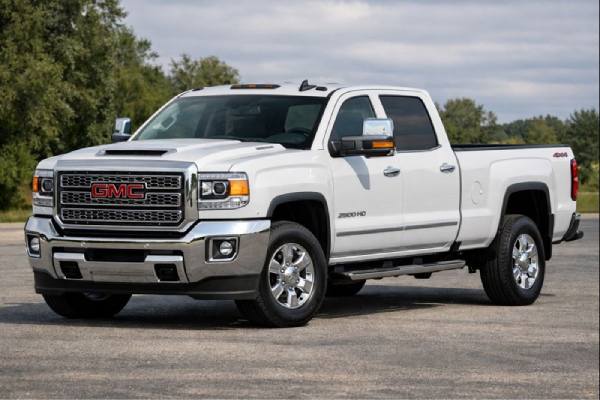
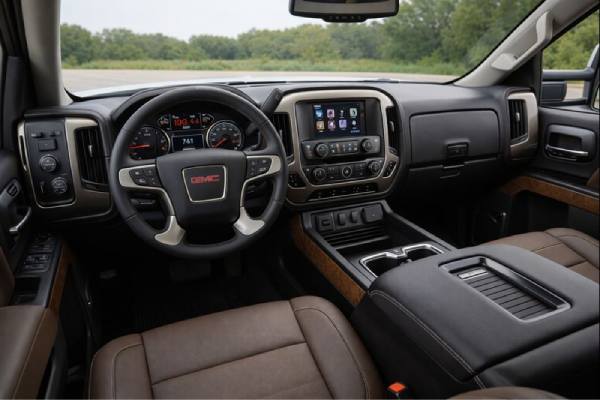
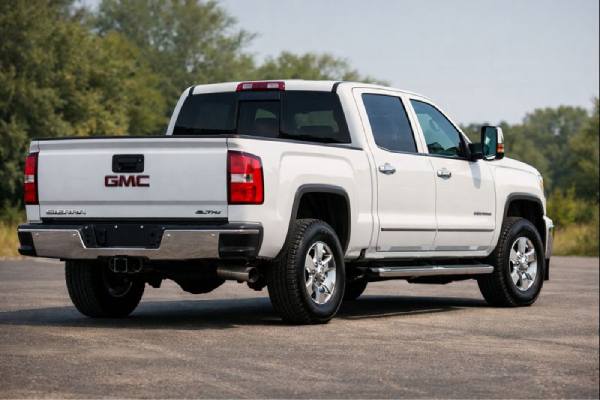
The 2017–2019 GMC Sierra HD RWD with the L5P 6.6L Duramax is a “work-first” heavy-duty pickup that happens to be comfortable enough to live with. In rear-wheel drive form, it keeps the driveline simpler and often a bit lighter than 4×4 equivalents—useful if your priorities are payload, towing stability on dry pavement, and long-term serviceability. The L5P brought a big step in stock output (445 hp and 910 lb-ft) and pairs with the Allison 6-speed automatic for controlled, predictable power delivery under load.
Ownership usually comes down to how it was used: light commuting is easy on the chassis but can be hard on emissions hardware; frequent towing is the opposite. If you buy wisely and maintain it like a commercial machine, this Sierra HD can be a durable long-haul partner.
What to Know
- Strong low-rpm torque and factory exhaust brake make heavy towing less tiring.
- RWD layout is simpler, often lighter, and easier to service than 4×4.
- Expect emissions-related sensors and heaters to be the most common “diesel headache” items.
- Change engine oil based on the Oil Life Monitor or at least every 12 months (whichever comes first).
- Replace the fuel filter on schedule (commonly around 24,000 km / 15,000 mi, depending on duty cycle and manual guidance).
Quick navigation
- GMC Sierra HD RWD L5P profile
- L5P 6.6 Duramax specs and dimensions
- Trims, packages, and safety tech
- Reliability and common L5P issues
- Maintenance plan and buying tips
- On-road performance and towing feel
- Sierra HD diesel vs key rivals
GMC Sierra HD RWD L5P profile
The GMTK2XX Sierra HD (2500HD and 3500HD) is built around a fully boxed front frame section and heavy-duty running gear designed for sustained load—trailers, payload, or both. In RWD (2WD) form, you’re looking at a truck optimized for on-road traction and capacity rather than off-road mobility. That matters because many HD owners tow on pavement most of the time, where a stable rear axle, long wheelbase options, and predictable brake feel count more than transfer-case capability.
The L5P Duramax is the centerpiece. It delivers its peak torque in a low, useful band, so it pulls without drama—especially when paired with Tow/Haul logic and a factory exhaust brake. The practical win is heat management: towing is mostly about controlling temperatures (coolant, oil, transmission fluid, charge air) and maintaining braking confidence on grades. GM’s HD cooling stack and the Duramax’s integrated emissions strategy aim to keep the truck within safe limits when worked hard—provided the maintenance is up to date and the truck hasn’t been “tuned” irresponsibly.
RWD also changes how the truck feels unloaded. Expect a firmer rear ride (especially on 3500 and dual-rear-wheel configurations) and traction that depends heavily on tire choice and bed weight in rain or snow. If you routinely tow in steep, slick conditions, 4×4 may be worth the trade-offs. But if your work is primarily highway towing, construction access roads, or fleet-style service, the RWD Sierra HD is often the sensible, lower-complexity choice.
Why these model years are a sweet spot
2017–2019 gives you the early L5P era in the classic K2 body style. The cabin ergonomics are straightforward, parts availability is strong, and most independent diesel shops know the platform well. You also avoid the learning curve and added system complexity that often comes with a full generational redesign.
Who it fits best
- Owners towing heavy on-road (equipment, enclosed trailers, RVs)
- Buyers who want diesel torque but value simpler driveline service
- Fleets that prioritize uptime and predictable running costs
L5P 6.6 Duramax specs and dimensions
Below are specs tailored to the 2017–2019 Sierra HD RWD with the 6.6L L5P Duramax (445 hp). Some items vary by cab, bed, axle ratio, single vs dual rear wheels, and trim. Treat towing and weight figures as configuration-dependent and verify using the door-jamb labels and the trailering information label on the specific truck.
Engine and performance
| Item | Specification |
|---|---|
| Code | L5P |
| Engine layout and cylinders | V8, OHV, 4 valves/cyl |
| Displacement | 6.6 L (6,604 cc) |
| Bore × stroke | 103 × 99 mm (4.06 × 3.90 in) |
| Induction | Turbocharged |
| Fuel system | Direct injection (high-pressure common rail) |
| Compression ratio | 16.0:1 |
| Max power | 445 hp (332 kW) @ 2,800 rpm* |
| Max torque | 1,234 Nm (910 lb-ft) @ 1,600 rpm* |
| Timing drive | Chain (service is typically condition-based) |
| Emissions system | EGR + DPF + SCR/DEF (varies by market calibration) |
*Factory-rated output for these model years.
Transmission and driveline
| Item | Specification |
|---|---|
| Transmission | Allison 1000 6-speed automatic (HD application) |
| Drive type | RWD (2WD) |
| Typical axle ratios | 3.73 or 4.10 (varies by towing package) |
| Differential | Open or automatic locking (option-dependent) |
Chassis and dimensions
Because Sierra HD spans multiple cab/bed lengths, use ranges. Typical Crew Cab wheelbases are approximately:
- Standard box: 3,904 mm (153.7 in)
- Long box: 4,260 mm (167.7 in)
Typical overall lengths are approximately:
- Standard box: 6,083 mm (239.5 in)
- Long box: 6,563 mm (258.4 in)
Other key dimensional notes:
- Width is roughly 2,045 mm (80.5 in) excluding mirrors (dual rear wheel trucks are wider at the rear).
- Height commonly lands near 1,986 mm (78.2 in), depending on suspension and tire package.
- Fuel tank is commonly around 136 L (36 US gal), but confirm by RPO/build.
Performance and capability (configuration-dependent)
| Capability | Typical range / examples |
|---|---|
| Conventional towing (2WD, best-equipped) | Up to about 9,071 kg (20,000 lb) on 3500HD DRW |
| 5th-wheel/gooseneck (2WD, best-equipped) | Up to about 10,478 kg (23,100 lb) on 3500HD DRW |
| 5th-wheel/gooseneck (2WD, example) | Up to about 6,985 kg (15,400 lb) on 2500HD Crew Cab 2WD |
| Payload (best-case example shown in GM literature) | Up to about 2,772 kg (6,112 lb) on select 3500HD 2WD DRW setups |
Fluids and service capacities (high-level)
| System | What to use | Capacity (approx.) |
|---|---|---|
| Engine oil | Diesel-rated oil per manual; viscosity depends on climate | ~9.5 L (10 US qt) with filter |
| DEF | ISO 22241-compliant DEF | ~19 L (5 US gal) |
| Coolant | Dex-Cool type coolant mix per manual | varies by cooling package |
| Transmission | ATF per manual (Allison/GM spec) | service-fill varies by procedure |
Because capacities and torque specs can differ by axle, brakes, and upfit equipment, verify fluids and critical fastener torques in the correct service information for the VIN.
Trims, packages, and safety tech
For 2017–2019, Sierra HD trims typically ladder from work-focused to luxury: Base, SLE, SLT, and Denali. In the used market, you’ll also see special editions and appearance packages, but what matters most for ownership is the mechanical content tied to trailering, axle ratios, and rear wheel configuration.
Trims in plain terms
- Base / SLE: Often the best value for fleets and owners who want durability first. Look for upfit-friendly options and simpler interiors that age well.
- SLT: The sweet spot for many private owners—more comfort features without quite as many luxury-only parts to replace.
- Denali: Quietest and most refined; great for long towing days. Expect higher replacement costs for trim, wheels/tires, and some electronics.
Options that change how the truck works
If you’re buying a diesel Sierra HD for real work, prioritize packages that improve control and cooling rather than cosmetics:
- Integrated trailer brake controller and trailering mirrors: Practical upgrades that reduce driver fatigue and improve safety margins.
- Gooseneck/5th-wheel prep: Cleaner installation and better resale if you tow heavy.
- Axle ratio choice (3.73 vs 4.10): This is a “feel” and temperature-management decision as much as a towing-number decision.
- 4.10 typically improves launch and grade control under heavier loads.
- 3.73 can feel calmer at highway speeds and may suit lighter towing with better cruising behavior.
Safety and driver assistance
These years focus more on alerts and driver support than on modern camera-and-radar automation. Depending on trim and package, you may find:
- Forward Collision Alert (warning system, not always automatic braking)
- Lane Departure Warning
- Front and Rear Park Assist
- Safety Alert Seat (seat vibration alerts)
- Trailer Sway Control, stability control, and a robust ABS calibration designed for load changes
Safety ratings reality check
Heavy-duty pickups are not always tested the same way as half-ton trucks by every rating organization, and results can vary by cab and weight class. When shopping, treat the best “safety data” as practical: tires in good condition, brakes and steering free of play, and all warning systems working correctly. For family hauling, also confirm child-seat anchoring points and rear-seat belt condition (especially on high-mileage fleet trucks).
Reliability and common L5P issues
The L5P Sierra HD is generally respected for strong stock durability, but it’s still a modern emissions-equipped diesel. Reliability usually depends less on the rotating assembly and more on sensors, heaters, and how the truck’s duty cycle matches its aftertreatment needs.
Below is a practical way to think about issues by prevalence and cost tier. Mileage bands are approximate; climate and towing frequency can shift them earlier or later.
Common (low to medium cost)
- NOx sensors and other emissions sensors
- Symptoms: check-engine light, reduced power messages, increased DEF consumption, failed emissions readiness.
- Likely cause: sensor aging, wiring exposure, heat cycling.
- Remedy: proper diagnosis (don’t guess), replace sensor, inspect harness routing and connectors.
- DEF heater or tank-related faults (cold climates)
- Symptoms: DEF warnings, countdown to limited speed, trouble codes after freezing nights.
- Likely cause: heater element or level/temperature sensor issues.
- Remedy: replace affected components; verify any updated parts or service actions.
- Glow plug / intake air heater concerns (usage dependent)
- Symptoms: rough cold starts, longer cranking, smoke on startup.
- Remedy: test before replacing; confirm battery health first.
Occasional (medium to high cost)
- EGR and charge-air path leaks
- Symptoms: hissing under boost, soot marks, loss of power under load, poor fuel economy.
- Remedy: smoke test the intake/charge system, repair boots/clamps, check EGR plumbing and gaskets.
- DPF regeneration complaints (often “usage mismatch”)
- Symptoms: more frequent regens, fuel smell, higher idle, reduced economy.
- Cause: repeated short trips and lots of idling prevent complete regen cycles.
- Remedy: adjust use pattern when possible; ensure no underlying sensor faults; keep oil changes on time.
Rare (high cost, but important)
- High-pressure fuel system contamination
- Symptoms: hard start, rail pressure codes, metal in fuel system, poor running.
- Cause: contaminated fuel, water intrusion, poor filtration practices.
- Remedy: immediate professional diagnosis; prevention is the real win—fresh fuel filter, clean fill practices, and water-in-fuel attention.
Service actions, software, and verification
Some drivability complaints are calibration-related (shift adapts, torque management, regen strategy). A dealer-level scan can confirm whether the ECM/TCM has updates that address known behaviors. Always verify recalls and completed service campaigns by VIN through official channels and keep documentation; it protects resale value and saves you from repeating work.
Maintenance plan and buying tips
Think of this Sierra HD as commercial equipment: maintenance is less about “pampering” and more about staying ahead of wear items and fluid degradation—especially if towing is frequent.
Practical maintenance schedule (typical guidance)
Use the Oil Life Monitor (OLM) as your baseline, but anchor it with time. A simple, conservative schedule looks like this:
| Item | Interval (distance/time) | Notes |
|---|---|---|
| Engine oil and filter | OLM or at least every 12 months | Short trips and long idling shorten OLM faster. |
| Fuel filter | ~24,000 km (15,000 mi) or 12 months | Use quality filters; prime correctly after replacement. |
| Engine air filter | Inspect every oil change; replace as needed | Dusty job sites can cut filter life dramatically. |
| Cabin air filter | 12 months | Helps HVAC performance and interior cleanliness. |
| Transmission service | Duty-cycle dependent | Towing/heat accelerate fluid wear; follow the severe schedule if you tow often. |
| Front end and steering joints | Inspect every service | HD steering and ball joints live a hard life on rough roads. |
| Brake fluid | Every 2–3 years | Moisture lowers boiling point; towing builds heat. |
| Coolant | Per manual time/mileage | Verify concentration and freeze protection annually. |
| Differential fluid | Duty-cycle dependent | More frequent if towing heavy or operating hot. |
| Batteries (test) | At least yearly | Diesels demand strong batteries; weak batteries mimic “fuel problems.” |
Key ownership practices that pay off
- Let the truck finish its work: If you notice active regeneration behavior (higher idle, different exhaust note), avoid shutting it off mid-cycle when practical.
- Control heat: Towing is temperature management. Keep the cooling stack clean, and don’t ignore rising trans temps.
- Keep tires matched and rated: Especially on DRW trucks, mismatched diameters can stress the rear axle and affect stability.
Used-buyer checklist (fast but meaningful)
- Check for modifications: Aggressive tuning, deleted emissions, or messy wiring can turn a strong truck into an expensive project.
- Scan for codes and readiness monitors: Even if the dash is clear, stored history matters.
- Inspect steering play and front-end wear: Look for uneven tire wear, clunks, and wandering.
- Look for boost leaks and soot trails: Simple visual checks can reveal expensive air-path issues.
- Verify tow equipment integrity: Receiver/hitch wear, bed hitch mounting points, trailer brake controller function, and wiring condition.
Durability outlook
Maintained stock and used as intended, the L5P Sierra HD commonly rewards owners with strong longevity. The biggest risk factors are poor fuel filtration habits, chronic short-trip use without adequate regen opportunity, and deferred fluid services after years of towing.
On-road performance and towing feel
Unloaded, a Sierra HD diesel RWD feels substantial rather than quick—until you roll into the torque. The L5P doesn’t need high rpm to move weight, and that shapes the driving experience: calm throttle, strong pull, and fewer dramatic downshifts than many gas HD trucks. The Allison 6-speed is tuned for load control more than sporty response, so it prioritizes clutch protection and temperature stability. That can feel like a brief “think” moment during aggressive throttle changes, especially on rolling grades.
Ride, handling, and NVH
- Ride: Firm in the rear when empty, smoother with payload or a trailer adding tongue/kingpin weight. DRW models ride stiffest unloaded.
- Stability: Long wheelbase configurations track confidently at highway speeds, which matters more than 0–60 times in an HD truck.
- Cab noise: Diesel clatter is present at idle but typically settles at cruise. Tire choice and mirror configuration can add wind noise.
Powertrain character under load
This is where the truck earns its reputation. With Tow/Haul engaged, the transmission holds gears longer, downshifts earlier for grade control, and works with the exhaust brake to reduce service brake use. For owners towing in hilly regions, the exhaust brake is one of the most meaningful “reduces fatigue” features—less pedal input, less heat in the pads, and steadier speed on descents.
Real-world efficiency
Official fuel economy ratings may not be published for certain HD configurations, so owners typically evaluate economy by duty cycle:
- Empty commuting: often reasonable for the size, but short trips can be harsh on emissions health.
- Highway cruise: generally the best case for both fuel use and aftertreatment behavior.
- Towing: expect a noticeable consumption penalty; aero drag from tall trailers can matter as much as weight.
Selective performance numbers that matter
For most buyers, the meaningful “performance” is not a benchmark sprint—it’s how the truck merges and climbs with a load. The L5P’s torque at low rpm helps passing without frantic hunting, and the chassis remains composed when the trailer is properly loaded and the hitch setup is correct. If the truck feels unstable while towing, the cause is usually setup (tongue weight, tire pressure, weight distribution, trailer brakes), not a lack of engine.
Sierra HD diesel vs key rivals
Cross-shopping usually comes down to three names: Ford Super Duty with the 6.7 Power Stroke, Ram Heavy Duty with the 6.7 Cummins, and the GM twins (Sierra HD and Silverado HD) with the Duramax.
Where the Sierra HD RWD L5P stands out
- Balanced towing manners: Strong torque, a proven transmission strategy, and a factory exhaust brake make it easy to drive smoothly.
- Configuration flexibility: Sierra HD towing numbers span a wide range; the “right” axle ratio and rear wheel setup matters more than brand loyalty.
- Serviceability (especially in RWD): Fewer driveline components than 4×4 can mean fewer wear points over long ownership.
Where rivals may fit better
- If you want maximum modern tech: Newer competitor model cycles may offer more advanced camera suites and hands-on driver assistance, depending on year and trim.
- If you prioritize engine-braking feel or inline-six character: Some buyers prefer the Cummins’ inline-six delivery and aftermarket ecosystem.
- If you tow in slick terrain frequently: A comparable 4×4 setup (any brand) can be the safer tool if mud, steep snow, or unpaved grades are routine.
Simple decision guide
- Choose Sierra HD RWD L5P if you tow heavy mostly on-road, value a simpler driveline, and want strong stock torque with good grade control.
- Choose a 4×4 alternative (GM or rival) if traction conditions are your limiting factor more often than raw towing capacity.
- Choose based on specific configuration (axle ratio, SRW vs DRW, bed length, hitch type) before you choose based on badge—HD trucks are extremely sensitive to being “optioned wrong.”
References
- 2019 GMC Towing and Trailering Guide 2019 (Trailering Guide) ([gmc.com][1])
- 2019 GMC Sierra 2500HD & 3500HD Catalog 2019 (Brochure) ([Dealer eProcess][2])
- 6.6L V-8 L5P Duramax® Turbo-Diesel Engine | GM Powered Solutions 2025 (Engine Specifications) ([poweredsolutions.gm.com][3])
- GM_TechLink_23_December_2018.pdf 2018 (Service Information)
- 2018 Duramax Diesel 6.6L Supplement 2018 (Owner Supplement) ([gmc.com][4])
Disclaimer
This article is for informational purposes only and is not a substitute for professional inspection, diagnosis, or repair. Specifications, torque values, service intervals, capacities, and procedures can vary by VIN, market, configuration, and installed equipment. Always verify details using the correct official service information and owner documentation for the specific vehicle you are working on.
If you found this guide useful, please consider sharing it on Facebook, X (Twitter), or your preferred forum or community to help others find it.