
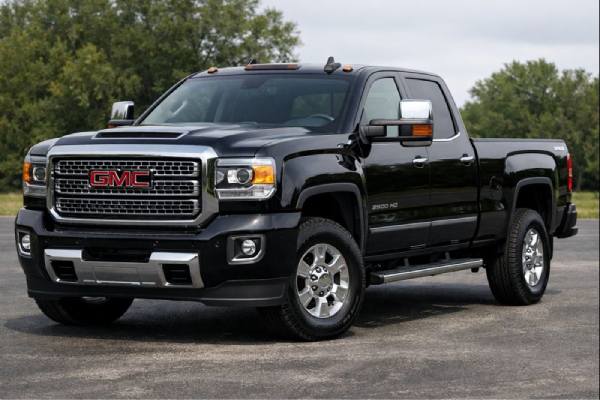
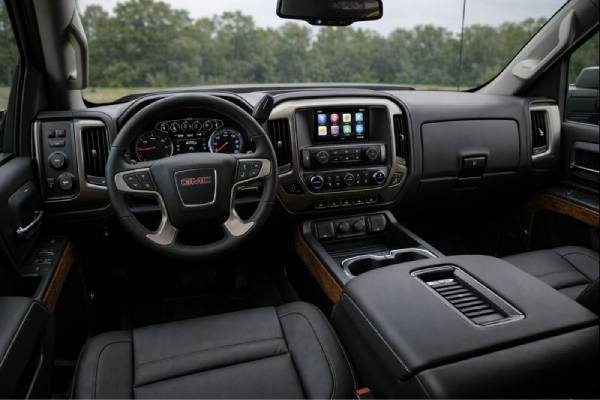
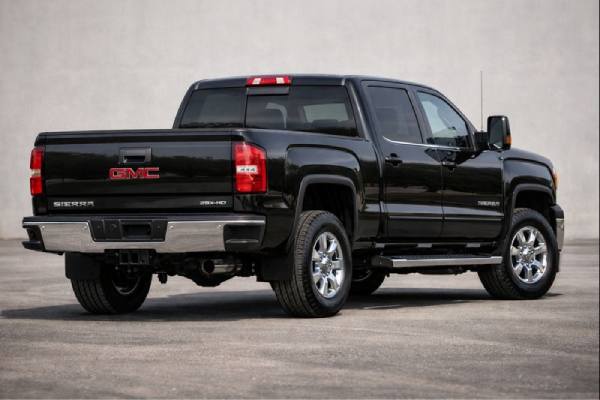
The 2017–2019 GMC Sierra HD 4WD with the L5P 6.6L Duramax is a heavy-duty pickup engineered for sustained work: towing, payload, and long hours in mixed conditions. The 4WD system adds meaningful capability for slippery boat ramps, muddy job sites, winter traction, and controlled low-speed crawling—at the cost of extra weight, more driveline service points, and more parts that can wear if neglected. The L5P’s 445 hp and 910 lb-ft focus on usable torque, pairing with the Allison 6-speed automatic to keep exhaust temperatures, transmission heat, and shift behavior under control when the truck is loaded.
For most owners, the “make or break” factor is duty cycle. Short trips and long idling can challenge emissions equipment; frequent towing is easier on aftertreatment but hard on fluids, brakes, and front-end joints. Buy a stock, well-documented truck and maintain it like the tool it is, and it can be an exceptionally capable long-term hauler.
At a Glance
- Strong grade-control with Tow/Haul and exhaust brake reduces service-brake heat on descents.
- 4WD low range improves control on ramps, snow, and loose terrain when towing or maneuvering.
- Expect added maintenance for the front differential and transfer case compared with 2WD.
- Plan fuel-filter service around 24,000 km (15,000 mi) or 12 months (duty-cycle dependent).
- Rotate LT tires every 10,000–12,000 km (6,000–7,500 mi) to protect steering feel and tread life.
Guide contents
- How this 4WD L5P Sierra HD fits
- Specs and measurements (L5P 4WD)
- Trims, towing gear, and safety equipment
- Known issues, recalls, and 4WD wear points
- Service schedule and smart buying checks
- Driving impressions: 4WD, towing, and economy
- Rivals and when to choose GM 4WD
How this 4WD L5P Sierra HD fits
In the GMTK2XX generation, Sierra HD is less about novelty and more about executing the basics well: robust cooling, predictable load handling, and power delivery that doesn’t fall apart when you add weight. The L5P Duramax is central to that personality. It makes its torque in a low, working-friendly band, which means the truck doesn’t need to rev hard to move a heavy trailer, and it can hold speed on grades without constant gear hunting.
The 4WD system changes the ownership story in two ways. First, it expands where and when the truck can do its job. A 2WD HD can tow big numbers on dry pavement, but traction at low speed (launching a heavy trailer, climbing a wet grade, backing onto grass, or creeping on rutted ground) is where 4WD earns its cost. Second, it adds driveline components that need clean fluid and occasional inspection: transfer case, front differential, CV axles, and additional seals. None of this is “fragile,” but neglect shows up faster when the truck sees water crossings, winter salt, or frequent 4HI/4LO use.
These model years are also attractive because they sit in a mature part of the platform’s life. Most parts and service knowledge are widely available, and many diesel shops understand the L5P’s emissions layout, common sensor faults, and towing-related maintenance needs. In the used market, the biggest differentiator is not trim level—it’s how the truck was used. A lightly loaded commuter can have a harder emissions life than a truck that regularly tows and keeps exhaust temperatures up.
Who should prioritize 4WD
- Regular towing on slick surfaces (boat ramps, gravel, snow, muddy worksites)
- Rural owners who face steep driveways or unplowed roads
- Anyone who values low-range control for maneuvering heavy loads at walking speed
Who might be better served by 2WD
If your towing and hauling are almost entirely on pavement in mild climates, 2WD can offer slightly higher payload potential and fewer driveline service items. For many buyers, the best choice is simply the one that matches the worst conditions you actually encounter a few times per year.
Specs and measurements (L5P 4WD)
The tables below focus on the 2017–2019 Sierra HD 4WD with the 6.6L L5P Duramax rated at 445 hp. Sierra HD spans 2500HD and 3500HD, multiple cabs and beds, and single- or dual-rear-wheel layouts. Treat towing, payload, and some capacities as configuration-dependent and verify against the door-jamb labels and trailering information for the exact truck.
Engine and performance
| Item | Specification |
|---|---|
| Code | L5P |
| Engine layout and cylinders | V8, OHV, 4 valves/cyl |
| Displacement | 6.6 L (6,604 cc) |
| Bore × stroke | 103 × 99 mm (4.06 × 3.90 in) |
| Induction | Turbocharged |
| Fuel system | High-pressure common rail direct injection |
| Compression ratio | 16.0:1 |
| Max power | 445 hp (332 kW) @ 2,800 rpm |
| Max torque | 1,234 Nm (910 lb-ft) @ 1,600 rpm |
| Timing drive | Chain (condition-based service) |
| Emissions hardware | EGR + DPF + SCR/DEF (market/calibration dependent) |
Transmission and 4WD driveline
| Item | Typical specification (verify by RPO/VIN) |
|---|---|
| Transmission | Allison 1000 6-speed automatic (HD application) |
| Drive type | 4WD (2HI / 4HI / 4LO on most trims) |
| Transfer case | 2-speed, part-time or electronically selectable (varies) |
| Low range ratio | Commonly around 2.7:1 (varies by transfer case) |
| Typical axle ratios | 3.73 or 4.10 (package-dependent) |
| Rear differential | Open or automatic locking (option-dependent) |
Dimensions (vary by cab and bed)
| Item | Typical range / examples |
|---|---|
| Wheelbase (Crew Cab) | ~3,904 mm (153.7 in) standard bed; ~4,260 mm (167.7 in) long bed |
| Overall length (Crew Cab) | ~6,083 mm (239.5 in) standard bed; ~6,563 mm (258.4 in) long bed |
| Width (body, excl. mirrors) | ~2,045 mm (80.5 in) |
| Fuel tank | Commonly ~136 L (36 US gal), confirm by build |
Capability highlights (configuration-dependent)
| Capability | What to expect in the real world |
|---|---|
| Towing | Wide spread by axle ratio, cab/bed, and SRW vs DRW; 3500HD DRW is the high-capacity benchmark |
| Payload | 4WD typically reduces payload versus 2WD due to added driveline weight; door sticker is the truth |
| Off-pavement control | 4LO improves launch control and downhill management at low speed, especially when loaded |
Fluids and service capacities (selected, approximate)
| System | Typical value / guidance |
|---|---|
| Engine oil with filter | ~9.5 L (10.0 qt) |
| DEF tank | ~26.5 L (7.0 gal) |
| Cooling system (L5P pickup) | ~29.7 L (31.4 qt) |
| Transmission fluid (pan removal and filter service) | ~7.0 L (7.4 qt) |
Because 4WD adds a transfer case and front differential, also confirm the correct fluids and fill quantities for those components in the official service information for the specific configuration.
Trims, towing gear, and safety equipment
For 2017–2019 Sierra HD, trims typically range from work-focused to luxury: Base, SLE, SLT, and Denali, with additional appearance and off-road themed packages depending on year and market. With a 4WD diesel HD, trim level changes comfort and convenience, but the option content is what changes how the truck performs and what it costs to own.
Trims and what they usually imply
- Base / SLE: Often the best route for fleet duty and simpler long-term ownership. You can still get the core towing hardware without paying for luxury electronics.
- SLT: A common “private-owner” sweet spot—more comfort features for long towing days without going fully premium.
- Denali: Most refined cabin and features. Expect higher replacement costs (wheels/tires, trim, and certain electronic modules).
4WD-related equipment to look for
Not all 4WD setups feel identical. Pay attention to the transfer-case controls, axle ratio, and tire package.
- 2HI / 4HI / 4LO controls: Confirm that engagement is smooth and that the indicator behavior matches the owner’s manual procedure (some require stopping and shifting to Neutral to enter 4LO).
- Skid plates and off-road suspension packages: Helpful if the truck sees rough access roads, but remember that heavy-duty towing stability still depends more on tires and hitch setup than on “off-road” branding.
- Automatic locking rear differential: A practical traction aid when launching on gravel or wet surfaces with a trailer.
Trailering gear that changes day-to-day usability
- Integrated trailer brake controller: Strongly recommended; it improves control and makes brake diagnostics easier.
- Fifth-wheel/gooseneck prep: Cleaner, safer installation and better resale for heavy tow buyers.
- Cooling and tow packages: Important because towing is heat management. Even a strong engine can feel “weak” if fluids overheat and power is reduced.
Safety systems and what to realistically expect
These model years typically offer a mix of robust stability-control fundamentals and selected driver alerts:
- Stability control with trailer sway logic and ABS tuned for load variation
- Front and side airbags, plus roof-rail airbags on many cab configurations
- Available alerts such as lane departure warning, forward collision alert, and park assist on higher trims/packages
Safety ratings: a practical way to interpret them
Heavy-duty pickups are not always rated across all crash-test programs in the same way as lighter vehicles, and results can vary by cab style and test version. For a used HD truck, the most meaningful safety check is condition-based: tire age and load rating, brake performance, steering and suspension tightness, and fully functioning warning lights and sensors. Confirm recalls by VIN and document the results for your records.
Known issues, recalls, and 4WD wear points
A stock L5P Sierra HD is widely viewed as a strong, capable platform, but it is still a modern diesel with emissions hardware and many sensors. With 4WD, you also add a set of mechanical wear points that deserve attention—especially on trucks used in winter salt, off-pavement worksites, or frequent low-range operation.
Below is a practical way to sort issues by prevalence and cost tier. Mileage ranges are approximate and can shift earlier with heavy towing, short-trip use, or harsh environments.
Common (low to medium cost)
- Emissions sensor faults (NOx, temperature, pressure)
- Symptoms: check-engine light, “service emissions” messages, unexpected DEF usage, reduced-power behavior.
- Root causes: sensor aging, connector corrosion, harness chafing, heat cycling.
- Remedy: scan-tool diagnosis before parts replacement; inspect wiring routing and connector seals.
- DEF heater and tank-level faults (cold climates)
- Symptoms: warning messages after freezes, countdown alerts if the system can’t confirm DEF quality/temperature.
- Remedy: test heater circuit and sensors; confirm updated parts if applicable; avoid ignoring early warnings.
- Front-end wear accelerated by heavy tires and rough roads
- Symptoms: wander, clunks over bumps, uneven tire wear, steering vibration.
- Likely culprits: ball joints, tie-rod ends, idler/pitman arms (platform-dependent), alignment drift.
- Remedy: inspect annually; align after suspension work; keep tires rotated and properly inflated.
Occasional (medium cost)
- Charge-air leaks under boost
- Symptoms: hissing under load, loss of pull, soot/oil mist near boots, higher exhaust temperatures.
- Remedy: pressure or smoke test; replace boots/clamps as needed; confirm sensors are reading plausibly.
- Transfer case and front differential fluid neglect
- Symptoms: binding, chatter, delayed engagement, or new noises after 4WD use.
- Remedy: verify correct fluid type, check for leaks, service on a severe schedule if used in water/salt.
Rare (high cost, but important)
- Fuel contamination events
- Symptoms: hard starting, rough running, rail pressure codes, metal debris in severe cases.
- Remedy: stop driving and diagnose immediately; prevention is consistent fuel-filter service and careful fueling practices.
Recalls and service actions: how to handle them correctly
Don’t rely on “the seller said it was done.” Run the VIN through official recall tools, then ask for dealer service history or printed proof of completion. If the truck has aftermarket tuning or emissions modifications, assume troubleshooting may be more expensive and less straightforward. For buyers who prioritize reliability, a stock calibration and intact aftertreatment system is usually the safer bet.
Service schedule and smart buying checks
A diesel HD truck rewards owners who plan maintenance around use, not just mileage. Towing, idle hours, dust exposure, and winter salt all change what “normal” means. With 4WD, add transfer-case and front differential service to your baseline.
Practical maintenance plan (distance and time)
Use the Oil Life Monitor (OLM) where equipped, but anchor it with a calendar. A conservative, owner-friendly approach looks like this:
| Item | Interval (typical) | Notes |
|---|---|---|
| Engine oil and filter | OLM or every 12 months | Short trips and extended idling shorten effective oil life. |
| Fuel filter | ~24,000 km (15,000 mi) or 12 months | More often with dusty use, biodiesel, or questionable fuel quality. |
| Engine air filter | Inspect every oil service | Replace early if used on dusty sites or behind other trucks. |
| Cabin air filter | 12 months | Helps HVAC performance and reduces cabin dust. |
| Transmission service | Duty-cycle dependent | Towing/heat calls for severe service intervals. |
| Brake fluid | Every 2–3 years | Moisture reduces boiling point; towing increases brake heat. |
| Coolant | Per official schedule | Test freeze protection annually; verify concentration. |
| Transfer case fluid | Duty-cycle dependent | Shorten intervals if frequently used in 4WD or in water/salt. |
| Front and rear differential fluid | Duty-cycle dependent | Important after heavy towing or deep-water exposure. |
| Tire rotation and alignment check | 10,000–12,000 km (6,000–7,500 mi) | Protects steering parts and reduces irregular wear. |
| Batteries and charging test | At least yearly | Weak batteries can mimic fuel or glow-plug problems. |
Fluids: what matters most
For decision-making, focus on using the correct specification rather than chasing a brand name. Diesel engines and modern transmissions can be sensitive to incorrect fluids. For 4WD components, the “right fluid” may differ by transfer-case type and RPO code, so verify before you top off or service.
Buyer’s inspection checklist (high signal, low fluff)
- Confirm configuration: 2500HD vs 3500HD, SRW vs DRW, axle ratio, and tow equipment. The door sticker and trailering label matter more than ads.
- Scan for diagnostic history: Ask for a scan that shows codes and readiness; emissions faults can be intermittent.
- Test 4WD engagement: 4HI and 4LO should engage per the manual procedure without grinding, flashing indefinitely, or loud bangs.
- Inspect for leaks: Look at charge-air plumbing, transfer case seals, and differential covers. A slightly damp seal is common; active dripping is not.
- Check steering and front-end tightness: HD trucks can hide wear until tires cup or towing feels unstable.
- Review maintenance records: Fuel filter changes, transmission service, and differential/transfer-case services are valuable proof of responsible ownership.
Long-term durability outlook
A stock, well-maintained L5P Sierra HD 4WD can be a long-life truck. The most common “ownership pain” tends to be emissions sensors and heaters, followed by front-end wear on trucks that run heavy tires, rough roads, or lots of low-speed turning under load. Preventive service and correct tire maintenance are the simplest ways to keep it feeling tight.
Driving impressions: 4WD, towing, and economy
The L5P Sierra HD drives like a tool built for controlled force. Unloaded, it feels substantial rather than quick, but the torque is always ready. Under load, it becomes calmer and more composed—exactly what you want in a heavy-duty tow vehicle.
Ride, handling, and NVH
- Ride quality: Expect a firm rear ride when empty, especially on 3500HD and DRW variants. Add payload or a trailer and it settles down.
- Steering feel: Typically heavy and stable at speed, but worn front-end parts can show up as wander or “sawing” corrections.
- Cab noise: Diesel sound is most noticeable at idle and cold start. At cruise, tire choice and mirrors often dominate NVH.
Powertrain behavior and grade control
With Tow/Haul enabled, shift logic generally favors control and heat management. The truck will hold gears longer on climbs and downshift sooner on descents to use engine braking. The exhaust brake (when equipped and activated) is a genuine advantage for towing: it reduces service-brake use, helps maintain speed on long grades, and cuts driver fatigue.
How 4WD changes the experience
- Launch traction: 4HI can transform a stressful wet launch into a clean, predictable pull—especially with a trailer.
- Low-speed control: 4LO is less about “off-roading” and more about precise movement: backing a heavy trailer, creeping on a steep driveway, or controlling speed on slippery descents.
- Trade-offs: 4WD adds rotating mass and driveline drag. You may notice slightly softer payload numbers and a modest fuel economy penalty compared with an otherwise identical 2WD truck.
Real-world fuel use (typical owner expectations)
HD diesels don’t always have the same official economy labels as lighter trucks, so owners usually rely on consistent patterns:
- Highway empty: often around 13–17 mpg (US) (18.1–13.8 L/100 km), depending on speed, tires, and axle ratio.
- Mixed driving: commonly 11–15 mpg (US) (21.4–15.7 L/100 km).
- Towing: wide variation; aerodynamic drag often matters as much as trailer weight.
Cold weather and frequent idling generally reduce economy and can increase regeneration frequency, so “winter numbers” can look noticeably worse than summer.
Rivals and when to choose GM 4WD
If you’re shopping a 2017–2019 Sierra HD 4WD Duramax, you’re usually comparing it to Ford Super Duty diesels and Ram Heavy Duty diesels, plus the Silverado HD twin. The right choice often comes down to configuration and intended use more than brand preference.
Where the Sierra HD 4WD shines
- Confident towing manners: The L5P’s torque delivery and the Allison’s towing-oriented shift strategy make long pulls feel controlled rather than frantic.
- Useful 4WD for real work: The system is a practical traction tool for ramps, winter roads, and jobsite access—not just a spec-sheet feature.
- Strong ecosystem: Parts availability, service knowledge, and towing accessories are widely available, which matters over years of ownership.
Where a rival might fit better
- If you want a different powertrain feel: Some buyers prefer an inline-six diesel’s character and low-speed rhythm, especially for steady-state towing.
- If your use is extreme or specialized: Depending on the exact year and package, competitors may offer specific factory options (camera systems, axle packages, chassis configurations) that match a niche need.
- If you rarely need 4WD: A comparable 2WD HD truck—any brand—can offer a simpler maintenance profile and potentially higher payload, which matters to certain fleet and RV users.
A simple way to decide
- Choose the configuration first: SRW vs DRW, cab/bed, axle ratio, and hitch type.
- Choose 4WD if traction is your limiting factor even a few times per year (snow, mud, ramps).
- Buy condition and documentation: A stock truck with proof of fuel-filter service, fluid maintenance, and recall completion often beats a “higher trim” truck with gaps.
References
- 2019 GMC Towing and Trailering Guide 2019 (Trailering Guide)
- 2019 GMC Sierra 2500HD and 3500HD Catalog 2019 (Brochure)
- Owners Manual Supplement 2018 (Owner’s Manual Supplement)
- Owner’s Manual 2017 (Owner’s Manual)
- Check for Recalls: Vehicle, Car Seat, Tire, Equipment | NHTSA 2025 (Recall Database)
Disclaimer
This article is for informational purposes only and is not a substitute for professional inspection, diagnosis, or repair. Specifications, torque values, service intervals, capacities, and procedures can vary by VIN, market, configuration, and installed equipment. Always verify details using the correct official owner and service documentation for the specific vehicle.
If this guide helped you, please consider sharing it on Facebook, X (Twitter), or your favorite community to support our work.