
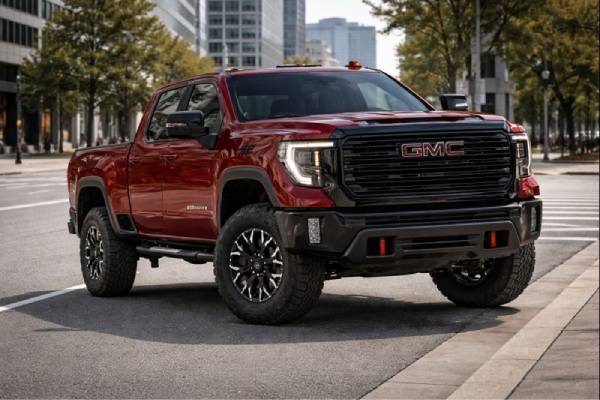
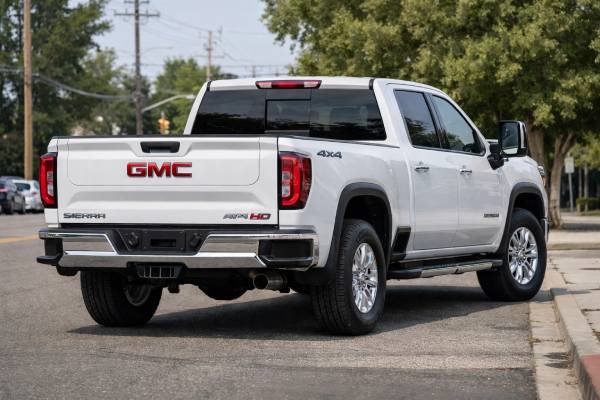
The facelifted 2024–present GMC Sierra HD 4WD with the L8T 6.6L gas V8 is built around a simple promise: big-truck capability without diesel complexity. You get a naturally aspirated, pushrod V8 tuned for load work, backed by a 10-speed “Allison-branded” automatic that keeps the engine in its useful torque band when towing or climbing. The 4WD system adds real winter and jobsite flexibility, but it also introduces extra maintenance points—front driveline, transfer case, and more seals and fluid volumes to watch.
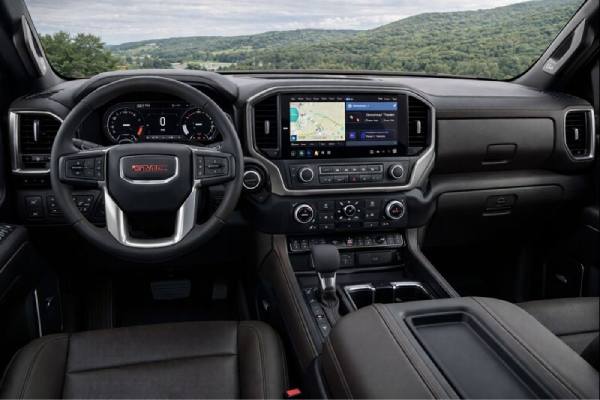
This generation’s refresh also matters in day-to-day ownership. The cabin technology, cameras, and trailering aids are stronger than earlier trucks, which reduces stress when backing heavy trailers or maneuvering in tight yards. If you want a heavy-duty truck that works hard, starts reliably in cold weather, and doesn’t require DEF, this configuration sits in a sweet spot.
Owner Snapshot
- Strong low-end pull and stable towing manners without diesel emissions hardware.
- 10-speed gearing helps keep engine speed controlled on grades and in headwinds.
- 4WD adds traction for snow, gravel, and wet ramps, but increases driveline service needs.
- Plan for transfer case and differential fluid service if you tow regularly or see deep water or mud.
- Typical interval: rotate tires every 12,000 km (7,500 mi) to keep wear even on heavy front axles.
Jump to sections
- 4WD Sierra HD facelift guide
- L8T 4WD technical specs
- Trims packages and safety tech
- Common faults recalls and fixes
- Maintenance schedule and buyer tips
- How it drives in 4WD
- Rivals and best alternatives
4WD Sierra HD facelift guide
Think of the 2024–present Sierra HD refresh as two upgrades layered on top of a proven heavy-duty chassis: a modernized cabin and electronics suite, and a reshuffled powertrain lineup that makes the gas truck feel less “base” than it used to. In 4WD form, the L8T sits as the straightforward workhorse choice—no turbo plumbing, no DEF tank, no particulate-filter regeneration strategy to manage. That simplicity is a real advantage for owners who rack up short trips, idle on job sites, or store the truck for stretches.
The L8T 6.6L gas V8 is designed for durability under load. It uses a classic cam-in-block (pushrod) layout and direct injection, with power tuned for usable midrange rather than high-rev drama. The 10-speed automatic is the other half of the story. With tighter ratio steps than earlier transmissions, it can hold speed more smoothly on grades, reduce gear hunting, and keep coolant and transmission temperatures steadier when you tow.
4WD changes the ownership equation in predictable ways. You gain traction and control—especially on wet boat ramps, snowy highways, muddy access roads, and loose gravel sites. You also add more wear items: front CV shafts (on IFS), front differential fluid, a transfer case with its own fluid, and more U-joints and seals. For many owners, that’s an easy trade, but it rewards basic discipline: correct tire matching, fluid service when towing is frequent, and quick attention to driveline noises before they become expensive.
Finally, this facelift generation’s trailering tools can genuinely reduce fatigue. Better camera coverage, trailer-angle guidance (when equipped), and more refined stability and brake control systems matter when you’re moving a heavy, high-profile trailer in crosswinds. In other words: the “work” part improved, not just the screen size.
L8T 4WD technical specs
Below are practical, owner-facing specifications for the facelift Sierra HD 4WD with the L8T gas V8. Exact figures can vary by 2500HD vs 3500HD, cab and bed, axle package, wheels/tires, and regional equipment, so treat these as configuration-dependent where noted.
Engine and performance
| Item | Specification |
|---|---|
| Code | L8T |
| Layout and cylinders | V8, OHV (pushrod), 2 valves/cyl |
| Displacement | 6.6 L (6,596 cc) |
| Bore × stroke | 103.25 × 98.0 mm (4.07 × 3.86 in) |
| Induction | Naturally aspirated |
| Fuel system | Direct injection |
| Compression ratio | 10.8:1 |
| Max power | 401 hp (299 kW) @ 5,200 rpm |
| Max torque | 629 Nm (464 lb-ft) @ 4,000 rpm |
| Timing drive | Chain (cam-in-block architecture) |
| Rated efficiency | Not EPA-labeled on many HD trims due to GVWR class; real-world varies widely |
Transmission and driveline
| Item | Specification |
|---|---|
| Transmission | 10-speed automatic (Allison-branded) |
| Gear ratios | 1st 4.54 / 2nd 2.87 / 3rd 2.06 / 4th 1.72 / 5th 1.48 / 6th 1.26 / 7th 1.00 / 8th 0.85 / 9th 0.69 / 10th 0.63 |
| Reverse | 4.87 |
| Drive type | 4WD (2-speed transfer case on most trims) |
| Final drive ratio | Commonly 3.73 on gas configurations (availability varies by GVWR and package) |
Chassis and dimensions
Dimensions vary dramatically by cab and bed. Use these as reference points rather than a single “the truck is X long” number.
| Item | Typical range or note |
|---|---|
| Suspension (front/rear) | Independent front suspension / leaf-spring solid rear axle |
| Brakes | 4-wheel disc (package-dependent sizing) |
| Wheels/tires | Multiple 18–20 in setups; match tire sizes carefully on 4WD |
| Wheelbase | Varies by cab/bed (regular, double, crew; standard or long bed) |
| Overall length | Varies by cab/bed; crew cabs with long beds are the longest |
| Ground clearance | Package-dependent; off-road trims sit higher |
Performance and capability (configuration-dependent)
| Item | Notes |
|---|---|
| 0–60 mph | Not a core design target; varies with GVWR and tires |
| Towing | Highly dependent on 2500HD vs 3500HD, axle, hitch type, and cab/bed |
| Payload | Varies significantly; check door-jamb tire and loading label |
| Cooling and thermal capacity | Built for sustained load, but airflow and ambient temps still matter |
Fluids and service capacities (verify by VIN)
Capacities and specifications can change with axle housing size, towing package, and cooling modules. Always verify against the correct service information for your VIN.
| System | Typical spec to confirm |
|---|---|
| Engine oil | dexos 1–approved gasoline oil; viscosity commonly 0W-20 (capacity varies by pan and filter) |
| Coolant | GM-approved long-life coolant (mix ratio typically 50/50) |
| Transmission fluid | OEM-specified low-viscosity ATF for the 10-speed; fill level set by procedure, not just volume |
| Front differential | OEM gear oil spec varies by axle; service is more frequent under towing or water exposure |
| Transfer case | OEM transfer case fluid; interval depends on use and environment |
| Rear differential | OEM gear oil; consider shorter intervals for towing or high heat |
Electrical and ignition
| Item | Notes |
|---|---|
| Charging system | Heavy-duty alternator options by trim and trailering equipment |
| 12 V battery | Size and CCA vary; higher draw with winches, plows, or accessories |
| Spark plugs | Correct OE heat range and gap are important under heavy load |
Safety and driver assistance
Heavy-duty pickups are not always tested the same way as light-duty vehicles by every ratings agency, and ratings may not be published for every configuration.
| Item | Notes |
|---|---|
| Crash ratings | Check the exact year and model on official databases; many HD variants have limited published results |
| ADAS | Availability varies by trim and packages (AEB, lane support, ACC, trailer aids) |
Trims packages and safety tech
For the 2024–present Sierra HD 4WD, trims matter less for “can it do the job?” and more for how confidently and comfortably you can do it, especially when trailering. Most trims can be configured with the L8T gas engine, but the mechanical details—axle ratios, tire load ratings, suspension tuning, and tow equipment—can change with packages.
Trims and options that change function
Common trim families include work-focused grades (often labeled Pro, SLE, or SLT depending on market) and premium trims (Denali, Denali Ultimate), plus off-road-oriented trims (AT4). What to watch:
- Axle and tow packages: Look for factory trailering equipment, integrated brake controller, and hitch type (receiver vs gooseneck or fifth-wheel prep where available). These packages can change cooling hardware, mirrors, and sometimes gearing availability.
- Tire and wheel packages: A “nicer” wheel can come with a lower-profile tire that rides better on pavement but may be less ideal for gravel work. More importantly, tire load range and maximum pressure matter for payload and stability.
- Suspension and steering feel: Off-road trims can trade a touch of steering sharpness for compliance; luxury trims often prioritize quiet and ride control.
- Cameras and trailering tech: This facelift generation’s camera suite can be a real productivity feature. If you routinely tow alone, prioritize the best camera package you can reasonably get.
Quick identifiers that help when shopping used:
- RPO codes (build codes): The glovebox sticker is no longer universal on new GM trucks, but dealer build sheets can list RPOs that confirm trailering packages and axle options.
- Hitch hardware: Factory gooseneck or fifth-wheel prep is expensive to retrofit cleanly.
- Trailer brake controller and mirror controls: Factory integration is preferable to add-on systems.
Safety ratings and what they mean here
With heavy-duty trucks, published crash-test ratings can be limited or not directly comparable to light-duty pickups. The right approach is to:
- Verify whether a specific model year and configuration has a published rating in official databases.
- Focus on standard safety equipment: stability control, trailer sway control, brake assist logic, and airbag coverage.
ADAS and calibration implications
Driver assistance features are increasingly tied to radar, cameras, and precise alignment targets. If your truck has:
- Adaptive cruise control, automatic emergency braking, or lane support, plan on proper calibration after windshield replacement, bumper work, suspension lifts, or alignment changes.
- Trailer camera additions and aftermarket wiring can introduce electrical “noise” or faults if installed poorly, so use a shop familiar with HD GM trucks.
In short: pick trim for the tools you’ll use—cameras, mirrors, trailering tech, and tire packages—not just for leather or chrome.
Common faults recalls and fixes
No HD truck is truly “problem-free,” but the L8T gas Sierra HD tends to be more predictable than many modern turbocharged powertrains. The most useful way to think about issues is by prevalence and cost tier, because that shapes what you should inspect before purchase and how aggressively you should maintain.
Common (usually low to medium cost)
- Brake wear under towing (medium): Heavy trailers and city driving can eat pads faster than owners expect.
Symptoms: pulsation, longer pedal travel, uneven pad wear.
Likely cause: heat cycling, trailer brake imbalance, sticking slide pins.
Fix: inspect slide pins and caliper hardware, verify trailer brake gain, use correct pad compound for duty. - Tire cupping or uneven front wear (low to medium): 4WD HD trucks load the front axle and steering hard.
Symptoms: humming noise, steering nibble, uneven tread blocks.
Cause: infrequent rotations, toe settings drifting, worn shocks.
Fix: rotate on schedule, align to spec, replace worn dampers before tires are ruined. - Battery and accessory load issues (low to medium): Plows, winches, idling with lights and HVAC, and trailer loads stress charging systems.
Symptoms: slow cranking, random low-voltage warnings.
Fix: test battery and alternator under load; keep grounds clean and tight.
Occasional (medium to high cost if ignored)
- 10-speed shift quality complaints (medium): Some owners report harsh shifts, hunting, or odd behavior under load.
Symptoms: delayed engagement, flare, clunks during downshifts.
Cause: adaptive learning, software calibration, fluid condition, or valve-body wear.
Fix: verify updates, perform proper reset and relearn if applicable, and address fluid condition with the correct procedure. - Transfer case and front driveline wear (medium): 4WD adds moving parts and seals.
Symptoms: vibration under load, clunks on takeoff, whining in 4HI.
Cause: U-joint wear, front differential fluid breakdown, transfer case chain or bearing wear (use-dependent).
Fix: inspect joints and mounts, service fluids on towing schedules, address leaks early.
Rare (but expensive)
- Cooling-system failures under severe duty (high): Rare in normal use, but sustained towing in heat exposes weak links.
Symptoms: rising coolant temps on grades, coolant smell, heater performance changes.
Cause: degraded coolant, airflow restriction, thermostat or pump issues.
Fix: restore airflow, pressure-test system, replace failed components promptly to avoid head gasket risk.
Recalls, TSBs, and service actions
Recalls can affect any trim, including new trucks. The practical approach is:
- Run the VIN through an official recall lookup tool.
- Ask the seller for proof of completion (dealer invoice or service record).
- Confirm open campaigns at a dealer before you buy.
Even when a recall doesn’t strand you, it can change your decision if parts availability is tight or if the issue affects a safety-critical system like steering, tailgates, braking, or airbags.
Maintenance schedule and buyer tips
A Sierra HD 4WD that tows regularly is less forgiving than a commuter SUV: the fluids run hotter, the brakes work harder, and driveline angles and joints take real load. The upside is that these trucks respond well to consistent maintenance.
Practical maintenance schedule (typical guidance)
Use the oil-life monitor where applicable, but shorten intervals for towing, heavy idle time, dust, or extreme temperatures.
- Engine oil and filter: every 12,000 km (7,500 mi) or 12 months; every 8,000 km (5,000 mi) in severe service. Use the exact dexos-approved viscosity specified for your VIN.
- Tire rotation: every 12,000 km (7,500 mi). Heavy front axles punish neglected rotations.
- Engine air filter: inspect every oil service; replace roughly every 24,000–48,000 km (15,000–30,000 mi) depending on dust.
- Cabin air filter (if equipped): about every 24,000 km (15,000 mi), sooner in dusty regions.
- Brake fluid: every 3 years is a sensible target for towing or mountain use; otherwise follow the manufacturer schedule.
- Front and rear differential fluids: inspect for leaks each oil change; service around 72,000–96,000 km (45,000–60,000 mi) with towing, sooner if submerged.
- Transfer case fluid: service around 72,000–96,000 km (45,000–60,000 mi) when 4WD is used often, or after deep water exposure.
- Transmission service: follow the manufacturer severe-duty schedule if you tow; avoid “flushes” unless required by procedure—correct level setting matters more than a quoted capacity.
- Cooling system: inspect annually; refresh coolant at the manufacturer interval or sooner if heavy towing heat cycles are frequent.
- 12 V battery: test annually after year 3; many HD batteries live 3–5 years depending on climate and use.
Fluids and torque values (decision-focused)
Because specs vary by axle and package, use these as shopping and planning guidance:
- Confirm the truck uses the correct OEM 10-speed ATF and that services were done by procedure.
- Confirm differentials and transfer case were serviced with the correct OEM spec fluids, not generic substitutes.
- Wheel lug torque: verify per wheel type; consistent torque is critical on HD wheels, especially after tire rotations.
Buyer’s guide checklist (what matters most)
- Door-jamb payload label: This is the reality check. Don’t buy based on brochure towing alone.
- Trailer history: Look for hitch wear, brake controller use, and evidence of overheated brakes.
- 4WD function test: Verify 2HI/4HI engagement, listen for abnormal noises, and check for driveline vibration on acceleration.
- Leaks: front diff, transfer case, rear pinion seal, and transmission pan area.
- Tire match: same brand/model/size and similar tread depth across the axle pairs; mismatched tires can stress 4WD systems.
- Service records: oil changes, driveline fluid services, and any transmission software updates.
Long-term outlook: the L8T gas powertrain can be a strong durability play if you keep fluids fresh and don’t ignore driveline noises. In heavy towing use, the maintenance schedule becomes the reliability strategy.
How it drives in 4WD
Unloaded, the Sierra HD 4WD feels like what it is: a heavy truck with a stiff structure, substantial tires, and suspension tuned to carry weight. The facelift improves the “daily” experience mainly through better cabin ergonomics and trailering tech, not by turning it into a half-ton.
Ride, handling, and NVH
- Straight-line stability: Excellent, especially at highway speeds with a properly balanced load. The truck’s mass and wheelbase help it track confidently in wind.
- Steering feel: Typically light-to-moderate effort with a slower ratio than sporty vehicles. Expect more “truck” feedback over broken pavement.
- Braking feel: Strong but load-sensitive. Pedal feel can change with trailer brake settings and pad temperature. A properly set trailer brake controller makes a major difference.
- Noise: Tire choice dominates. Aggressive all-terrains can add hum; highway tires are noticeably quieter.
Powertrain character
The L8T delivers smooth, linear response with a noticeable torque rise as revs build. It’s not diesel-like at idle, but it pulls confidently once you’re moving. The 10-speed is a big upgrade in how the truck manages grades:
- It can hold a gear without dramatic rev swings.
- Passing response is more predictable because the transmission can choose a “right-sized” downshift instead of a big jump.
Real-world efficiency (typical owner experience)
Many HD configurations in this class do not carry the same EPA-style fuel economy labeling as light-duty trucks, and real results vary widely. As a practical expectation:
- Unladen mixed driving: often lands in the low-to-mid teens mpg (US), depending on speed and tires.
- Towing: fuel use rises sharply with trailer weight, frontal area, and headwind; expect a meaningful mpg drop that can be more than 30–40% under heavy tow.
4WD traction and control
In wet or snowy conditions, 4WD changes the truck from “manageable” to “calm,” especially when pulling away with a trailer or descending slippery ramps. A few ownership notes:
- Use 2HI on dry pavement to reduce wear and improve turning ease.
- Use 4HI for snow-covered roads and loose gravel where you need steady traction.
- Use 4LO for controlled crawling, steep launches, or pulling a trailer slowly on a ramp—this reduces transmission heat and clutch slip.
Towing behavior
With a properly loaded trailer (correct tongue weight, level stance, good tires), the Sierra HD is steady and confidence-inspiring. The key is temperature management and setup: correct tire pressures, trailer brake gain, and hitch selection matter as much as horsepower.
Rivals and best alternatives
Cross-shopping a gas Sierra HD 4WD usually means comparing three “big gas” heavy-duty formulas: GM’s 6.6 gas (L8T), Ford’s 7.3 gas, and Ram’s 6.4 gas. None is universally best; the right pick depends on how you tow, how long you keep trucks, and how you value simplicity versus features.
Versus Ford Super Duty 7.3 gas (4WD)
- Strengths: Strong low-end torque character and a broad aftermarket ecosystem for work accessories. Ford’s chassis and axle options are appealing for certain upfit needs.
- Trade-offs: Depending on year and configuration, you may see different transmission behavior and packaging. Shop based on actual payload labels and axle packages rather than marketing claims.
Versus Ram HD 6.4 gas (4WD)
- Strengths: Often competitive pricing and a straightforward naturally aspirated engine option. Some buyers prefer Ram’s interior packaging and seat comfort.
- Trade-offs: Pay close attention to gearing and transmission behavior under heavy tow, and verify payload and rear axle ratings on the exact truck.
Versus GM’s own Duramax diesel (L5P)
This is the most important “rival,” because many buyers are torn between gas simplicity and diesel torque.
- Choose L8T gas if you do many short trips, want lower emissions-system complexity, and prefer simpler long-term ownership patterns.
- Choose diesel if you tow heavy often, drive long distances, or prioritize relaxed towing torque and potential resale in certain markets.
When the Sierra HD 4WD L8T is the best fit
This configuration shines for owners who:
- Tow moderate-to-heavy loads regularly but don’t want diesel emissions upkeep.
- Operate in cold climates or mixed-duty cycles with lots of starts and stops.
- Want modern trailering tech and cameras to reduce day-to-day stress.
If you buy based on payload label, match tires correctly, and service the driveline fluids like a working machine, the facelift Sierra HD 4WD with the L8T is a strong “buy it, use it, keep it” truck.
References
- 2024 GMC Sierra HD AT4X AEV Edition Off-Roading | GM Canada 2024
- gmtr23ct200_2024_sierra_hd_fo_010924_final.pdf 2024 (Catalog)
- Safety Recall N232426400 Tailgate May Open Unexpectedly 2024 (Recall)
- Check Your VIN During Vehicle Safety Recalls Week 2023 (Recall Database)
Disclaimer
This article is for informational purposes only and is not a substitute for professional diagnosis, inspection, or repair. Specifications, torque values, service intervals, fluids, and procedures can vary by VIN, market, model year, and equipment; always confirm details using the official owner’s manual and service information for your exact vehicle.
If this guide helped, please consider sharing it on Facebook or X to support our work.