
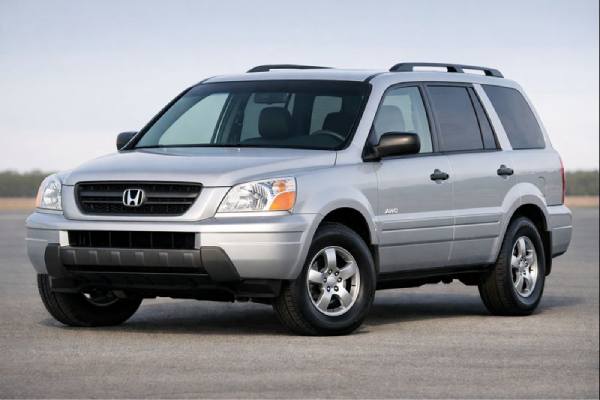
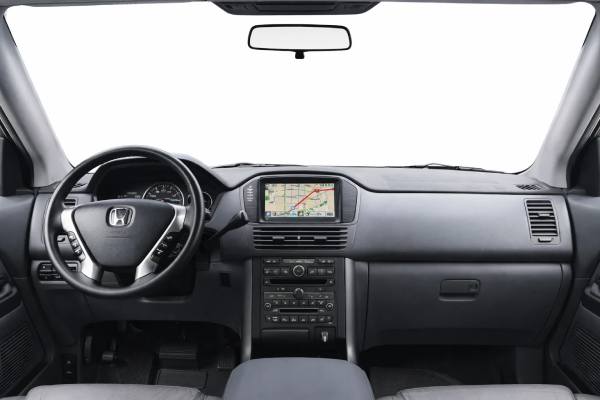
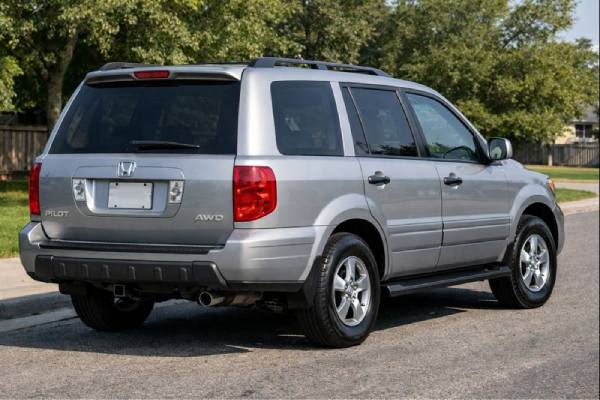
The 2003–2004 Honda Pilot AWD (YF1) sits in a sweet spot for buyers who want a practical three-row SUV without the complexity of newer turbo or hybrid systems. Under the hood is Honda’s 3.5-liter J35A4 V6, tuned for smooth, usable torque rather than high-strung power. Pair that with a 5-speed automatic and the VTM-4 all-wheel-drive system, and you get a family vehicle that feels confident in bad weather and stable on long highway runs.
These early Pilots reward owners who stay disciplined with fluids—especially the automatic transmission and rear differential. Do that, and the platform’s unibody structure, spacious cabin, and straightforward mechanical layout can deliver years of predictable ownership. If you’re shopping one today, your best value comes from verifying maintenance history and choosing a configuration that matches how you’ll actually use it (commuting, winter driving, or light towing).
Quick Specs and Notes
- Strong, naturally aspirated V6 pull with a relaxed, low-stress feel in daily driving.
- Real three-row usability with a boxy cargo area that’s easy to load and organize.
- VTM-4 AWD improves traction on wet and snowy roads without constant driver input.
- Automatic transmission health depends heavily on clean ATF and smooth shift behavior on a test drive.
- Plan timing belt service every 105,000 miles (168,000 km) or 7 years, whichever comes first.
Guide contents
- Honda Pilot AWD 2003–2004 in detail
- Honda Pilot AWD specs, weights, and measurements
- Honda Pilot AWD trims, options, and safety gear
- Reliability issues and service actions
- Maintenance and buyers checklist
- Driving character and real-world results
- Rivals and which one fits you
Honda Pilot AWD 2003–2004 in detail
Honda built the first-generation Pilot around a unibody platform shared with other Honda and Acura family vehicles of the era. That matters because it shapes how the Pilot feels: more controlled and “car-like” over broken pavement than many body-on-frame SUVs from the early 2000s, while still offering genuine towing ability and winter traction when equipped correctly.
For 2003–2004 AWD models, the headline feature is Honda’s VTM-4 system (Variable Torque Management 4WD). In normal cruising, it behaves like a front-drive vehicle to reduce driveline drag. When the front tires slip, the rear axle is fed torque to stabilize the vehicle and improve traction. The “Lock” function (where equipped) is not a rock-crawling tool, but it can help you pull away on loose surfaces at low speeds. Think steep, snowy driveways and muddy campsites—not deep ruts and boulders.
The J35A4 3.5-liter SOHC V6 is one of the reasons these Pilots still have a following. It delivers its 240 hp without turbo heat, high boost pressures, or complicated induction hardware. In practice, that means strong midrange power for passing and merging, with a smooth, predictable throttle that suits family driving. It also means your big-ticket maintenance tends to be “old-school” Honda: timing belt service, valve cover seepage, and keeping fluids fresh.
The 5-speed automatic is the part you should judge most carefully on a used example. Many Pilots live easy suburban lives, but others have spent years towing, hauling, or surviving stop-and-go commuting on old fluid. The good news is that a well-maintained unit can be durable. The bad news is that neglected transmission servicing often shows up as harsh 1–2 shifts, flare (engine revs rising without matching acceleration), or shudder under load.
Ownership verdict: the 2003–2004 Pilot AWD is best viewed as a roomy, mechanically straightforward family SUV that pays you back when you treat fluid changes as essential, not optional.
Honda Pilot AWD specs, weights, and measurements
Below are practical, model-specific specs that matter for shopping, servicing, and planning real-world use. Where a figure can vary by trim, equipment, or market labeling, I’ve listed the most typical values for 2003–2004 AWD models.
Powertrain and efficiency
| Item | Specification |
|---|---|
| Code | J35A4 |
| Engine layout and cylinders | V6, 6 cylinders, SOHC, 24-valve, VTEC |
| Displacement | 3.5 L (3,471 cc) |
| Bore × stroke | 89.0 × 93.0 mm (3.50 × 3.66 in) |
| Induction | Naturally aspirated |
| Fuel system | Multi-point fuel injection |
| Compression ratio | 10.0:1 |
| Max power | 240 hp (179 kW) @ 5,400 rpm |
| Max torque | 328 Nm (242 lb-ft) @ 4,500 rpm |
| Timing drive | Belt |
| Rated efficiency (EPA, AWD) | 14.7 / 10.7 / 13.1 L/100 km (16 / 22 / 18 mpg US) city/hwy/comb |
| Real-world highway @ 120 km/h (75 mph) | Typically ~11.5–13.5 L/100 km (17–20 mpg US), driving style dependent |
Transmission and driveline
| Item | Specification |
|---|---|
| Transmission | 5-speed automatic |
| Drive type | AWD (VTM-4) |
| Final drive ratio | 4.428 |
Chassis and dimensions
| Item | Specification |
|---|---|
| Body | Unibody |
| Suspension (front/rear) | Front strut / rear multi-link with trailing arms |
| Steering | Variable-assist rack-and-pinion |
| Brakes | 4-wheel disc with ABS and EBD |
| Wheels and tyres (common) | P235/70 R16 |
| Ground clearance | 203 mm (8.0 in) |
| Angles | Approach 28.5° / Departure 23.0° |
| Length / width / height (typical) | 4,775 mm (188.0 in) / 1,938 mm (76.3 in) / 1,793 mm (70.6 in) |
| Wheelbase | 2,700 mm (106.3 in) |
| Turning circle (kerb-to-kerb) | 11.6 m (38.0 ft) |
| Kerb (curb) weight (typical) | ~2,003–2,014 kg (4,416–4,439 lb), equipment dependent |
| Fuel tank | 73 L (19.2 US gal / 16.0 UK gal) |
| Cargo volume (SAE) | 462 / 1,379 / 2,556 L (16.3 / 48.7 / 90.3 ft³) behind 3rd/2nd/1st row |
Performance and capability
| Item | Specification |
|---|---|
| Acceleration | 0–100 km/h (0–62 mph): typically ~9.0–10.0 s (varies by tyres, load, and altitude) |
| Top speed | Not a practical metric for this model; stability and braking matter more than peak speed |
| Towing capacity | Up to 2,041 kg (4,500 lb) with required coolers and correct hitch setup |
| Payload | Depends on exact GVWR and curb weight; verify door jamb label on the vehicle you’re buying |
Fluids and service capacities
| Fluid | Specification and capacity |
|---|---|
| Engine oil | Capacity: 4.8 L (5.1 US qt) with filter; 4.4 L (4.7 US qt) without filter |
| Engine coolant | Total: 8.5 L (2.25 US gal) |
| Coolant reserve tank | 0.6 L (0.16 US gal) |
| Automatic transmission fluid | Drain/fill: ~3.0 L (3.2 US qt); total: ~7.8 L (8.2 US qt) |
| Rear differential fluid | Capacity varies by service method; use correct Honda rear diff fluid and confirm fill procedure |
| A/C refrigerant | HFC-134a (R-134a), 700–750 g (24.7–26.5 oz) |
| A/C compressor oil | ND-OIL8 |
Safety and driver assistance
| Item | Specification |
|---|---|
| Crash ratings | Euro NCAP: not a primary reference for this US-focused model year; IIHS: see model-year tests for frontal and restraint performance |
| ADAS | No modern AEB/ACC/lane centering in this era; focus is on structure, airbags, ABS, and stability systems |
| Core safety tech | Dual-stage front airbags; available front side airbags with OPDS; ABS with EBD; LATCH provisions |
Honda Pilot AWD trims, options, and safety gear
For 2003–2004, most buyers will encounter two main trims: LX and EX. Both share the same core mechanical package—J35A4 V6, 5-speed automatic, and the AWD system in the variant covered here. The differences that matter today are usually comfort features, seating details, and which safety equipment is installed on the vehicle you’re actually shopping.
Trims and options that change the experience
Pilot LX (AWD) is the “simple and durable” pick. You typically get the essentials: a roomy cabin, straightforward controls, and fewer high-cost luxuries to fail with age. It’s often the best value if you prioritize reliability over features, especially if the vehicle has documented fluid services and timing belt history.
Pilot EX (AWD) adds the convenience and family-focused upgrades most people want in a three-row SUV:
- More standard comfort equipment, often including upgraded audio and additional cabin storage and convenience touches
- Availability of leather trim, which typically pairs with heated mirrors and other niceties
- Availability of factory navigation and a DVD entertainment system (useful for some families, but costly to repair if screens or modules fail)
From a used-buyer perspective, the EX’s advantage is comfort and resale appeal. The tradeoff is higher odds of age-related issues: seat heater failures, navigation display problems, worn leather bolsters, or more electrical quirks simply because there’s more equipment onboard.
Quick identifiers to verify what you’re looking at
When listings are vague, use these practical checks during an in-person inspection:
- Tyre size and wheel type: many EX models wear alloys; many LX models started with steel wheels (though wheels are easily swapped, so don’t treat this as proof)
- Interior clues: leather seats and heated seat switches generally point to a leather-equipped EX
- Third-row and cargo hardware: confirm seat folding works smoothly and that latch points aren’t bent or broken
- OPDS indicator and side airbags: if the vehicle is equipped, verify the dash indicators behave normally at startup and then turn off
Safety ratings and what they mean in real life
This generation sits in an era where safety was rapidly improving, but testing standards also evolved. The key is to interpret ratings as relative comparisons to other early-2000s SUVs, not as direct equivalents to modern 5-star results.
- IIHS moderate overlap frontal tests are a useful reference for structure and restraint performance. For this model year, IIHS documentation notes an early-production concern with airbag timing that Honda addressed with a change on later builds. That means build date matters when you’re comparing two vehicles that look identical on a listing.
- Side-impact protection depends heavily on whether the Pilot has side airbags and how well the interior and seat-mounted components have aged. A warning light, tampered SRS wiring, or a history of flood damage is a hard no.
Safety systems and “ADAS” reality for 2003–2004
Don’t expect modern driver assistance. What you should expect is a solid baseline of safety hardware:
- ABS and electronic brake distribution (EBD) help maintain control under hard braking
- LATCH anchors make proper child-seat installation more straightforward
- Airbag system health is critical: any SRS light or missing airbag labels should be treated as a serious issue
If you service suspension, steering, or brakes, insist on correct alignment and high-quality tyres. On an older SUV, those basics often improve emergency handling more than any single “feature” on a brochure.
Reliability issues and service actions
A 2003–2004 Pilot AWD can be dependable, but only if you treat it like a system with known wear points. The most expensive surprises tend to come from driveline neglect, cooling system aging, or deferred major services like the timing belt. Below is a practical map of issues by prevalence and severity, with symptoms and what usually fixes them.
Common issues (most owners encounter these with age)
- Automatic transmission wear or shift quality decline (high cost if ignored)
- Symptoms: harsh 1–2 shift, flare on upshifts, delayed engagement into Drive, shudder under load, burnt-smelling ATF
- Likely causes: old ATF, heat stress from towing or city driving, internal wear
- Remedy: early-stage units often respond best to regular drain-and-fill service with the correct fluid and a careful inspection for leaks; persistent flare or slip usually needs professional diagnosis before it escalates
- Rear differential fluid breakdown and AWD “binding” feel (medium cost, easy prevention)
- Symptoms: groan, chatter, or shudder from the rear at low speed turns; inconsistent traction engagement
- Likely causes: overdue rear diff service, wrong fluid, or contamination
- Remedy: correct rear diff fluid service at sensible intervals; if symptoms persist, verify mounts, bearings, and driveline joints
- Engine mounts and driveline clunk (medium cost)
- Symptoms: thump when shifting from Park to Drive, vibration at idle, clunk on throttle transitions
- Likely causes: collapsed mounts, worn bushings
- Remedy: replace failed mounts first, then evaluate suspension bushings and CV joints
Occasional issues (not universal, but worth screening)
- Cooling system aging (medium to high cost if it overheats)
- Symptoms: creeping temperature, low coolant level, sweet smell, dampness near radiator or hoses
- Remedy: pressure test, replace suspect hoses, radiator, or cap; keep coolant fresh and at the correct concentration
- Oil seepage and gasket aging (low to medium cost)
- Symptoms: oil smell after drives, wet valve cover area, slow drip on driveway
- Remedy: replace valve cover gaskets and grommets; confirm PCV function; avoid “stop leak” shortcuts that can complicate later service
- A/C performance drop (medium cost)
- Symptoms: weak cooling at idle, cycling compressor, oily residue at fittings
- Remedy: leak test, verify correct refrigerant charge, and confirm condenser airflow is not blocked
Rare but costly concerns (screen carefully)
- Timing belt overdue (high severity, high cost if it fails)
- Symptoms: often none before failure; sometimes belt noise, coolant seepage at water pump
- Remedy: timing belt service with water pump and tensioners at the correct interval; treat missing history as “not done”
- Structural corrosion in harsh climates (severity varies)
- Symptoms: flaky subframe areas, brake line corrosion, mounting point deterioration
- Remedy: professional inspection; walk away from severe structural corrosion
Recalls, service campaigns, and how to verify them
This era includes safety campaigns that may have been completed years ago—or skipped. Your verification steps should be consistent:
- Run the VIN through an official recall lookup tool and print/save the result.
- Ask for dealer service records showing recall completion dates.
- If documentation is missing, assume it is not complete and schedule a dealer check.
Also note the IIHS documentation about early production airbag deployment characteristics and Honda’s later change for subsequent builds. When shopping, build date and service history can matter as much as trim.
Maintenance and buyers checklist
A solid maintenance plan is the difference between a Pilot that feels “Honda durable” and one that becomes a constant project. Use the schedule below as a practical baseline, then tighten intervals for short trips, heavy city use, hot climates, or towing.
Practical maintenance schedule (distance and time)
- Engine oil and filter: every 8,000–10,000 km (5,000–6,000 miles) or 6 months for mixed or severe use; longer intervals only if supported by your driving pattern and oil monitoring
- Engine air filter: inspect every oil change; replace about 24,000–32,000 km (15,000–20,000 miles) in dusty use
- Cabin air filter: every 20,000–30,000 km (12,000–18,000 miles) or yearly if allergies or city soot are common
- Coolant: replace at the manufacturer interval for the correct Honda coolant type; treat unknown coolant history as a reason to refresh it
- Spark plugs: typically around 160,000–170,000 km (100,000–105,000 miles) on long-life plugs; verify what’s installed
- Timing belt and related components: 105,000 miles (168,000 km) or 7 years, whichever comes first; include water pump, tensioner, and inspect seals
- Serpentine belt and hoses: inspect at each oil change; replace at the first signs of cracking, glazing, swelling, or seepage
- Automatic transmission fluid (ATF): drain-and-fill at conservative intervals (many owners target 30,000–50,000 km / 20,000–30,000 miles depending on use); towing warrants the shorter end
- Rear differential fluid: keep intervals conservative, especially if you drive in snow, tow, or do frequent short trips that stress fluids
- Brake fluid: every 3 years, regardless of mileage
- Brake pads and rotors: inspect every tyre rotation; look for uneven wear and caliper slide stiffness
- Tyre rotation and alignment: rotate every 8,000–10,000 km (5,000–6,000 miles); align if there’s uneven wear or steering pull
- 12 V battery: test yearly after year 3; many last 4–6 years depending on climate and driving pattern
Fluid specifications and capacities to know (decision-making quick list)
- Fuel tank: 73 L (19.2 US gal)
- Engine oil: 4.8 L (5.1 US qt) with filter
- Coolant total: 8.5 L (2.25 US gal)
- ATF drain-and-fill: about 3.0 L (3.2 US qt) per service
Essential torque values (verify for your VIN before final tightening)
- Wheel lug nuts: commonly 127 Nm (94 lb-ft) on Hondas of this era
- Engine oil drain bolt: commonly around 39 Nm (29 lb-ft) depending on hardware
Because torque values can vary with fastener revisions and service bulletins, treat these as planning numbers and confirm in official service documentation.
Used-buyer checklist: what to inspect and what to ask for
Service history to request
- Proof of timing belt service (invoice with parts listed)
- Evidence of regular ATF service (not just “checked”)
- Records for rear differential service and brake fluid replacement
- Any documentation for safety campaigns and recall completion
In-person inspection
- Cold start: listen for abnormal rattles, rough idle, or heavy smoke
- Test drive: smooth 1–2 and 2–3 shifts, no flare under moderate throttle
- Tight turns in a parking lot: check for rear shudder or groan
- Underbody: check for wetness at transmission, engine oil seepage, and corrosion hotspots
- Cabin electronics: verify HVAC modes, fan speeds, and A/C cooling stability
Which versions tend to age best
- A well-maintained LX often ages gracefully because there are fewer luxury parts to fail
- A well-kept EX with leather can be the better family experience, but only if the extra electronics are working and the interior hasn’t been neglected
Long-term durability outlook: if the timing belt schedule is respected and driveline fluids are kept clean, this generation can remain a stable, predictable family SUV well past the point where many early-2000s rivals start to feel worn out.
Driving character and real-world results
The 2003–2004 Pilot AWD is not trying to feel sporty. Its best trait is how calmly it covers distance with a full load of people, luggage, and winter gear. The J35A4 V6 provides smooth acceleration that builds without drama, and the 5-speed automatic generally keeps the engine in a comfortable rev range when everything is healthy.
Ride, handling, and NVH
- Ride quality: tuned for comfort, with good absorption over potholes for an SUV of its era
- Straight-line stability: confident at highway speed, helped by the long wheelbase and unibody structure
- Cornering balance: predictable and safe; it leans, but it doesn’t feel sloppy when suspension bushings and dampers are in good shape
- Braking feel: typically solid, though pedal feel can degrade if brake fluid is old or caliper slides are sticking
- Cabin noise: wind and tyre noise are more noticeable than modern crossovers; worn door seals and aggressive tyres amplify it
Powertrain character
- Throttle response: naturally aspirated smoothness; no turbo lag, but also no punchy low-end boost
- Passing power: strong midrange makes 2-lane passing and highway merges easy for a three-row SUV
- Transmission behavior: should be clean and decisive; hunting, flare, or harsh engagement are signs to investigate rather than “live with”
- AWD behavior: most noticeable in low-traction starts and wet corners; it improves confidence without needing constant driver input
Real-world efficiency
EPA-rated economy for the AWD variant is best viewed as a baseline. In real use:
- City driving: short trips and winter warm-ups can push consumption into the mid-teens (L/100 km) quickly
- Highway at 100–120 km/h: many owners see a meaningful penalty compared with slower cruising, especially with roof racks, wider tyres, or heavy cargo
- Towing: expect a noticeable increase in fuel use under load; plan for a significant range reduction and prioritize transmission cooling and fluid condition
Load and towing impressions
When equipped for towing and kept within limits, the Pilot can be a steady tow vehicle for small boats and light campers. The key is temperature management and braking:
- Keep transmission fluid fresh and verify any required coolers are installed for higher tow ratings
- Use a quality brake controller setup if your trailer requires it and confirm trailer brake function
- Expect longer braking distances and plan following space accordingly
Overall, the driving experience is defined by smoothness and stability rather than excitement—and for most buyers looking at this generation, that’s the point.
Rivals and which one fits you
If you’re cross-shopping a 2003–2004 Pilot AWD today, you’re likely comparing it with other early-2000s midsize SUVs. The right choice depends less on brochure specs and more on how each platform ages and how easily you can find a well-maintained example.
Versus Toyota Highlander V6 AWD (early 2000s)
Why some buyers prefer the Pilot
- More “square” interior packaging can feel roomier, especially in cargo usability
- Strong towing credentials when properly equipped
- A direct, straightforward feel from the naturally aspirated V6
Why some buyers choose the Highlander
- Often praised for long-term drivetrain smoothness and conservative tuning
- Typically strong resale demand, which can make clean examples expensive
Best pick: choose the one with the best maintenance history. A neglected vehicle from either brand can erase the advantage of the badge.
Versus Ford Explorer (early 2000s)
Pilot advantages
- Unibody ride comfort and on-road manners tend to feel more modern
- Cabin layout and day-to-day usability are strong for family duty
- Honda’s V6 character is smooth and predictable
Explorer advantages
- Depending on configuration, some buyers prefer its traditional SUV feel and available powertrains
- In certain markets, parts and service familiarity can be strong
Best pick: if most of your driving is paved-road family use, the Pilot often feels easier to live with—provided the transmission is healthy.
Versus Nissan Pathfinder (early 2000s)
Pilot advantages
- Three-row family focus and interior flexibility
- On-road refinement and relaxed V6 behavior
Pathfinder advantages
- Some configurations emphasize ruggedness more than the Pilot
- Depending on year and setup, may suit buyers who prioritize a tougher SUV vibe
Best pick: choose based on how you drive. For commuting, road trips, and winter traction, the Pilot’s “car-like SUV” formula is hard to beat.
The practical takeaway
At this age, condition is king. The Pilot’s biggest competitive advantage is that it can feel solid and family-friendly deep into high mileage if the timing belt service is documented and the driveline fluids have not been neglected. If you find a clean, well-maintained AWD example, it remains one of the more sensible early-2000s three-row SUV buys.
References
- 216 2004 (Owner’s Manual)
- 160 2004 (Owner’s Manual)
- Fuel Economy of the 2004 Honda Pilot 4WD 2026 (Fuel Economy Database)
- 2004 Honda Pilot 2026 (Safety Rating)
- 04_PL_factsheet 2003 (Specification Sheet)
Disclaimer
This article is for informational purposes only and is not a substitute for professional inspection, diagnosis, or repair. Specifications, torque values, fluid types, service intervals, and procedures can vary by VIN, market, production date, and equipment. Always verify details against official Honda service documentation for your exact vehicle before buying parts or performing work.
If you found this guide useful, please consider sharing it on Facebook, X (Twitter), or your favorite forum to help others find reliable ownership information.