

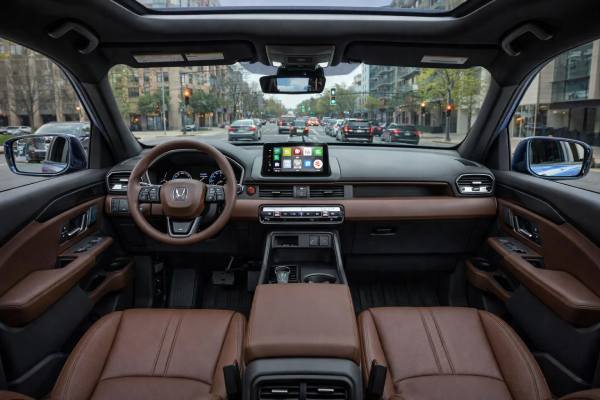
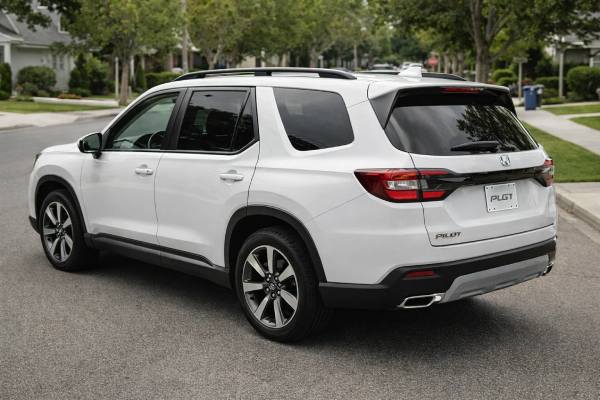
The fourth-generation Honda Pilot (YG1) brings a noticeably more mature three-row formula: a stronger body structure, a cleaner 10-speed automatic calibration, and a V6 that prioritizes smooth, low-stress power over flashy numbers. In FWD form, it targets families who want Pilot space and towing flexibility without the added cost and service needs of an AWD rear driveline. The J35Y8 3.5-liter V6 delivers a broad torque band for easy merging and confident passing, and the cabin layout is designed around daily usability—wide door openings, predictable controls, and practical storage.
Ownership tends to be straightforward when you treat it like a modern, electronics-heavy SUV: keep up with fluid services, watch for software updates, and don’t ignore early warning signs from sensors or infotainment. If you value long-haul comfort and simple, proven gasoline power, this Pilot generation is one of Honda’s most complete family vehicles.
Owner Snapshot
- Strong, smooth V6 power delivery with a well-matched 10-speed automatic for daily driving and road trips.
- Family-friendly packaging: easy third-row access and useful cargo space even with three rows in use.
- FWD trims typically weigh less than AWD, helping responsiveness and fuel economy.
- Plan for occasional infotainment and camera-system glitches that may require updates or module resets.
- Typical oil service interval is about 12 months / 12,000 km (7,500 mi) in normal use (follow the Maintenance Minder for your VIN).
Section overview
- Honda Pilot YG1 FWD: what it is
- Honda Pilot YG1 FWD key specs
- Honda Pilot YG1 trims and safety tech
- Reliability issues, recalls, and TSBs
- Maintenance plan and buyer’s checklist
- Driving feel and real-world economy
- How the Pilot stacks up against rivals
Honda Pilot YG1 FWD: what it is
Honda’s YG1 Pilot is a three-row midsize SUV built around a traditional strength: a naturally aspirated gasoline V6 driving a conventional automatic transmission. In an era where many rivals moved to turbo four-cylinders or hybrid-only lineups, the Pilot’s J35Y8 is designed to feel calm and predictable under load. That matters in family duty—full cabins, roof boxes, long highway grades, and frequent stop-and-go runs—where smooth torque delivery and stable cooling behavior can be more valuable than headline horsepower.
The FWD version is also worth calling out because it changes the ownership equation. With power going only to the front wheels, you avoid the service items tied to an AWD rear driveline (rear differential fluid, prop-shaft joints, extra seals). You also cut weight, which helps the Pilot feel a touch lighter on its feet in everyday driving. The tradeoff is traction when you ask a lot of the front tires—hard launches on wet pavement, steep gravel driveways, or winter conditions. On all-season tires, FWD is still very capable for most climates, but it depends more heavily on tire choice and electronic traction control.
From an engineering perspective, the YG1’s biggest “under the skin” advantage is refinement. Body stiffness, suspension tuning, and isolation are more in line with the best modern family SUVs. The Pilot is set up to be a quiet, stable long-distance vehicle, not a sporty crossover. That’s why buyers often describe it as easy to live with: visibility is good for its size, controls are logically placed, and the cabin is built around real storage rather than design gimmicks.
If you’re shopping 2023–present, focus on two things beyond the test drive: (1) equipment differences by trim (especially safety tech and seating layout), and (2) how well the vehicle’s software has been kept current. A well-updated Pilot with documented fluid services usually feels “sorted,” while neglected examples can develop a stack of small annoyances—camera errors, driver-assist warnings, or rough low-speed shifting that improves after proper service and updates.
Honda Pilot YG1 FWD key specs
The tables below cover the core technical picture for the Honda Pilot YG1 FWD (2WD) with the J35Y8 3.5-liter V6. Some numbers vary slightly by trim, wheel size, and market, so treat the values as a practical baseline for the FWD configuration.
Powertrain and efficiency
| Item | Specification |
|---|---|
| Code | J35Y8 |
| Engine layout and cylinders | V6, 6 cylinders, DOHC, 4 valves/cyl |
| Bore × stroke | 89.0 × 93.0 mm (3.50 × 3.66 in) |
| Displacement | 3.5 L (3,471 cc) |
| Induction | Naturally aspirated |
| Fuel system | Direct injection |
| Compression ratio | 11.5:1 |
| Max power | 285 hp (213 kW) @ 6,100 rpm |
| Max torque | 355 Nm (262 lb-ft) @ 5,000 rpm |
| Timing drive | Chain |
| Rated efficiency (2WD, typical EPA) | ~10.7 L/100 km (22 mpg US / 26 mpg UK) combined |
| Real-world highway @ 120 km/h (75 mph) | ~9.5–10.5 L/100 km (22–25 mpg US), tires and weather dependent |
Transmission and driveline
| Item | Specification |
|---|---|
| Transmission | 10-speed automatic |
| Drive type | FWD |
| Differential | Open (front); traction via brake-based system |
Chassis and dimensions
| Item | Specification |
|---|---|
| Suspension (front/rear) | MacPherson strut / multi-link |
| Steering | Electric power steering (EPS) |
| Wheels and tyres (common) | 255/60 R18; 255/50 R20; 265/45 R21 (varies by trim) |
| Ground clearance | 185 mm (7.3 in) |
| Length / width / height | 5,085 / 1,994 / 1,803 mm (200.2 / 78.5 / 71.0 in) |
| Wheelbase | 2,890 mm (113.8 in) |
| Turning circle (kerb-to-kerb) | 12.0 m (39.4 ft) |
| Kerb (curb) weight (2WD example) | ~1,958 kg (4,317 lb) |
| GVWR (example) | ~2,749 kg (6,060 lb) |
| Fuel tank (ICE) | ~70 L (18.5 US gal / 15.4 UK gal) |
| Cargo volume (SAE, typical) | ~527 L (18.6 ft³) seats up / ~2,464 L (87.0 ft³) seats down |
Performance and capability
| Item | Specification |
|---|---|
| Acceleration 0–100 km/h (0–62 mph) | ~6.9–7.5 s (trim and test conditions vary) |
| Top speed | ~180–190 km/h (112–118 mph), often electronically limited |
| Braking distance 100–0 km/h | ~38–42 m (depends heavily on tires) |
| Towing capacity | 1,588 kg (3,500 lb) braked (FWD) |
| Payload (approx, from GVWR–curb) | ~790 kg (1,743 lb), varies by trim/equipment |
Fluids and service capacities (decision-grade)
Capacities and exact specs can vary by VIN, cooler packages, and market. Use these as ownership planning numbers and confirm on your vehicle labels/service information.
| System | Specification (typical) |
|---|---|
| Engine oil | 0W-20 full synthetic; ~5.0–5.7 L (5.3–6.0 US qt) depending on drain/fill method |
| Coolant | Honda Type 2 (premix); ~7–9 L (7.4–9.5 US qt) total system |
| Transmission/ATF | Honda ATF (10AT spec); drain/fill typically ~3–4 L, total higher |
| Differential / transfer case | Not applicable (FWD) |
| A/C refrigerant | Typically R-1234yf; check under-hood label for exact charge |
| Key torque specs (common planning values) | Wheel lug nuts ~135 Nm (100 lb-ft); oil drain bolt ~39 Nm (29 lb-ft) |
Safety and driver assistance (high-level)
| Item | Notes |
|---|---|
| Crash ratings | Ratings depend on year/trim/test protocol; check the exact year and build date |
| Headlight rating (IIHS) | Trim- and headlamp-dependent |
| ADAS suite | Honda Sensing is commonly standard: AEB, ACC, lane support, road-departure mitigation; availability varies by market and trim |
Honda Pilot YG1 trims and safety tech
Pilot trim strategy changes by region, but the themes are consistent: the lower trims focus on value and seating flexibility, while upper trims bring better headlights, stronger audio, more cameras, and towing-support features. For a buyer, the most important differences are not cosmetic—they are functional: seating layout (second-row bench vs captain’s chairs), wheel size (which affects ride quality and tire cost), and the camera and sensor hardware that supports driver assistance.
Trims and options: what actually changes
Common trim patterns include entry models with cloth seating and smaller wheels, mid trims that add leather and comfort equipment, and upper trims that add premium audio, larger wheels, and enhanced exterior lighting. Practical differences to watch for:
- Wheel and tire packages: 18-inch setups tend to ride better and cost less to replace. 20–21 inch tires sharpen response but raise tire cost and can feel harsher on broken pavement.
- Seating configuration: A second-row bench usually maximizes passenger count, while captain’s chairs improve third-row access and reduce “kid conflict” on longer trips.
- Tow-related hardware: Even on a FWD Pilot, factory towing prep, hitch wiring, and transmission cooling strategy matter. Aftermarket hitches can work well, but wiring integration and cooling assumptions differ by market.
- Camera systems: Higher trims often add better multi-view cameras. That’s a quality-of-life feature and a repair-cost variable—more cameras means more modules and calibration steps if a bumper or windshield is replaced.
Quick identifiers can help when you’re inspecting a used Pilot:
- Wheels and calipers often reveal the trim tier at a glance.
- Headlight design (projector style and signature lighting) usually changes with equipment level.
- Cabin tells: a larger infotainment screen, wireless phone charging pad, and seat material are easy indicators.
Safety ratings: how to interpret them
Safety results can vary by model year and by test revision. A vehicle can score well in structure but lose points in headlights or updated rear-seat belt metrics. When you look up ratings, match all of the following:
- Exact model year (2023, 2024, 2025, etc.)
- Body style and drivetrain shown on the result page (often AWD is used for testing)
- Headlight configuration and build date notes, if present
Even when ratings are strong overall, the details matter for family use: child-seat accessibility, rear side-impact performance, and how well the automatic emergency braking handles real-world scenarios (crossing pedestrians at night, for example).
Safety systems and ADAS: what owners should know
Most YG1 Pilots are built around Honda Sensing features such as:
- Automatic emergency braking (AEB) and forward collision warning
- Adaptive cruise control (ACC) with low-speed follow
- Lane keeping assistance / lane centering (naming varies)
- Road departure mitigation and lane-departure warning
- Blind spot monitoring and rear cross-traffic alert (often trim-dependent)
Two ownership notes matter here:
- Windshield and alignment work can trigger calibrations. Many driver-assist systems rely on a forward-facing camera behind the windshield. After windshield replacement, front-end repairs, or suspension alignment changes, you may need calibration procedures for consistent behavior and to clear warning lights.
- Sensor cleanliness is a real thing. Salt film, heavy rain, and packed snow can reduce performance. If the Pilot throws intermittent sensor warnings, check simple causes first: dirty badges, blocked camera area, or a low 12V battery that’s creating voltage noise.
If safety tech is a priority, it’s often worth stepping up a trim to get better headlights and the full sensor suite. Those features can materially reduce fatigue on long trips—and they can also reduce minor fender-bender risk in crowded parking environments.
Reliability issues, recalls, and TSBs
Because the YG1 Pilot is still relatively new, reliability is best viewed in two layers: (1) the core mechanical platform (V6 + 10-speed) and (2) the electronics ecosystem (infotainment, cameras, radar, and network modules). Most owners experience the Pilot as dependable transport, but early-life problems often cluster around software, sensors, and trim-specific hardware.
Common issues by prevalence and cost tier
Common (usually low–medium cost):
- Infotainment freezes or reboots: Symptoms include blank screen, delayed camera view, Bluetooth dropouts, or audio that won’t resume. Root causes are often software-related; remedies range from system reset to dealer software updates, occasionally a module replacement.
- Camera and parking sensor warnings: Intermittent “camera unavailable” or parking sensor faults can be triggered by moisture, minor bumper damage, or wiring/connectors.
- 12V battery sensitivity: Modern SUVs draw more standby power. Short-trip patterns and cold weather can expose weak batteries sooner than expected.
Occasional (medium cost):
- 10-speed shift quality at low speed: Some vehicles feel “busy” between gears or exhibit clunks on parking maneuvers. Often improved by updated transmission software, correct fluid level, and ensuring mounts and driveline components are in good condition.
- Interior squeaks and rattles: Sunroof shades, third-row trim, and seat hardware can produce noises on rough roads. Annoying rather than dangerous, but time-consuming to diagnose.
Rare (higher cost potential):
- ADAS calibration faults after repairs: Post-collision repairs or windshield replacement without calibration can create persistent driver-assist warnings or inconsistent lane/ACC behavior.
- Cooling-system or sealing issues: Uncommon, but any coolant smell, slow level drop, or overheating under load should be treated seriously—three-row SUVs work hard in hot weather and towing.
Mileage and usage bands
- 0–30,000 km (0–20,000 mi): Software gremlins and first-run hardware issues show up here. A dealership update history is a positive sign.
- 30,000–100,000 km (20,000–60,000 mi): Maintenance discipline becomes the separator—oil quality, filters, brake service, and alignment/tire care.
- Heavy city use or towing: Expect faster brake wear, higher tire consumption, and more frequent transmission fluid attention.
Recalls, TSBs, and service actions
For a 2023–present vehicle, you should assume there may be open service campaigns depending on build date and region. The best approach is procedural:
- Run a VIN recall check through official channels (government database and Honda dealer lookup).
- Ask for dealer service printouts that show campaigns completed, not just “no warning lights.”
- Look for evidence of software updates when you test drive: stable infotainment, consistent camera engagement, no repeated driver-assist faults.
If you’re buying used, treat unresolved recalls as a negotiation point. Recall work is typically performed at no charge, but it can take time to schedule and can reveal related wear (damaged clips, weak battery, etc.). Also note that some “not a recall” problems still have official guidance via Technical Service Bulletins (TSBs). If a seller describes a repeated symptom—jerky low-speed shifting, camera blackouts—ask whether a bulletin update was applied.
Maintenance plan and buyer’s checklist
A modern Pilot rewards owners who treat maintenance as a system, not a single oil-change habit. The engine and transmission are robust when fluids stay clean and temperatures stay controlled, and the electronics are happier with a strong 12V battery and stable charging behavior. Below is a practical schedule for most drivers, plus a used-buyer checklist that targets high-value inspections.
Practical maintenance schedule (distance/time)
Use the vehicle’s Maintenance Minder when available, but plan around these common intervals:
- Engine oil and filter: every 12 months / ~12,000 km (7,500 mi) in normal use; shorten to 8,000–10,000 km (5,000–6,000 mi) for repeated short trips, towing, or very hot/cold climates. Use the specified 0W-20 and a quality filter.
- Engine air filter: inspect at each oil service; replace about 24,000–40,000 km (15,000–25,000 mi) depending on dust and pollen load.
- Cabin air filter: typically 12 months / 15,000–20,000 km, sooner if allergies or city soot are heavy.
- Brake fluid: every 3 years, regardless of mileage, or sooner with heavy mountain driving (brake fluid absorbs moisture).
- Spark plugs: commonly around 160,000 km (100,000 mi) on modern DI engines, but confirm by VIN/service guide.
- Coolant: often long-life; plan inspection annually and replacement around 5 years / 100,000 km, then at regular intervals thereafter (verify exact spec).
- Transmission fluid (10AT): inspect and consider a drain/fill around 50,000–80,000 km (30,000–50,000 mi) for severe use (city, towing, hot climates). For gentle highway use, the interval can extend, but fluid condition should guide the decision.
- Tires: rotate every 10,000–12,000 km (6,000–7,500 mi); keep alignment checked yearly or after major pothole impacts.
- 12V battery: test annually after year 3; many batteries in tech-heavy vehicles last 3–5 years depending on climate and usage.
Fluids, specs, and “owner-grade” torque values
For decision-making, the key is staying within the correct specification, not chasing exotic fluids:
- Oil: correct viscosity and API/ILSAC spec matter more than brand.
- ATF: stick to the specified Honda fluid for the 10-speed. Mixing “universal” ATF is a false economy.
- Coolant: use Honda-compatible premix to avoid mixed chemistry issues.
Helpful torque values when you’re evaluating service quality:
- Wheel lug nuts: ~135 Nm (100 lb-ft)
- Oil drain bolt: ~39 Nm (29 lb-ft)
If a shop can’t state torque practices or uses impacts without a torque stick, take that as a quality signal.
Buyer’s guide: inspection checklist (new-to-you or used)
Body and chassis
- Look for uneven tire wear (alignment or worn bushings).
- Check underbody shields: missing fasteners can lead to wind noise and water intrusion.
- Inspect for paint mismatch on bumpers and fenders (repair history often affects sensor calibration).
Powertrain
- Cold start should be clean and stable; a rough idle can indicate software, fuel quality, or sensor issues.
- During a slow neighborhood drive, the 10-speed should shift consistently without repeated clunks.
- Confirm the engine reaches temperature and holds it; watch for coolant smell after the test drive.
Electronics and ADAS
- Test every camera view and parking sensor feature. Intermittent faults often show up during repeated shift-to-reverse cycles.
- Confirm ACC and lane support operate without warnings.
- Check that the infotainment stays stable with navigation and phone pairing.
Service history
- Look for documented oil services, tire rotations, and any software update notes.
- Confirm recall/service campaign completion using the VIN and dealer records.
If you want the simplest long-term ownership profile, prioritize a Pilot with: (1) smaller wheels, (2) clean update/service history, and (3) no repeated electronic warnings. Those three traits often predict fewer headaches than any single trim badge.
Driving feel and real-world economy
The Pilot’s personality is best described as confident and calm rather than sporty. In FWD form, it feels slightly lighter than AWD versions, especially in low-speed transitions like parking lots and city roundabouts. The suspension is tuned for stability and comfort first, and that’s exactly what most three-row buyers want: the body stays controlled over highway dips, and the cabin remains quiet enough for long conversations or sleeping kids.
Ride, handling, and NVH (noise, vibration, harshness)
- Ride: 18-inch wheels usually deliver the best comfort-to-control balance. Larger wheel packages can transmit more sharp impacts on broken pavement.
- Steering: EPS is accurate and easy, with a light-to-medium weight. It’s not a feedback-rich setup, but it tracks straight and inspires confidence on long highway runs.
- Braking: Pedal feel is generally consistent, though true stopping distance depends heavily on tire compound and wheel size.
- Cabin noise: At steady speed, the Pilot is typically quiet for the class. If a test drive reveals booming or droning, suspect tire choice or uneven wear rather than a design flaw.
Powertrain character
The J35Y8 V6’s key advantage is how it delivers power: linear, predictable, and smooth. There’s no turbo lag, and passing power builds naturally. The 10-speed automatic is designed to keep the engine in a relaxed zone, but it can feel active around town because there are many ratios to choose from.
- In normal driving: it upshifts early and keeps revs low.
- Under quick throttle: it may drop multiple gears for brisk acceleration; that’s normal behavior.
- If it feels harsh: a combination of software updates, correct ATF condition, and learning adaptation often improves behavior.
Real-world efficiency (FWD focus)
Fuel economy in a V6 three-row depends more on speed, tires, and load than many owners expect.
Typical planning figures for FWD:
- City: ~12.4 L/100 km (19 mpg US / 23 mpg UK)
- Highway: ~8.7 L/100 km (27 mpg US / 32 mpg UK)
- Mixed: ~10.7 L/100 km (22 mpg US / 26 mpg UK)
At 120 km/h (75 mph), many owners see consumption drift upward versus the official highway number, especially with roof racks, winter tires, or a fully loaded cabin. In winter, short-trip use can raise consumption sharply because the engine spends more time warming up and running richer.
Load and towing (what changes in practice)
FWD Pilots are generally rated lower for towing than AWD versions. Within the FWD rating, the Pilot can be a stable tow vehicle when set up correctly:
- Use a proper hitch and wiring, and match trailer brake requirements to local laws.
- Expect a noticeable fuel economy penalty under tow—often +20–40% consumption increase depending on speed and terrain.
- Watch temperatures during long climbs; if you tow often, proactive transmission fluid service becomes more important.
If your life includes frequent towing on steep grades or winter travel on unplowed roads, AWD is worth considering. But for typical family hauling and occasional light towing, the FWD Pilot delivers the same core comfort and space with fewer driveline components to service.
How the Pilot stacks up against rivals
The midsize three-row segment is crowded, but the Pilot’s value proposition is clear: a smooth V6, a mature ride, and a cabin designed for real family use. To decide if it’s the right fit, it helps to compare it to the most common cross-shops.
Versus Kia Telluride and Hyundai Palisade
These cousins often win on interior presentation and feature-per-dollar, especially in mid and upper trims. They can feel very premium for the price. The Pilot counters with Honda’s long-term ownership reputation and a powertrain feel that’s very polished.
- Choose Telluride/Palisade if you want maximum features and a “near-luxury” cabin vibe for the money.
- Choose Pilot if you value a conservative, proven approach and a driving experience that stays composed over years of use.
Versus Toyota Highlander and Grand Highlander
Toyota leans hard into efficiency with turbo four and hybrid options. That can be a big win for fuel cost and urban use. The Pilot feels more traditional: larger V6 character, strong highway manners, and straightforward towing logic (within FWD limitations).
- Choose Toyota if fuel economy is your top priority or you want a hybrid-first lineup.
- Choose Pilot if you prefer naturally aspirated response and a familiar, non-turbo power delivery.
Versus Ford Explorer
Explorer often emphasizes performance and available power, but it can be more variable in ownership experience depending on configuration and model year. The Pilot typically feels more cohesive as a family tool: less “performance SUV,” more “comfortable mover.”
- Choose Explorer if you want a more performance-oriented feel and certain drivetrain layouts.
- Choose Pilot if you want consistent refinement and a calmer daily-driving profile.
Versus Subaru Ascent
Ascent’s standard AWD appeal is strong for snow climates, and Subaru’s safety reputation is a draw. The Pilot FWD, however, is aimed at buyers who don’t need AWD year-round and want fewer driveline service items.
- Choose Ascent if AWD is non-negotiable and you prioritize winter traction.
- Choose Pilot FWD if your driving is mostly paved-road family use and you want a simpler drivetrain.
Bottom line
The Pilot YG1 FWD is best for buyers who:
- Want a smooth, naturally aspirated V6 and conventional automatic behavior
- Need real three-row usability and predictable road-trip comfort
- Prefer fewer driveline components to service than an AWD setup
- Are willing to stay on top of software updates and routine fluid services
It may not be the cheapest to buy in every market, and it won’t beat hybrid rivals on fuel economy, but it’s a strong “own it for years” family SUV when maintained correctly.
References
- 2025 Pilot Specs and Features 2025 (Manufacturer Specifications)
- Compare Side-by-Side 2024 (Official Fuel Economy Data)
- Honda Pilot 4-door SUV 2024 (Safety Rating)
- Recalls 2026 (Recall Database)
Disclaimer
This article is for informational purposes only and is not a substitute for professional inspection, diagnosis, or repair. Specifications, torque values, service intervals, and procedures vary by VIN, market, and equipment. Always verify details using your official owner’s manual and service documentation for the exact vehicle you are maintaining or purchasing.
If this guide helped you, please consider sharing it on Facebook, X (Twitter), or your favorite forum to support our work.