

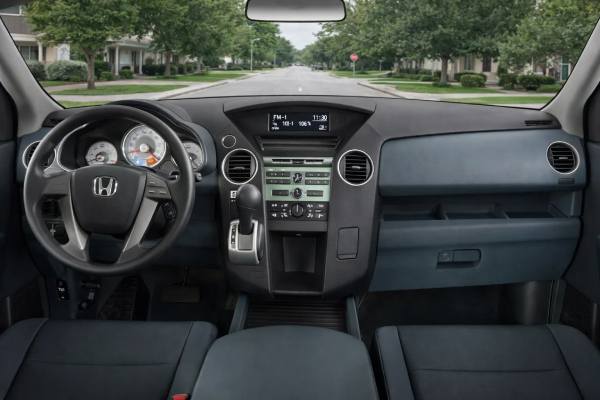
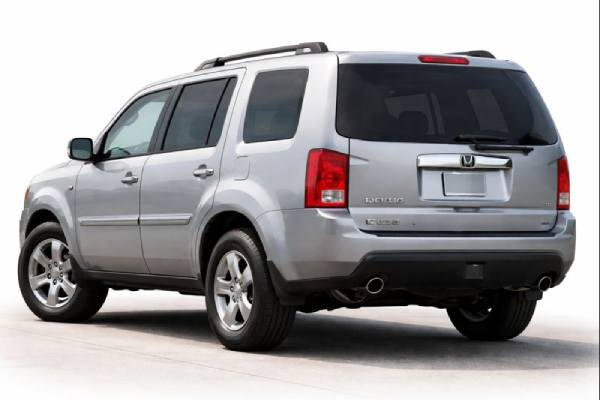
The 2009–2011 Honda Pilot FWD (second-generation, often grouped under the YF3 label for this spec) is a family SUV built around a proven formula: a naturally aspirated 3.5-liter V6 (J35Z4), a conventional 5-speed automatic, and a roomy, easy-to-live-with body with three usable rows. In front-wheel-drive form, it trades some all-weather traction for slightly lower weight, simpler ownership (no rear driveline service), and often better highway efficiency than comparable AWD trims.
These years are especially appealing if you want a traditional powertrain with predictable maintenance, good long-distance comfort, and strong parts availability. The key to happy ownership is staying ahead of age-related rubber and fluid items—especially the timing belt schedule, transmission fluid condition, and engine mount wear—so the Pilot keeps its smooth, quiet character even as mileage climbs.
Owner Snapshot
- Strong everyday usability: spacious cabin, easy access, and practical cargo shape for family duty.
- Simple, predictable powertrain feel: smooth V6 torque and a conventional automatic (no turbo complexity).
- FWD version is lighter and simpler to service than AWD (no rear differential/transfer-case fluid routines).
- Budget for the timing belt service around 170,000 km / 105,000 mi or ~7 years if not documented.
- A sensible baseline: engine oil service typically every 8,000–10,000 km (5,000–6,000 mi) or 6–12 months depending on use and oil life monitoring.
Jump to sections
- Honda Pilot YF3 FWD explained
- Honda Pilot YF3 FWD specs tables
- Honda Pilot YF3 trims and safety
- Known faults and recalls
- Maintenance plan and buyer checks
- Road feel and economy
- Rivals: Highlander and others
Honda Pilot YF3 FWD explained
If you want one sentence to describe the 2009–2011 Pilot FWD: it’s a large, family-focused SUV with a traditional Honda V6 that prioritizes comfort and capacity over sporty handling. The body is broad and tall, with a square cargo bay and wide-opening doors that make daily life—child seats, groceries, sports gear—feel straightforward rather than fiddly.
The headline mechanical piece is the J35Z4 3.5-liter V6. It’s a single-overhead-cam (SOHC) V6 with Honda’s i-VTEC valve control, tuned here for strong midrange pull rather than a peaky top end. In most markets where this configuration is common, output is quoted around 250 hp with torque in the mid-250 lb-ft range, which is enough to keep the Pilot relaxed on highways and confident in merging—especially when loaded with people.
Front-wheel drive changes the personality more than many buyers expect. In dry conditions it feels a touch lighter on its feet than AWD versions, and steering can feel slightly less “draggy” at low speeds because you aren’t turning extra driveline hardware. In poor weather, the Pilot’s stability control and traction control do a lot of work, but it still can’t create grip where tires don’t have it—so tire choice (a true winter tire in cold climates) matters more on FWD than on AWD.
From an ownership angle, these years reward documentation. A well-kept Pilot is typically smooth, quiet, and long-lived. A neglected one can feel tired: harsh shifts from old ATF, vibration from worn hydraulic mounts, and noisy suspension from aged bushings. The good news is that most of the “aging SUV” issues are visible on inspection and correctable—so buying smart often matters as much as buying the “right” year.
Honda Pilot YF3 FWD specs tables
Below are practical, owner-relevant specs for the 2009–2011 Pilot FWD with the J35Z4 3.5 l V6 and 5-speed automatic. Numbers can vary by trim, wheels, and market equipment, so treat them as a verified starting point and confirm against your VIN’s official documentation.
Powertrain and efficiency
| Item | Specification |
|---|---|
| Engine code | J35Z4 |
| Layout and cylinders | V6, 6 cylinders, SOHC i-VTEC, 4 valves/cyl (typical) |
| Displacement | 3.5 l (3,471 cc) |
| Induction | Naturally aspirated |
| Fuel system | Port fuel injection (typical for these years) |
| Compression ratio | ~10.5:1 (market-dependent) |
| Max power | 250 hp (186 kW) @ ~5,700 rpm (typical listing) |
| Max torque | ~343 Nm (253 lb-ft) @ ~4,800 rpm (typical listing) |
| Timing drive | Timing belt |
| Rated efficiency (typical EPA, 2WD) | ~12.4–13.8 L/100 km (17–19 mpg US) city; ~10.2–10.7 L/100 km (22–23 mpg US) highway |
| Real-world highway @ 120 km/h | Often ~11–12.5 L/100 km (19–21 mpg US), tire/roof load/wind dependent |
Transmission and driveline
| Item | Specification |
|---|---|
| Transmission | 5-speed automatic (conventional torque-converter) |
| Drive type | FWD |
| Differential | Open (traction managed by brake-based systems) |
Chassis and dimensions
| Item | Specification |
|---|---|
| Suspension (front/rear) | Independent front; independent rear (multi-link style rear layout typical) |
| Steering | Power-assisted rack-and-pinion (ratio varies by market) |
| Brakes | 4-wheel discs with ABS and stability control |
| Common tire sizes | Commonly 245/65 R17; larger wheel packages vary by trim |
| Ground clearance | ~200 mm (~7.9 in), trim/tire dependent |
| Length / width / height | ~4,850 mm / ~1,995 mm / ~1,800 mm (varies slightly by trim) |
| Wheelbase | ~2,775 mm (~109.2 in) |
| Turning circle (kerb-to-kerb) | ~12.0 m (~39–40 ft), equipment dependent |
| Kerb weight | Often ~1,950–2,050 kg (trim dependent) |
| GVWR | Commonly in the ~2,700 kg range (varies by market) |
| Fuel tank | ~79–80 L (≈21 US gal) |
| Cargo volume | Market measurement varies; practical takeaway: large boxy bay with flat-folding rear rows |
Performance and capability
| Item | Specification |
|---|---|
| 0–100 km/h (0–62 mph) | ~8.5–10.0 s (trim/tires/conditions) |
| Top speed | ~180–190 km/h (112–118 mph), limiter dependent |
| Braking 100–0 km/h | Typically ~40–45 m on good tires (varies widely) |
| Towing capacity (FWD) | Commonly up to ~1,590 kg (3,500 lb) in many specs (confirm by VIN/market) |
| Payload | Highly trim/market dependent—check door-jamb label |
Fluids and service capacities (typical planning values)
| Item | Specification (verify for your VIN) |
|---|---|
| Engine oil | API SM/SN era; typically 5W-20; capacity commonly ~4.3 L (≈4.5 US qt) with filter |
| Coolant | Honda long-life type; often 50/50 premix; capacity varies by radiator/market |
| Transmission ATF | Honda-spec ATF (DW-1 is commonly used today as replacement spec); service method changes total quantity |
| Brake fluid | DOT 3/DOT 4 per cap/market labeling (flush interval matters more than brand) |
| A/C refrigerant | R-134a (typical for these years) |
Key torque specs (critical fasteners only)
| Fastener | Typical torque (verify) |
|---|---|
| Wheel lug nuts | ~108 Nm (80 lb-ft) |
| Engine oil drain plug | ~39 Nm (29 lb-ft) |
| Spark plugs | ~18 Nm (13 lb-ft) |
Safety and driver assistance (what to expect)
| Category | Notes for 2009–2011 Pilot |
|---|---|
| Airbags | Front, front-side, and side-curtain (equipment can vary by trim/region) |
| ABS and stability control | Standard in most markets; includes traction control |
| ADAS | No modern AEB/ACC/lane centering on these years; think “pre-ADAS” era |
Honda Pilot YF3 trims and safety
Trim strategy for 2009–2011 Pilots usually follows a familiar pattern: a well-equipped base model, an “up-level” comfort trim, and a top trim that bundles leather, audio upgrades, and convenience features. The exact names depend on region, but the functional differences are often consistent—so you can shop by equipment rather than badge.
Trims and options that change the day-to-day experience
Here are the options that tend to matter most in real ownership:
- Seating material and second-row configuration: Some trims lean toward easy-clean cloth with durable cushions; others add leather and seat heaters. Depending on market, you may see a second-row bench or captain’s chairs. If you routinely carry adults in the third row, prioritize trims with rear ventilation controls and easy third-row access.
- Wheel and tire packages: Larger wheels can sharpen steering response but increase tire costs and sometimes worsen ride on broken pavement. If comfort is the goal, a smaller wheel with a taller tire sidewall is often the sweet spot.
- Audio and infotainment tier: The factory navigation/audio packages can be dated today. If you plan to retrofit modern connectivity, a non-nav head unit can sometimes be easier to work around—so “simpler” can be better.
- Tow preparation: Even on FWD, towing capability depends on cooling and hitch setup. Look for documented towing equipment and avoid vehicles that towed regularly without a clear maintenance record.
Quick identifiers when you’re standing next to a used Pilot:
- Leather seating and heated seat switches usually indicate a higher trim.
- A factory roof rack and larger wheels often suggest option packages.
- Check the door-jamb label for tire size and GVWR—useful for confirming how the vehicle was originally configured.
Safety ratings: what the tests say (and what they don’t)
For these years, crash-test results are a mix of strong outcomes in some tests and weaker outcomes in others. IIHS results for the 2010 Pilot show:
- Moderate overlap front: Good
- Side impact: Good
- Small overlap front (driver-side): Poor (rating applies broadly across the generation in IIHS documentation)
- Roof strength: Marginal for the 2009–2011 range in the IIHS data set
- Head restraints and seats: Good
The important nuance: a “Good” side rating and a “Poor” small overlap rating can both be true. Real crashes don’t announce which category they’ll match, so the practical move is to treat this Pilot as solid for its era, but not up to modern small-overlap structure performance.
Safety systems and what to verify after repairs
These Pilots rely on:
- ABS + stability control to manage traction and emergency control.
- Airbags (front, side torso, and curtains in many trims) paired with seatbelt pretensioners.
After collision repair or suspension work, verify:
- The steering wheel is centered and the vehicle tracks straight (alignment done correctly).
- The ABS/stability control lights stay off after a full drive cycle.
- Seatbelts retract smoothly and latch firmly—small details that can signal prior damage.
Known faults and recalls
A 2009–2011 Pilot can age very gracefully, but it has a few repeat themes. The best way to think about issues is by how often they show up and how expensive they are when they do.
Common (plan for it)
- Hydraulic engine mounts wear (medium cost):
Symptoms: vibration at idle (often in gear), clunks on takeoff, more harshness through the cabin.
Likely cause: fluid-filled mounts soften and leak with age/heat cycles.
Remedy: replace the failed mount(s); inspect the rest so you don’t chase vibration with piecemeal repairs. - Suspension bushings and links (low to medium cost):
Symptoms: dull clunks over bumps, vague steering, uneven tire wear.
Likely cause: rubber bushings harden and crack; stabilizer links loosen.
Remedy: targeted bushing/link replacement, then alignment. On a large SUV, fresh bushings can make it feel “newer” overnight. - Brake service sensitivity (low to medium cost):
Symptoms: pulsation, squeal, or soft pedal feel.
Likely cause: pad/rotor quality mismatch or old brake fluid.
Remedy: quality rotors/pads and brake fluid flush; verify caliper slide pins move freely.
Occasional (depends on maintenance and usage)
- Automatic transmission shift quality issues (medium to high cost if ignored):
Symptoms: shudder on light throttle, flare between gears, delayed engagement.
Likely cause: old ATF, overheating history, or internal wear over time.
Remedy: correct-spec ATF service (often multiple drain-and-fills rather than a harsh flush), plus inspection for leaks and correct fluid level. If symptoms persist, diagnose before damage spreads. - Oil consumption or misfire complaints on high-mileage engines (medium cost):
Symptoms: low oil between changes, misfire codes, fouled plugs on one bank.
Likely cause: can be maintenance-driven; on some Honda V6 applications, cylinder-deactivation behavior and extended oil intervals can worsen deposits.
Remedy: shorten oil intervals, use the correct viscosity for your market and climate, keep PCV and plugs in good shape, and diagnose misfires with plug reading/compression checks—not guesswork.
Rare, but costly when it hits
- Cooling system neglect leading to overheating (high cost):
Symptoms: temperature spikes, coolant smell, repeated coolant loss.
Likely cause: old coolant, weak radiator cap, aged hoses, or a tired radiator.
Remedy: pressure test, replace weak components proactively, and never ignore overheating—V6 engines don’t forgive repeated heat events.
Recalls, TSBs, and how to verify work
These model years are old enough that recall completion varies widely by owner history. Your best practice:
- Run the VIN through the official recall database and verify repair invoices or dealer history when possible.
- Treat “airbag recall done” as something to confirm, not assume—because many vehicles changed hands multiple times.
If you’re pre-shopping, ask for:
- Timing belt documentation (date and mileage).
- Evidence of recent ATF servicing (what fluid, how often).
- Any recall closure paperwork, especially for safety-related items.
Maintenance plan and buyer checks
A Pilot like this stays dependable when you follow two rules: keep fluids fresh, and don’t delay the big scheduled services. Below is a practical schedule you can use to plan ownership; always let the vehicle’s maintenance minder and VIN-specific service documentation be the final authority.
Practical maintenance schedule (distance/time)
Engine oil and filter
- Typical: 8,000–10,000 km (5,000–6,000 mi) or 6–12 months, sooner for short trips, towing, or extreme heat/cold.
- Use the correct viscosity for your market (many are labeled 5W-20) and keep an eye on oil level between changes.
Engine air filter
- Inspect every oil service; replace about every 24,000–32,000 km (15,000–20,000 mi) in dusty use.
Cabin air filter
- Replace about every 20,000–30,000 km (12,000–18,000 mi) or yearly if allergies/urban soot are a factor.
Coolant
- Often long-life: commonly ~10 years / ~190,000 km (120,000 mi) initial, then shorter intervals after (market-dependent). If history is unknown, baseline it.
Spark plugs
- Frequently specified around 170,000 km / 105,000 mi. Replace on schedule to protect coils and catalytic converters.
Timing belt service (critical)
- Plan for ~170,000 km / 105,000 mi or ~7 years (typical Honda interval on belt-driven V6s).
- Do it as a kit: belt, tensioner, idlers, and strongly consider the water pump while you’re there.
Serpentine belt and hoses
- Inspect every service; replace at first cracking/glazing or if squealing persists after tension checks.
Automatic transmission fluid (ATF)
- Conservative approach for longevity: every 40,000–60,000 km (25,000–40,000 mi) depending on heat load/towing history.
- Prefer multiple drain-and-fills with correct-spec fluid rather than a universal flush.
Brake fluid
- Flush about every 2 years, regardless of mileage—cheap insurance for ABS components.
Brakes (pads/rotors)
- Inspect at tire rotations; replace based on measured thickness and condition, not noise alone.
Tires, rotation, and alignment
- Rotate about every 8,000–10,000 km (5,000–6,000 mi).
- Align annually or after suspension work; uneven wear on a heavy SUV is expensive.
12 V battery
- Typical life 4–6 years. Test before winter; replace proactively if it’s weak.
Buyer’s guide: what to check on a used 2009–2011 Pilot FWD
Bring a flashlight and take your time. Prioritize:
- Service history proof
- Timing belt completion (invoice with mileage/date).
- Regular oil services (not “whenever it remembered to ask”).
- Transmission behavior
- Cold start and fully warmed test drive.
- Smooth engagement into Drive/Reverse; no delayed “thunk.”
- No shudder under light throttle in higher gears.
- Vibration and mount condition
- Idle in gear with A/C on: excessive shake suggests mount wear.
- Cooling system integrity
- Dry radiator end tanks, stable coolant level, no sweet smell after driving.
- Suspension and tires
- Uneven tire wear can signal alignment neglect or worn bushings.
- Listen for clunks on low-speed bumps.
- Corrosion hotspots
- Inspect subframes, brake lines, and rear suspension attachment points—especially in salted-road regions.
Durability outlook
If the timing belt service is current, the ATF is kept clean, and you address mounts/suspension rubber as it ages, these Pilots can remain comfortable long-haul vehicles at higher mileage. Most “bad Pilot” stories come from skipped big-ticket maintenance, not from inherently fragile core components.
Road feel and economy
The Pilot’s driving character is built around calmness. It’s not trying to feel sporty; it’s trying to feel stable, predictable, and quiet enough for conversation across three rows.
Ride, handling, and NVH (noise, vibration, harshness)
- Ride: The suspension is tuned for comfort over imperfect pavement. On smaller wheels with taller tires, it smooths pothole edges well for a vehicle of its size. On larger wheels, impacts can feel sharper.
- Handling: The Pilot prefers steady inputs. It will corner safely, but it carries its height and weight, so rapid direction changes feel slower than in a crossover designed around sportier priorities.
- Steering: Expect light-to-moderate steering effort with limited road texture. If steering feels twitchy or the vehicle wanders, suspect alignment or worn front suspension bushings.
- Cabin noise: Wind and tire noise are usually the main contributors. A sudden increase in low-frequency hum can point to cupped tires or a wheel bearing beginning to wear.
Powertrain character
The J35Z4 V6 delivers a broad, useful torque curve—especially in the midrange where real driving happens. Around town, it feels effortless rather than fast. The 5-speed automatic is smooth when healthy; when neglected, it’s also one of the first places you’ll feel it (flare, shudder, delayed engagement).
Drive gently for a few minutes after a cold start. These engines and transmissions tend to reward warm-up with smoother shifts and more stable idle quality.
Real-world efficiency (what owners typically see)
Fuel economy depends heavily on speed and load. In mixed suburban use, many owners land in the high-teens mpg (US). On highway trips at moderate speeds, low-20s mpg (US) is realistic for a well-maintained example on proper tires.
Two practical tips that move the needle:
- Keep tires at the correct pressure and choose low rolling-resistance touring tires if efficiency matters.
- Don’t ignore alignment. A slightly toe-out front alignment can quietly waste fuel and tires.
Load and towing (FWD realities)
Even if your Pilot is rated to tow (often quoted around 3,500 lb for many FWD specs), towing comfort depends on setup:
- Use the correct hitch hardware and wiring.
- Keep ATF fresh, because heat is the enemy when towing.
- Expect a noticeable consumption penalty under load—often 20–40% worse, depending on trailer shape, speed, and terrain.
If you tow often in hilly regions, the simplicity of FWD is nice for service, but AWD variants can feel more composed when traction is marginal—so match drivetrain to your actual usage, not the best-case scenario.
Rivals: Highlander and others
In the 2009–2011 era, the Pilot’s core rivals were other three-row crossovers and midsize SUVs aimed at families. Here’s how the Pilot FWD tends to compare in the ways that matter most when buying used.
Toyota Highlander (V6)
- Why people cross-shop it: similar family mission, strong resale, typically smooth V6 behavior.
- Pilot advantage: often feels roomier inside with a more “truck-like” cargo shape and a robust towing mindset.
- Highlander advantage: some buyers prefer its road manners and interior layout; perceived long-term refinement can be a draw.
- Your decision lever: choose based on third-row practicality and how each one feels on your commute route.
Ford Explorer (transition years)
- Why people cross-shop it: available power, strong presence, widely available used inventory.
- Pilot advantage: the Honda powertrain is usually more “set-and-forget” when maintained, with fewer surprises in normal ownership.
- Explorer advantage: depending on exact year and configuration, can offer a different driving feel and feature mix.
- Your decision lever: prioritize documented maintenance history over badge—because neglected examples in this class get expensive quickly.
Chevrolet Traverse / GMC Acadia / Buick Enclave (3.6 V6 family)
- Why people cross-shop it: space, comfort, and often a good used-value proposition.
- Pilot advantage: predictable maintenance rhythm and a strong reputation for long service life when serviced on schedule.
- GM advantage: interior packaging can be excellent, and ride comfort can be very competitive.
- Your decision lever: buy the cleanest, best-documented vehicle you can—especially regarding timing-related services (where applicable) and transmission behavior.
Nissan Pathfinder (pre-CVT era for many shoppers)
- Why people cross-shop it: SUV presence and capability image.
- Pilot advantage: more car-like usability for families, easier third-row access, and smoother daily behavior.
- Pathfinder advantage: depending on configuration, may appeal more to those prioritizing ruggedness cues.
- Your decision lever: if your use is mostly paved-road family duty, the Pilot’s comfort-first tuning often wins.
Bottom line comparison
If you want a used three-row that feels straightforward to own, the Pilot FWD’s strongest argument is its simple, conventional mechanical layout paired with excellent practicality. Its biggest tradeoffs are that it’s not especially efficient by modern standards and its crash-test performance in certain newer-style tests (like small overlap) doesn’t match today’s designs. If you can accept those realities and buy based on condition, it remains a very sensible family SUV.
References
- Gas Mileage of 2010 Honda Pilot 2010 (Fuel Economy Data)
- Gas Mileage of 2011 Honda Pilot 2011 (Fuel Economy Data)
- 2010 Honda Pilot 2010 (Safety Rating)
- Vehicle Detail Search – 2011 HONDA PILOT SUV FWD#recalls | NHTSA 2011 (Recall Database)
Disclaimer
This article is for informational purposes only and is not a substitute for professional inspection, diagnosis, or repair. Specifications, torque values, fluid types, service intervals, and procedures can vary by VIN, market, and equipment; always verify details using your vehicle’s official service documentation and labels before ordering parts or performing work.
If this guide helped, please consider sharing it on Facebook, X/Twitter, or your favorite forum to support our work.