
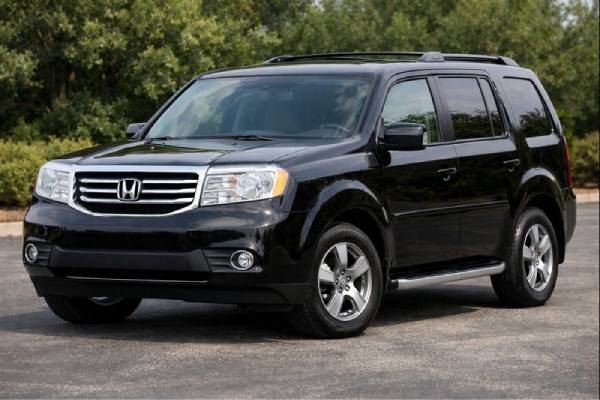

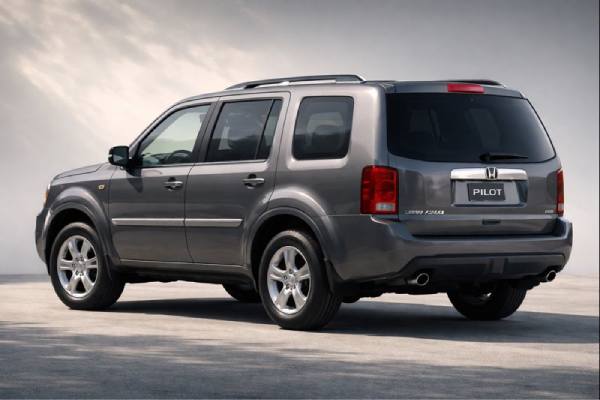
The facelifted 2012–2015 Honda Pilot FWD is a classic “big-family Honda” recipe: a roomy three-row cabin, a durable naturally aspirated V6, and a simple front-wheel-drive layout that avoids the extra complexity of AWD hardware. Under the hood, the 3.5-liter J35-series V6 focuses on smooth torque and low-stress cruising rather than sporty revs, pairing with a 5-speed automatic that favors predictability and long life when serviced on time. The real ownership story comes down to how the Pilot was used—short-trip city duty and skipped fluid service can bring expensive annoyances, while steady highway miles and consistent maintenance often deliver years of reliable transport. If you want an honest, practical family SUV with straightforward mechanics, this generation still makes sense—especially if you buy on condition and service history, not trim badges.
What to Know
- Excellent cabin space and seat flexibility for 7–8 people, with a boxy shape that makes real cargo easy.
- Smooth V6 power delivery and strong everyday torque for merging, hills, and full loads.
- FWD layout reduces drivetrain complexity versus AWD, which can help long-term cost control.
- Watch for V6 oil-consumption and vibration complaints on neglected examples; service records matter.
- Plan for timing-belt service around 170,000 km (105,000 mi) or ~7 years, whichever comes first.
Navigate this guide
- Honda Pilot FWD facelift basics
- Honda Pilot FWD technical specs
- Honda Pilot FWD trims and safety features
- Reliability and common issues
- Maintenance and buyer’s guide
- Driving, performance, and real MPG
- How it compares to rivals
Honda Pilot FWD facelift basics
Honda’s 2012–2015 facelift Pilot sits in a sweet spot for buyers who want maximum practicality with minimal drama. It’s a mid-size, three-row crossover with a notably upright body: that boxy profile may not look “sleek,” but it pays off in headroom, a tall cargo area, and a third row that’s usable for shorter adults in a pinch. The FWD configuration is also worth calling out. In dry climates—or for owners who simply run winter tires when needed—FWD removes a lot of parts that can age, leak, or need additional fluid service (rear differential, transfer case, extra driveshaft joints). Over years of ownership, that simplicity can translate into fewer maintenance lines and fewer noises to chase.
The J35-series 3.5-liter V6 in these years is tuned for smooth, broad torque rather than aggressive top-end power. It’s the kind of engine that makes the Pilot feel calm even when loaded, and it has enough reserve for long highway grades without constant downshifts. Where owners notice the “engineering personality” most is refinement: the Pilot is quiet for its age, the suspension is compliant, and the steering is tuned for stability rather than quick responses. In other words, it’s built to be easy to live with—school runs, long trips, and hauling a full cabin without feeling stressed.
This facelift generation also benefits from maturity. The platform had years of production behind it, so major design surprises are rare. Most of the pain points that show up now are age-and-maintenance related: fluid neglect, worn rubber bushings, tired engine mounts, and the occasional electrical nuisance (sensors, cameras, infotainment). A well-kept Pilot tends to “wear like a Honda,” while a neglected one can quickly feel like a heavy vehicle with expensive needs. That’s why your best strategy is to buy the cleanest maintenance history you can find—even if it means choosing a simpler trim.
Honda Pilot FWD technical specs
Below are practical, ownership-relevant specifications for the facelift Pilot FWD with the 3.5-liter V6 rated at 250 hp, focusing on what affects maintenance, running costs, and daily use. Some figures vary slightly by trim, wheel package, and market equipment, so treat these as a working baseline and verify by VIN where precision matters.
Powertrain and efficiency
| Item | Specification |
|---|---|
| Code | J35-series (J35Z4 family commonly referenced) |
| Engine layout and cylinders | Transverse V6, 6 cylinders, SOHC i-VTEC, 4 valves/cyl |
| Bore × stroke | 89.0 × 93.0 mm (3.50 × 3.66 in) |
| Displacement | 3.5 L (3,471 cc) |
| Induction | Naturally aspirated |
| Fuel system | Sequential MPFI (port injection) |
| Compression ratio | ~10.5:1 |
| Max power | 250 hp (186 kW) @ 5,700 rpm |
| Max torque | 343 Nm (253 lb-ft) @ 4,800 rpm |
| Timing drive | Belt |
| Rated efficiency (EPA, 2015 2WD) | ~11.8 L/100 km (20 mpg US) combined; city ~13.1 (18 mpg); highway ~9.4 (25 mpg) |
| Real-world highway @ 120 km/h (75 mph) | Commonly ~10.5–12.0 L/100 km (20–22 mpg US), depending on tires, load, wind, and temperature |
Transmission and driveline
| Item | Specification |
|---|---|
| Transmission | 5-speed automatic (torque-converter) |
| Drive type | FWD |
| Differential | Open |
Chassis and dimensions (typical FWD trims)
| Item | Specification |
|---|---|
| Suspension (front/rear) | Strut front / multi-link rear |
| Steering | Power rack-and-pinion; ratio ~19.0:1 |
| Brakes | 4-wheel discs; front rotor ~330 mm (13.0 in), rear ~333 mm (13.1 in) |
| Wheels and tires (common) | 235/60 R18 (18 in rim) or 235/65 R17 (17 in rim, some trims) |
| Ground clearance | ~202 mm (8.0 in) |
| Length / width / height | ~4,861 / 1,996 / 1,795 mm (191.4 / 78.5 / 70.7 in) |
| Wheelbase | ~2,775 mm (109.2 in) |
| Turning circle (kerb-to-kerb) | ~11.5 m (37.9 ft) |
| Kerb (curb) weight | ~1,950–1,960 kg (4,295–4,315 lb), trim-dependent |
| GVWR | ~2,700 kg (5,952 lb), trim-dependent |
| Fuel tank | ~79.5 L (21.0 US gal / 17.5 UK gal) |
| Cargo volume (SAE, typical) | ~510 L (18.0 ft³) seats up / ~1,351 L (47.7 ft³) behind 2nd row / ~2,463 L (87.0 ft³) max |
Performance and capability (typical)
| Item | Typical figure (varies by trim/tires/conditions) |
|---|---|
| Acceleration 0–100 km/h (0–62 mph) | ~8.5–9.5 s |
| Top speed | ~175–185 km/h (109–115 mph) |
| Braking 100–0 km/h | ~38–42 m (dry asphalt, good tires) |
| Towing capacity | Often listed as ~1,590 kg (3,500 lb) when properly equipped; some spec listings show lower ratings on certain trims—verify by VIN and hitch/tow package |
| Payload | Commonly ~500–600 kg (1,100–1,300 lb), trim-dependent |
Fluids and service capacities (ownership-focused)
| Item | Practical guidance (verify by VIN/service literature) |
|---|---|
| Engine oil | Honda-spec 0W-20; ~4.3 L (~4.5 US qt) with filter (typical) |
| Coolant | Honda Type 2 (premix); total system capacity varies by market (often ~7–8 L range) |
| Transmission/ATF | Honda ATF (spec varies by market); total fill is much higher than a drain-and-fill (often ~7–8 L total), with ~3–4 L typical per drain-and-fill |
| A/C refrigerant | R-134a (common for these years); charge varies—use under-hood label |
| Key torque specs | Wheel lug nuts commonly ~108 Nm (80 lb-ft); oil drain bolt commonly ~39 Nm (29 lb-ft) |
Safety and driver assistance (big picture)
- This generation predates modern “suite” ADAS on most trims. Expect stability control, ABS, traction control, and a rear camera on many models, but no factory AEB/ACC/LKA in most markets for 2012–2015.
- Crash-test results depend on the test body and test type; the major takeaway is that small-overlap performance is the weak point for this platform, while other categories score better (details in the safety section).
Honda Pilot FWD trims and safety features
Trim structure varies by market, but the facelift Pilot commonly appears in a ladder that runs from practical base trims (often called LX) up through comfort-heavy mid trims (EX/EX-L) and feature flagships (Touring). The most important thing for buyers is not the badge—it’s the equipment that changes maintenance costs and daily satisfaction. Start by confirming whether the vehicle is a true 8-passenger configuration (second-row bench) or a 7-passenger setup (second-row captain’s chairs on some versions and packages). If you routinely use the third row, the 8-passenger layout tends to be more flexible for family duty, while captain’s chairs make walk-through access easier.
Quick trim identifiers you can spot in photos or a walk-around:
- Wheel size and finish: 17-inch steel wheels (base) versus 17/18-inch alloys on higher trims.
- Headlights and fog lights: fog lamps and alloy wheels often signal mid trims.
- Interior “tells”: leather seating, power seat count, and infotainment screen size are strong trim markers.
- Tailgate and roof equipment: roof rails and a more upscale exterior garnish often show on higher trims.
Option packages that matter most (ownership impact):
- Navigation and rear entertainment: these improve resale for some buyers, but they add aging screens, DVD hardware, and more electronics that can fail. If you want long-term simplicity, choose a trim without them or ensure everything works before purchase.
- Tow equipment: don’t assume a hitch means “tow package.” A proper tow setup may include additional cooling and specific wiring; capacity labels can change based on how it was equipped.
Safety ratings and what they mean here
For 2012–2015, you should separate “structure” from “features.” The Pilot generally has a full set of airbags (front, side, and curtain coverage across rows on many models) and strong basics like stability control and ABS. However, the platform’s performance in the driver-side small-overlap crash test is the major concern in independent testing for this generation. In practical terms, small-overlap is a tough test that can expose how well the front corner manages crash energy and maintains occupant space. It’s one reason some shoppers prioritize newer three-row SUVs if maximum crash-performance is the top priority.
Driver assistance and modern expectations
If you’re coming from a newer vehicle, set expectations correctly: blind-spot monitoring, rear cross-traffic alert, lane centering, adaptive cruise, and automatic emergency braking are generally not part of the 2012–2015 Pilot story. The Pilot’s safety strength is “good fundamentals,” not modern automation. That’s not necessarily bad—older systems are simpler to service—but it does mean your best safety upgrades are tires, brakes, correct child-seat installation, and keeping suspension components tight so the vehicle tracks and stops as intended.
Reliability and common issues
A well-kept 2012–2015 Pilot FWD can be a long-life vehicle, but it’s not immune to predictable aging patterns. Think in three buckets: (1) V6 and emissions items, (2) transmission and mounts, and (3) suspension and steering wear. The good news is that many issues announce themselves clearly before they become catastrophic—if you know what to listen and look for.
Common issues (higher prevalence)
- Oil consumption and plug fouling (severity: medium to high cost if ignored)
Symptoms: low oil level between changes, oily spark plugs, misfire on cold start, catalytic-converter warning lights later on.
Likely cause: some J35 setups with cylinder deactivation hardware can be sensitive to short trips and extended oil-change intervals.
Remedy: strict oil level checks, correct oil spec, timely changes; address misfires early; avoid buying an example with recurring misfire codes and no documentation. - Active engine mount wear and vibration (severity: medium)
Symptoms: increased idle vibration in Drive, “buzz” through steering wheel, clunks on shifting from Park to Drive.
Likely cause: aging mounts and, on some builds, active mount systems that lose effectiveness over time.
Remedy: diagnose mounts rather than “tune around it”; replace worn mounts with quality parts. - Automatic transmission shift quality changes (severity: medium to high)
Symptoms: shudder during light-throttle lockup, delayed engagement, harsher downshifts, overheating smell after heavy loads.
Likely cause: aging ATF and heat; repeated short trips; towing without proper service cadence.
Remedy: fluid service with the correct ATF; confirm no persistent shudder during a test drive; avoid “universal” fluids unless approved in your market.
Occasional issues (trim/age dependent)
- Power steering seepage or pump noise (severity: low to medium)
Symptoms: groan on full lock, fluid dampness around lines.
Remedy: inspect lines and seals; use correct fluid; address leaks before the pump runs dry. - Cooling system aging (severity: medium)
Symptoms: slow coolant loss, overheating in traffic, sweet smell, crust at radiator seams.
Remedy: pressure test; replace aging hoses/radiator proactively if history is unknown. - Wheel bearings and suspension bushings (severity: medium)
Symptoms: humming that changes with steering input; clunks over bumps; uneven tire wear.
Remedy: inspect bearings, front control-arm bushings, and rear links; budget for alignment after suspension work.
Rare but costly (watch list)
- Catalytic converter replacement (severity: high)
Often secondary to long-term misfires or oil burning. The cheapest catalytic converter is the one you don’t have to buy—so treat misfires and oil consumption seriously. - Electrical/infotainment failures on high-option trims (severity: medium to high)
Navigation and entertainment components can be expensive to replace. Confirm all screens, cameras, audio zones, steering wheel controls, and climate functions work.
Service actions, recalls, and how to verify
Rather than memorizing recall headlines, take a more reliable approach: run the VIN through official databases and request dealer history showing what was completed. On a used Pilot, proof matters more than promises. If the seller can’t show documentation, assume outstanding work may exist and price the vehicle accordingly.
Maintenance and buyer’s guide
Treat the facelift Pilot like a “systems” vehicle: fluids, belts, rubber parts, and brakes determine your experience more than the engine’s headline horsepower. A clean maintenance plan also protects resale value because buyers of older three-row SUVs worry about deferred service.
Practical maintenance schedule (distance/time)
Use the vehicle’s maintenance reminder system where applicable, but anchor it with time limits and known wear items:
- Engine oil and filter: every 8,000–12,000 km (5,000–7,500 mi) or 12 months, whichever comes first. If you do short trips, idle a lot, or tow, stay on the shorter end. Check oil level monthly.
- Engine air filter: inspect every 20,000–30,000 km; replace as needed (dusty climates shorten this).
- Cabin air filter: typically every 20,000–30,000 km or yearly if airflow drops.
- Coolant: typically first change around 5 years / 160,000 km, then about 3 years / 80,000 km after (market guidance varies—verify locally).
- Spark plugs: commonly around 160,000 km (100,000 mi); replace sooner if misfires or oil fouling appears.
- Timing belt service: around 170,000 km (105,000 mi) or ~7 years, include belt, tensioner, and water pump as a package to avoid duplicate labor later.
- Automatic transmission fluid: conservative plan is every 40,000–60,000 km if you tow or drive hot/urban cycles; otherwise many owners do 60,000–90,000 km intervals. Smooth shifting is often a reflection of fresh, correct-spec fluid.
- Brake fluid: every 3 years, regardless of mileage (moisture absorption is time-driven).
- Brake pads and rotors: inspect at every tire rotation; don’t ignore pulsing (rotor issues) or uneven wear (caliper slide pins).
- Tires: rotate every 8,000–10,000 km, and align annually or after any suspension work.
- 12V battery: test yearly after year 3; many need replacement in the 4–6 year window depending on climate and usage.
Buyer’s inspection checklist (what actually catches bad examples)
- Cold start behavior: listen for rough idle, misfire, or rattles. A smooth cold start is a strong positive sign.
- Oil level and condition: check dipstick level before the test drive; a low level can be a red flag for consumption or neglect.
- Transmission feel: drive at light throttle at 60–90 km/h and note any shudder or “hunting.” Do a few firm accelerations to confirm decisive downshifts.
- Cooling system health: look for dried coolant residue and confirm stable temperature in traffic.
- Steering and suspension: listen for clunks over bumps; check for humming wheel bearings; inspect tires for inner-edge wear.
- Electronics: verify every window, lock, camera view, HVAC mode, and infotainment function—especially on high-option trims.
- Undercarriage and corrosion points: inspect subframes, brake lines, and suspension mounting points, especially in salt states or coastal areas.
Recommended trims and years (durability mindset)
- If you want the lowest long-term complexity, choose a mid trim with the features you truly use (heated seats, rear camera, basic audio) and skip the oldest navigation/DVD hardware unless you’ve tested it thoroughly.
- Buy on service evidence: timing belt documentation, ATF history, and consistent oil changes often matter more than whether it’s an EX or Touring.
Long-term outlook is strong when the belt service is done on time, fluids are kept fresh, and oil level is monitored. Skip those, and the Pilot can become a “cheap to buy, expensive to catch up” vehicle.
Driving, performance, and real MPG
From behind the wheel, the 2012–2015 Pilot FWD feels like what it is: a tall, family-focused crossover tuned for stability. The steering is light-to-moderate and not especially quick, which helps the Pilot track calmly on highways. In town, the turning circle is respectable for the size, but you still feel the vehicle’s mass during tight parking maneuvers. Ride quality is one of the better traits—this platform filters broken pavement well, and it tends to stay composed over long highway undulations, which is exactly what many owners want from a three-row SUV.
Powertrain character
The 3.5 V6 delivers its torque in a smooth, predictable way. It’s not punchy like a modern turbo four at low rpm, but it builds speed cleanly and feels unstrained at highway pace. The 5-speed automatic is the limiting factor for “modern feel.” It’s generally smooth, but it has fewer ratios than newer 6–10 speed automatics, so you may notice more obvious downshifts on hills or during passing. The upside is simplicity: fewer gears and a long-running design can be an ownership advantage—assuming fluid service is not neglected.
Real-world efficiency
Official economy figures for the 2015 2WD model land around 18 mpg city, 25 mpg highway, and 20 mpg combined. In practice, the Pilot’s shape and weight show up most at higher speeds:
- City and short trips: often the least flattering scenario, especially in winter—expect noticeably higher consumption.
- Steady highway (100–120 km/h): many owners see roughly 10.5–12.0 L/100 km (20–22 mpg US) with a lightly loaded cabin and correctly inflated tires.
- Mixed family use: roof boxes, winter tires, and full loads can add a meaningful penalty. A realistic planning mindset is: the Pilot can be efficient “enough,” but it won’t be a fuel-sipper.
Braking, control, and tire effects
Braking feel is typically confident when the system is in good shape, but this is a heavy vehicle—cheap tires and worn suspension bushings can make it feel less secure than it should. If you want one upgrade that improves safety, comfort, and steering response at the same time, prioritize quality tires in the correct load rating, then keep alignments current. The Pilot also benefits from fresh brake fluid and properly serviced caliper slide pins as it ages; sticky slides are a common cause of uneven pad wear and heat-related brake feel changes.
Load and towing reality
Even in FWD form, the Pilot can handle moderate towing when correctly equipped and maintained, but it is not a truck-based tow rig. If towing matters, confirm cooling condition, transmission behavior, and the exact rated capacity for the VIN. For everyday family duty—full cabin, luggage, and long trips—the Pilot’s stable chassis and broad V6 torque remain its best “performance feature.”
How it compares to rivals
Cross-shopping is where the facelift Pilot’s personality becomes clearer. It competes with other mainstream three-row crossovers of the era, and each rival tends to emphasize a different mix of efficiency, interior packaging, and driving feel.
Versus Toyota Highlander (similar years)
- Pilot advantages: generally more boxy usable space, especially cargo and third-row practicality; a “big cabin” feel that families notice immediately.
- Highlander advantages: often a slightly more car-like driving feel and, depending on year and configuration, strong reliability perception.
- Decision tip: choose the Pilot if you routinely use the third row and cargo space; choose the Highlander if you value a slightly smaller footprint and a calmer, more car-like experience.
Versus Ford Explorer (early unibody era) and Chevrolet Traverse
- Pilot advantages: straightforward V6 feel, typically strong ergonomics, and a reputation for predictable long-term ownership when maintained.
- Domestic three-rows advantages: often more power and sometimes more interior width; some versions offer stronger towing configurations.
- Decision tip: if you want the simplest “family appliance” and you buy on condition, the Pilot is a safe bet. If you need maximum tow rating or want a different feature mix, compare carefully—but budget for potentially higher variability in used condition.
Versus Nissan Pathfinder (transition years)
- Pilot advantages: traditional V6 automatic feel, steady highway behavior, and a mature platform with known needs.
- Pathfinder advantages: packaging can be competitive, but powertrain design choices vary by year, so used examples can be a mixed bag.
- Decision tip: prioritize the vehicle with the best verified service history; in this age range, maintenance evidence beats brand stereotypes.
Versus Mazda CX-9 (driving-focused alternative)
- Pilot advantages: more upright space, more relaxed ride, and often a more “utility-first” interior.
- CX-9 advantages: typically more engaging steering and handling character.
- Decision tip: if you enjoy driving and don’t need the boxiest cargo shape, CX-9 can be appealing. If you want the most straightforward cabin utility, the Pilot usually wins.
Bottom line: the facelift Pilot FWD is strongest when you value cabin space, predictable V6 behavior, and long-term practicality over the newest safety tech or the sharpest handling. Shop carefully, buy on records, and you can end up with a genuinely useful family vehicle that still feels “right” for everyday life.
References
- Gas Mileage of 2015 Honda Pilot 2015 (Fuel Economy Data)
- 2015 Honda Pilot 2015 (Safety Rating)
- Vehicle Detail Search – 2015 HONDA PILOT SUV FWD | NHTSA 2015 (Recall Database)
- 2015 Honda Pilot Specifications 2015 (Specifications)
- 2012 Honda Pilot LX 2WD 4dr Features and Specs 2012 (Specifications)
Disclaimer
This article is for informational purposes only and is not a substitute for professional inspection, diagnosis, or repair. Specifications, torque values, service intervals, and procedures can vary by VIN, market, and equipment, so always verify details against official owner and service documentation for your exact vehicle.
If you found this guide useful, please consider sharing it on Facebook, X (Twitter), or your favorite forum or group—sharing helps support our work.