
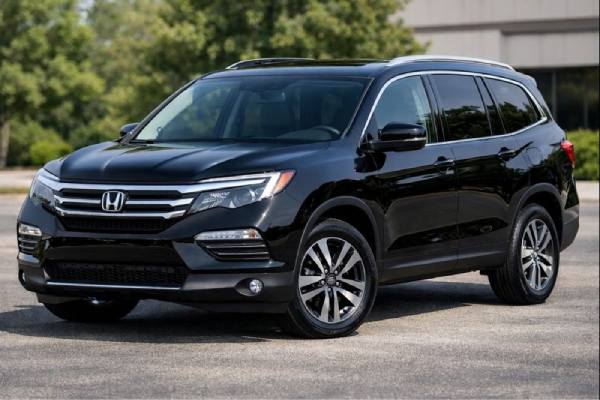
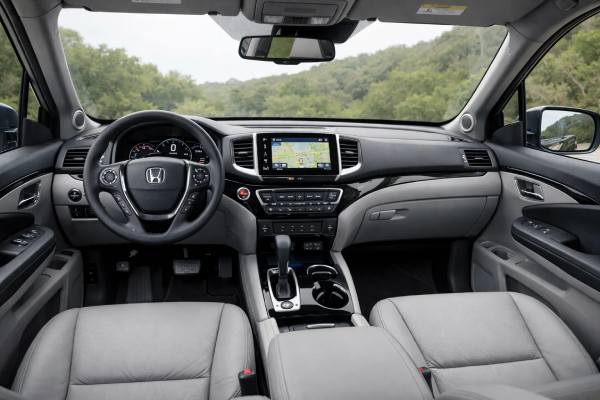
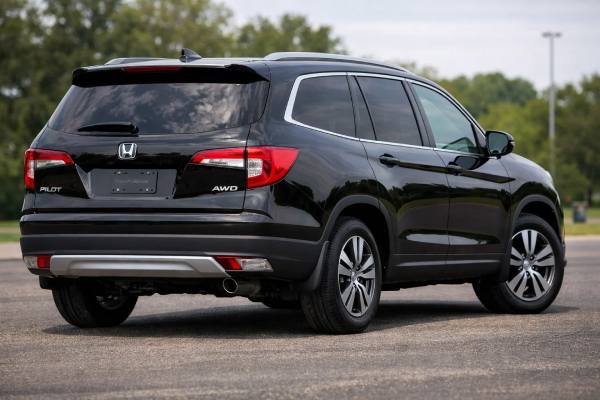
The 2016–2018 Honda Pilot FWD (YF5) is the “family-hauler that thinks like a crossover”: lighter than the previous generation, quicker off the line, and noticeably more efficient without giving up three-row practicality. In FWD form, it also avoids some AWD-specific maintenance while keeping the same strong 3.5-liter J35Y6 V6 character—smooth, torquey, and easy to live with.
Where owners typically win is in day-to-day usability: the Pilot’s wide-opening doors, flexible seating, and sensible cargo shapes make it simpler than many rivals to load, clean, and keep comfortable. Where buyers need to stay sharp is drivetrain configuration. Across these years, FWD Pilots can be paired with different automatics (6-speed or 9-speed depending on trim), and that changes both feel and service needs. Get the exact transmission and equipment right, and this generation remains a very balanced long-term pick.
Owner Snapshot
- Strong, naturally aspirated V6 pull with confident passing power even when loaded.
- Three-row packaging that’s easy to use day-to-day, with a practical cargo shape behind every row.
- FWD layout keeps running gear simpler than AWD while still towing up to 1,588 kg (3,500 lb) when properly equipped.
- If equipped with the 9-speed, expect more sensitivity to software updates and correct ATF choice than the 6-speed.
- Plan on engine oil every 8,000–12,000 km (5,000–7,500 mi) or 12 months (short-trip and city driving pushes you to the shorter end).
Jump to sections
- Honda Pilot YF5 FWD ownership profile
- Honda Pilot YF5 J35Y6 specs tables
- Honda Pilot YF5 equipment and safety hardware
- Reliability hotspots and recall checks
- Care schedule and purchase checks
- Road manners and fuel use
- Cross-shopping key competitors
Honda Pilot YF5 FWD ownership profile
Think of the 2016–2018 Pilot FWD as a “big, calm” three-row SUV that behaves like a smaller vehicle in daily use. It was engineered to feel lighter on its feet than older body-on-frame SUVs, yet it still focuses on the basics families actually notice: stable highway tracking, predictable braking, and cabin comfort that holds up when the third row is full.
What this FWD version does especially well
- Simple drivetrain, lower complexity: Without a rear differential, transfer case, and extra half-shafts, there’s less hardware to service. That matters if you live in a mild climate and don’t need AWD traction.
- V6 performance without turbo drama: The J35Y6’s naturally aspirated power delivery is linear—no lag, no boost spikes—so it feels consistent for merging and passing.
- Everyday practicality: Wide rear doors, a low-ish cargo floor for the class, and straightforward fold-and-tumble seating make it easier to use than some rivals with tighter third-row access.
What buyers often overlook
- Transmission differences change the experience. Many FWD trims use a 6-speed automatic that feels conventional and is generally forgiving. Some higher trims use a 9-speed with shift-by-wire and, in many cases, idle-stop. The 9-speed can be excellent when updated and maintained correctly, but it is less tolerant of wrong fluid, weak batteries, and outdated calibrations.
- This is a big vehicle on big tires. Alignment and tire condition matter. A Pilot that “wanders” or feels noisy is often on unevenly worn tires or has been run with borderline pressures for too long.
- Towing is real—but setup matters. FWD can tow meaningfully, but you want the right hitch hardware, a healthy cooling system, and realistic expectations for hills and heat.
Who it fits best
- Households that need three rows often but don’t want a minivan.
- Drivers who do mostly paved-road commuting and trips, and value predictable V6 power over maximum fuel savings.
- Buyers who want a long-term SUV that’s serviceable by any competent shop without exotic parts.
If you’re shopping used, the best Pilot isn’t “the newest one you can afford.” It’s the one with documented fluid services, a clean scan for drivetrain codes, and an equipment mix that matches how you actually drive.
Honda Pilot YF5 J35Y6 specs tables
Specs vary by trim and transmission, so the tables below focus on typical 2016–2018 FWD (YF5) configurations and highlight where the 6-speed vs 9-speed split matters. Treat these as planning numbers, then confirm against your door-jamb label, VIN build data, and service literature.
Powertrain and efficiency
| Item | Specification (FWD 2016–2018) |
|---|---|
| Code | J35Y6 |
| Engine layout and cylinders | V6 (6 cyl), SOHC i-VTEC, 24 valves (4 valves/cyl) |
| Displacement | 3.5 L (3,471 cc) |
| Induction | Naturally aspirated (NA) |
| Fuel system | Direct injection |
| Compression ratio | ~11.5:1 (varies by calibration) |
| Max power | 280 hp (209 kW) @ 6,000 rpm |
| Max torque | 355 Nm (262 lb-ft) @ 4,700 rpm |
| Timing drive | Belt |
| Rated efficiency (typical) | 6AT FWD: 19/27/22 mpg (US); 9AT FWD: 20/27/23 mpg (US) |
| Real-world highway @ 120 km/h (75 mph) | Typically 9.0–10.5 L/100 km (22–26 mpg US) depending on tires, load, and wind |
Transmission and driveline
| Item | Specification |
|---|---|
| Transmission (common) | 6-speed automatic (many trims) |
| Transmission (some higher trims) | 9-speed automatic with shift-by-wire (trim-dependent) |
| Drive type | FWD |
| Differential | Open (traction managed by braking and stability control) |
Chassis and dimensions
| Item | Typical value (varies by trim) |
|---|---|
| Suspension (front/rear) | MacPherson strut / multi-link |
| Steering | Electric power steering (EPS) |
| Brakes | 4-wheel discs (ABS/EBD/Brake Assist) |
| Wheels and tires (popular) | 245/60 R18 (many trims); larger wheels on some trims |
| Ground clearance | ~185 mm (7.3 in) |
| Length / Width / Height | ~4,940 mm / 1,996 mm / 1,770–1,800 mm (194.5 in / 78.6 in / ~69.7–70.9 in) |
| Wheelbase | ~2,820 mm (111.0 in) |
| Turning circle (kerb-to-kerb) | ~12.1 m (39.7 ft) |
| Kerb (curb) weight | ~1,830–1,980 kg (4,035–4,365 lb) |
| GVWR | Typically ~2,550–2,650 kg (5,620–5,840 lb) |
| Fuel tank | 73.8 L (19.5 US gal / 16.2 UK gal) |
| Cargo volume | Approx. 467 L seats up (behind 3rd) to 3,000+ L seats down (SAE method varies) |
Performance and capability
| Item | Typical value (FWD) |
|---|---|
| Acceleration 0–100 km/h (0–62 mph) | ~7.5–8.0 s (trim/tire dependent) |
| Top speed | ~190 km/h (118 mph), limiter dependent |
| Braking 100–0 km/h | ~38–41 m (tire dependent) |
| Towing capacity | 1,588 kg (3,500 lb) braked (with proper hitch/cooler equipment as specified) |
| Payload | Commonly 500–650 kg (1,100–1,430 lb) depending on trim |
Fluids and service capacities (planning guide)
| Item | Specification (verify by VIN and transmission) |
|---|---|
| Engine oil | 0W-20; capacity typically ~5.4 L (5.7 US qt) with filter |
| Coolant | Honda-type long-life coolant; mix per factory fill; total system varies |
| ATF (6-speed) | Honda ATF DW-1 (do not substitute) |
| ATF (9-speed) | Honda ATF Type 3.1 (do not substitute; not interchangeable with DW-1) |
| Differential / transfer case | Not applicable (FWD) |
| A/C refrigerant | Typically R-134a; charge varies by under-hood label |
| Key torque specs (common) | Wheel lug nuts 108 Nm (80 lb-ft); spark plugs ~18 Nm (13 lb-ft) (confirm for exact plug type) |
Safety and driver assistance (high-level)
| Category | What to expect |
|---|---|
| Crash ratings | Strong IIHS crashworthiness scores for this generation; award status depends on headlights and optional crash-prevention availability |
| Headlight rating (IIHS) | Varies by trim and headlight type (check your exact configuration) |
| ADAS suite | Honda Sensing features (AEB/CMBS, ACC, lane support) available on some trims/years; not universal across all 2016–2018 models |
Honda Pilot YF5 equipment and safety hardware
Trims and options matter more on this generation than many shoppers expect, because they influence transmission, headlights, and the availability of driver-assistance tech—all of which affect ownership satisfaction and safety scores.
Trims and options that change how it drives
Across 2016–2018, the Pilot lineup ranges from value-focused trims to premium family touring versions. The practical way to shop is by functional differences, not badges:
- Transmission choice (biggest mechanical divider)
- 6-speed automatic: Common on core trims. It feels familiar, with predictable gear changes and fewer quirks in stop-and-go driving.
- 9-speed automatic: Appears on some higher trims. It can improve efficiency and response when it’s operating as intended, but it’s more sensitive to battery health, software updates, and correct ATF.
- Wheels and tires
- Many Pilots run 245/60 R18, which balances ride comfort and replacement cost.
- Larger wheel packages can sharpen steering response slightly, but they usually raise tire cost and can make the ride busier over broken pavement.
- Cabin configuration and “family hardware”
- Some trims emphasize convenience: power tailgate, second-row captain’s chairs, integrated sunshades, and upgraded audio.
- If you routinely use the third row, prioritize trims with easier second-row movement and durable seat materials.
Quick identifiers when you’re viewing a used Pilot
- Shift-by-wire buttons (rather than a traditional PRND lever) often indicate the 9-speed setup on these years.
- Headlight design varies by trim and can affect night driving comfort and IIHS headlight scoring.
- If equipped, Honda Sensing-related menus appear in the driver information screens; lack of these menus often indicates the vehicle does not have the full driver-assist package.
Safety ratings and what they mean in practice
- IIHS: This generation performs well in core crash tests, but IIHS award status can be conditional—commonly tied to specific headlight performance and the presence of front crash prevention hardware.
- NHTSA: Ratings can vary by configuration and year. Always check the exact model-year and drivetrain listing you are considering.
Safety systems and ADAS coverage (what to look for)
Even base models typically include the fundamentals:
- Front airbags plus side-impact and side-curtain airbags across rows
- Stability control and traction control
- ABS with electronic brake distribution and brake assist
- Rearview camera (standard in this era)
Optional or trim-dependent features can include:
- AEB (Automatic Emergency Braking) via CMBS (Collision Mitigation Braking System)
- Adaptive cruise control
- Lane keeping and road-departure mitigation
- Blind-spot monitoring and rear cross-traffic alert
Calibration note after repairs: If your Pilot has camera- and radar-based driver aids, windshield replacement, front-end repairs, and even some alignments can require sensor aiming and recalibration. A “cheap” repair can become expensive if it triggers warning lights that demand proper calibration equipment.
Reliability hotspots and recall checks
The 2016–2018 Pilot FWD can be a durable vehicle, but it rewards owners who treat maintenance as a system—fluids, battery health, and software updates all interact. Below are the issues that show up most often, grouped by prevalence and cost tier, with the symptom → likely cause → practical remedy path.
Common (watch these first)
- 9-speed shift quality quirks (medium cost tier)
- Symptoms: Hesitation from a stop, abrupt downshifts, “busy” shifting at low speeds.
- Likely causes: Outdated transmission software, adaptation values out of range, degraded or incorrect ATF, weak 12 V battery affecting control logic.
- Remedy: Confirm the correct ATF type, check for dealer software updates, and ensure the battery and charging system test strong. A proper drain-and-fill schedule helps long-term behavior.
- Infotainment glitches (low to medium)
- Symptoms: Screen freezing, delayed boot, Bluetooth dropouts, CarPlay/Android Auto instability.
- Likely causes: Firmware bugs, aging USB ports/cables, low system voltage.
- Remedy: Update firmware if available, use known-good cables, and verify battery condition.
- Brake feel and rotor wear (low to medium)
- Symptoms: Steering wheel shake under braking, pulsation, uneven pad wear.
- Likely causes: Heat cycling from repeated short stops, sticking caliper pins, cheap replacement pads/rotors.
- Remedy: Service caliper hardware, replace with quality friction parts, and flush brake fluid on schedule.
Occasional (depends on climate and usage)
- Direct-injection intake deposits (medium)
- Symptoms: Rough idle, reduced efficiency, occasional misfires at higher mileage.
- Likely causes: DI engines can accumulate deposits on intake valves because fuel no longer washes them.
- Remedy: Use quality fuel, keep oil change intervals sensible, and consider intake cleaning if symptoms and scan data point that way (don’t do it “just because”).
- VCM-related drivability complaints (medium)
- Symptoms: Vibration during cylinder-deactivation, uneven engine feel, mount wear over time.
- Likely causes: Cylinder deactivation strategy interacting with mounts and ignition components.
- Remedy: Ensure mounts and plugs are healthy; address misfires promptly so the engine management system can do its job smoothly.
Rare but important (high severity)
- No-restart after idle-stop (high severity if it occurs)
- Symptoms: Engine stops at a light and fails to restart normally.
- Likely causes: Battery degradation, starter/charging stress, control software, or system condition thresholds not being met.
- Remedy: Treat battery testing as mandatory, confirm update history, and document the event if it occurs so a dealer can follow official diagnostic steps.
Recalls, TSBs, and how to verify completion
Do not guess on recalls—verify them.
- Use the official VIN-based recall lookup and compare with dealer service history.
- Ask for proof of completion, not just “it was done.”
- If the Pilot has ADAS features, confirm no active warning lights and that the system passes a road test without intermittent faults.
Pre-purchase checks to request
- Full service history with dates/mileage for oil and ATF services
- Proof of recall completion by VIN
- Battery test results (especially on 9-speed/idle-stop equipped vehicles)
- A scan for stored powertrain and body codes, even if no lights are on
Care schedule and purchase checks
A Pilot that lasts is usually not “babied.” It’s maintained on time and serviced with the correct fluids. Use the schedule below as a practical baseline, then follow the vehicle’s maintenance minder and local service documentation where they differ.
Practical maintenance schedule (distance/time)
Every 8,000–12,000 km (5,000–7,500 mi) or 12 months
- Engine oil and filter (0W-20)
- Tire pressure check and visual inspection (look for inner-edge wear)
- Brake inspection (pad life, rotor condition, caliper pin movement)
Every 12,000–16,000 km (7,500–10,000 mi)
- Tire rotation and steering/suspension check
- Alignment check if tire wear is uneven or steering feels off
Every 24,000–40,000 km (15,000–25,000 mi)
- Engine air filter (sooner in dusty areas)
- Cabin air filter (often annually for allergy-sensitive households)
Every 48,000–60,000 km (30,000–37,500 mi)
- Brake fluid (or every 3 years, whichever comes first)
- Transmission fluid service:
- 6-speed: plan regular drain-and-fill intervals
- 9-speed: use only the correct ATF and keep intervals conservative if you do heavy city driving
Every 100,000–160,000 km (60,000–100,000 mi)
- Spark plugs (often around 100,000 miles in many service plans)
- Coolant service (interval varies—verify by manual and market)
Timing components (critical long-term item)
- The J35Y6 uses a timing belt. A common planning interval is ~105,000 miles (170,000 km) or ~7 years, but confirm the exact requirement for your market and usage.
- When doing the belt, bundle related labor: tensioner, idlers, and often the water pump depending on service guidance and condition.
12 V battery
- Test annually after year 3. Replace proactively if it tests marginal—especially if you have idle-stop and/or the 9-speed.
Fluid specifications that matter
- Engine oil: 0W-20 (correct spec and quality matter more than brand)
- 6-speed ATF: Honda ATF DW-1 only
- 9-speed ATF: Honda ATF Type 3.1 only
Mixing or substituting ATF is one of the fastest ways to create expensive drivability problems.
Buyer’s guide: inspection checklist
Body and chassis
- Check for signs of accident repair: mismatched paint, overspray, uneven panel gaps
- Inspect underbody and subframes for corrosion if the vehicle lived in salted-road regions
Powertrain
- Cold start: listen for abnormal rattles, rough idle, or repeated cranking
- Test drive: confirm smooth low-speed behavior, clean kickdown, no slipping or flare
- After drive: check for oil seepage around covers and for coolant odor
Brakes and tires
- Feel for braking pulsation and steering wheel shake
- Look for uneven tire wear (inner edges are a common tell of alignment neglect)
Electronics and comfort
- Verify every door lock, window, seat motor, camera view, and climate zone
- If equipped with ADAS, confirm no warning lights and that lane/cruise functions behave consistently
Long-term durability outlook
A well-documented 2016–2018 Pilot FWD can be a long-term keeper. The main ownership “unlock” is simple: match the trim/transmission to your tolerance for complexity, then keep fluids and battery health in the green. Do that, and the Pilot’s core structure and V6 powertrain can stay dependable well past 200,000 km (125,000 mi).
Road manners and fuel use
On the road, the 2016–2018 Pilot FWD leans into comfort and stability rather than sporty reflexes. That’s not a criticism—it’s the point of the vehicle. You get a calm, confidence-inspiring SUV that won’t feel “busy” on long drives, even when the third row is occupied and the cargo area is full.
Ride, handling, and NVH (noise, vibration, harshness)
- Ride: The suspension does a good job smoothing highway expansion joints and imperfect city pavement. With 18-inch tires, the Pilot typically feels more compliant than some rivals on larger wheels.
- Handling: Body roll is present (it’s tall and heavy), but it’s controlled and predictable. The Pilot prefers smooth inputs—turn in early, be patient mid-corner, and it rewards you with stable grip.
- Steering: Electric steering is light to moderate. Feedback is limited, but straight-line tracking is usually solid when alignment and tires are correct.
- Cabin noise: Tire choice makes a huge difference. A quiet touring tire can make the Pilot feel premium; aggressive all-seasons can make it sound older than it is.
Powertrain character: what it feels like
- Throttle response: Linear and easy to modulate. The V6 doesn’t need to be wrung out to move the Pilot smartly.
- Low-rpm torque: Strong enough for relaxed merges, especially when not overloaded.
- 6-speed behavior: Generally smooth and predictable, with conventional shift timing.
- 9-speed behavior: Can feel very responsive when updated and healthy, but may “think” more at low speeds. It’s not unusual for drivers to notice more shifting activity in town.
Real-world fuel economy (what owners tend to see)
Factory ratings depend on transmission and trim. In practice:
- City-heavy driving: Often around 12–14 L/100 km (17–20 mpg US) depending on traffic, temperature, and trip length.
- Steady highway cruising (100–120 km/h): Often 9–10.5 L/100 km (22–26 mpg US) with stock tires and moderate load.
- Cold-weather penalty: Short trips in winter can add a noticeable increase—expect higher consumption until the engine fully warms.
Biggest efficiency levers
- Tires (type and pressure)
- Roof racks/boxes and open windows at speed
- Trip length and idle time
- Keeping alignment in spec
Load and towing impressions (FWD)
With the right hitch and cooling provisions, towing up to 3,500 lb (1,588 kg) is achievable, but expect:
- More frequent downshifts on grades
- A meaningful fuel economy drop under load
- The need to keep brakes and cooling system in top shape
For occasional towing—small campers, utility trailers, or watercraft—the Pilot FWD is a capable tool. For repeated mountain towing in hot climates, you may want a vehicle with more cooling margin, or consider the AWD version and a stricter service routine.
Cross-shopping key competitors
If you’re considering a 2016–2018 Pilot FWD, you’re probably also looking at a handful of other midsize SUVs. Here’s how the Pilot tends to stack up in the areas that matter most to buyers: space, powertrain feel, efficiency, and long-term running costs.
Toyota Highlander (same era)
Why people choose it: A reputation for low drama and strong resale value, with a well-rounded driving feel.
Where Pilot can win: The Pilot often feels more “family utility” focused—especially in how the seating and cargo areas are shaped and accessed.
Where Highlander can win: Some shoppers prefer its tighter road manners and its ownership reputation. If you prioritize “set it and forget it” simplicity, a comparable Highlander is always worth a close look.
Ford Explorer (same era)
Why people choose it: Strong engines and a more assertive, “American SUV” driving vibe.
Where Pilot can win: Smooth V6 delivery and a generally calmer, more refined family-road-trip personality.
Where Explorer can win: Available performance-oriented variants and a different feature mix, depending on trim.
Chevrolet Traverse / GMC Acadia (same era)
Why people choose them: Big interior space, especially third-row and cargo volume in some configurations.
Where Pilot can win: Often feels easier to place on the road and more cohesive in everyday controls and cabin layout.
Where GM can win: If you need the biggest possible space envelope in this class, these can be compelling—just shop carefully by maintenance history.
Nissan Pathfinder (same era)
Why people choose it: Value pricing and family-friendly packaging.
Where Pilot can win: The Honda V6-plus-automatic combination tends to deliver a more traditional, confident feel than some competitors’ drivetrain strategies in that era.
Where Pathfinder can win: Often good used-market pricing, making it attractive if budget is tight.
Mazda CX-9 (same era)
Why people choose it: Sharper handling feel and upscale interior design.
Where Pilot can win: More naturally suited to heavy family duty—especially frequent third-row use and cargo flexibility.
Where Mazda can win: If you care most about steering feel and a premium cabin vibe, the CX-9 is often a favorite.
Quick verdict for most shoppers
- Choose the Pilot FWD if you want three-row practicality, smooth V6 performance, and a simpler drivetrain than AWD—while accepting that trim-dependent transmissions and tech packages affect long-term satisfaction.
- Choose a rival if you have a very specific priority: maximum space (some GM options), a more premium drive feel (CX-9), or a different value/resale balance (Highlander).
The smartest move is to decide your “must-haves” first—transmission type, headlight performance, driver-assist features, and seating configuration—then cross-shop only trims that truly match.
References
- 2018 Honda Pilot 4-door SUV 2018 (Safety Rating)
- Vehicle Detail Search – 2018 HONDA PILOT SUV FWD#recalls | NHTSA 2018 (Recall Database)
- Gas Mileage of 2016 Honda Pilot 2016 (Fuel Economy Database)
- EPA Fuel-Economy Ratings – 2018 Honda Pilot 2018 (Official Ratings)
- 2018 Honda Pilot TRIM WALK 2018 (Trim and Features Guide)
Disclaimer
This article is for informational purposes only and is not a substitute for professional inspection, diagnosis, or repair. Specifications, torque values, service intervals, and procedures can vary by VIN, market, trim level, and installed equipment. Always verify details using the correct official service information and labels for your specific vehicle.
If you found this guide useful, please consider sharing it on Facebook, X, or your favorite forum to help others find reliable ownership information.