
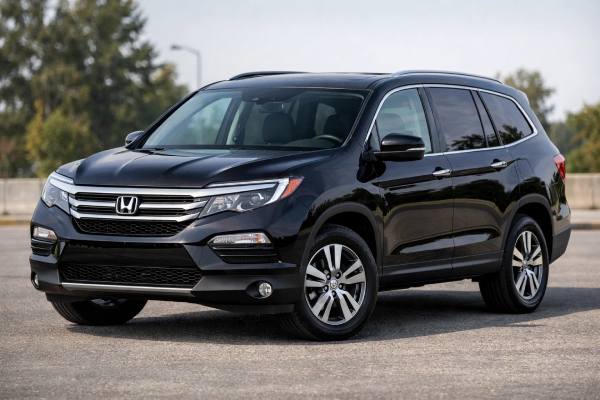
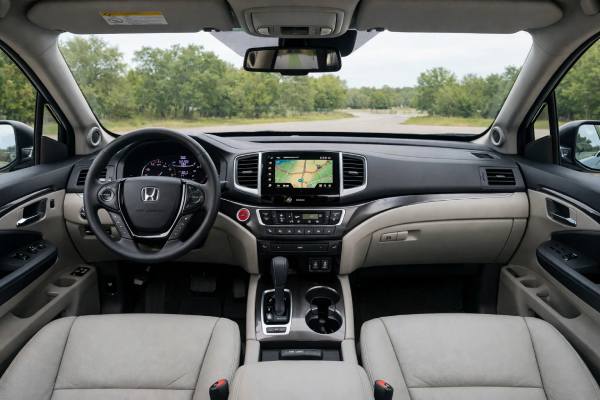
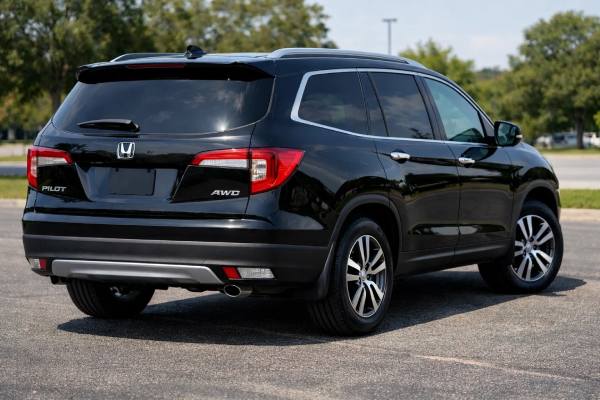
The 2016–2018 Honda Pilot AWD (YF6) is one of the more “engineering-forward” family SUVs of its era. You get Honda’s 3.5-liter J35Y6 V6—strong, smooth, and naturally aspirated—paired with an AWD system designed for traction and control, not just getting unstuck. In normal driving it behaves like a front-driven crossover, but when grip drops it can actively distribute torque rearward to stabilize the vehicle and reduce wheelspin.
For owners, the big appeal is the Pilot’s blend of three-row practicality with a drivetrain that feels confident in winter and on wet highways. The trade-off is that AWD adds service items: a rear differential with clutch packs needs fresh fluid, and tire matching becomes more important to avoid drivetrain stress. Choose the right trim (and transmission), keep the AWD fluids on schedule, and the YF6 Pilot can be a durable, high-utility long-term vehicle.
Quick Specs and Notes
- AWD traction and stability are a real advantage for snow, steep driveways, and wet highways, especially on good all-season or winter tires.
- The 280 hp J35Y6 V6 gives confident passing power with a full cabin and luggage.
- Properly equipped, towing can reach 2,268 kg (5,000 lb) (trim and hitch equipment dependent).
- AWD ownership requires rear differential fluid service; ignoring it can lead to chatter and expensive wear.
- Plan on rear differential fluid every 48,000–80,000 km (30,000–50,000 mi) depending on climate, towing, and lots of low-speed traction events.
Navigate this guide
- Honda Pilot YF6 AWD explained
- Honda Pilot YF6 specs and measurements
- Honda Pilot YF6 trims and safety systems
- Common problems and service actions
- Maintenance plan for AWD
- Driving feel, towing, and economy
- Pilot AWD vs key rivals
Honda Pilot YF6 AWD explained
Honda’s AWD Pilot (YF6) is best understood as a family SUV that’s built to stay composed when traction changes quickly—rain grooves, slushy intersections, downhill turns, and gravel driveways. Unlike older “always-on” systems that mainly send torque rearward after slip, Honda’s approach can be proactive and, in many trims, more dynamic: it can bias torque front-to-rear and vary it side-to-side at the rear axle to help the vehicle rotate cleanly instead of pushing wide.
What that means in real ownership
- Safer feel in poor weather: AWD doesn’t reduce braking distances, but it can improve stability when you’re accelerating or maintaining speed on mixed-grip surfaces.
- Less traction control intervention: On steep or slick starts, AWD can move the vehicle with less brake-based traction control pulsing, which often feels smoother.
- Tire choice becomes a “drivetrain component”: AWD hardware assumes all four tires are close in rolling circumference. Big differences in tread depth or mixed tire models can create binding and extra heat in the driveline.
Where the AWD Pilot fits best
- Snow-belt families who don’t want a truck-based SUV.
- Drivers who regularly deal with unplowed side streets, cabin roads, muddy parking areas, or boat ramps.
- Owners who tow often enough that they want extra launch traction and stability.
The important caveat: AWD adds service obligations
You’re adding a rear differential and a prop shaft, and in many trims the rear unit contains clutch packs that do real work. That makes fluid quality non-negotiable. A used Pilot that “shudders” during tight turns or makes a groaning sound after a cold start can be telling you one of two things: the fluid is overdue, or the unit has been run too long in a degraded state.
Transmission choice still matters
Across 2016–2018, the Pilot could be paired with a conventional 6-speed automatic or a 9-speed automatic (trim-dependent). Both can be good, but they behave differently:
- The 6-speed feels familiar and is usually less sensitive to software revisions.
- The 9-speed can feel sharper and more efficient, but it’s less forgiving of weak batteries, incorrect fluid, and missed updates.
If you’re shopping used, “AWD Pilot” is not specific enough. Your best outcome comes from matching AWD system + transmission + tire strategy to your climate and driving style.
Honda Pilot YF6 specs and measurements
The tables below focus on the 2016–2018 Pilot AWD (YF6) with the J35Y6 3.5 V6 (280 hp). Specs vary by trim, wheel package, and transmission, so treat this as a structured reference and verify against your VIN and under-hood labels.
Powertrain and efficiency
| Item | Specification (2016–2018 Pilot AWD) |
|---|---|
| Code | J35Y6 |
| Engine layout and cylinders | V6, SOHC i-VTEC, 24 valves (4 valves/cyl) |
| Displacement | 3.5 L (3,471 cc) |
| Bore × stroke | ~89.0 × 93.0 mm (3.50 × 3.66 in) |
| Induction | Naturally aspirated (NA) |
| Fuel system | Direct injection |
| Compression ratio | ~11.5:1 (varies by calibration) |
| Max power | 280 hp (209 kW) @ 6,000 rpm |
| Max torque | 355 Nm (262 lb-ft) @ 4,700 rpm |
| Timing drive | Belt |
| Rated efficiency (example) | 2018 AWD 6AT: 18/26/21 mpg (US) |
| Real-world highway @ 120 km/h (75 mph) | Typically 9.5–11.0 L/100 km (21–25 mpg US) (tires, load, wind dependent) |
Transmission and driveline
| Item | Specification |
|---|---|
| Transmission (common) | 6-speed automatic (trim-dependent) |
| Transmission (higher trims) | 9-speed automatic (trim-dependent) |
| Drive type | AWD (torque managed electronically; rear axle engagement varies by system) |
| Differential | Rear differential with clutch-based torque control (system and capability vary by trim) |
Chassis and dimensions
| Item | Typical value (varies by trim) |
|---|---|
| Suspension (front/rear) | MacPherson strut / multi-link |
| Steering | Electric power steering (EPS) |
| Brakes | 4-wheel discs, ABS, stability control |
| Wheels and tires (popular) | 245/60 R18; larger wheel packages on some trims |
| Ground clearance | ~185 mm (7.3 in) |
| Length / Width / Height | ~4,940 mm / 1,996 mm / 1,770–1,800 mm (194.5 in / 78.6 in / ~69.7–70.9 in) |
| Wheelbase | ~2,820 mm (111.0 in) |
| Turning circle (kerb-to-kerb) | ~12.1 m (39.7 ft) |
| Kerb (curb) weight | Often ~1,900–2,050 kg (4,190–4,520 lb) depending on trim and AWD hardware |
| GVWR | Typically ~2,600–2,750 kg (5,730–6,060 lb) |
| Fuel tank | 73.8 L (19.5 US gal / 16.2 UK gal) |
| Cargo volume | Approx. 467 L behind 3rd row to 3,000+ L seats folded (method varies by market/standard) |
Performance and capability
| Item | Typical value (AWD) |
|---|---|
| Acceleration 0–100 km/h (0–62 mph) | ~7.4–8.0 s (trim/tire dependent) |
| Top speed | ~190 km/h (118 mph), limiter dependent |
| Braking 100–0 km/h | ~38–41 m (tire dependent) |
| Towing capacity | Up to 2,268 kg (5,000 lb) (when properly equipped; varies by trim/hitch/cooling) |
| Payload | Commonly 450–650 kg (990–1,430 lb) depending on equipment |
Fluids and service capacities (planning guide)
| Item | Specification (verify by VIN and transmission) |
|---|---|
| Engine oil | 0W-20; ~5.4 L (5.7 US qt) with filter |
| Coolant | Honda long-life coolant; capacity varies by market and equipment |
| ATF (6-speed) | Honda ATF DW-1 |
| ATF (9-speed) | Honda ATF Type 3.1 |
| Rear differential (AWD) | Honda-approved rear differential fluid per label (service interval is critical) |
| A/C refrigerant | Typically R-134a; charge shown on under-hood label |
| Key torque specs (common) | Wheel lug nuts 108 Nm (80 lb-ft); spark plugs ~18 Nm (13 lb-ft) (confirm exact plug spec) |
Safety and driver assistance (what applies here)
| Item | Notes |
|---|---|
| Euro NCAP | Not applicable in many markets (model not commonly tested) |
| IIHS | Strong crashworthiness results for this generation; award status depends on headlights and crash-prevention equipment |
| Headlight rating | Varies by trim and headlight type |
| ADAS suite | Honda Sensing features (AEB, ACC, lane support) are trim/year dependent—confirm on the exact vehicle |
Honda Pilot YF6 trims and safety systems
On the 2016–2018 Pilot AWD, “trim” is more than cosmetics. It can decide your transmission, headlight performance, towing rating, and which driver-assistance features you actually get. The clean way to shop is to focus on functional packages, then confirm with the VIN build data and a visual walkaround.
Trims and options that change the mechanical package
1) Transmission and controls
- Many mid trims use a 6-speed automatic with a conventional shifter. It tends to feel natural in stop-and-go traffic and is straightforward for most shops to service.
- Some higher trims use a 9-speed automatic with shift-by-wire buttons. It can be efficient and responsive, but it is more sensitive to battery health and correct ATF.
2) AWD system capability
- AWD Pilots can range from “primarily traction support” to systems that feel more active in how they distribute torque. In practice, you’ll notice the difference most on slippery uphill starts and on wet corners at moderate speed.
- If you frequently drive on snow or uneven surfaces, prioritize trims with the more capable rear-drive hardware, and budget for rear differential fluid service as routine maintenance.
3) Wheels, tires, and brakes
- The most owner-friendly setup is usually 18-inch wheels with higher-profile tires. It protects ride comfort and keeps replacement cost reasonable.
- Bigger wheels can look great, but they can increase road noise and cost more at replacement time.
Quick identifiers in a used-car listing or driveway
- Shift-by-wire buttons often point to the 9-speed package.
- Badging and interior cues (seat material, speaker count, tailgate trim) can hint at trim, but don’t rely on them alone—vehicles get “de-trimmed” with used parts after repairs.
- If Honda Sensing is present, you’ll typically see additional menu options in the driver information screens and buttons for cruise and lane functions with more settings than basic cruise control.
Safety ratings: what to pay attention to
Crashworthiness for this generation is generally strong, but safety awards can hinge on two details:
- Headlight performance: Some headlight setups test better than others. If you do a lot of rural night driving, treat this as a must-check item.
- Crash-prevention equipment: Advanced driver assistance is not the same as “standard equipment” across all trims and years. Award status can depend on having the right AEB system and calibration.
Safety systems and ADAS: what’s typical vs optional
Common baseline safety hardware
- Multiple airbags (front, side, and side-curtain)
- ABS, stability control, traction control
- Rearview camera
Trim- and year-dependent safety tech
- AEB (Automatic Emergency Braking)
- Adaptive cruise control
- Lane keeping and road departure mitigation
- Blind-spot monitoring and rear cross-traffic alert
- Parking sensors and upgraded camera views on higher trims
Calibration note after repairs
If your Pilot has camera and radar systems, windshield replacement, bumper work, and some alignments can require recalibration. A clean dash (no warning lights) is good, but the best confirmation is a road test where lane and cruise features operate consistently.
Common problems and service actions
A well-maintained 2016–2018 Pilot AWD can run for a long time, but it has a few repeat patterns. The goal isn’t to fear them—it’s to recognize symptoms early, service the right fluids, and verify all recalls and updates by VIN.
Common issues (most owners will encounter)
Rear differential fluid overdue (medium to high cost if ignored)
- Symptoms: Chatter or shudder in tight turns, groaning at low speed, or a “binding” sensation during parking maneuvers.
- Likely cause: Degraded rear diff fluid allowing clutch pack chatter or excess heat.
- Remedy: Service with the correct Honda-approved fluid at the recommended interval. If symptoms persist after a proper service, further diagnosis is needed before damage becomes permanent.
9-speed shift quality sensitivity (medium)
- Symptoms: Hesitation from a stop, harsh downshifts, gear hunting in town.
- Likely cause: Software calibration, adaptation values, low system voltage, or incorrect/aged ATF.
- Remedy: Confirm the correct ATF type, verify software updates, and test the 12 V battery. A healthy battery often improves drivability in vehicles with complex shift logic.
Infotainment and camera glitches (low to medium)
- Symptoms: Frozen screen, Bluetooth issues, intermittent camera behavior.
- Likely cause: Firmware bugs, weak battery, aging USB ports/cables.
- Remedy: Update firmware where available, confirm charging system health, and test with known-good cables.
Occasional issues (usage and climate dependent)
Direct-injection intake deposits (medium)
- Symptoms: Rough idle, reduced efficiency, occasional misfire codes at higher mileage.
- Likely cause: DI engines can build deposits on intake valves.
- Remedy: Address only when symptoms and scan data support it. Keep oil change intervals sensible and use quality fuel.
VCM-related vibration complaints (medium)
- Symptoms: Light vibration at steady cruising, sometimes felt as a “drone” sensation.
- Likely cause: Cylinder deactivation interacting with mounts and ignition components.
- Remedy: Make sure mounts, plugs, and ignition components are healthy and that no misfires are present.
Suspension wear and tire edge wear (low to medium)
- Symptoms: Clunks over bumps, vague steering, uneven inner tire wear.
- Likely cause: Bushings and alignment drift on a heavy SUV.
- Remedy: Correct alignment with attention to rear toe, and replace worn bushings before tires get chewed.
Recalls, TSBs, and extended coverage: how to handle them
For this generation, service campaigns can involve powertrain software, safety-related sensors, or component inspections. Instead of chasing rumors:
- Run a VIN recall check on an official database.
- Ask for dealer documentation showing completion dates.
- Test-drive with all features active (cruise, lane features, cameras) to confirm no intermittent faults.
Pre-purchase checks to request (AWD-specific)
- Proof of rear differential fluid service (or budget to do it immediately)
- Matching tire brand/model and similar tread depth on all four corners
- No drivetrain noises on full-lock turns in a parking lot
- Scan for stored codes even if the dash is clean, especially transmission and AWD control modules
Maintenance plan for AWD
Treat the Pilot AWD as two systems: a strong V6 up front and a traction-and-control driveline behind it. If you maintain both, the vehicle usually rewards you with predictable ownership.
Practical maintenance schedule (distance/time)
Every 8,000–12,000 km (5,000–7,500 mi) or 12 months
- Engine oil and filter (0W-20)
- Tire pressure check and visual inspection (look for inner-edge wear)
- Brake inspection (pad thickness, rotor condition, caliper pin movement)
Every 12,000–16,000 km (7,500–10,000 mi)
- Tire rotation (AWD tire matching matters—rotate on time)
- Alignment check if steering feel changes or tire wear is uneven
Every 24,000–40,000 km (15,000–25,000 mi)
- Engine air filter (sooner in dusty areas)
- Cabin air filter (often annually for comfort and HVAC performance)
Every 48,000–80,000 km (30,000–50,000 mi)
- Rear differential fluid service (sooner if you see snow, tow, or do lots of low-speed traction events)
- Brake fluid (or every 3 years, whichever comes first)
Transmission fluid strategy (trim-dependent)
- 6-speed: Conservative drain-and-fill intervals are a good ownership move, especially with city driving or towing.
- 9-speed: Use only the specified ATF and keep intervals conservative. The wrong fluid can create expensive shift problems.
Every 100,000–160,000 km (60,000–100,000 mi)
- Spark plugs (often around 100,000 miles in many service schedules)
- Coolant service (interval varies by market—verify in your official documentation)
Timing belt planning (high importance)
The J35Y6 uses a timing belt, and timing-belt service is one of the biggest long-term costs on this engine family. A common planning interval many owners use is ~170,000 km (105,000 mi) or ~7 years, but you should follow the official requirement for your market and driving conditions. When you do it, plan the job efficiently by bundling the tensioner and related components per the service procedure.
AWD-specific ownership tips that save money
- Keep tire sets matched. If you replace one or two tires, measure tread depth and avoid large mismatches. Matching tire circumference reduces driveline stress.
- Don’t ignore “parking-lot symptoms.” Tight-turn chatter is often the early warning for rear differential service needs.
- Battery health matters. Modern transmissions and AWD controllers dislike low voltage. A weak 12 V battery can cause drivability complaints that look “bigger” than they are.
Buyer’s guide: best inspection flow
- Cold start: listen for abnormal rattles and confirm smooth idle.
- Parking-lot circles: slow, full-lock turns both directions—listen for chatter.
- Mixed road test: steady cruise, moderate acceleration, and a few gentle-to-firm braking events.
- Post-drive check: look for leaks and sniff for overheated fluid odors.
- Paperwork: confirm differential and transmission service history, plus recall completion by VIN.
Driving feel, towing, and economy
The Pilot AWD is tuned for stability and comfort, with a drivetrain that feels confident when the surface is unpredictable. It’s not a sporty SUV, but it’s a reassuring one—especially in rain and winter.
Ride, handling, and NVH
- Ride quality: With 18-inch tires, the Pilot usually rides with a soft edge that’s family-friendly on broken pavement. Larger wheels can sharpen response but often add impact harshness.
- Cornering balance: The Pilot prefers smooth inputs. In wet conditions, AWD helps it track more cleanly under throttle, reducing the “front push” sensation you can feel in FWD crossovers.
- Steering and stability: EPS steering is light-to-moderate with limited feedback, but straight-line stability is typically strong when alignment and tires are correct.
- Noise: Tire model choice is one of the biggest cabin-noise variables. A quiet touring tire can make the Pilot feel more expensive than it is.
Powertrain character
- V6 response: Linear and predictable, with strong mid-range pull for passing.
- 6-speed: Traditional behavior and generally smooth low-speed operation.
- 9-speed: Can feel quick and efficient, but it may shift more actively in city driving. When poorly maintained or out of date, it can feel hesitant—so service history matters.
Real-world fuel economy (what to expect)
EPA ratings vary by year, trim, and transmission. In real driving, AWD typically costs a modest amount versus FWD:
- City-heavy driving: often 12.5–15.0 L/100 km (16–19 mpg US) depending on traffic, trip length, and temperature.
- Highway (100–120 km/h): often 9.5–11.5 L/100 km (20–25 mpg US) depending on wind, tires, and load.
- Cold-weather penalty: short winter trips can raise consumption noticeably until the engine and driveline fully warm.
Efficiency levers that actually work:
- Tire pressure and alignment
- Removing roof boxes and crossbars when not needed
- Avoiding long warm-up idling (drive gently instead)
Towing and load behavior (AWD advantage)
When properly equipped, AWD Pilots can tow up to 5,000 lb (2,268 kg), and the AWD system can help with launch traction on ramps and wet grass. Still, towing changes the experience:
- Expect more downshifts on grades and higher coolant and transmission heat load
- Plan a stricter fluid schedule (engine oil and ATF) if you tow regularly
- Brake condition becomes critical; fresh pads and healthy rotors matter more than “rated towing capacity”
For occasional towing, the Pilot AWD feels stable and capable. For repeated mountain towing in heat, prioritize a vehicle with excellent maintenance history and be disciplined about service intervals.
Pilot AWD vs key rivals
Cross-shopping in this class usually comes down to three priorities: third-row usability, drivetrain feel, and long-term running costs. Here’s how the 2016–2018 Pilot AWD typically compares.
Toyota Highlander AWD (similar era)
Where the Highlander often wins
- A reputation for low-drama ownership and strong resale.
- A slightly more “car-like” demeanor for some drivers.
Where the Pilot often wins
- A roomier, more usable family layout in many configurations.
- A confident V6 feel under load and a practical interior shape for real cargo.
Ford Explorer 4WD/AWD (similar era)
Explorer strengths
- Strong engine options and a more assertive driving character.
- Trim variety that can skew sporty or premium.
Pilot strengths
- A calmer, more cohesive family-road-trip feel.
- AWD behavior that tends to feel stability-focused rather than performance-forward.
Chevrolet Traverse / GMC Acadia AWD (similar era)
GM strengths
- Big space envelope, especially for cargo and third-row comfort in some configurations.
Pilot strengths
- Often feels easier to place on the road and more intuitive in daily controls.
- AWD system can feel very confidence-inspiring in mixed-grip driving.
Nissan Pathfinder 4WD/AWD (similar era)
Pathfinder strengths
- Often attractive used pricing and family-friendly packaging.
Pilot strengths
- A more traditional and confident V6-plus-automatic experience for many drivers.
- Stronger “do everything” reputation when maintained properly.
Mazda CX-9 AWD (similar era)
CX-9 strengths
- Sharper steering feel and an upscale interior vibe.
Pilot strengths
- More naturally suited to frequent third-row use and heavy family duty.
- Towing and load behavior can feel more relaxed thanks to displacement and gearing.
Bottom line
Choose the Pilot AWD if your life includes real weather, occasional towing, and you want a three-row SUV that feels composed and predictable—so long as you’re willing to maintain the AWD hardware properly. Choose a rival if your priority is a specific “signature”: maximum space (some GM models), premium driving feel (CX-9), or the simplest possible ownership narrative (Highlander).
References
- 2018 Honda Pilot 2018 (Safety Rating)
- Fuel Economy of the 2018 Honda Pilot AWD 2018 (Fuel Economy Database)
- Vehicle Detail Search – 2018 HONDA PILOT SUV AWD | NHTSA 2018 (Recall Database)
- Check for Recalls: Vehicle, Car Seat, Tire, Equipment 2026 (VIN Recall Lookup)
- MyGarage 2026 (Owner’s Manuals)
Disclaimer
This article is for informational purposes only and is not a substitute for professional inspection, diagnosis, or repair. Specifications, torque values, service intervals, and procedures can vary by VIN, market, trim level, and installed equipment. Always verify details using the correct official service documentation, labels, and procedures for your specific vehicle.
If this guide helped you, please consider sharing it on Facebook, X, or your preferred community group so more owners can benefit.