
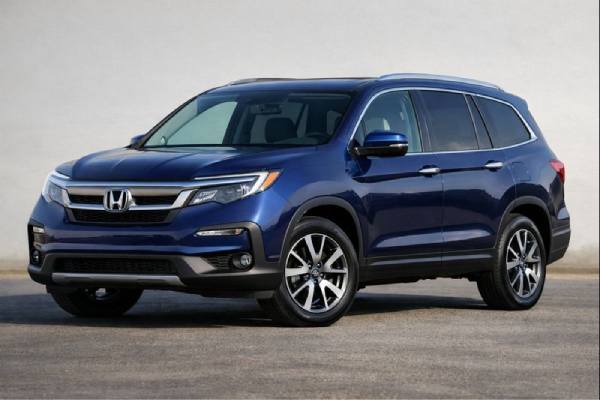
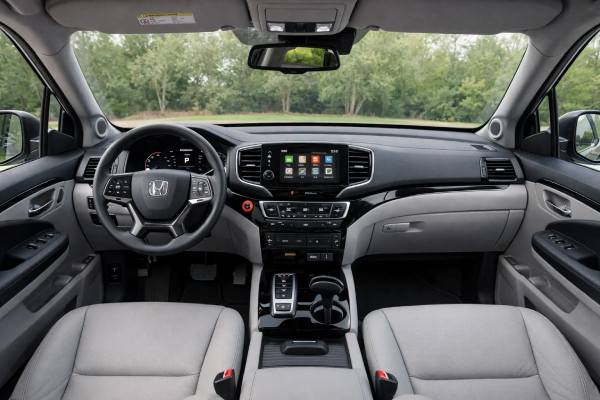
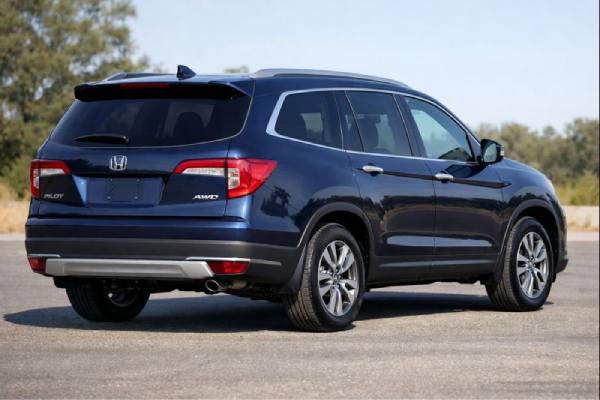
The 2019–2022 facelift Honda Pilot FWD (YF5) is a three-row family SUV built around a proven formula: a naturally aspirated 3.5-liter V6 (J35Y6), a smooth automatic gearbox, and a cabin designed to carry people and gear without drama. In front-wheel-drive form it’s lighter than the AWD versions, easier on tires and driveline fluids, and often feels a bit more responsive around town. The facelift years also matter because Honda expanded standard active-safety equipment and updated the exterior, while keeping the basic platform’s strengths: predictable handling, good visibility, and practical packaging.
Ownership comes down to a few big-ticket realities. The V6 uses a timing belt, not a chain, and the transmission choice and service history matter more than many buyers expect. Get those right and the Pilot tends to be a durable, easy-to-live-with long-haul SUV.
Essential Insights
- Strong, predictable V6 power and low-stress highway cruising for a full-size family load.
- FWD layout keeps running complexity down versus AWD (no rear differential services).
- Third-row usability and cargo flexibility remain a core advantage for road trips and daily hauling.
- Plan for timing-belt service on schedule; it is a normal ownership cost, not a rare failure.
- Change engine oil about every 8,000–12,000 km (5,000–7,500 mi) or 12 months, depending on use and the maintenance minder.
Contents and shortcuts
- Honda Pilot YF5 FWD 2019–2022: what it is
- Honda Pilot YF5 FWD specs that matter
- Honda Pilot YF5 FWD trims and safety tech
- Known issues and recall landscape
- Maintenance plan and smart buying
- Real-world driving and efficiency
- Pilot FWD vs three-row competitors
Honda Pilot YF5 FWD 2019–2022: what it is
Think of the facelift Pilot FWD as Honda’s “big practical tool” for families who want three rows, a traditional V6, and straightforward day-to-day manners. The 2019 refresh brought styling changes and a more modern equipment strategy, but the real appeal stayed the same: a roomy cabin, easy controls, and a powertrain that doesn’t rely on turbocharging or hybrid complexity.
The J35Y6 3.5-liter V6 is the centerpiece. It delivers strong midrange torque for merging, passing, and climbing grades with a full cabin. Because it’s naturally aspirated, response is linear: you get what your right foot asks for without turbo lag. For owners, that usually means less sensitivity to fuel quality and fewer heat-management concerns than some turbocharged rivals—though it’s still a modern engine with direct injection, sensors, and emissions hardware that needs clean fuel and consistent maintenance.
Front-wheel drive changes the personality in a few useful ways. Compared with AWD, the Pilot FWD is typically lighter, slightly more fuel-efficient, and simpler underneath—no rear driveshaft, rear differential, or transfer case to service. In dry and mixed conditions it remains stable and predictable, and with good tires it handles rain confidently. The trade-off is traction on steep, slippery grades or deep snow; if you regularly face those, tire choice matters more, and you may prefer AWD.
This model-year range also fits buyers who want modern driver-assistance features without stepping into the newest (and often more expensive) redesign cycle. The cabin is sized for real life: wide-opening doors, a practical third row for kids and occasional adults, and cargo space that stays useful even with seats in play. It’s a “do everything reasonably well” SUV—especially when its known maintenance items are treated as planned upkeep, not surprises.
Honda Pilot YF5 FWD specs that matter
Below are the core technical details owners and shoppers actually use. Numbers can vary slightly by trim, wheels/tires, and market, but this is the right framework for understanding the 2019–2022 facelift FWD Pilot.
Powertrain and efficiency
| Item | Honda Pilot FWD (YF5) 2019–2022 facelift |
|---|---|
| Engine code | J35Y6 |
| Layout | V6, naturally aspirated |
| Valvetrain | SOHC i-VTEC, 24 valves (4 valves/cyl) |
| Bore × stroke | ~89 × 93 mm (3.50 × 3.66 in) |
| Displacement | 3.5 L (3,471 cc) |
| Fuel system | Direct injection |
| Compression ratio | ~11.5:1 (varies by market calibration) |
| Max power | 280 hp (209 kW) @ ~6,000 rpm |
| Max torque | ~355 Nm (262 lb-ft) @ ~4,700 rpm |
| Timing drive | Belt (scheduled replacement item) |
| Rated efficiency (typical 2WD) | ~9.8 L/100 km combined (24 mpg US / 29 mpg UK) |
| Real-world highway @ 120 km/h | Often ~9.5–10.8 L/100 km (22–25 mpg US), load and wind dependent |
Transmission and driveline
| Item | Detail |
|---|---|
| Drive type | FWD |
| Differential | Open front differential with brake-based traction control |
| Automatic gearbox | 6-speed on some early facelift lower trims; 9-speed common on higher trims and later years |
| What it means | The 9-speed can feel busier (more shifting) but keeps the V6 in its torque band; the 6-speed is simpler and often feels more predictable at low speed |
Chassis and dimensions
| Item | Typical value |
|---|---|
| Suspension (front / rear) | MacPherson strut / multi-link |
| Steering | Electric power steering; ratio about 17.2:1 |
| Brakes (front / rear) | Disc / disc; about 330 mm (13.0 in) front and rear (trim-dependent) |
| Common tire sizes | 245/60 R18 or 245/50 R20 (trim-dependent) |
| Ground clearance | ~185 mm (7.3 in) |
| Length / width / height | ~4,991 / 1,997 / 1,800 mm (196.5 / 78.6 / 70.9 in) |
| Wheelbase | ~2,819 mm (111.0 in) |
| Turning circle (kerb-to-kerb) | ~12.3 m (40.4 ft) |
| Curb weight (FWD range) | ~1,833–1,891 kg (4,041–4,170 lb) |
| GVWR | ~2,596 kg (5,725 lb) |
| Fuel tank | ~73.8 L (19.5 US gal / 16.2 UK gal) |
Performance and capability
| Metric | Typical real-world expectation (FWD) |
|---|---|
| 0–100 km/h (0–62 mph) | About 6.7–7.5 s depending on trim, tires, and conditions |
| Top speed | Typically limited around 180–190 km/h (112–118 mph) depending on market |
| Towing capacity | Up to ~1,588 kg (3,500 lb) when properly equipped (FWD) |
| Braking distance | Heavily tire-dependent; expect “mid-pack” for the class, better with quality tires and fresh brake fluid |
Fluids and service capacities
Because capacities vary by VIN, transmission type (6AT vs 9AT), and market cooling package, treat these as decision-level guidance and verify in official service documentation for your exact vehicle.
| System | Spec you should use | Typical notes |
|---|---|---|
| Engine oil | Full-synthetic 0W-20 | Change by maintenance minder or annually |
| Coolant | Honda Type 2 (or equivalent spec) | Usually long-life; replace by schedule |
| ATF (6-speed) | Honda ATF DW-1 | Drain-and-fill service is preferred |
| ATF (9-speed) | Honda/Acura 9-speed-approved ATF | Correct fluid is critical for shift quality |
| Brake fluid | DOT 3 / DOT 4 as specified | Many owners do it every 3 years |
| A/C refrigerant | R-134a on many trims/years | Confirm under-hood label for your VIN |
Safety and driver assistance snapshot
| Area | What to expect |
|---|---|
| Structure | Modern unibody with advanced front structure and multiple airbags |
| ADAS suite | Honda Sensing (AEB, ACC, lane support, road-departure mitigation), availability and tuning vary by year/trim |
| Crash ratings | IIHS ratings apply broadly across 2019–2022 with trim-dependent headlights and updated side-test outcomes |
Honda Pilot YF5 FWD trims and safety tech
Trims vary by market, but the facelift-era Pilot range generally splits into “value” trims (simpler wheels, fewer luxury features, sometimes a different transmission) and “comfort/tech” trims (more standard equipment, larger wheels, and often the 9-speed automatic). For FWD buyers, this matters because the ownership experience is shaped as much by equipment as by the base platform.
Trims and options: what changes in real life
Even when engines are identical, you’ll notice three practical differences as you move up the trim ladder:
- Transmission behavior and feel: Early facelift lower trims may use a 6-speed automatic, while higher trims often use a 9-speed. The 6-speed tends to feel smoother creeping in traffic and is easier to “read” as a driver. The 9-speed can deliver better passing response and sometimes slightly better highway efficiency, but it is more sensitive to software calibration and correct fluid.
- Wheels and tires: Moving from 18-inch to 20-inch wheels sharpens steering response but can increase tire cost and make potholes feel harsher. If comfort is priority one, the smaller wheel package usually wins.
- Cabin features that affect family use: Power tailgate, upgraded audio, second-row seat configuration, rear climate controls, and parking sensors can change the day-to-day experience more than buyers expect. If you do school runs and tight parking often, parking sensors and a clear camera system are worth real money.
Quick identifiers when shopping used:
- Wheel size is the fastest visible clue (many top trims wear 20-inch wheels).
- Interior details (seat material, screen size, button layout) often track trim more reliably than exterior badges.
- Build date and VIN history help confirm whether a vehicle received software updates, recall work, or a transmission type you prefer.
Safety ratings: how to interpret them
For 2019–2022 Pilots, crash performance is generally solid, but two details are important:
- Headlight ratings vary by trim and option. A “great” crash-test summary can still pair with “average” lighting on some trims, which matters for rural driving and winter darkness.
- Updated test protocols can change a result. Ratings from updated side-impact methods or newer pedestrian-testing protocols may look tougher than older scores, even when the vehicle itself has not changed much.
Safety systems and ADAS: what’s included and what’s optional
Most facelift Pilots are equipped with a Honda Sensing suite that typically includes:
- AEB (automatic emergency braking) for vehicle-to-vehicle scenarios
- Adaptive cruise control
- Lane keeping assist and lane-departure warning
- Road departure mitigation
Depending on trim and year, you may also see:
- Blind-spot monitoring and rear cross-traffic alert (often standard on higher trims)
- Front and rear parking sensors
- Multi-angle rear camera
One ownership note: driver-assistance features rely on camera and radar alignment. After windshield replacement, front-end repairs, or certain suspension work, confirm calibrations are performed correctly—this is especially relevant if warning lights appear or adaptive cruise behaves inconsistently.
Known issues and recall landscape
A well-kept Pilot can be a long-term workhorse, but the facelift-era FWD version has patterns worth watching. The goal is to separate “normal wear” from issues that signal neglect or expensive downtime.
Common, low-to-medium cost issues
- Brake vibration (often “warped rotors” feel)
Symptoms: Steering shimmy under braking, especially from highway speed.
Likely cause: Rotor pad deposits from heat cycling, cheap pads, or uneven torque on wheels.
Remedy: Quality pads/rotors, correct lug torque, and brake fluid service. - Front suspension bushings and links wearing
Symptoms: Clunks over bumps, vague steering feel, uneven tire wear.
Likely cause: Normal wear accelerated by rough roads and heavy loads.
Remedy: Replace worn links/bushings; align afterward. - Infotainment glitches and camera oddities
Symptoms: Freezing, lag, audio dropouts, camera display faults.
Likely cause: Software, aging modules, or camera wiring/connector issues.
Remedy: Check for updates and service bulletins; confirm recall completion where applicable.
Occasional, higher-stakes items
- 9-speed shift quality complaints (if equipped)
Symptoms: Harsh shifts, gear hunting, odd downshifts, hesitation.
Likely cause: Outdated software, wrong/old fluid, adaptation issues, or internal wear in neglected units.
Remedy: Verify software is current, ensure the correct ATF is used, and prioritize fluid service history. A “freshly serviced” transmission with the wrong fluid is not a positive. - Direct-injection carbon buildup (usage dependent)
Symptoms: Rough idle, reduced efficiency, occasional misfire on high-mileage engines.
Likely cause: DI engines can accumulate intake-valve deposits, especially with short-trip driving.
Remedy: Driving pattern changes help; cleaning may be needed at higher mileage if symptoms appear.
Timing belt: not a defect, but non-negotiable
The J35-series V6 uses a timing belt. If it is overdue, treat it as a purchase negotiation point, not a “maybe later” task. When owners ignore it, the risk is severe engine damage. A properly documented timing-belt job is one of the strongest signs you’re looking at a responsibly owned Pilot.
Recalls, service bulletins, and how to verify
Honda and regulators periodically issue recalls or service actions that may involve fuel system components, cameras, software updates, or safety-related hardware. Because recall scope can depend on production range and parts batches, do this every time:
- Run an official VIN check using the manufacturer and/or regulator recall database.
- Ask for dealer repair history or printed recall completion records.
- Confirm with the seller that warning lights are not present and that drivability is stable after any recall work (especially fuel or power-related campaigns).
If a seller cannot show recall completion and the VIN check shows open campaigns, treat that as time and inconvenience you’ll inherit—sometimes with parts delays.
Maintenance plan and smart buying
The Pilot rewards “boring consistency.” If you want a three-row SUV that stays calm at 200,000+ km, maintenance planning matters more than chasing the cheapest example.
Practical maintenance schedule
Use the maintenance minder if available, but these intervals are a solid planning baseline for mixed driving:
- Engine oil and filter: every 8,000–12,000 km (5,000–7,500 mi) or 12 months
Short trips, cold weather, and heavy idling push you toward the shorter side. - Tire rotation and brake inspection: every 10,000–12,000 km (6,000–7,500 mi)
Keeps tire wear even and catches sticking calipers early. - Cabin air filter: every 20,000–30,000 km (12,000–18,000 mi) or yearly
Faster if you drive dusty roads or heavy city traffic. - Engine air filter: every 30,000–45,000 km (18,000–28,000 mi)
Inspect sooner if you see dust loading. - Brake fluid: every 3 years
Cheap insurance for pedal feel and ABS module health. - Coolant: often around 160,000 km (100,000 mi) / 5 years first, then shorter intervals
Verify the exact schedule for your VIN and market. - Spark plugs: often around 160,000 km (100,000 mi)
Earlier if you tow often or see misfire codes. - Timing belt and related components: commonly ~168,000 km (105,000 mi) or ~7 years
Replace belt and strongly consider tensioner/idlers and water pump while access is open. - Automatic transmission fluid:
- 6-speed: periodic drain-and-fill is the safe approach.
- 9-speed: service history and correct fluid are critical; many owners benefit from conservative intervals under heavy use.
Fluids, specs, and a few essential torque values
For decision-making:
- Use the exact oil viscosity specified (commonly 0W-20) and a quality filter.
- Do not mix transmission fluids. If you don’t know what’s inside, treat it as unknown and correct it properly with the right spec.
- Wheel lug torque matters. Over-tightening can contribute to brake vibration and rotor issues; under-tightening is a safety risk.
Because torque values and procedures can differ by wheel type, brake package, and market, verify exact numbers in official documentation for your VIN.
Buyer’s guide: what to inspect before purchase
Bring this checklist to a viewing:
- Service history proof: oil changes, transmission fluid services, brake fluid, coolant, and especially timing-belt documentation if the vehicle is near age/mileage thresholds.
- Transmission behavior: test low-speed creeping, moderate throttle upshifts, and kickdown response. Any harshness should be explained by documented service or addressed before purchase.
- Braking feel: look for shimmy, pulsing, or a long pedal; inspect tire condition (tells you alignment and suspension health).
- Cooling system and leaks: inspect for seepage, sweet smell, or crusty residue around hoses and the radiator area.
- Electronics and cameras: verify every camera view, parking sensor operation, and that the infotainment system boots consistently.
- Recalls and software: confirm completion via official databases and dealer records.
Durability outlook: a well-maintained Pilot can age gracefully, but neglected examples can get expensive quickly—usually due to deferred timing-belt service, questionable transmission history, or electrical/camera issues that owners “live with” until a sale.
Real-world driving and efficiency
On the road, the facelift Pilot FWD is defined by stability and easy power. It is not trying to feel like a sport SUV; it’s tuned to keep passengers comfortable and reduce fatigue over long distances.
Ride, handling, and NVH
- Ride quality: Generally compliant, especially on 18-inch wheels. With 20-inch wheels, sharp impacts and potholes are more noticeable.
- Straight-line stability: Strong; it tracks well at highway speed and feels “set” even with a family load.
- Steering feel: Light to moderate effort with predictable response, tuned for ease rather than feedback.
- Braking: Confident when the system is in good shape; inconsistent pedal feel often traces back to old brake fluid or uneven pad/rotor wear.
- Cabin noise: Wind and tire noise depend heavily on tire choice. Fresh, quality touring tires can make the Pilot feel one class more refined.
Powertrain character and transmission logic
The V6 is the highlight: smooth, strong, and rarely stressed. It pulls with confidence on on-ramps and doesn’t feel “out of breath” at higher speeds.
Transmission behavior depends on which unit you have:
- 6-speed: Usually simpler and calmer in stop-and-go traffic. It tends to hold gears predictably and feels less “busy.”
- 9-speed: Often more responsive for passing but may shift more frequently. In a healthy, properly serviced example it feels quick and efficient; in a neglected one it can feel indecisive.
Drive modes, if equipped, typically adjust throttle mapping and shift strategy. For daily driving, the normal mode is often the smoothest; sport mode can sharpen response but may hold gears longer than you want in traffic.
Real-world fuel economy
Expect results to swing with speed, temperature, and load:
- City driving: Many owners see roughly 11.5–14.0 L/100 km (17–20 mpg US) depending on traffic and warm-up time.
- Highway 100–120 km/h: Often 9.0–10.8 L/100 km (22–26 mpg US).
- Mixed use: Around 10.5–12.0 L/100 km (19–22 mpg US) is a realistic planning range.
Cold weather and short trips can increase consumption noticeably. The biggest “free” improvement usually comes from tire condition/pressure and keeping cruising speeds reasonable.
Load and towing (FWD reality check)
With the right equipment, the Pilot FWD can tow moderate loads, but you should be honest about your use case:
- It’s well suited to a small camper, utility trailer, or occasional towing.
- For frequent towing near the limit, keep transmission service conservative, use correct fluids, and monitor braking and cooling health.
- Expect a meaningful fuel economy hit when towing—often 20–35% depending on speed, trailer shape, and terrain.
Pilot FWD vs three-row competitors
Cross-shopping is where the Pilot’s “traditional V6 family SUV” character becomes clearer. It often wins on packaging and predictable road manners, while newer rivals may win on tech polish or hybrid efficiency.
Vs Toyota Highlander (and hybrid alternatives)
- Pilot advantages: Roomy cabin feel, useful third row, strong naturally aspirated pull, and a platform that feels stable with a full load.
- Highlander advantages: Hybrid efficiency options and often a more modern infotainment experience in comparable years.
- Best fit: Choose Pilot if you value space and V6 simplicity; choose Highlander if fuel economy and hybrid availability are priorities.
Vs Kia Telluride and Hyundai Palisade
- Pilot advantages: Proven long-run ownership profile, straightforward controls, and a “no surprises” driving feel.
- Korean rivals’ advantages: Often stronger perceived luxury for the money and very competitive family features.
- Best fit: If you prioritize cabin presentation and features per dollar, these can be compelling. If you prioritize known maintenance patterns and Honda’s long-term service ecosystem, the Pilot stays attractive.
Vs Ford Explorer
- Pilot advantages: Smooth V6 behavior and a family-first ride/handling balance.
- Explorer advantages: Strong powertrain variety and a more rear-drive-based feel in many configurations.
- Best fit: Pilot for calm family use; Explorer if you want a different driving character and are comfortable researching specific powertrain histories.
Vs VW Atlas and Chevrolet Traverse
- Pilot advantages: Efficient packaging, strong V6 drivability, and generally easy day-to-day ergonomics.
- Atlas/Traverse advantages: Interior volume can be very strong depending on configuration, with a more “big box” cargo approach.
- Best fit: If you need maximum space and don’t mind a larger footprint, these are worth a look. If you want a balanced “big but manageable” three-row, the Pilot fits well.
Bottom line
A well-maintained 2019–2022 Pilot FWD is a strong pick for buyers who want:
- A traditional V6 driving feel
- Three-row flexibility without a truck-like ride
- Lower drivetrain complexity than AWD
Just go in with clear expectations: the timing belt is scheduled ownership, transmission history matters, and safety tech is meaningful—but it’s only as good as its calibration and upkeep.
References
- Specifications – 2022 Honda Pilot 2022 (Manufacturer Specifications)
- 2021 Honda Pilot 2021 (Safety Rating)
- Vehicle Detail Search – 2021 HONDA PILOT SUV FWD#recalls | NHTSA 2021 (Recall Database)
- Safety Recall: 2016–21 Pilot Fuel Pump Motor 2024 (Recall Bulletin)
- Honda Sensing® 2022 (Owner’s Manual)
Disclaimer
This article is for informational purposes only and is not a substitute for professional diagnosis, inspection, or repair. Specifications, torque values, intervals, fluids, and procedures can vary by VIN, market, and equipment. Always verify details against official Honda service documentation for your exact vehicle and follow safe workshop practices.
If you found this guide useful, please consider sharing it on Facebook, X/Twitter, or your favorite forum to help others and support our work.