
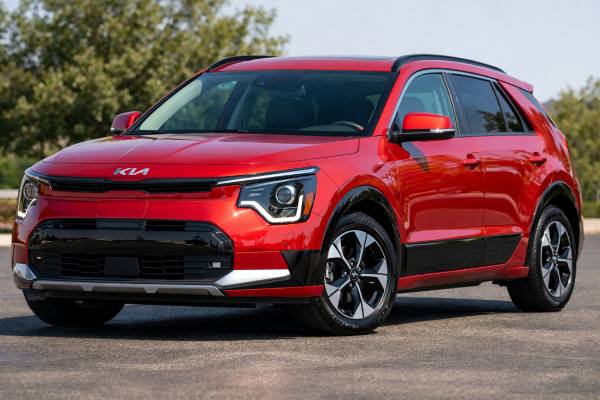
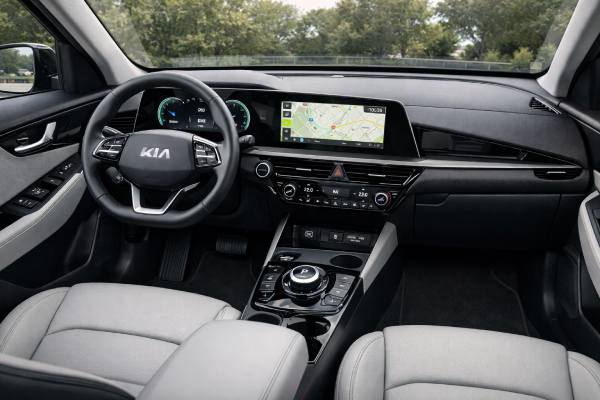
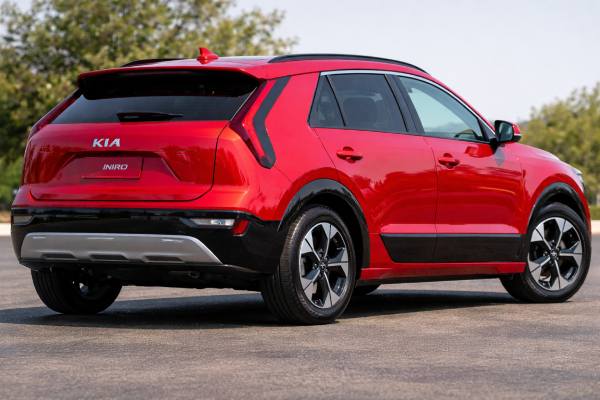
The second-generation Kia Niro EV (SG2, 2022–present) is built for people who want an everyday electric crossover without giving up practicality. Its single front-mounted permanent-magnet motor delivers a strong, smooth step-off in city driving, while the larger battery pack (compared with many older compact EVs) supports realistic mixed-use range when you manage speed and HVAC. The Niro EV’s packaging is also a highlight: a tall roofline, a sensible cargo area, and easy entry make it a better “only car” than many low-slung EVs.
Ownership is mostly straightforward, but EVs reward a different maintenance mindset: brake hardware can corrode from light use, tyres wear faster from torque, and software updates matter more than many buyers expect. Get the fundamentals right—charging routine, tyre pressures, and service documentation—and the SG2 Niro EV is a calm, efficient long-term companion.
What to Know
- Strong low-speed response and predictable handling make it easy in dense city traffic.
- Practical cabin packaging: good entry height, usable rear space, and sensible cargo shape.
- Efficient at moderate speeds; range drops quickly above ~120 km/h (75 mph).
- Plan for tyre wear and occasional brake cleaning if you mainly do short trips.
- Rotate tyres about every 10,000–12,000 km (6,000–7,500 mi) to keep wear even.
Jump to sections
- Niro EV SG2 ownership profile
- Niro EV SG2 key specs and dimensions
- Niro EV SG2 trims, safety and ADAS
- Reliability patterns and known faults
- Maintenance plan and buyer advice
- Range, charging and driving feel
- How it stacks up to rivals
Niro EV SG2 ownership profile
The SG2 Niro EV is best understood as a “normal car” EV: easy visibility, a familiar driving position, and controls that do not force you into a tech-only workflow. Most owners choose it for three reasons: (1) predictable everyday range, (2) crossover practicality in a compact footprint, and (3) a calm ride that suits commuting more than canyon carving.
Power delivery and drivability. With a single front motor, the Niro EV feels quick off the line but not edgy. It does not need multi-motor complexity to be satisfying in city use. Traction control is tuned for daily surfaces; you will still feel front-tyre limitation if you floor it on cold or wet pavement, but the behaviour is stable and easy to manage.
Packaging advantages. The cabin’s height and floor design make it family-friendly. You can fit child seats without contortions, and the cargo opening is shaped for real objects (strollers, weekly shopping, carry-on bags). The “small crossover” stance is also an ergonomic win for older passengers or anyone tired of climbing down into low sedans.
Where ownership differs from an ICE car.
- You will care more about charging access than “fuel economy.” A reliable home AC setup is the difference between loving the car and tolerating it.
- Tyres become a meaningful running cost. EV torque and weight can scrub the shoulders if pressures are low or alignment is slightly off.
- Brakes can rust or glaze if you rely heavily on regeneration. Periodic friction-brake use keeps the system healthy.
Who it suits best. If your driving is mostly urban/suburban with occasional highway legs, the SG2 Niro EV is a comfortable fit. If you do frequent long motorway runs at high speed, you can still make it work—but you should expect more charging stops and a higher sensitivity to temperature, wind, and speed than in slower mixed driving.
Niro EV SG2 key specs and dimensions
Specs can vary slightly by market, wheel size, and equipment. The tables below focus on the common SG2 Niro EV configuration with the 201 hp (150 kW) front motor and the larger battery pack.
Powertrain and efficiency (EV)
| Item | Specification |
|---|---|
| Powertrain code | SG2 Niro EV (market-dependent internal codes) |
| Motor type | Permanent-magnet synchronous motor (PMSM) |
| Motor count and axle | Single motor, front axle |
| Max power | 201 hp (150 kW) |
| Max torque | ~255 Nm (188 lb-ft) |
| Drive type | FWD |
| Battery capacity | ~64.8 kWh (pack; usable varies by market/software) |
| System voltage | ~358 V (typical) |
| Battery chemistry | Lithium-ion (NMC-family in most markets) |
Charging (typical SG2 Niro EV)
| Item | Specification |
|---|---|
| AC onboard charger | Often 11 kW (3-phase) in many markets (check trim) |
| Home charge time (240 V) | Around 7–8 hours is typical for a full charge on Level 2 |
| DC fast charging | Commonly peaks around the ~70–85 kW class (temperature-dependent) |
| Typical fast-charge window | Best speeds from low state-of-charge; taper increases as the battery fills |
| Charge port | CCS in many regions (regional variations exist) |
Chassis and dimensions (typical)
| Item | Specification |
|---|---|
| Suspension (front/rear) | MacPherson strut / multi-link (typical for this class; verify by market) |
| Brakes | 4-wheel discs (sizes vary by trim/wheel) |
| Wheels and tyres (common) | 17–18 in packages depending on trim; larger wheels reduce range |
Performance (typical)
| Metric | Typical value |
|---|---|
| 0–100 km/h (0–62 mph) | ~7–8 seconds (trim/tyres/temperature dependent) |
| Top speed | ~160–170 km/h (100–106 mph) class |
| Towing | Often limited or modest; verify your VIN/market rating before planning trailers |
| Payload | Varies by trim; check door-jamb label for the exact car |
Fluids and service capacities (EV-focused)
| Item | Notes |
|---|---|
| Battery/drive unit coolant | Type and quantity vary; use the correct OEM-spec coolant only |
| Brake fluid | DOT class varies by market; typically replaced on time rather than mileage |
| A/C refrigerant | Exact charge depends on heat-pump vs non-heat-pump setup |
| Reduction gear fluid | Some markets specify inspection/replace intervals; use OEM-approved fluid |
If you want one takeaway: wheel size, speed, and HVAC use have more effect on day-to-day results than small spec-sheet differences between trims.
Niro EV SG2 trims, safety and ADAS
Trim names vary by region, but SG2 Niro EV lineups usually split into value-focused versions and tech/comfort versions. The important thing is not the badge—it’s the hardware that affects range, comfort, and repair cost.
Trims and options that matter
Wheel and tyre package. This is the biggest hidden lever. Larger wheels look better, but they usually add rolling resistance and aerodynamic drag. If maximum range matters, choose the smaller wheel package available in your market, then invest in good tyres with low rolling resistance and strong wet braking.
Heat pump and battery preconditioning (where offered). In colder climates, a heat pump can reduce winter energy use compared with pure resistive heating. Preconditioning (warming/cooling the battery before fast charging) can also protect charge speed in winter—without it, DC charging may be slower until the pack warms up.
Driver display and infotainment tier. Higher trims often add better navigation and additional cameras/sensors. This is not just comfort: some ADAS functions rely on camera/radar configurations that can be expensive to recalibrate after windscreen replacement or front-end repairs.
Safety ratings and structure
In many European markets, the SG2-generation Niro achieved a 5-star result under the relevant test protocol, with strong adult and child occupant performance and good vulnerable road user scoring (pedestrians/cyclists). Ratings can differ by model year and equipment, so treat the star score as a headline and check the detail for your exact version.
Safety systems and ADAS (typical availability)
Common systems you may find across the range:
- AEB (Automatic Emergency Braking): often with pedestrian and cyclist detection
- ACC (Adaptive Cruise Control): useful for steady motorway commuting
- LKA/LFA (Lane Keeping / Lane Following): can reduce fatigue but requires clean lane markings
- Blind-spot monitoring and rear cross-traffic alert: very helpful in urban parking
- Traffic sign recognition and intelligent speed assistance: market-dependent behaviour
Calibration implications after service. Any windscreen camera or front radar work can require calibration. If you are buying used, ask for documentation of any windscreen replacement, front bumper repair, or ADAS fault history. A “cheap” cosmetic repair can turn expensive if sensors were disturbed and not calibrated correctly.
Bottom line: pick your trim around wheel size + winter equipment + ADAS hardware, not around cosmetic features.
Reliability patterns and known faults
Modern EV reliability is less about oil leaks and more about electronics, thermal management, and software. The SG2 Niro EV is generally uncomplicated (single motor, no multi-speed gearbox), which helps. Still, it pays to know what tends to happen, when it happens, and how it is usually fixed.
Common (higher prevalence) issues
- 12 V battery weakness (low/medium cost).
Symptoms: random warning messages, car “wakes up” inconsistently, charging door/locks misbehave, occasional no-start.
Likely cause: EVs still rely on a 12 V battery to boot modules and close high-voltage contactors; frequent short trips and accessory use can stress it.
Remedy: battery test, check DC–DC charging behaviour, replace 12 V battery if marginal. - Charge-port door or latch misalignment (low/medium).
Symptoms: port door won’t open/close cleanly, charging interruption messages, physical sticking in cold weather.
Cause: actuator/latch wear, water ingress, or minor impact misalignment.
Remedy: adjustment or latch/actuator replacement; inspect seals. - Brake rust and uneven rear brake wear (low/medium).
Symptoms: scraping noise after rain, vibration under braking, uneven pad deposits.
Cause: regen reduces friction-brake use; moisture sits on rotors.
Remedy: periodic firm braking, cleaning service, pad/rotor replacement if corrosion is severe.
Occasional issues
- Thermal system sensors or valves (medium).
Symptoms: weak cabin heat, noisy coolant pumps, reduced fast-charge speed, HVAC error codes.
Cause: sensor drift, valve sticking, or coolant flow restriction.
Remedy: diagnostic scan, software updates, replace faulty sensor/valve/pump as needed. - Infotainment and ADAS glitches (low/medium).
Symptoms: camera dropouts, Bluetooth instability, false ADAS alerts.
Cause: software bugs, camera connector issues, calibration drift.
Remedy: module updates (dealer or OTA where supported) and calibration checks.
Rare but higher-impact risks
- High-voltage charging faults (medium/high).
Symptoms: DC charging fails to start, repeated “check EV system” warnings.
Cause: charge-control module issues, wiring faults, or contactor problems.
Remedy: dealer-level diagnostics; sometimes resolved by reflash, sometimes by component replacement.
Recalls, TSBs, and service actions
Recalls and service actions vary by country and model year. For any used SG2 Niro EV, verify completion using your region’s official VIN lookup and request dealer history. A completed campaign is often the difference between a problem-free car and repeated warning lights.
Maintenance plan and buyer advice
The SG2 Niro EV has fewer consumables than a combustion car, but it still needs a schedule. The goal is simple: keep the thermal system, brakes, and tyres healthy, and keep software current.
Practical maintenance schedule (typical guidance)
Every 10,000–12,000 km (6,000–7,500 mi) or 12 months
- Tyre rotation; check tread depth across the axle (inner shoulders matter)
- Inspect suspension joints and bushings (EV weight can accelerate wear)
- Brake inspection: pad thickness, slider lubrication, rotor condition
- Cabin air filter check (replace if airflow is reduced or smells musty)
Every 2 years
- Brake fluid replacement (time-based, because fluid absorbs moisture)
- A/C performance check; inspect for condenser damage and leaks
Every 4–6 years (ownership-dependent)
- 12 V battery test annually after year 3; replace preventively if marginal
- Coolant service for battery/drive unit loops as specified for your market (do not “mix and match” coolant types)
As needed
- Alignment: if you see inner-edge wear, steering off-centre, or the car pulls
- Wiper blades and washer fluid (small items, big visibility payoff)
Fluids, specifications, and torque values (decision-useful)
Because exact specs can vary by VIN and market, use these principles:
- Only use OEM-approved coolant for the EV thermal loops; incorrect chemistry can attack seals or reduce corrosion protection.
- Brake fluid should meet the specified DOT class in your owner documentation.
- Wheel fasteners should be torqued to the spec for your wheels/hubs (commonly in the ~90–120 Nm class on many passenger cars, but verify for your exact vehicle).
Buyer’s guide (used and nearly-new)
Paperwork to request
- Full service record (even if services were “minor”)
- Proof of recall/service action completion
- Documentation of windscreen replacement or front-end repairs (ADAS calibration)
Inspection checklist
- Tyres: brand match, even wear, and remaining tread (EVs can chew tyres if alignment is off)
- Brakes: surface rust is normal; heavy scaling and deep lips suggest neglect
- Charging: test AC and DC if possible; confirm the port locks and releases correctly
- Thermal system: verify cabin heat and A/C work strongly (weak heat can signal heat-pump or valve issues)
- 12 V behaviour: look for erratic warning messages or slow boot-up
Which versions to seek
- If you drive long distances: prioritise smaller wheels (better efficiency) and the best fast-charging support available in your market.
- If you live in cold climates: look for heat pump and battery/charging temperature management features.
Range, charging and driving feel
The SG2 Niro EV is tuned for comfort and confidence rather than sporty sharpness, and that suits its mission. Steering is light-to-medium, the chassis feels stable, and the car’s mass is well managed in normal driving. You will notice weight if you push hard into tight bends, but daily handling is predictable and calm.
Powertrain character and regen feel
The motor’s response is immediate at low speeds, making gaps easy to take and roundabouts less stressful. Regenerative braking is typically adjustable (by paddles or drive-mode settings in many markets). A useful habit is to choose a regen level that lets you slow smoothly without constant pedal corrections. For slippery winter roads, a slightly lower regen setting can feel more natural and reduce abrupt deceleration if traction is limited.
Real-world efficiency and range
Range is less about the brochure number and more about your speed profile:
- City and suburban: usually the best case. Frequent decel events allow regen to recover energy, and speeds are aerodynamically gentle.
- Motorway at 100–120 km/h (60–75 mph): consumption rises sharply with speed. Headwinds and cold temperatures can compound the loss.
- Winter driving: expect a noticeable reduction, especially on short trips where the cabin needs repeated heating.
A practical driver strategy is to treat the last 15–20% state of charge as a buffer, not a plan. That buffer protects you from detours, cold snaps, and busy chargers.
Charging performance in real life
For home use, a 240 V Level 2 setup typically replenishes the battery overnight, which is how most owners keep the experience effortless. On road trips, DC fast charging is best approached as a sequence of shorter stops: arrive low, charge into the efficient window, then drive again. Charging speed depends heavily on battery temperature; preconditioning (if equipped) can make a bigger difference than many first-time EV owners expect.
NVH, ride, and braking
Cabin noise is generally low around town; at highway speeds, tyre noise becomes the main soundtrack. The ride is comfortable, but wheel size matters—larger wheels tend to add impact harshness. Braking feel can be slightly “blended” because the car mixes regen and friction braking; it is normal, but it rewards smooth inputs.
How it stacks up to rivals
The SG2 Niro EV competes in a crowded space: compact electric crossovers that promise “one-car” practicality. Here’s how it usually compares, focusing on real ownership trade-offs rather than marketing.
Versus Hyundai Kona Electric
The Kona Electric often feels a touch more efficiency-focused, while the Niro EV typically wins on interior packaging and everyday comfort. If you value rear-seat space and a calmer ride, the Niro is a strong pick. If you value a smaller footprint and a slightly more agile feel, Kona may appeal more.
Versus MG ZS EV and value-brand options
Value competitors can undercut pricing and still deliver usable range. The Niro EV’s advantage tends to be refinement, driver-assistance maturity, and a more “finished” cabin experience. If you do high mileage, those comfort details matter. If you drive mostly local trips and want the lowest entry cost, value rivals can make sense—just budget carefully for tyres and check charging behaviour in your climate.
Versus Peugeot e-2008 and other style-first crossovers
Some rivals prioritise design flair. The Niro EV is less about dramatic styling and more about usable space and straightforward controls. For owners who keep cars a long time, that ergonomic simplicity can age well.
Versus VW ID.3 / ID.4 class alternatives
Depending on your market, Volkswagen-group EVs may offer different charging curves, interior philosophies, and platform maturity. The Niro’s key advantage is that it remains familiar and easy to live with, especially for drivers transitioning from hybrid or ICE vehicles. If you want a more “EV-native” cabin concept, the VW approach may appeal—if you want a conventional, practical layout, the Niro often feels more intuitive.
The simple verdict
Choose the SG2 Niro EV if you want:
- a practical, comfortable daily EV,
- sensible controls and visibility,
- and an ownership experience that stays low-drama with routine tyre/brake attention.
If your priority is maximum fast-charging performance or frequent high-speed road trips, consider rivals known for stronger charging curves and highway efficiency—but be ready to trade some of the Niro’s straightforward practicality.
References
- Kia Niro 2022 (Safety Rating)
- 2023 Kia Niro Electric 2023 (Official Efficiency Data)
- Rescue sheets 2024 (Emergency Information)
Disclaimer
This article is for informational purposes only and is not a substitute for professional diagnosis, inspection, or repair. Specifications, torque values, service intervals, and procedures can vary by VIN, market, software version, and installed equipment. Always confirm details using your vehicle’s official service documentation and recall/VIN records.
If this guide helped, please consider sharing it on Facebook, X (Twitter), or your favourite forum to support our work.