
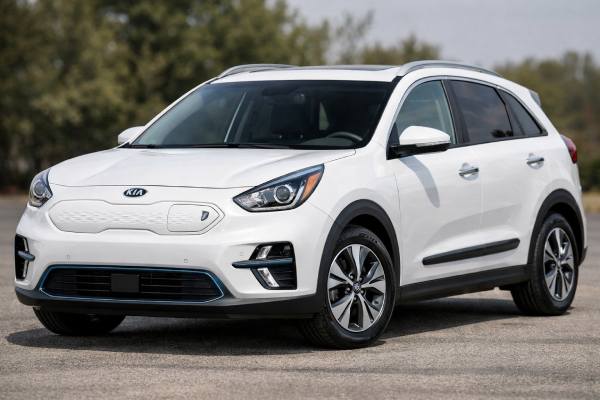
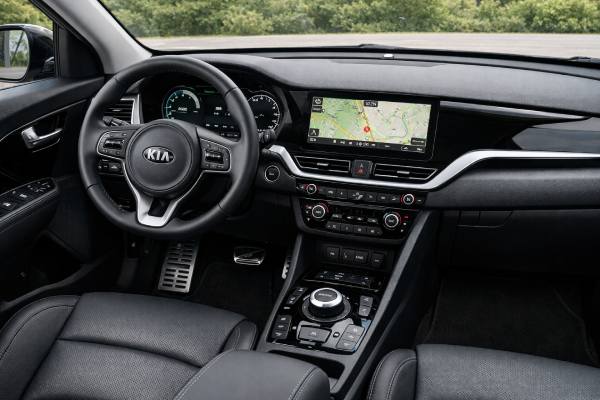
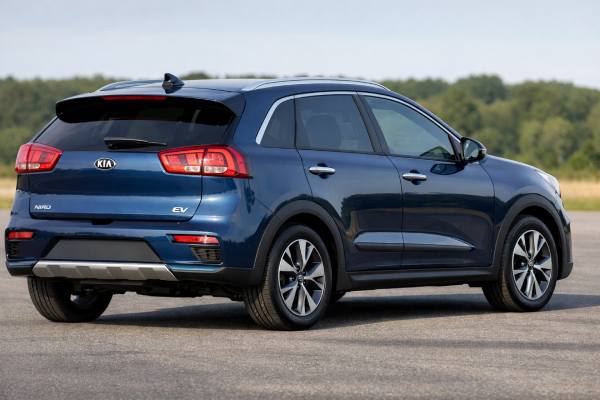
The facelift Kia Niro EV (DE) with the 150 kW (201 hp) permanent-magnet motor is the “sweet spot” of the first-generation Niro electric lineup: strong everyday torque, a genuinely usable long-range battery, and a driving position that still feels like a practical crossover rather than a low-slung EV. For owners, the big story is how well the car balances efficiency with comfort. The battery sits low in the floor, so the Niro feels stable in crosswinds, and the cabin is quiet enough at motorway speeds that you notice tire choice more than powertrain noise.
This version also benefits from improved infotainment and driver assistance availability versus early cars, while keeping the simpler, proven single-motor front-wheel-drive layout. If you want an EV that behaves like a normal family car—easy to park, easy to charge at home, and predictable to maintain—this Niro EV is one of the more sensible choices in its era.
Quick Specs and Notes
- Strong mid-range pull makes overtakes easy without “Sport mode” drama.
- Long-range battery works well for mixed driving and weekend trips with one fast-charge stop.
- Heat-pump and battery-heating equipment matter in winter—verify what your car has.
- Plan tire rotations every 10,000–12,000 km to keep road noise and wear even.
- Expect brake hardware to need cleaning/lubrication checks if you rely heavily on regen.
What’s inside
- Kia Niro EV 201 hp overview
- Kia Niro EV 201 hp specifications
- Kia Niro EV trims and ADAS
- Common faults and recalls
- Maintenance plan and buying tips
- Range, charging, and performance
- Niro EV 201 hp vs competitors
Kia Niro EV 201 hp overview
Think of this facelift Niro EV as a “conventional car that happens to be electric.” The seating is upright, visibility is good, and the hatchback-crossover shape makes it easy to load. Underneath, the engineering priorities are clear: keep the drivetrain simple, keep the battery thermally managed, and tune the chassis for calm stability rather than sharp sportiness.
The 150 kW PMSM motor is the main differentiator versus the lower-power version. It doesn’t just improve the 0–100 km/h number; it changes how the car feels from 30–110 km/h, where most real passing happens. Step into the throttle at city speeds and you get a strong, linear surge—then it continues pulling on the motorway without the “running out of breath” feeling many early EVs had. Because it’s front-wheel drive, full-throttle launches can spin the tires on cold or wet surfaces, but the traction control usually catches it quickly and smoothly.
The battery placement gives the Niro EV a planted feel. Body roll is controlled, and the car tracks confidently on uneven highways. The tradeoff is ride firmness on sharp edges—especially on larger wheels with lower-profile tires. In this generation, tires and alignment matter more than many owners expect: a quiet tire can make the car feel premium, while an aggressive tread can dominate the cabin at 100–120 km/h.
Ownership traits you’ll appreciate:
- Straightforward home charging: plug in overnight and start each morning “full enough.”
- Predictable regen behavior: easy to adapt to, and gentle on brake wear—if the brakes still get periodic friction use.
- No complicated AWD hardware: fewer moving parts, less weight, fewer expensive failure paths.
Where it demands a little more attention is in equipment verification. A facelift Niro EV can be optioned very differently depending on market and trim—heat pump, battery heater, adaptive cruise, and headlight type all change the daily experience. If you shop carefully, you can end up with a quietly capable family EV that feels “complete” rather than “early adopter.”
Kia Niro EV 201 hp specifications
Powertrain, battery, and efficiency
| Spec | Value |
|---|---|
| Motor type | PMSM |
| Motor count and axle | Single motor, front axle |
| Max power | 201 hp (150 kW) |
| Max torque | 395 Nm (291 lb-ft) |
| Drive type | FWD |
| Transmission | Single-speed reduction gear |
| Battery chemistry | NMC (lithium-ion) |
| Battery capacity (gross) | 64.8 kWh |
| Battery thermal management | Liquid-cooled and heated |
| Heat pump | Available (trim/pack dependent) |
| Official range standard | WLTP |
| Rated range (WLTP) | 455 km (283 mi) |
| Real-world highway @ 120 km/h | 22.0 kWh/100 km (354 Wh/mi) |
| Real-world highway range @ 120 km/h | 295 km (183 mi) |
Charging hardware and times
| Spec | Value |
|---|---|
| Charging connector (AC) | Type 2 |
| Charging connector (DC) | CCS2 |
| Charging port location | Front-left (driver-side for LHD) |
| Onboard charger (AC) | 11 kW |
| DC fast-charge peak | 77 kW |
| DC 10–80% | 44 min |
| AC 0–100% | 6:15 (11 kW) |
Performance and capability
| Spec | Value |
|---|---|
| 0–100 km/h (0–62 mph) | 7.8 s |
| Top speed | 167 km/h (104 mph) |
Chassis and dimensions
| Spec | Value |
|---|---|
| Suspension (front) | MacPherson strut |
| Suspension (rear) | Multi-link |
| Length | 4,375 mm (172.2 in) |
| Width | 1,805 mm (71.1 in) |
| Height | 1,560 mm (61.4 in) |
| Wheelbase | 2,700 mm (106.3 in) |
| Turning circle (kerb-to-kerb) | 10.6 m (34.8 ft) |
| Ground clearance | 160 mm (6.3 in) |
| Wheel and tire (common) | 215/55 R17 |
Safety ratings and driver assistance
| Spec | Value |
|---|---|
| Crash rating | 5 stars |
| Adult occupant | 91% |
| Child occupant | 80% |
| Vulnerable road users | 70% |
| Safety assist | 81% |
| ADAS highlights | AEB, ACC, lane support, blind-spot and rear cross-traffic (trim dependent) |
Kia Niro EV trims and ADAS
Because trims vary by country, the most useful way to think about the facelift Niro EV is as a “feature stack” rather than a single fixed spec. The drivetrain is broadly consistent (single front motor, long-range battery), but comfort, winter usability, and safety tech depend heavily on how the car was ordered.
Trims and options that actually change ownership
Heat pump and battery heating
- In mild climates, you can live without a heat pump. In cold climates, it can be the difference between “range drops a bit” and “range drops a lot.”
- Battery heating matters for both winter efficiency and fast-charge consistency. Without it, the car may charge slower when the pack is cold.
Headlights
- Some versions use LED headlights with better night visibility and lower draw. Others use halogen or simpler LED setups. If you drive rural roads often, this is worth verifying with a night test drive.
Infotainment and connectivity
- Facelift cars generally improved screen response and smartphone integration availability. For daily living, the practical value is not entertainment—it’s how easily you can manage charging schedules, preheat the cabin, and keep navigation stable.
Wheel and tire packages
- 17-inch setups often balance grip and comfort well. Larger wheels can look better but usually cost range and add road noise. If you’re range-sensitive, prioritize the more efficient wheel/tire package.
How to identify equipment quickly when shopping used
- Heat pump: look for “heat pump” or “eco heat” references in the vehicle menu and for additional HVAC plumbing under the hood.
- Adaptive cruise control (ACC): check steering wheel buttons for distance-setting and cruise mode controls.
- Blind-spot monitoring: look for mirror icons and confirm the warning lights activate in a test.
- Charging capability: confirm AC acceptance and DC fast-charging works by checking the car’s charge screen and, ideally, a short public charge session.
Safety ratings and what they mean in practice
This generation earned a strong 5-star crash rating under its test protocol. That matters, but your real-world safety experience also depends on:
- Whether AEB is installed and activated.
- Whether the car has lane centering/lane keep and how it behaves on your local roads.
- Calibration health after windshield replacement or front-end repairs (cameras and radar alignment are not “optional”).
A good rule for used buyers: treat ADAS like a system, not a checkbox. If it’s present, you want it working correctly—because intermittent warnings and disabled features can become a daily annoyance and a diagnostic expense.
Common faults and recalls
The facelift Niro EV is generally durable, but it’s still an early mass-market EV with multiple high-voltage subsystems that depend on software and good sealing. The smartest reliability mindset is to separate “annoying but cheap” from “rare but expensive,” then shop and maintain accordingly.
Common (higher frequency, usually low–medium cost)
12 V battery weakness
- Symptoms: no-start, random warning lights, infotainment reboot loops, charging session failures.
- Likely cause: aging 12 V battery, frequent short trips with heavy accessory use, or a parasitic draw pattern.
- Remedy: test 12 V battery condition, replace proactively, and confirm DC–DC charging behavior.
Brake corrosion and noise
- Symptoms: grinding after rain, uneven braking feel, rear brakes doing little work.
- Likely cause: heavy regen reduces friction brake use; moisture and road salt sit on rotors.
- Remedy: periodic “brake exercise” (firm stops), annual brake hardware cleaning/lubrication in salty climates.
Tire wear and alignment sensitivity
- Symptoms: cupping, humming at speed, steering pull.
- Likely cause: torque and weight plus alignment drift; some tire models are noisy on EVs.
- Remedy: rotate on schedule, align if wear starts, choose EV-friendly tires.
Occasional (medium cost, can be inconvenient)
Charge port latch or flap issues
- Symptoms: connector not locking, charging stops, water ingress concerns.
- Likely cause: wear, contamination, or misalignment.
- Remedy: inspect seals and latch operation; replace worn hardware.
Onboard charger (OBC) or charge-control faults
- Symptoms: reduced AC charging rate, intermittent AC charging, fault messages.
- Likely cause: internal OBC failure or connector/cooling issues.
- Remedy: diagnostic scan, wiring inspection, module repair/replacement as required.
HV coolant loop concerns
- Symptoms: coolant warnings, poor heating performance, charging throttles unexpectedly.
- Likely cause: coolant level issues, trapped air after service, or component wear.
- Remedy: proper bleeding procedure and correct coolant type; inspect pumps and valves.
Rare (higher cost, shop carefully)
Drive unit or reduction gear noise
- Symptoms: rising whine with speed, clunks on load changes.
- Likely cause: bearing wear or gear wear (uncommon but expensive).
- Remedy: confirm noise source early; address under warranty when possible.
HV isolation or moisture-related faults
- Symptoms: high-voltage warning, limited power, charging disabled.
- Likely cause: moisture ingress or insulation deterioration in HV components.
- Remedy: insulation testing and targeted component repair.
Service actions, software, and recall hygiene
Software updates can materially change charging behavior, warning logic, and thermal strategy. When you buy used, ask for:
- Dealer printout of completed campaigns/updates
- Evidence of any charge-system or coolant-loop repairs
- A battery health report or at least a recent range/consumption history that makes sense
Finally, don’t treat recalls as a one-time checkbox. Confirm completion in writing and re-check by VIN during ownership—especially if the car changes countries or service networks.
Maintenance plan and buying tips
An EV maintenance plan is mostly about inspection discipline and keeping the supporting systems healthy—tires, brakes, coolant loops, and the 12 V battery. The Niro EV doesn’t ask for much, but skipping the basics can make it feel unreliable when it’s really just neglected.
Practical maintenance schedule (normal use)
- Every 10,000–12,000 km or 12 months
- Tire rotation and pressure check
- Brake inspection (pads, slide pins, rotor surface condition)
- Suspension and steering inspection (bushings, ball joints, alignment indicators)
- Cabin air filter check (replace if airflow drops or smells develop)
- Every 20,000–30,000 km or 24 months
- Cabin air filter replacement (typical interval for many drivers)
- Brake fluid test; replace if moisture is high (time can matter more than distance)
- Every 3–5 years (depending on climate and use)
- Coolant system inspection with attention to level stability and correct type
- A/C performance check (important for defogging and heat-pump cars)
- Underbody inspection (fasteners, covers, corrosion hotspots)
- 12 V battery
- Test yearly after year 3; many owners replace around 4–6 years preventively, especially in cold climates.
Severe-use adjustments (do these if they apply)
If you do frequent DC fast charging, live in extreme cold/heat, drive dusty roads, or do lots of short trips:
- Shorten tire rotation intervals (torque + weight eats shoulders fast)
- Increase brake cleaning frequency (winter salt is brutal)
- Pay more attention to charging consistency and thermal performance
Buyer’s guide: what to check before you commit
Traction battery health
- Look for stable, predictable range estimates rather than a single “best case” number.
- Do a highway test: at 110–120 km/h, consumption should be believable and steady. Wild swings can indicate tire issues, headwinds, or thermal problems.
- If possible, review charging logs: a healthy car should fast-charge consistently when the pack is warm and the stall is capable.
Charging hardware
- Inspect the charge port for cracked plastic, broken pins, or a weak locking feel.
- Confirm AC charging reaches expected kW and doesn’t error after 10–20 minutes.
- If you can, do a short DC charge to confirm handshake and stable power.
Cooling and HVAC
- Run the heater and A/C; confirm the cabin reaches temperature quickly.
- If equipped, confirm heat-pump behavior in mild cold (it should be efficient and smooth).
Chassis and body
- Check front suspension and rear bushings for knocks.
- Inspect underbody covers; EVs rely on aero panels for efficiency and protection.
- Look for corrosion on brake lines, subframes, and fasteners if the car lived in salted regions.
Which versions to seek
- For colder climates: prioritize heat pump + battery heating.
- For highway commuters: prioritize the quieter wheel/tire setup and adaptive cruise.
Long-term outlook: with routine inspections and clean charging history, this Niro EV can be a steady long-haul ownership car, with the main “big ticket” risks concentrated in charge hardware, rare drive unit issues, and neglect of the 12 V/battery-thermal ecosystem.
Range, charging, and performance
This 201 hp Niro EV is at its best when you drive it like a normal car—smooth inputs, steady speeds—and let the drivetrain do what EVs do well: efficient torque without gear hunting. The performance is quick enough to feel modern even today, but the more impressive part is how calm and usable it is across conditions.
Ride, handling, and NVH
The low battery mass stabilizes the body, so the Niro doesn’t feel top-heavy. On the motorway it tracks well, and in corners it stays predictable. Steering is light and tuned for ease rather than feedback, but it’s accurate. NVH is generally good; what owners notice most is:
- Tire roar on coarse asphalt
- Wind noise around mirrors at higher speeds
- A mild electric whine that’s usually normal and speed-dependent
A good tire choice can transform the cabin. If you’re shopping used and the car feels noisy, don’t assume “that’s just how it is”—it may be the tire model or uneven wear.
Powertrain character and regen
The motor delivers immediate response, with strong pull from low speeds and a smooth build rather than a sudden “kick.” Regen is easy to live with, and many drivers adapt quickly to one-pedal style driving in town. Two practical tips:
- Use regen proactively, but apply the friction brakes regularly to keep the hardware clean.
- In slippery conditions, be gentle with throttle at low speeds—front tires do both steering and traction.
Real-world efficiency and range
Official range numbers are best treated as a “best case.” Your real range depends on speed and temperature:
- City use: often the most efficient scenario thanks to regen and lower aerodynamic drag.
- Motorway at 110–120 km/h: consumption climbs noticeably; expect your usable range to compress.
- Cold weather: cabin heat and a cold pack can reduce range; heat-pump cars usually do better.
If you plan trips, a realistic strategy is to charge to a comfortable state of charge for daily use (often 70–90%), then go to 100% only when you need the full buffer for a longer drive.
Charging behavior in everyday life
Home AC charging is where the Niro EV feels easiest. With an 11 kW capable setup, overnight charging covers typical daily distances comfortably. On DC fast charging, the car’s peak power is modest by newer standards, but it’s predictable. The key is starting state of charge and pack temperature:
- Starting at 10–20% generally produces the best session.
- Expect tapering as the battery fills; charging slows near higher SOC to protect the pack.
- In cold conditions, charging can be slower unless the car can warm the battery effectively.
Overall, this Niro EV is less about headline charging speed and more about “it charges reliably enough that you stop thinking about it,” especially if most of your energy comes from home.
Niro EV 201 hp vs competitors
The facelift Niro EV sits in a competitive sweet spot: it’s a practical crossover with a long-range battery, but it doesn’t chase extreme performance or ultra-fast charging. How it compares depends on what you value most.
Versus Hyundai Kona Electric
The Kona Electric is closely related in EV hardware philosophy and often feels a bit more “eager” in steering and response. The Niro typically counters with a more airy cabin and a more family-friendly packaging feel. If you want the more relaxed daily driver, the Niro often wins; if you want a smaller, slightly sportier vibe, Kona is compelling.
Versus Nissan Leaf
A comparable-era Leaf can be efficient and pleasant, but the Niro’s long-range battery and modern thermal approach tend to suit longer-distance drivers better. If your driving is mostly urban and you prioritize price, a Leaf can work; if you want fewer compromises on trip flexibility, the Niro is stronger.
Versus Volkswagen ID.3
The ID.3 is a newer-platform EV in many trims and can offer faster charging and more contemporary EV packaging. The Niro fights back with crossover practicality, a familiar control layout, and often a simpler ownership learning curve. If you want “EV-first” design, ID.3 fits; if you want “normal car, but electric,” Niro fits.
Versus Kia Soul EV (similar era)
The Soul EV can be charming and practical, but the Niro’s long-range battery and facelift-era feature set generally make it the more versatile one-car solution.
Bottom line
Choose the Niro EV 201 hp facelift if you want:
- A stable, family-friendly EV with strong real-world usability
- Good long-range battery behavior without complex driveline hardware
- A cabin and driving position that feels familiar, not experimental
Look elsewhere if you need:
- Very fast DC charging as a priority
- AWD traction for frequent snow use (this generation is FWD)
References
- e-niro-specification.pdf 2021 (Specification Sheet)
- Car Safety Recalls | What They Are & What To Do | Kia UK 2026 (Recall Guidance)
- Compare Side-by-Side 2020 (Official Efficiency Database)
- Euro NCAP | Search results 2016 (Safety Rating Index)
Disclaimer
This article is for informational purposes only and is not a substitute for professional diagnosis, repair, or official service guidance. Specifications, torque values, service intervals, software campaigns, and procedures can vary by VIN, market, model year, and equipment; always verify details using the vehicle’s official owner and service documentation and confirm recall status through authorized channels.
If you found this guide useful, please consider sharing it on Facebook, X (Twitter), or your favorite forum to support our work.