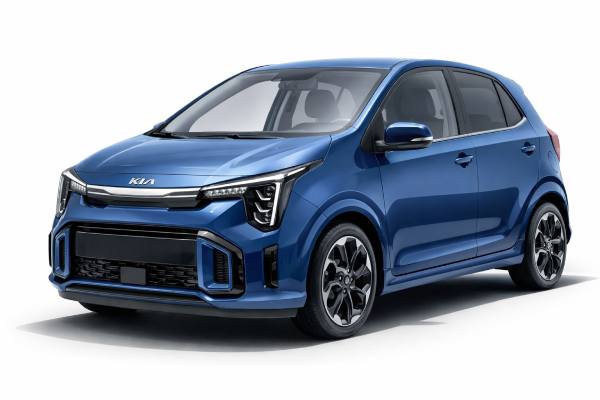


The facelifted 2024–present Kia Picanto (JA) with the G3LD 1.0-liter engine is built around one clear goal: dependable, low-cost urban transport that still feels modern behind the wheel. This version pairs a naturally aspirated three-cylinder with simple hardware, light weight, and compact dimensions that make parking and tight streets easy. The trade-off is modest power—so gearing, tire choice, and load have an outsized effect on how energetic it feels.
Where this Picanto tends to shine is ownership: predictable fuel use in mixed driving, straightforward service needs, and a parts ecosystem shared with related small Kia and Hyundai models. The 2024 facelift also brings a more up-to-date safety and infotainment story on many trims, which matters if you plan to keep the car for years or use it as a city commuter.
What to Know
- The 1.0 G3LD is a simple, naturally aspirated three-cylinder that favors low running costs over fast acceleration.
- Compact size and tight turning circle make it easy to live with in dense cities and narrow parking spaces.
- Many trims now bundle more driver-assistance features than older Picantos, improving daily safety.
- If equipped with the automated manual (AMT), clutch and calibration quality matter more than on a conventional automatic.
- Plan oil and filter service about every 12 months or 15,000 km (whichever comes first), sooner for frequent short trips.
Start here
- Kia Picanto JA 2024 facelift essentials
- Kia Picanto JA 1.0 specs table
- Kia Picanto JA trims and ADAS
- Common problems, recalls, and fixes
- Maintenance plan and buying advice
- Real-world driving and fuel use
- How it stacks up against rivals
Kia Picanto JA 2024 facelift essentials
This 2024–present facelift is still the same basic Picanto (JA) underneath: a light, front-wheel-drive city car with a simple suspension layout (front struts, rear torsion beam) and an engine designed for efficiency and durability rather than performance. The key difference with the facelift is how “finished” the car can feel, depending on trim: exterior lighting updates, refreshed interior screens on higher grades, and broader availability of driver-assistance features can move it from “basic runabout” to “small car you can happily keep.”
The G3LD 1.0 is a naturally aspirated 998 cc three-cylinder. In real ownership terms, that means:
- Best use case: stop-and-go commuting, school runs, errands, and short highway hops.
- Driving style: it likes revs when you need to merge or overtake, but it’s calm and economical when you keep a steady throttle.
- Load sensitivity: two adults and luggage will feel noticeably slower than a lightly loaded car. Tire choice and alignment also have a bigger impact than you might expect.
A helpful way to think about this powertrain is “low stress.” There’s no turbocharger, no high-pressure direct injection hardware on many markets’ versions, and the cooling and lubrication demands are generally forgiving if you keep up with oil changes. That said, modern emissions calibration can make short-trip usage harder on any small engine. If your driving is mostly cold starts and very short hops, treat oil changes as a “cheap insurance” item and shorten intervals.
On the transmission side, many markets pair this engine with a 5-speed manual, while some offer an AMT (automated manual) that shifts a manual gearbox for you using actuators. The AMT can be convenient in traffic, but it behaves differently from a conventional torque-converter automatic: low-speed creep, clutch take-up smoothness, and hill starts depend heavily on calibration and clutch condition.
In terms of day-to-day practicality, the Picanto remains a standout for:
- City maneuverability: compact footprint and easy parking.
- Running costs: modest fuel consumption and generally affordable consumables (tires, brakes).
- Usable packaging: a “small outside, decent inside” layout for two adults up front and occasional rear passengers.
If you want the simplest long-term experience, prioritize a well-maintained manual car with a complete service record. If you want maximum convenience, an AMT can work well—just test it carefully and confirm it’s been serviced and updated where applicable.
Kia Picanto JA 1.0 specs table
Below are commonly published specifications for the facelift-era Picanto (JA) with the 1.0 G3LD 63 hp engine. Exact values can vary by market, trim, wheel size, and emissions certification version, so treat this as a practical reference for comparisons and ownership planning.
Powertrain and efficiency
| Item | Specification |
|---|---|
| Code | G3LD |
| Engine layout and cylinders | Inline-3, DOHC, 12 valves (4 valves/cyl) |
| Bore × stroke | 71.0 × 84.0 mm (2.80 × 3.31 in) |
| Displacement | 1.0 L (998 cc) |
| Induction | Naturally aspirated (NA) |
| Fuel system | Port injection (market dependent) |
| Compression ratio | ~11.0:1 |
| Max power | 63 hp (46 kW) @ 5,000 rpm |
| Max torque | ~93 Nm (69 lb-ft) @ 3,750 rpm |
| Timing drive | Chain (typical for this family) |
| Rated efficiency (WLTP, typical) | ~5.1–5.5 L/100 km (46–43 mpg US / 55–51 mpg UK) |
| Real-world highway @ 120 km/h (75 mph) | Often ~6.0–6.8 L/100 km (39–35 mpg US / 47–42 mpg UK), depending on load, wind, and tires |
Transmission and driveline
| Item | Specification |
|---|---|
| Transmission | 5-speed manual (common); 5-speed AMT in some markets |
| Drive type | FWD |
| Differential | Open |
Chassis and dimensions
| Item | Specification |
|---|---|
| Suspension (front/rear) | MacPherson strut / torsion beam |
| Steering | Electric power steering (EPS) |
| Brakes (front) | Ventilated discs ~256 mm (10.1 in) |
| Brakes (rear) | Drums on many trims; rear discs on some higher trims (market/trim dependent) |
| Wheels/tyres (common) | 175/65 R14 (rim 14 in); larger trims may use 15–16 in |
| Ground clearance | ~141 mm (5.6 in) |
| Length / width / height | ~3,605 / 1,595 / 1,485 mm (142.0 / 62.8 / 58.5 in) |
| Wheelbase | ~2,400 mm (94.5 in) |
| Turning circle (kerb-to-kerb) | ~9.6 m (31.5 ft) |
| Kerb (curb) weight | ~910–1,010 kg (2,006–2,227 lb), varies by trim/transmission |
| Fuel tank | ~35 L (9.2 US gal / 7.7 UK gal) |
| Cargo volume | ~255 L (9.0 ft³) seats up; ~1,010 L (35.7 ft³) seats down (method varies by standard) |
Performance and capability
| Item | Specification |
|---|---|
| 0–100 km/h (0–62 mph) | ~15.6 s (manual); ~18.2 s (AMT) |
| Top speed | ~145 km/h (90 mph) |
| Braking distance (typical class expectation) | Often ~38–42 m from 100–0 km/h depending on tires and test method |
| Towing capacity | Often not rated or very limited in many markets (check local homologation) |
| Payload | Trim dependent; commonly ~350–450 kg (772–992 lb) |
Fluids and service capacities (typical planning figures)
These are practical planning values used for maintenance discussions. Always verify the exact spec for your VIN and market.
| Item | Typical spec and note |
|---|---|
| Engine oil | 0W-20 or 5W-30 (market/climate dependent), API SP / ILSAC GF-6 commonly; capacity often ~3.1–3.5 L (3.3–3.7 US qt) with filter |
| Coolant | Ethylene-glycol long-life coolant; capacity often ~4–5 L (4.2–5.3 US qt) total system |
| Manual gearbox oil | Usually a GL-4 spec gear oil; capacity commonly ~1.6–2.0 L (1.7–2.1 US qt) |
| AMT gearbox oil | Typically same base gearbox oil as manual (because it is a manual gearbox), plus actuator system checks |
| A/C refrigerant | Often R-1234yf or R-134a depending on market/year; charge varies by system label |
| Key torque specs (decision-making) | Wheel nuts often ~90–110 Nm (66–81 lb-ft) depending on wheel/market; verify in service info |
Safety and driver assistance (availability varies by trim/market)
| Item | Notes |
|---|---|
| Crash ratings | Public ratings may reference earlier JA testing; verify what applies to your exact variant and safety pack |
| Core stability systems | ABS, ESC, traction control commonly standard |
| ADAS suite (where equipped) | AEB (car/pedestrian/cyclist depending on pack), lane keep assist, lane follow assist, driver attention warning, intelligent speed assist/limit info (market dependent) |
| Child-seat provisions | ISOFIX/LATCH typically present on outboard rear seats; confirm tether points for your market |
Kia Picanto JA trims and ADAS
Trim structure varies widely by region, but the facelift-era Picanto generally follows a familiar pattern: a value-focused base grade, a mid grade that adds comfort and tech, and an upper grade that bundles convenience features and more advanced safety equipment. Because this is a small, price-sensitive car, the trim you choose often matters more than on larger vehicles—especially for safety and daily comfort.
Trims and options: what usually changes
Even when the trim names differ, look for these functional differences:
- Wheels and tires: Base trims commonly run 14-inch wheels with taller sidewalls (good for ride comfort and pothole resistance). Higher trims may move to 15–16 inches, improving steering response but increasing tire cost and making ride firmness more noticeable.
- Rear brakes: Many markets keep rear drums on lower trims; some higher trims offer rear discs. Drums are not automatically “bad”—they can last a long time in city use—but discs can feel more consistent on repeated hard stops and are easier to inspect visually.
- Infotainment and cluster: Higher trims are more likely to get a larger touchscreen, better phone integration, a nicer camera setup, and sometimes a more modern instrument display.
- Convenience: Heated seats, automatic climate control, keyless entry/start, folding mirrors, and upgraded lighting tend to be packaged higher up.
Quick identifiers when shopping used
If you’re scanning listings or walking a lot, these cues help:
- Wheel size and tire profile often signals trim level (14-inch tends to be base; 15–16 inch tends to be higher).
- Front camera/radar area near the windshield or grille can indicate AEB and lane-support hardware (but always confirm by VIN/equipment list).
- Steering wheel buttons: more comprehensive button layouts often correlate with active safety and infotainment upgrades.
Safety ratings: read the fine print
You’ll often see sellers cite a star rating without context. Two points matter:
- Test year and protocol: A car tested years ago may score differently under today’s stricter protocols.
- Safety pack vs no pack: Some small cars have a base rating and a higher rating when equipped with an optional safety pack (AEB, lane support, speed assistance).
For buyers, the practical takeaway is simple: prioritize the car’s actual fitted safety equipment over a single headline star number. A facelift model with AEB and lane support can be meaningfully safer in real traffic than an earlier build without those features, even if the platform is similar.
ADAS and service implications
Driver-assistance is helpful, but it adds service considerations:
- Windshield replacements: If your car uses a camera behind the windshield, replacement glass must match the correct spec, and calibration may be required afterward.
- Front bumper repairs: AEB sensors and brackets can be sensitive to impact repairs. Misalignment can trigger warnings or reduce performance.
- Software updates: Some drivability and warning-light issues are fixed with updates rather than parts. If a used car has intermittent ADAS faults, ask a dealer to check for campaign updates and stored codes.
If you mainly drive in dense, unpredictable traffic, pick the trim that gives you AEB and lane support without compromise. In this class, those features are among the highest-value options you can buy.
Common problems, recalls, and fixes
The Picanto’s strength is that it is not complicated, but “simple” does not mean “problem-free.” Most issues that appear on this model tend to be small-car patterns: battery sensitivity, wear-and-tear items, and occasional sensor or calibration complaints. The best way to think about reliability is to separate annoyances from car-stopping failures—and then plan maintenance around the few areas that can get expensive if ignored.
Common (usually low cost)
- 12 V battery weakness (age/short trips):
Symptoms: slow cranking, random warning lights, infotainment resets.
Likely cause: frequent short trips don’t recharge fully; battery ages faster in heat or cold.
Remedy: test battery and charging system; replace battery proactively every ~4–6 years in harsh climates. - Brake noise or uneven wear (city use):
Symptoms: squeal, judder, rear brake imbalance.
Likely cause: light braking and moisture lead to surface corrosion; rear drums can glaze.
Remedy: periodic firm stops (when safe), clean/adjust rear brakes, replace pads/shoes as needed. - Interior rattles and trim squeaks:
Symptoms: buzzing on rough roads.
Likely cause: light materials, clip movement.
Remedy: re-seat trim clips, add felt tape in targeted areas.
Occasional (moderate cost)
- Coil pack or spark plug misfire (age/mileage dependent):
Symptoms: rough idle, flashing check-engine light, poor acceleration.
Likely cause: worn plugs, weak coil, moisture intrusion.
Remedy: replace plugs at interval; replace coil(s) if misfire follows a cylinder. - Oxygen sensor or EVAP faults:
Symptoms: check-engine light with emissions codes, sometimes no drivability change.
Likely cause: sensor aging, vapor system leaks.
Remedy: smoke test for leaks; replace sensor if confirmed.
Rare but higher-impact (watchlist)
- Cooling system leaks (age-related):
Symptoms: coolant smell, low level, overheating risk.
Likely cause: hose clamps, radiator seam seepage, water pump wear (varies).
Remedy: pressure test, repair early—overheating is what turns a small leak into a big bill. - AMT shift quality issues (if equipped):
Symptoms: shudder on take-off, harsh or delayed shifts, clutch smell, rollback on hills.
Likely cause: clutch wear, actuator calibration drift, software mismatch after battery replacement.
Remedy: clutch wear assessment, calibration/relearn procedure, update software where applicable; replace clutch if worn.
Recalls, TSBs, and service campaigns
Recall and campaign content changes by market, and campaigns can apply only to specific VIN ranges. The smart approach is consistent:
- Run a VIN recall check using an official portal and save the result.
- Ask for dealer history showing campaigns completed.
- Treat unresolved recalls as non-negotiable: have them completed before purchase or immediately after.
Pre-purchase checks to request
- Full service history with dates and mileage.
- Confirmation of campaign completion (recalls/software updates).
- Battery test report (especially if the car has lots of short-trip use).
- On AMT cars: a drive that includes hill starts, parking maneuvers, and stop-go traffic to evaluate clutch behavior.
With a careful buy and routine maintenance, the 1.0 Picanto is typically a “predictable ownership” car—exactly what most city-car buyers want.
Maintenance plan and buying advice
A small, naturally aspirated engine can last a long time if it gets clean oil, good filtration, and cooling system stability. The goal with this Picanto is not over-maintenance—it’s timely maintenance that prevents the few problems that can spoil the ownership experience.
Practical maintenance schedule (distance/time)
Use the manufacturer schedule for your market as the baseline. For planning, these intervals are commonly sensible:
- Engine oil and filter: every 15,000 km or 12 months, whichever comes first.
If your use is mostly short trips, cold starts, or heavy traffic, shorten to 7,500–10,000 km. - Engine air filter: inspect every service; replace around 30,000 km (sooner in dusty areas).
- Cabin air filter: replace every 15,000–30,000 km or annually if you have allergies or city pollution.
- Spark plugs: typically 60,000–100,000 km depending on plug type and market. If you notice rough idle or a drop in fuel economy, don’t stretch the interval.
- Coolant: long-life coolant often runs 5–10 years initially (market dependent). After the first change, many systems use shorter repeat intervals. If you buy used and can’t confirm coolant age, budgeting a coolant service is reasonable.
- Brake fluid: every 2 years is a solid rule for safety and pedal feel.
- Transmission oil (manual/AMT gearbox): some schedules call it “lifetime,” but for long-term smoothness, consider a change around 90,000–120,000 km, especially for hard city use. The AMT is still a manual gearbox at its core—clean oil helps it.
- Tire rotation and alignment: rotate every 10,000–12,000 km; check alignment if you see inner-edge wear or steering pull.
- 12 V battery: test annually after year three; many owners replace preventively around 4–6 years depending on climate.
Fluids, specs, and decision-making notes
- Oil viscosity: choose the viscosity listed for your climate and engine variant. Using the right specification matters more than chasing a “premium” brand.
- Brake components: in this class, tire quality often changes braking performance more than upgrading pads. If safety is your focus, prioritize good tires and correct pressures.
- AMT clutch behavior: treat harsh take-off shudder as a “buying decision” item. It can be calibration—or it can be clutch wear.
Buyer’s guide: what to inspect
Bring a flashlight and spend time on these areas:
- Service history consistency: gaps matter more than mileage in city cars.
- Cooling system condition: look for low coolant, dried residue, or a sweet smell after a test drive.
- Undercarriage and corrosion hotspots: check seams, subframe areas, and around suspension mounting points—especially in salty climates.
- Suspension wear: listen for clunks over bumps; inspect front strut mounts and rear beam bushings if possible.
- Electronics and ADAS warnings: confirm no persistent warning lights and test camera-based features if equipped.
- AMT-specific: smooth pull-away, predictable shifting, no persistent transmission warnings.
Best “value” configuration
For most buyers:
- Manual transmission + mid trim with AEB/lane support is the sweet spot for durability and safety.
- Choose wheel sizes that match your roads. If potholes are common, smaller wheels with taller tires are often the smarter long-term choice.
Overall durability outlook is strong when the car is serviced on time. The Picanto’s main enemies are neglected oil changes, weak batteries, and (on AMT cars) ignoring early clutch or calibration symptoms.
Real-world driving and fuel use
If you judge the Picanto by power figures alone, it can look underwhelming. In real driving, it depends heavily on where and how you drive. In cities, the light weight and short gearing can make it feel responsive at low speeds. On fast highways or steep grades, you’ll use more throttle and more revs—and planning overtakes becomes part of the routine.
Ride, handling, and NVH
- Ride: On 14-inch wheels, the car generally rides more comfortably than you’d expect, with decent compliance over broken pavement. Larger wheels can sharpen response but transmit more impact harshness.
- Handling: The chassis is predictable. It turns in neatly, and the rear torsion beam keeps costs down while still delivering stable behavior. It’s not a hot hatch, but it’s confidence-inspiring for everyday speeds.
- Steering: EPS steering is light and easy at parking speeds. At higher speeds, it’s typically stable rather than chatty—good for commuting, less satisfying for “feel” lovers.
- Braking: With quality tires and fresh brake fluid, pedal feel is usually consistent. Rear drums (if fitted) can be durable, but their feel may differ slightly from disc setups in repeated heavy use.
Powertrain character
The 1.0 NA three-cylinder has a clear personality:
- Low rpm: adequate for gentle starts, but it won’t surge forward without revs.
- Midrange: happiest around the torque peak—this is where it feels most usable in traffic.
- High rpm: it will rev to do the job, but noise rises and progress is steady rather than quick.
With a manual gearbox, you have direct control and can keep it in the power band when needed. With an AMT, expect:
- More pause between shifts.
- Less smoothness at very low speeds.
- Better results when you drive it with a “single smooth throttle” style rather than rapid pedal changes.
Real-world efficiency expectations
Your results will vary, but typical patterns look like this:
- City driving: often ~5.5–7.0 L/100 km (43–34 mpg US / 51–40 mpg UK), strongly affected by traffic and trip length.
- Highway (100–120 km/h): often ~5.5–6.8 L/100 km (43–35 mpg US / 51–42 mpg UK).
- Mixed commuting: often ~5.1–6.2 L/100 km (46–38 mpg US / 55–46 mpg UK).
Cold weather can add a meaningful penalty, especially if trips are short and the engine spends much of the drive warming up.
Metrics that change the verdict
- 0–100 km/h: the car is functional but not fast. If you regularly merge into very fast traffic, test drive on your actual routes.
- Passing acceleration: the limiting factor is usually power at higher speeds. Downshifts matter; choosing a manual and learning the gearing helps.
- Turning circle: this remains one of the Picanto’s daily-life advantages—u-turns and tight parking become low-effort.
If your priority is relaxed highway cruising, you may prefer a stronger engine (where available) or a slightly larger class of car. If your priority is city convenience and predictable costs, the 1.0 facelift Picanto is exactly in its element.
How it stacks up against rivals
The facelift Picanto competes in a market where “small” can mean very different things: some rivals chase SUV-like styling, some focus on cabin space, and others aim for the lowest possible running costs. Here’s how this 1.0 63 hp version typically compares.
Versus Hyundai i10
The i10 is often the closest alternative in size and purpose. In many markets it offers similar engines and a similarly practical cabin. Your decision usually comes down to:
- Which one offers better safety equipment at your budget in your region.
- Which one feels better on your local roads (ride quality can differ with wheel/tire packages).
- Dealer support and parts pricing where you live.
Versus Toyota Aygo X
The Aygo X leans into crossover styling and a higher seating feel. It can be appealing if you want:
- A taller driving position.
- A more “mini crossover” vibe.
The Picanto often answers back with:
- A more traditional city-car footprint.
- Potentially better value when you compare equipment for the money (depending on trim deals).
Versus Suzuki Ignis
The Ignis can feel roomier for its footprint and is often praised for visibility and a quirky character. Depending on market, it may offer mild-hybrid setups or AWD variants. The Picanto’s advantage is usually a more conventional cabin and a smoother “normal car” feel—especially if you want something that disappears into the background and just works.
Versus budget-friendly larger options like Dacia Sandero
In some regions, price overlap means you can cross-shop a slightly larger car. The Sandero class can give you:
- More cabin space and a more relaxed feel on highways.
The Picanto counters with:
- Easier parking and city maneuvering.
- Often lower tire and brake costs due to smaller consumables.
Bottom line comparison
Choose the facelift Picanto 1.0 if you want:
- A compact footprint that makes daily city life easier.
- Predictable maintenance with simple mechanicals.
- A trim that includes modern safety tech without stepping into a larger (and often costlier) segment.
Choose a rival instead if:
- You spend lots of time at high speeds and want stronger acceleration.
- You routinely carry adults in the rear seats and want more space.
- You want a true automatic feel (torque-converter or modern dual-clutch), not an AMT experience.
Done right—good trim selection, correct tires, and sensible service—this Picanto remains one of the most rational “small car” choices you can make.
References
- kia-picanto-tech-specs-07082024.pdf 2024 (Technical Specifications)
- Euro NCAP | Latest Safety Ratings 2024 (Safety Rating Database)
- Recalls 2026 (Recall Database)
Disclaimer
This article is for informational purposes only and is not a substitute for professional diagnosis, inspection, or repair. Specifications, torque values, service intervals, and procedures can vary by VIN, market, model year, powertrain calibration, and installed equipment. Always verify details using official Kia documentation for your exact vehicle and consult a qualified technician when needed.
If this guide helped, please consider sharing it on Facebook, X (Twitter), or your favorite forum to support our work.