
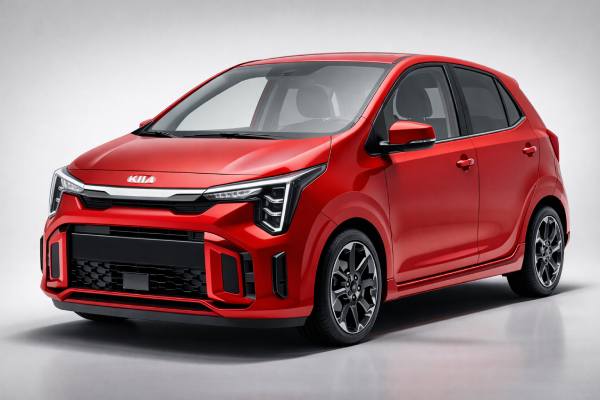
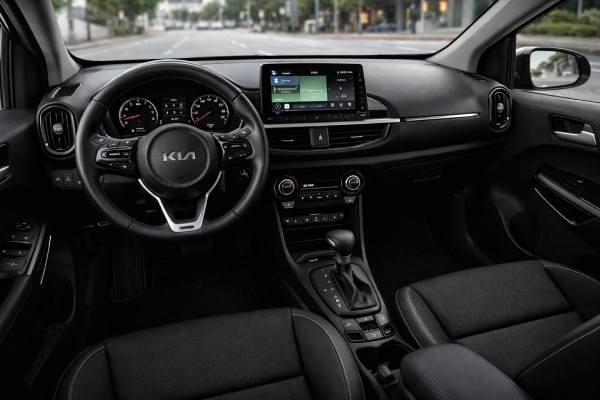
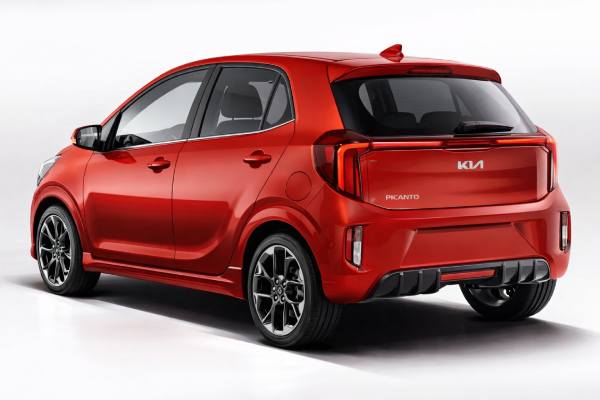
The 2024–present facelift version of the Kia Picanto (JA) with the 1.2-liter G4LF engine is the “grown-up” choice in the model range. It keeps the city-car footprint and simple mechanical layout, but adds a smoother, more flexible power delivery than the smaller 1.0 engines—especially noticeable when you carry passengers, use the A/C, or spend time at motorway speeds. Under the skin, this is still a conventional front-wheel-drive hatch with a naturally aspirated multi-point injection (MPI) engine, a timing chain, and straightforward suspension geometry that most independent workshops understand.
If you want a Picanto you can run for years, the key is matching expectations: it’s efficient and easy to place, but it rewards consistent servicing (oil, filters, brake fluid) and careful tyre/brake choices more than chasing “performance” upgrades.
What to Know
- The 1.2 MPI feels noticeably less strained in mixed driving than the 1.0, especially with a full cabin.
- Simple, proven hardware (timing chain, MPI fuel system) tends to be ownership-friendly long term.
- Tyre choice matters: a quality set improves braking and stability more than any small power gain.
- Watch for urban-use wear: front brake components and suspension bushings can age faster on potholes and short trips.
- Plan engine oil and filter service every 10,000–15,000 km (6,000–9,000 mi) or 12 months (sooner in severe use).
What’s inside
- Kia Picanto JA 1.2 facelift overview
- Kia Picanto JA G4LF specifications
- Kia Picanto JA equipment and safety tech
- Reliability patterns and known faults
- Service schedule and ownership costs
- On-road performance and economy
- Picanto 1.2 versus competitors
Kia Picanto JA 1.2 facelift overview
The facelifted 2024–present Picanto (JA) keeps the same core mission: a compact, light hatch designed to be cheap to run, easy to park, and predictable in traffic. The 1.2-liter G4LF variant sits in the sweet spot for many owners because it adds day-to-day torque without adding turbo complexity. In practical terms, that means fewer downshifts on inclines, less “busy” engine noise when you hold 100–120 km/h, and more relaxed overtakes when you plan ahead.
Mechanically, this is an uncomplicated layout: front-engine, front-wheel drive, MacPherson strut front suspension, torsion-beam rear suspension, and a conventional braking system. That simplicity is part of the ownership appeal. For most routine work—brakes, filters, plugs, fluids—parts are widely available and labour is usually straightforward. The 1.2’s multi-point injection (MPI) also tends to be tolerant of short-trip life compared with direct-injection systems that can be more sensitive to deposits.
The facelift itself is mainly about updated styling, lighting, and equipment packaging. Depending on market and trim, the “headline” ownership change is often safety and convenience tech becoming more common—things like autonomous emergency braking (AEB), lane support, and improved infotainment. That’s a benefit, but it also adds one practical consideration: after certain repairs (windscreen replacement, front bumper work, alignment changes), driver-assistance systems may need calibration to work correctly.
Who is this version for? It suits drivers who want an honest small car that can still handle occasional longer trips, commuters who want low running costs without the fragility of ultra-low-profile tyres, and new drivers who value predictable controls and manageable dimensions. It is less ideal if you routinely drive steep mountain roads fully loaded or want strong motorway acceleration—this is still a small-displacement naturally aspirated engine. The 1.2 improves flexibility, not the fundamental performance class.
Kia Picanto JA G4LF specifications
Specifications vary by market, gearbox, wheel/tyre package, and trim. The tables below focus on the typical 2024–present facelift Picanto (JA) with the 1.2 MPI G4LF engine and the most common European-style configurations.
Powertrain and efficiency
| Item | Specification |
|---|---|
| Code | G4LF |
| Engine layout and cylinders | Inline-4, 4 cylinders, DOHC, 4 valves/cyl |
| Bore × stroke | ~71.0 × 78.8 mm (2.80 × 3.10 in) |
| Displacement | 1.2 L (1,248 cc) |
| Induction | Naturally aspirated |
| Fuel system | MPI (multi-point injection) |
| Compression ratio | ~10.5:1 (market-dependent) |
| Max power | 79 hp (58 kW) @ ~6,000 rpm |
| Max torque | ~113 Nm (83 lb-ft) @ ~4,200 rpm |
| Timing drive | Chain |
| Rated efficiency | ~5.0–5.8 L/100 km (47–40 mpg US / 56–49 mpg UK), trim and gearbox dependent |
| Real-world highway @ 120 km/h (75 mph) | ~6.3–7.2 L/100 km (37–33 mpg US / 45–39 mpg UK) |
Transmission and driveline
| Item | Specification |
|---|---|
| Transmission | 5-speed manual (common); 4-speed automatic in some markets |
| Drive type | FWD |
| Differential | Open |
Chassis and dimensions
| Item | Specification |
|---|---|
| Suspension (front/rear) | MacPherson strut / torsion beam |
| Steering | Electric power steering (EPS); ratio varies by market |
| Brakes | Front discs (often ventilated) / rear drums (typical); rear discs on some trims/markets |
| Wheels and tyres (popular) | 185/55 R15 (rim 15 in); also 175/65 R14 common |
| Ground clearance | ~140–150 mm (~5.5–5.9 in), market dependent |
| Length / width / height | ~3,595–3,605 / 1,595 / 1,485–1,500 mm (~141.5–141.9 / 62.8 / 58.5–59.1 in) |
| Wheelbase | ~2,400 mm (~94.5 in) |
| Turning circle (kerb-to-kerb) | ~9.4–9.6 m (~30.8–31.5 ft) |
| Kerb (curb) weight | ~950–1,060 kg (~2,095–2,337 lb) |
| GVWR | Market/trim dependent |
| Fuel tank | ~35 L (9.2 US gal / 7.7 UK gal) |
| Cargo volume | ~255 L (~9.0 ft³) seats up; ~1,010 L (~35.7 ft³) seats down (method varies) |
Performance and capability
| Item | Typical figure (varies by gearbox/trim) |
|---|---|
| 0–100 km/h (0–62 mph) | ~13.0–14.5 s |
| Top speed | ~155–165 km/h (96–103 mph) |
| Braking distance 100–0 km/h | Tyre-dependent; expect meaningful variation by tyre compound |
| Towing capacity | Often not rated or very limited in some markets—check VIN/market documentation |
| Payload | Market/trim dependent |
Fluids and service capacities (typical)
| Fluid / spec | Typical guidance |
|---|---|
| Engine oil | 5W-30 or 5W-20 (market/temperature dependent); capacity ~3.3–3.7 L (3.5–3.9 US qt) with filter |
| Coolant | Long-life coolant (spec varies by region); capacity ~5–6 L (5.3–6.3 US qt) |
| Transmission (manual) | Gear oil spec varies; capacity varies by gearbox |
| Transmission (automatic) | ATF spec varies by region/gearbox family |
| A/C refrigerant | R-1234yf common in EU markets; charge depends on system and year |
Key torque specs (critical fasteners only)
| Item | Typical range (verify for your VIN) |
|---|---|
| Wheel nuts | ~88–108 Nm (65–80 lb-ft) |
| Engine oil drain plug | ~25–35 Nm (18–26 lb-ft) |
| Spark plugs | ~20–25 Nm (15–18 lb-ft) |
Safety and driver assistance
| Item | Notes |
|---|---|
| Crash ratings | This generation’s rating depends on safety pack/trim and test protocol year; verify your exact trim |
| ADAS suite | AEB (car/ped/cyclist), lane support, driver attention warning, and speed assistance are common on higher trims in many markets |
Kia Picanto JA equipment and safety tech
Trim names vary by country, so it helps to think in “equipment layers” rather than badges. Most markets split the Picanto 1.2 range into: a value-focused trim (smaller wheels, simpler infotainment), a mid trim (better audio/screen, extra comfort features), and a higher trim (more active safety systems, nicer wheels/lighting). The facelift period often changes which features are standard, so the same badge can mean different equipment across model years.
Trims and options that matter mechanically
- Wheels and tyres: The most noticeable real-world change. A move from 14-inch to 15-inch wheels usually sharpens steering response but can increase impact harshness on broken roads. For many owners, a quality 185/55 R15 tyre is the best balance.
- Brakes: Many Picanto builds use rear drums. Drums are fine in city use, but they benefit from periodic cleaning and correct adjustment to avoid binding or uneven braking feel. Some trims/markets may offer rear discs.
- Transmission: If your market offers a 4-speed automatic, it prioritizes smoothness and simplicity over performance. The manual typically feels more responsive and can improve real-world economy when driven calmly.
Quick identifiers to check
- Safety pack presence: Look for the forward-facing camera near the rear-view mirror and radar/cover elements in the front grille/bumper area (design varies). If present, confirm the car has the matching steering wheel buttons and cluster warnings for lane support and AEB.
- Infotainment tier: Higher trims often pair the larger screen with additional USB ports, better Bluetooth features, and sometimes navigation. For buyers, the screen size is less important than whether the system supports the phone integration standard used in your region.
Safety ratings: how to interpret them
For this generation, crash-test results can differ based on whether the test vehicle includes AEB and lane support (often bundled as a safety pack). Some ratings published for the Picanto platform show a meaningful step up when the safety pack is fitted. The practical takeaway is simple: if safety ratings and crash-avoidance support matter to you, prioritize a trim with factory AEB and lane support rather than trying to add aftermarket tech.
Safety systems and ADAS (what’s typical)
- Passive safety: Expect front airbags, front side airbags, and curtain airbags on many trims, with ISOFIX/LATCH child seat anchors. Verify curtain airbag presence on lower trims where applicable.
- Core stability systems: ABS, ESC (stability control), and hill-start assist are common in most regions.
- Active safety/ADAS: Depending on trim, you may see AEB (vehicle/pedestrian/cyclist detection), lane keep assist or lane following support, driver attention warning, and intelligent speed assistance or sign recognition. These systems rely on camera/radar alignment—after windscreen replacement or front-end repairs, ask the workshop whether calibration is required.
Reliability patterns and known faults
Overall, the Picanto JA with the 1.2 MPI engine has a reputation for solid basic reliability when serviced on time. Most “problems” owners experience are small-car wear items, age-and-use issues, or sensor/electrical niggles rather than catastrophic engine failures. The most helpful way to think about it is by prevalence and cost tier.
Common (low to medium cost)
- 12 V battery fatigue (age 3–6 years): Symptoms include slow cranking, stop-start quirks (if fitted), random warning lights after cold starts, and infotainment resets. Remedy: battery test under load; replace with the correct capacity and quality.
- Brake wear and sticking from city use (30,000–70,000 km / 2–5 years): Symptoms include squeal, uneven pad wear, or a “dragging” feel. Root causes are often caliper slider pin corrosion (front) or drum hardware dust/binding (rear). Remedy: proper cleaning/lubrication with correct grease and replacing worn hardware, not just pads.
- Suspension knocks over bumps (40,000–100,000 km): Often drop links, strut top mounts, or worn bushes. Remedy: replace the worn joint/bush; don’t ignore alignment after work.
Occasional (medium cost)
- Ignition coil or spark plug issues (60,000–120,000 km): Symptoms are misfires under load, rough idle, or a flashing MIL. Root causes include aged plugs, moisture intrusion, or coil degradation. Remedy: replace plugs at the correct interval, and coils as needed—avoid mixing cheap coils.
- Oxygen sensor or catalyst efficiency codes: Symptoms are MIL and failed emissions testing. Root causes can be sensor ageing, exhaust leaks upstream, or extended short-trip operation. Remedy: diagnose properly before replacing the catalyst; confirm no exhaust leaks and verify fuel trims.
- Air-conditioning performance drop: Symptoms include weak cooling in traffic. Root causes can be condenser fin damage, low charge, or fan issues. Remedy: leak check, condenser inspection, and correct refrigerant service.
Rare (higher cost)
- Timing chain noise or correlation faults: This is uncommon, but listen for cold-start rattles that persist, or fault codes related to timing correlation. Remedy: professional diagnosis; replace chain/tensioner/guides if out of spec.
- Steering column/EPS issues: Rare, but if present you may notice intermittent heavy steering or warning lights. Remedy: scan for EPS codes and verify charging system health first.
Software and calibrations
Modern facelifts often bundle more electronics. If you experience odd behaviour—random warnings, camera faults, or infotainment instability—ask the dealer to check for ECU/ADAS/infotainment updates. Also remember that ADAS can require calibration after windscreen or bumper work.
Pre-purchase checks to request
- Evidence of regular oil services (time-based matters as much as kilometres).
- Brake inspection notes (especially if the car lived in dense city traffic).
- Tyre brand/model consistency (mismatched tyres can mask handling issues).
- Proof that any recalls or service campaigns were completed (dealer history or official VIN check).
Service schedule and ownership costs
A small, naturally aspirated engine can last a long time, but only if you treat “cheap to maintain” as “worth maintaining.” The Picanto 1.2 is forgiving, yet it still depends on clean oil, good filtration, and fresh brake fluid to keep the drivetrain and safety systems happy.
Practical maintenance schedule (typical guidance)
Every 10,000–15,000 km (6,000–9,000 mi) or 12 months
- Engine oil and filter (short trips, cold climate, and heavy traffic favour the shorter interval).
- General inspection: leaks, coolant level, belts/hoses, tyre wear, and brake condition.
- Rotate tyres if wear patterns suggest it, and check pressures.
Every 20,000–30,000 km (12,000–18,000 mi) or 2 years
- Cabin air filter (more often if you drive in dusty areas).
- Brake fluid (time-based is important because brake fluid absorbs moisture).
- Brake service inspection: clean and lubricate caliper slides; check rear drum hardware.
Every 30,000–45,000 km (18,000–28,000 mi)
- Engine air filter (earlier if dust exposure is high).
- Wheel alignment check, especially after pothole impacts.
Every 60,000 km (37,000 mi)
- Spark plugs (many owners see smoother running and better cold starts after timely replacement).
- Inspect accessory belt; replace if cracked or glazed.
Every 100,000–120,000 km (62,000–75,000 mi)
- Coolant service per manufacturer time/kilometre guidance (often long-life, but don’t treat it as “forever”).
- Manual gearbox oil inspection; replace if shifting quality degrades or if the service schedule calls for it.
- If your car has a traditional automatic, consider ATF service earlier if it lives in heavy city traffic.
Timing components
- The 1.2 typically uses a timing chain with no fixed replacement interval. Treat it as an inspection item: investigate persistent cold-start rattles, abnormal noises, or timing-related fault codes rather than waiting for failure.
Fluids, parts, and cost expectations
- Oil: Using the correct viscosity and spec is more important than chasing boutique brands. The Picanto benefits from consistent oil changes more than extended intervals.
- Brakes and tyres: This is where owners accidentally create “problems.” Cheap tyres can lengthen braking distances and trigger earlier ESC intervention. Low-quality pads can squeal, dust heavily, or feel inconsistent.
- Battery: Budget for a 12 V battery in the 4–6 year window and test before winter if the car sits outside.
Buyer’s guide: what to seek (and what to avoid)
Seek
- A trim with factory AEB/lane support if safety tech matters to you.
- A car with clean, consistent service records and matching tyres.
- Evidence that brakes were serviced properly (not just pads slapped on).
Be cautious with
- Cars used almost exclusively on short trips: they can have more brake sticking, more condensation-related oil contamination, and more battery complaints.
- Heavily curbed wheels and uneven tyre wear: these hint at alignment and suspension knocks.
Long-term, the best Picanto is usually the one that had boring ownership: regular oil, decent tyres, and prompt fixes for small issues before they become recurring ones.
On-road performance and economy
The Picanto 1.2 is not fast, but it is often the most satisfying engine in the range because it reduces the sense of effort. In city driving, it pulls cleanly from low rpm, tolerates frequent stop-start use, and feels less “peaky” than a smaller engine when you need a quick gap in traffic. With the manual gearbox, the car responds best when you short-shift and ride the midrange rather than revving it out. With a traditional automatic (where offered), expect calmer progress: it’s designed for smoothness and simplicity, not sharp kickdown.
Ride, handling, and NVH (noise, vibration, harshness)
- Ride: The torsion-beam rear setup is predictable, but wheel size matters. Smaller wheels with taller tyres absorb potholes better. Larger wheels look sharper but can feel busier over rough asphalt.
- Handling: The Picanto’s light weight helps it change direction easily. On good tyres, it feels stable and tidy rather than sporty. On cheap tyres, it can feel nervous in the wet and under heavy braking.
- Steering: Electric steering is typically light at low speeds, which suits parking. Feedback is limited, but the car’s narrow body and good visibility compensate.
- Motorway comfort: Expect noticeable wind and tyre noise at 110–130 km/h; this is normal for the class. Good tyres and correct pressures reduce drone.
Real-world efficiency
In mixed use, many owners can stay in the mid-5 L/100 km range if traffic is moderate and speeds are sensible. At a steady 120 km/h, consumption rises as aerodynamic drag dominates; this is where the 1.2 feels more relaxed than a 1.0 but still pays the physics bill. Winter driving, short trips, and frequent idling can add 10–25% to fuel use.
Useful performance metrics (what actually changes your experience)
- Passing and merging: The car rewards planning. Keep some rpm in hand before you commit to an overtake, especially uphill.
- Braking: Tyres are the deciding factor. A premium tyre can deliver a bigger real-world safety improvement than any minor power change.
- Turning circle: The compact footprint and tight turning circle are a genuine advantage in dense cities—less stress, fewer multi-point turns.
Load and hills
Fully loaded with passengers and luggage, the 1.2 remains usable, but you will downshift more on long grades and acceleration will feel measured. If you routinely drive steep terrain, prioritize the manual gearbox (where available) and keep tyres and brakes in top condition.
Picanto 1.2 versus competitors
The Picanto’s strongest argument is balance: it offers the size and running costs people want from an A-segment city car, while still feeling “complete” enough for longer trips. The 1.2 engine version leans into that balance by adding flexibility without adding turbo complexity.
Versus Hyundai i10 (1.2)
- Similarities: Comparable size, naturally aspirated engines, and sensible running costs.
- Picanto strengths: Often feels slightly more “buttoned down” in chassis tuning depending on tyre package; the 1.2 can feel eager with a manual.
- i10 strengths: Depending on market, it may offer slightly different infotainment/trim value and a broader dealer/service experience.
Versus Toyota Aygo X
- Picanto strengths: The 1.2 typically feels more relaxed than a smaller-displacement setup when loaded, and the cabin can feel more conventional and straightforward.
- Aygo X strengths: Styling and “mini crossover” driving position appeal; Toyota’s reputation for reliability and resale can be strong in many regions.
- Reality check: Aygo X is often tuned more for urban personality than motorway comfort.
Versus Fiat Panda / Fiat 500 Hybrid (where available)
- Picanto strengths: More modern active safety availability on many trims and a simpler, conventional drivetrain in this configuration.
- Fiat strengths: Character and compact packaging; some mild-hybrid variants can return good city economy.
Versus Dacia Sandero
- Picanto strengths: Smaller footprint, easier parking, and often lower tyre/brake costs.
- Sandero strengths: More cabin and cargo space for similar money, often with stronger motorway composure due to size.
Best-fit verdict
Choose the Picanto 1.2 if you want an easy city car that won’t feel overwhelmed by occasional longer drives, and you value simple hardware you can maintain anywhere. If your life demands more rear-seat space, regular long-distance travel, or frequent high-speed motorway work, a larger B-segment hatch may be the better “real cost” choice despite a higher purchase price.
References
- Picanto Specs 2026 (Manufacturer Specifications)
- Euro NCAP | Latest Safety Ratings 2026 (Safety Rating Database)
- Connectivity and OTA updates 2026 (Manufacturer Technical Information)
- Warranty Manual 2024 (Warranty Documentation)
Disclaimer
This article is for informational purposes only and is not a substitute for professional diagnosis, inspection, or repair. Specifications, torque values, service intervals, and procedures can vary by VIN, market, model year, and installed equipment. Always verify details using official service documentation for your exact vehicle and consult a qualified technician when needed.
If you found this guide useful, please consider sharing it on Facebook, X (Twitter), or your favourite forum to support our work.