

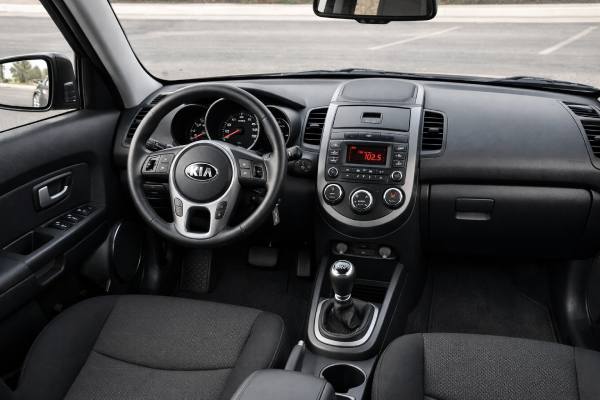

The first-generation Kia Soul earned its following by doing something many small hatchbacks did not: it mixed honest mechanical simplicity with a shape that made daily use easier. In G4GC 2.0-liter form, the AM-generation Soul is one of the more straightforward versions to own because it uses a naturally aspirated, multi-point-injection petrol engine rather than a turbocharged or direct-injection setup. That matters for long-term running costs, parts availability, and workshop familiarity.
The main caution is identification. In the 2011–2013 crossover period, registration year, facelift appearance, and engine-family listings do not always line up neatly in parts databases. Some cars sold or registered during this window are still cataloged as G4GC-powered, while some facelift-market documentation shows different 2.0-liter hardware. For owners and buyers, that means one simple rule: confirm by VIN and engine code before ordering timing, ignition, cooling, or sensor parts. Do that, and the Soul becomes a practical, roomy, easy-to-understand used car with fewer surprises than many style-led rivals.
Owner Snapshot
- The boxy body gives excellent headroom, easy entry, and a genuinely useful cargo area for a small car.
- The 2.0 MPI engine is simple, non-turbocharged, and usually cheaper to keep healthy than newer direct-injection units.
- Ride and steering are easy to live with, especially on 16-inch wheels rather than the firmer 18-inch packages.
- Timing-belt history matters more than almost anything else on a G4GC car; do not rely on seller memory.
- A typical official service rhythm for petrol Souls is every 10,000 miles (16,000 km) or 12 months, whichever comes first.
Guide contents
- Kia Soul AM Ownership Overview
- Kia Soul AM 2.0 Specs
- Kia Soul AM Trims and Safety
- Reliability, Faults, and Recalls
- Maintenance and Buyer Checks
- Driving and Real Economy
- Soul AM Versus Rivals
Kia Soul AM Ownership Overview
The G4GC-powered Soul sits in a sweet spot for buyers who want a small crossover-shaped hatchback without crossover complexity. Its strongest engineering trait is not outright performance. It is transparency. The Beta II 2.0 is an old-school four-cylinder that most independent workshops understand, and the rest of the car follows the same pattern: front-wheel drive, simple rear torsion-beam suspension, conventional brakes, and cabin electronics that are far less network-heavy than later cars.
That does not make it crude. The Soul was cleverly packaged. The upright roofline helps visibility, rear headroom, and child-seat loading. The doors open wide, the seats are mounted fairly high, and the luggage bay is more usable than the official numbers suggest because the tailgate opening is square. Many owners buy the Soul for styling, then keep it because it is easier to live with than a lower, narrower hatch.
The 2.0 also gives the car enough pace to avoid feeling strained. It is not quick by modern small-SUV standards, but it is meaningfully stronger than the base 1.6. Around town, that extra torque matters more than the published 0–100 km/h time. The car pulls away without drama, copes better with passengers, and needs fewer full-throttle downshifts on moderate grades.
The biggest ownership wrinkle is specification overlap. Registration-year listings can be misleading on these cars. Some 2011–2013 examples wear facelift cues but still get cataloged with earlier-engine service parts, while some market manuals show a different 2.0-liter setup during the same broad period. From a buyer’s point of view, this is not a reason to avoid the car. It is a reason to verify the engine code physically and decode the VIN before buying timing components, sensors, ignition parts, or even cooling-system pieces.
In broad terms, this Soul suits buyers who value cabin space, simple petrol ownership, and low-stress commuting over cutting-edge safety tech or sporty handling. It is a sensible used buy when maintenance records are strong. It is a risky one only when belt history, recall completion, and steering-noise diagnosis are vague.
Kia Soul AM 2.0 Specs
Because this is a transition-period car, exact figures can vary by market, gearbox, and registration date. The table below focuses on the commonly cataloged G4GC 2.0 MPI specification and flags the main areas where facelift-market cars can differ. That is the safest way to read this model.
| Powertrain and efficiency | Data |
|---|---|
| Code | G4GC |
| Engine layout and cylinders | Inline-4, DOHC, 16 valves, 4 valves per cylinder |
| Bore × stroke | 82.0 × 93.5 mm (3.23 × 3.68 in) |
| Displacement | 2.0 L (1,975 cc) |
| Induction | Naturally aspirated |
| Fuel system | MPFI / MPI |
| Compression ratio | About 10.1:1 |
| Max power | 142 hp (104 kW) @ 6,000 rpm |
| Max torque | 186 Nm (137 lb-ft) @ 4,600 rpm |
| Timing drive | Belt |
| Rated efficiency | Common published range: about 8.1–9.0 L/100 km (26–29 mpg US / 31–35 mpg UK), market and gearbox dependent |
| Real-world highway @ 120 km/h (75 mph) | About 7.5–8.5 L/100 km (28–31 mpg US / 33–38 mpg UK) |
| Transmission and driveline | Data |
|---|---|
| Transmission | 5-speed manual or 4-speed automatic, depending on market |
| Drive type | FWD |
| Differential | Open |
| Steering | Electric power steering; late cars should be checked carefully for MDPS coupling wear |
| Chassis and dimensions | Data |
|---|---|
| Suspension (front/rear) | MacPherson strut / torsion beam |
| Brakes | Front ventilated discs; rear discs on many 2.0 trims, trim-market variation exists |
| Wheels and tyres (most common) | 205/55 R16; some higher trims used 225/45 R18 |
| Ground clearance | About 165 mm (6.5 in) |
| Length / width / height | Usually 4,105–4,120 / 1,785 / 1,610 mm (161.6–162.2 / 70.3 / 63.4 in), market dependent |
| Wheelbase | 2,550 mm (100.4 in) |
| Turning circle | About 10.5 m (34.4 ft) |
| Kerb weight | Roughly 1,260–1,280 kg (2,778–2,822 lb) depending on trim and gearbox |
| GVWR | Roughly 1,705–1,760 kg (3,759–3,880 lb), market dependent |
| Fuel tank | 48 L (12.7 US gal / 10.6 UK gal) |
| Cargo volume | 340 L seats up and about 1,258–1,336 L seats folded, depending on measurement method and market literature |
| Performance and service data | Data |
|---|---|
| 0–100 km/h (0–62 mph) | About 9.9–10.4 s manual; about 10.2–10.9 s automatic |
| Top speed | About 171–177 km/h (106–110 mph) |
| Payload | Roughly 450–490 kg (992–1,080 lb) |
| Towing capacity | Market-specific and VIN-specific; verify registration plate data before towing |
| Engine oil | API SM or higher, ILSAC GF-4 or better; common viscosity 5W-30 or 5W-40 by climate; capacity about 4.0 L (4.23 US qt) with filter |
| Coolant | Ethylene-glycol aluminum-safe coolant, usually 50:50 mix; about 6.4 L (6.76 US qt) on 2.0 petrol |
| Manual transmission oil | API GL-4, SAE 75W/85; about 1.9–2.0 L (2.0–2.1 US qt) |
| Automatic transmission fluid | SP-IV; about 7.1 L (7.50 US qt) total capacity |
| Brake fluid | DOT 3 or DOT 4 |
| Key torque spec | Wheel nuts 88–107 Nm (65–79 lb-ft) |
The practical takeaway is simple: the Soul is mechanically straightforward, but the G4GC code matters more than the registration year.
Kia Soul AM Trims and Safety
Trim naming varied a lot by region, so it is smarter to think of the 2.0 Soul in layers rather than by one universal badge. Most markets followed the same pattern. Lower trims kept the Soul’s useful body and strong feature basics but used smaller wheels, simpler seat trim, and fewer cosmetic extras. Mid-grade versions added the equipment many used buyers actually want: better audio, alloy wheels, parking sensors or a camera, climate upgrades, and a nicer steering wheel. Top trims usually added the visual identity people associate with the model, including 18-inch wheels, contrasting cabin accents, and sometimes leather or heated-seat packages.
Mechanically, the biggest trim differences were wheel-and-tyre size, brake hardware in some markets, and transmission pairing. The 2.0 often appeared in better-equipped versions, which is good for comfort but can mean firmer ride quality if the car sits on 18-inch wheels. For a daily driver, the 16-inch setup is usually the better buy because it rides better, costs less to tyre, and puts less impact stress into suspension joints and bushings.
Quick identifiers matter with this Soul. If a seller says “facelift 2.0” but cannot show the engine code, slow down. The cleanest identifiers are the VIN, the engine stamp, and the previous parts history. A timing-belt invoice that explicitly mentions G4GC is more useful than a generic oil-change book. Cabin clues such as wheel size, head-unit style, and trim inserts help identify equipment level, but they do not replace the engine code.
On safety, the AM Soul was respectable for its era rather than outstanding by modern standards. Euro NCAP gave the model a five-star result under the 2009 protocol, with strong adult and child scores for the time. Standard safety equipment was usually solid: front, side, and curtain airbags, ABS, stability control, traction-related functions, and active head restraints or whiplash-minded seat design depending on market. ISOFIX or LATCH child-seat anchors were part of the car’s family-friendly appeal.
Where the Soul shows its age is driver assistance. There is no modern AEB, lane centering, blind-spot intervention, or adaptive cruise system here. Some cars offered rear parking sensors, a reversing camera, or cruise control, but these are convenience features, not modern ADAS. After service work, owners should still pay attention to steering-angle calibration and airbag warning lights, because even a simple car becomes irritating when the basics are not reset correctly.
Reliability, Faults, and Recalls
At its best, the G4GC Soul is dependable because its problem areas are familiar and usually diagnosable without guesswork. Most failures are not mysterious. They are maintenance-related, age-related, or wear-related.
Common, medium-to-high consequence issues start with the timing-belt system. On a true G4GC car, missed belt replacement is the most serious avoidable risk. A cheap used Soul with unknown belt age is not cheap until that service is done. Water pump, tensioner, and idlers should be treated as one job. Cooling-system wear is the next big item. Radiators, thermostat housings, older hoses, and seepage around the pump area can all become more frequent after years of heat cycling. Overheating is not a fault to “watch for later” on this engine.
Common, low-to-medium cost issues include ignition coils, plugs, and cam or crank sensors. These usually show up as misfire, hesitant starting, intermittent loss of power, or a check-engine light. Valve-cover gasket leaks are also familiar. They are rarely dramatic, but oil seepage onto the head and plug wells should be fixed before it damages ignition components.
Very typical chassis trouble centers on the steering and front-end wear items. The electric power steering system is known for MDPS coupling wear, which creates a clicking or knocking noise when the wheel is moved left and right at a standstill. It is annoying more than catastrophic, but it is common enough that buyers should test for it deliberately. Front drop links, control-arm bushes, and top mounts are also routine aging items, especially on cars driven on broken urban roads or fitted with 18-inch wheels.
Automatic cars deserve extra attention. The 4-speed automatic is durable when serviced sensibly, but it feels old and does not hide neglected fluid. Harsh 2–3 shifts, delayed engagement, or flare under light throttle suggest the car needs more than a simple filter-and-fluid visit. Manual cars are usually simpler bets, though clutch wear and sloppy shift linkage can show up on higher-mileage examples.
Important service actions and recalls should not be ignored. One of the biggest headline items for 2011–2013 Souls in the U.S. was the HECU fire-risk recall. Some sunroof-equipped cars were also covered by a headliner-plate recall related to curtain-airbag deployment. On the service side, the MDPS flexible coupling bulletin is highly relevant to ownership because it directly matches a very common symptom.
For a pre-purchase inspection, ask for belt proof, recall completion proof, steering-noise diagnosis, recent cooling-system work, and transmission-fluid history. Those five items tell you more about the next two years of ownership than the paint condition does.
Maintenance and Buyer Checks
This Soul rewards preventive service. The goal is not to over-maintain it. The goal is to stay ahead of the few failures that become expensive when ignored.
A practical schedule for a G4GC-powered car looks like this:
| Interval | What to do |
|---|---|
| Every 10,000 miles / 16,000 km or 12 months | Engine oil and filter, inspect belts, hoses, brakes, tyres, steering, suspension, and fluid levels |
| Every 20,000–30,000 km | Cabin filter, brake inspection and clean-up, tyre rotation, alignment check if tyre wear suggests it |
| Every 30,000–45,000 km | Engine air filter, inspect spark plugs, inspect drive belt and cooling hoses closely |
| Every 45,000–60,000 km | Brake-fluid replacement every 2 years, deeper suspension inspection, battery load test |
| Around 60,000 km onward | Manual gearbox oil refresh is sensible if shift feel worsens; on automatics, many owners benefit from earlier fluid service rather than “lifetime” assumptions |
| Around 90,000 km / 6 years | Timing belt, tensioner, idlers, and ideally water pump on confirmed G4GC cars |
| Around 5 years, then by condition | Coolant replacement, then regular condition checks for corrosion or contamination |
| Around 4–6 years | 12 V battery replacement window, depending on climate and usage |
For fluids, the owner-focused decision numbers are straightforward: about 4.0 L of engine oil with filter, about 6.4 L of coolant on the 2.0 petrol, about 1.9–2.0 L for the manual gearbox, and about 7.1 L total capacity for the automatic. Wheel-nut torque is 88–107 Nm. Those are the figures most owners and buyers use regularly. For drain plugs, spark plugs, and deeper engine fasteners, use VIN-correct workshop data, especially because parts-catalog overlap exists on these transition-year cars.
The best buyer’s checklist is short and deliberate:
- Confirm the engine code physically, not just by registration.
- Ask for written proof of timing-belt replacement.
- Listen for steering knock at parking speed with the car stationary.
- Check for coolant staining around the radiator, hose joints, and pump area.
- Look for oil in spark-plug wells and around the valve cover.
- Test the automatic when cold, if fitted.
- Inspect front tyres for inner-edge wear that hints at alignment or bushing issues.
- Verify recall completion with dealer records or an official VIN check.
Recommended cars are the ones with boring paperwork: documented belt service, no steering knock, no overheating history, and sensible wheel sizes. Cars to avoid are the ones with aftermarket cosmetic spending but no maintenance evidence. Long-term durability is good when the basics are handled on time. Neglected examples age quickly because the same few problems feed into each other.
Driving and Real Economy
From behind the wheel, the Soul feels exactly like the shape suggests: upright, easy to place, and more comfortable in everyday traffic than on a fast empty road. The seating position is one of its best features. You step in rather than drop down, visibility is strong, and the short nose makes urban parking easy.
Ride quality depends heavily on wheels. On 16-inch tyres, the Soul feels composed enough for rough city streets and broken secondary roads. On 18s, it looks better but transmits more sharp edges and makes the front suspension work harder. Straight-line stability is acceptable rather than exceptional, and the boxy body starts to pick up noticeable wind noise once speeds move well into motorway territory.
The 2.0 MPI engine is honest rather than exciting. Throttle response is predictable, and the engine has enough mid-range to keep the car from feeling underpowered with passengers on board. The manual gearbox makes the most of it and gives the Soul a more relaxed character on rolling roads. The automatic is usable but clearly older-tech. It can be slow to kick down, it keeps revs higher on fast roads, and it is the main reason some owners describe the 2.0 Soul as thirstier than expected.
Real-world economy usually lands around these numbers in healthy condition:
- City: about 9.5–11.0 L/100 km
- Highway at 100–120 km/h: about 7.0–8.5 L/100 km
- Mixed use: about 8.5–9.5 L/100 km
In US and UK terms, that is roughly 21–25 mpg US in town, 28–34 mpg US on the highway, and about 25–28 mpg US mixed. Cold weather, short trips, and the automatic gearbox can push the numbers worse.
Braking feel is secure if the car is maintained, though it is not a sharp sporty pedal. The steering is light and practical, but feedback is limited. In other words, the Soul is better as a daily tool than a back-road toy. That is not a criticism. It is part of why owners who buy it for style often keep it for convenience.
Soul AM Versus Rivals
Against period rivals, the Soul wins more on usability than on numbers. The Nissan Juke is the obvious comparison because both leaned into distinctive design. The Juke feels more playful and, with the right engine, quicker. The Soul is easier to see out of, easier to load, easier for rear passengers, and usually simpler to live with as an older used car. If you care more about cabin practicality than design drama from the driver’s seat, the Kia makes more sense.
The Skoda Yeti is the more mature alternative. It feels more polished on the move, offers clever packaging, and in some versions gives you stronger engine choices or more flexibility. It can also bring more complexity, especially when turbo engines, DSG gearboxes, or four-wheel-drive hardware enter the picture. The Soul’s advantage is lower conceptual risk. There is less going on, and that matters once the car is well into used-car age.
The Hyundai ix20 and Kia Venga are softer, more MPV-like alternatives. They are sensible, often comfortable, and easy to maneuver. The Soul counters with stronger identity, a more upright cargo opening, and, in 2.0 form, better performance than many 1.4- and 1.6-focused rivals. It is the more characterful choice without becoming difficult to own.
That really defines the Soul’s place in the market. It is not the sharpest handler, the most efficient, or the most advanced. It is the one you buy when you want a tall small car with honest petrol mechanics, strong space efficiency, and easy daily usability. In G4GC form, it is especially appealing for buyers who distrust turbo complexity and want an older car that still feels friendly to independent servicing.
References
- Instruktionsbok 2012 (Owner’s Manual)
- Service Intervals 2026 (Maintenance Schedule)
- KIA Soul – Euro NCAP Results 2009 2009 (Safety Rating)
- Part 573 Safety Recall Report 23V-652 2023 (Recall Database)
- mdps flexible coupling replacement 2019 (TSB)
Disclaimer
This article is for informational purposes only and is not a substitute for professional diagnosis, repair, or VIN-specific technical guidance. Specifications, torque values, service intervals, procedures, and equipment vary by VIN, market, trim, gearbox, and production date, so always verify against official service documentation before buying parts or carrying out repairs.
If this guide helped you, please share it on Facebook, X/Twitter, or your preferred forum. That support helps us keep publishing detailed, owner-focused vehicle guides.