

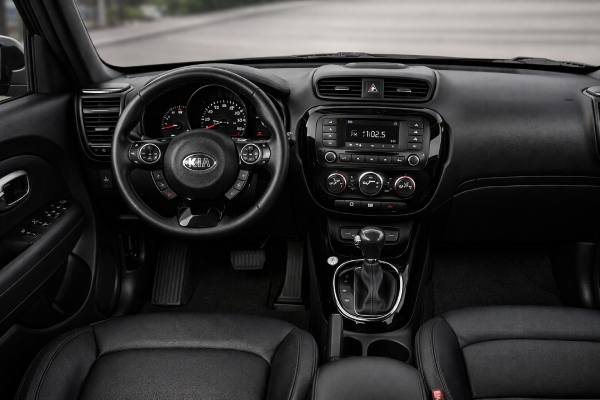
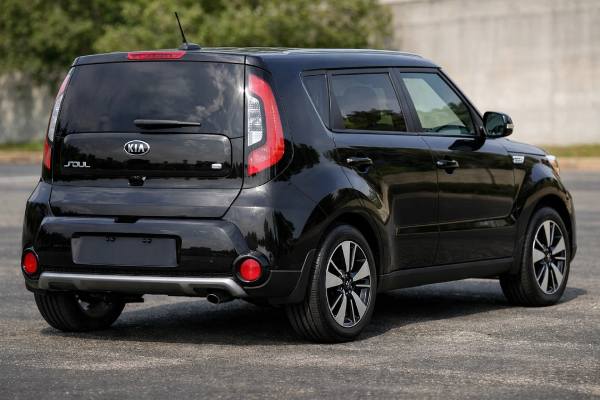
The PS-generation Kia Soul diesel is one of those cars that makes more sense the longer you live with it. It kept the Soul’s upright, easy-entry shape, but moved onto a newer platform with a stiffer body, a quieter cabin, and better road manners than the older AM model. In European-market D4FB form, the 1.6-liter CRDi is the engine that gives the Soul its strongest everyday character. It is not a fast crossover, but it delivers the kind of low-rpm torque that suits commuting, loaded family use, and long motorway runs.
For used buyers, this version has a clear appeal. It is roomy for its size, efficient on the highway, and less mechanically intimidating than many newer small SUVs. The key caveat is usage pattern. This diesel works best when it sees regular longer drives. Cars used only for short urban trips can suffer with DPF, EGR, and soot-related trouble sooner than owners expect. Buy the right example, though, and the PS Soul diesel is a practical, unusually honest small crossover.
Fast Facts
- The PS Soul is roomier, quieter, and more refined than the earlier AM-generation car.
- The 1.6 CRDi diesel gives strong mid-range torque and very good highway economy for a boxy crossover.
- The tall roof, wide doors, and square tailgate opening make daily use easier than many style-led rivals.
- Short-trip use is the main ownership risk because it can accelerate DPF and EGR trouble.
- Official service schedules for this diesel commonly land at 20,000 to 30,000 km or 12 months, depending on market.
Navigate this guide
- Kia Soul PS Diesel Profile
- Kia Soul PS Technical Figures
- Kia Soul PS Grades and Protection
- Weak Points and Campaigns
- Service Plan and Buying Advice
- On-Road Character and Economy
- How the PS Soul Stacks Up
Kia Soul PS Diesel Profile
The second-generation Soul matters because it fixed several things owners noticed in the first car without changing the basic idea. Kia kept the upright roof, tall seating position, and unmistakable shape, but underneath it moved to a newer architecture related to the contemporary cee’d. That brought a stiffer shell, a better-isolated front subframe, a more mature suspension tune, and noticeably improved cabin refinement. In practical terms, the PS Soul feels less novelty hatch and more fully developed family car.
That matters even more in diesel form. The D4FB-coded 1.6 CRDi belongs to Kia’s U2 diesel family, and in this application it gives the Soul the sort of performance it really needs. Official European data lists it at 128 ps and 260 Nm, which is roughly 126 hp in mechanical horsepower terms, though many catalogues round it as 128 hp. However the number is written, the important part is the torque delivery. Peak torque arrives low in the rev range, so the car pulls cleanly in normal traffic without needing constant downshifts.
This engine suits the Soul’s body better than many buyers expect. The car is not especially heavy, but it is tall and square, so a weak engine can make it feel slower than the numbers suggest. The diesel fixes that. It is most convincing on A-roads and motorways, where it settles into an easy rhythm and can return very respectable fuel use. If you regularly drive 80 to 120 km at a time, this is one of the most logical Soul variants to own.
The Soul’s packaging is still a major selling point. Rear-seat headroom is generous, the doors are wide, and the cargo opening is useful rather than fashionable. The upright shape also improves outward visibility. That sounds simple, but on older used crossovers it is a real quality-of-life advantage.
The main caution is that this diesel is strongly use-case dependent. A buyer doing mostly cold starts, short school runs, and heavy city traffic may be better off in a petrol Soul. The diesel pays you back when it gets warm and works steadily. That is the ownership lens to keep in mind throughout this car: it is a practical, efficient, durable small crossover when used in the way a small diesel likes to be used.
Kia Soul PS Technical Figures
The table below focuses on the European 2014 launch specification for the 1.6 CRDi 128 ps PS Soul, which is the cleanest open reference point for this version. Some trim, wheel, gearbox, and market details vary slightly, so VIN-level confirmation is still the right approach before buying parts.
| Powertrain and efficiency | Data |
|---|---|
| Code | D4FB |
| Engine layout and cylinders | Inline-4, DOHC, 16 valves, 4 valves per cylinder |
| Bore × stroke | 77.2 × 84.5 mm (3.04 × 3.33 in) |
| Displacement | 1.6 L (1,582 cc) |
| Induction | Turbocharged VGT |
| Fuel system | Common-rail direct injection |
| Compression ratio | 17.3:1 |
| Max power | 128 ps / about 126 hp (94 kW) @ 4,000 rpm |
| Max torque | 260 Nm (192 lb-ft) @ 1,900–2,750 rpm |
| Timing drive | Chain |
| Rated efficiency | 4.8–5.0 L/100 km manual, 6.0 L/100 km automatic (about 47–49 mpg US / 56–59 mpg UK manual) |
| Real-world highway @ 120 km/h (75 mph) | Typically about 5.8–6.7 L/100 km (35–41 mpg US / 42–49 mpg UK) |
| Transmission and driveline | Data |
|---|---|
| Transmission | 6-speed manual or 6-speed automatic, market dependent |
| Drive type | FWD |
| Differential | Open |
| Chassis and dimensions | Data |
|---|---|
| Suspension (front/rear) | MacPherson strut / coupled torsion beam axle |
| Steering | Electric rack-and-pinion; 16.0:1 ratio on 1.6 CRDi |
| Brakes | 280 × 26 mm front ventilated discs; 262 × 10 mm rear solid discs |
| Wheels and tyres | 205/60 R16 most common; also 215/55 R17 and 235/45 R18 |
| Ground clearance | 143 mm (5.6 in) |
| Length / width / height | 4,140 / 1,800 / 1,593–1,618 mm (163.0 / 70.9 / 62.7–63.7 in) |
| Wheelbase | 2,570 mm (101.2 in) |
| Turning circle | 10.6 m (34.8 ft) |
| Kerb weight | 1,308–1,463 kg manual; 1,331–1,482 kg automatic |
| GVWR | 1,920 kg manual; 1,940 kg automatic |
| Fuel tank | 54.0 L (14.3 US gal / 11.9 UK gal) |
| Cargo volume | 354 L seats up / 1,367 L seats folded, VDA method |
| Performance and service data | Data |
|---|---|
| 0–100 km/h (0–62 mph) | 11.2 s manual; 12.2 s automatic |
| Top speed | 180 km/h (112 mph) manual; 177 km/h (110 mph) automatic |
| Braking distance 100–0 km/h | 35.5 m (116.5 ft) |
| Payload | About 450–610 kg depending on trim and gearbox |
| Engine oil | ACEA C2 or C3, commonly 5W-30; 5.3 L (5.6 US qt) |
| Key torque spec | Wheel nuts 88–107 Nm (65–79 lb-ft) |
On safety, the diesel PS Soul tested by Euro NCAP scored four stars under the 2014 protocol, with 75% adult occupant, 82% child occupant, 59% pedestrian, and 56% safety assist. Standard ESC and seatbelt reminders helped, but the car lacked autonomous emergency braking and lane-keeping support in that rating.
For buyers, the spec sheet tells a simple story: this is a roomy front-wheel-drive diesel hatch-crossover with sensible dimensions, useful torque, and good efficiency, not an all-out performance model.
Kia Soul PS Grades and Protection
The PS Soul was sold with a wide range of market-specific trims, so the most useful way to understand equipment is by level rather than by one universal badge. Entry versions usually gave you the strong fundamentals: the tall body, good basic safety kit, air conditioning, and the diesel powertrain. Mid-grade cars are where the Soul becomes easier to recommend, because that is where you start to see the comfort and convenience features that suit the car’s family role: alloy wheels, better audio, cruise control, parking sensors or camera, and warmer cabin materials. Higher trims add the visual identity many buyers remember, including larger wheels, contrasting interior accents, premium sound, panoramic roof, heated seats, climate control, and more dramatic exterior detailing.
Mechanically, wheel size is one of the most important trim-linked differences. The Soul can wear 16-, 17-, or 18-inch setups, and that changes the ownership experience. The 18-inch cars look the part, but they ride more firmly, tyre replacement costs are higher, and broken-road comfort is noticeably worse. For most buyers, a 16- or 17-inch diesel is the sweet spot.
The launch specification also shows where Kia was trying to push the Soul upmarket. Depending on trim and market, features included LED daytime running lights, HID headlamps, keyless entry, push-button start, heated and ventilated front seats, heated rear seats, an 8-inch navigation system, Infinity audio, DAB radio in some countries, and a panoramic glass roof. More interestingly, Kia also offered a few driver-assistance features that were not common in this class at the time, such as High Beam Assist, Smart Parking Assist, and Lane Departure Warning. They were not universal, and this is not a modern ADAS-heavy car, but they did move the Soul beyond bare-bones hatchback territory.
Safety equipment was solid for the period. The Euro NCAP-tested car was a 1.6 diesel EX in left-hand-drive form. Front, side, and curtain airbags were fitted, along with ESC, seatbelt reminders, and ISOFIX anchorages on the outer rear seats. That gave the car good family-car credibility in real use.
There is one year-sensitive safety detail worth knowing. Euro NCAP noted that earlier cars before a specific VIN point used an earlier side-airbag setup, and that Kia updated the design to improve chest protection. That makes VIN checking more than a paperwork exercise. It can affect what exact safety specification the car now carries and whether a campaign was completed. In a used buy, trim matters for comfort, but VIN and campaign history matter more for peace of mind.
Weak Points and Campaigns
The PS Soul diesel is generally a sensible used car, but its problem pattern is easy to predict. The biggest divide is between cars used properly and cars used badly. A motorway-driven, regularly serviced 1.6 CRDi can age very well. A short-trip urban car can become an expensive soot-management project.
The most common issue is DPF and EGR-related trouble. Symptoms usually start with frequent regeneration, raised idle speed, cooling fans running after shutdown, poor economy, hesitation, or a warning lamp. The root cause is often a mix of short trips, interrupted regens, thermostat problems, old oil, or EGR contamination. The remedy is not always a parts cannon. Good diagnosis matters: check ash load, soot load, temperature sensors, differential-pressure readings, and thermostat behavior before condemning the filter itself.
Common, medium-cost wear items include front drop links, bushes, wheel bearings, and rear brake corrosion on lightly used cars. The Soul’s tall body and often rough urban life are hard on these parts. Knocks over broken surfaces, uneven tyre wear, or a dragging rear brake are not unusual, especially on cars with larger wheels.
Clutch and dual-mass flywheel wear sits in the common-to-occasional range depending on use. The diesel’s torque is useful, but it is still going through a front-wheel-drive driveline in a car that may see a lot of stop-start use. Shudder when moving off, rattle at idle, or vibration under load usually points toward a tired clutch or flywheel package.
Occasional engine-side issues include injector sealing trouble, glow plug or glow control faults, split boost hoses, sticky turbo-control hardware, and thermostat problems that stop the engine reaching full temperature cleanly. Most are manageable if caught early. Rare but expensive problems tend to come from neglect: poor oil-change history leading to chain wear or turbo stress, or repeated DPF abuse that overheats or cracks expensive exhaust aftertreatment parts.
Steering deserves special attention. The PS Soul family was also associated in some markets with steering gear pinion-plug recall work. In plain terms, this means you should check official VIN records and dealer history, not just assume that an older car has had all campaign work completed. Any clunking, looseness, or off-centre feel in the steering should be investigated properly.
For a pre-purchase inspection, ask for these five things:
- Full service history with oil grade listed.
- Proof of recall or campaign completion by VIN.
- Diagnostic check for stored DPF, EGR, glow, and boost faults.
- Clutch and flywheel assessment on a road test.
- Underside inspection for brake corrosion, bush wear, and subframe rust in salt-climate cars.
This car’s reliability story is not about hidden defects. It is about whether the previous owner used a diesel as a diesel.
Service Plan and Buying Advice
The best maintenance plan for a used PS diesel is not simply the longest official interval you can find. Kia market schedules for this engine vary, with open official documents showing annual service intervals commonly at 20,000 km or 30,000 km depending on region. For an older, used DPF-equipped diesel, a slightly shorter real-world plan is usually the wiser choice.
A practical schedule looks like this:
| Interval | What to do |
|---|---|
| Every 12 months or 12,000–15,000 km | Engine oil and filter, full inspection, tyre condition and pressures, brake inspection, scan for stored faults |
| Every 15,000–20,000 km | Cabin filter, battery test, underbody and corrosion check |
| Every 30,000 km | Engine air filter, fuel filter if service history is uncertain, brake clean-up, alignment check if tyre wear suggests it |
| Every 2 years | Brake fluid replacement |
| Every 60,000–90,000 km | Automatic transmission fluid refresh if fitted; manual gearbox oil refresh is sensible if shift quality has deteriorated |
| Every service | Check auxiliary belt, coolant hoses, intercooler hoses, steering joints, suspension bushes, rear brakes, and DPF data |
| By condition after higher mileage | Glow plug testing, injector leak-off check, clutch and DMF assessment |
For fluids, the anchor figures are clear enough for owners to use in decision-making:
- Engine oil: ACEA C2 or C3 5W-30, 5.3 L.
- Manual gearbox: GL-4 class oil in the correct viscosity for the gearbox version; verify exact fill by VIN.
- Brake fluid: DOT 4.
- Wheel nuts: 88–107 Nm.
On cooling system service, older used diesels benefit from a cautious reset even when the book interval looks long. If the coolant age is unknown, replacing it and pressure-testing the system gives you a clean baseline.
The buyer’s checklist is straightforward:
- Prefer cars with longer mixed or motorway use over city-only use.
- Prefer 16- or 17-inch wheels over 18s unless you value style over comfort.
- Ask for proof of the correct low-SAPS oil.
- Check hot and cold starts.
- Watch live coolant temperature if possible; a lazy thermostat hurts DPF health.
- Confirm the car can complete a proper road test without entering limp mode.
- Inspect the cargo area and rear body for signs of previous damage; Souls are often used hard in urban environments.
The best years are usually 2015–2016 cars with settled early production issues, strong service history, and modest wheel size. The cars to avoid are the ones with cosmetic upgrades but vague paperwork, repeated warning-light resets, or a life spent on five-minute trips. Long-term durability is decent to good when the diesel is maintained properly. When neglected, it becomes a false economy quickly.
On-Road Character and Economy
The PS Soul diesel is better to drive than its shape suggests. It is still an upright, narrow-bodied small crossover, so no one should expect a low-slung hot hatch feel, but the second-generation chassis is a real step up from the old car. Straight-line stability is improved, the body feels more tightly assembled, and the suspension does a better job of separating the cabin from sharp road inputs.
Ride quality depends heavily on wheel choice. On 16-inch tyres, the Soul is comfortable enough for poor urban roads and feels less busy on patched surfaces than many rivals with larger standard wheels. On 18s, it loses some of that maturity. The suspension is still competent, but the car becomes more fidgety and impact harshness is more noticeable. Steering is light and accurate enough for daily use, though feedback is modest.
The diesel engine gives the car its strongest dynamic asset: easy mid-range response. From low revs, the 1.6 CRDi pulls cleanly and makes the Soul feel more relaxed than the petrol versions when loaded with passengers or luggage. Turbo lag is present but small in normal driving. The manual gearbox suits the engine best. It helps the car feel alert enough and makes it easier to keep the engine in its useful torque band. The automatic is smoother in traffic, but it blunts performance and usually adds noticeable fuel use.
Real-world economy is one of the main reasons to choose this version. In healthy condition, reasonable figures look like this:
- City: about 6.2–7.2 L/100 km
- Highway at 100–120 km/h: about 5.6–6.7 L/100 km
- Mixed driving: about 5.7–6.4 L/100 km
That translates roughly to 33–38 mpg US in town, 35–42 mpg US on the highway, and around 37–41 mpg US mixed. Cold weather, frequent DPF regeneration, and short trips can worsen those numbers noticeably. That is another reason why service history and usage pattern matter more than brochure figures.
Noise levels are acceptable for a small diesel of this era. The engine is clearly audible when cold and under load, but once warm at steady speed it settles into the background. Wind noise still arrives earlier than it would in a lower hatchback, yet the PS car is clearly quieter than the older Soul. The result is not sporty, but it is easy to live with, and that is exactly what most owners want from it.
How the PS Soul Stacks Up
The most obvious rival is the Nissan Juke 1.5 dCi. The Juke feels more style-led from the driver’s seat and often looks more overtly sporty, but the Kia is easier to use every day. The Soul has the better rear-seat shape, the more practical cargo opening, and a less cramped cabin. For buyers who actually carry adults or bulky cargo, the Soul is the more rational car without becoming boring.
The Skoda Yeti is the sharper all-round engineering rival. It usually feels more planted on the road, offers better seat flexibility in some versions, and can be the more polished long-distance car. But it can also bring more complexity and, depending on engine and transmission, more expensive age-related issues. The Soul’s advantage is clarity. Its layout is simpler, parts logic is straightforward, and independent garages are rarely confused by it. If your priority is clean packaging and low-stress ownership, the Kia makes a strong case.
The Hyundai ix20 and Kia Venga diesel sit on the softer, mini-MPV side of the market. They are sensible and easy to drive, but they do not give you the Soul’s visual character or its more upright, squared cargo shape. The Soul feels like the better compromise between style and usefulness, especially if you like the higher seating position but do not want a larger crossover.
Against a Peugeot 2008 1.6 HDi or early Renault Captur diesel, the Soul usually wins on cabin access, seat comfort, and mechanical straightforwardness, while the French rivals often counter with lighter steering, softer ride tuning, and in some versions slightly better official economy. The Kia’s weakness is not that it is bad anywhere. It is that it rarely dominates on paper. Its strength is the way the whole package hangs together.
That is the key verdict. The PS Soul 1.6 diesel is not the best choice for buyers who only do short urban drives, and it is not the class leader in handling flair or modern driver assistance. But for a driver who wants a small, practical, efficient crossover with good visibility, strong low-end torque, and honest long-term usability, it remains one of the more appealing used options in its niche.
References
- Soul 2014 (Technical Specifications)
- Kia Soul – Euro NCAP Results 2014 2014 (Safety Rating)
- Kia Service Intervals 2023 (Maintenance Schedule)
- Engine Oil Grades and Capacities – Kia 2023 (Service Data)
- Part 573 Safety Recall Report 17V-608 2017 (Recall Database)
Disclaimer
This article is for informational purposes only and is not a substitute for professional diagnosis, repair, or VIN-specific technical guidance. Specifications, torque values, service intervals, procedures, and equipment vary by VIN, market, gearbox, trim, and production date, so always verify against official service documentation before ordering parts or carrying out maintenance.
If this guide helped you, please share it on Facebook, X/Twitter, or another platform you use. That support helps us continue publishing detailed, owner-focused vehicle guides.