
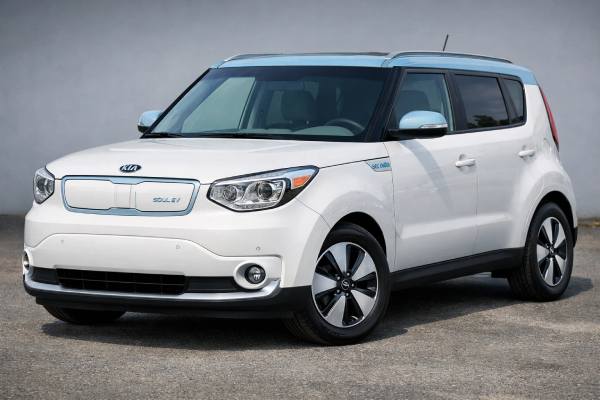
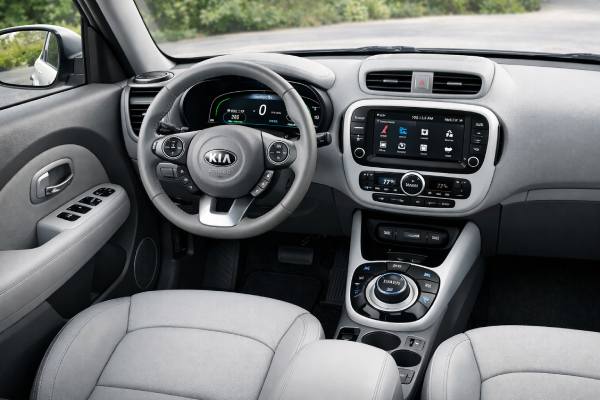
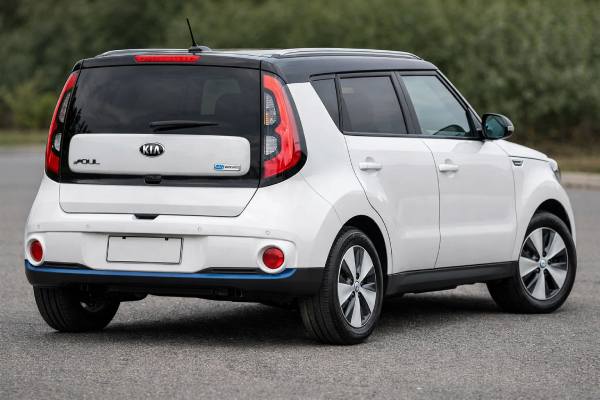
The 2018–2019 Kia Soul EV AM facelift is one of those electric cars that makes more sense the longer you look at it. It is not fast by modern EV standards, and its battery is small beside newer rivals, but the engineering brief was clear and still holds up well. Kia paired a compact 81.4 kW front motor with a 30 kWh battery, a simple single-speed reduction gear, and a tall, square body that is easy to enter, easy to park, and surprisingly practical inside.
For the right owner, its appeal is straightforward. The facelifted Soul EV has predictable controls, useful low-speed torque, a standard heat-pump HVAC system in key markets, and charging hardware that still works well for local and regional driving. The main ownership question is battery condition, not drivetrain complexity. Buy one with strong state-of-health, completed recall work, and a clean charging history, and this late first-generation Soul EV can still be a smart used EV.
Fast Facts
- Strong low-speed torque and upright visibility make it an easy city EV to live with.
- The facelift version benefits from a 30 kWh pack, six-airbag safety structure, and useful standard EV hardware.
- Heat-pump HVAC and 6.6 kW AC charging help everyday efficiency and home charging convenience.
- Battery health and completed high-voltage recall work matter more than cosmetic condition.
- A practical service rhythm is every 15,000 km or 12 months, with more frequent brake and tyre checks in hard urban use.
What’s inside
- Kia Soul EV Facelift Profile
- Kia Soul EV Data Tables
- Kia Soul EV Grades and Safety
- Battery Health and Known Trouble
- Ownership Schedule and Buying Checks
- Range Behavior and Driving Feel
- Soul EV Versus Used EVs
Kia Soul EV Facelift Profile
The facelifted Soul EV is best understood as a refined late version of Kia’s first serious mass-market battery EV, not as a rival to the newer 40 to 70 kWh cars that followed it. That distinction matters. If you judge it by today’s range race, it looks modest. If you judge it by purpose, packaging, and long-term usability, it still has a strong case.
For this article, the baseline is the 2018–2019 North American facelift model with the 81.4 kW motor and 30 kWh battery, because that is the clearest official configuration for this output. In other markets, equipment and connector standards could differ, but the core engineering stayed recognizable: front-wheel drive, a single-speed reduction unit, a high floor due to the battery pack, and a tall body that favors practicality over style-led aerodynamics.
That body shape is central to the Soul EV’s appeal. The cabin feels airy, the roof is tall enough for adults, and the driving position is natural for people who dislike dropping down into a low hatchback. The rear seat is square rather than sleek, and the cargo area is useful in the real world because the opening is tall and the shape is easy to load. This is one of the reasons the Soul EV still attracts buyers who want a small EV but do not want a tiny one.
The facelift also arrived at the right time. Kia had already learned from the earliest Soul EVs, and by 2018–2019 the package felt more settled. The battery was larger than the original 27 kWh version, range improved, and the charging hardware remained straightforward. The car also kept features that matter in daily use, such as a heat pump, regenerative braking modes, navigation-based energy displays, and a simple cabin layout that does not bury routine functions.
Its limits are just as clear. Highway range is modest by current standards. Fast charging works, but this is an older CHAdeMO-based system and not a long-distance specialist. The passive battery approach is less robust in repeated hot-weather rapid-charging use than a newer liquid-managed pack. That does not make it a weak used EV. It means the Soul EV rewards buyers who know what it is for: commuting, urban miles, regional errands, and predictable daily charging. In that role, it remains one of the friendlier first-generation used EVs to own.
Kia Soul EV Data Tables
Powertrain and battery
| Spec | Value |
|---|---|
| Motor type | AC synchronous permanent magnet motor |
| Motor count and axle | Single motor, front axle |
| System voltage | 360 V |
| Battery chemistry | Lithium-ion polymer |
| Traction battery energy | 30 kWh |
| Battery voltage | 375 V |
| Battery capacity | 75 Ah |
| Battery power | 90 kW |
| Battery pack weight | 605 lb (274 kg) |
| Battery pack volume | 241 L (8.5 ft³) |
| Max power | 109 hp (81.4 kW) |
| Max torque | 285 Nm (210 lb-ft) |
| Thermal management | Air-cooled battery, heat-pump HVAC, high-voltage PTC heater |
| Efficiency test standard | EPA |
| Rated efficiency | 19.3 kWh/100 km (312 Wh/mi) combined |
| Rated range | 179 km (111 mi) EPA |
| Real-world highway @ 120 km/h (75 mph) | about 21.5–23.5 kWh/100 km (346–378 Wh/mi); about 128–140 km (80–87 mi) |
Charging and driveline
| Spec | Value |
|---|---|
| Transmission / drive unit | Single-speed gear reduction unit |
| Final drive ratio | 8.206:1 |
| Drive type | FWD |
| Differential | Open |
| Charging connector (AC) | J1772, single-phase, 120 V or 208–240 V |
| Charging connector (DC) | CHAdeMO |
| Charging port location | Behind front grille |
| Onboard charger (AC) | 6.6 kW |
| Max AC acceptance | 6.6 kW |
| DC fast-charge peak | 50 kW |
| Replenishment time, DC 10–80% | about 35 min |
| Replenishment time, AC 0–100% | about 5 h 10 min to 6 h at 240 V / 6.6 kW |
| Replenishment time, AC 0–100% at 120 V | about 33 h |
| Battery preconditioning for DC charging | Not fitted |
Performance and capability
| Spec | Value |
|---|---|
| 0–100 km/h (0–62 mph) | about 11.7 s |
| 0–60 mph | 11.2 s |
| 80–120 km/h (50–75 mph) | about 9.3 s |
| Top speed | 145 km/h (90 mph) |
| Braking distance 100–0 km/h | 42.7 m |
| Braking distance 62–0 mph | 140 ft |
| Towing capacity | Not recommended |
Chassis and dimensions
| Spec | Value |
|---|---|
| Suspension, front / rear | MacPherson strut / coupled torsion beam axle |
| Steering | Motor-driven power steering, 15.7:1 |
| Brakes, front / rear | Ventilated disc / solid disc, 300 mm (11.8 in) / 282 mm (11.1 in) |
| Parking brake | Electronic parking brake |
| Wheels and tyres | 205/60 R16 on 16 in alloy wheel |
| Ground clearance | 150 mm (5.9 in) |
| Approach / departure angle | 17.3° / 29.2° |
| Length / width / height | 4,140 mm / 1,801 mm / 1,600 mm (163.0 / 70.9 / 63.0 in) |
| Wheelbase | 2,570 mm (101.2 in) |
| Turning circle, kerb-to-kerb | about 10.6 m (34.8 ft) |
| Kerb weight | 1,492 kg (3,289 lb) |
| GVWR | 1,960 kg (4,321 lb) |
| Cargo volume | 532 L / 1,402 L (18.8 / 49.5 ft³), SAE |
Safety and service data
| Spec | Value |
|---|---|
| Euro NCAP | 4 stars; adult 75%, child 82%, pedestrian 59%, safety assist 56% |
| Airbags | Front, front side, and full-length curtain |
| Child-seat provision | ISOFIX on rear outboard seats |
| ADAS suite | AEB not available; ACC not available; lane support not available; blind-spot monitoring not fitted |
| EV-specific features | Heat-pump HVAC, regenerative braking mode, charge-port lighting, charge-status indicators |
| 12 V battery | 45 Ah |
| Brake fluid | DOT 4 |
| Service interval | 15,000 km or 12 months |
Kia Soul EV Grades and Safety
The late Soul EV was never sold in huge numbers, which makes trim knowledge more important when you shop. In the baseline U.S. market, the key trims were EV and EV+. Mechanically, they were very close. Both used the same 81.4 kW motor, the same 30 kWh battery, the same 6.6 kW onboard charger, and the same CHAdeMO fast-charge setup. That means a buyer does not have to chase the upper trim for more range or better core performance. The main differences are comfort, cabin finish, and a few convenience features.
The standard EV trim was already well equipped. It included J1772 and CHAdeMO charging hardware, the heat-pump HVAC system, the high-voltage PTC heater, regenerative braking, navigation with an 8-inch screen, a rear-view camera, heated steering wheel, heated front seats, cruise control, and the full airbag package. That is a better baseline than many used EV rivals from the same period.
The EV+ added the extras that matter more to some buyers than others. You gained features such as front fog lamps, power-folding mirrors, leather upholstery, ventilated front seats, heated rear outboard seats, auto-dimming mirror, additional cargo conveniences, and optional upgrades such as a panoramic sunroof. In pure used-car logic, the EV+ is nicer, but the base EV is often the better value because it keeps the same motor, charging, and battery hardware.
Quick identifiers help when seller descriptions are vague. Both trims wear the distinct Soul EV front end with the charge flap behind the grille. Inside, EV+ cars are the ones more likely to have leather, ventilated seats, and the more upscale cabin trim. The panoramic roof is a visual clue on equipped upper-spec cars, but it is not always the best ownership choice because it adds weight and one more item to inspect for noise or water-entry issues.
Safety is solid rather than class-leading by modern standards. The Soul EV earned a four-star Euro NCAP result under the tougher 2014 protocol, with strong child-occupant performance and respectable pedestrian protection for the time. That rating is not a 2018-specific retest, but it remains the relevant platform-era benchmark for this body and EV structure. The car also includes six airbags, ESC, ABS, brake assist, hill-start assist, tire-pressure monitoring, and rear ISOFIX points.
What you do not get is a modern ADAS package. There is no automatic emergency braking, adaptive cruise control, blind-spot radar, or lane-keeping system. For some buyers that is a drawback. For others it is a cost advantage, because there is less calibration burden after windscreen replacement and less sensor complexity as the car ages. In used EV terms, the Soul EV’s equipment mix is sensible: enough comfort and EV-specific hardware to feel modern, without the repair overhead of later semi-automated systems.
Battery Health and Known Trouble
The 2018–2019 Soul EV is usually a dependable used EV when it has a healthy battery and a documented service history, but it has a few patterns that buyers need to understand. As with many early EVs, the expensive question is not “does it have lots of small faults?” It is “is the high-voltage system healthy, and was the official campaign work completed?”
The big headline issue is the high-voltage battery recall covering certain 2015–2019 Soul EVs. For 2018–2019 cars, the official remedy centered on updated battery-management software and inspection of the pack, with battery replacement where required. This is the first thing to verify on any used example. If a seller cannot prove recall completion, treat that as unfinished business, not as a small paperwork gap.
Outside the recall, battery condition is the real ownership divider. The 30 kWh facelift cars generally hold up better than the earlier 27 kWh versions, but they still use an older battery strategy that is less tolerant of repeated heat exposure and back-to-back fast charging than newer liquid-cooled EVs. Healthy cars in moderate climates can still feel strong and usable. Cars that spent years in very hot climates, sat fully charged for long periods, or lived on repeated rapid charging deserve closer scrutiny. Ask for a battery state-of-health report, not just dashboard range.
The common lower-cost issues are more ordinary. Twelve-volt battery weakness is one of the most frequent causes of strange behavior in older EVs. Symptoms include warning messages, no-ready events, charging interruptions, and erratic electrical behavior. The fix is often simple, but a tired 12 V battery can imitate bigger faults.
Brake hardware is another routine pain point. Because the car uses regenerative braking often, the friction brakes may do little work on lightly used urban cars. That can lead to sticky sliders, rusty rear discs, and uneven pad wear. A Soul EV with neglected brakes can feel rough or grabby even if the motor and battery are fine.
Occasional faults include onboard charger problems, charge-port latch or seal wear, coolant-level warnings, and HVAC faults related to the heat-pump or PTC heater system. None of these is universal, but they are worth checking because they affect daily usability more than headline performance.
Drive-unit and chassis faults are usually age-related rather than EV-specific disasters. Listen for front wheel bearing noise, reduction-gear whine, and worn front-end links or bushes. Also inspect the underbody carefully. On EVs, corrosion is not just a body issue. You want to see clean battery-case mounting points, intact undertrays, and no evidence of moisture intrusion around charging components. A good Soul EV should feel quiet, predictable, and ordinary. Drama is usually a warning sign.
Ownership Schedule and Buying Checks
Owning this Soul EV well is less about big scheduled parts replacement and more about staying ahead of the systems that age quietly: the 12 V battery, brakes, tyres, cooling hardware, and the high-voltage battery’s usable health. The official service rhythm is light, but used buyers should think in practical intervals rather than in the minimum needed to keep a service book stamped.
A sensible real-world schedule looks like this:
- General inspection and software scan every 15,000 km or 12 months.
- Cabin air filter every 15,000–20,000 km or 12 months.
- Brake inspection, including pad movement and corrosion check, every 15,000 km or 12 months.
- Brake fluid every 24 months.
- Tyre rotation every 10,000 km or sooner if front wear appears.
- Alignment check at least yearly, and immediately if the steering wheel sits off-center or tyre shoulders wear unevenly.
- 12 V battery load test every year from year four onward; many cars need replacement in the year-four to year-six window.
- High-voltage battery health check yearly, and always before purchase.
- Cooling-system inspection every service, with extra attention to leaks, pumps, fans, and correct coolant history.
- Reduction-gear and drive-unit leak and noise inspection every service; long-term owners often choose a preventive fluid refresh around 90,000–120,000 km.
Frequent DC fast charging, very hot weather, repeated high-speed driving, and long periods parked at 100% state of charge count as severe use for this car. Under those conditions, shorten inspections for tyres, brakes, cooling hardware, and battery-health checks.
For buying, focus on six things. First, get a documented battery state-of-health report and compare it with the displayed range at a known state of charge. Second, test both AC and DC charging if possible, because charge-port and onboard-charger faults do not always show up on a short road test. Third, verify recall completion and ask whether the battery pack or modules were ever replaced. Fourth, inspect the friction brakes closely, because neglected EV brakes can need a full refresh. Fifth, check the 12 V battery age and the condition of the cooling hardware and front radiator area. Sixth, listen for drive-unit whine and front suspension knocks.
The best used examples are usually 2019 cars with complete charging history, completed recall work, and no evidence of battery abuse. I would prioritize a clean EV over a cosmetically nicer EV+ with weak battery health. Long term, the Soul EV’s durability outlook is decent. The likely expensive item remains the battery pack, while the rest of the car is usually manageable if corrosion and charging issues have not been ignored.
Range Behavior and Driving Feel
The Soul EV does not drive like a hot hatch, but it does drive like a well-sorted small EV. Step-off is smooth, immediate, and easier than the numbers suggest because the 285 Nm arrives right away. Around town, that makes the car feel more alert than its 11.2-second 0–60 mph time implies. The response is clean, predictable, and easy to meter in traffic.
The low-mounted battery helps the chassis more than many buyers expect. The Soul still sits tall and boxy, so there is body movement in quick transitions, but the extra mass down low gives it a planted feel through city corners and roundabouts. Steering is light rather than talkative, and that suits the car. It is easy to thread through urban gaps and simple to place in parking spaces.
Ride quality is decent on the standard 16-inch setup. That tyre package is an underrated strength, because it helps absorb broken surfaces and keeps rolling resistance reasonable. The Soul EV is not especially quiet on a fast motorway, though. Wind noise becomes noticeable at highway speed, and the upright shape pays an aerodynamic price. This is one of the reasons high-speed range falls away more quickly than in a sleeker EV like the Ioniq Electric.
Regenerative braking is useful but old-school. Kia gave the car a straightforward max-regeneration drive mode rather than a full modern one-pedal system. It is easy to adapt to, and many owners end up using it often in traffic, but it does not deliver the same single-pedal feel as newer EVs. The brake pedal itself is usually smooth when the system is healthy, though neglected friction hardware can make the handoff feel rough.
Real-world range depends heavily on speed and weather. In mild urban use, a healthy car can still manage roughly 160–190 km. Mixed driving often lands around 145–175 km. At a steady 120 km/h, expect more like 128–140 km, sometimes less in winter. Cold weather, cabin heating, wet roads, and elevation changes can cut usable range by 20 to 35 percent. That sounds severe, but it is normal for a small-battery EV of this generation.
Home charging is one of the car’s stronger ownership traits. The 6.6 kW onboard charger is still good enough for overnight charging, and a full charge from a 240 V supply takes roughly five to six hours. DC charging is adequate for occasional top-ups, with 10 to 80 percent in about 35 minutes under good conditions. The limitation is consistency. Without modern battery preconditioning, charge speed depends more heavily on battery temperature and recent use, and repeated fast charging can bring earlier tapering. For daily commuting, though, the Soul EV remains easy to live with.
Soul EV Versus Used EVs
The facelift Soul EV sits in an interesting spot in the used EV market because it blends practicality and simplicity better than many direct rivals, even if it does not win on outright range. Its closest natural alternatives are the Nissan Leaf, Volkswagen e-Golf, Hyundai Ioniq Electric, and BMW i3 94 Ah.
Against the 40 kWh Nissan Leaf, the Soul EV loses on outright range and newer-car feel. The Leaf is the stronger choice for drivers who need more margin between charges. But the Soul EV has a few quiet advantages. Its upright body is easier to enter, the cargo shape is more practical than the Leaf’s sloping hatch suggests, and some buyers prefer its more playful cabin and better outward visibility. Neither car is a thermal-management champion in heavy fast-charge use, so the Soul is not as badly outclassed there as the raw battery figures suggest.
Against the Volkswagen e-Golf, the Kia usually loses on motorway polish. The e-Golf is calmer at speed, more refined in ride and cabin noise, and feels more conventional. The Soul answers with easier entry, a more upright load space, and often a more appealing equipment mix for buyers who care about heat-pump efficiency and simple packaging.
Against the Hyundai Ioniq Electric, efficiency is the big dividing line. The Ioniq is clearly the smarter long-range tool because it slices through the air better and stretches each kilowatt-hour further. The Soul EV counters with a taller seating position, more van-like cabin usability, and easier day-to-day access. If your usage is urban and suburban, the Soul’s packaging can matter more than the Ioniq’s aerodynamic edge.
Against the BMW i3, the Soul EV looks less exotic but more conventional. The i3 is quicker, lighter on its feet, and more technically ambitious. It can also be more expensive to buy and less straightforward to repair as it ages. The Kia is simpler in feel and usually easier for a mainstream workshop or buyer to understand.
So who should choose the Soul EV? The best fit is a buyer who wants a compact used EV for commuting, town work, short regional trips, and easy access. It is especially strong for drivers who care more about seating position and practical packaging than about headline acceleration. I would steer longer-distance motorway users toward a more aerodynamic rival with a larger battery, but for local EV duty, the facelift Soul EV still makes a persuasive case. Its charm is not that it beats every rival. It is that it stays honest about what it does well, and it still does those things with very little fuss.
References
- 2019 Kia Soul EV Specifications 2019 (Specifications)
- 2019 Kia Soul EV Features & Options 2019 (Features)
- Kia Service Intervals 2025 (Service Intervals)
- Kia Soul EV – Euro NCAP Results 2014 2014 (Safety Rating)
- Part 573 Safety Recall Report 23V-218 2023 (Recall Database)
Disclaimer
This article is for informational purposes only and is not a substitute for professional diagnosis, repair, or vehicle-specific service advice. Specifications, torque values, maintenance intervals, procedures, charging hardware, and fitted equipment can vary by VIN, market, battery pack, and trim, so always verify details against official service documentation for the exact vehicle.
If this guide helped you, please share it on Facebook, X, or another platform to support our work.