

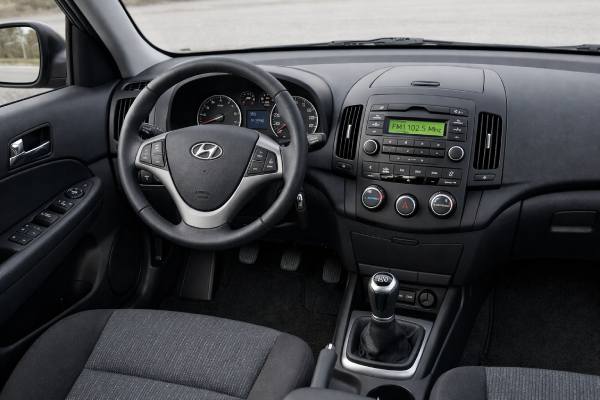
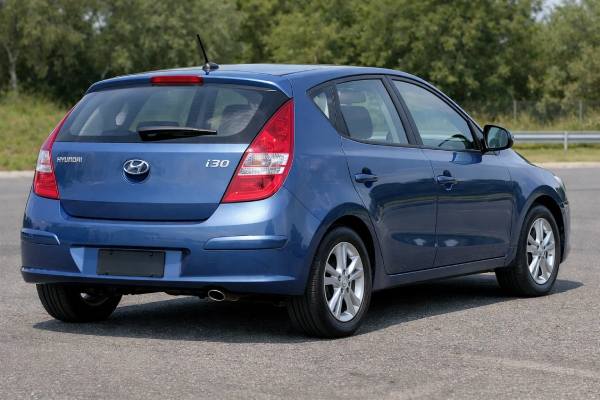
The first-generation Hyundai i30 FD mattered because it helped move Hyundai from a value-first brand into the mainstream compact-hatch conversation. In 1.6 MPI form, it still makes sense today because it combines a simple naturally aspirated petrol engine, multi-point fuel injection, and a timing chain with a roomy five-door body and reasonable running costs. On paper, 126 hp is modest, but in daily use it is enough, especially with the five-speed manual. The bigger appeal is ownership logic: fewer high-stress parts than a small turbo petrol, fewer carbon-build concerns than later direct-injection engines, and enough space to work as a practical family hatch. The main caution is that safety equipment varied by market and trim, and age-related steering problems deserve careful checking before purchase. For buyers who want a straightforward used hatchback, the i30 FD 1.6 MPI remains one of the more sensible options from its era.
Owner Snapshot
- The 1.6 MPI uses a naturally aspirated, multi-point-injected G4FC engine with a timing chain, which helps keep the mechanical package relatively simple.
- The hatchback body is practical for its size, with a 340 L boot and up to 1,250 L with the rear seats folded.
- The five-speed manual is the better all-round choice, with stronger performance and lower official fuel use than the four-speed automatic.
- Steering history matters, because official service actions covered both a steering-column joint issue and electric power-steering faults on some cars.
- A sensible baseline service rhythm is engine oil every 15,000 km or 12 months, with spark plugs and fuel filter typically due at 60,000 km.
Guide contents
- Hyundai i30 FD essentials
- Hyundai i30 FD specs
- Hyundai i30 FD trims and safety
- Reliability and service actions
- Maintenance and buyer checks
- Driving feel and economy
- How the i30 FD compares
Hyundai i30 FD essentials
The FD-generation Hyundai i30 was one of the company’s first compact hatchbacks that felt engineered to compete directly with European mainstream rivals rather than merely undercut them on price. That is still important when judging the car today. The 1.6 MPI version is not the fastest in the range, but it is arguably the most rational used buy because it keeps the engineering simple: naturally aspirated induction, multi-point fuel injection, four cylinders, and a chain-driven DOHC valvetrain. For long-term ownership, that matters more than headline acceleration.
In everyday use, the i30 1.6 MPI is about balance rather than excitement. The engine produces 126 hp at 6,200 rpm and 154 Nm at 4,200 rpm, so it does not deliver strong low-rpm shove, but it revs cleanly and is easy to use. The five-speed manual suits the engine better than the optional four-speed automatic because it helps the car stay in its useful power range and also returns better official economy. For buyers choosing between the two, the manual is usually the better ownership decision unless traffic demands an automatic.
The broader ownership case is strong. A 53 L fuel tank, a useful 340 L boot, and a roomy cabin make the i30 FD practical even by current standards as a second family car or everyday commuter. Its appeal is also tied to age. At this point, condition is much more important than the brochure specification. A clean, well-maintained 1.6 MPI with complete service history and confirmed steering recall work is usually a better purchase than a higher-trim example with poor maintenance.
Safety is the area where buyers need to be exact. The structure was competitive for its time, but trim and market differences matter. Some versions had stronger passive-safety equipment and ESC, while others did not. Modern active-safety systems such as autonomous emergency braking, lane-keeping assist, and blind-spot monitoring were not part of the package. So the i30 FD still works as a durable and practical used hatchback, but it should be bought with clear expectations: simple mechanicals, useful space, and low-stress ownership, not modern driver-assistance technology.
Hyundai i30 FD specs
The figures below refer to the 2007–2010 Hyundai i30 FD 1.6 MPI five-door hatchback with the five-speed manual unless otherwise noted. Automatic cars, local trim levels, wheel packages, emissions calibrations, and safety equipment can differ by market, so this is best read as a baseline technical profile for the model.
| Powertrain and efficiency | Value |
|---|---|
| Code | G4FC |
| Engine layout and cylinders | Inline-4, DOHC, 4 valves per cylinder |
| Bore × stroke | 77.0 × 85.4 mm (3.03 × 3.36 in) |
| Displacement | 1.6 L (1,591 cc) |
| Induction | Naturally aspirated |
| Fuel system | Multi-point manifold injection |
| Compression ratio | 10.5:1 |
| Max power | 126 hp (93 kW) @ 6,200 rpm |
| Max torque | 154 Nm (113.6 lb-ft) @ 4,200 rpm |
| Timing drive | Chain |
| Rated efficiency | 6.2 L/100 km combined (37.9 US mpg / 45.6 UK mpg) |
| Urban / extra-urban | 8.0 / 5.2 L/100 km |
| Real-world highway @ 120 km/h (75 mph) | Typically about 6.5–7.2 L/100 km in normal use |
| Transmission and driveline | Value |
|---|---|
| Transmission | 5-speed manual |
| Optional transmission | 4-speed automatic |
| Drive type | FWD |
| Differential | Open |
| Automatic official combined economy | 6.9 L/100 km |
| Automatic 0–100 km/h | 12.1 s |
| Chassis and dimensions | Value |
|---|---|
| Suspension, front / rear | Independent MacPherson strut / independent multi-link |
| Steering | Rack-and-pinion, electric power assist |
| Brakes | Ventilated front discs / rear discs |
| Most common tyre size | 185/65 R15 |
| Other wheel packages | 16-inch and 17-inch wheels on higher trims in some markets |
| Length / width / height | 4,245 / 1,775 / 1,480 mm (167.1 / 69.9 / 58.3 in) |
| Wheelbase | 2,650 mm (104.3 in) |
| Turning circle | 10.2 m (33.5 ft) |
| Kerb weight | 1,193 kg (2,630 lb) |
| GVWR | 1,720 kg (3,792 lb) |
| Payload | 527 kg (1,162 lb) |
| Fuel tank | 53 L (14.0 US gal / 11.7 UK gal) |
| Cargo volume | 340–1,250 L (12.0–44.1 ft³) |
| Performance and service capacities | Value |
|---|---|
| 0–100 km/h | 11.1 s |
| Top speed | 192 km/h (119.3 mph) |
| Braking distance | Varies by tyre and test source; no single open official figure is consistently published for this exact trim |
| Engine oil capacity | About 3.3 L change fill; about 3.7 L total system |
| Common oil grades | 0W-30 or 5W-30 |
| Coolant capacity | 6.0 L (6.34 US qt) |
| Fuel type | Petrol |
| Emissions standard | Euro 4 |
| A/C refrigerant | R134a is typical; exact charge varies by market and compressor setup |
| Key torque specs | Verify by VIN-specific workshop data before using any critical torque figure |
| Safety and driver assistance | Published information |
|---|---|
| Crash rating context | Period old-protocol small-family-car testing |
| Overall safety result | Competitive for the era |
| ABS / EBD | Standard in many listed markets |
| Side airbags / curtains / ESC | Trim- and market-dependent |
| ADAS | No AEB, lane support, adaptive cruise control, or blind-spot monitoring |
The numbers reveal a clear picture. This is a sensible family hatch rather than a quick one. The manual is materially better than the automatic for both performance and fuel use. The mechanical layout is uncomplicated by modern standards, which helps long-term maintenance. And because specifications changed by region, trim, and year, buyers should always verify the exact equipment of the car they are considering rather than assuming all 1.6 MPI cars were identical.
Hyundai i30 FD trims and safety
Trim naming varied by market, so the smartest way to evaluate the i30 FD is by actual equipment rather than the badge on the tailgate. In many markets, lower trims focused on value, mid-level versions added comfort features, and top trims brought larger alloy wheels, better cabin trim, climate control, parking sensors, and extra convenience equipment. That means two cars with the same engine and body shape can feel quite different in daily use and can also differ in safety content.
Base versions usually had smaller wheels, more basic upholstery, and fewer convenience features. Mid-level cars often added a leather steering wheel, improved audio controls, alloy wheels, and a better overall cabin feel. Higher trims were more likely to bring climate control, rain-sensing wipers, cruise control, parking sensors, and upgraded seat trim. For used buyers, these details matter because they help identify the original equipment level quickly, even when sellers do not know the trim accurately.
Safety equipment requires even closer attention. The i30 FD’s body structure was competitive for its time, but passive-safety equipment was not equally generous across all markets and grades. ABS and EBD were widely available, but side airbags, curtain airbags, and ESC were sometimes standard only on higher trims or optional on lower ones. This makes trim verification more important than it might be on a newer car with globally standardized safety packages.
In practical terms, the safest used buy is the one with verified ESC and the full side-curtain airbag setup where those were available. Buyers should also look for ISOFIX or LATCH child-seat points if family use matters. The i30 FD did well enough in period crash testing to be taken seriously as a family hatch, but that result belongs to its time. It does not provide the active intervention systems now expected in modern compact cars.
There is also a useful buying lesson here. A higher trim is not automatically the better car unless it combines stronger safety equipment with good service history. A lower-trim example with full maintenance records and confirmed recall work may still be the better long-term choice than a more luxurious version that has been neglected. On older hatchbacks, verified condition is always worth more than a longer options list.
Reliability and service actions
The 1.6 MPI engine is one of the most reassuring parts of the i30 FD package. It avoids turbocharger complexity, does not use direct injection, and relies on a timing chain rather than a scheduled cambelt replacement. That does not make it fault-free, but it does mean the core mechanical design is relatively straightforward and usually cheaper to keep healthy than many later downsized petrol engines. Most ownership trouble on these cars comes from age, maintenance gaps, and a few known steering concerns rather than from a deeply flawed engine design.
The most important official service actions involve the steering system. One recall addressed a steering-column universal-joint bolt that may not have been tightened correctly, which could lead to noise, looseness, or steering-control concerns. Another service action covered motor-driven power-steering faults on some 2009–2010 cars, where the symptoms could include heavier steering effort and an illuminated EPS warning light. These are not items to guess about. Any buyer should ask for VIN-based recall confirmation and workshop documentation showing the relevant checks or repairs were completed.
Outside formal campaigns, steering-related wear remains one of the most important day-to-day checks on the i30 FD. Common owner complaints on older cars include clunks or knocks felt through the steering wheel, especially at low speed or over rough surfaces. The symptom pattern often points to wear in steering couplers, joints, or related column components. The good news is that accurate diagnosis matters more than blind parts replacement, because not every noise means the whole steering assembly is bad.
The engine itself is generally robust when serviced on time, but age still creates predictable weak points. Neglected oil changes can lead to noisier timing-chain operation and rougher running. Cooling-system maintenance matters because older hoses, seals, and coolant lose their margin with age. Ignition components and service items such as spark plugs also become more important as mileage rises. The car is not especially prone to catastrophic failures when maintained, but it does punish neglect in the usual ways: poor idle, reduced fuel economy, warning lights, and avoidable wear.
For pre-purchase checks, ask for a cold start, a full road test, service invoices, and proof of steering-related campaign work. Listen for chain rattle on start-up, feel for EPS heaviness or notchiness, and inspect tyres and suspension for clues to poor alignment or hard use. A well-kept i30 FD 1.6 MPI can still be a durable and low-stress hatchback. A neglected one can become a long list of medium-cost repairs very quickly.
Maintenance and buyer checks
A consistent maintenance routine is what makes the i30 FD 1.6 MPI a good used-car proposition. The engine and chassis are not unusually demanding, but the car benefits from regular servicing rather than long gaps followed by major catch-up work. A practical baseline is engine oil every 15,000 km or 12 months, engine air filter every 45,000 km, spark plugs and fuel filter every 60,000 km, and coolant plus serpentine belt around 120,000 km, with coolant also tied to time as well as distance.
| Item | Practical interval | Notes |
|---|---|---|
| Engine oil and filter | Every 15,000 km or 12 months | About 3.3 L on a routine oil change |
| Engine air filter | Every 45,000 km | Inspect earlier in dusty conditions |
| Cabin air filter | Inspect regularly; replace as needed | Often overlooked on older cars |
| Fuel filter | Every 60,000 km | Worth doing if history is uncertain |
| Spark plugs | Every 60,000 km | Replace on schedule, not only after misfire |
| Timing chain | No fixed routine replacement interval | Inspect for noise, stretch symptoms, or timing faults |
| Serpentine belt | Around 120,000 km | Check condition at each service |
| Coolant | Around 120,000 km or by time limit | Capacity about 6.0 L |
| Brake fluid | Every 2 years is a sensible preventive interval | Especially important on older cars |
| Manual / automatic transmission fluid | Check condition and service history | A preventive fluid refresh is wise on aging cars |
| Brake pads and rotors | Inspect at every service | Rust, lip wear, and uneven pad wear matter |
| Tyre rotation and alignment | Inspect regularly | Uneven wear often reveals suspension or steering problems |
| 12 V battery | Test as the car ages | Many intermittent faults start here |
For fluid choice, use an engine oil grade appropriate to climate and official specification, commonly 0W-30 or 5W-30 on this engine. Coolant, transmission fluid, and any other service fluids should always be matched to the correct Hyundai specification for the exact VIN and gearbox. That is particularly important on older used cars because many have mixed service histories and undocumented workshop work.
The best buyer’s version is usually the manual 1.6 MPI with clear service history, strong safety equipment, and evidence that steering-related campaigns were addressed. During inspection, check for coolant seepage, tired suspension, uneven tyre wear, steering knock, electrical faults, and corrosion underneath. Also inspect the boot floor, door shuts, and subframe areas in climates where road salt is common.
The long-term durability outlook is good for a car of this type. It is not exotic, and that is exactly why it works. When maintained properly, the i30 FD 1.6 MPI tends to age like a normal, usable family hatch rather than a complicated one with expensive surprises.
Driving feel and economy
The i30 FD 1.6 MPI feels mature and honest on the road. It is not a hot hatch, but it was tuned to feel more complete than many buyers expected from Hyundai at the time. The suspension delivers a sensible compromise between comfort and control, and the car feels stable enough at motorway speed for regular long-distance use. A healthy example still comes across as solid and predictable, which is one of its strongest long-term qualities.
The engine character suits the rest of the car. With 126 hp and 154 Nm, the 1.6 MPI is smooth and linear rather than punchy. It needs revs for brisk progress, especially when overtaking or joining faster roads. That is why the manual gearbox is the better fit. It makes the most of the power band and gives the car a more responsive feel. The four-speed automatic is usable, but it softens performance and is more of a convenience option than a dynamic one.
Officially, the manual car reaches 100 km/h in 11.1 seconds and a top speed of 192 km/h. The automatic takes 12.1 seconds and tops out at 183 km/h. Neither set of numbers is exciting, but both are enough for normal daily use. What matters more is that the car feels predictable and easy to place, and that its controls make sense when the mechanical condition is good.
Real-world fuel economy is one of the i30’s better strengths. The manual’s official combined figure is 6.2 L/100 km, with 8.0 L/100 km urban and 5.2 L/100 km extra-urban. In everyday use, most drivers should expect something closer to the high-sixes or low-sevens overall, depending on traffic, temperature, tyre choice, and driving style. Dense urban use can push that figure upward, while steady highway travel can keep it comfortably lower. The automatic generally consumes more fuel in every scenario.
Noise levels are acceptable for the class and era. The engine stays smoother than many contemporary small diesels, and the body usually feels better tied down than cheaper rivals from the same period. Brake feel, steering precision, and ride quality now depend heavily on maintenance, tyre quality, and suspension wear. In other words, the i30 FD’s road manners today reflect care more than age alone. A well-kept one still feels like a competent family hatch. A tired one quickly reveals every year it has lived.
How the i30 FD compares
The most obvious rival is the first-generation Kia Cee’d 1.6 petrol, because it shares much of its engineering philosophy and, in broad terms, its mechanical character. In used-car terms, these two models are close enough that condition, service history, and safety equipment should decide the purchase rather than brand loyalty. The Kia often feels like the i30’s nearest substitute, not a fundamentally different choice.
A Toyota Auris 1.6 from the same era usually offers strong reputation value and a slightly more conservative market image. For some buyers, that still matters. The Hyundai counters with strong practicality, simple naturally aspirated engineering, and often better value on the used market. The Toyota may feel like the safer brand choice, but the Hyundai can be the smarter buy when price and condition are weighed together.
Compared with a Ford Focus of the period, the i30 FD does not quite reach the same steering polish or driver appeal. The Focus still tends to be the benchmark for handling feel in this class and era. But the Hyundai closes the gap more than many expect, while often feeling like the easier ownership proposition if you want straightforward petrol power without extra complexity.
That is the real verdict. The i30 FD 1.6 MPI is not the most charismatic or prestigious hatchback from the late 2000s, but it is one of the most rational. It offers usable space, simple engineering, fair fuel economy, and a good chance of low-stress ownership if you buy carefully. For many people, that matters more than sharper steering or a stronger badge.
References
- Hyundai i30 | Safety Rating & Report | ANCAP 2007 (Safety Rating)
- REC-000611 – Hyundai Motor Company – HYUNDAI i30 | Vehicle Recalls 2014 (Recall Database)
- REC-000612 – Hyundai Motor Company – HYUNDAI i30 (FD) , Elantra (HD) 2009 – 2010 | Vehicle Recalls 2015 (Recall Database)
- Hyundai i30 I 1.6 (126 Hp) | Technical specs, data, fuel consumption, Dimensions 2026 (Technical Data)
- Hyundai i30 2008 1.6 petrol (2008, 2009, 2010) service information and maintenance intervals 2026 (Service Guide)
Disclaimer
This article is for informational purposes only and is not a substitute for professional diagnosis or repair. Specifications, torque values, service intervals, and procedures vary by VIN, market, transmission, and equipment, so always verify critical details against the official service documentation for the exact vehicle.
Please consider sharing this guide on Facebook, X, or another social platform if you found it useful. It helps support our work.