
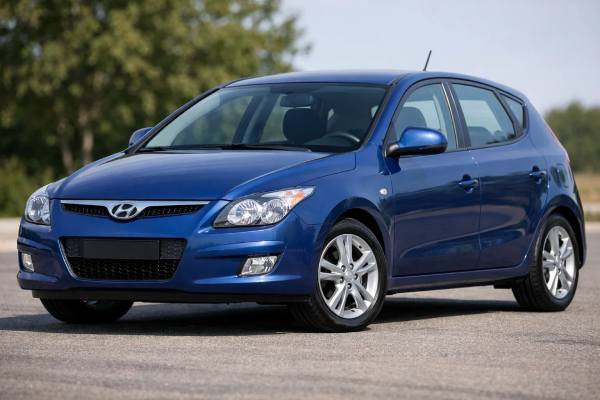
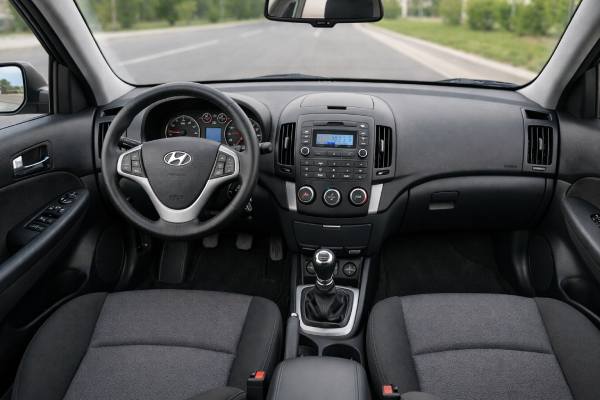
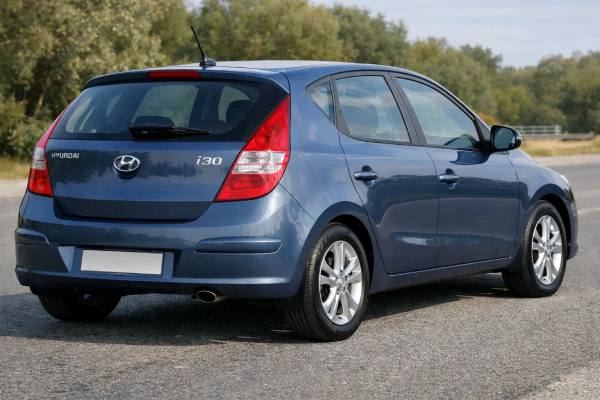
The first-generation Hyundai i30 FD 1.6 CRDi 90 hp sits in a useful sweet spot: it is not fast or flashy, but it combines honest diesel torque, compact family-car packaging, and running costs that can still make sense today. In 2007–2010 form, this version was aimed at drivers who wanted strong fuel economy, a practical five-door body, and more standard safety equipment than many budget-focused rivals of the time. The 1.6-liter common-rail diesel is the key story here. It gives the i30 easy low-speed pull and solid motorway range, while the FD platform adds a roomy cabin, independent rear suspension, and predictable road manners. The main caution is age: these cars are now old enough that condition and service history matter more than the badge or trim name. A well-kept example can still be a sensible daily car. A neglected one can quickly turn into a chain, clutch, DPF, or corrosion project.
Quick Specs and Notes
- Strong diesel torque makes the 90 hp car feel better in normal traffic than the power figure suggests.
- Practical hatchback body with a useful 340 L boot and a roomy 2,650 mm wheelbase.
- Standard ESP, ABS, and six airbags were real strengths for a mainstream hatch of this era.
- Short-trip use is hard on DPF-equipped cars and can also worsen EGR and intake-soot issues.
- A sensible oil-and-filter interval is every 10,000 to 15,000 km or 12 months, even if some period marketing quoted longer service spacing.
Navigate this guide
- Hyundai i30 FD in Context
- Hyundai i30 FD Specs and Data
- Hyundai i30 FD Trims and Safety
- Reliability and Known Trouble Spots
- Maintenance Plan and Buying Advice
- Road Manners and Real-World Use
- How It Stacks Up Against Rivals
Hyundai i30 FD in Context
The FD-generation i30 was Hyundai’s early serious push into the European family-hatch class. In this 1.6 CRDi 90 hp form, it was built around sensible priorities rather than headline numbers. You got a 1.6-liter four-cylinder common-rail turbo-diesel, front-wheel drive, and usually a manual gearbox, wrapped in a five-door hatchback body sized almost exactly where the class expected it: large enough for family use, still easy to park, and efficient enough to be attractive to commuters and fleet buyers. The most important engineering choice was not the output figure. It was the balance between modest power, healthy torque, and practical gearing. That is why the car tends to feel more relaxed in everyday use than a 90 hp badge implies.
In period, this engine sat below stronger 1.6 CRDi versions, so the 90 hp car was the economy-first choice. For many buyers, that was the right answer. The torque peak of 235 Nm gives the i30 enough mid-range pull to handle urban driving, light motorway work, and daily commuting without constant downshifts. The downside is obvious when the road opens up: 0–100 km/h takes around 14.9 seconds, so overtakes require planning and full-load performance is only adequate. That does not make it a bad powertrain. It just means this is a value-and-efficiency hatch, not a warm diesel.
The FD also matters because it brought features that buyers now take for granted. Independent rear suspension helped ride quality and composure, while stability control, multiple airbags, and ISOFIX child-seat points gave the car a solid family brief. In Europe and the UK, trim levels such as Classic, Comfort or Style, and Premium could add useful everyday equipment without turning the i30 into a complicated ownership proposition. That is still part of the appeal today. A basic or mid-grade 90 hp car can feel refreshingly simple compared with newer diesels overloaded with electronic driver aids.
The ownership question in 2026 is no longer whether the i30 FD was competitive when new. It was. The real question is whether a specific used example has had the right kind of life. These cars respond well to regular oil changes, proper diesel use patterns, and timely mechanical work. They do not forgive neglect. A motorway-used, serviced example can still be a durable budget hatch. A city-only car with long service gaps can become expensive very quickly.
Hyundai i30 FD Specs and Data
For this section, the values below focus on the European-style five-door Hyundai i30 FD 1.6 CRDi 90 hp from the 2007–2010 period. Exact gearbox type, emissions equipment, and some service capacities can vary by VIN, facelift timing, and market. Early cars were commonly published as Euro 4 with a 5-speed manual, while later facelift-era listings can show cleaner emissions and, in some markets, different drivetrain coding.
Powertrain and efficiency
| Item | Value | Notes |
|---|---|---|
| Code | D4FB | Hyundai/Kia U-family diesel |
| Engine layout and cylinders | Inline-4, DOHC, 16-valve | 4 cylinders, 4 valves per cylinder |
| Bore × stroke | 77.2 × 84.5 mm | 3.04 × 3.33 in |
| Displacement | 1.6 L (1,582 cc) | Common-rail diesel |
| Induction | Turbocharged | Variable-geometry hardware varies by version |
| Fuel system | Common Rail Direct Injection | Diesel |
| Compression ratio | 17.3:1 | Early published spec |
| Max power | 90 hp (66 kW) @ 4,000 rpm | 89 hp in some UK listings |
| Max torque | 235 Nm (173 lb-ft) @ around 1,750–2,750 rpm | Published rpm range varies by market/version |
| Timing drive | Chain | No scheduled belt replacement |
| Rated efficiency | 4.5 L/100 km (52.3 mpg US / 62.8 mpg UK) | Early 2007 figures |
| Facelift-era rated efficiency | 4.4 L/100 km (53.5 mpg US / 64.2 mpg UK) | Later cleaner-emissions listing |
| Real-world highway at 120 km/h | usually about 5.2–6.0 L/100 km | Ownership expectation, not a certified figure |
Transmission, chassis, and dimensions
| Item | Value | Notes |
|---|---|---|
| Transmission | Usually 5-speed manual | Some later market listings differ by VIN |
| Drive type | FWD | Front-wheel drive |
| Differential | Open | Standard road-car setup |
| Suspension front/rear | MacPherson strut / independent multi-link | One of the FD’s better traits |
| Steering | Rack and pinion, electric assistance | About 2.69 turns lock-to-lock |
| Brakes | 280 mm front vented / 262 mm rear solid | Rear size published on brochure data |
| Wheels and tyres | 185/65 R15 | Most common 90 hp size |
| Length / Width / Height | 4,245 / 1,775 / 1,480 mm | 167.1 / 69.9 / 58.3 in |
| Wheelbase | 2,650 mm | 104.3 in |
| Turning circle | about 10.4 m | kerb-to-kerb |
| Kerb weight | about 1,291 kg | around 2,846 lb |
| GVWR | 1,820 kg | about 4,012 lb |
| Fuel tank | 53 L | 14.0 US gal / 11.7 UK gal |
| Cargo volume | 340–1,250 L | roughly 12.0–44.1 ft³ |
Performance, fluids, and safety
| Item | Value | Notes |
|---|---|---|
| 0–100 km/h | 14.9 s | 0–62 mph |
| Top speed | 172 km/h | 107 mph |
| Towing capacity | 1,400 kg braked / about 550 kg unbraked | market dependent |
| Payload | about 454 kg | varies with trim |
| Engine oil | commonly 5W-30 low-SAPS diesel oil | DPF cars especially need correct spec |
| Engine oil capacity | 5.3 L service fill | about 5.6 US qt |
| Coolant capacity | 6.8 L | about 7.2 US qt |
| Manual transmission fluid | about 2.0 L | verify exact approved grade by VIN |
| Wheel nut torque | 88–108 Nm | about 65–79 lb-ft |
| Euro NCAP | 4-star adult, 3-star child, 2-star pedestrian | 2007 test protocol |
| Standard safety equipment | front pretensioners, load limiters, front, side, and head airbags | driver knee airbag not fitted |
| ADAS | none of the modern systems | no AEB, ACC, LKA, or BSD in this era |
The headline numbers tell the story well. This is a light, efficient hatch with useful diesel torque, decent luggage space, and a real-world focus. The car is not especially quick, but its published fuel use and modest weight help explain why owners still look for clean examples. Safety equipment was respectable for the time, even if the 2007 Euro NCAP result belongs to an older testing era and should not be compared directly with modern five-star systems.
Hyundai i30 FD Trims and Safety
Trim names varied by market, but the UK-style ladder of Classic, Comfort or Style, and Premium is a useful reference point for the 2007–2010 i30 FD. The entry-level cars were not bare in the way some rivals were. Period brochure material shows that even Classic-spec cars could include 15-inch wheels, front fog lights, a height-adjustable driver’s seat, air conditioning, remote central locking, and electronic stability control. That matters in the used market because a basic 90 hp diesel still gives you the essentials without the cost or complexity of luxury equipment.
Move up the range and the i30 became easier to live with rather than dramatically more capable. Comfort and Style grades typically added nicer cabin trim, steering-wheel audio controls, and a leather-trimmed steering wheel and gear knob. Premium models could add climate control, reversing sensors, automatic headlights, rain-sensing wipers, cruise control, and a front wiper de-icer. The key point for buyers is that trim level changed comfort and convenience more than mechanical character. On a 90 hp diesel, your biggest dynamic differences usually come from tyre size, wheel choice, overall condition, and whether the car is an early or facelift-era example, not from the badge on the tailgate.
Quick identifiers help when you are viewing used cars. Base cars usually wear smaller wheels and simpler cloth trim. Mid-grade cars tend to have a better steering wheel, more switchgear on the wheel spokes, and a slightly nicer cabin feel. Premium cars are the easiest to spot because they often pair extra exterior trim details with climate control, parking sensors, and more obvious comfort features. Year-to-year changes matter mainly around the facelift period, when emissions equipment, economy figures, and some drivetrain coding changed by market. That is why VIN-based parts lookup is worth doing before buying service parts or assuming a specific gearbox or emissions setup.
Safety is one of the stronger points of the FD if you judge it fairly for its age. Euro NCAP’s 2007 result for the i30 showed 33 points and 4 stars for adult occupant protection, 34 points and 3 stars for child occupant protection, and 14 points with 2 stars for pedestrian protection. The tested car was a left-hand-drive 1.6 hatch, and the published report said the rating applied to the i30 range. The passenger compartment stayed stable in the frontal test, but the report criticized knee and femur protection, child-seat warning clarity, and pedestrian protection around the bonnet leading edge and adult head impact zones. Standard equipment included front seatbelt pretensioners, load limiters, front airbags, side body airbags, and side head airbags, while a driver knee airbag was not fitted.
There were no modern driver-assistance systems in the way buyers now expect. No autonomous emergency braking, lane-centering, blind-spot monitoring, or adaptive cruise control. Instead, the safety package was built around structure, airbags, ABS, EBD, BAS, traction control, and ESP. That still makes the i30 easier to recommend than older low-budget hatches that lacked stability control in base trim.
Reliability and Known Trouble Spots
The i30 FD 1.6 CRDi 90 hp is best described as fundamentally sound but very sensitive to maintenance quality. The core car is durable. The age-related failures come from diesel ancillaries, chain wear, clutch wear, and corrosion rather than from one catastrophic design flaw that affects every example. In other words, a good one can feel impressively robust. A neglected one can ask for several medium-cost repairs in a short period. Public recall information is also market-specific, so a VIN-based recall check and dealer history matter more than random internet lists.
Common, medium to high cost: timing-chain stretch or tensioner wear on the D4FB diesel. The usual pattern is a metallic rattle on cold start, rougher running, or timing-correlation faults after long oil intervals or poor-quality oil. There is no routine belt interval because this engine uses a chain, but that does not mean the chain is lifetime-proof. Once it grows noisy or the timing goes out of spec, the right fix is a proper chain, guide, and tensioner repair rather than repeated attempts to mask the symptom with thicker oil.
Common, low to medium cost at first: EGR fouling, intake soot, and airflow-sensor contamination, especially on cars used for cold starts and short urban trips. Symptoms are hesitation, lazy boost response, smoke, poor fuel economy, limp-home behavior, and frequent regeneration if the car is DPF-equipped. The likely root cause is a mix of soot, incomplete regeneration, and diesel use that never lets the engine fully warm up. The correct remedy depends on fault codes and measured values: it may be cleaning, forced regeneration, sensor replacement, or in worse cases DPF replacement. This is why usage history is almost as important as service history on older diesels.
Occasional, medium to high cost: clutch and dual-mass flywheel wear on manual cars, especially those driven in heavy traffic or by drivers who lug the engine in high gears. Listen for idle rattle, clutch judder, a high bite point, or shudder under load. While the 90 hp model is not especially powerful, diesel torque and age are enough to wear out the driveline. Turbocharger failure is less common than chain or EGR trouble, but it can happen on cars with poor oil history or long periods between changes. Injector issues, leaking injector seals, weak glow plugs, and tired batteries also show up on high-mileage cars and can make cold starts feel rough.
Chassis and body issues: front drop links, bushes, top mounts, and wheel bearings are all age-related wear points. Steering systems can develop knocks or vague assistance feel. Rear brakes deserve close inspection because older cars that sit outside can suffer from corrosion and poor caliper operation. Corrosion hotspots depend heavily on climate, but rear arches, door bottoms, the tailgate edge, subframes, brake lines, and underbody seams are all worth checking carefully. A car with clean bodywork above waist level can still be rusty underneath.
For service actions and recalls, keep the process simple. Ask for service invoices, run an official VIN or registration recall check, and verify any dealer campaign history you can. For this age of Hyundai, documented maintenance is usually more valuable than a seller saying the car is “problem-free.”
Maintenance Plan and Buying Advice
A practical maintenance plan for the i30 FD 1.6 CRDi should be stricter than the longest period marketing intervals. These engines reward clean oil, fresh filters, and regular inspection. For most owners, the smartest schedule is:
- Engine oil and filter: every 10,000 to 15,000 km or 12 months.
- Engine air filter: inspect at every service, replace about every 20,000 to 30,000 km sooner in dusty use.
- Cabin filter: every 15,000 to 20,000 km or yearly.
- Fuel filter: about every 30,000 to 40,000 km or every 2 years.
- Coolant: around 90,000 km or 5 years.
- Brake fluid: every 2 years.
- Manual gearbox oil: every 60,000 to 90,000 km if you want better long-term protection.
- Timing chain: no fixed replacement interval, but inspect immediately if there is cold-start rattle, fault-code evidence, or metal in the oil.
- Accessory belt and hoses: inspect every service; replace the auxiliary belt around 120,000 km or earlier if cracked or noisy.
- Brake pads, discs, tyre condition, and alignment: inspect every service.
- 12 V battery: test annually once the battery is about 4 years old.
- Glow plugs and charging system: check when cold-start quality drops.
For fluids, keep the choices conservative. A low-SAPS diesel oil such as a 5W-30 meeting the required Hyundai-compatible diesel standard is the safest default for DPF-equipped cars. Published service-fill engine oil capacity is about 5.3 L. Coolant capacity is about 6.8 L. Manual gearbox oil is commonly listed at about 2.0 L, but the exact approved viscosity should be checked against the car’s VIN, gearbox code, and local manual. One widely available open torque figure from owner-manual material is wheel nut torque at 88–108 Nm. That is enough for ownership decisions, but any deeper repair work should be cross-checked against workshop literature before tools come out.
For buyers, the inspection order matters. Start with a fully cold start. You want fast firing, little smoke after the initial moment, and no prolonged chain rattle. Then road-test the car in a high gear from low rpm to check for turbo hesitation, clutch slip, vibration, or dual-mass flywheel chatter. After that, inspect the underbody for rust, wet coolant marks, oil leaks, split boots, tired rear brakes, and crusty brake lines. Finally, plug in a scan tool. On an older diesel, stored fault codes often tell you more than a polished dashboard and a fresh wash.
The best cars to seek are usually 2009–2010 manual examples with complete service records and evidence of regular oil changes. Mid-grade trims are a sweet spot because they add useful comfort without much extra complexity. Cars to avoid are short-trip diesels with patchy history, obvious smoke, repeated regeneration behavior, heavy clutch chatter, or visible underbody corrosion. Long term, the i30 FD can be durable and inexpensive to own, but only if you buy condition first and price second.
Road Manners and Real-World Use
On the road, the Hyundai i30 FD 1.6 CRDi 90 hp feels like an honest commuter hatch. The engine’s 235 Nm torque output gives it enough shove to move cleanly away from junctions and build speed without feeling strained in normal traffic. Around town, the car usually feels stronger than its 90 hp headline suggests because most drivers use the torque band, not the top end. On the motorway, though, the limits appear. It will cruise comfortably, but steep grades, heavy loads, and quick overtakes need a downshift and a bit of patience.
The chassis is one of the better parts of the package. Straight-line stability is good, ride quality is mature enough for broken roads, and the independent rear setup helps the car feel planted rather than bouncy. Steering is light and easy rather than especially communicative, so enthusiastic drivers will still prefer a Ford Focus of the same era. The i30’s strength is not sharp front-end bite. It is calm, predictable behavior and low-effort daily use. That makes sense for a car bought primarily on economy, equipment, and practicality.
Noise, vibration, and harshness are acceptable for the age but not class-leading. Expect some diesel clatter at cold idle and a clear engine presence under hard acceleration. Once warm, the car settles down. At motorway speeds it is generally comfortable, though tyre roar and wind noise depend heavily on tyre brand, wheel size, and how fresh the door seals are after all these years. Braking feel is straightforward and confidence-inspiring when the system is healthy, but older rear discs and calipers can drag down the experience if they are corroded or half-seized.
Real-world economy is where the 90 hp diesel still makes a case for itself. The official combined numbers sit around 4.5 L/100 km for early cars and 4.4 L/100 km for later facelift-style listings. In daily use, a healthy manual car often returns roughly 5.8–6.8 L/100 km in short-trip city work, 5.2–6.0 L/100 km at 100–120 km/h motorway speeds, and about 5.0–5.8 L/100 km in mixed use. Cold weather, short trips, winter tyres, and DPF regeneration can add around 0.5–1.0 L/100 km. Those are not miracle numbers by modern standards, but for an older conventional diesel hatch they are still respectable.
This is also a car that reacts strongly to tyre choice. The common 185/65 R15 setup helps ride comfort and economy, but it also limits ultimate cornering grip. That is fine for the car’s mission. The i30 feels best when used as a stable, economical family hatch, not when pushed beyond the pace its tyres and powertrain were designed to support.
How It Stacks Up Against Rivals
Against its main late-2000s rivals, the i30 FD 1.6 CRDi 90 hp usually wins by being balanced. It is not the sharpest car, the fastest diesel, or the most prestigious badge. What it offers is a good spread of space, safety kit, equipment, and sensible operating costs when maintained properly.
Against the Kia cee’d 1.6 CRDi: this is the closest rival because the two cars share so much engineering DNA. The Kia often feels a touch more style-led or slightly keener dynamically depending on version, but the Hyundai is effectively playing the same game. Buy on condition, service history, and trim rather than assuming one badge is automatically better.
Against the Ford Focus 1.6 TDCi: the Ford is the better driver’s car. Steering feel, front-end precision, and overall chassis polish are stronger. But the Hyundai counters with straightforward ownership appeal, good equipment, and often a less fussy cabin experience in daily commuting. If your priority is enjoyable handling, the Focus wins. If your priority is value, the i30 stays in the fight.
Against the Volkswagen Golf diesel models: the Golf usually feels more upmarket inside and holds a stronger image in many markets. It can also cost more to buy and, depending on version and condition, more to sort properly. A clean i30 can deliver much of the same practical usefulness without the same resale premium.
Against the Toyota Auris diesel: the Toyota often attracts buyers chasing long-term dependability and straightforward ownership, but the Hyundai’s combination of standard equipment, road comfort, and cabin practicality can make it the better used buy if the specific car is in stronger condition.
That is really the verdict on the i30 FD 1.6 CRDi 90. It is a rational rival-beater only when bought carefully. Compared with the best cars in the class, it gives away some driver appeal and some cabin polish. In return, it offers strong value, useful safety equipment for its era, honest fuel economy, and a simple ownership brief. For a buyer who wants a budget diesel hatch and is willing to inspect carefully, that remains a convincing package.
References
- Hyundai Owners manuals | Hyundai Motor UK 2026 (Owner’s Manual)
- Owner manuals | Hyundai Australia 2025 (Owner’s Manual)
- Check if a vehicle, part or accessory has been recalled – GOV.UK 2026 (Recall Database)
- Car Recalls | Owning | Hyundai Australia 2026 (Recall Checker)
- Frontal impact driver Frontal impact passenger Side impact … 2007 (Safety Rating)
Disclaimer
This article is for informational purposes only and is not a substitute for professional diagnosis or repair. Specifications, torque values, intervals, procedures, and equipment can vary by VIN, market, model year, emissions package, and trim. Always verify critical service information against the correct official owner’s manual, workshop documentation, parts catalog, and dealer recall records for the exact vehicle.
If this guide was useful, please consider sharing it on Facebook, X, or another social platform to support our work.