
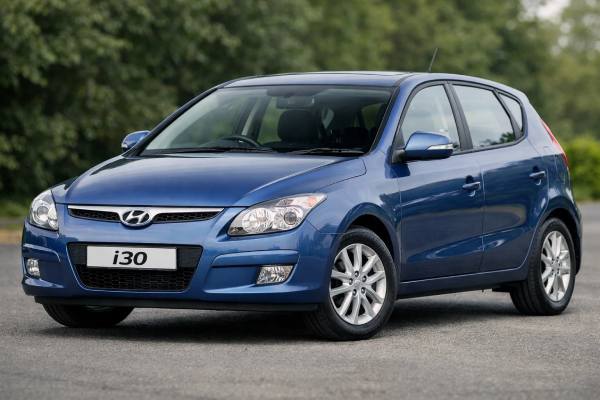
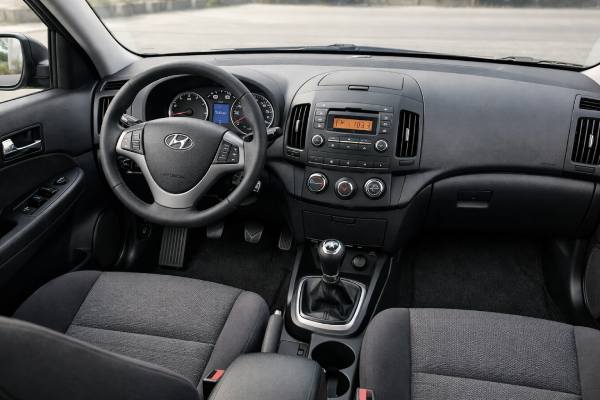
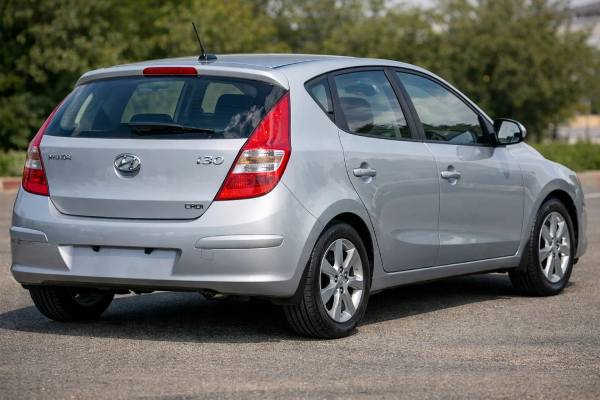
The first-generation Hyundai i30 FD was one of the cars that changed how many buyers viewed Hyundai in Europe. In 1.6 CRDi 116 hp form, it offered the mix that mattered most in the late 2000s: useful torque, low running costs, practical hatchback packaging, and a chassis that felt more mature than Hyundai’s older compact cars. This version is especially interesting because it sits in the sweet spot of the range. It is quicker and more flexible than the lower-output diesel, but still more economical and often simpler to live with than larger diesel rivals of the same era.
For today’s used-car buyer, the i30 FD 1.6 CRDi is not perfect, but it is often a sensible choice when service history is strong. The engine is generally durable, the cabin is roomy for the class, and parts support is still good. The real test is condition, maintenance quality, and recall history, not just mileage.
Owner Snapshot
- Strong low-rpm torque makes daily driving easier than the modest power figure suggests.
- Cabin space, rear-seat room, and hatch practicality are still competitive for an older C-segment car.
- Independent rear suspension helps ride comfort and gives the car a settled feel on poor roads.
- Neglected cars can develop diesel soot, clutch and flywheel wear, and age-related steering or suspension faults.
- A sensible oil and filter interval is every 15,000 km or 12 months, and earlier on heavy short-trip use.
Guide contents
- Hyundai i30 FD Overview
- Hyundai i30 FD Specs
- Hyundai i30 FD Trims and Safety
- Reliability and Known Faults
- Maintenance and Buyer Checks
- Driving and Fuel Economy
- i30 FD Against Rivals
Hyundai i30 FD Overview
The Hyundai i30 FD arrived with a clear job: compete seriously in Europe’s compact hatchback class. That meant it had to do more than offer value. It needed better ride and handling, higher cabin quality, more convincing safety equipment, and a diesel engine that could stand next to well-known European rivals. In 1.6 CRDi form, the i30 largely achieved that.
This diesel version uses Hyundai’s 1.6-liter common-rail four-cylinder and, in 116 hp tune, delivers the kind of real-world flexibility many owners want more than outright speed. Peak torque comes in early, so the car feels stronger in normal traffic than the power figure suggests. It is happiest as a commuter hatchback, family daily, or long-distance budget cruiser rather than a sporty driver’s car.
One of the i30 FD’s key strengths is balance. The body is compact enough for urban use, but the wheelbase is generous for the class, which helps rear legroom and luggage usability. The hatchback’s boot is practical rather than class-leading on paper, yet its shape is easy to load. The cabin design is simple, but most controls are intuitive and the ergonomics are straightforward even by modern standards.
The chassis matters here too. Hyundai gave the car a more European tuning focus, and that shows in the way it rides rough surfaces without becoming nervous on the motorway. The fully independent rear suspension was a genuine selling point in this class and price band, and it still helps the car feel more composed than some cheaper rivals with a torsion-beam rear axle.
Ownership appeal comes from more than the basic package. Many cars were sold with useful equipment, and the diesel’s running costs can still be attractive when the engine, clutch, turbo system, and service history are in good shape. The downside is age. These cars are now old enough that neglected maintenance, corrosion, electrical wear, and previous low-budget repairs matter more than brochure specifications. A clean, well-documented i30 FD 1.6 CRDi is often a good used buy. A cheap, tired one can quickly lose its value advantage.
For buyers who want a straightforward diesel hatchback with decent comfort, respectable space, and honest mechanicals, the FD-generation i30 still makes sense. Its biggest advantages are usability, economy, and value. Its biggest risk is not design weakness alone, but the gap between a cared-for example and an ignored one.
Hyundai i30 FD Specs
The figures below describe the common European 5-door hatchback Hyundai i30 FD 1.6 CRDi 116 hp from the 2007 to 2010 period. Some numbers vary by market, trim, wheel size, transmission, and emissions version, so treat them as the correct working baseline rather than a universal figure for every VIN.
Powertrain and efficiency
| Item | Hyundai i30 FD 1.6 CRDi 116 |
|---|---|
| Engine code | D4FB |
| Engine layout and cylinders | Inline-4, DOHC, 4 valves per cylinder |
| Bore × stroke | 77.2 × 84.5 mm (3.04 × 3.33 in) |
| Displacement | 1.6 L (1,582 cc) |
| Induction | Turbocharged, variable-geometry turbo |
| Fuel system | Common-rail direct injection |
| Compression ratio | 17.3:1 |
| Max power | 116 hp (85 kW) @ about 4,000 rpm |
| Max torque | 255 Nm (188 lb-ft) @ 1,900–2,750 rpm |
| Timing drive | Chain |
| Rated efficiency, manual | about 4.7 L/100 km (50.0 mpg US / 60.1 mpg UK) |
| Rated efficiency, automatic | about 5.9 L/100 km (39.9 mpg US / 47.9 mpg UK) |
| Real-world highway at 120 km/h | about 5.0–5.7 L/100 km (41.3–47.0 mpg US / 49.6–56.5 mpg UK) |
Transmission and driveline
| Item | Specification |
|---|---|
| Transmission | 5-speed manual, with 4-speed automatic in some markets |
| Drive type | Front-wheel drive |
| Differential | Open |
Chassis and dimensions
| Item | Specification |
|---|---|
| Front suspension | MacPherson strut |
| Rear suspension | Independent multi-link |
| Steering | Rack-and-pinion, electric assist on many versions |
| Brakes | Commonly 280 mm (11.0 in) vented front and 262 mm (10.3 in) solid rear; some trims use larger front discs |
| Most common tyre size | 205/55 R16, with 195/65 R15 also common |
| Ground clearance | about 150 mm (5.9 in), market dependent |
| Length / width / height | 4,245 / 1,775 / 1,480 mm (167.1 / 69.9 / 58.3 in) |
| Wheelbase | 2,650 mm (104.3 in) |
| Turning circle | about 10.3 m (33.8 ft) |
| Kerb weight | about 1,300–1,370 kg (2,866–3,020 lb), often around 1,366 kg for well-equipped hatchbacks |
| GVWR | about 1,820 kg (4,012 lb) |
| Fuel tank | 53 L (14.0 US gal / 11.7 UK gal) |
| Cargo volume | 340 L seats up and about 1,250 L seats folded (12.0 / 44.1 ft³) |
Performance and service data
| Item | Specification |
|---|---|
| 0–100 km/h | about 11.6 s |
| Top speed | about 192 km/h (119 mph) |
| Towing capacity | commonly up to 1,200 kg (2,646 lb) braked and around 650 kg (1,433 lb) unbraked; verify by VIN |
| Payload | roughly 450 kg (992 lb), trim dependent |
| Engine oil | about 5.3 L (5.6 US qt) with filter; use the exact viscosity and ACEA/API spec listed for the car’s market and DPF fitment |
| Coolant | long-life coolant; first replacement often listed at 210,000 km or 10 years, then 30,000 km or 24 months |
| Manual transmission fluid | gearbox specification varies by revision; verify by VIN before service |
| Brake fluid | DOT 4 is the normal working spec |
| Key torque spec | wheel nuts 88–107 Nm (65–79 lb-ft) |
Safety and driver assistance
| Item | Specification |
|---|---|
| Crash rating | Euro NCAP old protocol: 4-star adult occupant result, child score 34, pedestrian score 14 |
| IIHS | Not applicable for this European-market model in period context |
| ADAS suite | No modern AEB, ACC, lane-centering, blind-spot monitoring, or rear cross-traffic alert |
| Core safety hardware | ABS, EBD, airbags, ISOFIX, and ESC on many well-equipped European cars, but equipment varies by market and trim |
This is a simple, well-judged specification sheet rather than an exotic one. The i30 FD’s value comes from the whole package: useful torque, sensible weight, mature suspension design, and good everyday space.
Hyundai i30 FD Trims and Safety
Trim structure varied by country, but in the UK and several nearby markets the key hatchback grades were Comfort, Style, and Premium. That matters because equipment spread was one of the i30’s selling points, and buyers today often shop by badge without realizing how much a lower or higher trim can change the ownership experience.
Comfort models usually cover the essentials well. You often get air conditioning, remote locking, electric mirrors, trip computer functions, and practical cloth trim. Style adds the kind of upgrades many used buyers actually want, such as nicer wheel designs, more convenience equipment, and a more complete cabin feel. Premium versions tend to add the cosmetic and comfort extras that make the FD feel less budget-minded, though the exact list changes by market. In some countries, wheel sizes, audio upgrades, climate control, and parking aids also moved with trim.
Mechanically, the biggest distinction for this article is transmission choice. The 1.6 CRDi was usually at its best with the manual gearbox. Some markets also offered a 4-speed automatic, which adds ease in traffic but gives away some fuel economy and responsiveness. Brake size can also vary with wheel package and trim, so it is worth checking the actual hardware on the car rather than ordering parts by model name alone.
Quick identifiers help when you are inspecting a used car. The simplest clues are wheel size, seat trim, climate control type, steering-wheel buttons, and whether ESC, curtain airbags, or parking sensors are present. If the seller claims a high trim, verify the cabin and option content rather than trusting registration data alone. Early or imported cars can surprise you.
On safety, the FD-generation i30 was competitive for its time, but it must be judged by late-2000s standards, not current family-car expectations. The Euro NCAP result was respectable in period, but the test regime was older and far less demanding than modern protocols. Some markets also had differences in side-curtain airbag fitment and ESC availability, so buyers should not assume all cars are identical.
In real ownership terms, the important safety hardware to check is basic but critical:
- airbag warning light behavior
- ABS and ESC warning lights
- front seat-belt condition and latch function
- rear ISOFIX anchor presence and cover condition
- crash-repair quality around front rails, floorpan, and A-pillars
There is no modern driver-assistance suite here. No lane centering, no camera-based AEB, and no blind-spot warning. That sounds obvious now, but it affects the buying decision. The i30 FD depends more on sound visibility, honest steering, predictable brakes, and passive safety than on electronic intervention. For many drivers that is acceptable, but families used to current safety tech should set expectations correctly before buying.
Reliability and Known Faults
The Hyundai i30 FD 1.6 CRDi has a generally solid reputation when it is maintained correctly. It is not a fragile car, but it does have familiar age-related weak points. The most important thing is to separate common wear items from expensive neglect.
Common, usually medium-cost issues
- EGR and intake soot build-up: Symptoms include flat response, uneven idle, smoke under load, and reduced fuel economy. Root cause is typical diesel soot accumulation, especially on short-trip cars. Remedy is cleaning or replacing the affected EGR and intake components, then fixing the driving pattern or maintenance habits that caused it.
- Clutch and dual-mass flywheel wear: Expect chatter, vibration at idle, poor take-up, or slip under torque on higher-mileage manual cars. Heavy city use makes this more likely. Remedy is clutch and DMF replacement as a set when wear is confirmed.
- Suspension links and bushes: Front anti-roll-bar links, bushes, and sometimes lower-arm components can knock on rough roads. This is common and usually not serious if caught early.
- Wheel bearings: A humming or droning noise that rises with speed is a routine age-related issue on some cars.
Occasional, sometimes higher-cost issues
- Timing chain noise or timing correlation faults: The D4FB is chain-driven, which is good for routine maintenance, but it is not immune to wear. Poor oil quality or stretched oil-change intervals can lead to cold-start rattle, rough running, or cam-crank correlation faults. The remedy is inspection and chain set replacement if wear is confirmed.
- Turbo and boost-control problems: Sticking variable-geometry vanes, split hoses, or boost-control faults can cause limp mode or weak pull. Cars used for short journeys are more vulnerable.
- Injector seal or fuel-system issues: Hard starting, diesel smell, rough idle, or combustion blow-by around injectors should not be ignored. Early intervention is cheaper than waiting for damage or carbon build-up.
Occasional low-cost electrical faults
- battery weakness and glow-plug issues
- window regulator failures
- brake-light switch faults
- blower resistor problems
- hatch wiring fatigue and central-locking glitches
Corrosion and structure
Body corrosion is not usually the i30 FD’s defining problem, but age has changed the picture. Inspect rear arches, the lower tailgate area, underbody seams, brake pipes, front and rear subframes, and jacking points. Cars from salty climates deserve a proper lift inspection.
Recalls and service actions
The main headline item to verify is the airbag control unit recall affecting certain i30 FD vehicles built between May 2007 and May 2012. The issue concerned insufficient ACU calibration in certain impacts, and official recall status should be checked by VIN before purchase. Buyers should also ask for dealer printouts or stamped evidence showing whether recall work and service campaigns were completed.
What to request before buying
- Full service history with oil intervals that make sense for a turbo diesel.
- Proof of recall completion.
- Cold-start demonstration.
- Evidence of clutch, flywheel, and brake work if mileage is high.
- Underside inspection for corrosion and crash repair.
A healthy i30 FD 1.6 CRDi can cover big mileage. A neglected one can hide several medium-cost jobs at once, which is what turns a bargain into a false economy.
Maintenance and Buyer Checks
This is a car that rewards routine service. The strongest examples are rarely the lowest-mileage cars. They are the cars that got regular oil changes, proper filters, timely brake work, and early attention when small diesel faults first appeared.
A practical maintenance plan for the 1.6 CRDi looks like this:
| Item | Practical interval |
|---|---|
| Engine oil and filter | Every 15,000 km or 12 months; shorten on short-trip or severe use |
| Engine air filter | Inspect at each service, replace as needed |
| Cabin air filter | About every 15,000 km or 12 months |
| Fuel filter | Inspect service history closely; replace sooner if fuel quality is poor or symptoms appear |
| Coolant | First replacement at about 210,000 km or 10 years, then every 30,000 km or 24 months |
| Brake fluid | Every 24 months |
| Brake pads and discs | Inspect at every service |
| Tyre rotation | Every 10,000–15,000 km |
| Wheel alignment | Check yearly or after tyre wear appears |
| Manual gearbox oil | Inspect for leaks and shift quality; consider a proactive change around 120,000 km on hard-used cars |
| Serpentine belt and hoses | Inspect every service |
| Timing chain | No fixed belt interval; inspect if cold-start rattle, fault codes, or timing noise appear |
| 12 V battery | Test regularly after 4 years; many need replacement in the 4–6 year range |
| Glow plugs | Inspect if cold starts worsen |
For fluids, the safest approach is VIN-first rather than forum-first. Engine oil capacity is about 5.3 L with filter, but the correct viscosity and ACEA/API requirement can vary with emissions equipment and market. The same is true of gearbox fluid. Do not let a shop fill the car by guesswork just because it is an older diesel Hyundai.
A smart buyer’s inspection should focus on the expensive items first:
- cold start from fully cold engine
- smoke color and smell
- injector noise or blow-by
- clutch bite point and DMF chatter
- steering weight, warning lights, and column noises
- turbo pull from low rpm
- cooling system stability and heater performance
- underbody corrosion and brake-pipe condition
- all electrical functions, including A/C and central locking
The best versions to buy are usually clean manual cars with clear maintenance records, stable idle quality, and evidence of routine service rather than cars marketed only on low mileage. A slightly higher-mileage example with recent clutch, brakes, tyres, battery, and fluid work is often the better long-term choice.
The versions to approach cautiously are heavily urban-used cars with patchy records, obvious soot build-up, cheap tyres, warning lights, or signs that several small jobs have been deferred. Long-term durability is decent, but only when the car has been treated like a turbo diesel and not like an appliance that needs nothing between MOTs.
Driving and Fuel Economy
The i30 FD 1.6 CRDi drives like a car developed for real roads rather than just brochure numbers. Its strongest trait is composure. It feels planted at everyday speeds, absorbs broken surfaces well, and rarely becomes tiring on longer journeys. That is helped by the independent rear suspension, which gives the car a more settled feel than some budget-minded rivals from the same period.
The engine’s character suits the car. From low rpm, the 255 Nm torque figure gives it enough pull to feel easy and relaxed. Around town, you do not need to work the gearbox hard. On the open road, it cruises comfortably and feels most convincing in the mid-range rather than near the redline. There is some diesel clatter at idle and under cold load, but it is acceptable for the era.
The manual gearbox is the one to have if you care about response and economy. It suits the engine’s torque band better and makes the car feel lighter on its feet. The optional 4-speed automatic is usable, but it blunts acceleration and can feel old-fashioned next to later six-speed rivals.
In terms of ride and handling, the i30 leans slightly toward comfort over sharpness. Steering feel is not especially rich, but the car tracks straight, corners predictably, and brakes with decent confidence when the hardware is in good condition. Tyres matter more than many sellers admit. A good set of quality 16-inch tyres can make the car feel calmer, quieter, and more secure than a mismatched budget set ever will.
Real-world economy is one of the big reasons to buy this version:
- city: about 6.0–6.8 L/100 km, or 34.6–39.2 mpg US and 41.5–47.1 mpg UK
- highway at 100–120 km/h: about 5.0–5.7 L/100 km, or 41.3–47.0 mpg US and 49.6–56.5 mpg UK
- mixed use: about 5.3–6.0 L/100 km, or 39.2–44.4 mpg US and 47.1–53.3 mpg UK
Cold weather, short trips, DPF-equipped versions, heavy traffic, and poor tyres can move those figures noticeably in the wrong direction. Even so, a healthy car remains inexpensive to fuel for a conventional diesel hatchback of this age.
This is not a hot hatch and it does not pretend to be. Its performance is adequate rather than exciting. But the combination of flexible torque, calm ride quality, and honest efficiency still makes it a likeable daily driver.
i30 FD Against Rivals
The Hyundai i30 FD 1.6 CRDi was aimed directly at mainstream European compact hatches, and it still makes the most sense when judged that way.
Against the Kia cee’d 1.6 CRDi, the i30 is really competing with a close relative. The Kia shares much of the core engineering, so the choice often comes down to condition, equipment, and price. The i30 usually feels a touch more conservative in design, while the cee’d can be the better bargain if you find a clean one. There is no clear mechanical knockout winner between them.
Against the Ford Focus Mk2 1.6 TDCi, the Hyundai loses on steering feel and cornering precision. The Focus is the more engaging car to drive. But the i30 can be the smarter used buy if you want simpler ownership priorities: good space, decent ride, lower purchase price, and fewer badge-driven price premiums.
Against the Volkswagen Golf Mk5 diesel, the Golf still has the stronger interior image and often the slightly more polished motorway feel. However, used prices, repair costs, and diesel-system complexity on neglected examples can quickly erase that advantage. The i30 often wins on value and honesty.
Against the Toyota Auris diesel of the same era, the Hyundai usually feels a little more comfortable and more generous in equipment for the money. Toyota retains its reputation edge, but the Auris is not always the more appealing car to sit in or drive.
The Hyundai’s real competitive position is clear:
- best points: value, usable cabin, good torque, mature ride, strong equipment for the era
- weaker points: limited brand cachet, no modern driver-assistance tech, average steering feel, and age-related diesel issues if neglected
For many buyers, that is enough to settle the decision. If you want the sharpest chassis, buy the Focus. If you want the strongest badge and a more premium image, buy the Golf. If you want a balanced compact diesel hatch that still looks rational on a budget, the i30 FD 1.6 CRDi remains one of the better-value choices.
References
- Home | Hyundai Recalls & Service Campaigns 2026 (Recall Checker) ([Hyundai Recalls][1])
- Hyundai recalls certain ‘i30 (FD)’ passenger vehicles – CCPC Consumers 2020 (Recall Database) ([CCPC][2])
- HYUNDAI I30 OWNER’S MANUAL Pdf Download | ManualsLib 2007 (Owner’s Manual) ([ManualsLib][3])
- Hyundai i30 (2008) – pictures, information & specs 2008 (Press and Specs) ([NetCarShow.com][4])
- Frontal impact driver Frontal impact passenger Side impact … 2007 (Safety Rating)
Disclaimer
This article is for informational purposes only and is not a substitute for professional diagnosis, repair, or official workshop procedures. Specifications, torque values, service intervals, fluid requirements, and repair methods can vary by VIN, market, production date, transmission, emissions equipment, and trim level, so always verify details against official service documentation for the exact vehicle.
If this guide helped you, please consider sharing it on Facebook, X, or another social platform to support our work.