
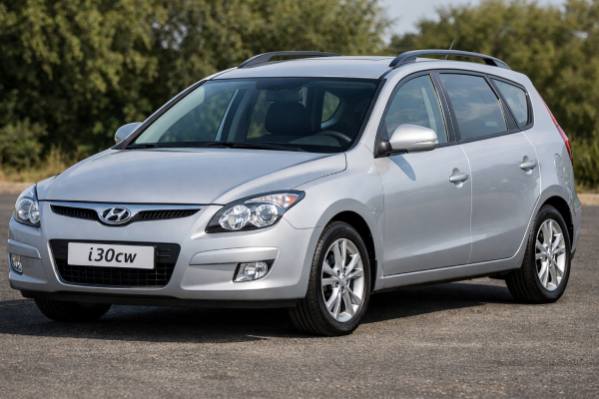
The Hyundai i30cw FD 1.6 CRDi sits in a useful sweet spot in the used estate market. It combines a compact exterior with a genuinely practical wagon body, a torquey diesel engine, and relatively simple mechanicals by modern standards. For many buyers, that matters more than badge prestige. The 116 hp 1.6-liter diesel gives the i30cw enough mid-range pull for motorway use, decent real-world fuel economy, and lower fuel bills than the larger 2.0 CRDi without turning the car into a slow, overloaded-feeling estate.
This version also benefits from the FD platform’s mature chassis, multi-link rear suspension, and straightforward cabin layout. It is not a luxury car and it does not offer modern driver assistance, but it can still be a very sensible family hauler. The main ownership question is condition. A well-kept i30cw can be durable and affordable to run, while a neglected one can quickly need suspension work, diesel-system attention, and age-related repairs. That makes service history more important than trim level or mileage alone.
Fast Facts
- Strong cargo space for the class, with a useful square load bay and fold-flat rear seats.
- The 1.6 CRDi has good low-rpm torque and usually feels more effortless than the petrol engines on long trips.
- Ride comfort and motorway stability are better than many budget-badged estates from the same period.
- Poor oil service history can lead to timing-chain wear, turbo issues, or diesel-system trouble on high-mileage cars.
- A practical oil and filter interval is every 10,000–15,000 km or every 12 months.
Navigate this guide
- Hyundai i30cw FD Diesel Estate
- Hyundai i30cw FD Technical Data
- Hyundai i30cw FD Trims and Safety
- Reliability Patterns and Service Actions
- Maintenance Plan and Buyer Advice
- Driving Character and Efficiency
- Value Against Key Rivals
Hyundai i30cw FD Diesel Estate
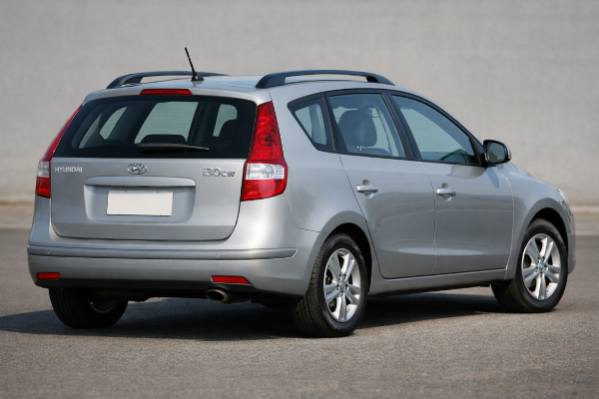
The i30cw was Hyundai’s practical answer to buyers who wanted hatchback running costs with estate-car usefulness. In FD-generation form, the i30cw kept the basic front-end structure and cabin layout of the regular i30 hatch, then stretched the rear bodywork to deliver a longer roofline, a larger cargo area, and a more family-friendly load space. That matters because the car does not feel oversized on the road. It is still compact enough for daily city use, yet it carries luggage, pushchairs, dogs, or flat-pack cargo far better than the hatchback.
The 1.6 CRDi 116 hp version is one of the most balanced engines in the range. It does not have the outright shove of the 2.0 CRDi, but it also avoids some of the higher running costs associated with the larger diesel. In real use, the smaller engine suits the wagon well. Peak torque arrives low enough that the car feels relaxed in traffic and on inclines, and it is noticeably easier to drive efficiently than the petrol alternatives. For families and long-distance commuters, that low-end torque is more useful than a strong top-end rush.
The chassis is better than some buyers expect from a Hyundai of this era. The FD platform uses front MacPherson struts and a multi-link rear suspension arrangement, which helps the estate feel composed when loaded. The steering is light rather than talkative, but the car tracks well at speed and does not feel clumsy through long bends. That gives it a mature character. It is not sporty, yet it feels secure and easy to live with.
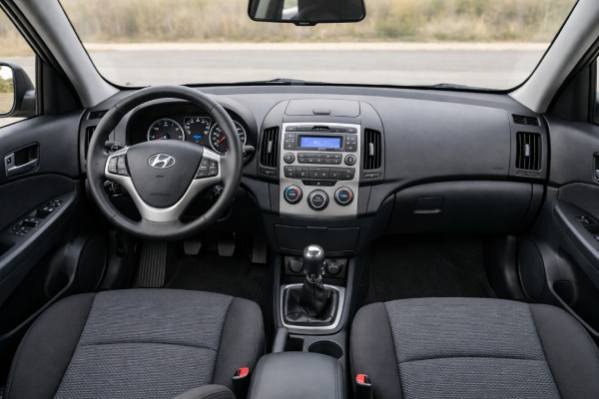
The cabin design is straightforward and durable, though not especially rich in materials. Visibility is good, switchgear is generally logical, and the driving position is easy to adjust. Rear-seat space is adequate for adults, while the extended cargo area is the real reason to buy the cw version. On the used market, this model now appeals to buyers who want a compact wagon with honest mechanicals, good fuel economy, and low entry cost. The trade-off is that every surviving example is now old enough for condition to dominate the ownership experience.
Hyundai i30cw FD Technical Data
The figures below reflect the 2008–2010 Hyundai i30cw FD with the 1.6 CRDi 116 hp diesel engine. Some details vary by market, gearbox, emissions version, and the late 2010 facelift, so treat small differences as VIN-specific rather than unusual.
Powertrain and efficiency
| Item | Data |
|---|---|
| Engine code | D4FB |
| Engine layout | Front-transverse inline-4 diesel |
| Cylinders | 4 |
| Valvetrain | DOHC, 16 valves, 4 valves per cylinder |
| Bore × stroke | 77.2 × 84.5 mm (3.04 × 3.33 in) |
| Displacement | 1.6 L (1,582 cc) |
| Induction | Turbocharged, intercooler |
| Fuel system | Common-rail direct injection |
| Compression ratio | 17.3:1 |
| Max power | 116 hp (85 kW) @ 4,000 rpm |
| Max torque | 255 Nm (188 lb-ft) @ about 1,900–2,750 rpm |
| Timing drive | Chain |
| Rated combined economy | about 4.9 L/100 km manual, about 5.8 L/100 km automatic |
| Real-world highway @ 120 km/h | usually about 5.3–6.2 L/100 km, depending on load, tyres, and weather |
Transmission and driveline
| Item | Data |
|---|---|
| Manual gearbox | 5-speed manual on most 2008–2010 pre-facelift cars |
| Automatic gearbox | 4-speed automatic in some markets |
| Drive type | FWD |
| Differential | Open |
Chassis and dimensions
| Item | Data |
|---|---|
| Front suspension | MacPherson strut |
| Rear suspension | Multi-link coil-spring setup |
| Steering | Rack and pinion, power assisted |
| Brakes | Ventilated front discs, rear discs |
| Typical tyre size | 185/65 R15 or 205/55 R16 |
| Length | 4,475 mm (176.2 in) |
| Width | 1,775 mm (69.9 in) |
| Height | about 1,565 mm (61.6 in) |
| Wheelbase | 2,700 mm (106.3 in) |
| Turning circle | about 10.4 m (34.1 ft) |
| Kerb weight | about 1,334 kg (2,941 lb) manual; about 1,341 kg (2,956 lb) automatic |
| GVWR | about 1,920 kg (4,233 lb) manual; about 1,940 kg (4,277 lb) automatic |
| Fuel tank | 53 L (14.0 US gal / 11.7 UK gal) |
| Cargo volume | 415 L (14.7 ft³) seats up / 1,395 L (49.3 ft³) seats folded |
Performance and capability
| Item | Data |
|---|---|
| 0–100 km/h | about 11.9 s manual / about 13.4 s automatic |
| Top speed | about 188 km/h (117 mph) manual / about 180 km/h (112 mph) automatic |
| Braking distance | market-specific road-test figures vary |
| Towing capacity | often around 1,200–1,400 kg braked, market dependent |
| Payload | roughly 500–580 kg depending on spec |
Fluids and service capacities
| Item | Data |
|---|---|
| Engine oil | ACEA C3 or manufacturer-approved diesel oil, commonly 5W-30 |
| Engine oil capacity | 5.3 L (5.6 US qt) |
| Coolant | Ethylene-glycol based coolant for aluminium radiator |
| Coolant capacity | 6.8 L (7.2 US qt) |
| Brake and clutch fluid | DOT 3 or DOT 4 |
| Brake and clutch capacity | about 0.7–0.8 L (0.74–0.85 US qt) |
| Manual transaxle fluid | verify by gearbox code and market specification |
| Automatic fluid | verify by transmission code and market specification |
| A/C refrigerant | verify by under-bonnet label |
| Wheel nut torque | 88–107 Nm (65–79 lb-ft) |
The most important technical point is that this engine blends useful torque with moderate running costs, but only if it receives the correct oil, clean fuel filtration, and timely service.
Hyundai i30cw FD Trims and Safety
Trim structures differed widely by country, so buyers should think in terms of equipment groups rather than assuming one global grade ladder. In many markets, the i30cw 1.6 CRDi sat in mid-range or upper-mid-range trims because diesel buyers were often expected to cover higher mileage and wanted extra comfort equipment. That means used examples can range from basic cloth-seat fleet cars to more appealing versions with climate control, alloy wheels, parking sensors, cruise control, upgraded audio, and leather-trimmed steering wheels.
The best way to identify trim on an older i30cw is not the badge but the hardware. Look at wheel size, steering-wheel buttons, the air-conditioning panel, seat fabric, and whether the car has rear parking sensors, fog lamps, or a trip computer. Some vehicles also received market-specific packages, including larger wheels, roof rails, silver exterior trim, or upgraded seat upholstery. Mechanical differences were modest, but wheel and tyre packages can affect ride quality, noise, and tyre replacement cost. Tow ratings may also vary slightly by market paperwork even when the underlying vehicle is similar.
A useful year-to-year point is the 2010 facelift. Late cars may have revised front and rear styling, some updated interior trim, Euro 5 calibration in certain markets, and in manual form sometimes a 6-speed gearbox instead of the earlier 5-speed. That does not automatically make facelift cars better. Earlier Euro 4 cars can be simpler in emissions hardware, while later ones may feel more refined on the motorway. Buyers should choose on condition and documented maintenance first.
Safety for the FD i30 family was decent for the era, but this is still a late-2000s design. In 2007, the i30 family earned a four-star Euro NCAP adult-occupant result. The structure stayed stable in testing, but protection in some frontal-impact measures, especially around the driver’s knee area and dashboard interaction, prevented a five-star result under that test regime. Child protection was reasonable, though period criticism included less-than-ideal clarity of child-seat and airbag-status information.
In equipment terms, most i30cw models had front airbags, side airbags, curtain airbags, seatbelt pretensioners, ABS, and electronic brake-force distribution. Stability control was available in some markets and trims, but not every surviving car has it. There was effectively no modern ADAS suite. No autonomous emergency braking, no lane centring, no blind-spot monitoring, and no adaptive cruise should be expected on this generation. After repair, the key safety question is whether the car still has correct airbags, intact seatbelt systems, and properly aligned suspension rather than whether sensors need recalibration.
Reliability Patterns and Service Actions
The i30cw 1.6 CRDi is generally a dependable old diesel estate if it has seen regular servicing. Its problems are usually familiar diesel-ageing issues rather than exotic design failures, but they can become expensive when ignored.
Common, low-to-medium cost issues
- EGR and intake contamination: rough running, flat response, smoke under load, or uneven idle can point to soot build-up in the EGR path or intake system. Cars used for repeated short trips are more likely to show this.
- Glow plug and control issues: hard cold starts, lumpy initial running, or persistent warning lights often lead back to tired glow plugs or related control hardware.
- Fuel filter neglect or water contamination: the owner’s manual itself highlights water management in the diesel fuel filter. If service history is poor, starting and running issues can follow.
- Suspension wear: front drop links, bushes, and top mounts are common age-related replacements, especially on rough roads.
Occasional, medium-cost issues
- Turbo hoses and boost leaks: a split hose or charge-air leak can mimic a bigger turbo problem by causing loss of torque, whistle, or black smoke.
- Clutch and dual-mass flywheel wear: on manual cars, slipping under load, idle rattle, or vibration through the pedal can indicate a tired clutch package. Higher-mileage towing or urban use accelerates wear.
- Rear brake drag and caliper corrosion: estates that carry weight or spend time unused can develop sticky rear brakes.
- Steering column or assist clunk: this is more irritating than catastrophic in many cases, but it is worth fixing properly.
Less common but more expensive issues
- Timing-chain wear: unlike the petrol 2.0 MPI in the earlier article, the 1.6 CRDi uses a chain. It is not a regular belt-change service item, but neglected oil changes can lead to chain noise, guide wear, and eventual timing correction faults.
- Turbocharger wear: long oil intervals, incorrect oil, or hot shut-down habits after heavy load can shorten turbo life.
- Injector or high-pressure fuel-system issues: not constant across the whole fleet, but a noisy, smoky, or difficult-starting example deserves a careful diesel diagnosis before purchase.
Corrosion is now an ownership reality on many FD cars. Check rear arches, tailgate or hatch seam areas near the wagon opening, front subframe zones, rear suspension mounting points, brake pipes, and the underbody around jacking points. Cars from salty climates need a more serious rust inspection than low-mileage photos suggest.
On the service-action side, one of the most relevant official campaigns for the wider i30 FD family is the Australian airbag-control-unit programming recall affecting 2007–2012 cars. The remedy was a module reprogram. That is important because the problem involved possible unintended deployment of airbags and seatbelt pretensioners. Always ask a seller for recall proof and verify completion through official VIN channels or dealer records. On an older Hyundai diesel, documented corrective work matters almost as much as routine servicing.
Maintenance Plan and Buyer Advice
A good maintenance plan for the i30cw 1.6 CRDi is built around fluid quality, diesel-system cleanliness, and early intervention. This is not a car that likes long neglected intervals.
Practical maintenance schedule
- Engine oil and filter: every 10,000–15,000 km or 12 months. For short-trip, cold-climate, or heavy-traffic use, stay at the shorter end.
- Engine air filter: inspect every service and replace roughly every 20,000–30,000 km, sooner in dusty use.
- Cabin air filter: every 12 months or about 15,000–20,000 km.
- Fuel filter: replace on schedule and do not postpone it on a common-rail diesel. Water contamination or restriction can create bigger system costs.
- Coolant: renew according to the correct specification and interval for the vehicle. If history is unclear, a full coolant refresh after purchase is wise.
- Brake fluid: every 2 years.
- Manual gearbox oil: even if marketed as long-life, a change around 80,000–100,000 km is sensible.
- Automatic transmission fluid: do not trust lifetime language on an older 4-speed automatic. Fresh fluid is cheap protection.
- Timing chain: no fixed belt-style replacement interval, but listen for start-up rattle, monitor timing-related fault codes, and be stricter about oil quality than mileage marketing suggests.
- Auxiliary belt and hoses: inspect annually.
- Brake pads and discs: inspect at each service, especially rear calipers on underused cars.
- Battery: test from around year four onward, especially before winter.
Useful fluid and decision data
| Item | Specification |
|---|---|
| Engine oil | Diesel-approved 5W-30, ACEA C3 or equivalent approved specification |
| Engine oil capacity | 5.3 L |
| Coolant capacity | 6.8 L |
| Brake/clutch fluid | DOT 3 or DOT 4 |
| Wheel nut torque | 88–107 Nm |
Used-buyer inspection checklist
- Start the engine cold and listen for chain noise, injector knock beyond normal diesel clatter, or extended cranking.
- Look for smoke under acceleration and feel for missing mid-range boost.
- Check service records for oil grade, oil interval, and fuel-filter replacement.
- Test the clutch for slip and the flywheel for vibration or rattle.
- Inspect rear brakes for binding and the handbrake for even operation.
- Check the coolant system for staining, hose ageing, or low level.
- Inspect the underbody for rust, especially around subframes and brake lines.
- Look for mixed tyres, poor alignment, and worn suspension bushes.
- Confirm recall completion and ask whether any airbag or steering work was done.
- On facelift-era cars, verify whether emissions hardware differs from earlier examples.
Long-term durability is good when the car is maintained as a diesel estate rather than treated like a disposable runabout. The best examples are usually the ones that were driven regularly, serviced on time, and repaired with decent parts.
Driving Character and Efficiency
The i30cw 1.6 CRDi is at its best when used exactly as intended: commuting, family travel, and medium- to long-distance work. Its powertrain character is defined by torque rather than drama. Step-off is not especially quick, but once the turbo is in its working range the car moves with more ease than its numbers suggest. That matters in an estate body. It does not feel overburdened with passengers and luggage unless paired with the older automatic, which softens response and makes the engine feel less eager.
In manual form, the engine is more convincing. It has enough mid-range shove for overtaking and motorway inclines, and it rewards short-shifting better than revving it out. The gearbox itself is usually light and easy to use, though worn cars can develop a looser, notchier action. The automatic is smoother in traffic but slower to react, and it materially changes the verdict on performance.
Ride quality is one of the stronger points of the FD wagon. The longer body does not upset the chassis, and the multi-link rear end helps the car stay composed over broken roads. Straight-line stability is good, especially with decent tyres, and the car feels settled at motorway speed. Steering feedback is limited, but weight is light and predictable. That makes the i30cw easy to place, easy to park, and undemanding on longer journeys.
Noise, vibration, and harshness are acceptable rather than polished. At idle, the diesel makes itself known. Under steady cruise, it calms down, though road noise and wind noise rise on rougher surfaces. A tired example with cheap tyres or worn suspension will feel much louder than a sorted one.
Real-world economy expectations
- City driving: about 6.2–7.8 L/100 km manual, often higher with the automatic
- Highway at 100–120 km/h: about 5.0–6.2 L/100 km
- Mixed driving: around 5.3–6.4 L/100 km for a healthy manual car
Cold weather, short runs, heavy load, and active regeneration hardware on some late cars can nudge those figures upward. Even so, the diesel estate usually remains meaningfully cheaper to fuel than the comparable petrol wagon.
In manual form, the key selective numbers remain useful: about 11.9 seconds to 100 km/h, roughly 188 km/h top speed, and relaxed cruising thanks to the engine’s torque. The i30cw is not a performance estate, but it is a very usable one. Its biggest dynamic advantage is that it feels mature and predictable. For many used buyers, that matters more than sharper turn-in or a fancier badge.
Value Against Key Rivals
The i30cw 1.6 CRDi competed against some very strong rivals, including the Ford Focus Estate, Volkswagen Golf Variant, Skoda Octavia Estate, Kia cee’d SW, Toyota Auris estate-type alternatives, and later on cars such as the Renault Mégane Sport Tourer. Against that group, the Hyundai rarely topped the class in one single category, but it offered a convincing mix of price, practicality, and easy ownership.
Against the Ford Focus Estate, the Hyundai gives away steering feel but usually matches it for family usefulness and often undercuts it on purchase price. Against the Volkswagen Golf Variant, the i30cw feels less premium inside, but it can be the safer ownership bet if the alternative is a complicated DSG-era diesel with patchy history. Against the Skoda Octavia Estate, the Hyundai is not as spacious in the rear or boot, but it feels more compact and often cheaper to buy. Against the Kia cee’d SW, the contest is extremely close because the cars share much of their engineering. In practice, the better-maintained car is the better buy.
The Hyundai’s strongest case is for buyers who want:
- a genuinely useful wagon body
- modest running costs
- a diesel that feels relaxed without being oversized
- conventional suspension and brake hardware
- an affordable purchase price
It makes less sense for buyers who want the sharpest handling estate, the plushest interior, or modern active safety systems. This is also not the ideal choice for someone who only does short urban trips. Diesel hardware dislikes that kind of use, and the savings at the pump disappear if the car is constantly operating below full temperature.
As a used car, the i30cw FD 1.6 CRDi wins on honest utility. It is roomy enough to replace larger cars for many households, efficient enough to justify its diesel badge, and mechanically straightforward enough to stay viable if maintained properly. The verdict is simple: buy the cleanest, best-documented example you can find, and it remains a smart, practical estate rather than just a cheap old wagon.
References
- Hyundai i30 Owner’s Manual 2009 (Owner’s Manual)
- Scheduled Maintenance Service – Hyundai i30 Owner’s Manual 2009 (Service Manual)
- Fuel Filter; Fuel Filter Cartridge Replacement; Extracting Air In The Fuel Filter (1.6L Diesel Engine); Draining Water From Fuel Filter – Hyundai I30 Owner’s Manual 2009 (Service Manual)
- REC-000635 – Hyundai Motor Company – HYUNDAI I30 2007 – 2012 | Vehicle Recalls 2019 (Recall Database)
- Frontal impact driver Frontal impact passenger Side impact … 2007 (Safety Rating)
Disclaimer
This article is for informational purposes only and is not a substitute for professional diagnosis, repair, or model-specific technical advice. Specifications, torque values, service intervals, procedures, and equipment can vary by VIN, market, production date, gearbox, and trim, so always verify critical details against the correct official service documentation for the exact vehicle.
If this guide was useful, please consider sharing it on Facebook, X, or another social platform to support our work.