
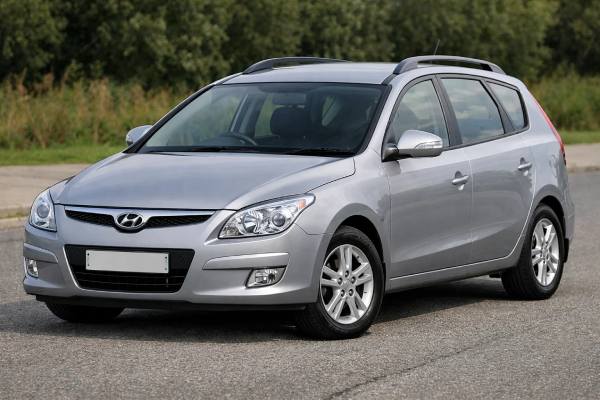


The Hyundai i30cw FD 2.0 CRDi is one of those used diesels that makes sense when you look past badge prestige and focus on the engineering brief. This 2008–2010 estate version takes the already practical first-generation i30 and adds a longer body, more cargo space, and a stronger diesel option that suits high-mileage family use surprisingly well. The 2.0-liter turbo-diesel brings the kind of low-rpm torque that helps a loaded wagon feel relaxed, while the chassis stays straightforward and predictable. You also get one of the i30’s quieter strengths for the era: solid safety equipment, an independent rear suspension layout, and a cabin that was designed for everyday use rather than showroom drama. The catch is age. These cars are now firmly in the condition-first stage of ownership. Buy a well-serviced example and the i30cw can still be a capable long-distance estate. Buy a neglected one and diesel hardware, rust, clutch wear, and deferred maintenance can erase the value quickly.
Owner Snapshot
- Strong 2.0 CRDi torque makes the wagon feel more effortless than smaller-displacement diesel rivals.
- Practical estate body offers useful rear-seat room and a large 415 L to 1,395 L cargo area.
- Stable road manners and good motorway range are real strengths for family and commuter use.
- Poor service history can lead to expensive EGR, turbo, clutch, or timing-belt-related repairs.
- A sensible engine-oil service interval is every 10,000 to 15,000 km or 12 months.
What’s inside
- Hyundai i30cw FD Wagon Profile
- Hyundai i30cw FD Numbers and Specs
- Hyundai i30cw FD Trims and Protection
- Reliability Faults and Recall Checks
- Service Schedule and Smart Buying
- On-Road Behavior and Economy
- Estate-Car Rivals Compared
Hyundai i30cw FD Wagon Profile
The i30cw was Hyundai’s answer to buyers who liked the first-generation i30 hatchback but needed more luggage room, better long-distance flexibility, and stronger diesel performance. In 2.0 CRDi form, the wagon became the range’s more mature workhorse. This version was aimed at drivers who covered big annual mileage, carried family gear, or wanted a diesel estate without the higher used prices often attached to Volkswagen, Ford, or Peugeot rivals. It is a very clear product once you understand the formula: front-wheel drive, a torquey 2.0-liter turbo-diesel, a manual gearbox in most markets, and an estate body designed around practical use rather than sporty styling.
The engine is the key reason this specific version stands out. While smaller 1.6-liter diesels in the i30 range lean harder into economy, the 2.0 CRDi gives the wagon a more confident character. Peak torque sits around 304 to 305 Nm, which is enough to make the car feel easygoing in traffic and genuinely comfortable on the motorway with passengers and luggage on board. The power figure is commonly listed at 140 hp or 141 hp depending on market notation, but the number matters less than the way the engine delivers its shove low in the rev range. This is not a fast estate by modern standards, yet it does not feel underpowered in the way many older family diesels now do.
The estate body also changes the ownership story. The hatchback FD is already practical, but the i30cw adds the extra load area and easier luggage access that many buyers want from a family car. That makes it more versatile for prams, bikes, dogs, airport runs, and weekly use without moving into a larger and heavier class of vehicle. The extra size does not ruin the car’s everyday usability either. It is still compact enough for city parking and narrow streets, especially compared with larger diesel wagons from the same period.
The chassis is another reason the i30cw deserves more respect than it usually gets. Hyundai gave the FD-generation i30 independent rear suspension, and that helps the car feel planted and calm instead of crude or bouncy. It is not a driver’s estate in the Ford Focus mold, but it is composed, stable, and easy to trust. Safety equipment was also decent for the era, with six airbags, ABS, and stability control widely available.
In 2026, the real question is no longer whether the i30cw 2.0 CRDi was competitive when new. It was. The question is whether the specific example in front of you has been maintained like a long-distance diesel estate should be. A good one still makes a compelling case. A tired one can become an expensive reminder that diesel bargains are only bargains when the basics are right.
Hyundai i30cw FD Numbers and Specs
The figures below focus on the European-market Hyundai i30cw FD 2.0 CRDi from 2008–2010. Exact values can vary slightly by emissions level, trim, tyre package, and local market notation. Power is often published as 140 hp in DIN terms and 141 hp in broader consumer listings, so both descriptions refer to the same basic engine output.
Powertrain and efficiency
| Item | Value | Notes |
|---|---|---|
| Code | D4EA | Hyundai/Kia 2.0-liter diesel family |
| Engine layout and cylinders | Inline-4, DOHC, 16-valve | 4 cylinders, 4 valves per cylinder |
| Bore × stroke | 83.0 × 92.0 mm | 3.27 × 3.62 in |
| Displacement | 2.0 L (1,991 cc) | Turbo-diesel |
| Induction | Turbocharged | Intercooled |
| Fuel system | Common Rail Direct Injection | Diesel |
| Compression ratio | 17.3:1 | Common published figure |
| Max power | 141 hp (103 kW) @ 3,800 rpm | Also commonly listed as 140 hp |
| Max torque | 305 Nm (225 lb-ft) @ 1,800–1,900 rpm | Market listings vary slightly |
| Timing drive | Belt | Replace on schedule, not lifetime |
| Rated efficiency | 5.5 L/100 km (42.8 mpg US / 51.4 mpg UK) | Combined figure |
| Real-world highway @ 120 km/h | usually about 5.8–6.5 L/100 km | Load, weather, and tyres matter |
Transmission, driveline, and chassis
| Item | Value | Notes |
|---|---|---|
| Transmission | 6-speed manual | Most common configuration |
| Drive type | FWD | Front-wheel drive |
| Differential | Open | Standard road setup |
| Suspension front/rear | MacPherson strut / independent multi-link | Helps ride and stability |
| Steering | Rack and pinion, power assisted | Light rather than sporty |
| Brakes | Front ventilated discs / rear solid discs | Exact diameters vary by market |
| Wheels and tyres | 195/65 R15 or 205/55 R16 | Most common size depends on trim |
| Ground clearance | about 150 mm | estimate varies by market/tyres |
| Length / Width / Height | 4,475 / 1,775 / 1,520 mm | 176.2 / 69.9 / 59.8 in |
| Wheelbase | 2,700 mm | 106.3 in |
| Turning circle | about 10.9 m | kerb-to-kerb |
| Kerb weight | about 1,381 kg | about 3,045 lb |
| GVWR | about 1,970 kg | about 4,343 lb |
| Fuel tank | 53 L | 14.0 US gal / 11.7 UK gal |
| Cargo volume | 415–1,395 L | 14.7–49.3 ft³ |
Performance, capacities, and safety
| Item | Value | Notes |
|---|---|---|
| 0–100 km/h | about 10.3–10.7 s | depends on source and tyres |
| Top speed | 205 km/h | 127 mph |
| Towing capacity | up to 1,500 kg braked | unbraked commonly around 550–650 kg |
| Payload | about 589 kg | varies by trim and equipment |
| Engine oil | 5W-30 or 5W-40 diesel oil meeting correct spec | low-ash oil preferred where fitted equipment requires it |
| Engine oil capacity | about 5.9 L service fill | about 6.2 US qt |
| Coolant capacity | about 6.5 L | about 6.9 US qt |
| Manual transmission fluid | about 2.0–2.2 L | verify exact gearbox spec by VIN |
| A/C refrigerant | R134a | charge varies by system |
| Wheel nut torque | about 110 Nm | about 81 lb-ft |
| Euro NCAP | 4-star adult, 3-star child, 2-star pedestrian | 2007 range rating applies to i30s |
| ADAS | none of the modern systems | no AEB, ACC, LKA, or blind-spot monitoring |
These numbers show the i30cw’s character clearly. It is not a lightweight economy special and not a performance wagon either. It sits in a practical middle ground: useful diesel torque, strong luggage capacity, respectable towing ability for the class, and motorway-friendly gearing. That combination is why the 2.0 CRDi wagon still appeals to buyers who want an older estate that can work hard without feeling especially large or complex.
Hyundai i30cw FD Trims and Protection
Trim naming varied by market, but the general structure for the i30cw was familiar: entry-level versions covered the essentials, mid-grade cars added comfort features, and higher trims bundled the equipment most family buyers actually wanted. The 2.0 CRDi usually sat above the basic fleet-style versions in many markets, which means surviving examples often have a better equipment level than you might expect from an older Hyundai estate.
Base or lower-mid trims typically included air conditioning, power windows, remote locking, height-adjustable front seats, CD or MP3 audio, and smaller alloy or steel wheel packages. Mid-spec cars often added nicer seat trim, steering-wheel controls, a leather-trimmed steering wheel, cruise control, and upgraded audio. Higher trims could bring climate control, automatic headlights, rain-sensing wipers, parking sensors, heated seats in some markets, and larger wheel packages. The wagon body itself was the main option most people cared about, because it changed daily usability more than any trim badge.
Mechanical differences between trims were usually modest, but they still matter when buying. Wheel and tyre sizes can affect ride quality and noise more than many owners expect. Smaller 15-inch packages generally ride better and cost less to replace. Some better-equipped cars on 16-inch wheels look nicer but can feel firmer and may highlight worn suspension bushes more clearly. The drivetrain usually stays the same: manual gearbox, front-wheel drive, and the same core 2.0 CRDi tune. That means trim choice is mostly about comfort and convenience rather than performance.
Quick identifiers help in the used market. Lower trims tend to have plainer seat fabrics, fewer steering-wheel buttons, and simpler climate controls. Better-equipped cars usually have more switchgear on the steering wheel, automatic climate controls instead of simple rotary manual units, and more obvious exterior extras such as fog lamps, roof rails, or alloy wheels. Build date matters as well, because late-run facelift-era cars can bring small equipment and trim updates that are easy to miss if you rely only on registration year.
Safety was a genuine strength for the era, even if it has to be understood in period context rather than compared directly with modern five-star standards. The Euro NCAP result attached to the i30 range showed 4 stars for adult occupant protection, 3 stars for child occupant protection, and 2 stars for pedestrian protection. The tested model was a hatchback, but the published note said the rating applied to all i30s. The safety package included front seatbelt pretensioners, load limiters, front airbags, side body airbags, and side curtain airbags. A driver knee airbag was not fitted. ISOFIX points were part of the family-car brief, though the test report criticized the clarity of marking and child-seat warning information.
As with most cars from this period, there was no true modern driver-assistance suite. The important systems were ABS, EBD, brake assist, traction control, and electronic stability control. For a late-2000s mainstream estate, that was respectable and still meaningful today.
Reliability Faults and Recall Checks
The i30cw FD 2.0 CRDi is generally a durable car, but it is not a casual car. It rewards proper maintenance and punishes neglect in ways that can turn a cheap estate into a costly project. The engine itself is capable of high mileage, yet the supporting hardware, timing-belt schedule, emissions equipment, and age-related wear points all matter. Reliability is best understood by grouping faults into common patterns rather than looking for one single fatal flaw.
Common and medium cost: EGR valve fouling, intake contamination, and airflow-related running issues. Symptoms usually show up as hesitation, uneven boost delivery, excessive smoke under load, limp-home behavior, and worsening fuel economy. Cars used for short trips, cold starts, and repeated urban use are more vulnerable. The likely causes are soot buildup, sticky EGR operation, and incomplete burn conditions. The right remedy may be cleaning, valve replacement, hose checks, sensor diagnosis, or a more complete intake clean if neglect has built up over time.
Common and medium to high cost: clutch and dual-mass flywheel wear. The 2.0 CRDi’s torque is one of its strengths, but it also means driveline wear becomes noticeable once the mileage climbs. Listen for idle rattle, a heavy or inconsistent clutch pedal, shudder on take-off, and vibration under load in a high gear. A worn dual-mass flywheel can quickly turn a cheap buy into a four-figure repair in many markets.
Occasional and high cost: turbocharger wear or failure, especially on cars with weak oil-change history. Watch for whistle changes, oil misting, smoke, lazy response, or fault codes related to boost control. Turbo issues can sometimes begin with vacuum leaks or control hardware rather than the turbo itself, which is why proper diagnosis matters before parts get ordered.
Timing-belt risk: unlike the smaller 1.6 CRDi chain-driven engine, the 2.0 CRDi uses a belt. That is a major ownership point. If there is no proof of a recent belt service, assume it is due and budget for the belt, tensioners, idlers, and water pump. This is not an area to gamble on.
Cooling and fuel-system issues: older examples can develop coolant seepage, tired thermostats, worn hoses, and injector seal or fuel-delivery problems. Hard starting, diesel smell, or rough cold running should never be ignored. Glow plug faults and tired batteries are also common enough to matter, especially in cold climates.
Chassis and body age points: front drop links, control-arm bushes, top mounts, wheel bearings, rear brake calipers, and underbody corrosion all deserve close inspection. Estates also live harder lives than hatchbacks. They tow, haul weight, and spend more time loaded, so rear suspension wear and brake condition can tell you a lot about how the car has been used.
For recalls and service actions, keep the process simple and official. Check the VIN or registration through an official recall service, ask for dealer history where available, and treat missing paperwork as a real risk rather than a minor detail. On a car of this age, proof matters more than promises.
Service Schedule and Smart Buying
A smart maintenance routine is the difference between a satisfying i30cw 2.0 CRDi and an expensive one. The wagon is old enough now that conservative servicing makes more sense than stretching intervals. Even if some markets originally advertised long service spacing, owners who want durability should think in shorter, cleaner cycles.
A practical schedule looks like this:
- Engine oil and filter: every 10,000 to 15,000 km or 12 months.
- Engine air filter: inspect every service, replace every 20,000 to 30,000 km.
- Cabin filter: every 15,000 to 20,000 km or yearly.
- Fuel filter: every 30,000 to 40,000 km or every 2 years.
- Coolant: every 5 years or around 90,000 to 100,000 km.
- Brake fluid: every 2 years.
- Manual gearbox oil: every 60,000 to 90,000 km if long-term ownership matters to you.
- Timing belt kit and water pump: replace at the manufacturer schedule or sooner if history is unknown.
- Accessory belt and hoses: inspect every service, replace on condition or at major belt work.
- Brake pads, discs, slides, and handbrake hardware: inspect every service.
- Tyres and alignment: inspect regularly, rotate when wear pattern supports it.
- Battery and charging system: test annually once the battery is four years old.
For fluids, keep things simple and correct. Most owners will use a quality 5W-30 or 5W-40 diesel oil that meets the right specification for the engine and emissions equipment. Service-fill oil capacity is commonly around 5.9 L. Coolant capacity is about 6.5 L. Manual transmission oil is typically around 2.0 to 2.2 L, but the correct grade should always be checked by VIN or gearbox code. A useful decision-level torque figure is wheel nut torque at about 110 Nm.
The buyer’s checklist should start with paperwork, not paint. Ask for evidence of timing-belt replacement first. After that, look for regular oil changes, fuel-filter service, and any invoices showing clutch, flywheel, brakes, or suspension work. Then inspect the car cold. A good cold start should be quick and reasonably clean, without excessive smoke, diesel knock beyond the normal first moments, or warning lights that stay on.
On the road, load the engine in a high gear and watch for clutch slip, boost hesitation, vibration, or uneven pulling. At idle, listen for flywheel chatter and injector noise that sounds harsher than normal diesel clatter. Underneath, inspect the rear suspension, brake lines, sills, tailgate edge, wheel arches, and subframes. Estates often hide hard use well.
The best examples are usually late 2009 or 2010 cars with full service history, moderate sensible mileage, and evidence of timing-belt work. The cars to avoid are the ones sold mainly on low price, missing records, or “easy fix” wording. Long term, a sorted i30cw can still be a durable, practical estate. A neglected one can empty the savings you thought you made.
On-Road Behavior and Economy
The i30cw 2.0 CRDi drives like a car built for real use. That sounds simple, but it matters. There is enough torque to make the wagon feel relaxed with passengers, luggage, or light towing, and the engine suits the estate body much better than smaller low-output diesels often do. Throttle response is not sharp in a modern sense, but once the turbo is working, the car pulls with solid mid-range strength. Around town, it feels flexible rather than urgent. On the motorway, it settles into its best role: covering distance without drama.
Ride quality is one of the better surprises. The FD platform’s independent rear suspension helps the i30cw stay composed over uneven surfaces, especially when compared with some rivals that can feel crashy or more basic from the rear axle. Straight-line stability is good, and the wagon does not feel loose or floaty when loaded correctly. Steering is light and easy, aimed more at daily comfort than feedback. It does the job well, but this is not the estate you buy for crisp front-end response.
Noise levels are acceptable for the period. At idle and under hard acceleration, the 2.0 CRDi sounds like the older-generation diesel it is. Once cruising, though, the car becomes much calmer than the cold-start impression suggests. Wind noise is manageable, and tyre roar depends heavily on wheel size and tyre brand. Smaller-wheel cars often feel more settled and quieter on rough roads, while larger wheels can sharpen response slightly but tend to add noise.
Braking feel is dependable when the system is healthy. Pedal action is predictable and easy to modulate, though older rear discs and calipers can drag or corrode if the car has spent time standing outside. That is one reason a careful test drive still matters on an older estate even if the engine feels strong.
Real-world economy remains one of the i30cw’s main arguments. Official combined figures sit around 5.5 L/100 km. In practice, expect roughly 6.8–7.8 L/100 km in short-trip city use, 5.8–6.5 L/100 km on highway runs at about 100–120 km/h, and 6.1–6.9 L/100 km in mixed driving for a healthy manual car. Cold weather, winter tyres, short journeys, and DPF or EGR-related inefficiency can push those numbers upward. Under light towing or a fully loaded family-holiday run, consumption can rise by roughly 10 to 20 percent.
This is also a wagon that benefits from being driven the way it was designed to be used. Frequent longer runs suit the diesel better than repeated short-hop commuting. In that environment, the i30cw makes a strong case for itself: good range, enough shove, stable body control, and the kind of relaxed road manners that make an older estate still feel worthwhile.
Estate-Car Rivals Compared
The i30cw 2.0 CRDi sits in a competitive group of late-2000s diesel estates, and its position is clear once you compare priorities rather than badges. It rarely wins on image, but it often wins on balance.
Against the Kia cee’d Sporty Wagon 2.0 CRDi: the closest rival shares much of the same thinking and much of the same engineering. The Kia can look a little sharper in some trims, but the real-world difference is usually tiny. Buy whichever has the better history, better rust condition, and clearer maintenance record.
Against the Ford Focus Estate 2.0 TDCi: the Ford is usually the better driver’s car. Steering feel, turn-in, and overall chassis polish still give it an edge. But the Hyundai answers with straightforward practicality, good standard safety equipment, and often a lower used purchase price for the same condition level. If handling matters most, the Focus wins. If the whole ownership equation matters, the i30cw holds up well.
Against the Volkswagen Golf or Jetta estate diesels: the Volkswagen products usually feel more premium inside and may offer stronger resale appeal. They also tend to cost more to buy, and some buyers will face equally serious diesel-system repair risk if maintenance has slipped. The Hyundai is not as polished in cabin feel, but it can be the better value car when you compare purchase price with actual usefulness.
Against the Peugeot 308 SW 2.0 HDi: the Peugeot often offers a more flexible rear area and a slightly more sophisticated cabin feel, while the Hyundai counters with simpler controls and a more straightforward ownership vibe. Much depends on which specific car has the clearer service record and fewer warning signs underneath.
Against the Toyota Corolla or Auris alternatives: Toyota estates and diesel offerings often attract buyers focused on dependability, but availability varies more by market. The Hyundai’s advantage is that it combines decent equipment, useful cargo space, and strong diesel torque without moving into a larger segment.
That leaves the i30cw in a sensible place. It is not the romantic choice, not the prestige choice, and not usually the enthusiast choice. It is the rational estate for buyers who want real cargo room, a strong mid-range diesel, and honest day-to-day usability. The biggest rival is not another model. It is poor maintenance. Against other used wagons in equal condition, the Hyundai compares well. Against a better-kept rival, badge value will not save it. Condition still decides everything.
References
- Hyundai Owners Manuals 2026 (Owner’s Manual)
- Owner manuals | Hyundai Australia 2025 (Owner’s Manual)
- Check if a vehicle, part or accessory has been recalled – GOV.UK 2026 (Recall Database)
- Car Recalls | Owning | Hyundai Australia 2026 (Recall Checker)
- Frontal impact driver Frontal impact passenger Side impact … 2007 (Safety Rating)
Disclaimer
This article is for informational purposes only and is not a substitute for professional diagnosis or repair. Specifications, torque values, intervals, procedures, and equipment can vary by VIN, market, model year, emissions setup, and trim. Always verify critical information against the correct official owner’s manual, workshop documentation, parts catalog, and recall records for the exact vehicle.
If this guide helped you, please consider sharing it on Facebook, X, or another social platform to support our work.