
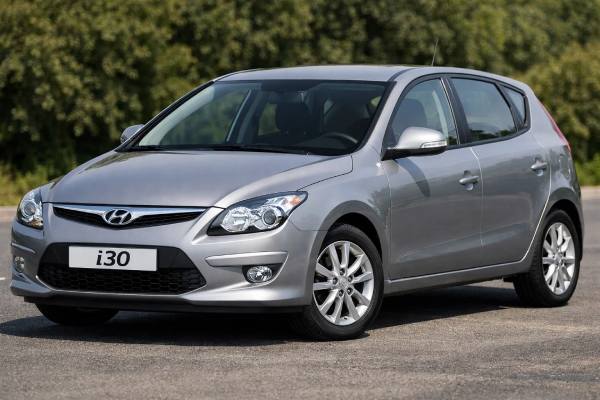
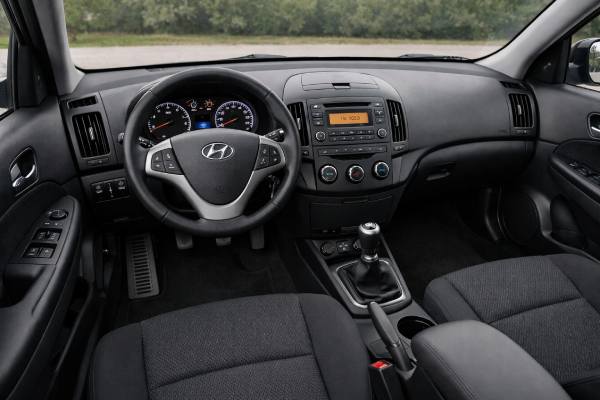
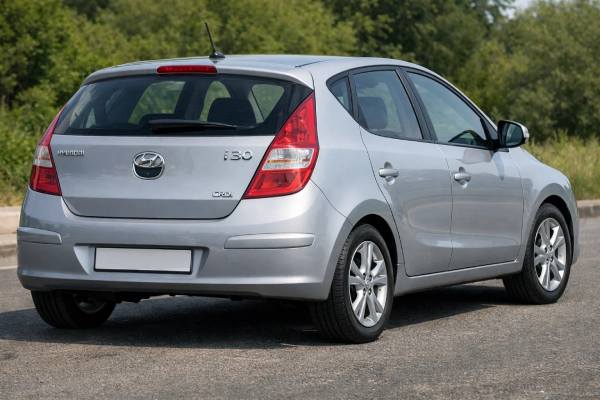
The facelifted Hyundai i30 FD 1.4 MPI sits in an interesting corner of the used-car market. It is not the fastest version of the first-generation i30, and it does not have the low-end shove of the diesel models, but it makes sense for buyers who want a simple naturally aspirated petrol hatchback with modest running costs and fewer diesel-related headaches. This 109 hp 1.4-liter engine is straightforward in design, chain-driven, and generally easier to live with over time than many small turbo engines or neglected diesels from the same period.
What makes this version appealing is balance. The facelift brought a cleaner look, the FD platform still offered a roomy cabin and independent rear suspension, and the car remained easy to drive in daily use. The key question today is not whether the i30 was good when new. It is whether the example in front of you has been maintained properly, repaired well, and kept ahead of age-related wear.
Top Highlights
- Naturally aspirated 1.4 MPI engine avoids many of the soot and turbo issues seen in small diesels.
- Cabin space, rear-seat room, and hatch practicality remain strong for an older compact hatchback.
- Independent rear suspension helps the car feel calmer and more composed than many budget rivals.
- Neglected cars can develop timing-chain noise, ignition faults, suspension knocks, and corrosion underneath.
- A sensible oil service interval is every 15,000 km or 12 months, with shorter intervals on severe use.
What’s inside
- Hyundai i30 FD Facelift Basics
- Hyundai i30 FD Technical Numbers
- Hyundai i30 FD Equipment and Protection
- Known Trouble Spots and Service Campaigns
- Upkeep Schedule and Used-Buying Tips
- Real Driving and Fuel Use
- How This i30 Stacks Up
Hyundai i30 FD Facelift Basics
The facelifted Hyundai i30 FD was Hyundai’s attempt to keep its first serious European compact hatch fresh until the next generation arrived. In 1.4 MPI form, it became the range’s simple petrol option: modest power, conventional port injection, front-wheel drive, and a five-speed manual. On paper, that sounds basic. In practice, it is part of the appeal.
This version uses the 1.4-liter G4FA gasoline engine, a naturally aspirated inline-four that trades outright punch for simplicity. There is no turbocharger to worry about, no diesel particulate filter, and no direct-injection carbon issue in the usual modern sense. For buyers who do short trips, mixed commuting, school runs, and normal family use, that matters. This engine is happiest when driven smoothly and allowed to rev, because its torque arrives high in the range. It feels more willing in town than many old small-displacement petrol engines, but it is not a low-rpm cruiser.
The facelift also sharpened the i30’s appearance without changing its core strengths. It remained a practical five-door hatchback with straightforward controls, a generous seating position, and rear-seat space that still feels respectable today. The boot is usefully shaped, and the folding rear seat makes it easy to handle bulky daily cargo. Compared with many low-cost compact cars of the same period, the i30’s packaging feels mature rather than cheap.
A bigger reason the FD still deserves attention is the chassis. Hyundai gave the car a fully independent rear suspension, something not every rival at this price point offered. That helps the i30 ride broken roads well and gives it a more settled, planted feel on faster roads. It is not a sporty hatch, but it does not feel flimsy or underdeveloped either.
Ownership today depends more on condition than specification. A clean 2010–2012 1.4 MPI can be a very sensible used buy because the mechanical package is honest and parts support is still decent. A tired example, though, can need a chain of medium-cost jobs: tyres, brakes, suspension links, ignition components, A/C work, and corrosion correction. That is why this car works best when bought as a well-kept, documented hatchback rather than as the cheapest example available.
The verdict at a glance is simple. The facelifted i30 FD 1.4 MPI is not exciting, but it is practical, user-friendly, and generally durable when serviced correctly. For buyers who value predictability over performance, that still counts for a great deal.
Hyundai i30 FD Technical Numbers
The figures below describe the common European Hyundai i30 FD facelift hatchback with the 1.4 MPI 109 hp engine and 5-speed manual from the 2010 to 2012 period. Market, trim, tyre package, and homologation differences can change some details, so the table should be treated as a sound baseline rather than a universal answer for every VIN.
Powertrain and efficiency
| Item | Specification |
|---|---|
| Engine code | G4FA |
| Engine layout and cylinders | Inline-4, transverse |
| Valvetrain | DOHC, 4 valves per cylinder |
| Bore × stroke | 77 × 75 mm (3.03 × 2.95 in) |
| Displacement | 1.4 L (1,396 cc) |
| Induction | Naturally aspirated |
| Fuel system | Multi-port manifold injection |
| Compression ratio | 10.5:1 |
| Max power | 109 hp (80 kW) @ 6,200 rpm |
| Max torque | 137 Nm (101 lb-ft) @ 5,000 rpm |
| Timing drive | Chain |
| Rated combined efficiency | 6.1 L/100 km (38.6 mpg US / 46.3 mpg UK) |
| Real-world highway @ 120 km/h | about 6.6–7.3 L/100 km (32.2–35.6 mpg US / 38.7–43.0 mpg UK) |
Transmission and driveline
| Item | Specification |
|---|---|
| Transmission | 5-speed manual |
| Drive type | FWD |
| Differential | Open |
Chassis and dimensions
| Item | Specification |
|---|---|
| Suspension front / rear | MacPherson strut / independent multi-link |
| Steering | Rack and pinion; MDPS on many facelift cars |
| Brakes | Ventilated front discs / rear discs |
| Most common tyre size | 185/65 R15, with 195/65 R15 and 205/55 R16 seen on higher trims |
| Length / width / height | 4,280 / 1,775 / 1,480 mm (168.5 / 69.9 / 58.3 in) |
| Wheelbase | 2,650 mm (104.3 in) |
| Turning circle | 10.2 m (33.5 ft) |
| Kerb weight | about 1,193 kg (2,630 lb) |
| GVWR | 1,720 kg (3,792 lb) |
| Fuel tank | 53 L (14.0 US gal / 11.7 UK gal) |
| Cargo volume | 340 L / 1,250 L (12.0 / 44.1 ft³) |
Performance and capability
| Item | Specification |
|---|---|
| 0–100 km/h | 12.6 s |
| Top speed | 187 km/h (116.2 mph) |
| Towing capacity | 1,200 kg (2,646 lb) braked / 550 kg (1,213 lb) unbraked |
| Payload | about 527 kg (1,162 lb) |
Fluids and service capacities
| Item | Specification |
|---|---|
| Engine oil | 3.3 L (3.49 US qt); Europe manual lists API SL or SM and ACEA A3 or above |
| Coolant | about 6.0 L (6.34 US qt) as a working reference; verify by VIN and engine variant |
| Brake fluid | DOT 4 |
| Manual transmission fluid | Specification and fill quantity vary by gearbox revision; verify by VIN |
| A/C refrigerant | R134a; charge varies by compressor and market spec |
| Key torque spec | Wheel nuts 88–108 Nm (65–80 lb-ft) |
Safety and driver assistance
| Item | Specification |
|---|---|
| Euro NCAP | Original 2007 protocol result for i30 hatch: 4-star adult, 3-star child, 2-star pedestrian; tested result applied broadly to the model line |
| IIHS | Not applicable for this European-market hatchback |
| ADAS suite | No AEB, ACC, lane-keeping assist, blind-spot monitoring, or rear cross-traffic alert |
| Core safety hardware | ABS, airbags, ISOFIX, and ESC/ESP on many facelift cars, depending on trim and market |
These numbers explain the car well. It is light by current compact-hatch standards, reasonably practical, and geared toward steady everyday use rather than headline performance.
Hyundai i30 FD Equipment and Protection
Trim and equipment structure depended heavily on market, so the safest way to talk about the facelifted FD is by pattern, not by pretending every country got the same grades. In Ireland, the UK, and parts of continental Europe, buyers commonly saw entry models with names like Classic or Comfort, middle trims with Style or similar badging, and higher trims such as Deluxe or Premium. What matters now is not the brochure name on the tailgate. It is the actual hardware fitted to the car.
Entry trims usually covered the essentials well enough: air conditioning, basic audio, electric front windows or full electric windows depending on market, body-color trim, and the major passive safety features buyers expected by this point. Mid-range cars often added alloy wheels, cruise control, better steering-wheel controls, upgraded audio integration, and convenience touches that make the cabin feel noticeably less basic. Higher trims may add automatic lights, parking sensors, climate control, different seat trim, and larger wheel packages.
For used buyers, quick identifiers are more useful than catalog language:
- wheel size and brake hardware
- manual or climate-control panel type
- steering-wheel button layout
- presence of parking sensors
- seat trim quality
- chrome or body-color exterior details
- whether ESC/ESP and curtain airbags are confirmed on the car
The safety story needs context. The FD-generation i30 was respectable in its day, but its crash-test result belongs to the older Euro NCAP system. That means its four-star adult result and lower child and pedestrian outcomes should not be read like a modern four-star or five-star score. Still, the tested structure was stable in frontal impact, and the car offered the important basics: front airbags, side airbags, curtain airbags on many versions, ISOFIX points, and braking and stability systems that were competitive for the period.
Where the facelift feels old today is active safety. There is no modern camera- and radar-based assistance package. No autonomous emergency braking, no active lane support, and no blind-spot monitoring. That makes tyre condition, brake performance, headlamp condition, and steering accuracy even more important on a used example. A well-maintained i30 FD can still feel safe and predictable. A poorly maintained one loses a lot of that margin.
If you are viewing a car in person, check these safety-related items carefully:
- Airbag, ABS, ESC, and steering warning lights at startup.
- Correct seat-belt retraction and buckle action.
- Front crash repair quality around rails, slam panel, and inner wings.
- ISOFIX anchor condition and rear-seat latch integrity.
- Consistent brake pedal feel and straight-line stopping.
- Tyre age, matching tread, and correct load-speed rating.
A buyer expecting current ADAS features will not find them here. A buyer wanting solid basic passive safety and predictable road manners still can, provided the car has not been cheapened by neglect or poor repairs.
Known Trouble Spots and Service Campaigns
The facelifted i30 FD 1.4 MPI is generally one of the safer bets in this generation, but it is no longer young, and age now matters as much as design. The good news is that the common faults are usually understandable. The bad news is that several medium-cost jobs can stack up on a neglected car.
Common, low-to-medium cost
- Ignition coil or spark-plug trouble: Symptoms include misfire under load, rough idle, poor starting, and an engine warning light. The cause is usually a weak coil pack or overdue plugs. Remedy is coil and plug replacement, plus checking for oil in plug wells.
- Suspension knocks: Front anti-roll-bar links, bushes, and lower-arm wear are common. The car will sound loose over small bumps. This is rarely catastrophic but quickly affects refinement.
- Brake drag and uneven rear brake wear: Older rear calipers can seize or hang up, especially on lightly used cars. Remedy is service, rebuild, or replacement before discs overheat or wear unevenly.
- Electrical annoyances: Window regulators, door-lock actuators, blower resistors, and aging battery-related faults are familiar on older examples.
Occasional, medium cost
- Timing-chain stretch or tensioner noise: The G4FA uses a chain, which is helpful, but chain-driven does not mean lifetime-free. Cold-start rattle, rough running, or correlation faults after long oil-change neglect deserve attention. Remedy is inspection and chain-set replacement when wear is confirmed.
- Cooling-system faults: Thermostat aging, hose deterioration, radiator seepage, and water-pump wear can show up with age. Watch for fluctuating temperature, weak cabin heat, or coolant smell.
- A/C compressor or clutch problems: Common symptoms are poor cooling, noisy operation, or clutch engagement issues. On a cheap used hatch, this is often ignored until summer.
Occasional, higher-cost if ignored
- Catalyst or lambda-sensor issues: Persistent warning lights, poor economy, or emissions-test failures can follow long-term misfire or rich running.
- Clutch wear: This engine is not especially hard on clutches, but city-driven cars can still need one by this age.
Corrosion is not the i30 FD’s main calling card, but it does deserve inspection. Check front and rear subframes, brake pipes, rear arches, sill edges, jacking points, floor seams, and the lower tailgate area. Cars from salty regions can look tidy above and still be tired underneath.
The main official service-campaign story is more important than the routine faults. The FD line was affected by a major airbag control unit recall, a later ABS-module short-circuit fire-risk recall in some markets, and an ESC module moisture-related recall affecting certain 2010–2012 vehicles. On a used example, recall completion matters just as much as oil changes. Ask for printed dealer evidence, and verify by VIN wherever possible.
There is no single software issue that defines this petrol model the way some later turbo cars are defined by reflashes or module logic updates. Here, hardware condition matters more. A pre-purchase inspection should focus on service history, underside corrosion, cold start behavior, warning lights, and proof that recall work is finished. That is the difference between a cheap hatchback and a sound buy.
Upkeep Schedule and Used-Buying Tips
The strongest i30 FD 1.4 MPI cars are usually not the lowest-mileage examples. They are the ones that got regular servicing, decent tyres, proper brake work, and quick attention when small faults started. This is a simple car, but simple cars still punish neglect.
A practical maintenance plan for real ownership looks like this:
| Item | Practical interval |
|---|---|
| Engine oil and filter | Every 15,000 km or 12 months |
| Cabin air filter | Every 15,000 km or 12 months |
| Engine air filter | Inspect regularly; replace about every 40,000 km or sooner in dusty use |
| Spark plugs | About every 45,000 km is a sensible working interval |
| Coolant | First change at about 210,000 km or 10 years, then every 30,000 km or 24 months |
| Brake fluid | Every 24 months |
| Brake pads and discs | Inspect at every service |
| Drive belts | Inspect every service; replace on condition |
| Timing chain | No fixed interval; inspect if noisy, rattly on cold start, or if timing faults appear |
| Manual gearbox oil | Check for leaks and shift quality; proactive change around 90,000–120,000 km is sensible |
| Tyre rotation | Every 10,000–15,000 km |
| Alignment check | Yearly or when tyre wear appears uneven |
| 12 V battery | Test from year 4 onward; many cars need one in the 4–6 year range |
For fluids and capacities, the most important figures are the ones that stop guesswork. Engine oil capacity is 3.3 L, wheel-nut torque is 88–108 Nm, and Europe-market guidance in the manual calls for API SL or SM and ACEA A3 or above. Brake fluid is DOT 4. Coolant fill is roughly 6.0 L as a working reference, but exact fill can vary slightly with engine and draining method, so a VIN check is the right way to finish the job. Manual transmission oil specification also varies by gearbox revision, so this is not a car to fill by habit.
For buyers, the inspection checklist should focus on the expensive truth, not the cosmetic one:
- cold start from fully cold
- idle stability and warning lights
- chain rattle on first start
- coolant condition and temperature stability
- clutch bite point and gearbox shift quality
- brake drag or uneven braking
- air conditioning operation
- underside corrosion, brake lines, and subframe condition
- recall completion records
- tyre brand, date, and evenness of wear
The best years are usually the later facelift cars with complete records and evidence of steady maintenance. The trims to seek are mid- and high-spec cars with ESC, sensible wheel sizes, and no signs of cheap modifications. The ones to avoid are cars with vague history, multiple warning lights, fresh underbody paint hiding corrosion, or obvious corner-cutting on tyres and brakes.
Long-term durability is decent. The engine itself is not the worry. The real risk is buying a car that needs five age-related jobs at once.
Real Driving and Fuel Use
The facelifted i30 FD 1.4 MPI is easy to understand from behind the wheel. It is calm, predictable, and more refined in chassis behavior than its modest output suggests. The driving experience is built around balance, not speed.
Ride quality is one of the car’s better traits. The FD platform copes well with patchy roads, speed humps, and rough secondary routes without becoming harsh. At the same time, motorway stability is respectable for an older C-segment hatchback. The steering is light rather than rich in feedback, but it is accurate enough for daily use and does not make the car feel nervous.
Handling is safe and tidy. There is some body roll if pushed, and this is not a car that wants to be rushed, but the independent rear suspension helps it stay composed. On ordinary tyres and in good condition, the car feels stable in quick lane changes and more planted than some budget-focused rivals from the same era. Braking feel is usually consistent as long as the rear calipers are free and the discs are healthy.
The engine defines the rest of the experience. Throttle response is clean, but torque is modest and arrives high, so the i30 1.4 responds best when you use the gearbox properly. In urban traffic it feels honest rather than energetic. On faster roads, overtaking requires planning and usually a downshift. That is not a flaw so much as the natural character of a small naturally aspirated petrol engine from this period.
Real-world fuel use usually looks like this:
- city: about 7.5–8.5 L/100 km, or 27.7–31.4 mpg US and 33.2–37.7 mpg UK
- highway at 100–120 km/h: about 5.8–7.0 L/100 km, or 33.6–40.6 mpg US and 40.4–48.7 mpg UK
- mixed use: about 6.5–7.2 L/100 km, or 32.7–36.2 mpg US and 39.2–43.5 mpg UK
Those figures line up reasonably well with the official combined figure when the car is healthy and driven smoothly. Short trips, underinflated tyres, old spark plugs, worn brakes, and heavy motorway speeds will push consumption higher. The 53-liter tank still gives a useful real-world touring range for a petrol hatch of this size.
Performance matters mainly in context. The official 0–100 km/h time of 12.6 seconds and top speed of 187 km/h tell the truth: the car is adequate, not brisk. Yet the everyday verdict is better than the numbers suggest, because visibility is good, the controls are light, and the car never feels intimidating or awkward. That makes it a pleasant commuter, even if it is not a fast one. When fully loaded or towing near its limit, expect noticeably slower responses and a fuel-use penalty in the 10–20% range.
How This i30 Stacks Up
The facelifted Hyundai i30 FD 1.4 MPI makes the most sense when compared with other straightforward family hatchbacks from the same period. It was never meant to beat every rival on every measure. It was built to be balanced, usable, and good value.
Against the Kia cee’d 1.4, the Hyundai is effectively competing with its close cousin. The shared engineering means condition and history usually matter more than the badge. The Kia often feels just as sensible, but the i30’s cabin presentation and used-market pricing can sometimes make it the easier buy.
Against the Ford Focus 1.6 petrol, the Ford still wins for steering feel and driver engagement. The Focus is the sharper car. But the Hyundai often fights back with simpler ownership, better feature content for the money, and a slightly more understated, practical feel.
Against the Volkswagen Golf 1.4 or 1.6 petrol, the Golf holds the stronger image and, in some trims, a more polished cabin. Even so, the i30 usually wins on purchase cost and can be the more rational used buy, especially when you want a non-turbo petrol with straightforward maintenance.
Against the Toyota Auris 1.33, the Toyota brings a powerful reliability reputation, but the i30 can feel more comfortable and less austere. The Hyundai’s rear suspension also helps it feel more composed over poor surfaces.
The i30’s strongest points are clear:
- simple naturally aspirated petrol engine
- practical cabin and hatchback packaging
- mature ride quality
- good value in the used market
- fewer diesel-specific ownership risks than CRDi models
Its weaker points are just as clear:
- modest low-rpm performance
- no modern driver-assistance technology
- some age-related electrical and suspension wear
- recall history that must be checked carefully
- weaker badge pull than the Golf or Focus
That leaves the Hyundai in a very sensible position. If you want the best steering, choose the Focus. If you want the strongest badge image, choose the Golf. If you want a practical, straightforward, non-turbo compact hatch that still feels well judged, the facelift i30 FD 1.4 MPI remains an appealing alternative. It is at its best when bought on condition, not on assumption.
References
- Hyundai Motor Company – HYUNDAI I30 2007 – 2012 2019 (Recall Database)
- Hyundai Motor Company Australia Pty Ltd – HYUNDAI I30, ELANTRA 2020 (Recall Database)
- Hyundai Motor Company Australia Pty Ltd – HYUNDAI i30 2010 – 2012 2016 (Recall Database)
- Hyundai i30 2011 Owner’s Manual 2011 (Owner’s Manual)
- Frontal impact driver Frontal impact passenger Side impact … 2007 (Safety Rating)
Disclaimer
This article is for informational purposes only and is not a substitute for professional diagnosis, repair, or official workshop procedures. Specifications, torque values, service intervals, capacities, and repair methods can vary by VIN, market, production date, transmission, and equipment level, so always verify details against official service documentation for the exact vehicle.
If this guide was useful, please consider sharing it on Facebook, X, or another social platform to support our work.