
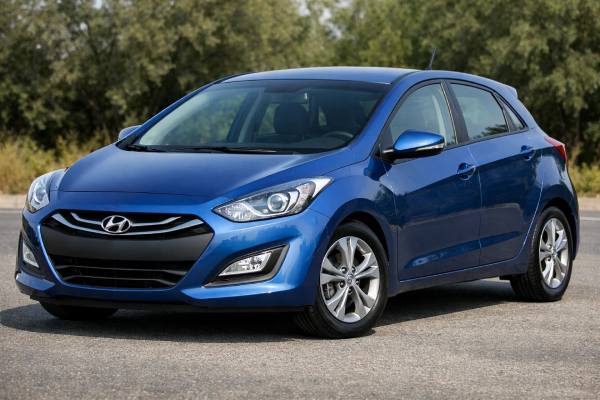
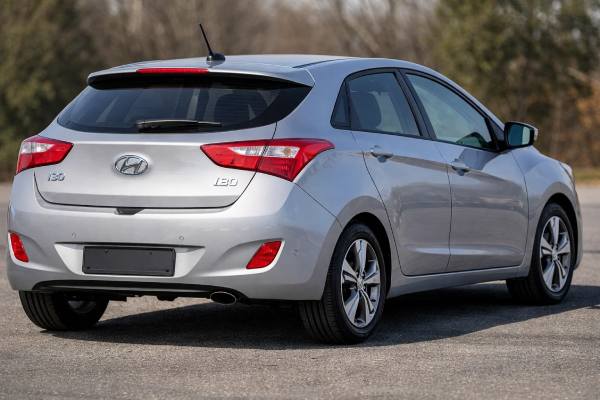
The Hyundai i30 GD 1.4 MPI is one of those family hatchbacks that looks modest on paper but makes a lot of sense in real ownership. It arrived as a cleaner, more mature successor to the FD-generation car, with a stiffer body, a more refined cabin, and a chassis tuned for European roads. In 1.4 MPI form, it was never meant to be quick. Instead, it aimed to deliver predictable running costs, simple naturally aspirated petrol engineering, and enough space to work as a genuine daily family car.
That still shapes its appeal today. Buyers usually come to this version because they want to avoid turbo complexity, diesel emissions hardware, and oversized wheels, not because they expect hot-hatch pace. The result is a sensible used car with strong safety credentials, a roomy cabin, and straightforward servicing. The catch is that the 100 hp engine must work fairly hard in a modern traffic environment, so condition, maintenance history, and realistic expectations matter more than the badge on the nose.
At a Glance
- Simple naturally aspirated petrol engine keeps long-term maintenance easier than many small turbo rivals.
- Roomy interior, useful 378 L boot, and a composed chassis make it a practical everyday hatchback.
- Strong passive-safety package and a 5-star crash-test result were major selling points in period.
- Performance is adequate rather than brisk, and neglected ignition, clutch, or steering issues can spoil the ownership experience.
- A sensible service rhythm is engine oil and filter every 10,000–15,000 km or every 12 months.
Quick navigation
- Hyundai i30 GD Petrol Snapshot
- Hyundai i30 GD Specs Table
- Hyundai i30 GD Trim and Safety Map
- Common Faults and Recall Checks
- Service Plan and Buying Advice
- Real Driving and Fuel Costs
- Position Against Family Rivals
Hyundai i30 GD Petrol Snapshot
The GD-generation i30 marked a real step forward for Hyundai in the European hatchback market. It was longer, wider, and more polished than the car it replaced, yet it stayed faithful to the same basic idea: honest compact-car practicality with easy ownership and sensible value. In 1.4 MPI form, the i30 did not try to be clever. It used a naturally aspirated petrol four-cylinder, front-wheel drive, a six-speed manual gearbox, and a chassis tuned more for confidence and comfort than drama. That decision gives the car much of its character today.
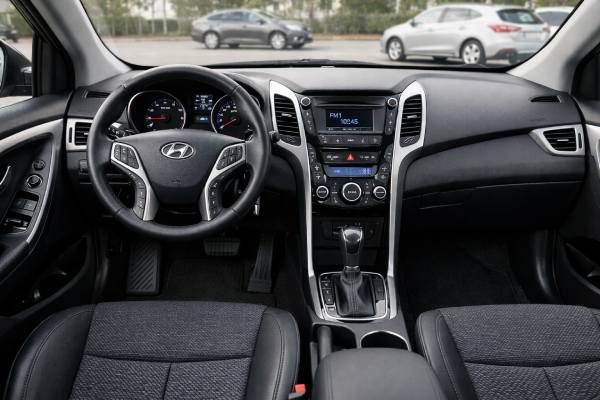
From the driver’s seat, the i30 feels like a car designed by people who understood how family hatchbacks are actually used. Visibility is good, the dashboard layout is simple, and there is enough seat and steering-column adjustment to suit a wide range of drivers. Rear-seat space is also stronger than the modest exterior suggests. Adults fit without too much complaint, and the boot is large enough for weekly shopping, luggage, or a folded pushchair. For buyers stepping out of smaller city cars, the GD i30 often feels like a meaningful upgrade in everyday usability.
The 1.4 MPI engine is the quiet achiever here. It will not impress anyone with straight-line shove, but it does offer clean response, no turbo lag, and relatively straightforward upkeep. In normal commuting, it behaves predictably and smoothly. Around town, that matters more than power figures. On the open road, though, the limits of 100 hp are clear. With passengers and luggage on board, the engine needs revs and gear changes to stay lively. That does not make it a bad fit for the car, but it does mean this is a better match for patient drivers than for anyone expecting strong overtaking punch.
The underlying chassis is one of the i30’s biggest strengths. Hyundai gave the GD a mature suspension setup and a calmer, more grown-up feel than many buyers expected from the badge at the time. It rides well, tracks straight, and remains composed over poor surfaces. The steering is light and not especially rich in feel, but for daily use it suits the car’s role.
As a used purchase, the GD 1.4 MPI appeals because it is rational. It gives up some performance and some badge cachet, but it answers with space, safety, low-stress engineering, and predictable ownership. That remains a strong combination.
Hyundai i30 GD Specs Table
The figures below describe the Hyundai i30 GD hatchback with the 1.4 MPI 100 hp petrol engine sold during the 2012–2015 period. Small market differences existed in trim, tyre packages, and some late-running changes, so exact VIN decoding always matters.
Powertrain and efficiency
| Item | Data |
|---|---|
| Engine family | Gamma 1.4 MPI |
| Common engine code | G4FA |
| Engine layout and cylinders | Inline-4, 4 cylinders |
| Valvetrain | DOHC, CVVT, 4 valves per cylinder |
| Bore × stroke | 77.0 × 74.99 mm (3.03 × 2.95 in) |
| Displacement | 1.4 L (1,396 cc) |
| Induction | Naturally aspirated |
| Fuel system | Multi-point injection |
| Compression ratio | 10.5:1 |
| Max power | 100 hp (73.2 kW) @ 5,500 rpm |
| Max torque | 137 Nm (101 lb-ft) @ 4,200 rpm |
| Timing drive | Chain |
| Rated combined efficiency | 5.6 L/100 km (42.0 mpg US / 50.4 mpg UK) |
| Real-world highway @ 120 km/h | usually about 5.8–6.5 L/100 km (36.1–40.6 mpg US / 43.5–48.7 mpg UK) |
Transmission and driveline
| Item | Data |
|---|---|
| Transmission | 6-speed manual |
| Drive type | FWD |
| Differential | Open |
Chassis and dimensions
| Item | Data |
|---|---|
| Front suspension | Fully independent subframe-mounted MacPherson struts with coil springs and anti-roll bar |
| Rear suspension | Fully independent multi-link with coil springs and anti-roll bar |
| Steering | Rack and pinion, motor-driven power steering |
| Steering ratio detail | 2.85 turns lock-to-lock |
| Brakes | Front and rear discs |
| Most popular tyre size | 195/65 R15 or 205/55 R16 |
| Length | 4,300 mm (169.3 in) |
| Width | 1,780 mm (70.1 in) |
| Height | 1,470 mm (57.9 in) |
| Wheelbase | 2,650 mm (104.3 in) |
| Turning circle (kerb-to-kerb) | about 10.6 m (34.8 ft) |
| Kerb weight | about 1,185–1,306 kg (2,612–2,879 lb) |
| GVWR | 1,820 kg (4,012 lb) |
| Fuel tank | 53 L (14.0 US gal / 11.7 UK gal) |
| Cargo volume | 378 L (13.3 ft³) seats up / 1,316 L (46.5 ft³) seats folded |
Performance and capability
| Item | Data |
|---|---|
| 0–100 km/h | 13.2 s |
| Top speed | 182 km/h (113 mph) |
| Braking distance | factory brochure does not publish a single rotor-distance figure for this exact version |
| Towing capacity | 1,200 kg (2,646 lb) braked / 600 kg (1,323 lb) unbraked |
| Payload | roughly 514–635 kg (1,133–1,400 lb), depending on kerb-weight spec |
Fluids and service capacities
| Item | Data |
|---|---|
| Engine oil | typically 5W-30 meeting Hyundai-approved or API SM/SN-class petrol specifications |
| Engine oil capacity | about 3.3 L (3.5 US qt) service fill / about 3.7 L (3.9 US qt) dry |
| Coolant | ethylene-glycol long-life coolant, mixed to official market specification |
| Coolant capacity | about 5.8 L (6.1 US qt) |
| Manual transmission fluid | verify by gearbox code; commonly around 1.8–1.9 L (1.9–2.0 US qt) |
| Brake and clutch fluid | DOT 3 or DOT 4 |
| A/C refrigerant | verify by under-bonnet label |
| Key torque spec | wheel nuts typically 88–107 Nm (65–79 lb-ft) |
Safety and driver assistance
| Item | Data |
|---|---|
| Euro NCAP | 5 stars; Adult 88%, Child 84%, Vulnerable Road Users 64%, Safety Assist 68% |
| ANCAP | 5 stars for June 2012–December 2014 range, applying to all variants in that rating group |
| IIHS | not applicable to the European i30 hatchback |
| ADAS suite | no AEB, ACC, lane-keep assist, blind-spot warning, or rear cross-traffic alert on this version |
The technical picture is clear: the GD 1.4 MPI is a simple, light-duty family hatch rather than a performance model. Its appeal lies in balance, not headline numbers.
Hyundai i30 GD Trim and Safety Map
Trim structure depended on market, but the broad pattern was familiar. Entry versions focused on value, mid-spec cars offered the sweet spot, and higher trims added convenience and visual upgrades rather than major mechanical changes. In several European markets, names like Classic, Deluxe, and Premium were used, while other countries applied different badges to similar equipment groups. That means a used buyer should decode the actual features on the car rather than rely too heavily on an online trim label.
Base versions were usually not badly equipped. Even simpler cars often had air conditioning, Bluetooth, front fog lamps, LED daytime running lights, height-adjustable steering, ISOFIX anchor points, and the core passive-safety package. That gave the i30 a strong entry-level story. Mid-spec cars generally make the most sense today because they add items that improve daily life without introducing much extra complexity: alloy wheels, cruise control with speed limiter, parking sensors, upgraded steering-wheel controls, folding mirrors, and sometimes the Flex Steer function. Higher trims may add panoramic roof, dual-zone climate control, automatic lights and wipers, semi-leather upholstery, and a more upscale appearance.
Mechanically, there was little reason to chase top trim unless you genuinely want the comfort features. The 1.4 MPI engine is unchanged in its core character, and the same is true of the front-wheel-drive layout and basic chassis architecture. In fact, lower trims on smaller wheels can ride better and cost less to maintain because tyres are cheaper and sidewalls are more forgiving on broken roads.
Safety was one of the GD i30’s strongest talking points when new. Euro NCAP awarded it five stars, and ANCAP applied a five-star result across the hatch and wagon range it assessed. The test car was a left-hand-drive 1.4-liter model, which is especially relevant here because it closely matches the subject of this article. Scores were strong in adult and child protection, and the car also brought a more modern active-safety foundation than older budget hatchbacks.
Typical safety equipment included front airbags, side airbags, full-length curtain airbags, ABS, electronic brake-force distribution, electronic stability control, vehicle stability management, hill-start assist, emergency brake signal, and seatbelt reminders. Some markets also included a driver knee airbag. That is a solid specification for a car in this class and era.
What the GD i30 does not offer is a modern ADAS suite. There is no autonomous emergency braking, adaptive cruise control, blind-spot warning, lane-keep assist, or traffic-sign recognition in this 1.4 MPI range. Buyers need to think in terms of strong passive safety and baseline chassis electronics, not sensor-led active intervention. After body repairs, the priority is making sure the structure, airbags, seatbelts, and geometry are correct, not recalibrating radar or camera systems.
Common Faults and Recall Checks
The Hyundai i30 GD 1.4 MPI is generally a dependable used hatchback, but it is now old enough that age, servicing habits, and climate matter as much as design quality. The good news is that most trouble spots are conventional and affordable if caught early.
Common and usually low-cost issues
- Ignition wear: rough idle, hesitation, or a flashing engine light often point to spark plugs or ignition coils. The engine is simple, and these faults are rarely disastrous if addressed early.
- Brake wear and sticking rear calipers: older compact hatchbacks often develop uneven rear-pad wear or lazy handbrake action, especially in wet or salty climates.
- Suspension consumables: drop links, bushes, top mounts, and anti-roll-bar bushes are normal age-related replacements. Symptoms are clunks over sharp bumps, vague steering, and uneven tyre wear.
- Battery and charging complaints: stop-start-equipped cars, if fitted, can be sensitive to battery condition. Even non-stop-start cars begin to show weak-battery behaviour as they age.
Occasional medium-cost problems
- MDPS steering clunk: some Hyundai and Kia cars of this era develop a light knock or clunk in the motor-driven power steering system, often noticed at low speed or over uneven surfaces. It is usually more annoying than dangerous, but it should be diagnosed correctly.
- Clutch wear: the 1.4 MPI does not overwhelm its clutch, but urban use, learner-driver abuse, or heavy hill work can shorten clutch life. Watch for slip under load and high bite points.
- Cooling-system seepage: thermostat housing issues, ageing hoses, and small coolant leaks are worth taking seriously. This is not a known head-gasket disaster engine, but any aluminium engine dislikes repeated overheating.
- Exhaust flex section and heat-shield rattles: older cars often develop harmless but irritating noises underneath.
Less common but more expensive risks
- Timing-chain noise on neglected cars: the chain does not have a routine belt-change interval, but poor oil quality and long drain intervals can encourage stretch, tensioner wear, or cold-start rattle.
- Catalyst damage after repeated misfire: cars driven for too long with ignition faults can end up needing more than just coils and plugs.
- ABS module recall relevance: some markets issued recall campaigns for ABS-module short-circuit fire risk on related Hyundai models, and separate ESC-module campaigns affected some early-build i30s. This does not mean every GD 1.4 MPI is affected, but it does make a VIN-based recall check essential.
Corrosion is less of a headline issue than on the older FD, but it still matters. Check rear arches, bonnet leading edge, tailgate seams, door bottoms, underbody seams, subframe areas, jacking points, and brake lines. Cars from dry climates can still look excellent; salted-climate cars need a much harder inspection.
Software is not a major ownership theme on this engine compared with later turbo cars, but dealer updates can still matter for audio, instrument-cluster quirks, steering feel, and occasional drivability complaints. When buying, ask not only for stamped services but also for proof that recall and campaign work was completed.
Service Plan and Buying Advice
The i30 GD 1.4 MPI is easy to maintain, but the smartest way to own one is to stay ahead of small jobs rather than wait for failures. Because it is a naturally aspirated petrol car, its service needs are less complicated than a comparable turbo or diesel rival. That simplicity is one of its biggest strengths.
Practical maintenance schedule
- Engine oil and filter: every 10,000–15,000 km or 12 months. The official long interval may be longer in some markets, but older used cars benefit from the shorter end of that range.
- Engine air filter: inspect every service, replace around 20,000–30,000 km, sooner in dusty conditions.
- Cabin filter: every 12 months or about 15,000–20,000 km.
- Spark plugs: check at service intervals and replace at a sensible mileage based on plug type, commonly around 45,000–60,000 km for conventional plugs.
- Coolant: if the car still has a documented long-life fill and clean system, follow the correct schedule. On an older used example with unclear history, a full coolant renewal is sensible.
- Brake fluid: every 2 years.
- Manual gearbox oil: often marketed as long-life, but refreshing it around 80,000–100,000 km is a practical decision for shift quality and bearing life.
- Timing chain: inspect by symptoms, cold-start noise, and fault history rather than mileage alone.
- Auxiliary belt and hoses: inspect annually.
- Brake inspection: check rear calipers, slider pins, and handbrake operation at every service.
- Tyre rotation and alignment: rotate every 10,000–12,000 km if wear is even enough to justify it, and check alignment after any suspension work.
- 12 V battery: test from year four onward and replace proactively once cold starts begin to slow.
Useful fluid and decision data
| Item | Practical guidance |
|---|---|
| Engine oil | 5W-30 is the usual safe choice for most climates; verify exact approval by market |
| Engine oil quantity | about 3.3 L service fill |
| Coolant quantity | about 5.8 L |
| Manual gearbox oil | verify by gearbox code; commonly just under 2.0 L |
| Brake fluid | DOT 3 or DOT 4 |
| Wheel nut torque | typically 88–107 Nm |
Used-buyer inspection checklist
- Start the car cold and listen for chain rattle, noisy pulleys, or misfire.
- Check for stable idle and smooth throttle response when warm.
- Inspect service records for oil quality, not just service stamps.
- Test clutch take-up, especially on a hill or in a high gear under load.
- Drive over rough surfaces and listen for front-end knocks or steering-column noises.
- Inspect tyres for uneven shoulder wear that suggests bush or alignment problems.
- Check rear brakes for dragging or a weak handbrake.
- Look carefully for rust under the car, not just on visible body panels.
- Confirm that air conditioning, Bluetooth, parking sensors, and all windows work.
- Ask for proof of recall completion and any dealer campaign history.
The best years to target are usually those with a full service trail and modest, consistent use. Avoid neglected low-price examples that need tyres, brakes, clutch, suspension, and cosmetic rust work all at once. The long-term durability outlook is good if the car has been maintained on rhythm rather than patched together after neglect.
Real Driving and Fuel Costs
The 1.4 MPI i30 is one of those cars that quickly tells you what it is. It is not slow in a dangerous way, but it is not quick either. Instead, it feels honest. The throttle response is clean, the power delivery is linear, and there is no turbo surge or awkward gearbox logic to work around. For everyday urban driving, that straightforward nature is a genuine advantage. The car feels predictable in stop-start traffic, easy to park, and light on its controls.
Once the road opens up, the engine needs a more deliberate style. The six-speed manual helps because it gives the driver enough choice to keep the engine in its useful band. In town, second and third gears are flexible enough for normal flow. On faster roads, you need to plan overtakes and downshift when the car is loaded. That is the trade-off for the simpler naturally aspirated layout. Drivers coming from a small turbo petrol may find it less punchy, but they may also appreciate the smoother response and lower mechanical stress.
The chassis does a lot to support the car’s modest performance. The i30 rides with more maturity than many budget hatchbacks, and the multi-link rear suspension helps it stay composed over broken surfaces. Straight-line stability is good, and motorway cruising feels secure rather than busy. Steering feel remains one of the weaker points. It is accurate enough, but it never becomes especially informative. For normal family driving, though, the light effort and calm responses are easy to live with.
Noise levels are acceptable rather than premium. Around town, the engine is quiet enough. At motorway speed, tyre roar and wind noise become more noticeable, particularly on coarse surfaces and larger alloy-wheel setups. This is another reason smaller-wheel trims often make more sense for used ownership.
Real-world fuel use for a healthy manual car
- City: about 7.0–8.2 L/100 km
- Highway at 100–120 km/h: about 5.2–6.5 L/100 km
- Mixed driving: about 6.0–6.8 L/100 km
Those numbers can worsen if the car is running on old tyres, worn plugs, a sticking brake caliper, or a weak thermostat that keeps the engine cooler than intended. In normal condition, though, the 1.4 MPI can still be economical enough for everyday use without feeling strained on every journey.
The key official performance numbers remain useful because they set expectations correctly: 0–100 km/h in 13.2 seconds and a top speed of 182 km/h. That is enough for modern traffic, but the engine works best with measured inputs rather than aggressive demands. The i30 GD 1.4 MPI drives like a balanced family hatch that values smoothness, comfort, and low-stress control more than excitement. For the right buyer, that remains a perfectly sound verdict.
Position Against Family Rivals
The Hyundai i30 GD 1.4 MPI entered one of the most competitive classes in Europe. Its natural rivals included the Ford Focus 1.6, Kia cee’d 1.4, Volkswagen Golf 1.2 TSI or 1.4 MPI depending market, Opel or Vauxhall Astra 1.4, Toyota Auris 1.33, and Mazda3 1.6. Against that group, the Hyundai did not win every category, but it built a strong case by being sensible in almost all of them.
Against the Ford Focus, the Hyundai gives away steering feel and some driver appeal. The Focus is still the more engaging car to hustle. The i30 answers with a calmer ownership vibe, strong safety equipment, and often lower used prices. Against the Volkswagen Golf, the Hyundai feels less premium inside, but it often avoids the higher purchase costs and some of the complexity associated with small turbo engines and dual-clutch gearboxes. Against the Toyota Auris, the i30 often feels roomier and more mature on the road, even if the Toyota keeps its stronger reliability image. Against the Kia cee’d, the comparison is extremely close, and condition matters more than badge.
Where the i30 really earns its place is as a complete package. It offers:
- a roomy, practical hatchback body
- strong period safety
- straightforward naturally aspirated petrol engineering
- comfortable ride quality
- sensible parts and servicing costs
Its weaknesses are also clear. The 1.4 MPI is not especially lively, the steering is only average, and top-trim cars do not suddenly become premium alternatives to a Golf. Buyers who want performance or crisp driver involvement will probably prefer something else. Buyers who want easy ownership with low drama may find the Hyundai more convincing.
That is why the GD 1.4 MPI still deserves attention. It makes the most sense for drivers who do mixed everyday mileage, want to avoid diesel complexity, and care more about reliability, comfort, and safety than about badge image. It makes less sense for very high-speed motorway commuters or anyone who regularly drives fully loaded in hilly terrain and wants effortless overtaking.
The final verdict is simple. The Hyundai i30 GD 1.4 MPI is not the flashiest car in its class, but it remains one of the more rational used choices. Buy a well-maintained one, and its strengths become clearer the longer you own it.
References
- Hyundai Owners manuals | Hyundai Motor UK 2026 (Owner’s Manual)
- Hyundai i30 2015 (Brochure)
- EuroNCAP | Hyundai i30 2017 (Safety Rating)
- Hyundai i30 | Safety Rating & Report | ANCAP 2012 (Safety Rating)
- Hyundai Motor Company Australia Pty Ltd – HYUNDAI I30, ELANTRA 2020 (Recall Database)
Disclaimer
This article is for informational purposes only and is not a substitute for professional diagnosis, repair, or model-specific workshop guidance. Specifications, torque values, service intervals, procedures, and equipment vary by VIN, market, model year, and trim, so always verify critical details against the correct official service documentation for the exact vehicle.
If this guide helped you, please consider sharing it on Facebook, X, or another social platform to support our work.