
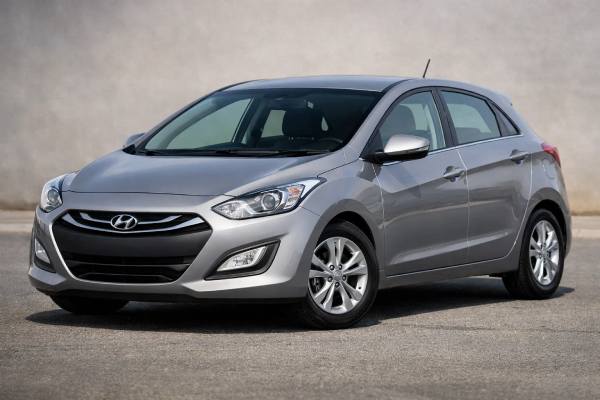
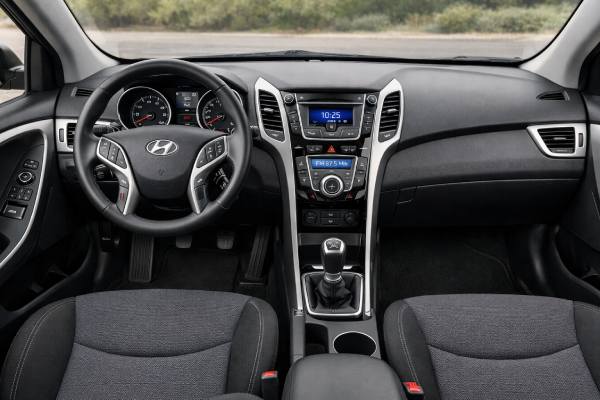
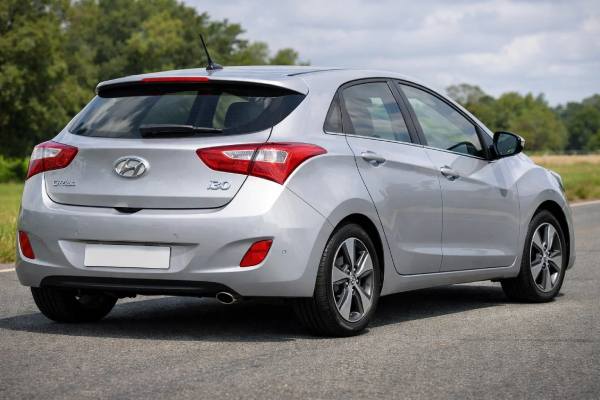
The Hyundai i30 GD 1.6 GDI is one of those compact hatchbacks that becomes more interesting with age, not less. It arrived with sharper styling than the old FD model, a stronger body, more mature road manners, and a 1.6-liter direct-injection petrol engine that aimed to balance everyday efficiency with enough performance to feel modern. For used buyers today, the main attraction is the mix of space, safety, and relative simplicity. This is still a straightforward front-wheel-drive hatch with a naturally aspirated engine, not a heavily boosted downsized motor full of extra heat and pressure. At the same time, the GDI fuel system brings its own ownership realities, especially around intake-valve deposits and maintenance quality. In the right condition, the i30 GD 1.6 GDI is a very sensible family hatch. In the wrong condition, it can become a car that feels slower, rougher, and more expensive than the badge suggests.
Essential Insights
- Direct-injection 1.6 petrol offers a good mix of smoothness, decent pace, and simpler long-term ownership than many small turbo engines.
- Spacious cabin, 378 L boot, and a stable chassis make it a practical all-rounder for daily family use.
- Euro NCAP safety performance was strong for its era, with a 5-star result under the 2012 test regime.
- Carbon buildup and stretched oil intervals are the main long-term caveats on the 1.6 GDI engine.
- A sensible oil-and-filter service interval is every 10,000 to 15,000 km or 12 months.
Contents and shortcuts
- Hyundai i30 GD in Use
- Hyundai i30 GD by Numbers
- Hyundai i30 GD Equipment and Safety
- Failure Patterns and Factory Actions
- Maintenance Map and Shopper Advice
- Road Feel and Fuel Reality
- Compact Hatch Rivals Compared
Hyundai i30 GD in Use
The GD-generation i30 marked a clear step forward for Hyundai in the compact hatchback class. It looked more confident, felt more European in the way it drove, and delivered a better blend of refinement and practicality than many buyers expected from the brand at the time. In 1.6 GDI form, the car sat in an interesting middle ground. It was stronger and more eager than the basic 1.4 petrol, but it avoided the diesel-specific issues that often trouble older high-mileage cars. That makes it one of the more balanced used choices in the range, especially for drivers who do mixed or lower annual mileage.
The engine is the heart of that balance. Hyundai’s 1.6 GDI is a naturally aspirated direct-injection petrol four-cylinder from the Gamma family, rated at 135 hp. Its power delivery is clean and linear, but it is not a torque-rich engine in the modern turbo sense. Peak torque arrives high in the rev range, so the i30 feels best when driven with a little intent rather than lazily short-shifted. Around town it is smooth and civil, but on fast roads or with a full load it needs more revs than some rivals. That is not a flaw so much as a character trait. Buyers coming from older turbo diesels often think the car feels softer than expected at low rpm, while buyers moving out of smaller petrol engines usually find it perfectly acceptable.
The rest of the package is easy to like. The hatch body is compact enough for daily urban use, but long enough inside to work as a proper family car. Hyundai also gave the GD a much more polished cabin than earlier i30s. Visibility is good, the dashboard layout is clear, and the car generally avoids the awkward packaging compromises that hurt some rivals in this class. Rear-seat room is decent, and the boot is useful rather than token.
Chassis tuning is another quiet strength. The GD feels stable and secure, with better body control than many buyers expect. It is not the sharpest hatch of its era, but it is far from dull. On a long motorway run, it feels planted. In town, it is light and easy to place. Over poor surfaces, it usually rides with enough softness to stay comfortable without feeling loose.
From an ownership point of view, the biggest attraction is that this version remains fairly conventional. You are dealing with front-wheel drive, a naturally aspirated petrol engine, and either a manual or a traditional automatic. That means fewer high-stakes systems than on some newer cars. The caution is that direct injection changes the maintenance story. Carbon deposits, fuel-system cleanliness, and regular oil changes matter more than they do on simpler multi-point injection engines. Buy with that in mind and the i30 GD 1.6 GDI can still be a very smart compact hatchback.
Hyundai i30 GD by Numbers
The figures below focus on the 2012–2015 five-door Hyundai i30 GD 1.6 GDI hatchback in its common European-spec manual form. Some weights, tyre sizes, automatic-transmission details, and towing figures vary by market and trim. Where those differences matter, they are noted.
Powertrain and efficiency
| Item | Value | Notes |
|---|---|---|
| Code | G4FD | Hyundai Gamma direct-injection petrol |
| Engine layout and cylinders | Inline-4, DOHC, 16-valve | 4 cylinders, 4 valves per cylinder |
| Bore × stroke | 77.0 × 85.4 mm | 3.03 × 3.36 in |
| Displacement | 1.6 L (1,591 cc) | Naturally aspirated petrol |
| Induction | Naturally aspirated | No turbocharger |
| Fuel system | Direct injection | GDI petrol |
| Compression ratio | 10.5:1 | Common published figure |
| Max power | 135 hp (99 kW) @ 6,300 rpm | 133 bhp in some UK listings |
| Max torque | 157 Nm (116 lb-ft) @ 4,850 rpm | High-rpm torque peak |
| Timing drive | Chain | No fixed belt-replacement interval |
| Rated efficiency | 5.7 L/100 km (41.3 mpg US / 49.6 mpg UK) | Combined, 6-speed manual |
| Real-world highway @ 120 km/h | about 6.2–6.8 L/100 km | Load, tyres, and weather affect this |
Transmission and driveline
| Item | Value | Notes |
|---|---|---|
| Transmission | 6-speed manual | 6-speed automatic offered in some markets |
| Drive type | FWD | Front-wheel drive |
| Differential | Open | Standard road-car setup |
Chassis and dimensions
| Item | Value | Notes |
|---|---|---|
| Suspension front/rear | MacPherson strut / independent rear suspension | Multi-link style rear layout by market description |
| Steering | Electric rack and pinion | Light and accurate rather than sporty |
| Brakes | Ventilated front discs / rear discs | ABS standard |
| Wheels/Tyres | 195/65 R15, 205/55 R16, 225/45 R17 | Most common size depends on trim |
| Length / Width / Height | 4,300 / 1,780 / 1,470 mm | 169.3 / 70.1 / 57.9 in |
| Wheelbase | 2,650 mm | 104.3 in |
| Turning circle | 10.6 m | 34.8 ft |
| Kerb (Curb) weight | 1,193 kg | 2,630 lb |
| GVWR | 1,820 kg | 4,012 lb |
| Fuel tank | 53 L | 14.0 US gal / 11.7 UK gal |
| Cargo volume | 378–1,316 L | 13.4–46.5 ft³ |
Performance and capability
| Item | Value | Notes |
|---|---|---|
| Acceleration | 0–100 km/h in 9.9 s | Manual |
| Top speed | 195 km/h | 121 mph |
| Towing capacity | about 1,400 kg braked / 600 kg unbraked | Market dependent, manual |
| Payload | about 627 kg | Based on common published weight figures |
Fluids and service capacities
| Item | Value | Notes |
|---|---|---|
| Engine oil | 5W-30 or 5W-40 meeting correct Hyundai petrol spec | Climate and market guidance matter |
| Engine oil capacity | 3.6 L | 3.8 US qt |
| Coolant | Hyundai-approved long-life coolant mix | Verify exact spec by market |
| Coolant capacity | 5.8 L | 6.1 US qt |
| Transmission fluid | Correct Hyundai manual or automatic spec | Verify by gearbox code |
| Manual transmission capacity | about 1.9–2.0 L | Approximate service-fill range |
| A/C refrigerant | R134a | Charge varies by system |
| Key torque specs | Wheel nuts commonly around 90–110 Nm | Verify exact value by VIN and market manual |
Safety and driver assistance
| Item | Value | Notes |
|---|---|---|
| Crash ratings | Euro NCAP 5 stars | 2012 protocol |
| Adult/Child/VRU/Safety Assist | 90% / 90% / 67% / 86% | Not directly comparable with newer protocols |
| Headlight rating (IIHS) | Not applicable | IIHS does not meaningfully apply here |
| ADAS suite | Very limited by modern standards | Stability control standard; advanced systems rare or trim-specific |
These numbers explain the i30 GD’s position in the market well. It is neither a stripped economy car nor a hot hatch. Instead, it offers a useful blend of modest weight, decent power, respectable efficiency, and family-friendly practicality. The spec sheet also highlights the trade-off of the 1.6 GDI engine: better efficiency and response than older basic petrols, but more dependence on clean intake paths, correct servicing, and healthy fuel-system behavior.
Hyundai i30 GD Equipment and Safety
Trim names changed by market, but the overall pattern was familiar. Lower trims covered the essentials, mid-level cars added the features most owners actually care about, and upper trims focused more on comfort and appearance than on major mechanical changes. That is helpful in the used market because it means the best car is often the cleanest mid-spec example, not automatically the most expensive one.
Base and lower-mid trims typically included air conditioning, power windows, remote central locking, height-adjustable front seats, steering-wheel audio controls, and the safety features that mattered most at the time. Mid-range cars often added better seat trim, upgraded wheel sizes, parking sensors, Bluetooth, automatic lights, and cruise control. Higher trims could bring dual-zone climate control, larger alloys, navigation, rear-view camera equipment in some markets, heated seats, and nicer cabin finishes. The i30’s cabin never tried to look exotic, but it was sensibly designed and generally ages well if it has not been abused.
Mechanical differences between trims were limited. That makes the buying process easier because you are not dealing with wildly different suspension setups or major powertrain changes inside the same 1.6 GDI hatchback range. Wheel size is the biggest practical difference. The 15-inch cars usually ride best and cost less to maintain. Seventeen-inch cars look more aggressive, but can feel firmer and more susceptible to worn bushes, damaged rims, or tyre roar. On a car that is already more comfort-focused than sporty, smaller wheels often make more sense unless you strongly prefer the appearance of the higher-spec models.
Quick identifiers are useful when viewing cars. Lower trims tend to have simpler cloth seats, smaller wheels, and less dashboard brightwork. Better-equipped cars usually have more steering wheel buttons, climate-control displays instead of basic rotary controls, parking-sensor buttons, and richer interior trim. Navigation-equipped cars also tend to have a more integrated center stack. None of these change the engine’s character, but they do affect day-to-day comfort.
Safety was a genuine strong point for the GD i30. Under the 2012 Euro NCAP test regime, the model scored a 5-star overall result with 90 percent for adult occupant protection, 90 percent for child occupant protection, 67 percent for pedestrian protection, and 86 percent for safety assist. That was a strong result for a mainstream hatchback of its time. Just as important, the car backed up the rating with the hardware buyers wanted to see: six airbags, ABS, ESC, and a body structure that had clearly moved Hyundai forward.
It is important to read those results in period context. A 2012 five-star car is not directly comparable with a later five-star car tested under much tougher standards. The i30 GD was safe for its era, but it does not offer the sort of advanced driver assistance that many buyers now expect. There was no broad, model-wide package of autonomous emergency braking, adaptive cruise control, blind-spot monitoring, or lane-centering. Some markets and higher trims added useful convenience and warning features, but this remains a car whose safety story is built mainly on passive protection, stability control, and predictable handling rather than modern active assistance.
Failure Patterns and Factory Actions
The 1.6 GDI i30 is generally a solid car, but it has a very clear reliability profile. It is not the kind of model where one catastrophic weakness overshadows everything else. Instead, it is a car where several medium-risk issues can gradually stack up if routine maintenance has been stretched or ignored. That is especially true on cars used only for short trips, cars that missed oil changes, or cars driven hard and serviced cheaply.
Common, low to medium cost: intake-valve carbon buildup. This is the classic direct-injection issue and the one buyers should understand first. Because fuel is injected directly into the combustion chamber rather than over the intake valves, those valves do not benefit from the same cleaning effect seen on old multi-point injection engines. Over time, especially with lots of short trips and low-load use, carbon deposits can build on the intake side. Symptoms include rough idle, dull throttle response, hesitation, worse cold-start behavior, and gradually falling real-world fuel economy. The likely remedy is inspection and cleaning, usually through walnut blasting or an equivalent intake-cleaning process when deposits become severe enough to affect driveability.
Occasional, medium cost: timing-chain stretch or tensioner wear. The chain is a major convenience compared with a timing belt, but it is not maintenance-proof. Long oil intervals and poor oil quality can accelerate wear. Listen for start-up rattle, persistent top-end timing noise, or fault codes related to timing correlation. The correct fix is not guesswork. It is a proper chain, guide, and tensioner inspection and replacement if the system is out of spec.
Common, low to medium cost: ignition and fueling issues. Coil packs, spark plugs, oxygen sensors, and sometimes injectors can cause misfires, uneven idle, or a warning light. On a direct-injection engine, those symptoms can overlap with carbon buildup, so accurate diagnosis matters. Replacing plugs and a coil may solve the problem. On another car, the root cause may be dirty intake valves or a weak injector pattern.
Occasional, low to medium cost: oil seepage and cooling-system aging. Watch for rocker-cover leaks, damp thermostat areas, tired hoses, or early coolant loss. None of these are dramatic at first, but ignoring them turns minor maintenance into reliability frustration. The same is true of PCV-system health. A poor crankcase-ventilation setup can worsen oil use and deposit formation over time.
Transmission and driveline: the 6-speed manual is generally the simpler long-term choice, but clutch wear, release-bearing noise, and sometimes notchy shifts can appear with mileage. The automatic can be durable if serviced properly, but harsh or delayed shifts on an older example should be taken seriously. A gearbox sold as “sealed for life” is not a gearbox that benefits from dirty old fluid forever.
Chassis and body wear: front drop links, control-arm bushes, dampers, wheel bearings, and rear brake condition are all normal age-related concerns. Rear calipers can seize on lightly used cars. Corrosion is not usually the i30 GD’s defining issue in the way it can be on some older rivals, but you should still inspect underbody seams, brake lines, subframes, door bottoms, tailgate edges, and wheel arches carefully.
For recalls and service actions, the rule is simple. Do not rely on memory or seller confidence. Run an official recall check, ask for dealer records, and treat missing documentation as unfinished research rather than proof that nothing applies. On this model, a clean service file and believable recent maintenance matter more than promises about how “trouble-free” the car has been.
Maintenance Map and Shopper Advice
The i30 GD 1.6 GDI does best with conservative maintenance. Hyundai built it to be easy to live with, but the direct-injection engine is much happier when oil stays clean, plugs are fresh, and minor issues are handled before they become drivability problems. A buyer who follows a realistic schedule will usually spend less over time than one who chases the longest possible interval.
A practical maintenance plan looks like this:
- Engine oil and filter: every 10,000 to 15,000 km or 12 months.
- Engine air filter: inspect every service, replace about every 20,000 to 30,000 km.
- Cabin filter: every 15,000 to 20,000 km or yearly.
- Spark plugs: around every 45,000 to 60,000 km, depending on plug type and usage.
- Coolant: every 5 years or about 90,000 to 100,000 km.
- Brake fluid: every 2 years.
- Manual gearbox oil: every 60,000 to 90,000 km if long-term ownership matters.
- Automatic transmission fluid: periodic service is wise even if some sellers call it lifetime fill.
- Timing chain: no fixed interval, but inspect immediately if there is start-up rattle or timing-related fault-code activity.
- Accessory belt and hoses: inspect every service and replace on condition.
- Brake pads, discs, sliders, and rear-caliper function: inspect every service.
- Tyres and alignment: check regularly and after suspension work.
- 12 V battery: test yearly once it is four years old.
For fluids, keep the choices sensible. A quality 5W-30 is the default answer in most climates, though some markets also accept 5W-40 depending on ambient conditions and specification. Oil capacity is about 3.6 L. Coolant capacity is about 5.8 L. Manual gearbox fluid is roughly 1.9 to 2.0 L. Those are decision-making figures, but critical service work should still be checked against the correct market manual and VIN-specific data.
The buyer’s guide starts with service history. Look for proof of annual oil changes, spark-plug replacements, and signs that the car has not just been serviced cheaply to get it sold. A thick folder matters less than the right invoices. After that, start the car fully cold. A healthy example should settle quickly, idle evenly, and avoid prolonged chain rattle. During the test drive, watch for flat throttle response, idle stumble at lights, uneven power delivery, or a gearbox that feels reluctant when cold.
Then inspect the car underneath. Even good i30s can hide worn rear brakes, tired front bushes, bent undertrays, or early corrosion on brake lines and subframe areas. Check the boot floor and spare-wheel well for dampness. Inside, make sure the infotainment, steering-wheel controls, windows, locks, and climate system work properly. Many small faults suggest a larger maintenance attitude problem.
The best buys are usually manual cars with complete history, sensible wheel sizes, and obvious evidence of routine upkeep. Mid-level trims are often the sweet spot. Cars to avoid are the ones with vague service records, chain noise described as “normal,” several warning lights recently cleared, or an engine that feels rougher than it should. Long term, the 1.6 GDI can be a durable engine. It simply needs a buyer who respects how direct-injection petrol engines age.
Road Feel and Fuel Reality
The i30 GD drives with a mature, settled character that suits its role well. It is not the sharpest hatch in the class, but it is easy to trust and easy to live with. Steering is light, response is predictable, and the chassis feels planted enough at speed that long journeys are one of the car’s strengths. Hyundai clearly worked hard to make the GD feel more refined and more European than earlier i30s, and that work still shows.
The 1.6 GDI engine is central to the experience. Around town, it is smooth and civil, but it does not deliver much low-rpm shove. Pulling away cleanly is easy enough, yet meaningful acceleration asks for revs. In the manual, that is not a problem. The engine feels happier when you use the upper half of the rev range and let it breathe. In fast overtakes or uphill work, that matters. The automatic version is acceptable for relaxed commuting, but it blunts the engine’s character and makes the car feel slower and heavier. For drivers who want the best version of the 1.6 GDI, the manual is the better match.
Ride quality is generally well judged. Smaller-wheel cars soak up rough surfaces better and suit the i30’s comfort-first tuning. Seventeen-inch cars look smarter but often ride more firmly and produce more tyre noise. Straight-line stability is good, and the car feels composed at motorway speed. The rear suspension helps it avoid the cheap, busy feel that some compact hatches develop on poor roads. Cornering balance is safe and neutral rather than playful. Compared with a Ford Focus, the i30 gives away some steering feel. Compared with weaker rivals, it feels calm and competent.
Noise, vibration, and harshness are also respectable for the class. At idle, the engine is quiet by older petrol-hatch standards. Under load, it becomes more noticeable because it needs revs to make real progress. At a steady cruise, the i30 is more relaxed than many buyers expect. Tyre choice makes a visible difference. Cheap tyres can make the car sound busier and feel less secure than the chassis really is.
Real-world fuel economy is decent, but the official figure should not be read as a promise. In practice, expect roughly 7.8–8.8 L/100 km in short-trip city use, 6.2–6.8 L/100 km on steady highway runs at 100–120 km/h, and 6.8–7.6 L/100 km in mixed driving for a healthy manual car. The automatic usually adds a little more. Carbon buildup, tired plugs, underinflated tyres, or frequent cold starts can push consumption upward more than some owners realize.
This is also a car that changes noticeably with condition. A well-maintained 1.6 GDI feels smoother, cleaner, and more eager than a neglected one. That means road-test impressions matter a lot. If the car feels flat, hesitant, or rough, do not assume that is normal. A good i30 GD 1.6 GDI is not fast, but it should feel tidy, willing, and coherent. That is part of what makes it a strong used hatch when bought correctly.
Compact Hatch Rivals Compared
The i30 GD 1.6 GDI sits in one of the most crowded parts of the used market, which makes its character easier to understand through comparison. It rarely dominates one category, but it performs well by being well rounded.
Against the Kia cee’d 1.6 GDI: this is the closest comparison because the two cars share so much underlying engineering. The Kia often feels slightly more style-led in some trims, while the Hyundai counters with a cabin that many buyers find a little more sober and straightforward. In real ownership terms, there is very little between them. Buy on service history, condition, and price.
Against the Ford Focus 1.6 petrol: the Ford is usually the better driver’s car. Steering feel, front-end precision, and chassis polish are still excellent. But the Hyundai fights back with a strong cabin layout, good safety credentials for its era, and an ownership experience that often feels a little more relaxed and a little less image-driven. If dynamic feel is your top priority, the Focus has the edge. If all-round value matters more, the i30 deserves serious attention.
Against the Volkswagen Golf 1.4 or 1.6 petrol: the Golf often feels more premium inside and can carry stronger resale appeal. It may also cost more to buy in like-for-like condition. The Hyundai does not have the same prestige factor, but it can offer a lot of the same practical usefulness without the same market premium. For buyers who want sensible transport more than status, that matters.
Against the Opel Astra and Peugeot 308 petrols: those rivals can feel more distinctive in design or equipment, but they also vary more widely in used quality and mechanical reputation depending on exact engine and gearbox combinations. The Hyundai’s advantage is that its ownership brief is easy to understand. You are buying a direct-injection petrol hatch with reasonable performance, good cabin space, and broadly conventional hardware.
Against smaller turbo-petrol rivals: this is where the i30’s naturally aspirated layout still has appeal. It lacks the low-rpm punch of a small turbo engine, but some buyers prefer its simpler throttle response and lower thermal stress. The trade-off is that it never feels as effortless from low revs.
That gives the i30 GD a clear place in the market. It is not the enthusiast’s first choice, not the premium choice, and not the cheapest thing you can buy. It is the balanced choice. It offers useful space, solid safety for its era, honest performance, and a relatively straightforward ownership path if the car has been maintained properly. Its biggest weakness is that neglect hides well on a direct-injection petrol hatch. Its biggest strength is that a well-kept example still feels like a thoughtful, practical everyday car rather than a compromise. For many used buyers, that is exactly what makes it worth owning.
References
- Hyundai Owners manuals | Hyundai Motor UK 2026 (Owner’s Manual)
- Owner manuals | Hyundai Australia 2025 (Owner’s Manual)
- Check if a vehicle, part or accessory has been recalled – GOV.UK 2026 (Recall Database)
- Car Recalls | Owning | Hyundai Australia 2026 (Recall Checker)
- Hyundai i30 – Crash Test 2012 2012 (Safety Rating)
Disclaimer
This article is for informational purposes only and is not a substitute for professional diagnosis or repair. Specifications, torque values, intervals, procedures, and equipment can vary by VIN, market, transmission, trim, and model year. Always verify critical information against the correct official service documentation, owner’s manual, parts catalog, and recall records for the exact vehicle.
If this guide helped you, please consider sharing it on Facebook, X, or another social platform to support our work.