

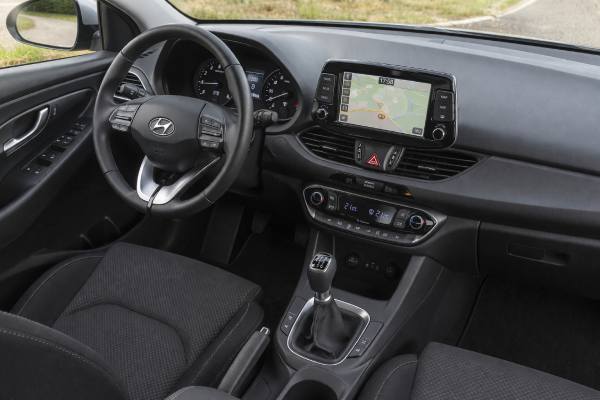
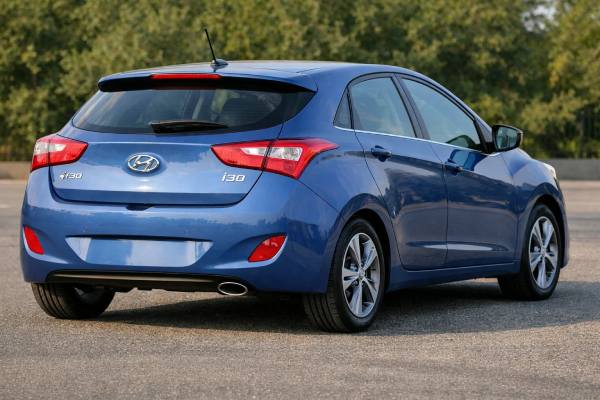
The facelifted Hyundai i30 GD 1.6 MPI is one of the more sensible used family hatchbacks from the mid-2010s. It combines a roomy cabin, a solid safety baseline, and a naturally aspirated petrol engine that is simpler than many small turbo rivals from the same period. That matters now, because buyers looking at a 2015–2017 i30 are often less interested in showroom novelty and more interested in long-term dependability, predictable running costs, and day-to-day usability.
In this version, the 1.6-liter MPI engine gives the i30 enough performance to feel comfortable in daily traffic without adding diesel emissions hardware or direct-injection-specific concerns. The facelift years also brought cleaner styling, a tidier cabin presentation, and strong crash-test coverage for the updated range. The real question today is not whether the design works. It does. The key is whether the specific car has been serviced properly, driven consistently, and kept ahead of ordinary age-related wear.
Core Points
- The 1.6 MPI engine is smoother and more flexible than the base 1.4 petrol, yet mechanically simpler than many turbo alternatives.
- The facelifted GD i30 offers strong passive safety, a roomy cabin, and stable motorway manners for a compact hatchback.
- Running costs are usually predictable if the car has seen regular oil services, brake care, and suspension upkeep.
- Steering clunks, rear brake drag, ignition wear, and neglected timing-chain oil service are the main ownership watchpoints.
- A practical oil and filter interval is every 10,000–15,000 km or every 12 months.
Start here
- Hyundai i30 GD Facelift Role
- Hyundai i30 GD Facelift Spec Data
- Hyundai i30 GD Facelift Equipment and Safety
- Reliability Patterns and Factory Actions
- Maintenance Routine and Buyer Strategy
- Everyday Manners and Fuel Use
- How It Stacks Up Against Rivals
Hyundai i30 GD Facelift Role
The facelifted GD i30 arrived at a point when Hyundai was no longer trying to be merely cheaper than the class leaders. It was trying to be a genuine alternative to them. You can feel that in the way this car has been put together. The basic recipe is simple: a practical five-door hatchback body, a comfortable cabin, front-wheel drive, and a naturally aspirated 1.6-liter petrol engine that favours smoothness and familiarity over headline numbers. That still makes a lot of sense in the used market.
The facelift itself was more than a styling exercise. The front and rear design became cleaner, interior trim quality improved in several markets, and the range gained a more polished feel overall. The core GD strengths remained in place. Cabin room is strong for the class, the driving position is easy to settle into, rear-seat space is respectable for adults, and the hatchback boot is large enough for family use without the car feeling oversized in urban driving. It is a car that fits daily life well.
The 1.6 MPI engine is central to its appeal. This is not a downsized turbo motor that depends on boost to feel awake. It is a conventional multi-point-injection petrol engine with a chain-driven cam layout, dual variable valve timing, and a straightforward character. It does not overwhelm the front tyres or pretend to be sporty, but it is usually more pleasant than the basic 1.4 in normal traffic. It also avoids the soot and short-trip issues that can make a diesel frustrating for lower-mileage owners.
That balance defines the ownership experience. A good facelift 1.6 MPI feels easygoing, predictable, and well rounded. It starts cleanly, warms up quickly, and handles short urban trips better than a diesel. It also remains usable on the motorway, especially with the six-speed manual. The automatic is more relaxed in traffic but dulls the car slightly.
What matters now is condition rather than brochure specification. The best cars are usually not the cheapest. They are the ones with regular oil changes, matching tyres, good brakes, and evidence of honest maintenance. The facelifted i30 GD 1.6 MPI succeeds because it keeps the fundamentals simple while giving owners enough space, comfort, and refinement to feel like a proper family hatchback rather than just cheap transport.
Hyundai i30 GD Facelift Spec Data
The figures below focus on the facelifted Hyundai i30 GD five-door hatchback with the 1.6 MPI 120 hp petrol engine from the 2015–2017 period. Small variations by market, gearbox, trim, wheel size, and emissions calibration are normal, so exact VIN-level confirmation is still the safest route for parts and fluids.
Powertrain and efficiency
| Item | Data |
|---|---|
| Code | Gamma 1.6 MPI / G4FG |
| Engine layout and cylinders | Inline-4 petrol, 4 cylinders |
| Valvetrain | DOHC, 16 valves, Dual CVVT |
| Valves per cylinder | 4 |
| Bore × stroke | 77.0 × 85.44 mm (3.03 × 3.36 in) |
| Displacement | 1.6 L (1,591 cc) |
| Induction | Naturally aspirated |
| Fuel system | MPI / multi-point injection |
| Compression ratio | 10.5:1 |
| Max power | 120 hp (88 kW) @ 6,300 rpm |
| Max torque | 156 Nm (115 lb-ft) @ 4,850 rpm |
| Timing drive | Chain |
| Rated efficiency | 6.3 L/100 km manual, 6.8 L/100 km automatic |
| Rated efficiency in mpg | 37.3 mpg US / 44.8 mpg UK manual; 34.6 mpg US / 41.5 mpg UK automatic |
| Real-world highway @ 120 km/h | usually about 6.4–7.2 L/100 km (32.7–36.8 mpg US / 39.2–44.1 mpg UK) |
Transmission and driveline
| Item | Data |
|---|---|
| Transmission | 6-speed manual or 6-speed automatic |
| Drive type | FWD |
| Differential | Open |
Chassis and dimensions
| Item | Data |
|---|---|
| Suspension front | MacPherson strut, coil springs, anti-roll bar |
| Suspension rear | Multi-link independent rear suspension |
| Steering | Rack and pinion, motor-driven power steering |
| Steering ratio / turns | about 2.85 turns lock-to-lock |
| Brakes | Front ventilated discs, rear solid discs |
| Brake diameter | 280 or 300 mm (11.0 or 11.8 in) front; 262 or 284 mm (10.3 or 11.2 in) rear depending on trim |
| Wheels and tyres | 195/65 R15, 205/55 R16, or 225/45 R17 |
| Ground clearance | about 140 mm (5.5 in) |
| Length | 4,300 mm (169.3 in) |
| Width | 1,780 mm (70.1 in) |
| Height | 1,470 mm (57.9 in) |
| Wheelbase | 2,650 mm (104.3 in) |
| Turning circle | about 10.6 m (34.8 ft) |
| Kerb weight | about 1,189 kg (2,621 lb) manual / about 1,223 kg (2,697 lb) automatic |
| GVWR | 1,820 kg (4,012 lb) manual / 1,850 kg (4,079 lb) automatic |
| Fuel tank | 53 L (14.0 US gal / 11.7 UK gal) |
| Cargo volume | 378 L (13.3 ft³) seats up / 1,316 L (46.5 ft³) seats folded, VDA |
Performance and capability
| Item | Data |
|---|---|
| 0–100 km/h | 10.9 s manual / 11.9 s automatic |
| Top speed | 192 km/h (119 mph) manual / 192 km/h (119 mph) automatic |
| Towing capacity | 1,300 kg (2,866 lb) braked manual / 1,200 kg (2,646 lb) braked automatic |
| Unbraked towing | 600 kg (1,323 lb) |
| Payload | roughly 597–631 kg, depending on kerb weight |
Fluids and service capacities
| Item | Data |
|---|---|
| Engine oil | commonly 5W-30 or 0W-30 meeting Hyundai-approved petrol spec |
| Engine oil capacity | about 3.6 L (3.8 US qt) service fill |
| Coolant | long-life ethylene-glycol coolant |
| Coolant capacity | about 5.8 L (6.1 US qt) |
| Manual transmission fluid | verify by gearbox code; typically just under 2.0 L |
| Automatic transmission fluid | verify by transmission code and market spec |
| Brake and clutch fluid | DOT 3 or DOT 4 |
| A/C refrigerant | verify by under-bonnet label |
| Key torque spec | wheel nuts 88–107 Nm (65–79 lb-ft) |
Safety and driver assistance
| Item | Data |
|---|---|
| Crash ratings | 5-star ANCAP for updated variants built from January 2015 |
| Assessment score | 35.69 out of 37 |
| Airbags | dual front, front side, curtain, and driver knee airbag in the ANCAP-applied updated range |
| ADAS suite | no AEB, no ACC, no lane support, no blind-spot assist |
The numbers show the car’s real purpose. This is a practical, light-duty family hatch with enough power to feel comfortable, but not so much that it becomes costly or complex.
Hyundai i30 GD Facelift Equipment and Safety
Trim structure varied by region, but the facelift i30 GD usually followed a familiar pattern. Lower trims offered strong core equipment, mid-spec cars hit the sweet spot, and upper trims added comfort and appearance upgrades rather than transforming the car mechanically. That matters for used buyers because the 1.6 MPI is largely the same car underneath, whether it wears simpler cloth trim and 15-inch wheels or comes in a better-equipped grade with parking sensors, larger alloys, and dual-zone climate control.
Entry and lower-mid trims often included air conditioning, Bluetooth, electric windows, LED daytime running lights, front fog lamps, a leather-trimmed wheel, height and reach steering adjustment, and the Flex Steer system in some markets. Mid-grade versions usually added 16-inch alloys, cruise control with speed limiter, rear parking sensors, improved seat adjustment, auto lights, and nicer cabin finishes. Upper trims might bring a panoramic roof, automatic wipers, privacy glass, dual-zone climate control, semi-leather trim, and a more premium-looking audio or navigation setup.
The important point is that high trim does not fundamentally change the car’s best qualities. In fact, smaller-wheel versions can be more pleasant long term because they ride better and tyre replacement is cheaper. For many owners, the ideal used facelift i30 1.6 MPI is a mid-spec manual on 15- or 16-inch wheels, not the most expensive-looking example.
Safety was one of the updated i30’s strongest selling points. ANCAP’s January 2015 to March 2017 rating applied to all updated i30 variants, including the wagon, and the assessment score was strong at 35.69 out of 37. That puts the facelifted GD on a firmer footing than many older budget hatchbacks. The updated range was noted for dual frontal, side chest, side head curtain airbags, and a driver knee airbag in the ANCAP-applied specification. Electronic brakeforce distribution, emergency brake assist, and electronic stability control were standard in that assessed range, and advanced seatbelt reminders were fitted across all seats.
That said, this is still a mid-2010s mainstream hatchback, not a modern ADAS-heavy car. AEB was not available on any variant in the ANCAP-assessed updated range, and lane support was also unavailable. Adaptive cruise, blind-spot monitoring, rear cross-traffic alert, and traffic-sign recognition are not part of the story here. Buyers should think in terms of strong passive safety and baseline stability systems rather than sensor-based crash avoidance.
After repairs, the critical issue is whether the structure, airbags, seatbelts, braking system, and suspension geometry were restored correctly. There is no radar camera suite to recalibrate, but there is still plenty to inspect. A straight, correctly repaired facelift i30 remains a reassuringly safe used hatchback for its age.
Reliability Patterns and Factory Actions
The facelifted i30 GD 1.6 MPI is generally a sound used car, but it follows the same rule as most mainstream family hatchbacks: simple problems stay simple only when owners address them early. This version’s advantage is that its MPI petrol engine avoids the carbon-on-intake issues of GDI motors and the emissions complexity of diesels. That does not make it trouble-free, but it does keep most common faults conventional.
Common, low-to-medium cost issues
- Ignition wear: rough idle, misfire under load, hesitant acceleration, or a flashing engine light usually lead first to spark plugs or ignition coils. These are common maintenance items, not unusual failures.
- Rear brake drag: sticky calipers, uneven rear pad wear, and weak handbrake balance appear regularly on cars of this age, especially where they have seen winter road salt.
- Suspension consumables: anti-roll-bar links, bushes, top mounts, and lower-arm bushings wear in normal use. Symptoms include clunks over sharp edges, light steering vagueness, or tyre-edge wear.
- Battery condition: weak batteries can create false electrical complaints, poor stop-start operation where fitted, and slow cold starts.
Occasional but important issues
- MDPS steering clunk: some Hyundai and Kia models using motor-driven power steering develop a knock or clunk in the steering column or coupling area. It is often more irritating than dangerous, but it should be fixed properly because it affects the car’s sense of solidity.
- Clutch wear: manual cars are usually durable, but high urban use, frequent hill starts, or poor driving habits can shorten clutch life. Watch for high bite points or slip under load.
- Cooling-system seepage: thermostat housings, hose joints, and older expansion-tank or radiator areas can begin to weep. The engine itself does not have a major overheating reputation, but any coolant loss deserves prompt attention.
- Exhaust and heat-shield noise: older i30s often pick up harmless but annoying underside rattles.
Less common but higher-cost risks
- Timing-chain wear on neglected cars: the chain is designed as a long-life component, but dirty oil and extended drain intervals can still lead to tensioner or chain-noise issues. Cold-start rattle should never be dismissed.
- Catalytic-converter damage after prolonged misfire: this usually follows neglected ignition faults, not random failure.
- Corrosion in harsh climates: the GD is better than the FD, but rear arches, door bottoms, underbody seams, jacking points, and subframe areas still deserve inspection.
Public recall material for the facelifted 2015–2017 1.6 MPI is lighter than it is for some earlier i30 generations, and that is a good sign. Even so, market-specific campaigns vary. The right approach is always the same: check the VIN through official recall channels and ask a Hyundai dealer to confirm campaign completion. On a used car like this, complete records matter more than assumptions.
Maintenance Routine and Buyer Strategy
The i30 GD 1.6 MPI is easy to keep healthy when the owner follows a disciplined routine. The mistake many used-car owners make is assuming that a simple naturally aspirated petrol engine can tolerate neglect better than other engines. It can tolerate some neglect better than a turbo or diesel, but it is still happiest with timely oil changes, clean ignition parts, and regular brake and suspension checks.
Practical maintenance schedule
- Engine oil and filter: every 10,000–15,000 km or 12 months. For frequent short trips or heavy city use, stay near the shorter interval.
- Engine air filter: inspect at each service and replace roughly every 20,000–30,000 km, sooner in dusty conditions.
- Cabin air filter: every 12 months or around 15,000–20,000 km.
- Spark plugs: inspect on schedule and replace at a sensible mileage based on plug type. Do not stretch worn plugs because coil stress and misfire costs rise quickly.
- Coolant: replace according to correct long-life coolant guidance. On a used example with weak service history, a full coolant renewal is sensible.
- Brake fluid: every 2 years.
- Manual gearbox oil: even if described as long-life, a change around 80,000–100,000 km is a practical decision.
- Automatic transmission fluid: refresh earlier than “filled for life” language suggests, especially if shift quality has dulled.
- Timing chain: inspect by symptom and service history rather than a fixed mileage interval.
- Auxiliary belt and hoses: inspect annually.
- Brake inspection: rear calipers and slider pins deserve special attention at every service.
- Tyres and alignment: rotate when wear pattern permits and check alignment after suspension work.
- 12 V battery: load-test from around year four onward.
Useful service data
| Item | Practical guidance |
|---|---|
| Engine oil | 5W-30 or 0W-30 with the correct Hyundai petrol approval |
| Engine oil quantity | about 3.6 L |
| Coolant quantity | about 5.8 L |
| Brake fluid | DOT 3 or DOT 4 |
| Wheel nut torque | 88–107 Nm |
| Fuel tank | 53 L |
Used-buyer inspection checklist
- Start the engine cold and listen for chain rattle, pulley noise, or misfire.
- Let it idle fully warm and check for stable revs and smooth throttle pickup.
- Confirm not only that services were done, but what oil grade was used.
- Test the clutch under load in a higher gear.
- Drive over poor surfaces and listen for steering-column or front-suspension noise.
- Inspect rear brakes and handbrake operation carefully.
- Check tyre wear for alignment or bush-related clues.
- Look under the car for rust at seams, brake lines, and jacking points.
- Verify that parking sensors, air conditioning, mirrors, windows, and steering-wheel controls all work.
- Ask for proof of recall or service-campaign completion.
The best facelift 1.6 MPI cars are the ones with boring histories: regular servicing, sensible tyres, no cheap patchwork, and no overheating story. That is exactly what you want in a long-term daily hatchback.
Everyday Manners and Fuel Use
The facelift i30 1.6 MPI drives like a car designed to make daily life easier rather than more exciting. In town, it feels light on its controls, easy to place, and predictable in stop-start traffic. The engine responds cleanly and progressively because there is no turbocharger to spool and no dual-clutch gearbox trying to second-guess the driver. That makes it particularly friendly for people who do lots of mixed commuting or who simply prefer a calmer driving experience.
The six-speed manual is the better partner for the 1.6 MPI. It makes the most of the modest torque and helps the car feel more alert when overtaking or climbing gradients. The automatic suits relaxed urban use, but it softens the engine’s response and raises real-world consumption. Neither version is slow enough to be frustrating in normal use, but the car does appreciate deliberate inputs. With passengers and luggage on board, a manual downshift is sometimes needed to keep the engine in its useful band.
Ride quality is one of the facelift i30’s real strengths. The GD platform was already a mature-feeling chassis, and the facelift retained that composed, well-judged character. Broken urban roads, expansion joints, and patchy rural surfaces are handled with more polish than many buyers expect from a mainstream compact hatch. The multi-link rear suspension helps the car stay planted and stable without becoming harsh. That also benefits motorway driving. Straight-line tracking is strong, crosswind behaviour is acceptable, and the car feels secure at speed.
Steering feel is less memorable. It is accurate enough, but it is light and somewhat remote. For everyday ownership, though, that is not a serious drawback. The i30 is easy to park, easy to guide through traffic, and rarely tiring on longer journeys.
Noise levels are acceptable rather than premium. Around town, the engine is quiet enough and the cabin feels civilised. On faster roads, tyre roar and wind noise rise, especially on coarser surfaces and on larger wheel packages. This is another reason mid-trim cars on 15- or 16-inch wheels often make the best used buy.
Real-world fuel economy for a healthy car
- City: about 7.4–8.8 L/100 km manual, usually higher in the automatic
- Highway at 100–120 km/h: about 6.0–7.2 L/100 km
- Mixed driving: about 6.5–7.5 L/100 km
Cold starts, old tyres, dragging brakes, weak ignition parts, or a lazy thermostat can push those figures higher. In good condition, though, the facelift 1.6 MPI remains a respectable mid-2010s petrol hatchback: not exceptionally frugal, but easy to drive and easy to understand.
How It Stacks Up Against Rivals
The facelift Hyundai i30 GD 1.6 MPI lived in one of Europe’s most competitive segments. Its natural rivals included the Ford Focus 1.6 petrol, Volkswagen Golf 1.2 TSI or 1.4 petrol, Kia cee’d 1.6 MPI, Opel or Vauxhall Astra 1.4, Toyota Auris 1.6, and Mazda3 1.5 or 1.6 depending market. That is a serious group. The Hyundai did not dominate every category, but it built a very credible case by avoiding major weaknesses.
Against the Ford Focus, the Hyundai gives away steering feel and some driver enjoyment. The Focus is still the sharper car. The i30 answers with a calmer ride, strong safety coverage, and usually lower buying costs. Against the Volkswagen Golf, the Hyundai feels less premium inside, but it often avoids the higher purchase price and some of the long-term complexity that can come with small turbo engines and dual-clutch transmissions. Against the Toyota Auris, the Hyundai usually feels a little roomier and more polished on the road, even if the Toyota keeps a stronger reputation for low-drama longevity. Against the Kia cee’d, the comparison is especially close because so much engineering overlaps. In practice, condition matters more than badge.
The i30’s best argument is that it makes sense as a whole. It offers:
- a strong safety foundation for its age
- a roomy cabin and useful boot
- a smooth, conventional petrol engine
- a comfortable, mature chassis
- predictable maintenance when serviced properly
Its weaknesses are easy to understand too. The 1.6 MPI is competent rather than lively, the steering is only average, and top-spec examples do not suddenly become premium alternatives to a Golf. Buyers who want excitement will likely look elsewhere. Buyers who want a stable, rational family hatchback often find the Hyundai more convincing.
This version especially suits owners who do mixed daily mileage, want to avoid diesel complications, and prefer a non-turbo petrol engine for long-term peace of mind. It is less suited to drivers who expect effortless loaded overtaking or who care most about sharp steering feedback.
That is ultimately why the facelift i30 GD 1.6 MPI remains relevant. It does not win with drama. It wins by being sensible in the places that matter: safety, comfort, space, and mechanical clarity. For many used-car buyers, that is a better kind of strength.
References
- Hyundai i30 2015 (Brochure)
- Hyundai i30 | Safety Rating & Report | ANCAP 2015 (Safety Rating)
- Hyundai | UK | User Manuals 2026 (Owner’s Manual)
- Find out if your vehicle or component has been recalled because of a safety risk. 2026 (Recall Database)
Disclaimer
This article is for informational purposes only and is not a substitute for professional diagnosis, repair, or model-specific technical guidance. Specifications, torque values, intervals, procedures, and equipment vary by VIN, market, gearbox, and trim, so always verify critical details against the correct official service documentation for the exact vehicle.
If this guide helped you, please consider sharing it on Facebook, X, or another social platform to support our work.