
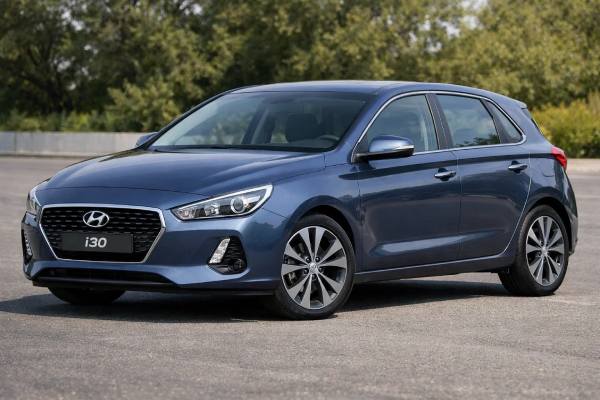
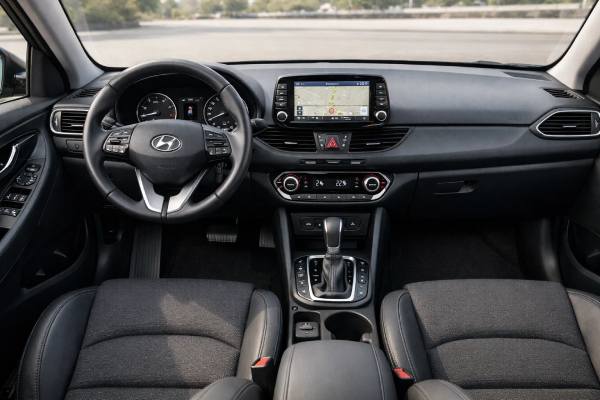

The Hyundai i30 PD with the 1.4 T-GDi 140 hp petrol engine sits in a sweet spot of the 2017–2020 range. It is quicker and more relaxed than the entry petrol cars, but still lighter and simpler than many larger turbo rivals. In daily use, this version stands out for its broad mid-range torque, tidy road manners, and solid long-distance refinement. The turbo engine also pairs well with either the six-speed manual or the seven-speed dual-clutch automatic, giving buyers a real choice between control and convenience. Just as important, the PD-generation i30 brought a more mature chassis, strong crash protection, and a cabin that aged better than many budget-minded hatchbacks. For used-car shoppers, the key questions are not whether the i30 is fundamentally good, but which trim, gearbox, and service history make the most sense. This guide covers the specs, real-world behavior, common faults, maintenance needs, and where this Hyundai still shines today.
Owner Snapshot
- Strong mid-range torque and brisk real-world pace for an everyday hatchback.
- Turbo models feel planted and composed, helped by the more sophisticated rear suspension setup.
- The 395 L boot and practical cabin make the car easy to live with.
- The seven-speed dual-clutch gearbox is the main ownership watch point if service history is weak.
- A sensible oil-service target is every 10,000–15,000 km or 12 months, sooner in heavy city use.
Guide contents
- Hyundai i30 PD ownership overview
- Hyundai i30 PD specs and data
- Hyundai i30 PD trims and safety
- Reliability and service actions
- Maintenance and buyer’s guide
- Driving and road manners
- Hyundai i30 PD versus rivals
Hyundai i30 PD ownership overview
The PD-generation Hyundai i30 marked a clear step forward over earlier i30 models. It looked cleaner, drove with more confidence, and felt engineered for buyers who might otherwise have chosen a Volkswagen Golf, Ford Focus, or Kia Ceed. In 1.4 T-GDi form, it also hit an especially useful balance. You get enough power to make the car feel genuinely modern and flexible, but not so much that running costs, insurance, or tyre wear jump sharply.
This engine is a 1.4-liter turbocharged direct-injection petrol four-cylinder that produces 140 hp and a healthy 242 Nm of torque. That matters more than the peak power number. The i30 1.4 T-GDi pulls well from low revs, does not need constant downshifts, and feels stronger in day-to-day driving than naturally aspirated alternatives of similar output. On paper, it is a mainstream family hatch. On the road, it often feels one class more effortless.
The rest of the package supports that impression. The car is compact enough for city use, but long enough inside to work as a genuine family car. The hatchback body offers a square, useful cargo area, while the cabin design is straightforward and durable rather than flashy. That has helped many PD i30s age gracefully. Controls are easy to learn, visibility is decent, and higher trims gained useful features without turning the car into an over-complicated gadget showcase.
From an ownership point of view, the 1.4 T-GDi version is attractive because it avoids the diesel-specific concerns that affected some rivals in this era, yet still offers strong motorway performance. Buyers can choose between a six-speed manual and Hyundai’s seven-speed dual-clutch transmission. The manual is usually the safer long-term bet. The DCT can be pleasant and efficient, but condition and software history matter.
Overall, the 2017–2020 i30 PD 1.4 T-GDi is best understood as a well-rounded, value-focused European hatchback with enough torque, enough safety, and enough practicality to satisfy most private owners. It is not the most exciting car in the class, but it is often one of the easiest to recommend when condition, history, and trim are right.
Hyundai i30 PD specs and data
For this model, the most important numbers are the ones that shape ownership: engine output, real-world efficiency, cabin space, and the hardware underneath. The 1.4 T-GDi hatch is not rare or exotic, but the details explain why it feels more substantial than many value-priced rivals.
Powertrain and efficiency
| Item | Data |
|---|---|
| Code | Kappa 1.4 T-GDi |
| Engine layout and cylinders | Inline-4, DOHC, 4 cylinders, 4 valves per cylinder |
| Bore × stroke | 71.6 × 84.0 mm (2.82 × 3.31 in) |
| Displacement | 1.4 L (1,353 cc) |
| Induction | Turbocharged |
| Fuel system | Direct injection |
| Compression ratio | 10.5:1 |
| Max power | 140 hp (103 kW) @ 6,000 rpm |
| Max torque | 242 Nm (179 lb-ft) @ 1,500–3,200 rpm |
| Timing drive | Chain-driven valvetrain |
| Rated efficiency | 5.0–5.5 L/100 km (42.8–47.0 mpg US / 51.4–56.5 mpg UK), depending on trim and wheel package |
| Real-world highway at 120 km/h | About 6.3–7.2 L/100 km (32.7–37.3 mpg US / 39.2–44.8 mpg UK) |
Transmission and driveline
| Item | Data |
|---|---|
| Transmission | 6-speed manual or 7-speed dual-clutch automatic |
| Drive type | Front-wheel drive |
| Differential | Open differential |
Chassis and dimensions
| Item | Data |
|---|---|
| Suspension, front | MacPherson strut |
| Suspension, rear | Multi-link |
| Steering | Motor-driven power steering; ratio about 13.4:1 |
| Brakes | 288 mm (11.3 in) ventilated front discs; rear discs, market-dependent sizing |
| Wheels and tyres | Common sizes: 205/55 R16 or 225/45 R17 |
| Length | 4,340 mm (170.9 in) |
| Width | 1,795 mm (70.7 in) |
| Height | 1,455 mm (57.3 in) |
| Wheelbase | 2,650 mm (104.3 in) |
| Kerb weight | Roughly 1,230–1,350 kg (2,712–2,976 lb), depending on trim and gearbox |
| Fuel tank | 50 L (13.2 US gal / 11.0 UK gal) |
| Cargo volume | 395 L (13.9 ft³) seats up, 1,301 L (45.9 ft³) seats folded, VDA method |
Performance and service capacities
| Item | Data |
|---|---|
| 0–100 km/h | About 8.9–9.2 seconds |
| Top speed | About 205–210 km/h (127–131 mph) |
| Engine oil | Usually ACEA A5/B5-grade oil; around 4.2 L (4.4 US qt) with filter, but verify by VIN and market |
| Coolant | Ethylene-glycol mix, commonly 50:50; around 7.0 L (7.4 US qt) in comparable 1.4 T-GDi applications |
| Brake fluid | DOT 4 / DOT 4 LV type |
| DCT fluid | Hyundai-specified gear oil; around 1.6–1.7 L (1.7–1.8 US qt) in comparable applications |
| Key torque specs | Wheel fasteners commonly fall in the 110–130 Nm range; always confirm the exact value for the wheel and market |
Safety and driver assistance snapshot
| Item | Data |
|---|---|
| Euro NCAP | 5 stars |
| Adult occupant | 88% |
| Child occupant | 84% |
| Vulnerable road users | 64% |
| Safety assist | 68% |
| IIHS | Not applicable for this European-market hatchback |
| ADAS availability | AEB, lane keeping, driver attention warning, high-beam assist, cruise-control upgrades, blind-spot and rear cross-traffic functions depending on year and trim |
These figures tell the story well. The i30 is roomy enough, fast enough, and efficient enough to feel complete. More importantly, there are no hidden compromises in the basics.
Hyundai i30 PD trims and safety
The trim structure for the 2017–2020 Hyundai i30 PD varied by country, but the overall pattern stayed consistent across Europe. The 1.4 T-GDi 140 hp engine usually sat above the entry-grade 1.0-liter models and below the more expensive performance-oriented versions. In practical terms, that meant most 1.4 T-GDi cars were mid-spec or upper-mid-spec cars rather than stripped fleet specials.
In many markets, likely equivalents included trims such as SE Nav, Premium, Premium SE, Style, Comfort, or N Line, depending on country and model year. That matters because equipment spread is wide. Lower and mid trims often came with 16-inch wheels, cloth seats, a simpler interior finish, and the most important safety features. Higher grades added larger wheels, a more upscale infotainment setup, navigation, camera systems, climate-control upgrades, LED lighting elements, keyless entry, and extra driver aids. By 2019 and 2020, sport-themed appearance packages became easier to find, and they often changed wheel design, seats, bumpers, and steering-wheel trim rather than the basic mechanical package.
Quick identifiers help when you inspect a used car:
- 16-inch wheels and cloth trim usually point to a more modest specification.
- 17-inch wheels, larger infotainment screen, and brighter exterior trim usually signal a better-equipped version.
- N Line cars often have sportier bumpers, darker details, and more aggressive seats.
- DCT cars are typically easier to spot from the selector layout and trim-level positioning.
Mechanically, the most important differences are usually wheel size, tyre choice, gearbox, and ADAS content rather than springs or brake hardware. The car’s basic character remains consistent across the range, but 17-inch wheel cars can feel firmer and slightly noisier over rough roads.
Safety is one of the i30 PD’s stronger points. The structure performed well in European crash testing, and the car earned a five-star result. Standard passive safety equipment generally included six airbags, ABS, stability control, and ISOFIX child-seat points on the outer rear seats. Hyundai also pushed active safety harder than many rivals at this price point. Forward collision warning with autonomous braking, lane-related support systems, driver attention warning, and high-beam assist were widely available from launch, while blind-spot monitoring, rear cross-traffic alert, and more advanced cruise-control functions were often trim-dependent.
Two ownership points matter here. First, ADAS content changed by year and market, so buyers should not assume every 1.4 T-GDi has the same systems. Second, cars with front camera or radar-based features need correct calibration after bumper work, windshield replacement, or accident repair. A clean dashboard and a test drive without warning messages are not enough. The system must be correctly aligned, or the car may not perform as intended.
Reliability and service actions
Taken as a whole, the Hyundai i30 PD 1.4 T-GDi has a better-than-average reliability profile for a modern small turbo petrol hatchback. It does not carry a widespread reputation for one single catastrophic flaw. Instead, ownership risk comes from a handful of known patterns that are manageable when caught early and expensive when ignored.
Here is the practical breakdown by prevalence and severity:
- Common, low to medium cost:
Low-speed hesitation, jerkiness, or shudder on DCT cars.
Symptoms: creeping awkwardness, jerky take-off, or inconsistent clutch engagement in traffic.
Likely cause: clutch wear, adaptation issues, or outdated transmission calibration.
Recommended remedy: software update and adaptation first; clutch-pack work if shudder remains severe. - Common, low cost:
Misfire under load or rough running.
Symptoms: hesitation, engine light, poor pull in the mid-range.
Likely cause: tired spark plugs, weak ignition coils, or poor maintenance.
Recommended remedy: correct plugs at the right interval, coil diagnosis, and intake-system checks. - Occasional, medium cost:
Carbon build-up on intake valves from direct injection.
Symptoms: uneven idle, reduced response, or fuel-economy drift over higher mileage.
Likely cause: short-trip use and normal direct-injection deposit formation.
Recommended remedy: intake cleaning if symptoms justify it, plus better service discipline. - Occasional, medium cost:
Cooling-system seepage or thermostat-related warm-up issues.
Symptoms: coolant smell, slow warm-up, or small but repeated coolant loss.
Likely cause: aging hoses, housing seals, or pump-related wear.
Recommended remedy: pressure-test the system and replace the failing part rather than repeatedly topping up. - Occasional, medium cost:
Suspension and wheel-related wear.
Symptoms: clunks, humming, or vague front-end feel.
Likely cause: drop links, bushes, wheel bearings, or pothole damage.
Recommended remedy: inspect carefully, especially on 17-inch wheel cars. - Rare, high cost:
Turbocharger wear or oil-related damage.
Symptoms: smoke, poor boost, whistle changes, or oil consumption.
Likely cause: delayed oil changes, poor oil quality, or repeated hot shut-down abuse.
Recommended remedy: fix the oil-service discipline and address any boost leak before condemning the turbo.
The timing chain should be treated as a monitored component, not a guaranteed lifetime part. Start-up rattle, correlation faults, or obvious timing noise deserve inspection. Corrosion is usually not the main story on these cars, but buyers in salty climates should still inspect the subframe, fasteners, rear arch lips, and lower door seams.
Public campaign history varies by market, so the safest rule is simple: verify open and completed recalls by VIN, ask for dealer printouts, and do not rely on seller memory. On a used example, software status matters almost as much as hardware condition.
Maintenance and buyer’s guide
The 1.4 T-GDi i30 responds well to sensible preventive maintenance. Owners who shorten oil intervals, use the correct fluids, and stay ahead of wear items usually avoid the expensive stories. Buyers who follow the longest possible service intervals, especially in heavy urban use, are more likely to meet DCT complaints, intake deposits, and turbo-related wear.
A practical maintenance plan looks like this:
| Item | Practical interval |
|---|---|
| Engine oil and filter | Every 10,000–15,000 km or 12 months; shorten to 5,000–10,000 km or 6–12 months in short-trip or heavy-traffic use |
| Cabin air filter | Every 15,000–20,000 km or 12 months |
| Engine air filter | Inspect every service; replace around 30,000–45,000 km sooner in dusty use |
| Spark plugs | Around 60,000–70,000 km |
| Coolant | First major change around 100,000 km or 5 years, then roughly every 40,000 km or 2 years where that schedule applies |
| Brake fluid | Inspect regularly and replace no later than every 2–4 years |
| Manual gearbox oil | Inspect for leaks; proactive change around 60,000–90,000 km is sensible |
| DCT fluid and condition check | Inspect condition and leaks; proactive attention around 60,000–90,000 km is wise |
| Tyre rotation | About every 10,000–12,000 km |
| Alignment check | Yearly, or after pothole impacts or uneven tyre wear |
| 12 V battery test | Start annual testing from year 4 onward |
| Timing chain | No fixed belt-style interval; inspect if noisy or if timing-related faults appear |
| Auxiliary belt and hoses | Inspect from roughly 60,000–90,000 km or 4–6 years |
Useful fluid and decision-making details:
- Engine oil: many markets specify ACEA A5/B5 oil, often in 5W-30 or a climate-specific low-viscosity grade.
- Oil capacity: roughly 4.2 L with filter.
- Coolant: aluminum-safe ethylene-glycol coolant, usually mixed 50:50.
- Brake fluid: DOT 4 or DOT 4 LV type.
- Fuel tank: 50 L.
- Wheel fasteners: commonly tightened in the low-100 Nm range; verify by VIN and wheel type.
For buyers, the checklist is straightforward:
- Start the engine cold and listen for chain noise, rough idle, and exhaust smoke.
- On DCT cars, test crawl-speed smoothness, hill starts, and repeated stop-go take-offs.
- Look for full service history, not just stamped intervals.
- Inspect coolant level, undertray residue, and boost-hose condition.
- Check all ADAS warnings, camera functions, and sensor alignment after any body repair.
- Inspect tyre wear for alignment problems and look underneath for subframe corrosion.
Best used buys are usually well-kept mid or upper trims with a clear maintenance record. The long-term durability outlook is good when the car has not been neglected.
Driving and road manners
The Hyundai i30 PD 1.4 T-GDi is not trying to be a junior hot hatch, and that is part of its appeal. On the road, it feels mature, stable, and easy to trust. Straight-line composure is good at motorway speeds, the steering is predictable, and the chassis does a fine job of keeping the car calm over uneven surfaces. This is especially true in the turbo models, which feel more tied down and less basic than many lower-powered family hatchbacks.
Ride comfort depends heavily on wheel size. Cars on 16-inch wheels usually offer the best balance. They absorb broken urban surfaces more cleanly and generate less tyre noise. Cars on 17-inch wheels look sharper and turn in a little more crisply, but they can send more impact harshness and road roar into the cabin. Even so, the i30 remains a fundamentally easy long-distance car.
The 1.4 T-GDi engine suits the chassis well. Below about 1,500 rpm, response is tidy rather than instant. Once the turbo is fully on song, the engine pulls with real confidence through the middle of the rev range. That makes overtaking easy and reduces the need to chase gears. The six-speed manual gives the cleanest, most natural feel. The seven-speed dual-clutch is quicker on the move, but in parking situations and crawling traffic it can feel more mechanical than a conventional torque-converter automatic.
Real-world efficiency is respectable rather than class-leading. In mixed use, many owners can expect roughly 6.6–7.5 L/100 km (31.4–35.6 mpg US / 37.7–42.8 mpg UK). In city-heavy driving, 7.3–8.5 L/100 km is more realistic. On steady motorway runs at around 120 km/h, 6.3–7.2 L/100 km is a fair expectation. Cold weather, short trips, and heavy traffic will push the numbers upward.
Performance is strong enough to matter in real life. A 0–100 km/h time in the high-eight to low-nine-second range means the i30 never feels underpowered, and the top speed north of 200 km/h shows that the drivetrain has genuine reserve. Braking feel is consistent and easy to modulate, though ultimate pedal confidence still depends heavily on tyre choice and pad condition.
In simple terms, the i30 1.4 T-GDi drives like a car designed by people who understood everyday European roads. It is more about confidence and ease than excitement, and for most owners that is exactly the right priority.
Hyundai i30 PD versus rivals
The Hyundai i30 PD 1.4 T-GDi entered one of the toughest classes in Europe, so context matters. This car was never the obvious badge-led choice, but it often made more sense on paper and in long-term ownership than its better-known rivals.
Against the Volkswagen Golf 1.4 TSI, the i30 usually feels slightly less polished inside and a little less premium in brand image. The Golf still has the edge in perceived sophistication. However, the Hyundai often counters with stronger value, simpler used pricing, generous equipment for the money, and a more straightforward ownership proposition when condition is equal.
Compared with the Ford Focus 1.5 EcoBoost, the Hyundai is less playful and not quite as sharp at turn-in. The Focus is the more eager driver’s car. Yet the i30 answers with a calmer highway character, a more understated cabin, and often lower purchase cost on the used market. For many buyers, that trade is worthwhile.
The most natural comparison is the Kia Ceed 1.4 T-GDi. The two cars share a lot of engineering logic, and the decision often comes down to trim, dealer history, seat comfort, and price. In practice, you buy the better example rather than the badge.
Against the Mazda3 2.0 Skyactiv-G, the Hyundai wins on low-rpm shove. The Mazda feels more premium in some trims and avoids turbo complexity, but it does not deliver the same easy mid-range torque. Buyers who do a lot of motorway and loaded driving may prefer the Hyundai’s more effortless character.
The Toyota Corolla 1.2T is another sensible rival where available, and later Corolla hybrids complicate the picture further. Toyota has the stronger reputation for conservative reliability, but the Hyundai can feel more spacious for the money and often comes with stronger equipment in comparable used listings.
So where does the i30 land? It is the rational all-rounder. It may not top every category, but it rarely disappoints in any of them. For buyers who want a modern petrol hatchback with good torque, good safety, practical packaging, and reasonable used values, the 2017–2020 i30 1.4 T-GDi remains a very credible choice. The best cars are manual or well-behaved DCT examples with strong history, sensible wheel sizes, and proof that maintenance was done on time rather than only on schedule.
References
- EuroNCAP | Hyundai i30 2017 (Safety Rating)
- Hyundai Owners manuals | Hyundai Motor UK 2026 (Owner’s Manual Portal)
- New Generation Hyundai i30 Wagon: elegance meets versatility 2017 (Press Release)
- Check if a vehicle, part or accessory has been recalled 2026 (Recall Database)
- Nuevo – Hyundai i30 2017 (Brochure)
Disclaimer
This article is provided for informational purposes only and is not a substitute for professional diagnosis, repair, or vehicle-specific technical advice. Specifications, torque values, service intervals, procedures, and equipment can vary by VIN, market, production date, and trim level, so always confirm details against the correct official service documentation for the exact vehicle.
If this guide helped you, please consider sharing it on Facebook, X, or another platform to support our work.