
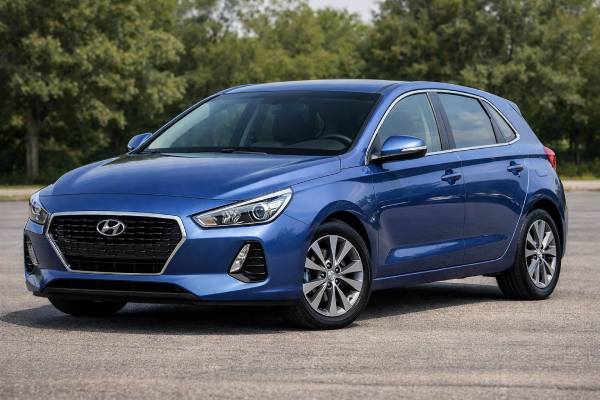
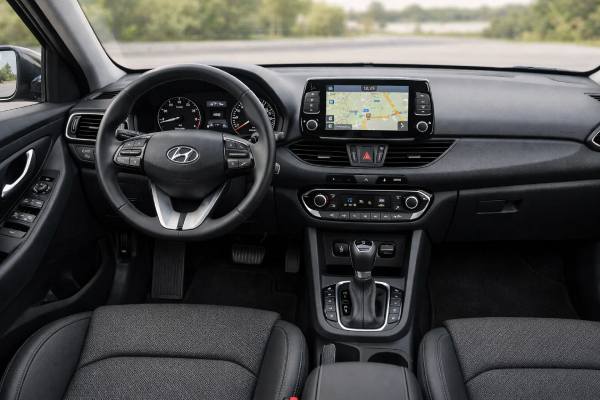
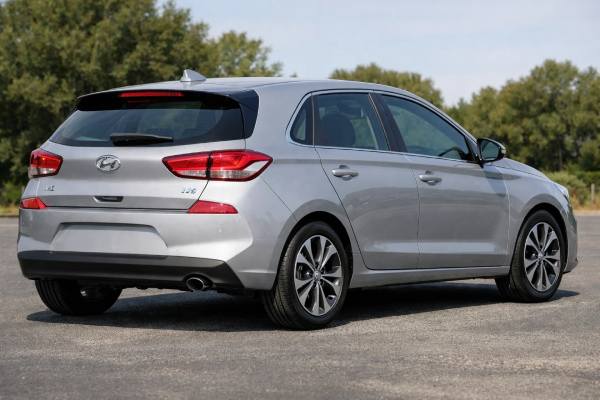
The Hyundai i30 PD 1.6 CRDi 95 hp sits in a useful corner of the compact hatchback market. It is not the quickest diesel in the range, but it often makes sense for drivers who want low running costs, a mature chassis, and solid everyday practicality without stepping into a larger car. This version combines a 1.6-liter common-rail turbo-diesel with front-wheel drive and a manual gearbox, and it was tuned more for efficiency and mid-range usability than outright pace. In real ownership terms, that means strong fuel economy potential, relaxed motorway cruising, and straightforward packaging for family or commuting duty. The PD-generation i30 also brought a more polished cabin, better safety technology, and a more composed rear suspension layout than many budget-focused rivals. The main caution is simple: like many modern diesels, this engine rewards longer trips and regular use more than repeated short urban drives.
Fast Facts
- Strong low-rpm torque and easy motorway manners for a modest-output diesel hatchback.
- Spacious cabin and useful 395 L boot for a car in the compact class.
- Multi-link rear suspension helps the i30 feel settled and predictable on rougher roads.
- Short-trip use can accelerate DPF and EGR-related trouble on lightly driven diesel examples.
- Official service interval is typically every 30,000 km or 2 years, depending on market schedule.
Guide contents
- Hyundai i30 PD overview
- Hyundai i30 PD specifications
- Hyundai i30 PD trims and safety
- Reliability and service actions
- Maintenance and buyer’s guide
- Driving and performance
- How it compares to rivals
Hyundai i30 PD overview
The PD-generation Hyundai i30 marked a meaningful step forward for the model line. Compared with earlier i30 versions, it felt more European in its tuning, more polished inside, and better aligned with mainstream rivals such as the Volkswagen Golf, Ford Focus, Opel Astra, and Peugeot 308. In 1.6 CRDi 95 hp form, the focus was not performance but balance. Buyers got a compact hatch with diesel economy, decent long-distance refinement, and enough torque to avoid feeling weak in daily use.
This engine uses a 1.6-liter four-cylinder turbo-diesel layout with common-rail direct injection and 280 Nm of torque. That figure matters more than the modest 95 hp headline, because it gives the car its easygoing character at lower engine speeds. Around town and on secondary roads, the i30 moves cleanly without constant downshifts. On the motorway, it settles into a quiet cruise better than many small turbo-petrol rivals of the same era.
The chassis is one of the car’s stronger selling points. Hyundai gave the i30 PD a more serious suspension setup than many value-led hatchbacks, and the multi-link rear axle helps it feel planted over broken surfaces and more composed mid-corner. Steering feel is not especially rich, but the car is stable, predictable, and forgiving. That makes it a good fit for commuting, family use, and long highway runs.
For ownership, the 95 hp diesel is usually most attractive to drivers who cover regular medium or long distances. It is capable of very low official consumption, and the 50 L fuel tank supports a useful touring range. The trade-off is that this is not the best version for constant short cold starts, brief city trips, or long idle-heavy use. Like many Euro 6 diesels, it needs the right driving pattern to stay healthy.
One important year-range note is worth knowing. The 95 hp 1.6 CRDi belongs mainly to the earlier part of the PD era. By the 2020 facelift, many markets shifted to higher-output diesel versions such as 115 hp, so a “2020” registration may reflect carry-over stock, market differences, or overlap between pre-facelift and facelift availability. For used buyers, the VIN, emissions label, and build date matter more than the registration year alone.
Overall, this version of the i30 is best understood as the efficient, sensible diesel in the range. It is not the enthusiast’s choice, and it is not the trim usually loaded with every premium feature. But for buyers who want a well-rounded used hatchback with conservative running costs and a mature road feel, it remains a credible option.
Hyundai i30 PD specifications
Below are the key technical figures for the Hyundai i30 PD 1.6 CRDi 95 hp hatchback. Some details vary slightly by wheel size, trim, market, and production date, so exact numbers should always be checked by VIN.
| Specification | Hyundai i30 PD 1.6 CRDi 95 hp |
|---|---|
| Engine code family | 1.6 CRDi diesel |
| Engine layout | Inline-4 |
| Cylinders | 4 |
| Valvetrain | DOHC, 4 valves per cylinder |
| Bore × stroke | 77.2 × 84.5 mm |
| Displacement | 1.6 L (1,582 cc) |
| Induction | Turbocharged, VGT intercooler |
| Fuel system | Common-rail direct injection |
| Compression ratio | 16.0:1 |
| Max power | 95 hp (70 kW) @ 4,000 rpm |
| Max torque | 280 Nm (206 lb-ft) @ 1,500–2,000 rpm |
| Timing drive | Chain |
| Rated efficiency | 3.6–3.8 L/100 km |
| Real-world highway @ 120 km/h | usually around 4.8–5.5 L/100 km, depending on load, weather, and tyres |
| Transmission and driveline | Data |
|---|---|
| Transmission | 6-speed manual |
| Drive type | FWD |
| Differential | Open |
| Chassis and dimensions | Data |
|---|---|
| Front suspension | MacPherson strut |
| Rear suspension | Multi-link |
| Steering | Electric rack-and-pinion |
| Steering ratio | 13.4:1 |
| Brakes front | Ventilated discs, typically 280–305 mm depending on trim |
| Brakes rear | Discs, typically 272–284 mm depending on trim |
| Most common tyre size | 205/55 R16 |
| Other factory tyre sizes | 195/65 R15, 225/45 R17 |
| Ground clearance | 140 mm |
| Length | 4,340 mm |
| Width | 1,795 mm |
| Height | 1,455 mm |
| Wheelbase | 2,650 mm |
| Turning circle | 10.6 m |
| Kerb weight | about 1,338–1,486 kg depending on trim and equipment |
| GVWR | around 1,860 kg |
| Fuel tank | 50 L |
| Cargo volume | 395 L seats up / 1,301 L seats folded, VDA |
| Performance and capability | Data |
|---|---|
| 0–100 km/h | 12.2 s |
| Top speed | 186 km/h |
| Braking distance 100–0 km/h | varies by tyres and test conditions; no single factory figure is consistently published |
| Towing capacity | market- and approval-dependent; verify by VIN and registration data |
| Payload | varies by trim and equipment |
| Fluids and service capacities | Data |
|---|---|
| Engine oil capacity | 5.3 L including filter |
| Transmission oil capacity | 1.8 L |
| Coolant capacity | 6.7 L |
| Washer fluid reservoir | 4.6 L |
| A/C refrigerant | varies by equipment and market |
| A/C compressor oil | varies by system specification |
| Safety and driver assistance | Data |
|---|---|
| Euro NCAP rating | 5 stars |
| Adult Occupant | 88% |
| Child Occupant | 84% |
| Vulnerable Road Users | 64% |
| Safety Assist | 68% |
| ADAS availability | AEB, lane keeping support, cruise systems, blind-spot and rear cross-traffic systems varied by trim and year |
A few ownership notes matter more than raw numbers. First, the chain-driven timing system is a practical advantage over a belt-driven rival, because there is no fixed belt replacement interval in normal service. Second, the 280 Nm torque output makes the car feel stronger than the power figure suggests in normal driving. Third, the car’s brake and wheel specifications change noticeably with trim level, so buyers should not assume every 95 hp example has the same stopping hardware or tyre package.
The 2020 model-year overlap also deserves mention again. In many facelift markets, Hyundai moved on from the 95 hp diesel and offered stronger diesel variants instead. That means the purest match for this specification sheet is usually a 2017 to 2019 pre-facelift PD hatch, with some later registrations depending on local stock and market timing.
Hyundai i30 PD trims and safety
The Hyundai i30 PD 1.6 CRDi 95 hp was generally positioned as a value-focused diesel rather than a flagship drivetrain. In many markets, it was sold in lower to mid trims, which makes equipment levels especially important when shopping used. A clean, well-kept mid-grade car can be much more appealing than a sparse entry model, even if both share the same engine.
In the early PD years, common trim names included Pure, Select, Trend, Style, and Premium, though exact naming varied by country. In German-market material from 2017, the 95 hp diesel was associated mainly with Select and Trend grades. That usually meant buyers got the efficient diesel engine without the full premium equipment loadout found higher in the range.
Useful trim differences often included:
- wheel size and tyre package
- infotainment screen size and navigation availability
- parking sensors and reversing camera
- dual-zone climate control
- heated front seats and heated steering wheel
- LED lighting upgrades
- blind-spot monitoring and rear cross-traffic alert
- adaptive cruise control availability on higher trims or specific gearbox combinations
For quick identification on a used car, the easiest clues are the wheel size, headlamp type, climate-control panel, seat trim, and infotainment screen. Cars with larger factory wheels, navigation, full LED headlamps, and richer driver assistance usually sit above the basic trim level. A reversing camera, front parking sensors, heated seats, and a leather-trimmed steering wheel are also helpful signs of a better-equipped example.
Year-to-year changes matter because the 2020 facelift reshuffled the range in many markets. Trims such as N Line and Prime appeared, infotainment and digital-cluster options improved, and diesel outputs changed. For this reason, buyers should not assume a “2020 i30 diesel” carries the same engine or standard equipment as a 2017 or 2018 95 hp car.
On safety, the PD-generation i30 performed well for its class. Euro NCAP awarded it a five-star result, with strong scores for adult and child occupant protection. Structural performance was respectable, and Hyundai made a visible effort to improve active safety compared with older value-focused compact hatchbacks.
Depending on trim and year, safety equipment could include:
- front, side, and curtain airbags
- stability control and brake assist
- hill-start assist
- autonomous emergency braking
- lane keeping support
- speed limit information
- adaptive cruise control
- blind-spot detection
- rear cross-traffic alert
- ISOFIX child-seat mounting points on the outer rear seats
ADAS availability is one of the most important used-market distinctions. Some systems were standard low in the range, while others were optional or reserved for higher trims. That matters not only for convenience and safety, but also for repair costs. Windscreen replacement, radar alignment, camera calibration, and bumper repairs can all be more involved on higher-spec ADAS-equipped cars.
The safest buy is not always the most heavily optioned car. A mid-spec i30 with a complete service record, clean body structure, working cameras and sensors, and verified calibration after any repair is often a better long-term choice than a feature-rich example with patchy history. Buyers who care about child-seat use should also check ISOFIX condition, rear-seat buckle operation, and whether the lane and emergency braking systems function without warning lights.
Reliability and service actions
The Hyundai i30 PD 1.6 CRDi 95 hp has a generally sound reputation as a used compact diesel, but its durability depends heavily on service history and driving pattern. This is not a famously fragile model, yet it does have the normal watchpoints expected of a modern Euro 6 diesel hatchback. The best examples are usually cars that covered regular open-road mileage, had timely servicing, and avoided long periods of neglect.
A practical way to read the car’s reliability picture is by prevalence and cost.
Common, usually low to medium cost
- DPF loading on cars used for repeated short journeys
- EGR and intake soot build-up
- 12 V battery weakness, especially on lightly used cars
- brake disc corrosion on cars that sit for long periods
- drop-link, bush, or minor suspension wear as mileage rises
Occasional, medium cost
- clutch wear and dual-mass flywheel noise on hard-used manual cars
- sensor faults affecting emissions systems
- parking sensor, camera, or infotainment glitches
- wheel bearing noise or uneven tyre wear from alignment issues
Less common, but potentially higher cost
- injector or high-pressure fuel-system faults
- turbocharger wear on poorly maintained cars
- timing-chain noise or correlation faults if lubrication history is poor
- heavy DPF or SCR-related repair bills on cars driven almost entirely in urban stop-start use
The usual diesel failure pattern goes like this: repeated short cold trips prevent full regeneration, soot load rises, the DPF system works harder, and EGR contamination becomes more likely. Symptoms can include reduced fuel economy, cooling-fan overrun, warning lights, repeated regeneration attempts, uneven idle, or a car that feels reluctant at low load. The remedy depends on how far the problem has progressed. Sometimes a long forced regeneration strategy and software update are enough. Sometimes the right fix is part replacement and a check for the driving pattern that caused the issue.
The timing chain is a notable technical point. Unlike a belt-driven rival, this engine family does not have a routine timing-belt replacement schedule, which is a plus. Still, that does not mean the system is lifetime-proof. Chain noise on cold start, timing-related fault codes, or evidence of poor oil maintenance should be taken seriously.
Chassis durability is respectable. The car is generally stable and robust underneath, but used examples still deserve checks for:
- front lower-arm bush wear
- rear suspension play
- steering knocks
- uneven tyre wear
- underbody corrosion on winter-road cars
- subframe and rear suspension fastener corrosion
- seized rear brakes on low-use examples
Software and calibration history also matter more than many buyers expect. Engine management updates can improve driveability, emissions-system behavior, and fault handling. ADAS-equipped cars may also need proper recalibration after windscreen or bumper work.
For recalls, campaigns, and service actions, the right approach is VIN-based verification. Official dealer records and national recall databases are more reliable than seller memory. Ask for proof of campaign completion, not just verbal assurance. A strong pre-purchase file should include service invoices, emissions-system work if any, battery replacement history, and evidence that warning lights were not simply cleared before sale.
Maintenance and buyer’s guide
The i30 PD 1.6 CRDi 95 hp is easiest to own when maintenance is preventive rather than reactive. Hyundai’s official service schedule in some markets sets a long interval of 30,000 km or 2 years, but buyers looking for long diesel life often prefer more conservative oil service on heavily urban cars.
A practical ownership schedule looks like this:
- Engine oil and filter: every 10,000 to 15,000 km or annually for severe use; do not stretch to the maximum interval if the car does mostly short trips.
- Engine air filter: inspect every service, replace as needed, often around 30,000 km in normal use.
- Cabin air filter: every 15,000 to 30,000 km or yearly in dusty or urban use.
- Fuel filter: follow the official diesel schedule for the exact VIN and market.
- Coolant: inspect condition regularly and replace by official time-based guidance for the specific car.
- Transmission oil: inspect for leaks and consider replacement as preventive service on higher-mileage manual cars.
- Brake fluid: typically renewed every 2 years in sensible maintenance practice.
- Brake pads and discs: inspect at every service, especially on low-use examples.
- Tyre rotation and alignment: inspect wear every 10,000 to 15,000 km.
- 12 V battery: test from year 4 onward, especially if stop-start performance weakens.
- Timing chain: no fixed replacement interval, but inspect symptoms, noise, and fault history.
Useful factory capacities include:
- engine oil with filter: 5.3 L
- manual transmission oil: 1.8 L
- coolant: 6.7 L
- fuel tank: 50 L
Exact oil viscosity, coolant chemistry, refrigerant charge, and torque values should be confirmed by VIN and market documentation. That matters because emissions package, build date, climate package, and supplier variation can all change the correct specification.
For used buyers, the inspection checklist should focus on the diesel system and service record first:
- cold start quality
- warning lights and stored fault codes
- evidence of DPF trouble or interrupted regenerations
- injector noise or fuel smell
- clutch bite point and flywheel rattle
- underbody corrosion
- brake condition
- tyre wear pattern
- air-conditioning performance
- infotainment and camera function
- ADAS warnings or calibration issues
- signs of accident repair around radar or front bumper areas
The best years to target are usually well-maintained pre-facelift cars with a full history, sensible mileage, and medium trim levels. A Select or Trend type of specification often gives the sweet spot: enough equipment to feel modern, but not so much complexity that repair costs rise sharply. Cars to avoid are those with irregular servicing, heavy city-only use, poor battery health, mismatched tyres, or repeated emissions faults.
Long term, the durability outlook is good rather than exceptional. A healthy example can be a dependable, economical family hatch, but it is not a diesel that thrives on neglect. Buy on condition, history, and usage profile, not on registration year alone.
Driving and performance
On the road, the Hyundai i30 PD 1.6 CRDi 95 hp feels more complete than its power figure suggests. It is not fast, but it is rarely frustrating in normal use. The key reason is torque. With 280 Nm arriving low in the rev range, the car pulls cleanly away from urban speeds and cruises easily once it is into its stride. That gives it a relaxed, mature character that suits commuting and motorway work.
Acceleration is adequate rather than eager. The official 0–100 km/h time of 12.2 seconds tells the story well. Solo driving feels fine, but full loads, steep grades, and fast overtakes demand planning. This is not the diesel version to buy for brisk cross-country performance. Instead, it rewards smooth inputs and early use of the mid-range.
The manual gearbox is central to the experience. In a healthy car, it suits the engine well and helps the driver keep the diesel in its torque band. Around town, the i30 feels easy to place, with light controls and good forward visibility. At higher speeds, straight-line stability is strong, and the suspension keeps the car composed over poor motorway surfaces.
Ride and handling are respectable strengths. The PD i30 does not chase hot-hatch sharpness, but it feels planted and confident. The multi-link rear axle helps maintain control on rough roads and gives the car a more settled feel than some cheaper torsion-beam rivals. Steering is accurate and light, although not especially communicative. Braking is usually reassuring and progressive, though tyre quality and trim-level brake size make a noticeable difference.
In terms of NVH, the i30 is generally well judged for the class. There is some diesel clatter at idle and under cold load, but once warm and cruising it becomes more subdued. Wind and road noise are acceptable, and on 16-inch wheels the car often rides more sweetly than on larger low-profile tyres.
Real-world fuel economy depends heavily on driving pattern:
- city use: often around 5.8 to 6.8 L/100 km
- mixed driving: often around 5.0 to 5.8 L/100 km
- steady highway use: often around 4.5 to 5.2 L/100 km
Those are realistic owner-style expectations rather than official test values. Cold weather, traffic, short trips, and regeneration cycles can push the numbers higher. The car makes the most sense for drivers who routinely cover enough distance for the diesel after-treatment system to operate normally.
Overall, the driving verdict is easy to summarize. The i30 1.6 CRDi 95 hp is calm, economical, and competent. It does not excite, but it rarely annoys. For buyers who want a comfortable compact hatchback with diesel range and mature road manners, that is exactly the point.
How it compares to rivals
The Hyundai i30 PD 1.6 CRDi 95 hp competes in one of Europe’s toughest used-car classes, so its value depends on what a buyer prioritizes. Against the main rivals, it usually wins by being balanced rather than class-leading in one dramatic area.
Against the Volkswagen Golf 1.6 TDI, the i30 often feels like the value alternative. The Golf usually has stronger badge appeal, a very polished cabin, and broad parts familiarity. The Hyundai counters with generous equipment for the money, a longer original warranty in many markets, and a chassis that feels more serious than some buyers expect. The Golf often has the stronger resale story; the Hyundai can be the smarter budget buy.
Against the Ford Focus 1.5 TDCi, the i30 gives up some steering feel and driver engagement. The Focus is usually the more entertaining car on a twisting road. The Hyundai, however, often feels quieter, simpler in character, and more convincing as a conservative family hatch. Buyers who value comfort and low-stress ownership may prefer it.
Against the Peugeot 308 1.6 BlueHDi, the i30 feels less distinctive but more conventional. The Peugeot can be extremely efficient and comfortable, but not every buyer likes the cabin layout or smaller steering wheel design. The Hyundai feels more straightforward and easier to adapt to, especially for households sharing one car.
Against the Opel or Vauxhall Astra 1.6 CDTi, the i30 is again a balance play. The Astra can feel lighter and in some versions more eager, but the Hyundai often matches it on practical space and delivers a calm, tidy road feel. Choice between them often comes down to service history and local parts or specialist support.
The Kia Ceed 1.6 CRDi is perhaps the closest conceptual rival because it shares the same broad manufacturer philosophy and often similar value logic. Here, condition and specification matter more than brand. The Hyundai may feel slightly more polished in some PD-era forms, while the Kia can be equally sensible.
Choose the i30 PD 1.6 CRDi 95 hp if you want:
- strong value for money
- sensible trim and technology levels
- a composed ride and stable highway manners
- diesel efficiency without chasing maximum performance
Look elsewhere if you want:
- stronger overtaking pace
- a more premium badge
- sharper handling feel
- a diesel that will spend most of its life on very short urban trips
In used-market terms, the Hyundai’s biggest competitive advantage is that it often delivers most of what mainstream buyers actually need, without demanding premium-brand money. That makes it a rational and often underrated choice.
References
- Hyundai i30 | Technische Daten Diesel | Stand: 4.2017 2017 (Technical Data)
- Hyundai i30 | Ausstattung und Preise | Stand: 5.2017 2017 (Pricing and Equipment)
- EuroNCAP | Hyundai i30 2017 (Safety Rating)
- Check if a vehicle, part or accessory has been recalled 2025 (Recall Database)
- 5-Year Warranty | New Cars | Hyundai Motor UK 2026 (Warranty and Campaign Lookup)
Disclaimer
This article is provided for informational purposes only and is not a substitute for professional diagnosis, repair, or model-specific technical advice. Specifications, fluid requirements, torque values, service intervals, equipment, and procedures can vary by VIN, market, production date, emissions package, and trim level, so always verify details against the official service documentation and parts data for the exact vehicle.
If this guide helped you, please consider sharing it on Facebook, X, or your preferred social platform to support our work.