
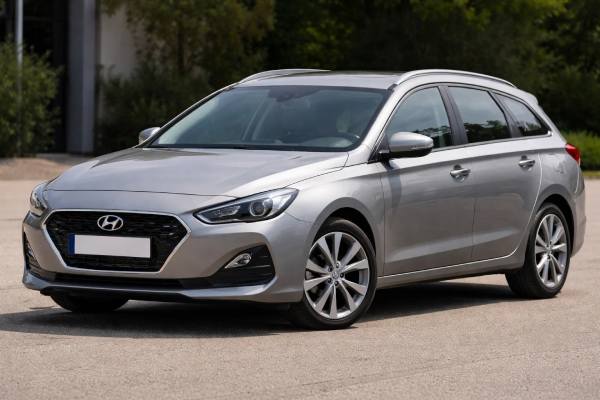
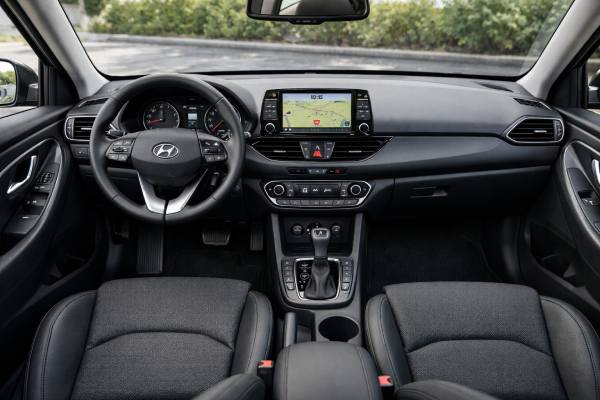
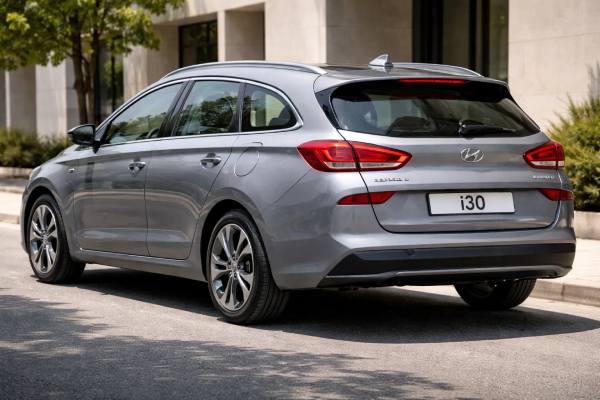
The 2017–2020 Hyundai i30 Wagon PD with the 1.0 T-GDi 120 hp engine is one of the more sensible small-estate choices of its era. It takes the practical core of the regular i30 hatch and adds a much larger cargo area, a longer roofline, and better family-car flexibility without becoming bulky or expensive to run. The key engineering choice is the 1.0-liter turbocharged three-cylinder petrol engine. It gives this wagon more low-rpm torque and a lighter, more eager feel than the older non-turbo petrol options, while still keeping front-wheel drive and a simple manual setup in most examples. For owners, that creates an appealing balance: strong space efficiency, useful safety technology for the period, and decent fuel economy if the car is serviced properly. The trade-off is that this is a direct-injection turbo engine, so oil quality, service history, and recall checks matter more than they do on the simplest naturally aspirated versions.
Fast Facts
- The 1.0 T-GDi feels stronger in daily driving than its size suggests thanks to 172 Nm of torque.
- The Wagon body offers 602 L of boot space with the rear seats up and 1,650 L with them folded.
- Euro NCAP gave the i30 range a 5-star rating, with strong adult and child occupant scores for the period.
- Patchy oil-service history is a bigger concern here than on the non-turbo petrol engines.
- A sensible baseline is engine oil and filter every 15,000 km or 12 months, sooner in severe use.
What’s inside
- Hyundai i30 Wagon PD Profile
- Hyundai i30 Wagon PD Specs
- Hyundai i30 Wagon PD Grades and Safety
- Known Issues and Recall Actions
- Service Plan and Buying Checks
- Everyday Performance and Fuel Use
- Estate Rivals and Verdict
Hyundai i30 Wagon PD Profile
The Hyundai i30 Wagon PD sits in a useful middle ground that many used-car buyers still want. It is larger and more flexible than a hatchback, but it is still easier to park, cheaper to run, and less cumbersome than a midsize estate. That positioning is a big part of its appeal. Hyundai gave the wagon a long roof, a low cargo floor, and a proper family-sized luggage area, yet it kept the footprint tidy enough for urban driving and narrow parking spaces. In practical terms, this is the kind of car that can handle a child seat, a weekly supermarket run, a folding bicycle, and holiday bags without drama.
The 1.0 T-GDi engine is what makes this version more interesting than the numbers alone suggest. On paper, a 1.0-liter three-cylinder in a wagon may sound like the bargain-bin option. In practice, the turbocharged layout gives it a healthier mid-range than the old-school non-turbo petrol units lower in the range. Hyundai rated it at 120 hp, but the more important figure in daily use is the 172 Nm torque plateau. That helps the car feel more relaxed in traffic, more willing on inclines, and less breathless in normal overtakes than a small naturally aspirated engine with similar peak power.
This model also reflects Hyundai’s shift toward a more mature European tune during the PD generation. The i30 range was developed with a stronger focus on handling, structural rigidity, and safety equipment than earlier i30s. The wagon benefits from that same work. It does not try to be sporty in the hot-hatch sense, but it feels composed and predictable, and it has the kind of solid, calm road manners that make long-distance driving easier. For families, commuters, and small-business owners, that matters more than lap-time sharpness.
Ownership is where the car’s strengths and caveats become clearer. The big strength is flexibility. The 602 L luggage area is genuinely useful, and the rear seat fold gives the wagon real load-carrying value beyond what most compact hatchbacks can manage. The caveat is that the 1.0 T-GDi is not the kind of engine you should neglect. This is a turbocharged direct-injection petrol unit, so clean oil, timely servicing, and careful pre-purchase inspection matter. A cheap example with unclear maintenance is not the bargain it first appears to be.
In broad terms, the i30 Wagon 1.0 T-GDi suits drivers who want one car to do many jobs. It works well as a daily commuter, a family estate, or a practical second-hand alternative to more expensive Volkswagen Group estates. It is less suited to buyers who want effortless motorway performance with a full load or who plan to tow regularly. Within those limits, it is one of the smarter compact estate options from the late 2010s.
Hyundai i30 Wagon PD Specs
For this version, the key specification story is simple: compact-estate practicality paired with Hyundai’s small turbo petrol engine and a manual front-wheel-drive layout. The wagon body is meaningfully larger in cargo terms than the hatchback, while the 1.0 T-GDi brings useful torque without pushing running costs into diesel territory. As always with Hyundai i30s from this period, a few figures vary slightly by market, trim, and homologation sheet, so buyers should treat VIN-specific data as final.
Powertrain and efficiency
| Item | Hyundai i30 Wagon PD 1.0 T-GDi |
|---|---|
| Code | 1.0 T-GDi petrol |
| Engine layout and cylinders | Inline-3, DOHC, 4 valves per cylinder |
| Bore × stroke | 71.0 × 84.0 mm (2.80 × 3.31 in) |
| Displacement | 1.0 L (998 cc) |
| Induction | Turbocharged |
| Fuel system | Direct injection |
| Compression ratio | 10.5:1 |
| Max power | 120 hp (88.3 kW) @ 6,000 rpm |
| Max torque | 172 Nm (127 lb-ft) @ 1,500–4,000 rpm |
| Timing drive | Verify by VIN-specific service data before parts ordering |
| Rated efficiency | 6.0 urban / 4.6 extra-urban / 5.2 combined L/100 km |
| Real-world highway @ 120 km/h | Typically around 6.2–7.2 L/100 km depending on load, wind, and tyres |
Transmission and driveline
| Item | Hyundai i30 Wagon PD 1.0 T-GDi |
|---|---|
| Transmission | 6-speed manual |
| Drive type | FWD |
| Differential | Open |
Chassis and dimensions
| Item | Hyundai i30 Wagon PD 1.0 T-GDi |
|---|---|
| Suspension front | MacPherson strut |
| Suspension rear | Market and spec documents vary; verify exact layout by VIN |
| Steering | Rack-and-pinion electric power steering |
| Brakes | Four-wheel disc layout is common; exact sizes vary by market and wheel package |
| Most popular tyre size | 205/55 R16 |
| Other common tyre sizes | 195/65 R15, 225/45 R17 |
| Ground clearance | Around 140 mm (5.5 in), market-dependent |
| Length | 4,585 mm (180.51 in) |
| Width | 1,795 mm (70.66 in) |
| Height | 1,465 mm (57.68 in) |
| Wheelbase | 2,650 mm (104.33 in) |
| Turning circle | About 10.6 m (34.8 ft), depending on market spec |
Weights and capacities
| Item | Hyundai i30 Wagon PD 1.0 T-GDi |
|---|---|
| Kerb weight | Typically low-1,200 to low-1,300 kg range depending on trim |
| Mass in running order | 1,320 kg (2,910 lb) in a period wagon brochure example |
| GVWR | Varies by market and equipment; verify from VIN plate |
| Fuel tank | 50 L (13.21 US gal / 11.0 UK gal) |
| Cargo volume | 602 L (21.26 ft³) seats up / 1,650 L (58.27 ft³) seats folded, VDA |
| Towing capacity | Usually around 1,000–1,200 kg braked and 500–600 kg unbraked, market-dependent |
| Payload | Roughly 520–600 kg depending on trim and market |
Performance and service data
| Item | Hyundai i30 Wagon PD 1.0 T-GDi |
|---|---|
| 0–100 km/h | About 11.4 s |
| Top speed | About 196 km/h (122 mph) |
| Engine oil specification | API SM and ILSAC GF-4 or above, or ACEA A5/B5 |
| Common oil grades | 5W-30 is the usual choice; climate-specific alternatives exist |
| Engine oil capacity | 3.6 L (3.8 US qt), drain and refill |
| Coolant | Ethylene-glycol based coolant for aluminum systems, mixed with soft or deionized water |
| Transmission fluid | Use VIN-specific Hyundai manual-transmission specification |
| Brake fluid | DOT 3 or DOT 4 |
| A/C refrigerant | Verify from under-hood label and VIN-specific service data |
| Key torque specs | Use official workshop data for wheel nuts, plugs, brakes, and suspension fasteners |
Safety and driver assistance
| Item | Hyundai i30 Wagon PD 1.0 T-GDi |
|---|---|
| Euro NCAP rating | 5 stars |
| Adult Occupant | 88% |
| Child Occupant | 84% |
| Vulnerable Road Users | 64% |
| Safety Assist | 68% |
| ADAS availability | AEB, lane warning, driver attention features, and related systems varied by trim and market |
Two details matter most here. First, the 602 L boot is a real differentiator in this class. Second, the 172 Nm torque figure is what makes the 1.0 T-GDi a better match for the wagon body than buyers might expect from a three-cylinder engine.
Hyundai i30 Wagon PD Grades and Safety
Trims and equipment on the i30 Wagon vary quite a bit by country, and that matters more than many used buyers realize. Hyundai often sold the same basic car with different names, wheel sizes, infotainment packages, and active-safety content depending on market. That means the safest way to shop is not by trim name alone, but by actual equipment on the car in front of you. Still, the broad structure is easy to understand: lower trims focus on the essentials, mid-range cars usually give the best value, and upper trims add the features that make the wagon feel much newer than its age.
In period wagon material, a typical well-equipped 1.0 T-GDi manual model included 16-inch alloy wheels, rear parking assist, a rear-view camera with dynamic guidelines, cruise control with speed limiter, Bluetooth, a touchscreen audio unit, manual air conditioning, keyless entry, electric folding mirrors, LED daytime running lights, and front fog lamps. That is already a useful package in used-car terms. It covers the comfort and convenience items most family buyers want without making the car overly complex or expensive to recondition.
Higher-spec versions add the features that tend to lift resale appeal. Those can include navigation, larger touchscreens, smartphone integration, dual-zone climate control, upgraded cloth or part-leather upholstery, and more advanced lighting. The mechanical differences are usually modest on the 1.0 T-GDi manual wagon. This is not a trim structure where you expect dramatic changes in suspension hardware or differential type. Instead, the biggest differences are wheel size, convenience equipment, and active-safety fitment.
That last point is important. The i30 range earned a strong Euro NCAP result, but the exact ADAS bundle depends on the car. Hyundai promoted systems such as Autonomous Emergency Braking, Lane Departure Warning, and Driver Attention Alert in period materials, yet availability could vary by trim or market. On a used example, this creates two practical rules:
- Confirm that the car physically has the camera and sensor hardware you expect.
- Confirm that those systems work properly and have no stored calibration faults.
This matters after windscreen replacement or front-end repair. A car may still drive perfectly well yet carry a hidden ADAS warning, a misaligned camera, or a disabled assistance function. That does not make it unsafe by default, but it does affect the value of the equipment you are paying for.
Passive safety is less ambiguous and remains one of the wagon’s better selling points. The i30’s 5-star Euro NCAP result and solid adult and child occupant scores reflect a body structure that was competitive in its class at launch. Most cars in this range also came with front, side, and curtain airbags, stability control, anti-lock braking, tyre-pressure monitoring, and ISOFIX child-seat mounting points. For family buyers, that gives the wagon a reassuring baseline even before you get to the optional driver aids.
The sweet spot for many used buyers is the mid-spec wagon with the camera, parking assist, cruise control, and sensible wheel size. It delivers the real day-to-day value of the i30 Wagon without pushing too hard into feature-heavy territory where repair bills and diagnostic time can start to rise. The best examples are the ones with original-equipment consistency, not necessarily the highest specification on paper.
Known Issues and Recall Actions
The i30 Wagon 1.0 T-GDi is generally a sensible used car, but it is not a car to buy carelessly. The underlying platform is solid, yet the engine and electronics reward buyers who pay attention to service history and campaign completion. The goal is not to treat the model as fragile. It is to understand which issues are routine, which ones are age-related, and which ones deserve immediate verification before purchase.
| Issue area | Prevalence | Severity and cost tier | Typical symptoms |
|---|---|---|---|
| 12 V battery ageing | Common | Low to medium | Slow cranking, low-voltage warnings, intermittent electronic glitches |
| Ignition and minor running faults | Occasional | Low to medium | Hesitation, rough idle, misfire under load |
| Intake contamination on DI turbo engines | Occasional | Medium | Loss of smoothness, rough idle, reduced response over time |
| Boost or vacuum leaks | Occasional | Medium | Flat response, underboost faults, uneven throttle feel |
| Camera or infotainment faults | Occasional | Low to medium | Screen resets, warning messages, non-working driver aids |
| Timing-related wear on neglected engines | Rare | Medium to high | Start-up rattle, correlation faults, poor cold running |
| Recall-related brake issue | Limited but serious | High | Abnormally hard brake pedal on affected cars |
| Seat-belt tensioner recall | Limited but serious | High | No clear driver symptom, recall completion must be checked |
The most common ownership nuisance is not the turbo itself. It is the ordinary 12 V battery. As these cars age, weak batteries can trigger odd warning lights, lazy starting, and electronic behavior that looks worse than it really is. This is one reason a proper battery test is worth doing on any used example, especially if the car has sat for periods or is used only for short trips.
On the engine side, the 1.0 T-GDi is usually durable when serviced properly, but it is less forgiving of neglect than the simplest non-turbo petrol units. Poor oil-service history, repeated very short trips, or long intervals on low-quality oil can accelerate wear, worsen turbo conditions, and contribute to carbon-related running issues over time. A rough idle is not always a disaster, but it should not be ignored. Coil packs, plugs, vacuum leaks, and intake contamination are all plausible explanations and usually easier to diagnose early than late.
The two headline safety campaigns are more important. One recall covers certain i30 PDE vehicles built from October 25, 2018 to July 15, 2020, where fibres from the tandem pump belt could seal the tandem pump pre-filter and cause the brake pedal to harden, affecting normal braking. Another recall covers certain i30 PDE vehicles built from May 25, 2020 to October 6, 2020, where the front seat-belt tensioners may be defective. These are exactly the kind of issues that should be verified by VIN before money changes hands.
For a pre-purchase inspection, ask for five things:
- Full service history with dates, mileage, and oil grade if possible.
- Proof of recall and service-campaign completion.
- A diagnostic scan, even if no warning lights are showing.
- A true cold start, not a pre-warmed engine.
- A road test that includes low-speed town driving and steady motorway pace.
The cars to approach cautiously are the ones with weak paperwork, overdue recalls, inconsistent running, and sellers who only describe the car as “drives fine.” On this engine, that is not enough.
Service Plan and Buying Checks
A good maintenance plan for the i30 Wagon 1.0 T-GDi is straightforward: stay ahead of fluid changes, treat the turbo engine like a precision unit rather than a throwaway commuter motor, and inspect wear items before they become bigger faults. Hyundai’s maintenance structure for this generation supports that approach, but on an older used example, a little extra caution is usually money well spent.
Practical maintenance schedule
| Item | Sensible interval for real ownership |
|---|---|
| Engine oil and filter | Every 15,000 km or 12 months in normal use; sooner in severe use or on an older short-trip car |
| Engine air filter | Inspect regularly; replace around 45,000–60,000 km depending on environment |
| Cabin air filter | Check annually; replace as needed, often yearly in real use |
| Spark plugs | 160,000 km or 120 months |
| Coolant | First change at 210,000 km or 10 years, then every 30,000 km or 24 months |
| Manual transmission fluid | Inspect regularly; severe-use replacement around 120,000 km is sensible |
| Brake fluid | Inspect at service visits; many specialists refresh every 2 years |
| Brake pads and discs | Inspect every service |
| Tyres | Rotate and inspect about every 10,000–12,000 km |
| Auxiliary belt and hoses | Inspect for cracks, noise, and tension issues |
| Timing components | No routine open-source replacement interval; inspect for noise and timing faults |
| 12 V battery | Test yearly once battery age reaches about 4 years |
Useful fluid and fuel guidance
- Engine oil: API SM and ILSAC GF-4 or above, or ACEA A5/B5.
- Common oil choice: 5W-30.
- Oil capacity: 3.6 L with filter.
- Coolant: Hyundai-compatible ethylene-glycol coolant for aluminum systems.
- Brake fluid: DOT 3 or DOT 4.
- Fuel: good-quality unleaded petrol, normally 95 RON in applicable markets.
A buyer’s inspection should focus on evidence of care rather than just cosmetic condition. The best used cars usually show boring consistency: yearly service stamps, matching tyres from decent brands, a smooth cold start, and no sign that warning lamps were recently cleared to help a sale. On this engine, listen for chain-area noise at cold start, watch for smoke under load, and pay attention to how the car responds from low rpm in a higher gear. A healthy 1.0 T-GDi should feel willing and clean, not hesitant or uneven.
Also inspect the wagon-specific areas. Check the tailgate opening, cargo-floor trim, rear-seat folding hardware, and the luggage-area side panels. Estate cars live harder lives than hatchbacks. Scratches and wear are normal, but poorly repaired load-bay damage, missing trim, or water ingress are red flags. Around the exterior, look for accident-repair clues around the front bumper, windscreen area, and camera locations, because these can affect ADAS performance.
The best years to target are usually 2018 to 2020 examples with complete recall history and a clear service file. Earlier cars can still be good buys, but later cars often benefit from minor production refinements and newer infotainment hardware. The trims to seek are the ones with the key convenience features you will actually use, especially rear camera, parking sensors, and sensible wheel sizes. Long-term durability is good when maintenance is consistent. Neglect, not design intent, is what usually turns these cars into expensive used buys.
Everyday Performance and Fuel Use
The i30 Wagon 1.0 T-GDi drives like a practical estate that has just enough extra energy to avoid feeling dull. That is really its character. The 120 hp output is respectable, but the torque delivery matters more. With 172 Nm arriving low in the rev range, the car feels noticeably stronger in daily traffic than a small non-turbo petrol engine with a similar top-end figure. It pulls away cleanly, copes well with normal urban gaps, and does not need constant revving to stay useful.
There is still a clear ceiling. This is not a fast long-distance load-hauler. If the wagon is full of passengers and luggage, or if you are driving into headwinds on the motorway, you will use the gearbox. The 6-speed manual helps because it gives the engine room to stay in its stronger zone, but the car is best when driven smoothly rather than aggressively. Buyers expecting effortless overtaking like a torquey diesel or a larger turbo petrol will need to reset expectations.
Ride comfort is one of the wagon’s better traits. The PD chassis feels settled and mature, especially on 15-inch or 16-inch wheels. Small surface imperfections are handled well, and the longer wagon body does not make the car clumsy. Straight-line stability is good, and the steering is light enough for everyday driving without becoming vague. This is not the sharpest compact estate in corners, but it is easy to trust and easy to place, which is often more valuable in real life.
The three-cylinder engine note is present under load, though not unpleasant. Around town, it is mostly subdued. Under harder acceleration, it sounds distinctly like a small turbo triple, with a slightly busy tone rather than a smooth four-cylinder hum. On the motorway, cabin noise is acceptable for the class, though the car is more relaxed on moderate cruise than on fast, fully loaded uphill work.
Real-world fuel use depends heavily on route and driving style. In broad terms, owners can expect something like this:
| Use case | Real-world expectation |
|---|---|
| Dense city driving | Around 6.8–7.9 L/100 km |
| Open-road highway at 100–110 km/h | Around 5.5–6.3 L/100 km |
| Highway at 120 km/h | Around 6.2–7.2 L/100 km |
| Mixed commuting | Around 5.9–6.8 L/100 km |
Those figures are not meant as guarantees, but they are realistic for a compact estate with a small turbo petrol engine. Short trips and cold weather will push consumption upward. So will roof loads, poor tyres, and repeated hard acceleration. With light towing, the car remains stable enough, but fuel use rises quickly and the small engine needs frequent downshifts on grades.
The verdict from behind the wheel is easy to summarize: the i30 Wagon 1.0 T-GDi is not exciting, yet it is far from underpowered in normal use. It feels like a well-judged everyday estate, and that is exactly why many buyers continue to seek it out.
Estate Rivals and Verdict
The Hyundai i30 Wagon 1.0 T-GDi competes in one of the most rational corners of the used-car market. Buyers here are usually not chasing image. They want luggage space, sensible running costs, decent safety, and a car that feels modern enough to live with every day. That puts the i30 Wagon up against cars such as the Kia Ceed Sportswagon, Ford Focus Estate, Volkswagen Golf Variant, and Skoda Octavia Combi.
Against the Kia Ceed Sportswagon, the Hyundai feels like a very close cousin in philosophy. Both prioritize value, usability, and warranty-backed brand confidence. The choice often comes down to which example is better cared for and better equipped. Against the Ford Focus Estate, the Hyundai usually loses on steering precision and driver involvement, but many owners will prefer the i30’s calmer, more neutral character and straightforward cabin layout. Against the Volkswagen Golf Variant, the i30 often feels less premium in small material details, yet it can deliver similar day-to-day usefulness at a more accessible used price.
The strongest rival is arguably the Skoda Octavia Combi, because it often offers even more rear-seat and boot space. If absolute family practicality is the only goal, the Skoda can be hard to beat. But the Hyundai fights back with a tidy footprint, strong safety credentials for the era, and a simpler ownership feel than some highly specified rivals. That matters for used buyers who want fewer surprises and clearer maintenance decisions.
Where the i30 Wagon clearly shines is balance. It does not dominate the class in one dramatic area, but it does many things well. The boot is large, the cabin is sensible, the 1.0 T-GDi is more flexible than the engine size suggests, and the car generally feels robust when maintained properly. The weak points are also manageable: trim variation, the need for good oil-service discipline, and the importance of checking recall completion and ADAS condition on later cars.
For most buyers, the right way to judge this Hyundai is not by badge prestige or headline power. Judge it by how neatly it solves everyday transport. A clean 2018–2020 example with a full service file, completed recalls, good tyres, and working camera-based features is a very convincing used estate. It may not be the enthusiast’s choice, but it is a smart, practical, and often underrated family car.
If your priorities are cargo space, reasonable fuel use, strong safety, and a compact estate that does not feel cheap or flimsy, the Hyundai i30 Wagon PD 1.0 T-GDi deserves a place high on the shortlist.
References
- All-New – i30 Tourer 2017 (Brochure)
- EuroNCAP | Hyundai i30 2017 (Safety Rating)
- Home | Hyundai Recalls & Service Campaigns 2026 (Recall Database)
- Hyundai Owners manuals 2026 (Owner’s Manual)
Disclaimer
This article is for informational purposes only and is not a substitute for professional diagnosis, repair, or VIN-specific workshop guidance. Specifications, torque values, service intervals, procedures, and equipment can vary by VIN, market, transmission, trim, and production date, so always verify details against official Hyundai service documentation and dealer records before servicing, repairing, or buying a vehicle.
If this guide was useful, please consider sharing it on Facebook, X, or another social platform to support our work.