
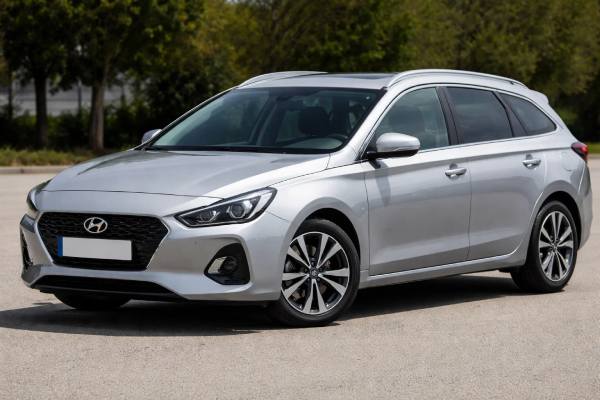
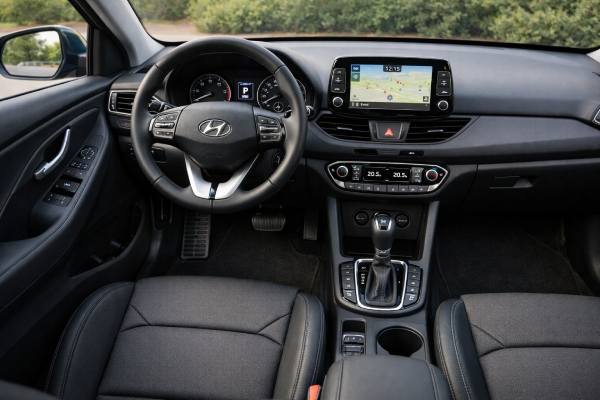
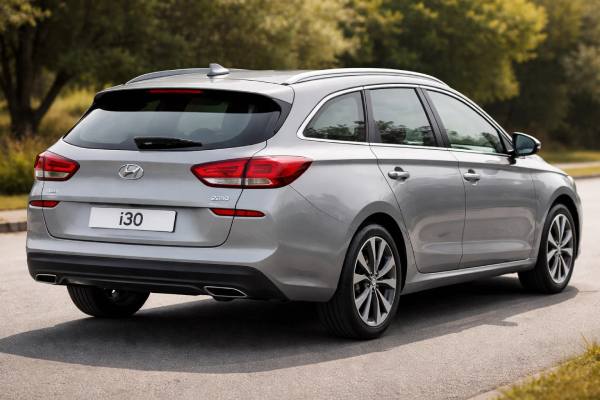
The 2017–2018 Hyundai i30 Wagon PD with the 1.6 CRDi 110 hp diesel engine is one of those cars that makes sense the longer you look at it. It is not the flashiest estate in the compact class, but it combines long-range efficiency, generous cargo space, and a chassis that feels more mature than many budget-minded rivals. For buyers who drive frequent motorway miles, carry family gear, or want a practical diesel wagon without stepping into a larger segment, this version of the i30 remains a very sensible used choice. The PD generation also improved cabin quality, safety technology, and body rigidity over earlier i30 models, which matters when you are buying a car that is now several years old. The real ownership questions are not about whether the concept works, but how the 1.6 CRDi behaves over time, which trims are worth chasing, and what to inspect before purchase.
Fast Facts
- Excellent boot space with 602 L seats up and 1,650 L seats folded.
- Efficient diesel engine suits long commutes and motorway use especially well.
- Good active-safety coverage for the class, even in modest trims.
- Short-trip use can accelerate DPF, EGR, and intake-related diesel problems.
- A practical oil-service target is every 10,000–15,000 km or 12 months.
Navigate this guide
- Hyundai i30 Wagon PD diesel profile
- Hyundai i30 Wagon PD technical figures
- Hyundai i30 Wagon PD grades and protection
- Known faults and factory fixes
- Upkeep plan and used-buying advice
- On-road feel and diesel economy
- Hyundai i30 Wagon PD against competitors
Hyundai i30 Wagon PD diesel profile
The PD-generation i30 Wagon was Hyundai’s attempt to make a truly European compact estate rather than simply a hatchback with extra sheet metal behind the rear axle. In 1.6 CRDi 110 hp form, it targets buyers who value running efficiency, usable torque, and cargo volume more than outright speed. That focus defines the whole car.
The most obvious strength is packaging. Hyundai stretched the body to 4,585 mm and created one of the largest boots in this part of the market. With 602 liters available under the parcel shelf and 1,650 liters with the rear seats folded, the wagon is meaningfully more useful than the hatchback. It can swallow pushchairs, flat-pack furniture, dogs, luggage for long holidays, or the mixed clutter of family life without constantly forcing compromises. The load bay shape is practical too, which matters more than headline numbers.
The 1.6 CRDi engine suits that job well. This is not a sporty diesel, but it offers strong low-end and mid-range pulling power, which is exactly what an estate car needs. The engine does not demand high revs to move the car smartly, and that makes the i30 Wagon relaxed when loaded or cruising. Buyers could also pair it with either a six-speed manual or, in some markets and trims, a seven-speed dual-clutch transmission. The manual is the simpler and usually safer long-term choice. The DCT can be a good motorway gearbox, but service condition matters more.
The PD platform also improved the i30’s engineering feel. Steering response is tidier than older i30 models, the body structure is stiffer, and road manners are more settled at speed. This is still a comfort-first family car, yet it does not feel loose or cheap. That balance is important because many buyers will use this car as an all-rounder: weekday commuting, weekend travel, airport runs, school duties, and occasional heavy cargo use.
Who should buy one today? The answer is straightforward. A well-kept 1.6 CRDi wagon makes sense for drivers who still cover enough distance to justify diesel, want a practical estate without premium-brand pricing, and prefer a car that majors on usefulness rather than image. It is less suitable for very short urban journeys, because modern diesel hardware does not enjoy that pattern. In the right use case, though, the i30 Wagon is one of the most rational family diesels of its era.
Hyundai i30 Wagon PD technical figures
The key to understanding the i30 Wagon 1.6 CRDi is to separate wagon-specific data from general i30 diesel hardware. The estate body adds real carrying capacity, but the core mechanical package remains familiar Hyundai compact-car engineering: front-wheel drive, a transverse diesel four-cylinder, and a straightforward chassis.
Powertrain and efficiency
| Item | Data |
|---|---|
| Code | U3 1.6 CRDi, D4FB family |
| Engine layout and cylinders | Inline-4, DOHC, 4 cylinders, 4 valves per cylinder |
| Bore × stroke | 77.2 × 84.5 mm (3.04 × 3.33 in) |
| Displacement | 1.6 L (1,582 cc) |
| Induction | Turbocharged diesel |
| Fuel system | Common-rail direct injection |
| Compression ratio | About 16.0:1 |
| Max power | 110 hp (81 kW) @ 4,000 rpm |
| Max torque | 280 Nm (207 lb-ft) @ about 1,500–2,750 rpm |
| Timing drive | Chain |
| Rated efficiency | 3.7–4.3 L/100 km (54.7–63.6 mpg US / 65.7–76.3 mpg UK), depending on tyres and transmission |
| Real-world highway at 120 km/h | About 5.0–5.8 L/100 km (40.6–47.0 mpg US / 48.7–56.5 mpg UK) |
Transmission and driveline
| Item | Data |
|---|---|
| Transmission | 6-speed manual; 7-speed dual-clutch available in some markets |
| Drive type | Front-wheel drive |
| Differential | Open differential |
Chassis and dimensions
| Item | Data |
|---|---|
| Suspension, front | MacPherson strut |
| Suspension, rear | Multi-link on most diesel wagon specifications |
| Steering | C-MDPS rack-and-pinion; about 10.6 m turning circle |
| Brakes | Ventilated front discs and solid rear discs; size varies by trim and wheel package |
| Wheels and tyres | Most common size 205/55 R16; some trims use 15-inch or 17-inch packages |
| Ground clearance | About 140 mm (5.5 in), market and load dependent |
| Length / Width / Height | 4,585 / 1,795 / 1,465 mm (180.5 / 70.7 / 57.7 in) |
| Wheelbase | 2,650 mm (104.3 in) |
| Kerb weight | Roughly 1,350–1,450 kg (2,976–3,197 lb), depending on trim and gearbox |
| GVWR | Roughly 1,900–1,980 kg (4,189–4,365 lb), market dependent |
| Fuel tank | 50 L (13.2 US gal / 11.0 UK gal) |
| Cargo volume | 602 L (21.3 ft³) seats up / 1,650 L (58.3 ft³) seats down, VDA |
Performance and service capacities
| Item | Data |
|---|---|
| 0–100 km/h | About 11.4–11.9 seconds |
| Top speed | About 185–188 km/h (115–117 mph) |
| Braking distance, 100–0 km/h | Typically around 37–39 m in road tests with standard tyres |
| Towing capacity | Commonly up to 1,300 kg braked / 600 kg unbraked, verify by VIN |
| Payload | Usually around 500–560 kg depending on trim |
| Engine oil | Low-SAPS ACEA C2/C3 diesel oil, commonly 5W-30; about 5.3 L (5.6 US qt) with filter |
| Coolant | Hyundai-approved long-life coolant, normally 50:50 mix; capacity varies around 7 L |
| Manual gearbox oil | Hyundai MTF-spec fluid; typically around 1.9–2.0 L |
| DCT fluid | Hyundai-specified DCT gear oil; verify exact fill by gearbox code |
| A/C refrigerant | Verify under-bonnet label because charge and refrigerant type vary by market |
| Key torque specs | Wheel fasteners commonly around 110–120 Nm; verify exact value for wheel type |
Safety and driver assistance
| Item | Data |
|---|---|
| Euro NCAP | 5 stars |
| Adult occupant | 88% |
| Child occupant | 84% |
| Vulnerable road users | 64% |
| Safety assist | 68% |
| IIHS | Not applicable to this European-market wagon |
| ADAS suite | AEB, lane support, driver attention warning, high-beam assist, and higher-grade options such as blind-spot and rear cross-traffic alerts depending on trim |
For most buyers, the important takeaway is simple: the wagon body adds real utility without turning the car into a sluggish or thirsty load-hauler.
Hyundai i30 Wagon PD grades and protection
Trim names differed by market, but the 2017–2018 i30 Wagon range followed a familiar Hyundai pattern. Lower trims focused on value and core safety, mid trims offered the best balance, and upper trims added convenience, appearance, and more driver assistance rather than dramatically different mechanical hardware. In several European countries, the wagon was sold in grades equivalent to Classic, Comfort, Business, Style, SE Nav, Premium, or similar regional names.
For the 1.6 CRDi 110 hp specifically, that matters because many of the most desirable used examples sit in the middle of the range. They tend to have the right comfort equipment without the cost of large wheels, panoramic roof complexity, or harder-to-replace premium trim pieces. A Business or mid-spec navigation model often lands in the sweet spot for ownership value.
Useful trim clues include:
- 15-inch or 16-inch wheels and simpler seat trim usually indicate a lower or mid-grade car.
- 8-inch navigation, reversing camera, and stronger driver-assistance content usually point to Business, Nav, or upper-mid trims.
- Style or Premium-type trims often add wireless charging, keyless start, parking sensors, LED lighting upgrades, and a richer cabin finish.
- DCT availability depended on engine and market, so transmission choice itself can identify where a car sat in the range.
The good news is that Hyundai did not reserve all safety equipment for expensive trims. The PD-generation i30 family was marketed heavily around active safety, and many wagon versions came with autonomous emergency braking for vehicle detection, lane keeping support, driver attention warning, and automatic high-beam control from fairly modest specifications. Upper trims and option packs typically added blind-spot monitoring, rear cross-traffic alert, speed-limit functions, and more advanced cruise-control systems.
Passive safety was solid as well. The structure used a much higher proportion of advanced high-strength steel than earlier i30s, and the Euro NCAP performance was strong. In family use, that matters more than glossy marketing language. You also get ISOFIX child-seat points, a predictable driving position, and generally good outward visibility for the class.
One practical ownership issue deserves attention: ADAS equipment is only an advantage when it is working and calibrated correctly. If the car has had a bumper repair, radar replacement, windshield change, or front-end accident history, check that the sensors and camera systems were recalibrated properly. A quick dashboard scan for warning lights is not enough. Buyers should test lane and collision warnings where safe and ask for repair invoices.
Year-to-year change within 2017–2018 was modest, so choosing on condition, service history, and equipment makes more sense than chasing a specific month. In this range, a clean, correctly maintained mid-spec wagon is usually the best ownership bet.
Known faults and factory fixes
The i30 Wagon 1.6 CRDi does not suffer from one defining disaster, but it is still a modern Euro-6 diesel, and that means the usual supporting systems matter as much as the core engine. Reliability is strongest when the car sees regular longer journeys and timely servicing. It becomes less impressive when it is used as a low-mileage town car.
The most important issue map looks like this:
- Common, medium cost: DPF loading and interrupted regenerations
Symptoms: rising fuel use, fan running after shutdown, warning lights, limp mode.
Likely root cause: repeated short trips, failed pressure sensors, or ignored warning messages.
Recommended remedy: diagnose differential-pressure and exhaust-temperature data, force regeneration only when appropriate, and correct the usage pattern. - Common, medium cost: EGR and intake contamination
Symptoms: flat response, rough idle, hesitation, or fault codes linked to airflow and emissions.
Likely root cause: soot and oil deposit build-up, especially with urban use.
Recommended remedy: inspect EGR valve and intake tract, clean or replace as needed, and update ECU software if a calibration bulletin applies. - Occasional, medium cost: dual-clutch drivability complaints on DCT cars
Symptoms: jerky parking-speed operation, delayed engagement, or shudder during take-off.
Likely root cause: clutch wear, adaptation problems, or outdated transmission software.
Recommended remedy: software check and clutch adaptation first, then mechanical repair if symptoms persist. - Occasional, low to medium cost: wheel bearings, drop links, and front-end wear
Symptoms: hum, clonk, or looseness over broken roads.
Likely root cause: normal wear, potholes, and estate-car loading duty.
Recommended remedy: inspect suspension joints and wheel bearings carefully during a pre-purchase check. - Occasional, medium cost: cooling-system leaks or thermostat issues
Symptoms: slow warm-up, coolant smell, small but repeated coolant loss.
Likely root cause: housing seals, hoses, or age-related component fatigue.
Recommended remedy: pressure-test the system and repair the exact fault rather than topping up repeatedly. - Rare, high cost: injector or turbocharger wear
Symptoms: smoke, hard starting, poor boost, or metallic diesel knock.
Likely root cause: poor fuel quality, neglect, or extended oil-change intervals.
Recommended remedy: proper diagnosis before parts replacement, because injector, boost-leak, and DPF problems can overlap.
The timing chain should be monitored, not feared. It is not a routine belt replacement item, but start-up rattle, correlation faults, or persistent chain noise should be investigated early. Software and calibration updates can also matter on modern diesels. Driveability complaints, idle quality, regeneration strategy, and some sensor-related issues may have official reflash solutions rather than hard-part replacements.
Recalls and service actions vary by country and VIN, so the right process is better than a generic list. Always run the official VIN recall check, ask a Hyundai dealer for campaign history, and request invoices showing completion. On a used diesel wagon, documented software work can be just as valuable as visible mechanical repairs.
Upkeep plan and used-buying advice
A strong maintenance plan is the difference between a satisfying i30 diesel wagon and an irritating one. The engine itself is durable when serviced properly, but the emissions hardware, intake system, and transmission need disciplined attention. Buyers should think in terms of preventive servicing, not minimum legal servicing.
A practical schedule for this model looks like this:
| Item | Practical interval |
|---|---|
| Engine oil and filter | Every 10,000–15,000 km or 12 months |
| Cabin air filter | Every 15,000–20,000 km or 12 months |
| Engine air filter | Inspect every service; replace around 30,000–45,000 km |
| Fuel filter | Roughly every 30,000–60,000 km depending on market and fuel quality |
| Coolant | About 5 years or 100,000 km first, then shorter intervals thereafter if specified |
| Brake fluid | Every 2 years is a sensible target |
| Manual gearbox oil | Inspect regularly; proactive replacement around 60,000–90,000 km is wise |
| DCT fluid and condition check | Inspect for leaks and drivability issues; proactive service attention around 60,000–90,000 km |
| Auxiliary belt and hoses | Inspect from 60,000 km onward |
| Brake pads and rotors | Inspect at every service |
| Tyre rotation | About every 10,000–12,000 km |
| Alignment check | Annually, or after pothole impacts |
| 12 V battery test | Begin annual testing from year 4 onward |
| Timing chain | Inspect if noisy, out of phase, or showing correlation faults rather than replacing on a fixed belt-style interval |
Fluid guidance is equally important:
- Engine oil: low-ash diesel oil meeting the correct ACEA and DPF-compatible requirement, commonly 5W-30.
- Oil capacity: around 5.3 L with filter.
- Coolant: Hyundai-approved long-life coolant, usually mixed 50:50.
- Brake fluid: DOT 4 or equivalent low-viscosity version where specified.
- Transmission fluid: use only the correct Hyundai manual or DCT specification.
- Wheel fasteners: commonly around 110–120 Nm.
For buyers, the inspection checklist should cover more than the usual cosmetic walk-around:
- Check for cold-start smoke, chain rattle, rough idle, and slow warm-up.
- Inspect for DPF or engine-management warnings and ask whether the car does regular long runs.
- Confirm fuel-filter, oil, and gearbox servicing with invoices.
- On DCT cars, test reverse, crawling traffic, and repeated hill starts.
- Look for coolant residue, boost leaks, and oil mist around intake plumbing.
- Check the boot floor, rear suspension area, and underbody for impact damage or corrosion.
- Verify every safety campaign and software update by VIN.
Best buys are usually manual cars with full history and medium trim levels. Long-term durability is good when the car has been used as intended and maintained before problems become faults.
On-road feel and diesel economy
The i30 Wagon 1.6 CRDi 110 hp is not fast in a dramatic way, but it is well judged for the sort of work an estate car actually does. The engine’s 280 Nm of torque arrives low enough to make the car feel easy rather than eager. That matters on hills, during overtakes, and when the boot is full. You rarely need to chase the top half of the rev range to keep pace with traffic.
The ride and handling balance is one of the pleasant surprises of the PD wagon. It feels composed at motorway speed, with a stable rear end and none of the loose, floaty behavior that once affected some budget estates. Steering weight is light but sensible, and the car tracks cleanly on long journeys. Body control is tidy enough that it never feels like a penalty-box workhorse. At the same time, comfort remains the priority, especially on 16-inch wheels. Those are usually the best choice for noise, ride, and tyre cost.
Noise, vibration, and harshness are respectable for a diesel wagon of this era. In town, you will hear the engine more clearly than in a petrol i30, especially when cold. On a steady cruise, though, the diesel settles well, and wind noise is kept under reasonable control. The long-roof body does not introduce a major refinement penalty.
The six-speed manual is the most natural partner for this engine. Ratios are sensible, and the car’s broad torque band means you can shift early without making it feel flat. The seven-speed DCT can be pleasant once moving, especially on the motorway, but it is less polished than the best torque-converter automatics at parking speeds.
Real-world economy is still one of the main reasons to buy this version. Typical figures are:
- City use: around 5.8–6.8 L/100 km (34.6–40.6 mpg US / 41.5–48.7 mpg UK)
- Highway at 100–120 km/h: around 5.0–5.8 L/100 km (40.6–47.0 mpg US / 48.7–56.5 mpg UK)
- Mixed driving: around 5.2–6.0 L/100 km (39.2–45.2 mpg US / 47.1–54.3 mpg UK)
Cold weather and short trips can push those numbers higher, and a partially loaded DPF can do the same. Under a full family load, the car still behaves well, though fuel use usually rises by around 8 to 15 percent. Towing or continuous high-speed motorway use can push the increase beyond that. The overall impression is of a calm, efficient long-distance tool rather than a wagon that constantly reminds you of its compromises.
Hyundai i30 Wagon PD against competitors
The Hyundai i30 Wagon 1.6 CRDi 110 hp competed in one of Europe’s most practical classes, so its value depends on what kind of buyer you are. It was never the prestige choice, but it often made the strongest case on a mix of price, space, and equipment.
Against the Volkswagen Golf Variant 1.6 TDI, the Hyundai usually feels less premium in badge appeal and slightly less polished in tiny interior details. The Volkswagen still carries stronger used-market prestige in many regions. Yet the i30 Wagon often answers with more equipment for the money, a simpler buying proposition, and less risk of paying a brand premium for a car that is no better maintained.
Compared with the Ford Focus Estate 1.5 TDCi, the Hyundai is usually the calmer car. The Ford feels more agile and a little more engaging on twisty roads, but the i30 counters with a roomier-feeling cargo area, a more straightforward cabin layout, and strong safety content. For family or fleet-style use, the Hyundai’s practicality often wins.
The Kia Ceed Sportswagon 1.6 CRDi is the closest natural rival because the engineering philosophy is so similar. In many used markets, the decision comes down to which example has the better history, trim, tyres, and dealer support. There is rarely a wrong answer between them if condition is excellent.
Against the Škoda Octavia Combi 1.6 TDI, the Hyundai faces its toughest practicality rival. The Octavia usually offers even more rear-seat and load-space cleverness, and it has a very strong reputation as a rational estate. The Hyundai still fights back with competitive safety equipment, a solid body structure, and often a lower purchase price at the same age and mileage.
The Peugeot 308 SW 1.6 BlueHDi is another key competitor. It often feels more stylish and can be very efficient, but it also brings its own complexity and a different ergonomic philosophy that not every owner enjoys. The Hyundai is more conventional and arguably easier to live with.
So where does the i30 Wagon land? It is the value-led all-rounder. It does not dominate every metric, but it combines big-boot practicality, respectable safety, good motorway manners, and very usable diesel economy without demanding premium-brand money. For buyers who still need an honest compact estate and will use a diesel properly, the 2017–2018 1.6 CRDi 110 hp i30 Wagon remains a quietly strong choice.
References
- EuroNCAP | Hyundai i30 2017 (Safety Rating)
- Hyundai Owners Manuals | Hyundai Motor UK 2026 (Owner’s Manual)
- New Generation Hyundai i30 Wagon: elegance meets versatility 2017 (Manufacturer Publication)
- Nuova Hyundai i30 Wagon: al via gli ordini in Italia 2017 (Manufacturer Publication)
- Check if a vehicle, part or accessory has been recalled 2026 (Recall Database)
Disclaimer
This article is for informational purposes only and is not a substitute for professional diagnosis, repair, or workshop-level inspection. Specifications, torque values, service intervals, fluids, procedures, and equipment can vary by VIN, market, gearbox, emissions package, and trim level, so always verify the exact details against the correct official service documentation for the vehicle you are working on or buying.
If you found this guide useful, please consider sharing it on Facebook, X, or another platform to support our work.