
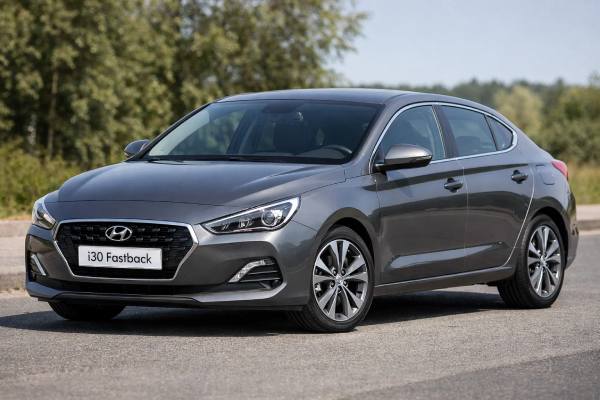
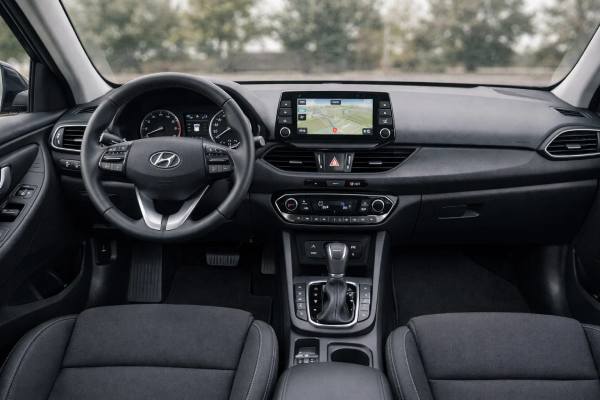
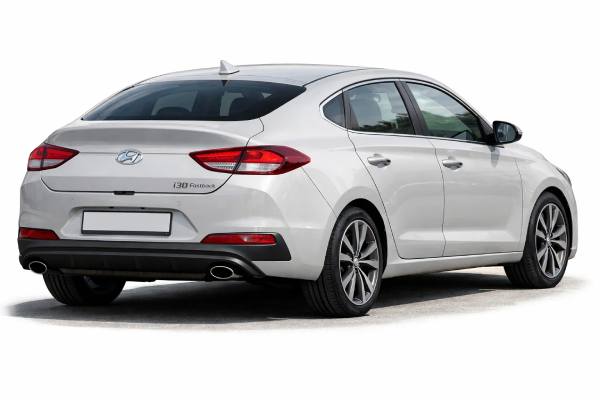
The Hyundai i30 Fastback PD 1.4 T-GDi sits in an unusual but appealing corner of the compact-car market. It uses the practical bones of the ordinary i30 hatch, then adds a longer roofline, a cleaner tail, and a larger boot without turning into a full-size sedan. That alone makes it interesting. What keeps it relevant as a used car is the balance underneath: a 140 hp turbo petrol, available manual or seven-speed DCT transmission, multi-link rear suspension, and a cabin that is simple to live with every day. It is not a hard-edged performance car, but it is more polished than many style-led alternatives from the same period. For buyers, that means the Fastback can work as both a sensible commuter and a more elegant long-distance car. The main caution is equally clear: this is a direct-injection turbo engine, so maintenance discipline, gearbox behavior, and software history matter more than the sleek body shape might suggest.
Top Highlights
- Sleeker styling than the hatchback comes with a genuinely larger 450 L boot.
- The 1.4 T-GDi gives useful mid-range torque and better everyday pace than the base petrol.
- Multi-link rear suspension helps the Fastback feel composed on mixed roads.
- Poor service history can lead to ignition, intake-carbon, or DCT drivability headaches.
- A 10,000–15,000 km or 12-month oil-service routine is a smart long-term habit.
Start here
- Hyundai i30 Fastback PD profile
- Hyundai i30 Fastback 140 specs
- Hyundai i30 Fastback grades and safety
- Ownership issues and service notes
- Maintenance plan and buyer checks
- Road manners and real economy
- Fastback against key rivals
Hyundai i30 Fastback PD profile
The Hyundai i30 Fastback was Hyundai’s attempt to give the conventional i30 mechanical package a more distinctive body without sacrificing the usefulness that made the standard five-door attractive. In 1.4 T-GDi 140 hp form, that formula makes more sense than it may seem at first glance. The engine is strong enough to suit the longer, more style-led body, yet still efficient enough for family-car duty. That matters, because the Fastback is not just a design exercise. It is a practical five-door liftback with a larger luggage area than the ordinary hatch and a noticeably more mature motorway feel.
The mechanical story is straightforward. The 1.4 T-GDi is a 1353 cc turbocharged direct-injection petrol four-cylinder with 140 hp and 242 Nm. Hyundai paired it with either a six-speed manual or a seven-speed dual-clutch transmission, both driving the front wheels. The chassis uses MacPherson struts at the front and a multi-link rear axle, which is a real asset in this class. On the road, that gives the car a tidier, calmer rear end than many rivals that rely on simpler rear suspension layouts in equivalent trims.
The Fastback’s body is its biggest point of difference. At 4455 mm long, it is noticeably longer than the regular i30 hatch, mostly because of the extended rear bodywork. Yet it still feels compact enough for normal urban use and parking. The roofline is lower and the rear deck cleaner, so the car looks more expensive than its badge suggests. Inside, however, it remains an i30: sensible controls, good forward visibility, useful storage, and a layout that makes sense quickly. That is a strength. The car does not ask the driver to trade ergonomics for style.
There is also a timing point worth understanding. The 1.4 T-GDi Fastback belongs mainly to the pre-facelift and transition years. By the later facelift period, many markets moved toward the newer 1.5 T-GDi mild-hybrid setup instead. So when people say “2020 i30 Fastback,” they may not always mean the same engine. For used buyers, the exact powertrain matters more than the registration plate.
As an ownership proposition, the 1.4 T-GDi Fastback works best for drivers who want a conventional compact car with a slightly more premium silhouette. It is not as roomy in the rear head area as a square-roof hatch, and it is not as overtly sporty as the N models. But it quietly solves a common problem: how to get everyday practicality without looking like you bought the default option.
Hyundai i30 Fastback 140 specs
The clearest open data for this model comes from Hyundai’s 2018 UK and German Fastback technical sheets. Those documents cover the 1.4 T-GDi in both six-speed manual and seven-speed DCT form, and they give a solid picture of the Fastback’s shape, mass, and performance.
Powertrain and efficiency
| Item | 1.4 T-GDi 6MT | 1.4 T-GDi 7DCT |
|---|---|---|
| Code | Kappa 1.4 T-GDi | Kappa 1.4 T-GDi |
| Engine layout and cylinders | Inline-4, DOHC, 4 valves/cyl | Inline-4, DOHC, 4 valves/cyl |
| Displacement | 1.4 L (1353 cc) | 1.4 L (1353 cc) |
| Bore × stroke | 71.6 × 84.0 mm (2.82 × 3.31 in) | 71.6 × 84.0 mm (2.82 × 3.31 in) |
| Induction | Single-scroll turbo | Single-scroll turbo |
| Fuel system | Direct injection | Direct injection |
| Compression ratio | 10.0:1 | 10.0:1 |
| Max power | 140 hp (103 kW) @ 6000 rpm | 140 hp (103 kW) @ 6000 rpm |
| Max torque | 242 Nm (178.5 lb-ft) @ 1500 rpm | 242 Nm (178.5 lb-ft) @ 1500 rpm |
| Timing drive | Chain | Chain |
| Transmission | 6-speed manual | 7-speed dual-clutch automatic |
| Drive type | FWD | FWD |
| Differential | Open | Open |
| Rated combined efficiency | 5.9 L/100 km | 5.7 L/100 km |
| Rated economy | 39.9 mpg US / 47.9 mpg UK | 41.3 mpg US / 49.6 mpg UK |
| Real-world highway @ 120 km/h | about 6.1–7.0 L/100 km | about 6.0–6.8 L/100 km |
Those official consumption figures are older NEDC-correlated values, so real use is usually higher. Still, they show the car’s basic character well: this is not a thirsty sporty-lifestyle liftback. It is a normal family car with a reasonably strong turbo petrol.
Chassis and dimensions
| Item | Hyundai i30 Fastback 1.4 T-GDi |
|---|---|
| Suspension front / rear | MacPherson strut / multi-link |
| Steering | Electric rack, ratio 13.4:1 |
| Steering turns lock-to-lock | 2.57 |
| Brakes front | Ventilated discs, 288 mm; 305 mm on Premium |
| Brakes rear | Discs, 272 mm; 284 mm on Style/Premium |
| Wheels and tyres | 225/45 R17 or 225/40 R18 |
| Ground clearance | 135 mm (5.3 in) |
| Length / Width / Height | 4455 / 1795 / 1425 mm |
| Wheelbase | 2650 mm (104.3 in) |
| Turning circle | 10.6 m (34.8 ft) |
| Kerb weight | 1255–1409 kg manual; 1287–1439 kg DCT |
| GVWR | 1840 kg manual; 1860 kg DCT |
| Fuel tank | 50 L (13.2 US gal / 11.0 UK gal) |
| Cargo volume | 450–1351 L (15.9–47.7 ft³), VDA |
| Towing capacity | 1410 kg braked / 600 kg unbraked |
| Roof load | 80 kg |
Performance and service capacities
| Item | 1.4 T-GDi 6MT | 1.4 T-GDi 7DCT |
|---|---|---|
| 0–100 km/h | 9.1 s | 9.4 s |
| 0–62 mph | 9.2 s | 9.5 s |
| Top speed | 210 km/h (130 mph) | 205 km/h (127 mph) |
| Engine oil incl. filter | 4.2 L (4.4 US qt) | 4.2 L (4.4 US qt) |
| Gear oil / transmission fluid | 1.8 L (1.9 US qt) | 2.0 L (2.1 US qt) |
| Coolant | 6.1 L (6.4 US qt) | 6.1 L (6.4 US qt) |
Safety and assistance headline
| Item | Hyundai i30 Fastback 1.4 T-GDi |
|---|---|
| Euro NCAP family result | 5 stars |
| Adult / child / vulnerable road users / safety assist | 88% / 84% / 64% / 68% |
| AEB with forward collision warning | standard in the UK 2018 Fastback range |
| Lane keep assist | standard in the UK 2018 Fastback range |
| Blind-spot monitoring | higher trims |
| Rear cross-traffic alert | higher trims |
The key message from the numbers is that the Fastback is more practical than it looks, and quicker than its relaxed styling suggests.
Hyundai i30 Fastback grades and safety
The i30 Fastback 1.4 T-GDi was offered with a trim structure that varied by market, but the UK launch material gives a good baseline. There, the car was sold in grades such as SE Nav, Premium, and Premium SE, and the 1.4 T-GDi was available with either six-speed manual or seven-speed DCT across that structure. In Germany, the naming leaned more toward Trend, Style, and Premium. The important point for buyers is not the badge itself, but what changes with it.
Wheel size is one of the first practical differences. Lower or mid trims often sat on 17-inch wheels with 225/45 R17 tyres, while upper versions moved to 18-inch wheels with 225/40 R18 tyres. That changes ride quality, tyre replacement cost, and brake packaging. Higher trims also brought larger front and rear brake discs, an electric parking brake instead of the basic mechanical arrangement, and more comfort equipment such as smarter key access, front and rear parking sensors, heated steering wheel, and richer infotainment.
The Fastback was also well equipped in safety terms for a non-premium compact car of its period. The UK launch specification listed front, front-side, and curtain airbags across the range, along with ABS, ESC, emergency stop signal, hill-start assist, driver attention alert, autonomous emergency braking with forward collision warning, lane departure warning with lane keep assist, TPMS, and ISOFIX mounting points on the outer rear seats. That is a healthy amount of core active safety for 2018. Blind-spot detection and rear cross-traffic alert sat higher up the trim ladder, which makes upper-spec used cars more attractive for drivers who value later-life convenience and lane-change support.
Euro NCAP published a five-star result for the i30 family, and the public listing includes 1.4 T-GDi manual and automatic variants. The result itself is posted under the i30 family rather than under a separate Fastback-only entry, but that still matters because the Fastback is built on the same basic safety structure and assistance foundation. In practical ownership terms, that means the Fastback is not simply a prettier shape with weaker safety credentials. It benefits from the same solid engineering program that underpinned the regular i30.
One year-to-year point matters. By the later phase of the model’s life, Hyundai was refreshing the broader i30 range with more SmartSense equipment, larger screens, and newer powertrains. That means a late-registered Fastback can look newer inside while not always being the same engine underneath. Buyers should check the exact powertrain, not just the registration year.
The best used examples usually sit in the middle or upper part of the trim ladder. They tend to have the stronger infotainment package, the more useful parking assistance, and the safety features people actually value in daily driving, without necessarily adding huge complexity.
Ownership issues and service notes
The i30 Fastback 1.4 T-GDi is not known for one catastrophic design defect that overshadows the whole model. Its ownership risks are more ordinary than dramatic, which is good news for careful buyers. Most problems come from maintenance habits, driving pattern, or gearbox condition rather than from a universally weak engine bottom end or an obviously flawed body shell.
Common | Low to medium cost: ignition and combustion smoothness issues.
Like many small turbo direct-injection petrol engines, the 1.4 T-GDi can become fussy when spark plugs age, coils weaken, or fuel quality is inconsistent. Symptoms are usually mild hesitation, a brief stumble under load, or a misfire light during strong acceleration. The likely remedy is straightforward: fresh plugs, coil testing, software checks, and making sure the engine is actually running the correct specification parts.
Common | Medium cost: intake-valve carbon build-up over time.
This is not unique to Hyundai. Direct injection means fuel no longer washes the back of the intake valves, so engines used for repeated short trips can gradually collect deposits. Typical signs are rough cold running, slower response, or an engine that feels less clean at low rpm. It is not usually an early-life problem, but it is something to keep in mind on higher-mileage cars that spent years doing short urban journeys.
Occasional | Medium cost: seven-speed DCT low-speed behavior.
The dual-clutch gearbox suits the engine well once moving, but it can feel less smooth than a torque-converter automatic in stop-start traffic. Some cars show hesitation, a slightly awkward crawl, or clutch shudder if they have been heavily urban-driven or poorly adapted after battery or software work. A proper test drive from cold, including parking and uphill creep, is important. A healthy DCT should not feel broken, but it does have a different character from a conventional automatic.
Occasional | Low to medium cost: chassis wear and tyre-related complaints.
This car uses decent rear suspension, but it is still a compact front-wheel-drive platform. Drop links, bushes, wheel alignment, and tyre condition matter. Fastback buyers are often drawn to the car for style, which means some examples run on larger wheels and cheaper replacement tyres than they deserve. That can dull the ride and create noise that owners incorrectly blame on the car itself.
Rare | Medium to high cost: turbo or timing-system complaints on neglected cars.
The engine uses a chain rather than a belt, which removes one scheduled replacement job, but not the need for clean oil and proper checks. A chain-driven engine can still suffer tensioner wear or noisy timing if servicing has been poor. Likewise, a turbocharged petrol engine does not forgive long oil-change gaps forever.
Software is part of the modern ownership picture too. Infotainment updates, gearbox calibrations, and driver-assistance system checks can improve daily behavior, even when the car has no hard fault. That is why dealer or specialist diagnostic history adds value.
For recalls and service actions, the safest route is the official VIN checker and dealer record. There is no single public campaign that defines every 1.4 T-GDi Fastback, so buyers should verify the exact car rather than relying on general internet lists.
Maintenance plan and buyer checks
A good maintenance strategy for the i30 Fastback 1.4 T-GDi is conservative rather than heroic. Hyundai’s published technical sheets provide the important capacities, but long-term reliability comes from shortening some intervals in real life, especially once the car is older or mostly used in town.
A practical schedule looks like this:
- Engine oil and filter: every 10,000–15,000 km or 12 months. The official capacity is 4.2 L with filter, but the more important point is to use the correct Hyundai-approved oil grade for the VIN and climate.
- Engine air filter: inspect every service; replace around 30,000 km sooner in dusty use.
- Cabin filter: yearly is sensible, especially if the climate system runs hard.
- Spark plugs: inspect by about 45,000 km and renew around 45,000–60,000 km if drivability is no longer crisp.
- Brake fluid: every 2 years.
- Coolant: inspect yearly and renew by age according to official guidance for the exact market and coolant type.
- Manual gearbox oil or DCT fluid: if the history is unclear, a preventive fluid change is wise in long-term ownership rather than waiting for symptoms.
- Tyres, alignment, pads, and discs: inspect at every service. These cars respond clearly to tyre quality and correct alignment.
- Timing chain: no routine belt replacement is required, but listen for cold-start rattle, check for timing-correlation faults, and be more cautious on neglected cars.
- 12 V battery: test annually from year 4 onward, because weak voltage can upset stop-start and gearbox behavior.
Useful published capacities include 4.2 L engine oil, 1.8 L manual gearbox oil, 2.0 L DCT fluid, 6.1 L coolant, and a 50 L fuel tank. The open Hyundai technical sheets do not publish every workshop-level torque value or every air-conditioning charge detail, so refrigerant amount, compressor oil charge, drain-plug torque, and suspension fastener settings should always be verified against the exact service documentation before work begins.
As a used buy, the checklist is fairly clear:
- full service history, not just a recent stamp
- smooth cold start and stable idle
- clean pull under load with no hesitation
- quiet timing chain area on cold start
- DCT creep and low-speed take-up that feel normal, not jerky or delayed
- even tyre wear and no cheap mixed brands
- quiet suspension over sharp edges
- working climate control, cameras, parking sensors, and lane-assist functions
- evidence of recent brake-fluid and gearbox-fluid care on higher-mileage cars
- official recall and campaign check by VIN
The best cars are usually the boring ones on paper: unmodified, properly serviced, and wearing good tyres. Long-term durability is respectable if the car is treated like a modern turbo petrol and not like an old naturally aspirated runabout that can ignore service timing.
Road manners and real economy
The i30 Fastback 1.4 T-GDi is at its best when you drive it as a polished everyday car rather than expecting N Line drama from a normal chassis. The steering is light but accurate, the body feels stable at motorway speed, and the longer rear body actually helps the car feel calmer and more mature than the short-roof hatch. Hyundai’s multi-link rear suspension earns its keep here. Over mid-corner bumps and fast, broken roads, the Fastback feels tidier than many compact rivals with simpler rear setups.
The engine is better than the modest numbers suggest. With 242 Nm arriving low in the rev range, the 1.4 T-GDi does not need to be worked hard to feel responsive. In manual form, it suits drivers who like a conventional, easy-going turbo petrol. In DCT form, it becomes a very relaxed commuter and long-distance car, though still with the slightly mechanical low-speed feel common to many dual-clutch systems. Throttle response is decent rather than sharp, turbo lag is present but mild, and the overall character is smoother than sportier.
Official acceleration is strong enough for the class: about 9.1 seconds to 100 km/h for the manual and 9.4 seconds for the DCT, with top speed around 210 km/h and 205 km/h respectively. Those are not hot-hatch figures, but they are comfortably enough for overtaking, joining fast traffic, and carrying passengers without the engine feeling strained.
Real-world fuel use is also reasonable. Expect about 7.0–8.5 L/100 km in urban-heavy driving, roughly 6.0–7.0 L/100 km on a steady highway run around 100–120 km/h, and about 6.5–7.5 L/100 km in mixed use. In mpg terms, that is about 28–34 mpg US / 34–41 mpg UK in town, 34–39 mpg US / 41–47 mpg UK on the highway, and 31–36 mpg US / 37–43 mpg UK mixed. Cold weather, short trips, cheap tyres, and constant stop-start traffic will move those figures upward.
Noise levels are well judged. The Fastback is not silent, but road and wind noise are controlled well enough that the car feels one size more expensive on a long run. The lower roofline does reduce rear-seat headroom compared with the hatch, but the trade-off is a more graceful shape and a bigger-looking luggage area.
This is not a car that begs to be driven hard. Instead, it rewards neat inputs and steady use. That is a compliment. It feels composed, efficient enough, and mature, which is exactly what many buyers want.
Fastback against key rivals
The i30 Fastback 1.4 T-GDi does not compete in a simple one-on-one segment because the body style itself is unusual. Some rivals match the engine and size, others match the shape, and only a few do both. That actually helps the Hyundai. It offers something slightly different without moving into a more expensive class.
Against a Volkswagen Golf 1.5 TSI or Ford Focus 1.0/1.5 EcoBoost hatchback, the Hyundai’s strongest advantage is visual identity. It does not look like the default company car, and the 450 L boot adds real usefulness. Against a Skoda Octavia liftback, the Hyundai gives away some rear space and outright practicality, but it fights back with tidier size, a more coupe-like profile, and a more compact, easier-to-park feel. Versus a Mazda3 Fastback, the Hyundai often feels more relaxed in rear-space packaging and usually cheaper to maintain in used form.
Its real sweet spot is buyers who want style without the usual penalty. Many shape-led compact cars become less useful once the roofline drops. The i30 Fastback avoids most of that trap. It keeps five doors, usable rear seats, and a genuinely helpful luggage area. That is why it is still an intelligent used purchase.
Its strongest advantages are easy to summarize:
- more distinctive shape than a normal hatch
- practical boot size for the class
- strong everyday turbo-petrol torque
- composed chassis with multi-link rear suspension
- solid safety and equipment foundation
Its weaker points are just as clear:
- rear headroom is less generous than in the hatch
- the DCT needs a careful test drive
- direct injection means long-term carbon build-up is worth watching
- the 1.4 engine sits in an awkward transition period because later facelift cars often moved to the 1.5
That last point matters in the used market. If you specifically want the 1.4 T-GDi, search by engine and output, not just by model year. Do that, and the Fastback becomes easier to recommend. It is not the roomiest rival, the sportiest rival, or the fanciest rival. But it blends style, normality, and usable engineering better than many alternatives, and that makes it a quietly strong buy.
References
- Hyundai i30 Fastback Press Kit – November 2018 2018 (Technical Data)
- Hyundai i30 Fastback | Technische Daten | Stand: 4.2019 2020 (Technical Data)
- EuroNCAP | Hyundai i30 2017 (Safety Rating)
- Home | Hyundai Recalls & Service Campaigns 2026 (Recall Database)
Disclaimer
This article is for informational purposes only and is not a substitute for professional diagnosis, repair, or VIN-specific service information. Specifications, torque values, service intervals, equipment, and procedures can vary by VIN, market, model year, transmission, and trim, so always verify the exact details against official Hyundai service documentation for the vehicle you are working on or planning to buy.
If this guide was useful, please consider sharing it on Facebook, X, or another community you trust to support our work.