
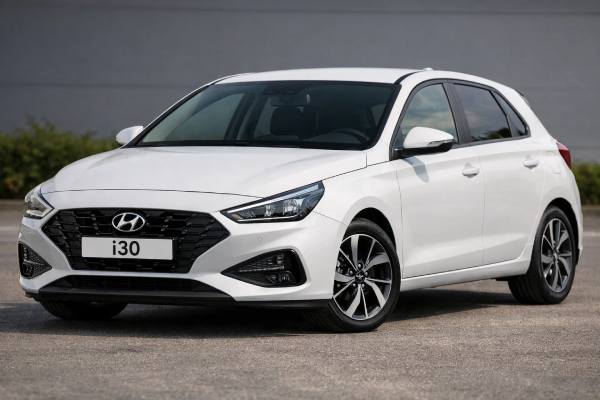
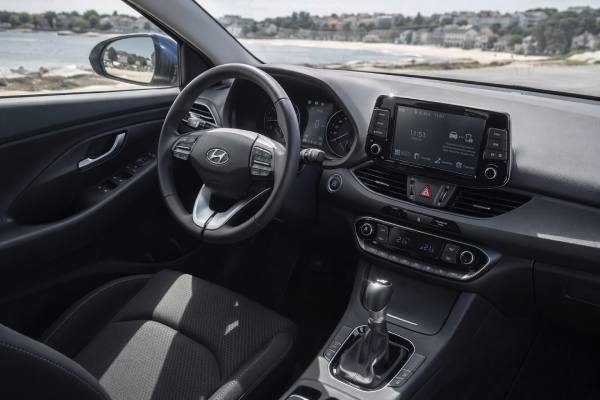
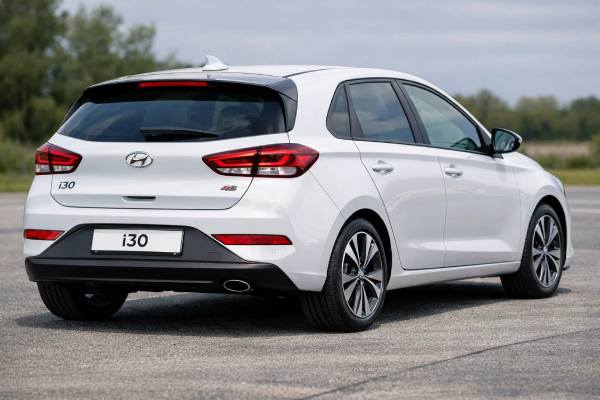
The facelifted Hyundai i30 (PD) with the 1.5 DPi 110 hp petrol engine is one of the simpler mainstream family hatchbacks of its era. That matters. In a market full of small turbos, mild-hybrid systems, and increasingly complex gearboxes, this version keeps things straightforward with a naturally aspirated 1.5-liter four-cylinder and a 6-speed manual. For many owners, that means easier long-term ownership, predictable service needs, and fewer expensive powertrain surprises. It is not the fastest i30, and it is not the most fuel-efficient version in city driving, but it can be a smart choice for buyers who value mechanical simplicity, decent cabin space, and Hyundai’s generally strong safety and equipment story. The facelift also brought a cleaner design, better connectivity, and a stronger SmartSense driver-assistance package, making this particular i30 a practical, modern used buy when service history and recall completion are both in order.
Owner Snapshot
- The naturally aspirated 1.5 and 6-speed manual are simpler than the turbo and hybrid-style alternatives.
- Ride comfort, sensible packaging, and easy controls make it a relaxed daily hatchback.
- Facelift cars gained a better safety and tech package, especially in higher trims.
- Performance is modest, so motorway overtakes and steep hills often need a downshift.
- Engine oil service is typically due every 15,000 km or 12 months, with broader scheduled service every 30,000 km or 24 months.
Navigate this guide
- Hyundai i30 PD facelift essentials
- Hyundai i30 PD 1.5 DPi data
- Hyundai i30 PD trims and safety
- Reliability and known faults
- Maintenance and buying advice
- On-road performance
- Rivals and best alternatives
Hyundai i30 PD facelift essentials
The 2020 facelift kept the i30’s core formula intact: it remained a compact front-wheel-drive family car sold as a hatchback, fastback, and wagon in many European markets. What changed was the detail work. Hyundai sharpened the styling, updated the cabin tech, and widened the availability of driver-assistance features. That helped the i30 stay competitive against the Ford Focus, Volkswagen Golf, Kia Ceed, Skoda Scala, and Mazda3.
In 1.5 DPi form, this i30 sits at the sensible end of the lineup. The engine is a 1.5-liter naturally aspirated petrol four-cylinder with dual-port injection rather than a small turbo. On paper, 110 hp and 144.2 Nm do not sound exciting, and on the road they are not. But this powertrain is aimed at buyers who want predictable response, lower mechanical complexity, and a traditional manual gearbox. That has real value once the car is out of warranty and into everyday ownership.
The facelift car also makes a better daily companion than its modest numbers suggest. Visibility is good, the cabin layout is easy to understand, and the hatchback body remains practical. The standard hatch gives you a useful 395 L boot, while the wagon is much roomier if luggage space matters more than urban maneuverability. Cabin quality is not class-leading in an upscale sense, but it is solid, logically arranged, and generally durable if the car has been treated well.
Where this version is less convincing is outright pace. A 0–100 km/h time of 12.3 seconds is adequate rather than brisk, and the engine needs revs when the car is loaded or driven on faster roads. Buyers expecting strong low-rpm pull may prefer the 1.0 T-GDi or 1.5 T-GDi, but those options add more complexity. The 1.5 DPi is the calmer, lower-stress choice.
That balance defines the whole car. The 1.5 DPi facelift i30 is not the enthusiast’s pick and not the efficiency leader in heavy city traffic. It is, instead, one of the more conservative ownership choices in the range. For buyers who keep cars a long time, drive a mix of town and highway miles, and want a modern hatch without turbo or hybrid complications, that can be exactly the right answer.
Hyundai i30 PD 1.5 DPi data
Below are the core specifications for the facelift Hyundai i30 (PD) with the 1.5 DPi 110 hp petrol engine. Figures can vary slightly by body style, tyre package, trim, and market, so use the VIN-specific build information for final confirmation.
| Item | Data |
|---|---|
| Powertrain type | Naturally aspirated petrol |
| Displacement | 1.5 L (1,498 cc) |
| Engine layout and cylinders | Inline-4, 4 cylinders, 16 valves |
| Valvetrain | 4 valves per cylinder |
| Bore × stroke | 72.0 × 92.0 mm (2.83 × 3.62 in) |
| Induction | Naturally aspirated |
| Fuel system | DPi dual-port injection |
| Compression ratio | 11.0:1 |
| Max power | 110 hp (80.9 kW) @ 6,000 rpm |
| Max torque | 144.2 Nm (106.4 lb-ft) @ 3,500 rpm |
| Factory engine code | Public consumer specs do not consistently list it; verify by VIN |
| Timing drive | Verify by VIN and service documentation |
| Rated efficiency | 6.0–6.8 L/100 km (39.2–34.6 mpg US / 47.1–41.5 mpg UK) combined WLTP |
| Real-world highway @ 120 km/h | About 6.5–7.2 L/100 km (36.2–32.7 mpg US / 43.5–39.2 mpg UK), depending on load, tyres, and weather |
| Transmission and driveline | Data |
|---|---|
| Transmission | 6-speed manual |
| Drive type | Front-wheel drive |
| Differential | Open differential |
| Chassis and dimensions | Data |
|---|---|
| Front suspension | MacPherson strut |
| Rear suspension | Torsion-beam style rear axle on 1.5 DPi |
| Steering | Electric rack-and-pinion |
| Steering ratio | 13.4:1 |
| Turning circle | 10.6 m (34.8 ft) |
| Brakes | Disc brakes front and rear; size depends on trim |
| Common wheel and tyre sizes | 195/65 R15, 205/55 R16, 225/45 R17, 225/40 R18 |
| Most common tyre size | 205/55 R16 |
| Ground clearance | 140 mm (5.51 in) |
| Hatchback length | 4,340 mm (170.9 in) |
| Width | 1,795 mm (70.7 in) |
| Height | 1,455 mm (57.3 in) |
| Wheelbase | 2,650 mm (104.3 in) |
| Kerb weight | 1,176–1,325 kg (2,593–2,921 lb) |
| GVWR | 1,750 kg (3,858 lb) |
| Fuel tank | 50 L (13.21 US gal / 11.00 UK gal) |
| Cargo volume, hatch | 395–1,301 L (13.95–45.94 ft³), VDA |
| Cargo volume, fastback | 450–1,351 L (15.89–47.71 ft³) |
| Cargo volume, wagon | 602–1,650 L (21.26–58.27 ft³) |
| Performance and capability | Data |
|---|---|
| 0–100 km/h | 12.3 s |
| Top speed | 187 km/h (116.2 mph) |
| Braking distance | Not consistently published for this trim |
| Towing capacity | 1,200 kg (2,646 lb) braked / 600 kg (1,323 lb) unbraked |
| Payload | About 425–574 kg (937–1,265 lb), depending on trim and equipment |
| Roof load | 80 kg (176 lb) |
| Fluids and service capacities | Data |
|---|---|
| Engine oil capacity | 3.4 L (3.59 US qt) including filter |
| Engine oil grade | Verify by climate, market, and VIN-specific owner documentation |
| Coolant capacity | 5.8 L (6.13 US qt) |
| Coolant type and mix | Verify by VIN; market-specific coolant spec applies |
| Manual transmission oil capacity | 1.6 L (1.69 US qt) |
| Gear oil spec | Verify by VIN and service literature |
| Differential / transfer case | Not applicable |
| A/C refrigerant and compressor oil | Check the under-bonnet label and VIN-specific service data |
| Key torque values | Always verify by VIN; wheel fasteners on Hyundai passenger cars are commonly in the 107–127 Nm range |
| Safety and driver assistance | Data |
|---|---|
| Euro NCAP | 5 stars |
| Adult Occupant | 88% |
| Child Occupant | 84% |
| Vulnerable Road Users | 64% |
| Safety Assist | 68% |
| IIHS | Not applicable for this Europe-focused model |
| ADAS availability | FCA, lane support, lane following assist, blind-spot warning, rear cross-traffic assist, high beam assist, and more, depending on year and trim |
Two details are especially important here. First, the 1.5 DPi uses a simpler fuel and induction layout than the turbo engines in the same range. Second, the 1.5 DPi versions commonly use the simpler rear axle layout rather than the more sophisticated multilink setup fitted to some stronger variants. That helps cost and packaging, but it also explains why this trim feels more comfort-focused than sporty.
Hyundai i30 PD trims and safety
Trim naming changed by country, so there is no single universal facelift i30 1.5 DPi spec sheet for every market. In broad terms, though, the 1.5 DPi usually sat in the lower-to-mid part of the range rather than at the sporty top end. That means most examples were sold as comfort-focused daily drivers, not performance-oriented halo trims.
In practical buying terms, expect the following pattern:
- Entry and mid-grade cars usually have smaller wheels, simpler upholstery, and fewer premium exterior details.
- Better-equipped versions often add LED lighting, larger alloy wheels, a larger central screen, navigation, Bluelink services, rear camera support, and extra parking aids.
- Higher trims are more likely to have the upgraded SmartSense package with lane centering support, blind-spot monitoring, and rear cross-traffic functions.
- N Line styling may exist in some markets, but the 1.5 DPi is not the version most buyers seek for that look.
The easiest trim identifiers are often the wheels, headlamp type, climate controls, cluster design, and screen size. A 10.25-inch navigation display, more advanced ADAS, and stronger visual detailing usually point to a higher-grade car. VIN-based parts lookup and dealer build printouts are the best way to confirm original equipment, especially if the car has changed hands more than once.
The facelift itself mattered because Hyundai improved the i30’s safety and connectivity story. Depending on market and trim, facelift cars could offer Forward Collision-Avoidance Assist with vehicle, pedestrian, and cyclist detection, Lane Following Assist, Blind-Spot Collision-Avoidance Assist, Rear Cross-Traffic Collision-Avoidance Assist, Driver Attention Warning, High Beam Assist, and navigation-based connected services. Not every car has everything, so a road test should include a careful check of camera calibration, warning messages, parking sensors, rear camera clarity, and steering-wheel ADAS controls.
Crash safety remained a strong point. The i30 holds a 5-star Euro NCAP result, with 88% for adult protection and 84% for child protection. The facelift review kept the car’s safety case credible, although the published rating later expired under Euro NCAP’s normal validity rules as protocols moved on. That does not mean older cars suddenly became unsafe. It simply means newer test standards are tougher and ratings are time-limited.
Also look beyond the headline star score. Check that the car still has all original airbags, that the front structure shows no poor repair signs, and that windscreen replacement has not disturbed the camera system on ADAS-equipped cars. For family buyers, ISOFIX availability, rear-seat packaging, and easy visibility remain part of the i30’s appeal.
Reliability and known faults
The facelift i30 1.5 DPi is generally one of the safer long-term bets in the range because its powertrain is mechanically less demanding than the turbocharged alternatives. That does not make it fault-free. It means the most common issues are usually more ordinary and less financially painful.
Here is the ownership picture by prevalence and likely cost tier.
Common, low to medium cost issues
- 12 V battery weakness on lightly used cars: Symptoms include slow cranking, random warning lights, infotainment resets, and start-stop not working properly. Root cause is often short-trip use or an aging battery. Remedy is battery testing, charging-system checks, and replacement if voltage retention is poor.
- Brake corrosion, especially rear brakes: Cars that do many short journeys or sit outside can develop rusty discs and sticky rear hardware. Symptoms include grinding, uneven braking feel, or MOT inspection advisories. Remedy is cleaning, pad and disc replacement if worn, and regular highway braking use.
- Tyre wear and alignment drift: Uneven shoulder wear, steering pull, and extra road noise are common on cars that have hit potholes or kerbs. Remedy is alignment, tyre replacement, and suspension inspection.
- Small cabin rattles and trim noises: Usually low-severity but common with age.
Occasional, medium cost issues
- Clutch wear: This affects city-driven cars more than motorway cars. Symptoms are slip under load, a high bite point, or poor take-up when moving off. Remedy is clutch replacement and inspection of related hydraulics.
- Drop links, bushes, and wheel bearings: Listen for clunks over sharp bumps or humming that rises with speed. These are normal wear items rather than design disasters.
- Camera, sensor, or infotainment glitches: Freezing screens, weak reverse-camera output, or warning messages may point to software bugs, low battery voltage, or sensor alignment issues. A reflash or calibration is sometimes the official fix.
Rare, high-severity or must-check items
- Outstanding recall work: This matters more than most buyers realize. Some 2020-built i30s were recalled because front seat belt tensioners could be defective. On any used car, verify recall completion by VIN and dealer history, not just the seller’s word.
- Poor crash repair on ADAS-equipped cars: A cheap front-end repair can leave cameras and sensors misaligned even if the car looks clean.
- Neglected fluid service: This engine is simple, but low oil, old coolant, or ignored warning lights can still create expensive damage.
There is no standout public pattern suggesting the 1.5 DPi is an inherently fragile engine. In fact, its lack of turbo hardware and its port-injection layout are part of the appeal. Still, buyers should ask for complete service history, proof of recall completion, evidence of annual oil changes, and a cold-start inspection. A healthy example should start cleanly, idle evenly, shift well, and show no active warning lights after a proper drive cycle.
Maintenance and buying advice
The public technical data for the facelift i30 1.5 DPi gives two especially useful service anchors: engine oil change intervals of 15,000 km or 12 months, and broader scheduled service at 30,000 km or 24 months. For a long-life ownership plan, the smart move is to treat those as maximums, not goals.
A practical maintenance schedule for this engine looks like this:
| Item | Practical interval |
|---|---|
| Engine oil and filter | Every 15,000 km or 12 months |
| General inspection service | Every 30,000 km or 24 months |
| Engine air filter | Inspect at each service, replace around 30,000 km sooner in dusty use |
| Cabin air filter | Every 15,000–30,000 km or yearly in dusty or urban use |
| Spark plugs | Often around 60,000–90,000 km, but verify by VIN and market schedule |
| Coolant | Follow VIN-specific Hyundai schedule; capacity is 5.8 L |
| Manual gearbox oil | Inspect for leaks; many owners replace preventively by 90,000–120,000 km |
| Brake fluid | Every 2 years is a sound preventive target |
| Brake inspection | At every service |
| Tyre rotation and alignment check | Every 10,000–15,000 km, or whenever uneven wear appears |
| 12 V battery test | Yearly after year 3 |
| Auxiliary belt and hoses | Inspect at each major service |
| Timing components | Follow VIN-specific service literature and inspect for noise or faults |
Key service capacities are straightforward:
- Engine oil: 3.4 L with filter
- Coolant: 5.8 L
- Manual transmission oil: 1.6 L
- Fuel tank: 50 L
The buyer’s guide is really about condition, not brochure equipment. A good 1.5 DPi should feel honest and clean. Check the following:
- Cold start quality and idle stability
- Smooth clutch take-up and clean manual shift action
- No steering pull under braking
- Even tyre wear across the axle
- No brake judder, grind, or excessive lip on the discs
- No warning lights after a proper drive
- Full operation of ADAS, parking sensors, camera, navigation, and climate control
- Service book, invoices, and recall proof by VIN
Also inspect the body carefully. Family hatchbacks often live hard lives. Look for bumper resprays, uneven panel gaps, overspray near the headlights, and non-original windshields on cars with front cameras. Those clues matter more than an extra trim feature.
The best used examples are usually mid-grade cars with 16- or 17-inch wheels, full service history, and no signs of neglected city use. Very large wheels can hurt ride quality and add tyre cost, while very basic trims may miss the convenience and safety equipment most buyers now expect. Long-term durability looks promising when the car gets regular oil service, timely brake work, and battery care. This is one of those cars that ages well if it is maintained consistently.
On-road performance
The i30 1.5 DPi does not win its case with acceleration. It wins with ease. Around town, it feels light, predictable, and simple to place. The steering is not full of road feel, but it is accurate enough for daily driving, parking, and narrow streets. At low speed, the naturally aspirated engine responds cleanly, and there is no turbo lag because there is no turbo to wait for.
That clean response has a trade-off. Low-rpm shove is modest. If you are carrying passengers, climbing, or joining faster traffic, the engine wants a downshift and some revs. The 6-speed manual suits the car well because it lets the driver work around that. In normal commuting, the gearbox is part of the appeal. It feels more natural here than a sluggish automatic would.
Ride quality is generally good on mainstream wheel sizes. Smaller wheels are the sweet spot, giving the i30 a mature, settled feel over rougher roads. Cars on larger 17- and 18-inch packages look sharper, but they can add noise and take the edge off the comfort that makes this model appealing in the first place. Straight-line stability is solid, and motorway cruising is calm enough, though the engine is clearly working harder than the stronger turbo versions when speeds rise.
Real-world fuel use is respectable rather than exceptional. A careful mixed driver can often stay in the mid-6s to low-7s L/100 km. Heavy city traffic tends to move the number upward, while steady secondary-road driving gives the best results. Practical expectations are:
- City: around 7.2–8.2 L/100 km
- Highway at 100–120 km/h: around 6.0–7.2 L/100 km
- Mixed driving: around 6.5–7.5 L/100 km
That puts the 1.5 DPi behind the best hybrids in urban efficiency, but still within a sensible range for a traditional petrol manual hatchback. Noise, vibration, and harshness are also acceptable. The engine is quiet enough at gentle throttle, though it sounds more strained if you keep it near the top of the rev range.
In short, this i30 is not fast, but it is easy. It is a car that asks little of its driver and usually gives back a calm, predictable drive. For many owners, that matters more than a fast sprint time.
Rivals and best alternatives
The facelift i30 1.5 DPi makes the most sense when compared against rivals by ownership style, not just by numbers.
Against the Toyota Corolla hybrid:
The Corolla is stronger in city fuel economy and often feels more modern in stop-start commuting. It is the better choice for heavy urban mileage. The Hyundai fights back with a simpler manual-petrol ownership experience, a more traditional driving feel, and, depending on market, a lower used price.
Against the Kia Ceed:
This is the closest rival because it shares much of Hyundai Motor Group’s thinking but often comes with different tuning, trim packaging, and market positioning. Turbo Ceed models are quicker, but the i30 1.5 DPi can be the better pick for buyers who actively want to avoid turbo complexity.
Against the Mazda3 2.0:
The Mazda usually feels more premium inside and more polished to steer. But it can cost more to buy, rear packaging is tighter, and visibility is not always as easy. The Hyundai is the more straightforward family tool.
Against the Skoda Scala and Volkswagen Golf 1.0 or 1.5 TSI:
Those cars often feel punchier and more efficient at speed, especially the turbocharged versions. But some buyers still prefer the i30’s naturally aspirated simplicity and Hyundai’s straightforward control layout.
Against the Ford Focus:
The Focus is usually more engaging to drive, but the Hyundai counters with a simpler 1.5 DPi proposition and a strong equipment-for-money story on the used market.
The best verdict is this: buy the Hyundai i30 1.5 DPi if you want a balanced, conservative hatchback with modern safety, useful cabin space, and a simpler petrol manual powertrain. Do not buy it if your top priorities are quick overtaking, hybrid-grade city economy, or sporty handling. In the current used market, its strongest argument is not excitement. It is sensible ownership.
References
- Hyundai i30 Technical Specifications 2020 (Technical Data)
- Hyundai i30 | Technische Daten | Stand: 4.2019 2021 (Technical Data)
- EuroNCAP | Hyundai i30 2017 (Safety Rating)
- Petrol and Diesel Powertrains | Hyundai Motor Europe 2026 (Powertrain Overview)
- Home | Hyundai Recalls & Service Campaigns 2026 (Recall Database)
Disclaimer
This article is for informational purposes only and is not a substitute for professional diagnosis, repair, or VIN-specific service information. Specifications, torque values, service intervals, procedures, equipment, and recall applicability can vary by VIN, market, model year, and trim. Always verify critical details against official Hyundai service documentation and dealer records before servicing, repairing, or purchasing a vehicle.
If this guide helped you, please consider sharing it on Facebook, X, or another social platform to support our work.