
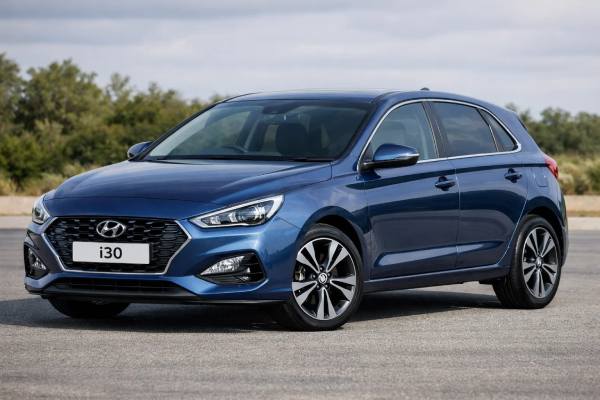
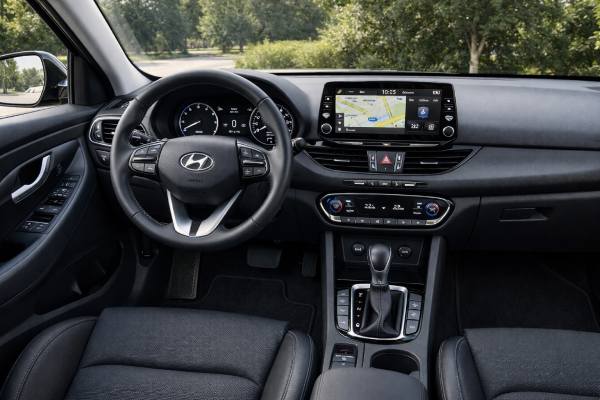
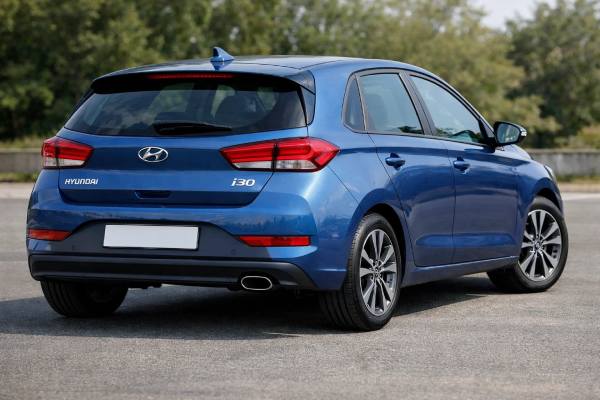
The 2020–2024 facelifted Hyundai i30 PD with the 1.6 CRDi 48V 136 hp diesel is one of the most rational versions of the range. It combines the i30’s tidy size, mature cabin, and strong safety base with the kind of long-range efficiency many compact petrol rivals cannot match. The key engineering change is the 48-volt mild-hybrid system, which supports restarts, coasting, and low-load efficiency without turning the car into a full hybrid. That gives the facelift diesel i30 a broader spread of ability than the older non-electrified version. It can commute, cover motorway miles economically, and still feel refined enough for family duty. The main ownership trade-off is complexity. This is still a turbo diesel with emissions hardware, a 48V electrical layer, and market-dependent transmission choices, so condition and service history matter more than on the simplest petrol i30s. Bought well, though, it remains a very convincing all-rounder.
What to Know
- The 1.6 CRDi 48V delivers strong real-world torque and especially good motorway economy.
- The facelift cabin and safety package make this version feel newer than many used compact rivals.
- The hatchback remains practical, with 395 L of boot space and a useful 1,301 L maximum.
- Short-trip use is not ideal for the diesel emissions system, especially on neglected cars.
- A prudent service baseline is engine oil and filter every 15,000 km or 12 months.
Jump to sections
- Hyundai i30 Facelift Diesel Snapshot
- Hyundai i30 Facelift 48V Specs
- Hyundai i30 Facelift Trims and ADAS
- Trouble Areas and Recall Checks
- Upkeep Plan and Buyer Notes
- Long-Distance Manners and Economy
- Golf, Ceed and Astra Matchup
Hyundai i30 Facelift Diesel Snapshot
The facelifted Hyundai i30 PD arrived with smarter styling, stronger connectivity, and a more modern safety package, but the real mechanical story for long-distance drivers is the 1.6 CRDi 48V engine. In this form, the i30 became one of the last genuinely sensible compact diesels on the European market: efficient, compact outside, roomy enough inside, and still available with both a manual-like transmission option and a more convenient automatic-style choice depending on market and trim.
The 1.6 CRDi 48V is not just the older diesel with a badge change. Hyundai’s mild-hybrid system adds a belt-driven motor-generator and a 48-volt electrical layer that help the car restart more smoothly, coast more often, and trim fuel use in steady driving. On paper that sounds modest, but in real ownership it changes the character of the car. The diesel already had enough torque to suit the i30 body. The 48V system mainly makes the car feel a little cleaner and more modern around transitions, especially in town and in mixed driving.
This version also suits the facelift itself. Hyundai sharpened the design, improved the infotainment, and expanded SmartSense driver-assistance features. That means the 2020–2024 car feels meaningfully newer than the pre-facelift PD, even before you consider the drivetrain. A used buyer stepping out of an older C-segment hatch will usually notice three things straight away: the cabin feels clearer and more mature, the safety technology is stronger, and the diesel has the kind of relaxed motorway character that smaller turbo petrols often cannot match.
That does not mean it is perfect for everyone. The 1.6 CRDi 48V is best when it is used properly. It likes distance, stable running temperatures, and owners who do not ignore warning lights or stretch maintenance. If most of your driving is cold-start urban work, the engine’s efficiency advantage narrows and the emissions system becomes more vulnerable to neglect. In that usage pattern, the simpler petrols make more sense. But for commuters, sales drivers, and households that still cover meaningful road mileage, the diesel i30 remains easy to justify.
The hatchback body also helps. It is easier to place than the wagon, less niche than the Fastback, and large enough for everyday family use. The 395-liter boot is still useful, and the rear seats fold flat enough to handle luggage, DIY supplies, or a pushchair. This is not a dramatic or emotional car. It is a polished, capable one. And in the used market, that often matters more.
The best way to view the facelift i30 1.6 CRDi 48V is as a late-era compact diesel done properly. It blends honest practicality with just enough electrified assistance to feel current, without introducing the heavier complexity of a full hybrid or plug-in system.
Hyundai i30 Facelift 48V Specs
The figures below focus on the facelifted five-door hatchback with the 1.6 CRDi 48V 136 hp engine. Hyundai offered this powertrain with different wheel packages and, in many European markets, with both six-speed iMT and seven-speed DCT transmission options. Because homologation figures vary by trim and tyre choice, the most honest way to present the data is as ranges where appropriate.
Powertrain and efficiency
| Item | Hyundai i30 1.6 CRDi 48V 136 |
|---|---|
| Code | Smartstream D1.6 Diesel Engine (48V mild hybrid) |
| Engine layout and cylinders | Inline-4, 4 cylinders, 16 valves |
| Bore × stroke | 77.0 × 85.8 mm (3.03 × 3.38 in) |
| Displacement | 1.6 L (1,598 cc) |
| Mild-hybrid system | 48V mild-hybrid with starter-generator assistance |
| System voltage | 48 V |
| Induction | Turbocharged |
| Fuel system | Common-rail direct injection |
| Compression ratio | 15.1:1 |
| Max power | 136 hp (100 kW) @ 4,000 rpm |
| Max torque, iMT | 280 Nm (206 lb-ft) @ 1,500–3,000 rpm |
| Max torque, 7DCT | 320 Nm (236 lb-ft) @ 2,000–2,250 rpm |
| Timing drive | Verify by VIN-specific service data before parts ordering |
| Rated efficiency, WLTP | 4.6–5.3 L/100 km depending on transmission, tyres, and trim |
| Real-world highway @ 120 km/h | Around 5.2–5.8 L/100 km in steady use |
Transmission and driveline
| Item | Hyundai i30 1.6 CRDi 48V 136 |
|---|---|
| Transmission | 6-speed iMT or 7-speed DCT |
| Drive type | FWD |
| Differential | Open |
Chassis and dimensions
| Item | Hyundai i30 hatchback |
|---|---|
| Suspension front | MacPherson strut |
| Suspension rear | Rear layout varies by spec source and market; verify by VIN for parts |
| Steering | Electric power steering |
| Brakes | Disc brakes front and rear; exact diameters vary by wheel package |
| Most popular tyre size | 205/55 R16 |
| Other common tyre sizes | 195/65 R15, 225/45 R17 |
| Length | 4,340 mm (170.87 in) |
| Width | 1,795 mm (70.67 in) |
| Height | 1,455 mm (57.28 in) |
| Wheelbase | 2,650 mm (104.33 in) |
| Turning circle | About 10.6 m (34.8 ft), market-dependent |
| Cargo volume | 395 L (13.95 ft³) seats up / 1,301 L (45.94 ft³) seats folded, VDA |
Weights, performance, and capacities
| Item | Hyundai i30 1.6 CRDi 48V 136 |
|---|---|
| Kerb weight, iMT | 1,313–1,462 kg (2,895–3,223 lb) |
| Kerb weight, 7DCT | 1,343–1,492 kg (2,961–3,289 lb) |
| Fuel tank | 50 L (13.21 US gal / 11.00 UK gal) |
| 0–100 km/h | About 10.2 s iMT / 9.9 s 7DCT |
| Top speed | About 200 km/h (124 mph) |
| Combined WLTP CO2 | Roughly 120–138 g/km depending on spec |
| Towing capacity | Verify by VIN plate and market homologation before towing |
| Payload | Varies by trim and equipment; check VIN plate |
Fluids and service capacities
| Item | Practical note |
|---|---|
| Engine oil | Use VIN-correct low-ash diesel oil meeting Hyundai’s market specification |
| Common viscosity | 0W-30 or 5W-30 low-SAPS is typical, depending on market spec |
| Coolant | Ethylene-glycol coolant for aluminum systems |
| Transmission fluid | Use Hyundai-approved fluid specific to iMT or 7DCT |
| Brake fluid | DOT 4 class fluid is the sensible baseline |
| A/C refrigerant | Verify by under-hood label and VIN-specific workshop data |
| Key torque specs | Always verify through workshop documentation before service work |
Safety and driver assistance
| Item | Hyundai i30 facelift |
|---|---|
| Euro NCAP rating basis | 5 stars for the i30 range, with facelift review and mild-hybrid variants added |
| Adult Occupant | 88% |
| Child Occupant | 84% |
| Vulnerable Road Users | 64% |
| Safety Assist | 68% |
| ADAS availability | FCA, LFA, LKA, BCA, RCCA, ISLW, DAW, HBA depending on trim and market |
The key takeaway is that this is a torque-first powertrain. The numbers that shape ownership most are not the 136 hp headline, but the 48V assistance, the low fuel use, and the stronger 320 Nm figure on DCT-equipped cars.
Hyundai i30 Facelift Trims and ADAS
With the facelifted i30, Hyundai made the car easier to recommend because the upgrades were not cosmetic only. The cabin tech improved, the styling became cleaner, and the SmartSense package grew stronger. That said, used buyers still need to shop carefully by actual equipment, not just trim name. Hyundai’s trim structures varied across Europe, and the same engine could appear in several grades with noticeably different wheel sizes, seat trims, and driver-assistance bundles.
At the lower end, most facelift diesel i30s still offered a good baseline. Even modest trims usually included stability control, multiple airbags, lane support of some kind, a central touchscreen, smartphone integration, tyre-pressure monitoring, cruise control, and ISOFIX points. That already makes the facelift car feel newer than many 2017–2019 rivals. Mid-spec versions are often the sweet spot. They typically add alloy wheels, better lighting, parking sensors or a camera, upgraded infotainment, automatic climate control, and the wider ADAS bundle buyers actually notice in daily use.
Higher trims and N Line versions mostly change the presentation rather than the underlying diesel verdict. You may see larger wheels, sharper trim, different upholstery, LED lighting, bigger screens, or more convenience features. But the most important differences for long-term owners are not cosmetic. They are tyre size, transmission choice, and the extent of the driver-assistance equipment. A 17-inch car may look better, but a 16-inch car is often the better used buy if you value ride comfort, lower tyre cost, and slightly less road noise.
The safety picture is strong but worth explaining carefully. Euro NCAP originally awarded the PD i30 a 5-star rating, and the official record later added mild-hybrid variants and logged a facelift review in 2020. That means the facelift diesel remains tied to a well-regarded safety platform. However, Euro NCAP also shows that the original rating expired in January 2024 under its normal time-based system. That does not mean the car suddenly became unsafe. It means the old star result is no longer current against the newest protocols. For used buyers, the sensible reading is still positive: the i30 has a strong passive-safety base for its class and era.
Hyundai’s own safety pages highlight the facelift ADAS package clearly. Depending on trim and market, buyers may find:
- Forward Collision-avoidance Assist with car, pedestrian, and bicycle detection.
- Lane Following Assist.
- Lane Keeping Assist.
- Blind Spot Collision-avoidance Assist.
- Rear Cross-traffic Collision-avoidance Assist.
- Intelligent Speed Limit Warning.
- Driver Attention Warning.
- High Beam Assist.
- Leading Vehicle Departure Alert.
That is a competitive set for a late-2020 compact hatch. The caveat is calibration. Windscreen replacement, bumper repairs, alignment problems, or battery faults can affect how these systems behave. On a used example, a fault-free road test and a diagnostic scan matter more than a seller’s equipment list. The best facelift i30s are not just well-specced. They are cars whose features still work exactly as intended.
If you are shopping one today, a mid-range facelift diesel with 16-inch wheels, camera or sensors, and the broader SmartSense package is usually the most balanced buy.
Trouble Areas and Recall Checks
The 1.6 CRDi 48V facelift i30 does not have a reputation as a fundamentally weak car, but it is also not a car that tolerates neglect well. That distinction matters. Many problems in this model are usage-related rather than guaranteed design failures. A car that spends its life on long motorway runs, receives correct oil, and gets recall work on time can be very dependable. A short-trip urban car with delayed servicing and ignored emissions warnings can become frustrating and expensive.
| Area | Prevalence | Severity and cost tier | What to watch for |
|---|---|---|---|
| DPF loading in short-trip use | Common on low-mile urban cars | Medium | Frequent regen behavior, rising fuel use, warning lights, limp mode |
| EGR and intake contamination | Occasional | Medium | Flat response, hesitant low-rpm pull, fault codes |
| AdBlue, NOx, or SCR-related faults | Occasional | Medium to high | Emissions warnings, countdown messages, no-start warnings after repeated faults |
| 48V system or battery weakness | Occasional | Medium | Rough restart behavior, warning messages, unusual stop-start operation |
| 7DCT low-speed hesitancy or shudder | Occasional | Medium | Jerky creep, awkward take-up in traffic, poor clutch behavior |
| Weak 12V battery | Common with age | Low to medium | Random warnings, hard starts, odd electronics behavior |
| Brake pump recall issue | Limited but serious | High | Hard brake pedal on affected vehicles |
| Seat-belt tensioner recall | Limited but serious | High | Must be checked by VIN even without symptoms |
The first weak spot is usage mismatch. This is a diesel with modern emissions hardware. If it is driven mostly on short cold trips, the DPF and EGR system work harder and the engine never really reaches its best conditions. That does not make the car fragile, but it does make buyer honesty important. A low-mileage town car is not automatically the safest used example. Often the better car is the one that has done regular motorway miles and has the cleaner service record.
The second point is the 48V layer. Hyundai’s mild-hybrid system is not as complex as a full hybrid, but it still adds more components, more wiring, and another battery system that must remain healthy. In practice, most ownership complaints here are not dramatic drivetrain failures. They are start-stop oddities, warning messages, low-voltage problems, or rougher-than-normal restart behavior that need proper diagnosis rather than guesswork.
Transmission choice matters too. The 7DCT suits the diesel’s torque well, but like many dual-clutch gearboxes it can feel less natural than a torque-converter automatic in crawling traffic. Occasional low-speed hesitation or clutch shudder on a tired or badly driven example deserves attention. The iMT version is mechanically simpler in feel, but it still relies on correct calibration and good clutch behavior.
The official recall picture is clearer. Hyundai’s recall checker is essential, and EU Safety Gate records confirm two key i30 PDE campaigns relevant to this period. One concerns front seat-belt tensioners on certain 2020-production cars. Another concerns the tandem pump pre-filter, where fibres from the tandem pump belt can obstruct the filter and harden the brake pedal. Because the production overlap reaches into 2020, some facelift-era cars can fall into these checks.
For a pre-purchase inspection, ask for:
- Full service history, not just a stamped booklet.
- Evidence of recall completion.
- A fault-code scan.
- A true cold start.
- A proper road test with urban, open-road, and motorway driving.
The safest used buy is the car with the clearest history, not always the one with the lowest mileage.
Upkeep Plan and Buyer Notes
Owning the facelift i30 1.6 CRDi 48V well is mostly about keeping small issues small. The car responds best to clean oil, proper diesel-friendly use, and timely checks of its emissions and electrical systems. That is why a practical maintenance plan matters more here than on a simple non-turbo petrol hatchback.
Practical maintenance schedule
| Item | Sensible interval |
|---|---|
| Engine oil and filter | Every 15,000 km or 12 months |
| Engine air filter | Inspect regularly, usually replace around 30,000–45,000 km sooner in dusty use |
| Cabin air filter | Check yearly and replace as needed, often annually |
| Fuel filter | Follow VIN-specific Hyundai schedule; inspect early if fuel-quality or running issues appear |
| Coolant | Long-life coolant, but verify first-change interval by VIN and market booklet |
| Brake fluid | Every 2 years is a sensible baseline |
| Brake pads and discs | Inspect every service |
| Tyres | Rotate and inspect roughly every 10,000–12,000 km |
| Manual or iMT transmission fluid | Inspect regularly; proactive change around 90,000–120,000 km is sensible |
| 7DCT fluid | Inspect and consider earlier renewal on hard-used cars |
| Auxiliary belt and hoses | Inspect at every service |
| Timing components | Monitor for noise, faults, and correlation issues; replace only when out of spec or symptomatic |
| 12V battery | Test annually from about year 4 onward |
| 48V battery and system | Check for stored faults and correct operation during services |
| DPF health | Monitor regeneration behavior, especially on short-trip cars |
Useful fluids and workshop guidance
- Engine oil: use a VIN-correct low-ash diesel oil approved for the car’s emissions system.
- Common viscosity: 0W-30 or 5W-30 low-SAPS, depending on market specification.
- Brake fluid: DOT 4 class fluid.
- Coolant: ethylene-glycol coolant suitable for aluminum systems.
- Fuel tank: 50 L.
- Transmission fluid: always use the correct Hyundai-approved fluid for iMT or 7DCT applications.
For buyers, the inspection checklist should focus on how the car has lived. Look for even tyre wear, smooth cold starting, stable idle, clean low-rpm pull, and no excessive fan activity or warning messages after a test drive. Ask whether the car completes regular longer runs. That question matters on this diesel. Also inspect the condition of the rear brakes, because motorway cars can actually preserve them better than slow-moving urban cars that spend more time parked between short trips.
Common reconditioning items on used examples include tyres, front discs and pads, 12V batteries, alignment, and software updates. None of those are unusual. What matters is whether they were done properly and on time. The stronger used choices are usually 2021–2024 cars with full history, modest wheel size, and clear recall completion. Some 2020 cars are still good buys, but early facelift production deserves closer campaign checking.
The trims to seek are the ones that balance comfort and cost: not too sparse, not overloaded with large wheels and expensive cosmetic extras. Long-term durability is good when the car is driven regularly and serviced properly. The diesel i30 is not a car to fear. It is a car to maintain on purpose.
Long-Distance Manners and Economy
The facelift i30 1.6 CRDi 48V makes sense from the driver’s seat almost immediately. It is not an exciting hot hatch, but it does not feel flat or strained either. The diesel’s main strength is relaxed, usable shove. In everyday terms, that means fewer downshifts, easier overtakes at normal road speeds, and a calmer motorway character than many small turbo petrol rivals.
The engine’s personality depends partly on the transmission. The iMT version feels more traditional and gives the driver more control over the torque curve. The DCT version feels more effortless in everyday traffic and makes better use of the higher 320 Nm figure. Neither version turns the i30 into a fast car, but both make it a stronger all-rounder than the entry-level petrol variants. The diesel’s extra torque is what gives the car its easy pace.
Ride and handling suit the engine well. The facelift i30 remains one of those compact cars that feels more mature than dramatic. It tracks straight, resists crosswinds decently, and gives enough steering accuracy to feel secure on a fast A-road without trying to be sporty. On 16-inch wheels, it is usually at its best. There is enough compliance for poor surfaces, enough control for long journeys, and less tyre roar than on larger wheels.
Noise levels are respectable rather than class-leading. At idle and under cold load, you can still tell it is a diesel. But once warmed through and settled into a cruise, it becomes quieter and more subdued than many buyers expect. That is where the engine earns its place. It does not have the creamy refinement of a larger premium diesel, but it is quieter at a sustained motorway pace than many small petrol engines working harder.
Real-world economy is one of the biggest reasons to buy this version.
| Use case | Real-world expectation |
|---|---|
| Urban driving with short trips | Around 5.8–7.0 L/100 km |
| Mixed commuting | Around 4.9–5.8 L/100 km |
| Highway at 100–110 km/h | Around 4.6–5.2 L/100 km |
| Highway at 120 km/h | Around 5.2–5.8 L/100 km |
Those figures move around with wheel size, traffic, temperature, and regeneration patterns, but they show the basic picture clearly. This is still one of the more economical conventional C-segment hatchbacks for drivers who do enough distance to justify a diesel.
The mild-hybrid system does not turn the car into a silent electric glider. Its contribution is subtler. Restarts are smoother, coasting behavior is smarter, and fuel use in mixed operation is trimmed in a way that feels almost invisible rather than flashy. That suits the i30’s character perfectly.
Load carrying is also fine for the class. The hatchback boot is practical, the rear seat folds easily, and the car stays settled with passengers and luggage aboard. Under towing or steep-grade work, the diesel makes more sense than the smaller petrols, though owners should always verify the exact VIN plate and homologated tow limit before relying on generic data.
As a road car, the facelift 1.6 CRDi 48V is easy to summarize: efficient, composed, and well suited to real mileage.
Golf, Ceed and Astra Matchup
The facelift Hyundai i30 1.6 CRDi 48V sits in one of the toughest used-car arenas, because good compact diesels from Volkswagen, Kia, Opel and Ford all aim at similar buyers. That is why the Hyundai’s appeal comes from balance rather than domination in one area.
Against a Volkswagen Golf diesel, the i30 usually feels a little less polished in brand image and some interior details, but it often matches it where many used buyers care most: everyday usability, safety, and long-distance comfort. The Hyundai’s big advantage is that it often costs less for similar age and equipment while still feeling modern. The Golf still tends to win on cabin prestige and perhaps steering polish, but not always on value.
Against the Kia Ceed 1.6 CRDi, the contest is even closer. The two cars share a family philosophy: sensible packaging, strong equipment logic, and reassuring warranty culture. The Hyundai usually edges the Kia on ride maturity and overall cabin calm, while the Kia can feel slightly more assertive in styling or trim strategy depending on market. In truth, the better car is often simply the better-kept one.
Against the Opel or Vauxhall Astra diesel, the Hyundai tends to feel more rounded. The Astra can be pleasant and efficient, but the facelift i30 generally offers the stronger mix of modern assistance systems, infotainment polish, and long-term ownership confidence. It also looks fresher than some Astra variants from the same years.
The i30’s main weaknesses in this group are not dramatic. It is not the most engaging car in corners. The diesel makes sense only for drivers who actually do enough mileage. And the mild-hybrid diesel setup is still a modern emissions car, which means used buyers cannot shop lazily. But its strengths are easy to defend:
- Strong motorway economy.
- Mature road manners.
- Good safety and ADAS availability.
- Sensible hatchback practicality.
- Broad trim appeal without needing top-spec money.
That is why this facelift i30 remains a smart used choice. It is not the enthusiast’s pick, and it is not the badge-led choice either. It is the compact diesel for buyers who want a car that feels current, uses fuel wisely, and does not punish them with size, complexity, or poor ergonomics.
If your driving still includes regular open-road or motorway work, the Hyundai i30 1.6 CRDi 48V deserves a place near the top of the shortlist. It is one of the last compact diesels that still feels genuinely easy to recommend when bought with care.
References
- i30 Range 2020 (Brochure)
- The new i30 Performance | Hatchback – Hyundai Worldwide 2026 (Technical Specifications)
- The new i30 Safety | Hatchback – Hyundai Worldwide 2026 (Safety Overview)
- EuroNCAP | Hyundai i30 2017 (Safety Rating)
- Home | Hyundai Recalls & Service Campaigns 2026 (Recall Database)
Disclaimer
This article is for informational purposes only and is not a substitute for professional diagnosis, repair, or VIN-specific workshop guidance. Specifications, torque values, service intervals, procedures, equipment, and recall applicability can vary by VIN, market, transmission, trim, and production date, so always verify critical details against official Hyundai service documentation and dealer records before servicing, repairing, towing, or buying a vehicle.
If this guide helped you, please consider sharing it on Facebook, X, or another social platform to support our work.